
Offshore Support Vessels Industry Market Size by Vessel Type, Water Depth, End User, Region – Revenue Pool Analysis, Margin Structure Assessment, Capital Flow Trends, Competitive Benchmarking & Forecast to 2032
Overview
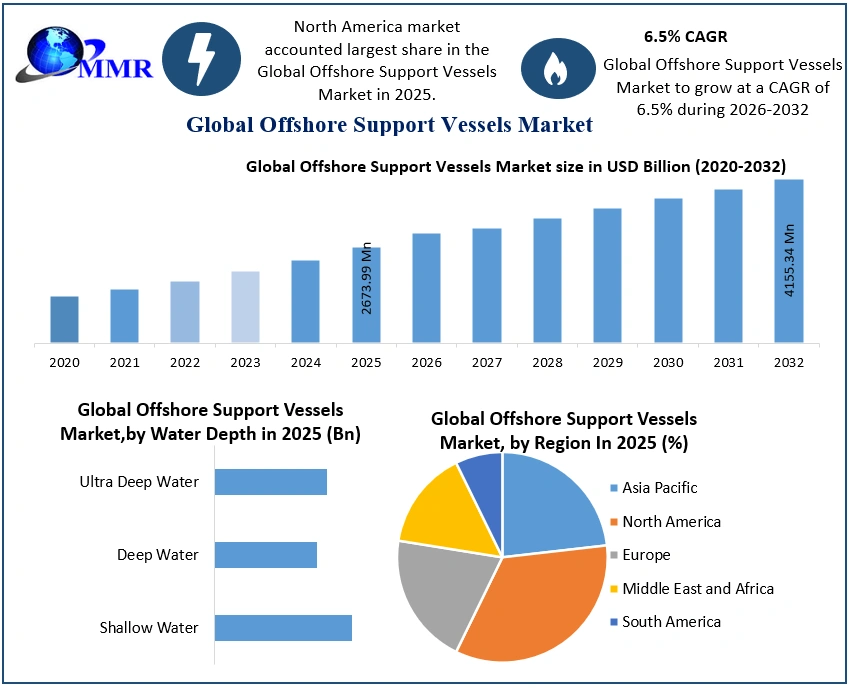
The Offshore Support Vessels Market size was valued at USD 2673.99 Million in 2025 and the total Offshore Support Vessels revenue is expected to grow at a CAGR of 6.5% from 2025 to 2032, reaching nearly USD 4155.34 Million by 2032.
Offshore Support Vessels Industry Overview:
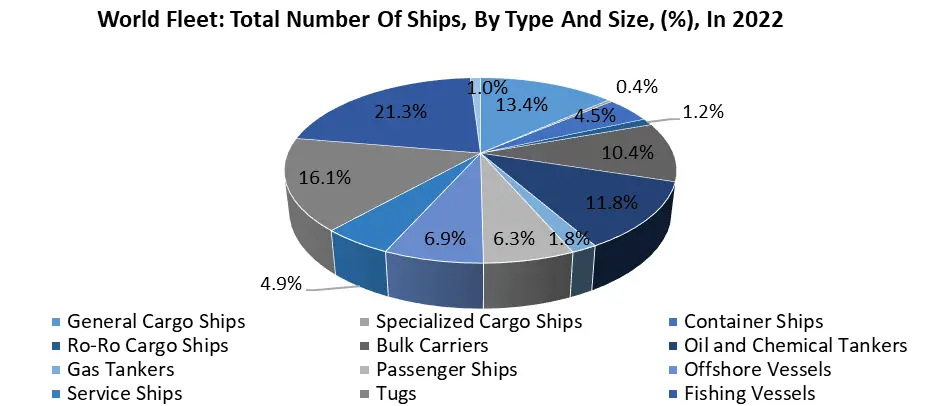
The Offshore Support Vessel (OSV) market is pivotal for seamless offshore operations in industries like oil and gas and Renewable Energy. These specialized maritime vessels play a vital role in addressing challenges posed by changing environmental conditions and intricate operational demands. OSVs ensure the steady flow of personnel, equipment, and supplies to and from offshore platforms, curbing downtime and facilitating activities such as resupply, maintenance, and emergency response. Their significance is closely tied to the offshore energy sector's health, particularly oil, gas, and renewable projects. Despite a growing focus on environmental considerations and energy-efficient technologies, immediate operational requirements often prioritize fast, high-powered vessels over energy efficiency. This intricate market dynamic shapes OSV design and characteristics. The trend leans toward advanced, deepwater-capable vessels, with a younger fleet equipped with cutting-edge technologies. OSVs are evolving in size, efficiency, and flexibility to meet complex, distant offshore needs. Larger vessels will accommodate increased cargo and regulations, while improved fuel efficiency aligns with sustainability goals. High-specification, adaptable designs are crucial for uninterrupted operations. As offshore activities grow more intricate, OSVs play a pivotal role beyond transportation.
What does the bundle’s collection provide?
1. Individual reports present a thorough analysis of the Offshore Support Vessel sector within specific regions.
2. The Offshore Support Vessel Bundle report provides a global overview of the market, encompassing factors like vessel types, water depth, and end-users.
3. The report furnishes insights into growth catalysts, impending challenges, emerging trends, opportunities, risks, and entry barriers that confront the industry.
4. The research methodology involves an exhaustive examination of product-oriented literature, industry announcements, annual reports, and pertinent documents sourced from major industry participants.
5. Noteworthy in the report is the industry players' concerted focus on technological advancements, driving their efforts to establish supremacy within the global Offshore Support Vessel market. Key players are actively providing their market positions.
6. With the intent of equipping stakeholders with well-founded decisions and a comprehensive grasp of market dynamics, the report aims to supply valuable insights and an in-depth exploration of the Offshore Support Vessel market.
Explore a vast reservoir of knowledge concerning the Offshore Support Vessel market through this budget-friendly bundle, providing a valuable repository of insights and information. By acquiring this economic package, you are granted entry to a series of reports at a cost lower than acquiring them individually. Seize the chance to immerse yourself in exhaustive evaluations and priceless data concerning the Offshore Support Vessel sector with this collection offered at a discounted rate.
Acquire the bundled report series titled "Sustainability and Green Practices Fueling the Future of the Offshore Support Vessels Industry," originally valued at $14500, now accessible at a reduced price of $12800.
1. North America Offshore Support Vessel market (Single User $ 2900)
2. Asia Pacific Offshore Support Vessel market (Single User $ 2900)
3. Europe Offshore Support Vessel market (Single User $ 2900)
4. Middle East and Africa Offshore Support Vessel market (Single User $ 2900)
5. South America Offshore Support Vessel market (Single User $ 2900)
How this report will help you:
1. Obtain insightful knowledge to facilitate well-informed business decisions by delving into this comprehensive report that examines key trends and driving forces within the Offshore Support Vessel market.
2. Enhance your market footprint and pinpoint avenues for expansion within the Offshore Support Vessel sector using insights from this report.
3. Identify promising realms for growth and investment through an in-depth analysis of pivotal segments and significant projects detailed in this report.
4. Comprehend the influence of governmental policies on the Offshore Support Vessel market, anticipate potential policy shifts, and realign your business strategies accordingly.
5. Strategize for the future by exploring historical and projected valuations of the Offshore Support Vessel market. This aids in budgeting, resource allocation, and establishing objectives to address forecast market evolutions.
6. Devise effective risk mitigation approaches by recognizing potential obstacles, market volatility, and regulatory elements underscored in this report.
To know about the Research Methodology :- Request Free Sample Report
Reports Offerings in the Bundle:
Report 1: Sustainability and Green Practices Fueling the Future OF the North America Offshore Support Vessels Industry: Industry Analysis and Forecast (2025-2032).
The North America Offshore Support Vessel Market size was valued at USD 816.11 Million in 2024 and the total North America Offshore Support Vessel Market revenue is expected to grow at a CAGR of 6.3 % from 2025 to 2032, reaching nearly USD 1272.80 Million. The offshore support vessel market is propelled by escalating offshore oil and gas exploration and production endeavors across North America. These operations necessitate the vital role of support vessels in ferrying equipment, supplies, and personnel to and from offshore platforms. The demand intensifies particularly due to the focus on deep-water and ultra-deep-water reserves in regions like Mexico, stimulating the requirement for specialized vessels capable of maneuvering in challenging and remote offshore conditions. The drive towards renewable energy sources, exemplified by offshore wind farms, further fuels market growth. These ventures rely on offshore support vessels for equipment installation, maintenance, and transportation. Investments in subsea infrastructure, encompassing pipelines, cables, and subsea installations, also amplify demand for construction and installation support vessels.
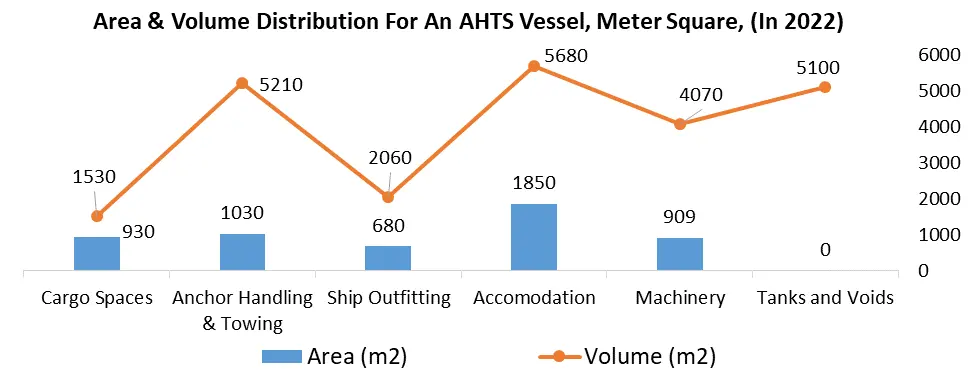
Technological advancements play a pivotal role, with innovations like advanced dynamic positioning systems, robotics, and remote-operated vehicles enhancing offshore operations' safety and efficiency. Stringent environmental and safety regulations mandate specialized vessels designed for compliance, including those catering to spill response and pollution control. The persistent demand for oil and gas products, coupled with the need for secure energy sources, sustains exploration and production efforts, thus reinforcing the offshore support vessels market. Improved oil prices and market stability further encourage investments in offshore projects, driving demand for diverse vessel types. North America's economic growth, stability, and supportive government policies foster an environment conducive to offshore energy exploration and production, consequently expanding the market.
| Sr. No. | Vessel Type | Description |
| 1. | Anchor Handling Towing and Supply (AHTS) vessels | 1. Fitted for deep-water anchor handling and towing operations, equipped with a winch capable of lifting a barge or other offshore vessel anchors. 2. The main duty is to move rigs, tow barges, set anchors, and provide supply support. 3. Equipped with large cranes, winches, and large open deck space. Winch and engine capacity determine power. Higher horsepower is used to handle heavier gear. |
| 2. | Platform Supply Vessels (PSV) | 1. The main purpose is to move cargo and supplies to/from offshore installations. 2. A flexible platform structure enables multiple-purpose supply cargo carrying capacity 3. Standard Type – UT755, a Rolls Royce-designed PSV, over 100 in operations |
| 3. | Multi-Purpose Service Vessel (MPSV) | 1. Multi-Purpose (MPP) use 2. Equipment for sub-sea service, large cranes, winches, and/or firefighting equipment. 3. May have other equipment, such as ROV support, diving support, etc. |
| 4. | Seismic Survey Vessels | 1. Survey vessels with seismic prospecting equipment, called seismic streamers. 2. Can be capable of a range of duties including survey, patrolling, fishery protection, emergency standby, pollution control, fire-fighting, salvage, towing, etc. |
| 5. | Standby and Rescue Vessels | 1. Standby duties are where a vessel is waiting near offshore installations in case of emergencies, to pick up people. 2. Typically with helipad, firefighting, rescue operations, or oil recovery equipment. 3. Can accommodate a large number of passengers, up to 300 persons |
Report 2: Sustainability and Green Practices Fueling the Future OF the Asia Pacific Offshore Support Vessels Industry: Industry Analysis and Forecast (2025-2032).
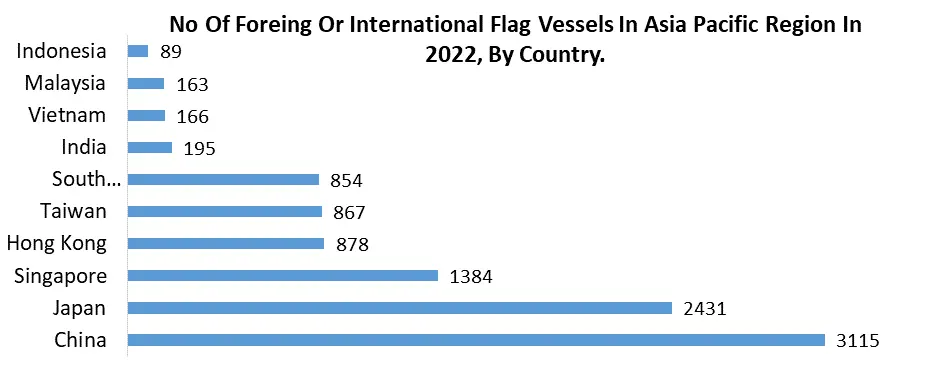
The Asia Pacific Offshore Support Vessel Market size was valued at USD 551.43 Million in and the total Asia Pacific Offshore Support Vessel Market revenue is expected to grow at a CAGR of 6.5 % from 2025 to 2032, reaching nearly USD 860.0 Million. The surge towards renewable energy sources, notably offshore wind farms, is propelling the demand for Offshore Support Vessels (OSVs) that cater to the installation, maintenance, and conveyance of components essential for these projects. The establishment of offshore wind farms necessitates OSVs with dynamic positioning capabilities and specialized equipment to facilitate turbine installation and upkeep. In Australia, impending offshore wind initiatives are poised to rely on OSVs across various phases, encompassing installation, maintenance, and logistical support. Numerous Asia Pacific nations are directing investments towards enhancing their maritime infrastructure, encompassing ports and offshore platforms. This trend results in an augmented requirement for OSVs to underpin construction, material transportation, and installation endeavors.
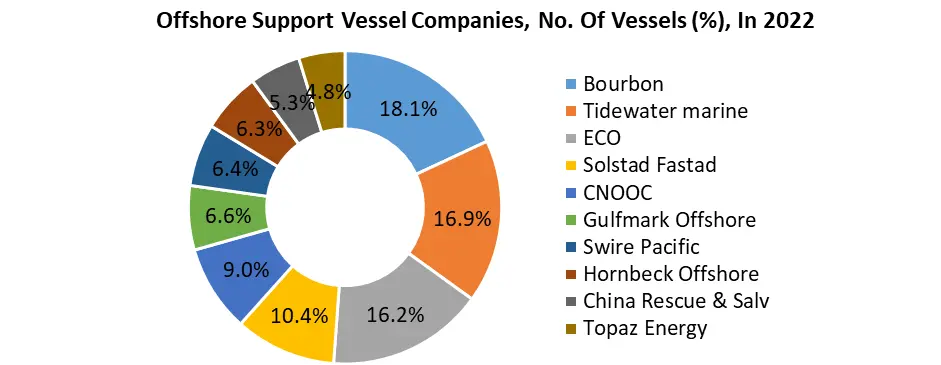
Malaysia's endeavors to expand its offshore platform infrastructure within the South China Sea are generating a demand for OSVs to facilitate both construction and ongoing operational needs. The growing appetite for raw materials and minerals, combined with advancements in deep-sea mining technologies, is fostering escalated exploration and extraction undertakings in deep waters. OSVs play a pivotal role by facilitating the conveyance of equipment and resources indispensable for supporting deep-sea mining operations. The exploration of polymetallic nodules within the Pacific Ocean, spearheaded by countries like China and Japan, necessitates the deployment of OSVs for the transportation of resources and the installation of extraction equipment.
Report 3: Sustainability and Green Practices Fueling the Future OF the Europe Offshore Support Vessels Industry: Industry Analysis and Forecast (2025-2032).
The Europe Offshore Support Vessel Market size was valued at USD 374.97 Million in and the total Europe Offshore Support Vessel Market revenue is expected to grow at a CAGR of 6.4 % from 2025 to 2032, reaching nearly USD 584.80 Million. The Europe Offshore Support Vessel Market is thriving due to several factors. Offshore oil and gas exploration fuels demand for vessels like platform supply and anchor-handling tug supply vessels, crucial for transporting personnel and supplies to rigs. The emphasis on renewable energy, especially offshore wind farms, drives the need for specialized vessels for turbine transport and maintenance. Aging installations sustain demand for construction support and decommissioning vessels. Stringent regulations enforce safety and environmental standards, spurring advanced vessel deployment. Deepwater exploration, notably in challenging zones like the North Sea, increases demand for advanced vessels.
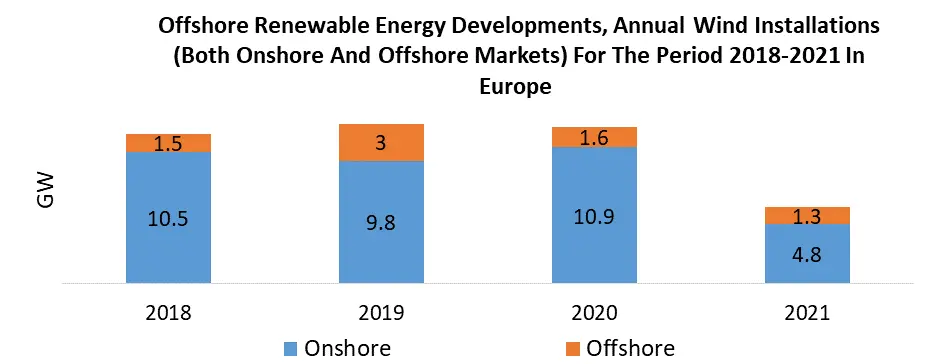
Growing subsea infrastructure prompts construction support vessel and remotely operated vehicle demand. Favorable geopolitics and stable investments in Europe drive offshore energy exploration. Despite renewables, hydrocarbons remain vital due to energy demand. Infrastructure development enhances vessel operations, and innovations in design, propulsion, and digitalization boost efficiency and safety, elevating offshore support vessel demand. Europe's offshore wind expansion, spearheaded by the UK and Germany, offers a prime market opportunity. The UK's offshore wind commitment has driven vessel demand, as seen in the Hollandse Kust Zuid project where Subsea 7 anticipates vessel needs for turbine transport, installation, and subsea support. Challenges like contract losses emphasize efficient contracting models and risk mitigation strategies.
Report 4: Sustainability and Green Practices Fueling the Future OF the Middle East and Africa Offshore Support Vessels Industry: Industry Analysis and Forecast (2025-2032).
The Middle East and Africa Offshore Support Vessel Market size was valued at USD 264.68 Million in and the total Middle East and Africa Offshore Support Vessel Market revenue is expected to grow at a CAGR of 6.6 % from 2025 to 2032, reaching nearly USD 412.80 Million. The Middle East and Africa offshore support vessel market is expected to see substantial growth, propelled by its vital role in bolstering offshore oil and gas exploration and production. With the global oil and gas demand predicted to rise, the region foresees a notable upsurge in offshore support vessel demand within the next 3 to 5 years. Key national oil companies (NOCs) like Saudi Aramco, ADNOC, and Qatar Energy are charting expansion plans that present expansive prospects.
However, this promising trajectory is not devoid of challenges. The sector grapples with intricate dynamics, including oil price impact on rates, security, and logistics intricacies. Following the success of the inaugural Offshore Support Vessel Conference, the second edition is slated for June 3-4, 2024, in Abu Dhabi, UAE. This event will unite offshore oil and gas production leaders, ship owners, shipbuilders, shipyards, and charterers. The aim is to unveil exploration and production advancements, introduce commercial trends, and spotlight emerging contracting opportunities. The conference serves as an exclusive platform for networking, collaboration, and innovation, fostering a sustainable future for the offshore support vessel sector.
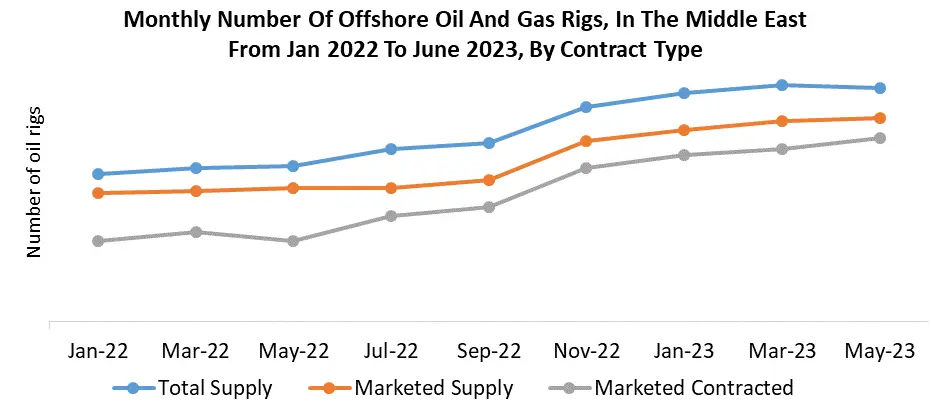
Industry giants are set to propel growth further. Saudi Aramco envisions a 50% expansion in its offshore support vessel fleet, potentially reaching 450 crafts. ADNOC's $548 million contract for a new main gas line at the Lower Zakum field amplifies offshore support vessel needs. Qatar Energy's initiation of 13 offshore LNG projects corresponds to a substantial demand increase. Similarly, Kuwait Oil Company's inaugural $594 million offshore drilling project will escalate offshore support vessel requirements. Amidst opportunities and challenges, the Middle East and Africa's offshore support vessel market is poised for notable expansion, underpinned by escalating oil and gas demand and ambitious NOC plans. The sector strives to navigate complexities, embrace innovation, and establish a robust foundation for a thriving offshore support vessel ecosystem.
| Vessel Type | Number Of Vessels | Gross Tons (GRT) |
| Anchor Handling Tug Supply (AHTS) | 1800 | 2,797,399 |
| Platform Supply Vessels (PSV) | 1100 | 1,338,806 |
| Fast Supply Vessels (FSV) | 90 | 21,915 |
| Total | 2990 | 4,158,120 |
Report 5: Sustainability And Green Practices Fueling The Future OF The South America Offshore Support Vessels Industry: Industry Analysis And Forecast (2025-2032).
The South America Offshore Support Vessel Market size was valued at USD 198.51 Million in and the total South America Offshore Support Vessel Market revenue is expected to grow at a CAGR of 6.7 % from 2025 to 2032, reaching nearly USD 309.60 Million. Offshore oil and gas Greenfield projects are set to experience a remarkable resurgence in investment, reaching their highest levels in a decade, with Brazil and Guyana leading the charge by earmarking a combined expenditure of $30 billion. This region is fast establishing itself as a leader in both deep-water and shallow-water operations, collaborating with the North Sea and the Middle East to drive global offshore expansion. Projections by Rystad Energy indicate a significant rise in worldwide offshore oil and gas project investments, with anticipated expenditures reaching $214 billion within the next two years. The annual Greenfield capital expenditure (capex) is poised to surpass $100 billion in and , marking a consecutive two-year feat unseen since and . Brazil is on track to escalate spending from $20.5 billion in to $23 billion in , while Guyana's investments will climb from $5 billion to $7 billion year-on-year.
Key developments encompass Brazil's deployment of 16 floating, production, storage, and offloading (FPSO) units across six fields by the decade's close. These initiatives underscore offshore oil and gas production's enduring significance, particularly as global energy strategies evolve toward lower carbon-intensive methods. The sector confronts challenges. Bottlenecks in subsea umbilicals, risers, and flowlines (SURF), sub-suppliers for vital equipment, yard capacity limitations, and labor shortages pose potential hurdles. Escalating material costs and supplier price hikes could challenge project feasibility. Nevertheless, as the Latin American offshore industry gains traction and extends its influence, it remains a crucial catalyst for propelling sustainable energy transitions and curbing global carbon footprints.
| Water Depth | Length (meter) | Bpd (In 1K) | Country |
| Shallow Water | 475 | 110 | Equatorial Guinea |
| Deep Water | 720 | 100 | Angola |
| 728 | 100 | Angola | |
| 960 | 80 | Equatorial Guinea | |
| 1221 | 100 | Brazil | |
| 1250 | 100 | Angola | |
| 1365 | 120 | Malaysia | |
| 1485 | 100 | Brazil | |
| Ultra-deep Water | 1525 | 120 | Guyana |
| 1600 | 220 | Guyana | |
| 1780 | 100 | Brazil | |
| 1850 | 60 | USA | |
| 1900 | 220 | Guyana | |
| 1900 | 220 | Brazil | |
| 2000 | 180 | Brazil | |
| 2100 | 120 | Brazil | |
| 2120 | 150 | Brazil | |
| 2140 | 150 | Brazil |
The South American Offshore Support Vessel (OSV) market is distinguishable by water depth, encompassing shallow water, deep water, and ultra-deepwater segments. Deep water reigns as the dominant segment, spanning water depths from around 500 meters to 1,500 meters. Operating at these depths entails complex challenges due to harsh environmental conditions and extended distances from shore. Deep-water OSV operations support subsea activities, ROVs, and intricate drilling and production setups, necessitating specialized vessels equipped for deep-water navigation. Shallow water regions, with depths up to around 200 meters, entail less demanding operational conditions and are often close to the coast. They are apt for activities like platform supply, anchor handling, and drilling support. In contrast, ultra-deepwater, exceeding 1,500 meters in depth, poses elevated technical and logistical challenges. Operating here requires advanced vessels, equipment, and technology to manage extreme pressures, currents, and intricate subsea installations. OSVs in this segment are vital for deep-sea drilling, subsea construction, and specialized research, addressing the complexities of ultra-deepwater conditions.
Offshore Support Vessels Industry Recent Industry Developments (2025–2026)
| Date | Company | Development | Impact |
|---|---|---|---|
| 06 January 2026 | Bourbon Corporation SA | The company completed a comprehensive financial and capital restructuring with new majority shareholders. | This marks a strategic shift to enhance organizational efficiency and expand its global market presence. |
| 25 February 2026 | Seacor Marine Holdings Inc. | The firm confirmed its first newbuild Platform Supply Vessel (PSV) is scheduled for delivery in the fourth quarter of 2026. | The addition will modernize the fleet and support high-demand drilling campaigns in international markets. |
| 02 March 2026 | Tidewater Inc. | The company announced a $500 million agreement to acquire the Wilson Companies to expand its operations. | The deal adds 22 PSVs in Brazil, significantly strengthening its dominance in the South American deepwater sector. |
| 09 February 2026 | Maersk Supply Service AS | The parent group signed an order for eight large dual-fuel vessels to be delivered starting in 2026. | This investment supports the company's goal of reaching net-zero GHG emissions across its maritime operations. |
Offshore Support Vessels Industry Scope: Inquire before buying
| Offshore Support Vessels Industry | |||
|---|---|---|---|
| Report Coverage | Details | ||
| Base Year: | 2025 | Forecast Period: | 2026-2032 |
| Historical Data: | 2020 to 2025 | Market Size in 2025: | 2673.99 USD Mn |
| Forecast Period 2026-2032 CAGR: | 6.5% | Market Size in 2032: | 4155.34 USD Mn |
| Segments Covered: | by Propulsion Type | Diesel Powered Hybrid Powered LNG Powered Electric Powered |
|
| by Fuel Type | Marine Diesel Oil Heavy Fuel Oil LNG Biofuel |
||
| by Vessel Type | Anchor Handling Vessel Tug Supply Vessel Platform Supply Vessel Multipurpose Support Vessel Crew Vessel Chase Vessel Seismic Vessel Standby Rescue Vessel |
||
| by Water Depth | Shallow Water Deep Water Ultra Deep Water |
||
| by End User | Oil and Gas industry Offshore wind Patrolling Research and Surveying Others |
||
Offshore Support Vessels Industry, by Region
North America (United States, Canada and Mexico)
Europe (UK, France, Germany, Italy, Spain, Sweden, Austria, Turkey, Russia and Rest of Europe)
Asia Pacific (China, India, Japan, South Korea, Australia, ASEAN and Rest of APAC)
Middle East and Africa (South Africa, GCC, Egypt, Nigeria and Rest of ME&A)
South America (Brazil, Argentina, Columbia and Rest of South America)
Offshore Support Vessel Key Players:
1. Abdon Callais Offshore LLC
2. Bass Marine Pty Ltd.
3. Bourbon Corporation SA
4. Bumi Armada Berhad,
5. Chandra Ship Management Pvt Ltd.
6. Delta Logistics Limited,
7. DOF ASA
8. DOLPHIN OFFSHORE ENTERPRISES INDIA LTD.
9. Dredging Corporation of India Limited.
10. Edison Chouest Offshore
11. Group
12. GOL OFFSHORE
13. Grupo Coremar S.A.,
14. Harvey Gulf,
15. Havila Shipping ASA,
16. HIND OFFSHORE.
17. Hornbeck Offshore Services
18. Intermarine LLC,
19. Island Offshore Management,
20. Japan Marine United Corporation
21. Maersk Supply Service A/S
22. Miclyn Express Offshore
23. MMA Offshore Limited
24. Nam Cheong International Ltd.
25. OCEAN SPARKLE LIMITED.
26. PACC Offshore Services Holdings
27. Rem Maritime As,
28. Seacor Marine Holdings Inc.
29. Seam Offshore
30. Solstad Farstad ASA
31. Tag Offshore Limited.
32. The Shipping Corporation of India Ltd. (SCI).
33. Tidewater Inc.
34. Topaz Energy and Marine
35. VARUN SHIPPING.
36. Vroon Offshore Service Pte Ltd
37. Wintermar Offshore Marine Group
FAQs:
1. What are the growth drivers for the Offshore Support Vessel Market?
Ans. Offshore Wind Expansion and Expanding Offshore Activities Fuel Offshore Support Vessel Demand and are expected to be the major driver for the Offshore Support Vessel Market.
2. What is the major restraint for the Offshore Support Vessel Market growth?
Ans. Geopolitical Uncertainty Affects the Offshore Support Vessel Market and are expected to be the major restraints for the Offshore Support Vessel Market.
3. Which country is expected to lead the global Offshore Support Vessel Market during the forecast period?
Ans. North America is expected to lead the Offshore Support Vessel Market during the forecast period.
4. What was the Global Offshore Support Vessels Market size in 2025?
Ans: The Global Offshore Support Vessels Market size was USD 2673.99 Million in 2025.
5. What segments are covered in the Offshore Support Vessel Market report?
Ans. The segments covered in the Offshore Support Vessel Market report are by Vessel Type, Water Depth, End-Users, and Region.