
Lighting Product Market Size by Product, Lighting Fixture, End User and Region – Segment-Level Market Assessment, Growth Opportunity Analysis, Competitive Mapping & Forecast to 2032
Overview
The Lighting Product Market size was valued at USD 132.97 Billion in 2024 and the total Lighting Product revenue is expected to grow at a CAGR of 3.82% from 2025 to 2032, reaching nearly USD 179.47 Billion.
Overview
LEDs with high intensity give high light output and they consume very little power. Ceiling Fixtures, Recessed Lighting Fixture, Strip Light Fixture, and Others (Chandeliers, Pendants, etc.) are the types of lighting fixture. Residential Lighting, Table Lamp, Floor Lamp, Desk Lamp, Commercial Lighting, Industrial Lighting, and Outdoor Lighting (Street Lights, Parking Garage, Landscape, etc.) and others are the applications of the lighting product. LED Tubes & Bulbs, T8 LED tubes & bulbs, and Others (Incandescent, High Intensity Discharge) are the types of the lighting product. The lighting product market growth is driven by several key factors.
Technological advancements like LED and smart lighting, which offer energy efficiency and remote control, are major contributors. Government regulations and incentives for energy-efficient solutions further boost demand. Increasing environmental awareness pushes consumers towards sustainable lighting. Urbanization and infrastructure projects, particularly smart city initiatives, require modern lighting solutions. The decreasing cost of LEDs makes them accessible to more consumers. Changing consumer preferences for aesthetically pleasing, functional, and health-benefiting lighting solutions also drive growth. Additionally, integration with renewable energy sources and advancements in lighting controls enhance energy savings and convenience, supporting market growth. These drivers collectively ensure the lighting market's robust growth.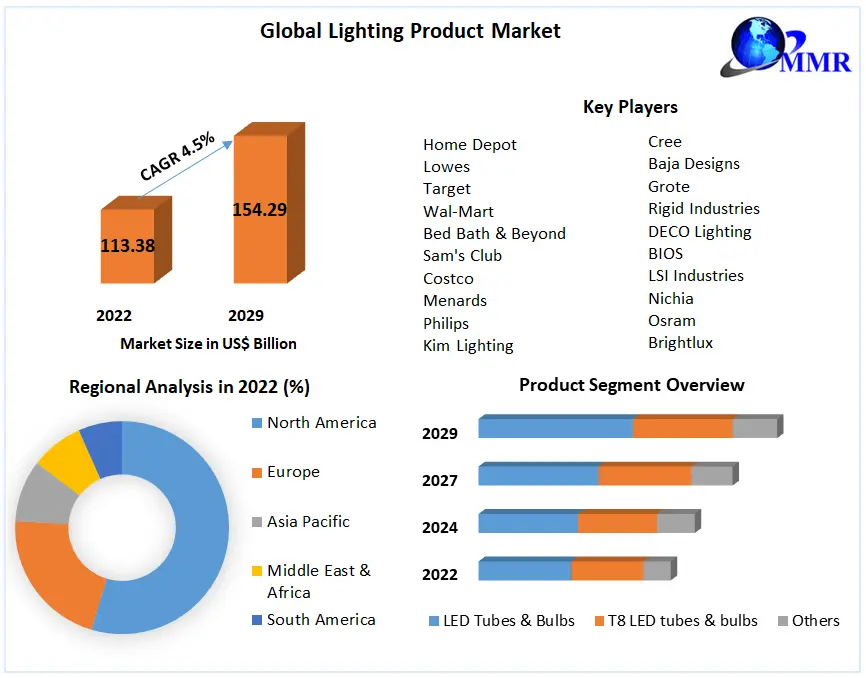 To know about the Research Methodology :- Request Free Sample Report
Lighting Product Market Dynamics
The Rapid Evolution of LED Technology Propels the Lighting Product Market
Advancements in LED technology is a pivotal growth driver for the lighting product market. LEDs have undergone significant improvements in efficiency, longevity and cost-effectiveness, making them the preferred choice for residential, commercial, and industrial lighting applications. Innovations such as tunable white LEDs and smart lighting solutions, which allow users to adjust color temperature and brightness, enhance the appeal of LED products. The trajectory of lighting has always been guided by innovation and LED light technology stands at the forefront of this evolution. LED lighting is no longer just about energy efficiency and longevity it's about pioneering designs, smarter integrations and transformative experiences. The ascent of LED light technology in commercial environments overnight phenomenon. It was a carefully orchestrated confluence of technological innovations, market demands and environmental considerations that paved the way for LEDs to become the preferred choice. Today’s LED technology is used extensively for commercial, industrial, and residential applications. LEDs’ capabilities have increased across the board increases in lifespan, increases in brightness (performance), and increases in energy efficiency. The greatly expanded use of LED technology has led to the development of warranties, industry best practices, and the introduction of government programs and standards.
The integration of LEDs with IoT devices enables intelligent lighting systems that is controlled remotely, contributing to energy savings and user convenience. Governments worldwide are also incentivizing the switch to LED lighting through regulations and subsidies, promoting sustainability and reducing energy consumption. The global push towards green building standards and eco-friendly practices further fuels the demand for advanced LED lighting solutions, ensuring continuous market growth. As LED technology continues to evolve, offering better performance and new functionalities, it is set to dominate the Lighting Product Market, driving substantial growth and innovation.
Recent advancements in LED technology have revolutionized the lighting industry with improved efficiency, smart capabilities, and enhanced light quality. Innovations like quantum dots offer higher efficiency and better color control. New materials reduce production costs, making LEDs more accessible. Smart LED systems provide remote control and integration with other devices. LEDs are now used in diverse applications, from standard light bulbs to automotive lighting, enabling innovative designs and improved energy management. With ongoing research in areas like micro-LEDs and OLEDs, the future promises even more exciting developments, driving innovation and sustainability in lighting solutions. Such factors are expected to boost the Lighting Product Market growth.
Latest LED Technology and Trends in the LED Industry
Many industries are making great strides when it comes to new technology and trends, the LED Lighting industry is certainly among the leaders. Over the last decade, the LED industry has experienced tremendous growth and change, with new applications, increasing efficiencies and lower costs throughout. For multiple businesses and products, this creates a great opportunity for Lighting Product Market growth.
| Category | Description |
| Elimination of External Drivers | New DC LED chips handle power requirements directly, eliminating the need for external circuit board drivers. This allows for more compact packaging and new product applications, with increasing light output relative to cost. |
| Dynamic Beam Spread | Innovative LED systems with dynamic beam spread and no moving parts provide custom beam control, opening up new application possibilities. |
| Flexible LED Foils | A roll-to-roll process developed in Finland enables the production of flexible in-molded LED foils with printed electronics, reducing manufacturing costs for flexible LED displays. |
| Li-Fi Technology | Li-Fi uses modulated LED light for high-rate data transmission, ideal for electromagnetic-sensitive areas. This technology is moving from research to commercialization and is suited for home and architectural networks. |
| Automotive LED Expansion | LEDs are now widely used in the automotive industry across all car lines, enhancing both styling and functionality in rear, forward, and interior lighting. Benefits include improved ambiance, passenger safety, and long life without bulb changes. |
Development of Smart Cities to Create Lucrative Opportunity for the LED Lighting Market
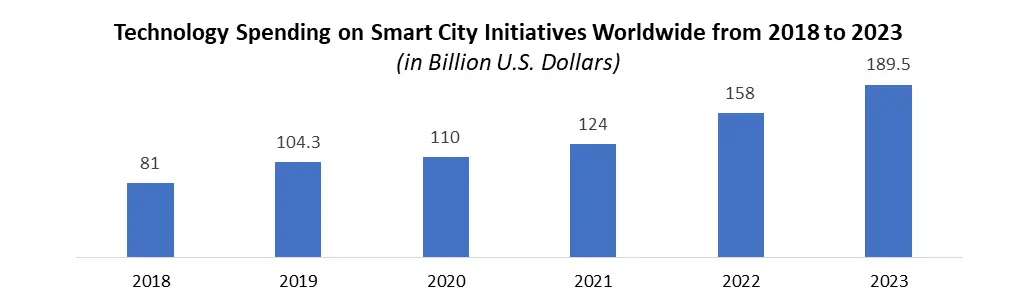
The emergence of smart cities presents a unique opportunity for the lighting product market, particularly in the realm of smart lighting solutions. Smart cities aim to enhance urban living through the integration of advanced technologies, and smart lighting is a key component of this vision. Smart lighting systems utilize sensors, wireless communication, and data analytics to provide adaptive and efficient lighting. These systems automatically adjust lighting based on real-time conditions such as occupancy and daylight levels, leading to significant energy savings and reduced operational costs. The smart lighting infrastructure serves multiple functions, including enhancing public safety through integrated surveillance and improving traffic management with real-time data on road usage. The Department of Energy (DOE) will invest almost $10 million to expand efforts to support the emergence of smart, energy-efficient and low-emission cities that are leveraging Smart Cities technologies. Such investment is expected to boost the market growth. Technology spending on smart city initiatives worldwide is forecast to more than double between and , increasing from 81 billion U.S. dollars in to 189.5 billion in .
The smart LED streetlights equipped with IoT (Internet of Things) sensors collect and transmit data, providing valuable insights for urban planning and maintenance. These lights monitor air quality, traffic flow, and even enhance security by detecting unusual activities. As governments and municipalities worldwide commit to creating more sustainable and connected urban environments, the demand for smart lighting product solutions is set to soar. This burgeoning trend towards smart city development represents a golden opportunity for the LED lighting market to innovate and expand its reach. The deployment of smart streetlights, which is monitored and controlled remotely, also reduces maintenance costs and improves reliability. As urban areas continue to grow and the concept of smart cities gains traction globally, the demand for smart lighting solutions is expected to soar, offering a lucrative opportunity for market players to innovate and capture a significant share of this transformative Lighting Product Market.
High Initial Costs Create Barriers to Adoption of Lighting Products and Restrain the Market Growth
The long-term cost savings and environmental benefits of energy-efficient lighting products, the high initial costs remain a significant restraining factor in the market. Advanced lighting technologies such as LED and smart lighting systems require substantial upfront investment compared to traditional incandescent or fluorescent bulbs. These higher costs is prohibitive for both residential consumers and businesses, particularly in regions with lower disposable incomes or limited access to financing options. For many potential buyers, the immediate expense outweighs the perceived future savings on energy bills, slowing the adoption rate. The high costs deter large-scale commercial projects or public infrastructure upgrades, where budget constraints are a major consideration. The price of LED and smart lighting has been decreasing over time, it remains a critical hurdle that the industry needs to address through continued technological innovation, subsidies, or incentive programs. Overcoming this financial barrier is essential for accelerating the transition to more sustainable lighting solutions and achieving broader Lighting Product Market penetration.
Lighting Product Market Segment Analysis
By Product:
Based on the Product, the Lighting Product Market is segmented into LED Tubes & Bulbs, T8 LED tubes & bulbs, and Others (Incandescent, High Intensity Discharge). The LED Tubes & Bulbs segment is expected to grow rapidly at a CAGR of xx% during the forecast period 2024-2030. This is due to the stringent regulations prohibiting the use of inefficient light bulbs. Governments in some regions have implemented legislation prohibiting the use of incandescent bulbs for general lighting and mandating the replacement of incandescent bulbs with more energy-efficient bulbs. These are the key benefits that are expected to boost the growth of the LED Tubes & Bulbs segment in the global market during the forecast period.
By Lightning Fixture:
Based on the Lighting Fixture, the Lighting Product Market is segmented into Ceiling Fixtures, Recessed Lighting Fixture, Strip Light Fixture, and Others (Chandeliers, Pendants, etc.). Ceiling Fixtures segment is expected to hold the largest market share of xx% by 2030. This is due to the widespread use of interior lighting among households, hospitals, corporate offices, retail malls, and educational institutions. Indoor and outdoor lighting fixtures, both wall-mounted and ceiling-mounted, create a more appealing and brighter atmosphere. The growth of the ceiling fixtures segment is expected to be driven by the availability of several designs of ceiling lighting fixtures for both commercial and residential applications. Others (Chandeliers, Pendants, etc.) segment is expected to grow rapidly at a CAGR of xx% during the forecast period 2025-2032. Manufacturing of chandeliers with a gorgeous and exquisite appearance and fine material quality, as well as the growing demand to match the ambiance, are driving this segment's growth. The manufacture of pleasing designs at reasonable rates is driving up demand for chandelier light fixtures.
Lighting Product Market Regional Analysis
Asia Pacific dominated the largest Lighting Product Market share in 2024. This growth is driven by the rapid development of infrastructure projects in emerging markets within the region, and the development of a heightened demand for LED lighting solutions. Also, the growth is fueled by the proactive energy-saving initiatives undertaken by regional governments, aligning with area-specific market dynamics. The construction industries in key economies such as China, Japan, and India contribute significantly to the rise of the regional market, complemented by the presence of numerous manufacturers focused on launching new products. These region-specific market trends underscore the resilience and potential of the Lighting Product Industry in Asia Pacific.
By the year 2030, the U.S. Department of Energy estimates that LED lighting has the potential to save 190 terawatt hours of electricity each year, which equates to $15 billion in energy costs. (General Electric). In the United States, 58% of Americans that they prefer using LED bulbs over other types of lighting. For total lamp inventory in the U.S., the residential share of the market is 71%.
Global Lighting Product Market Scope: Inquire before buying
| Global Lighting Product Market | |||
|---|---|---|---|
| Report Coverage | Details | ||
| Base Year: | 2024 | Forecast Period: | 2025-2032 |
| Historical Data: | 2019 to 2024 | Market Size in 2024: | USD 132.97 Bn. |
| Forecast Period 2025 to 2032 CAGR: | 3.82% | Market Size in 2032: | USD 179.47 Bn. |
| Segments Covered: | by Product | LED tubes and bulbs T8 LED tubes and bulbs Others |
|
| by Lighting Fixture | Ceiling Fixtures Recessed Lighting Fixture Strip Light Fixture Others |
||
| by End Use | Residential Commercial Industrial |
||
Lighting Product Market, by Region
North America (United States, Canada and Mexico)
Europe (UK, France, Germany, Italy, Spain, Sweden, Austria, Turkey, Russia and Rest of Europe)
Asia Pacific (China, India, Japan, South Korea, Australia, ASEAN and Rest of APAC)
Middle East and Africa (South Africa, GCC, Egypt, Nigeria and Rest of ME&A)
South America (Brazil, Argentina, Columbia and Rest of South America)
Lighting Product Key Players
North America
1. Home Depot (USA)
2. Lowe's (USA)
3. Target (USA)
4. Walmart (USA)
5. Bed Bath & Beyond (USA)
6. Sam's Club (USA)
7. Costco (USA)
8. Menards (USA)
9. Kim Lighting (USA)
10. Innovative Lighting (USA)
11. Cree (USA)
12. Baja Designs (USA)
13. Grote (USA)
14. Rigid Industries (USA)
15. DECO Lighting (USA)
16. BIOS (USA)
17. LSI Industries (USA)
Asia Pacific
18. Nichia (Japan)
19. Osram (Germany)
20. Brightlux (China)
21. Everlight (Taiwan)
22. Others
Frequently Asked Questions:
1] What is the growth rate of the Global Lighting Product Market?
Ans. The Global Lighting Product Market is growing at a significant rate of 3.82 % during the forecast period.
2] Which region is expected to dominate the Global Lighting Product Market?
Ans. APAC is expected to dominate the Lighting Product Market during the forecast period.
3] What is the expected Global Lighting Product Market size by 2032?
Ans. The Lighting Product Market size is expected to reach USD 179.47 Bn by 2032.
4] Which are the top players in the Global Lighting Product Market?
Ans. The major top players in the Global Lighting Product Market are Home Depot, Lowe's and Target and others.
5] What are the factors driving the Global Lighting Product Market growth?
Ans. The growth of smart home adoption is expected to drive the Lighting Product Market growth.
6] What was the Global Lighting Product Market size in 2024?
Ans: The Global Lighting Product Market size was USD 132.97 Billion in 2024.