
Mobility Market – Global Market Size, Strategic Growth Drivers, Risk Assessment Framework, Regulatory Landscape Review, Competitive Intensity Mapping & Long-Term Industry Outlook to 2029
Overview
The Global Mobility Market is undergoing a transformative shift, driven by key technology-driven trends. Auto manufacturers are swiftly transitioning from conventional vehicles to emission-free electric vehicles (EVs), leading to growth opportunities in the alternative fuel vehicles market.
Global Mobility Market Overview:
Rapid advancements in EV technologies like fast charging and connected features have accelerated global EV adoption. Three disruptive trends like vehicle electrification, connected & autonomous vehicles, and Mobility-as-a-Service (MaaS) are shaping the mobility landscape. EV Ancillary empowers manufacturing partners to establish production units for essential EV components, fostering growth in both manufacturing and charging businesses. This evolution is bolstered by rising environmental concerns, urbanization, and population growth, propelling the shift towards consumer-centric, electric-powered mobility. Investment in e-hailing, semiconductors, and sensors drives the development of driving assistance systems and autonomous driving capabilities. The fusion of connectivity, payment tech, opens avenues for innovative in-vehicle experiences and commerce. Modular designs are gaining prominence, as versatile concept vehicles serve both transportation and functional needs like item delivery. The future's innovation drivers include electrification, autonomous driving, and the MaaS model. Embracing these trends will define a sustainable and dynamic future of mobility, reducing carbon emissions and ensuring energy security.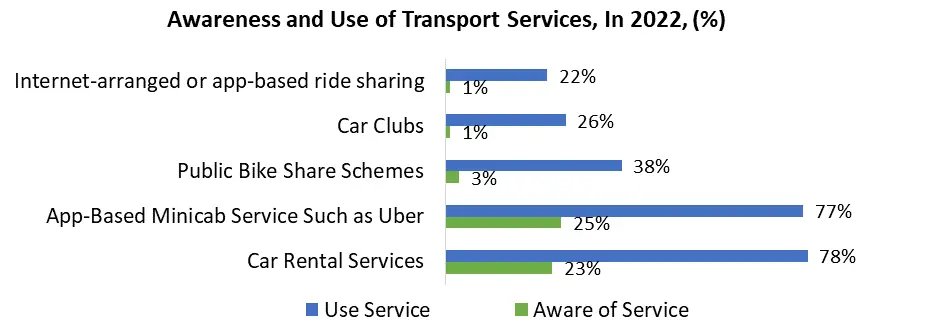 To know about the Research Methodology :- Request Free Sample Report
What does the bundle’s collection provide?
1. The Global Mobility Market bundle's collection offers a range of comprehensive reports that delve into various facets of the evolving mobility landscape.
2. Contained within are individual reports, each providing an extensive analysis of the Global Mobility Market sector within specific regions.
3. The bundle's report on the Global Mobility Market scrutinizes the global landscape, encompassing dimensions like mobility types, product offerings, distribution channels, applications, and end-user segments.
4. Insights provided encompass growth catalysts, imminent challenges, emerging trends, lucrative opportunities, potential risks, and barriers to entry within the industry.
5. The research methodology entails a meticulous examination of literature related to mobility technologies, industry announcements, annual reports, and pertinent documents shared by key industry stakeholders.
6. The report underscores industry leaders' dedication to technological advancements as a means to assert prominence within the Global Mobility Market sphere. Prominent players are actively fortifying their market positions.
7. The report aims to deliver valuable insights and a profound assessment of the Global Mobility Market, empowering stakeholders to make well-informed decisions and attain a comprehensive grasp of the dynamic market landscape.
Unlock a wealth of knowledge about the Future of Mobility with this economical bundle, offering a treasure trove of valuable information and insights. By purchasing this cost-effective package, you gain access to multiple reports at a reduced price than buying them individually. Don't miss out on the opportunity to delve into comprehensive analyses and valuable data on the lithium metal industry with this discounted collection.
The Unveiling Urban Movement Shaping the Global Mobility Market report bundle worth US$ 21000 can now be purchased at a reduced price of US$ 18600.
1. Connected and Autonomous Mobility Vehicles Industry (Single User $ 4600)
2. Micro-mobility the New Era of Mobility (Single User $ 4600)
3. Mobility as a Service Market, the New Paradigm in Transportation (Single User $ 4600)
4. Urban Air Mobility Industry (Single User $ 4600)
5. Waterway Technology to Change Water Mobility Market (Single User $ 4600)
1. How This Report Benefits You in Understanding the Global Mobility Market:
2. Acquire valuable insights and informed decision-making capabilities for your business through this all-encompassing report, delving into the key trends and driving forces shaping the Global Mobility Market.
3. Utilize this report to enhance your market presence and pinpoint avenues for growth within the dynamic landscape of the future mobility sector.
4. Identify promising realms for expansion and investment by leveraging the in-depth analysis of pivotal sectors and significant projects presented in this report.
5. Grasp the influence of governmental policies on the Global Mobility Market, enabling you to anticipate policy shifts and align your strategic initiatives accordingly.
6. Equip yourself for the future by accessing historical and projected valuations of the Global Mobility Market. This facilitates effective budgeting, resource allocation, and goal setting in anticipation of forthcoming market evolutions.
7. Formulate robust risk mitigation strategies by recognizing potential challenges, market fluctuations, and regulatory dynamics spotlighted in this report.
Reports Offerings in the Bundle:
Report 1: Connected and Autonomous Mobility Vehicles Industry: Industry Analysis and Forecast (2022-2029).
The Connected and Autonomous Mobility Vehicles Market size was valued at USD 106.66 Billion in 2022 and is expected to grow at a CAGR of 40.1 % from 2023 to 2029, reaching nearly USD 1129.97 Billion. Collaboration among technology firms, automakers, and governments expedites CAV development and deployment, harnessing diverse expertise and resources. Smart city ambitions necessitate revised governance models. Addressing challenges like emissions, sustainable urban growth, and energy-efficient infrastructure, CAVs hold promise for inclusive, eco-friendly transport. Abundant data from CAVs fuels personalized mobility solutions and eco-conscious urban planning. This drives infrastructure redesign and promotes ride-sharing to alleviate congestion and enrich metro mobility. The Connected and Autonomous Mobility Vehicles Market offers transformative potential, enhancing safety, efficiency, and sustainability, allowing industry, tech, and governments to shape transportation's future.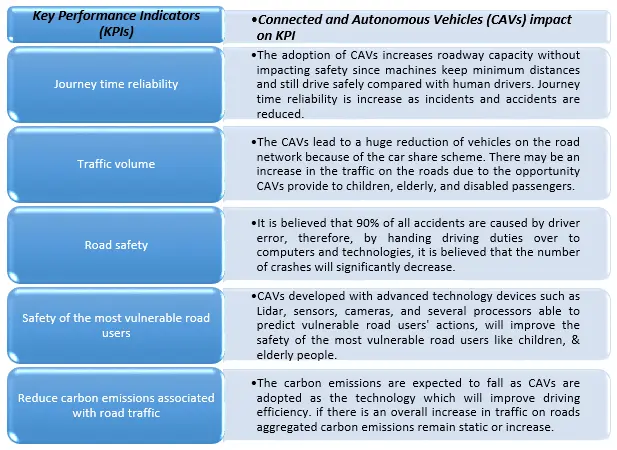
Segments Covered:
• By Level of Automation
Level 1
Level 2
Level 3
Level 4
Level 5
• By Vehicle Level of Automation
Passenger Car
Commercial Vehicle
• By Application
Civil
Defence
Transportation & Logistics
Construction
• By Propulsion Level of Automation
Semi-autonomous
Fully Autonomous
Connected and Autonomous Mobility Vehicles Industry Key Players:
1. AB Volvo
2. Amazon Web Services, Inc.
3. Aptiv
4. ARTHUR D. LITTLE
5. AVL
6. BMW AG
7. Daimler AG
8. Dassault Systèmes
9. Ford Motor Company
10. General Motors
11. Honda Motor Co., Ltd.
12. Hyundai Motor Company
13. Infineon Technologies AG
14. Nissan Motors Co., Ltd.
15. Renault Group
16. SAE International
17. Segula Technologies
18. Swiss Re
19. Tesla, Inc.
20. Toyota Motor Corporation
21. UITP Advanced Public Transport
22. Volkswagen AG
23. Wireless Car
24. WSP
Report 2: Micro-mobility the New Era of Mobility: Industry Analysis and Forecast (2022-2029).
The Micro-mobility Market size was valued at USD 67.88 Billion in 2022 and is expected to grow at a CAGR of 17.4 % from 2023 to 2029, reaching nearly USD 151.39 Billion.
The Micro-mobility Market is witnessing a pronounced sway towards E-kick scooters, poised for continued growth in the foreseeable future. This market segment is delineated by the types of vehicles employed for urban transportation, with E-kick scooters and bicycles taking the lead. Electric kick scooters have garnered remarkable favor in urban locales, lauded for their user-friendly attributes and convenience. Offering both throttle and pedal-assist modes, these scooters enable effortless movement, reducing physical exertion. The advent of dockless e-scooter sharing initiatives has substantially augmented accessibility, facilitating short intra-city trips. Traditional bicycles and their electric counterparts have historically held sway in the micro-mobility landscape. Notably sustainable and eco-conscious, bicycles offer an environmentally friendly travel alternative, while electric bikes augment the cycling experience by introducing motor-assisted pedalling.
Many urban centers have taken strides to bolster cycling by enhancing infrastructure, fostering protected bike lanes and cycling superhighways to elevate safety and encourage bike usage. E-kick scooters and bicycles form the vanguard of micro-mobility, laying the foundation for emerging counterparts like skateboards, hoverboards, and electric vehicles. E-scooters, catalyzed by dockless sharing programs, have witnessed rapid adoption as they address short-distance commuting needs, thereby curtailing traffic congestion and replacing brief car journeys. The enduring presence of bicycles, both traditional and electric, is fortified by established infrastructure and a burgeoning interest in sustainable transportation. Presently, bicycles and E-kick scooters reign supreme in the micro-mobility sector, with the latter experiencing an upsurge due to dockless programs, while bicycles continue to epitomize a reliable and eco-sensitive urban travel option.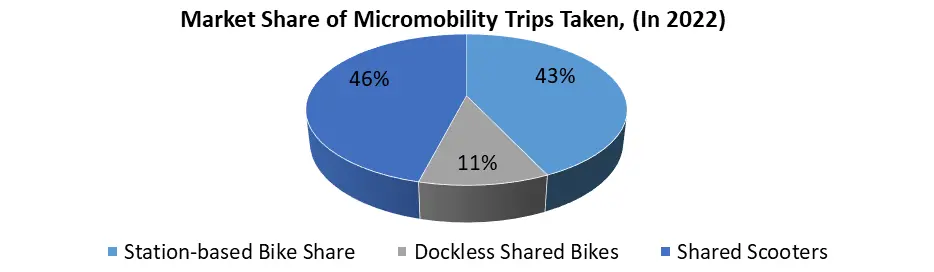
Segments Covered:
• By Propulsion Type
Human Powered
Electrically Powered
• By Vehicle Use
E-kick scooters
Bicycles
Skateboards
Hover-board
Low-Speed EVs
Segway
Mopeds and Scooters
Other
• By Sharing Type
Docked
Dock-less
• By Age Group
15-34
35-54
55 and above
• By Ownership
Business to Business
Business to Consumer
Micro-mobility market the New Era of Mobility Key Players:
1. Accell Group
2. AGC Inc.
3. Airwheel Holding Limited
4. Beam Mobility Holdings PTE. Ltd
5. Bird Global, Inc
6. Bolt Mobility
7. Boosted USA
8. Derby Cycle
9. DOTT
10. Electric feel
11. Helbiz
12. Hellotracks LLC
13. JIANGSU XINRI E-VEHICLE CO., LTD.
14. Joyride
15. Jugnoo
16. Lime Micro-mobility
17. Luna Systems
18. Lyft, Inc.
19. SWAGTRON
20. Velvioo LLC
21. VOI
22. Vulog
Global Mobility Market Scope Table: Inquire Before Buying
The Mobility as a Service Market, The New Paradigm in Transportation size was valued at USD 3.35 Billion in 2022 and is expected to grow at a CAGR of 32.1% from 2023 to 2029, reaching nearly USD 23.52 Billion. Mobility-as-a-Service (MaaS) offers an unparalleled chance to harness extensive data reserves, extracting invaluable insights into travel patterns and user inclinations. This data-centric approach fosters optimized services and personalized travel recommendations, enriching user experiences. Addressing regulatory hurdles necessitates a harmonious synergy involving governments, transportation providers, and MaaS operators. This collective effort engenders an environment conducive to MaaS expansion, guaranteeing equitable competition across diverse transportation modes. An avenue for amplified investment in infrastructure emerges.
This encompasses broadening public transit networks, establishing dedicated bike lanes, and deploying charging stations for electric vehicles. Enhanced infrastructure catalyzes the MaaS ecosystem, refining overall travel encounters. Surmounting consumer behavior challenges entails targeted educational campaigns, spotlighting MaaS virtues like convenience, cost-effectiveness, and ecological sustainability. This outreach incentivizes wider MaaS adoption. The interweaving of multifarious transportation modes poses intricacies, successful amalgamation presents a gateway to seamlessness and efficiency in travel. Collaborative endeavors streamline interchanges between modes, elevating MaaS as an enticing preference for users seeking smooth and comprehensive mobility solutions.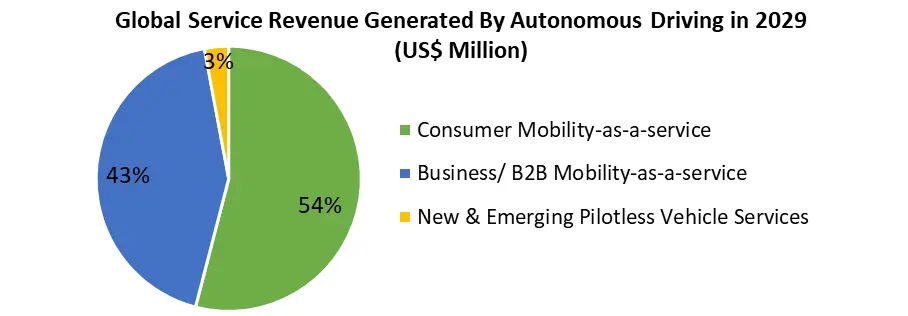
Segments Covered:
• By Service Type
Ride Hailing
Car Sharing
Micro mobility
Bus Sharing
Train Services
• By Solution Type
Technology Platforms
Payment Engines
Navigation Solutions
Telecom Connectivity Providers
Ticketing Solution Insurance
Insurance Services
• By Transportation Type
Public
Private
• By Vehicle Type
Micro mobility
Four-wheelers
Buses
Trains
• By Application
Personalized Application Services
Journey Management
Journey Planning
Flexible Payments & Transactions
• By Operating System
Android
iOS
Others (Linux, Symbian OS, Blackberry OS, Windows, and KaiOS)
• By Business Model
Business-to-Business
Business-to-Consumer
Peer-to-Peer
• By Propulsion Type
ICE Vehicle
Electric Vehicle
Hybrid Electric Vehicle
CNG/LPG Vehicle
Mobility as a Service Market, the New Paradigm in Transportation Key Players:
1. 99Taxis
2. Addison Lee
3. ANI Technologies Pvt. Ltd.,
4. Beijing Xiaoju Technology Co., Ltd,
5. BlaBla Car
6. Cabify
7. Careem
8. Citymapper, Ltd,
9. Communauto Inc.,
10. Daimler AG.,
11. DiDi Chuxing Technology Co.,
12. Easy Taxi
13. Gett
14. Gocatch
15. Grab Taxi
16. HINOMARU KOTSU,
17. Ingogo,
18. Lyft Inc.
19. Meituan (Mobike)
20. Meru Cabs,
21. Mobilleo
22. Moovit Inc.
23. Ola Cabs
24. SkedGo Pty Ltd
25. Smile Mobility
26. Tranzer
27. Uber Technologies Inc.
28. UbiGo AB
29. Whim (MaaS Global Oy),
30. Wiwigo
31. Yandex Taxi
Report 4: Urban Air Mobility Industry: Industry Analysis and Forecast (2022-2029).
The Urban Air Mobility Market size was valued at USD 2.3 Billion in 2022 and is expected to grow at a CAGR of 30.2 % from 2023 to 2029, reaching nearly USD 14.59 Billion. Urban Air Mobility (UAM) arises as a vital solution to escalating urban congestion in global metropolises. As cities expand, traffic gridlock hampers efficient commuting, curbing productivity. UAM offers an aerial alternative, circumventing ground congestion for short- to medium-range travel. Hours squandered in traffic to reach urban workplaces could be curtailed. Amid mounting environmental concerns, UAM, particularly electric-powered eVTOL aircraft and drones, has emerged as an eco-conscious choice, curbing emissions and fostering cleaner city air. 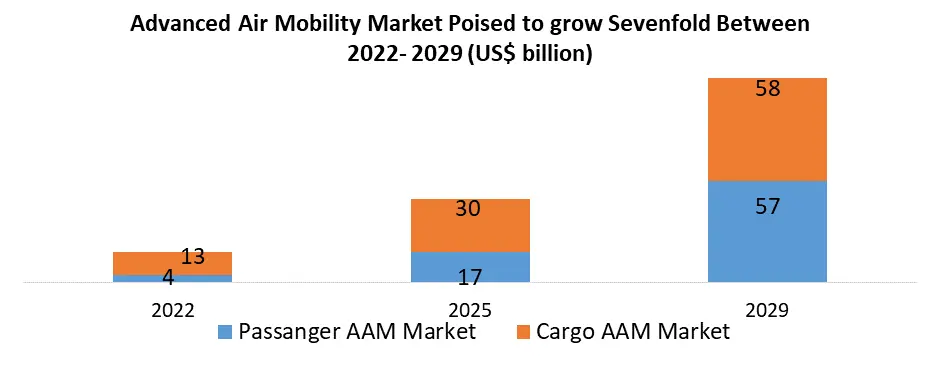
Renewable-powered eVTOL air taxis notably slash greenhouse gas emissions versus conventional fossil-fueled vehicles. Technological strides in lightweight materials, electric propulsion, batteries, and autonomous flight enhance UAM feasibility and reliability, attracting investments and expediting vehicle evolution. Aerospace
firms, tech behemoths, and startups' UAM pursuits drive substantial investments, spurring innovation. Industry titans pioneer eVTOL prototypes, fueling the sector's growth through capital infusion and research efforts. Composite material and electric motor advancements yield eVTOL crafted with extended ranges and superior performance, ushering UAM into a promising era of transformative urban mobility.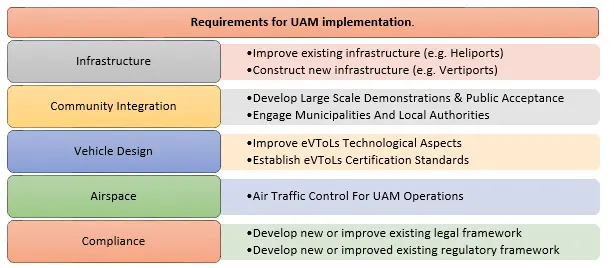
Segments Covered:
• By Platform
Air Taxis
Air Shuttles and & Air Metro
Personal Air Vehicles
Cargo Air Vehicles
Air Ambulance & Medical Emergency Vehicles
Last-mile Delivery Vehicles
• By Platform Operations
Piloted
Autonomous
• By Range
Intercity (>100 Km)
Intracity (<100 Km)
• By Platform Architecture
Rotary Wing
Fixed Wing Hybrid
Fixed Wing
• By End User
Ridesharing Companies
Scheduled Operators
E-Commerce Companies
Hospitals and Medical Agencies
Private Operators
Urban Air Mobility Market Key Players:
1. Airbus
2. Airspacex
3. Aurora Flight Sciences
4. Carter Aviation
5. Embraer SA
6. EHang
7. Jaunt Air Mobility Corporation
8. Joby Aviation Inc.
9. Kitty Hawk
10. Lilium
11. Neva Aerospace
12. Opener
13. Pipistrel Group
14. Safran SA
15. Textron Inc.
16. The Boeing Company
17. Volocopter GmbH
18. Wisk Aero LLC
19. Workhorse Group Inc.
Report 5: Waterway Technology to Change Water Mobility Market: Industry Analysis and Forecast (2022-2029).
The waterway technology to change water mobility market size was valued at USD 515.33 Billion in 2022 and is expected to grow at a CAGR of 5.7% from 2023 to 2029, reaching nearly USD 759.64 Billion. The growing emphasis on environmental sustainability and the imperative to curtail greenhouse gas emissions drives the water mobility sector. Electric-propelled boats and barges emerge as a cleaner, eco-friendly choice compared to conventional combustion vessels, resonating with eco-conscious individuals and businesses.
Exemplified by instances like Paris's "Black Swan" and PortLiner's electric barges, repurposing batteries from electric vehicles demonstrates how a circular economy approach can craft environmentally responsible water transit options. In urban hubs with intricate water networks, such as Amsterdam, water mobility alleviates road congestion. Autonomous boats, harnessed for diverse tasks like transportation, waste collection, and water quality assessment, unburden streets and elevate urban movement. Illustrated by Amsterdam's "Roboat" initiative, self-navigating boats address multiple challenges, mitigating congestion and adroitly erecting temporary structures like floating bridges to cater to pedestrian needs.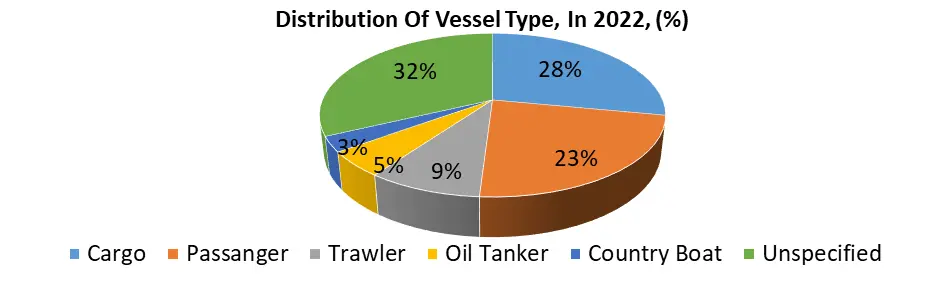
| Vessels / Terminals | Construction, Operation & Maintenance | Government Agencies | Public and Private Sector Enterprises |
| Waterway | Constructing of waterway | IWAI | CIWTC in Sundarbans |
| Waterway | Maintenance of Waterway | IWAI | Subcontracted Dredging |
| Waterway | Navigational Support | IWAI | Ports, near port areas GPS suppliers (KPT, Port of Panaji) |
| Carriers (Vessels) | Vessel Manufacturing | - | CIWTC, Hooghly Docks, Garden Reach Shipbuilders & Engineers (GRSE) |
| Carriers (Vessels) | Vessel ownership | IWAI | CIWTC/KSINCL and others |
| Carriers (Vessels) | Vessel maintenance/repair | - | CIWTC/KSINCL and others |
| Carriers (Vessels) | Vessel Operation | - | CIWTC/KSINCL and others |
| Terminals (Jetties) | Terminal construction | IWAI and State Government | Mormugao Port Trust, CIWTC |
| Terminals (Jetties) | Terminal operation | CC | Mormugao Port Trust |
Segments Covered:
• By Type
Deep-sea
Coastal
Great lakes
Inland water transport
• By Vessel Type
Cargo Ships
Container Ships
Tankers
Other Vessel Types
• By Transport Services
Electrically powered ferry
Sea Bubbles boat
Roboat
Water Scooter
Water Taxi
Water Bus
• By Transport Services
Onshore
Offshore
Waterway technology to change water mobility Market Key Players:
1. A.P. Møller-Mærsk A/S,
2. American Commercial Barge Line,
3. American River Transportation,
4. Cargill Incorporated;
5. China Ocean Shipping Company Limited,
6. CMA CGM Group,
7. European Cruise
8. Evergreen Marine Corp,
9. Hapag-Lloyd AG,
10. Hyundai Merchant
11. Imperial Logistics International
12. Ingram Barge,
13. Jeffboat
14. Kirby Inland Marine,
15. Kuehne + Nagel International AG.
16. Marine Co. Ltd.,
17. McKeil Marine Limited,
18. Nippon Yusen,
19. Rhenus Group,
20. Renault Group
FAQs:
1. What are the growth drivers for the Connected and Autonomous Mobility Vehicles Market?
Ans. Smart Cities Embrace Connected and Autonomous Mobility Vehicles for Efficient Mobility is expected to be the major driver for the Connected and Autonomous Mobility Vehicles Market.
2. What are the growth drivers for the Micro-mobility Market?
Ans. Advancements in IoT and battery tech enhance micro-mobility solutions and are expected to be the major driver for the Micro-mobility Market.
3. What are the growth drivers for the Mobility as a Service Market, The New Paradigm in Transportation?
Ans. Advancements in Technology Propelled the Rise of Mobility as a Service Platform is expected to be the major driver for the Mobility as a Service Market, The New Paradigm in Transportation.
4. What are the growth drivers for the Urban Air Mobility Market?
Ans. The Urban Air Mobility Revolution is the Sustainable Future for City Transportation and is expected to be the major driver for the Urban Air Mobility Market.
5. What are the growth drivers for the Waterway technology to change the water mobility market?
Ans. Electric-Powered Boats Are the Greenest Solution for Water Mobility and are expected to be the major driver for the Waterway technology to change the water mobility market.