
Asia Pacific Lupus Nephritis Market Size by Drug Class, Distribution Channel, Route of Administration, End User and Country, 2025–2034
Overview
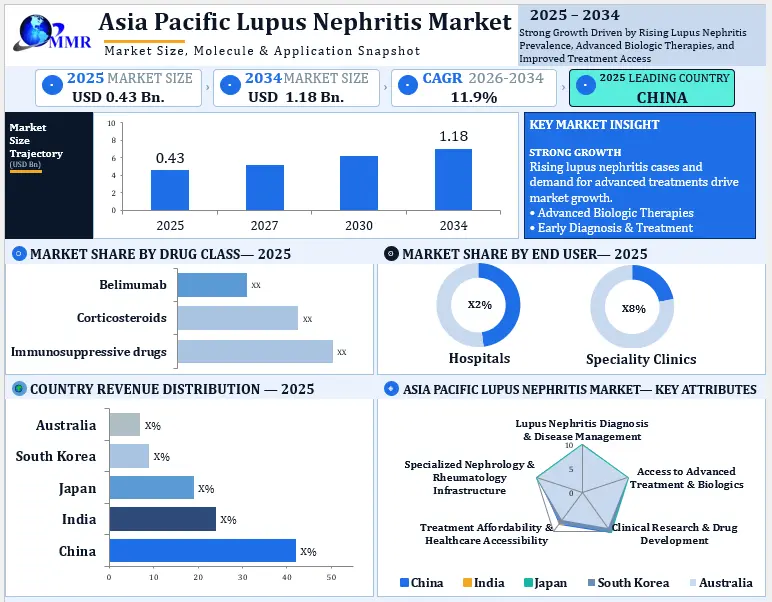
The Asia Pacific Lupus Nephritis Market was valued at USD 0.43 Billion in 2025 and is projected to reach USD 1.18 Billion by 2034, growing at a CAGR of 11.9% during the forecast period 2026–2034.
Asia Pacific Lupus Nephritis Market Overview
The Asia Pacific Lupus Nephritis Market represents a growing segment of the autoimmune disease treatment and renal healthcare industry, driven by increasing awareness of systemic lupus erythematosus (SLE), rising demand for early kidney disease diagnosis, and expanding access to advanced immunosuppressive therapies. Lupus nephritis is a serious kidney complication of systemic lupus erythematosus in which autoimmune inflammation damages kidney tissues and affects renal function. The regional lupus nephritis treatment market includes corticosteroids, immunosuppressants, biologic therapies, calcineurin inhibitors, antimalarial medications, and emerging targeted immunotherapies. Increasing adoption of renal screening, proteinuria monitoring, kidney biopsy, and personalized treatment strategies supports effective disease management. Growing healthcare investment, improving diagnostic infrastructure, and expanding access to specialist nephrology and rheumatology services strengthen the Asia Pacific lupus nephritis therapeutics market.
The Asia Pacific Lupus Nephritis Market experiences strong growth opportunities through increasing demand for autoimmune kidney disease treatments, expanding pharmaceutical research and development, and growing adoption of advanced biologic drugs. Rising awareness of lupus-related kidney complications encourages early diagnosis and long-term disease monitoring across the region. China maintains a significant position in the regional treatment landscape through its extensive healthcare network, pharmaceutical manufacturing capabilities, and clinical research activities. India presents emerging growth opportunities through improving healthcare accessibility, expanding nephrology services, and increasing demand for affordable lupus nephritis medications. Japan, South Korea, and Australia contribute to regional market development through advanced healthcare infrastructure, clinical innovation, and access to specialized autoimmune disease therapies. Pharmaceutical companies focus on developing targeted immunotherapies, improving treatment effectiveness, and expanding biologic drug accessibility. However, high treatment costs, unequal healthcare access, limited specialist availability, and differences in reimbursement policies continue to influence lupus nephritis drug adoption across Asia Pacific countries.
The Maximize Market Research Asia Pacific Lupus Nephritis Market Report provides a comprehensive assessment of market size, revenue forecasts, growth drivers, restraints, opportunities, challenges, disease prevalence, drug class segmentation, route of administration, distribution channels, patient populations, treatment patterns, and regional competitive landscape. The report examines immunosuppressive drugs, corticosteroids, calcineurin inhibitors, biologic therapies, and emerging targeted treatments across China, India, Japan, South Korea, Australia, and the Rest of Asia Pacific. It also evaluates pharmaceutical research and development, clinical trial activities, regulatory frameworks, healthcare expenditure, drug commercialization, reimbursement policies, and competitive benchmarking. Country-level analysis highlights variations in healthcare infrastructure, autoimmune disease diagnosis, therapeutic accessibility, and pharmaceutical investment. These insights support pharmaceutical manufacturers, biotechnology companies, healthcare providers, investors, and other stakeholders in identifying Asia Pacific Lupus Nephritis Market growth opportunities, evaluating competitive positioning, developing market entry strategies, expanding product portfolios, and making informed investment decisions in the regional lupus nephritis treatment industry.
Asia Pacific Lupus Nephritis Market Growth Outlook
To know about the Research Methodology :- Request Free Sample Report
Asia Pacific Lupus Nephritis Market Key Findings
• Strong Market Growth: The Asia Pacific Lupus Nephritis Market is projected to grow from USD 0.43 Billion in 2025 to USD 1.18 Billion by 2034, supported by rising demand for advanced renal therapeutics.
• China's Expanding Market Presence: China represents a major lupus nephritis treatment market, supported by pharmaceutical innovation, clinical research, and expanding specialist healthcare infrastructure.
• Biologic Therapies Transform Treatment: Increasing interest in belimumab, calcineurin inhibitors, and B-cell-targeted immunotherapies creates opportunities for advanced lupus nephritis drug development.
• Oral Treatments Support Long-Term Care: Oral immunosuppressants remain important in lupus nephritis management, while injectable biologics expand treatment options for patients requiring specialized care.
• Pharmaceutical Innovation Creates Investment Opportunities: Clinical trials, strategic licensing agreements, and next-generation CAR-T therapies strengthen the Asia Pacific lupus nephritis drug development pipeline.
Asia Pacific Lupus Nephritis Market Dynamics
Rising Lupus Nephritis Disease Burden and Increasing Demand for Advanced Renal Treatment Drive Asia Pacific Market Growth
The Asia Pacific Lupus Nephritis Market experiences increasing demand for autoimmune kidney disease treatments as the clinical burden of systemic lupus erythematosus (SLE), lupus-related renal complications, and chronic kidney disease strengthens the need for effective pharmaceutical intervention. Higher susceptibility to severe lupus nephritis among Asian patient populations increases the importance of early renal assessment, specialist consultations, and sustained disease management. Healthcare providers across China, India, Japan, South Korea, and Australia increasingly focus on urine protein testing, serum creatinine evaluation, estimated glomerular filtration rate (eGFR) monitoring, and kidney biopsy to identify renal inflammation and determine appropriate treatment strategies. Growing clinical adoption of immunosuppressive therapies supports demand for mycophenolate mofetil, corticosteroids, cyclophosphamide, and calcineurin inhibitors. Mycophenolate mofetil represents an important lupus nephritis treatment option, with clinical treatment regimens commonly involving a target dose of 2 g per day, subject to disease severity, patient response, and clinical assessment.
Increasing awareness of kidney function preservation, renal flare prevention, and long-term disease control encourages continued pharmaceutical utilization and specialist healthcare services. Expanding rheumatology and nephrology infrastructure further supports access to lupus nephritis diagnosis and treatment. The increasing emphasis on effective renal disease management, combined with demand for established immunosuppressive medications, remains a significant Asia Pacific Lupus Nephritis Market growth driver.
High Biologic Therapy Costs and Unequal Reimbursement Limit Lupus Nephritis Treatment Accessibility
The Asia Pacific Lupus Nephritis Market faces substantial restraints from the high acquisition costs of advanced biologic therapies, complex pharmaceutical reimbursement systems, and affordability differences across regional healthcare markets. Although conventional immunosuppressive medicines provide established treatment options, access to newer lupus nephritis biologics and targeted immunotherapies remains dependent on national regulatory approvals, healthcare insurance coverage, hospital procurement policies, and patient affordability. Belimumab and voclosporin represent important advances in lupus nephritis drug development, but product availability and reimbursement vary considerably across Asia Pacific countries. The financial burden extends beyond pharmaceutical purchasing to repeated specialist consultations, laboratory investigations, renal monitoring, and long-term maintenance therapy. Clinical recommendations generally support maintenance immunosuppressive treatment for at least 3 years to reduce renal relapse risk, creating sustained expenditure for healthcare systems and patients. In healthcare settings with substantial out-of-pocket payments, cumulative treatment expenses influence medication initiation, continuation, and access to specialist-managed biologic therapy. Differences between urban and rural healthcare financing also affect the commercial reach of premium lupus nephritis medications. These pricing and reimbursement limitations restrict the accessibility of advanced autoimmune kidney disease therapeutics and influence the adoption of higher-value pharmaceutical products across the Asia Pacific Lupus Nephritis Treatment Market.
Targeted Immunotherapy Innovation and Combination Drug Development Create New Commercial Opportunities
The Asia Pacific Lupus Nephritis Market presents significant opportunities for pharmaceutical manufacturers and biotechnology companies through the development of targeted biologic therapies, next-generation immunosuppressants, and combination treatment strategies that address unmet needs in active and refractory lupus nephritis. Increasing clinical interest in B-cell-directed therapy, calcineurin inhibition, and steroid-sparing treatment approaches creates opportunities for differentiated pharmaceutical portfolios. Belimumab targets B-lymphocyte stimulator activity, while voclosporin provides oral calcineurin inhibition as part of combination immunosuppressive treatment. Voclosporin has a labeled starting dosage of 23.7 mg twice daily for eligible adult patients, illustrating the role of specialized oral therapies in contemporary lupus nephritis drug development.
However, regional authorization and commercial availability remain country-specific. Pharmaceutical companies also explore therapies targeting immune signaling pathways, inflammatory mediators, and mechanisms associated with persistent renal disease activity. Expanding clinical research capabilities in China, Japan, South Korea, India, and Australia provide opportunities for multinational clinical trials, local pharmaceutical partnerships, drug licensing, and regional commercialization. Development of biosimilars, patient-specific treatment strategies, and improved oral drug formulations also creates opportunities to broaden access to advanced lupus nephritis medications. These developments support Asia Pacific Lupus Nephritis Market opportunities in innovative drug discovery, targeted therapeutic development, and expansion of specialized autoimmune disease treatment portfolios.
Complex Disease Management and Long-Term Treatment Safety Complicate Lupus Nephritis Therapeutic Outcomes
The Asia Pacific Lupus Nephritis Market encounters significant challenges from the heterogeneous nature of lupus nephritis, unpredictable renal flare patterns, treatment resistance, and the clinical complexity of maintaining long-term therapeutic effectiveness. Patients experience varying degrees of renal inflammation, proteinuria, and kidney function impairment, requiring treatment selection according to clinical presentation, kidney biopsy findings, and therapeutic response. Maintaining disease remission remains difficult because some patients experience incomplete responses, recurrent renal inflammation, or complications associated with prolonged immunosuppressive medication use.
Corticosteroids and immunosuppressants require careful clinical management because adverse effects include serious infections, metabolic disturbances, and treatment-related organ toxicity. Calcineurin inhibitor therapy also requires renal function and blood pressure surveillance, with voclosporin treatment protocols specifying eGFR evaluation every 2 weeks during the initial month and every 4 weeks thereafter during the initial treatment year. Such monitoring requirements increase the operational complexity of lupus nephritis treatment services. Medication adherence, treatment tolerability, reproductive health considerations, and coordination between rheumatologists and nephrologists further complicate patient management. The need to balance sustained disease control with medication safety creates continuing challenges for pharmaceutical companies, clinical specialists, and healthcare providers. Improving treatment response monitoring, minimizing therapeutic toxicity, and strengthening long-term patient adherence remain critical priorities for the Asia Pacific Lupus Nephritis Market.
Asia Pacific Lupus Nephritis Market Trends
| Key Market Trends | Therapeutic and Industry Advancements | Impact on Market Growth |
| Combination Immunotherapy Adoption | Increasing use of immunosuppressants, calcineurin inhibitors, and selected biologics supports individualized lupus nephritis treatment strategies. | Strengthens demand for advanced lupus nephritis therapeutics and combination drug regimens. |
| Steroid-Sparing Treatment Innovation | Growing emphasis on reducing corticosteroid exposure encourages interest in targeted immunomodulators and alternative treatment approaches. | Creates opportunities for innovative lupus nephritis drugs with improved long-term safety profiles. |
| B-Cell-Targeted Biologic Development | Pharmaceutical research focuses on B-cell-directed therapies and immune pathway modulation for active and refractory lupus nephritis. | Supports biologic drug innovation and specialized pharmaceutical product development. |
| Asian Patient-Specific Clinical Research | Clinical research examines treatment responses and disease characteristics among Asian lupus nephritis patients to improve therapeutic decisions. | Encourages regional clinical trials, pharmaceutical investment, and personalized treatment development. |
| Regional Drug Accessibility Expansion | Pharmaceutical companies assess localized distribution, treatment affordability, and reimbursement pathways across Asia Pacific healthcare markets. | Supports broader access to lupus nephritis medications and regional pharmaceutical commercialization. |
Asia Pacific Lupus Nephritis Market Segment Analysis
Asia Pacific Lupus Nephritis Market Segment, by Route of Administration
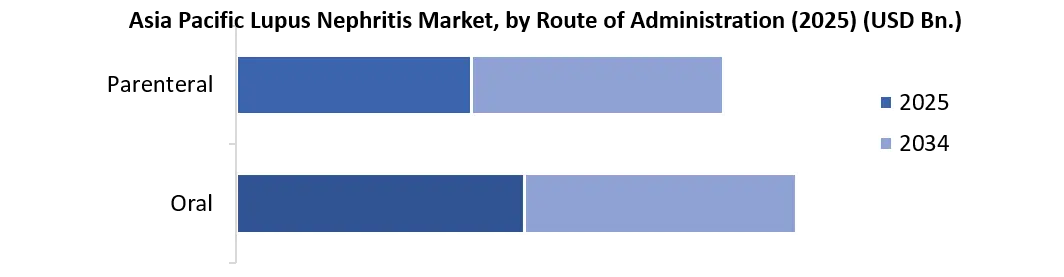
The Asia Pacific Lupus Nephritis Market, by route of administration, is segmented into Oral and Parenteral, with both segments supporting the growing demand for advanced lupus nephritis treatment, autoimmune kidney disease therapeutics, and renal healthcare management. The Oral segment holds a significant position in the Asia Pacific Lupus Nephritis Treatment Market, driven by increasing utilization of oral immunosuppressive drugs, corticosteroids, calcineurin inhibitors, and antimalarial medications. Drugs such as mycophenolate mofetil, tacrolimus, hydroxychloroquine, and prednisone support lupus nephritis disease management, renal inflammation control, and long-term maintenance therapy.
Convenient administration, outpatient treatment accessibility, and availability of generic immunosuppressants strengthen oral lupus nephritis drug demand across China, India, Japan, South Korea, and Australia. The Parenteral segment includes intravenous and subcutaneous lupus nephritis therapies, including belimumab and intravenous cyclophosphamide, which support selected patients requiring advanced immunotherapy and specialist-supervised treatment. Increasing clinical interest in biologic drugs, targeted immunosuppressive treatments, and personalized autoimmune kidney disease management creates opportunities for injectable lupus nephritis therapeutics. Expanding pharmaceutical innovation, specialist nephrology services, and access to advanced renal therapies support the Asia Pacific Lupus Nephritis Market growth outlook, while differences in treatment costs, regulatory approvals, and healthcare reimbursement influence the adoption of oral and parenteral lupus nephritis medications.
Asia Pacific Lupus Nephritis Market Segment, by Distribution Channel
The Asia Pacific Lupus Nephritis Market, by route of administration, is segmented into Oral and Parenteral, with each segment playing an important role in autoimmune kidney disease treatment and long-term renal management. The Oral segment represents a major component of lupus nephritis treatment, supported by the widespread use of mycophenolate mofetil, corticosteroids, hydroxychloroquine, tacrolimus, and other oral immunosuppressive medications. Oral lupus nephritis drugs offer convenient administration, support outpatient treatment, and facilitate long-term maintenance therapy for patients requiring continuous disease management. Increasing demand for cost-effective medications and convenient treatment regimens strengthens oral drug utilization across China, India, Japan, South Korea, and Australia. The Parenteral segment includes intravenous and subcutaneous therapies such as belimumab, intravenous cyclophosphamide, and selected biologic treatments used in appropriate clinical settings. Parenteral lupus nephritis therapeutics support intensive immunosuppressive treatment, specialist-supervised care, and advanced autoimmune disease management.
Growing clinical interest in targeted biologic therapies, hospital-based treatment services, and personalized immunotherapy creates opportunities for injectable lupus nephritis drugs. However, administration costs, infusion infrastructure requirements, and patient monitoring needs influence parenteral treatment accessibility. Both routes contribute to Asia Pacific Lupus Nephritis Market growth, as oral medications support routine disease management while parenteral therapies address selected treatment requirements and expanding biologic treatment opportunities.
Asia Pacific Lupus Nephritis Market Regional Insights
China represents an important market for Asia Pacific Lupus Nephritis Market development, supported by its large patient population, expanding pharmaceutical industry, and specialist healthcare infrastructure. Increasing demand for immunosuppressive drugs, biologic therapies, and advanced autoimmune kidney disease treatments supports lupus nephritis therapeutics market growth. Domestic pharmaceutical research and clinical trials create opportunities for targeted immunotherapies and innovative renal treatment solutions.
India presents significant opportunities in the Asia Pacific Lupus Nephritis Market, driven by increasing awareness of autoimmune kidney diseases, expanding nephrology services, and demand for affordable immunosuppressive medications. Generic pharmaceutical manufacturing supports access to lupus nephritis drugs, including mycophenolate mofetil, corticosteroids, and other renal disease treatments. Improving diagnostic facilities and specialist healthcare access strengthen the India lupus nephritis treatment market.
Japan maintains a strong position in the Asia Pacific Lupus Nephritis Market through established healthcare infrastructure, pharmaceutical research, and specialized nephrology services. Clinical adoption of biologic drugs, immunosuppressive therapies, and personalized treatment approaches supports lupus nephritis disease management. Pharmaceutical innovation and access to advanced autoimmune disease therapeutics create opportunities for the Japan lupus nephritis drugs market.
South Korea contributes to the Asia Pacific Lupus Nephritis Market through advanced biotechnology capabilities, specialist rheumatology services, and pharmaceutical clinical research. Growing interest in targeted biologic therapies, immune-modulating medications, and personalized autoimmune kidney disease treatment supports lupus nephritis drug development. Clinical research collaborations strengthen opportunities for innovative renal therapeutics and treatment optimization.
Australia supports the Asia Pacific Lupus Nephritis Market through established nephrology services, specialist healthcare networks, and active autoimmune disease research. Demand for immunosuppressive medications, biologic treatments, and long-term lupus nephritis management supports the therapeutic market. Clinical research initiatives and structured healthcare reimbursement pathways contribute to opportunities for advanced renal disease treatments.
Asia Pacific Lupus Nephritis Market Recent Developments
| Date | Recent Developments |
| July 2026 | AbelZeta Pharma announces U.S. FDA clearance for a registrational Phase II clinical trial of C-CAR168, a dual-target CD20/BCMA CAR-T cell therapy for refractory lupus nephritis. The Shanghai-linked biotechnology company's development program advances next-generation cell therapies for patients with inadequate responses to conventional lupus nephritis treatment. |
| June 2026 | Nanjing Immunophage Biomedical announces positive Phase IIa clinical findings for IPG11406, an investigational EBI2 antagonist targeting systemic lupus erythematosus with lupus nephritis. The company advances its clinical development strategy in China, supporting innovation in targeted oral lupus nephritis therapeutics. |
| June 2026 | Everest Medicines and Beijing Mabworks Biotech announce an exclusive Asia Pacific commercialization licensing agreement for Bejescin (MIL62), an anti-CD20 monoclonal antibody. The agreement includes RMB 23 million upfront and potential milestone payments of RMB 186 million. The partnership expands regional autoimmune disease and nephrology drug development, although lupus nephritis is not an approved indication for Bejescin. |
| June 2026 | Everest Medicines and Travere Therapeutics announce an exclusive licensing and collaboration agreement for civorebrutinib (EVER001), an investigational oral BTK inhibitor targeting immune-mediated kidney diseases. The agreement includes USD 112.5 million upfront and up to approximately USD 1.03 billion in milestone payments. Civorebrutinib has potential relevance to lupus nephritis research, although the agreement does not establish a lupus nephritis product approval. |
| March 2026 | Rui Therapeutics (Enraycan) announces regulatory clearance in China for clinical investigation of KN5501, an investigational CD19-targeted CAR-NK cell therapy covering refractory lupus nephritis and other autoimmune conditions. The development strengthens China's emerging autoimmune cell therapy pipeline and supports research into advanced lupus nephritis treatment alternatives. |
Asia Pacific Lupus Nephritis Market Competitive Landscape
The Asia Pacific Lupus Nephritis Market competitive landscape comprises multinational pharmaceutical companies, regional biotechnology firms, generic drug manufacturers, and emerging developers of advanced autoimmune kidney disease therapies. Major companies such as GSK plc, F. Hoffmann-La Roche Ltd., Aurinia Pharmaceuticals, Otsuka Pharmaceutical, AstraZeneca, Novartis, RemeGen, and Jiangsu Hengrui Pharmaceuticals contribute to the broader lupus nephritis pharmaceutical industry through marketed treatments, clinical research, immunotherapy development, and specialized drug portfolios. GSK maintains an established position in lupus nephritis biologic therapy through Benlysta (belimumab), while Aurinia Pharmaceuticals and Otsuka Pharmaceutical support the commercialization of Lupkynis (voclosporin) in Japan. Roche strengthens its competitive position through Gazyva (obinutuzumab), an anti-CD20 biologic for lupus nephritis, although regulatory approvals and commercial availability vary across Asia Pacific countries. Regional biotechnology companies focus on immune pathway modulation, B-cell-targeted therapies, and next-generation autoimmune disease treatments. Increasing pharmaceutical research investment, demand for innovative lupus nephritis drugs, and growing interest in personalized renal treatment strategies intensify competition across the Asia Pacific Lupus Nephritis Treatment Market.
The Asia Pacific Lupus Nephritis Market competitive environment reflects growing emphasis on pharmaceutical innovation, clinical trial development, product differentiation, and strategic commercialization partnerships. China strengthens its biotechnology research capabilities through domestic drug development and clinical investigation, while India supports the regional supply of affordable immunosuppressive medications through its generic pharmaceutical manufacturing industry. Japan remains an important market for specialized lupus nephritis therapeutics, supported by established pharmaceutical companies and advanced clinical treatment infrastructure.
South Korea and Australia contribute through biotechnology research, specialist healthcare services, and clinical development activities. Pharmaceutical manufacturers compete through drug efficacy, treatment safety, dosing convenience, product accessibility, regulatory approvals, and reimbursement eligibility. Companies also explore licensing agreements, research collaborations, distribution partnerships, and targeted immunotherapy platforms to expand their regional presence. Increasing interest in biologic drugs, oral calcineurin inhibitors, steroid-sparing treatments, and combination immunosuppressive regimens creates opportunities for product portfolio expansion. The Asia Pacific Lupus Nephritis Market continues to attract pharmaceutical development activity as companies seek to address unmet clinical needs, strengthen competitive positioning, and improve access to advanced lupus nephritis treatment across regional healthcare systems.
Asia Pacific Lupus Nephritis Market Scope: Inquire before buying
| Asia Pacific Lupus Nephritis Market | |||
|---|---|---|---|
| Report Coverage | Details | ||
| Base Year: | 2025 | Forecast Period: | 2026-2034 |
| Historical Data: | 2020 to 2025 | Market Size in 2025: | USD 0.43 Bn. |
| Forecast Period 2026 to 2034 CAGR: | 11.9% | Market Size in 2034: | USD 1.18 Bn. |
| Segments Covered: | by Drug Class | Immunosuppressive drugs Corticosteroids Belimumab |
|
| by Distribution Channel | Hospital Pharmacy Retail Pharmacy Online Pharmacy |
||
| by Route of Administration | Oral Parenteral |
||
| by End-User | Hospitals Speciality Clinics |
||
Asia Pacific Lupus Nephritis Market, by Country
China (RemeGen, Jiangsu Hengrui Pharmaceuticals, Qilu Pharmaceutical, Shanghai Henlius Biotech, Haisco Pharmaceutical)
India (Sun Pharmaceutical Industries, Dr. Reddy's Laboratories, Zydus Lifesciences, Cipla, Intas Pharmaceuticals)
Japan (Otsuka Pharmaceutical, Chugai Pharmaceutical, Astellas Pharma, Takeda Pharmaceutical, Daiichi Sankyo)
South Korea (Celltrion, Samsung Bioepis, Hanmi Pharmaceutical, GC Biopharma, Yuhan Corporation)
Australia (CSL Limited, GSK Australia, AstraZeneca Australia, Roche Australia, Novartis Australia)
Asia Pacific Lupus Nephritis Market key Players
1. GSK plc
2. AstraZeneca plc
3. F. Hoffmann-La Roche Ltd.
4. Novartis AG
5. Aurinia Pharmaceuticals Inc.
6. Otsuka Pharmaceutical Co., Ltd.
7. Bristol Myers Squibb Company
8. Regeneron Pharmaceuticals, Inc.
9. Sanofi S.A.
10. Biogen Inc.
11. UCB S.A.
12. Viatris Inc.
13. RemeGen Co., Ltd.
14. Qilu Pharmaceutical Co., Ltd.
15. Simcere Pharmaceutical Group Limited
16. Haisco Pharmaceutical Group Co., Ltd.
17. Shanghai Henlius Biotech, Inc.
18. China Immunotech (Beijing) Biotechnology Co., Ltd.
19. Nanjing IASO Biotechnology Co., Ltd.
20. Beijing Mabworks Biotech Co., Ltd.
21. Jiangsu Renocell Biotech Co., Ltd.
22. Nanjing Immunophage Biomedical Co., Ltd.
23. CSPC Pharmaceutical Group Limited
24. Jiangsu Hengrui Pharmaceuticals Co., Ltd.
25. JW Therapeutics
26. Essen Biotech
27. Guangzhou Bio-gene Technology Co., Ltd.
28. Curocell Inc.
29. AbelZeta Inc.
30. Fate Therapeutics, Inc.
31. Autolus Therapeutics plc
32. CRISPR Therapeutics AG
33. Cabaletta Bio, Inc.
34. Nkarta, Inc.
35. Artiva Biotherapeutics, Inc.
36. Century Therapeutics, Inc.
37. Cartesian Therapeutics, Inc.
38. Kyverna Therapeutics, Inc.
39. Mankind Pharma Limited
40. Intas Pharmaceuticals Limited
41. Zydus Lifesciences Limited
42. Cipla Limited
43. Torrent Pharmaceuticals Limited
44. RPG Life Sciences Limited
45. Micro Labs Limited
46. Eris Lifesciences Limited
47. La Renon Healthcare Private Limited
48. Sun Pharmaceutical Industries Limited
49. Dr. Reddy's Laboratories Limited
50. Lupin Limited
Frequently Asked Questions:
1. What is the Asia Pacific Lupus Nephritis Market size in 2025 and 2034, and what is its expected CAGR?
The Asia Pacific Lupus Nephritis Market is valued at USD 0.43 Billion in 2025 and is projected to reach USD 1.18 Billion by 2034, growing at a CAGR of 11.9% during 2026–2034.
2. What are the major growth drivers of the Asia Pacific Lupus Nephritis Market?
Rising systemic lupus erythematosus (SLE) awareness, increasing demand for autoimmune kidney disease treatments, expanding renal healthcare infrastructure, and growing adoption of advanced lupus nephritis drugs drive market growth.
3. Which country leads the Asia Pacific Lupus Nephritis Market?
China represents a major market for lupus nephritis therapeutics, supported by its extensive healthcare infrastructure, pharmaceutical manufacturing capabilities, clinical research, and demand for advanced immunosuppressive therapies.
4. Which drug classes are covered in the Asia Pacific Lupus Nephritis Treatment Market?
The Asia Pacific Lupus Nephritis Treatment Market covers immunosuppressive drugs, corticosteroids, and belimumab, with increasing clinical interest in targeted biologic therapies and combination immunotherapy.
5. What are the major distribution channels in the Asia Pacific Lupus Nephritis Market?
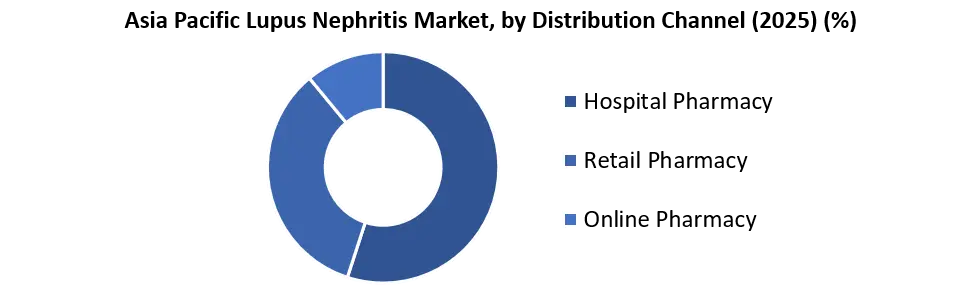
The market includes Hospital Pharmacy, Retail Pharmacy, and Online Pharmacy. Hospital pharmacies play an important role in specialist-prescribed lupus nephritis medications and advanced biologic treatments.
6. Who are the leading companies in the Asia Pacific Lupus Nephritis Market?
Major players include GSK, AstraZeneca, Roche, Novartis, Aurinia Pharmaceuticals, Otsuka Pharmaceutical, RemeGen, Qilu Pharmaceutical, and Jiangsu Hengrui Pharmaceuticals, contributing to pharmaceutical innovation and autoimmune kidney disease therapeutics.
7. What are the emerging trends and investment opportunities in the Asia Pacific Lupus Nephritis Market?
Key trends include B-cell-targeted biologic therapies, steroid-sparing treatments, personalized immunotherapy, advanced lupus nephritis drug development, and pharmaceutical research collaborations, creating opportunities for biotechnology companies and healthcare investors.