
Specialty Chemicals Market - Industry Structure Evaluation, Demand Drivers Analysis, Regional Growth Analysis and Identification, Competitive Positioning Review & Global Market Size Forecast to 2034
Overview
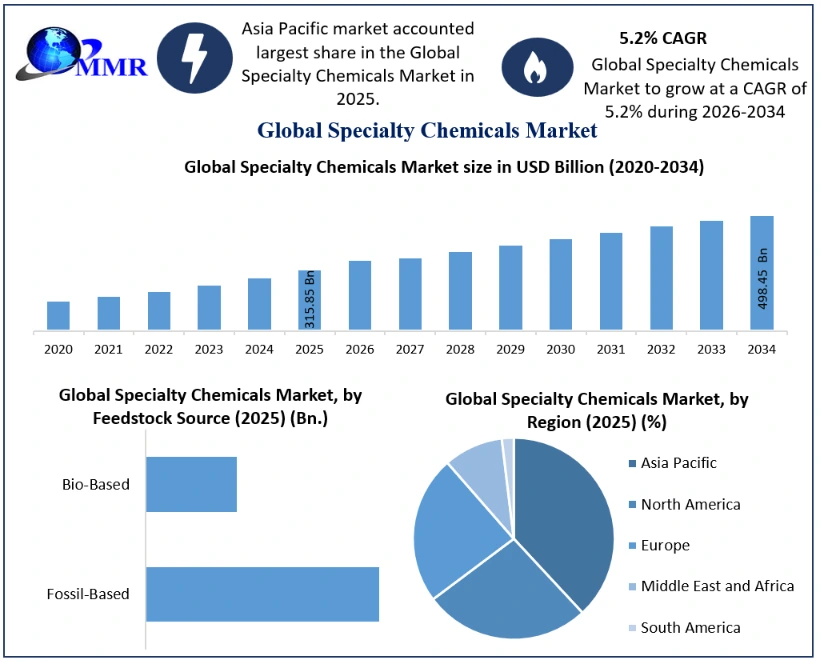
The Global Specialty Chemicals Market size was valued at USD 315.85 Billion in 2025 and the total Specialty Chemicals revenue is expected to grow at a CAGR of 5.2% from 2026 to 2034, reaching USD 498.45 Billion by 2034.
Global Specialty Chemicals Market Overview
The Global Specialty chemicals are high-value chemical products designed and sold based on their performance, function, or specific application rather than their chemical composition. They are used as essential inputs across a wide range of industries because their formulation and properties directly influence the performance, processing, durability, and quality of end products. Specialty chemicals include adhesives, agricultural chemicals, cleaning agents, dyes, cosmetic additives, construction chemicals, food additives, fragrances, lubricants, paints, polymers, textile auxiliaries, and other application-specific chemical products.
The Global Specialty Chemicals Market was valued at USD 315.85 billion in 2025 and is expected to grow at a CAGR of 5.2% from 2026 to 2034, reaching USD 498.45 billion by 2034. The market is expanding due to increasing demand from automotive, electronics, construction, healthcare, consumer goods, and renewable energy industries. Technological advancements are encouraging the development of enhanced chemical formulations that offer improved performance, efficiency, durability and sustainability.
The transition toward electric vehicles, renewable energy, advanced electronics, and energy-efficient technologies is creating additional demand for specialty chemicals used in batteries, coatings, adhesives, electronic components, polymers, and manufacturing processes. Asia-Pacific represents a major consumption center, with China being a leading market in the region. India also presents significant growth potential, with its domestic chemical industry valued at approximately USD 200 billion, of which specialty chemicals account for around 18%, representing approximately USD 36 billion.
The Maximize Market Research (MMR) Specialty Chemicals Market Report provides a comprehensive assessment of the market, covering market size, growth trends, forecasts, market dynamics, drivers, restraints, opportunities, challenges, and competitive developments. The report provides detailed segmentation analysis by relevant product types, applications, and regions, enabling clients to identify high-growth areas and emerging opportunities.
Global Specialty Chemicals Market Growth Outlook
To know about the Research Methodology:-Request Free Sample Report
Global Specialty Chemicals Market Key Highlights
• Market Growth: The global specialty chemicals market reaches USD 315.85 billion in 2025 and is projected to reach USD 498.45 billion by 2034, growing at a CAGR of 5.2% during 2026–2034.
• Growing Industrial Demand: Increasing demand from automotive, construction, electronics, healthcare, agriculture, and consumer goods industries drives the adoption of high-performance specialty chemical formulations.
• Asia Pacific Market Leadership: Asia Pacific leads the global specialty chemicals market, supported by strong chemical manufacturing capabilities, rapid industrialization, and rising demand from China, India, Japan, and South Korea.
• Sustainability and Technological Innovation: Growing investments in electric vehicles, renewable energy, semiconductor manufacturing, and sustainable materials create opportunities for advanced polymers, electronic chemicals, specialty coatings, and bio-based formulations.
• Competitive Landscape: Leading companies, including BASF SE, Dow Inc., Evonik Industries AG, Clariant AG, Arkema S.A., and Solvay S.A., strengthen their market positions through product innovation, capacity expansion, sustainable chemistry, and application-specific solutions.
Specialty Chemicals Market Dynamics-
Global Specialty Chemicals Market Drivers
Growing Investments in Clean Energy and Expanding Industrial Applications Drive the Specialty Chemicals Market
The global specialty chemicals market experiences strong growth due to rising demand from the automotive, electronics, construction, healthcare, packaging, and renewable energy industries. Specialty chemicals improve product performance, manufacturing efficiency, durability, and energy efficiency across industrial applications. In 2025, global energy investment reaches an estimated US$3.3 trillion, with approximately US$2.2 trillion directed toward clean energy technologies, including renewable energy, electric vehicles, nuclear power, grids, and energy storage. These investments strengthen demand for battery chemicals, specialty coatings, high-performance lubricants, electronic chemicals, adhesives, and advanced polymers. The expansion of electric vehicle manufacturing increases demand for battery additives, electrolyte solvents, and thermal management materials, while semiconductor manufacturing requires high-purity chemicals for chip fabrication. Growing infrastructure development and industrial modernization further support demand for construction chemicals, water treatment chemicals, and performance additives, strengthening the overall growth of the specialty chemicals market.
Global Specialty Chemicals Market Restraints
Raw Material Price Volatility and High Manufacturing Costs Restrict Specialty Chemicals Market Growth
The specialty chemicals market faces challenges from fluctuations in raw material prices, energy costs, and transportation expenses. Many specialty chemicals depend on petrochemical feedstocks, solvents, mineral-based inputs, and other industrial intermediates whose prices are influenced by crude oil markets, supply-demand imbalances, trade restrictions, and geopolitical developments. In 2025, continued volatility in international trade and energy markets increases cost uncertainty for chemical manufacturers and creates pressure on production margins. Specialty chemicals also require significant investment in research and development, advanced manufacturing equipment, quality control, and product testing. Manufacturers producing high-purity electronic chemicals, pharmaceutical ingredients, and performance materials face additional costs associated with stringent technical specifications and process consistency. Smaller producers may experience difficulties absorbing these expenses while maintaining competitive prices. These factors can delay capacity expansion, restrict investment in innovative formulations, and reduce profitability across the specialty chemicals value chain.
Global Specialty Chemicals Market Opportunities
Technological Advancements, Sustainable Formulations, and Customized Solutions Create New Growth Opportunities
Advancements in artificial intelligence (AI), automation, digital manufacturing, and advanced material science create opportunities for specialty chemical manufacturers to improve production efficiency and develop application-specific formulations. In 2025, global investment in the energy transition remains a major growth catalyst, supporting demand for specialty chemicals used in battery manufacturing, renewable energy systems, energy-efficient buildings, and electric vehicle components. Manufacturers increasingly develop bio-based chemicals, low-emission coatings, recyclable packaging additives, and environmentally compatible formulations to meet sustainability requirements. The pharmaceutical and healthcare industries also create opportunities through demand for high-purity excipients, pharmaceutical intermediates, diagnostic reagents, and specialized ingredients for medical applications. Customized additives, specialty polymers, electronic chemicals, and high-performance surface treatments allow manufacturers to address specific customer requirements across electronics, personal care, food processing, and industrial manufacturing. Investments in research and development, combined with digital process optimization, support product innovation, improve manufacturing consistency, and create opportunities for specialty chemical companies to expand into high-value applications.
Global Specialty Chemicals Market Challenges
Stringent Environmental Regulations and Supply Chain Disruptions Challenge Specialty Chemicals Manufacturers
Specialty chemical manufacturers face increasing challenges from environmental compliance requirements, chemical safety standards, emissions reduction targets, and waste management obligations. In 2025, the implementation and enforcement of chemical regulations across major markets require manufacturers to invest in product testing, environmental monitoring, safer formulations, and improved manufacturing processes. Restrictions on hazardous substances and growing scrutiny of persistent chemicals increase the need to reformulate products while maintaining their performance and commercial viability. The transition toward lower-carbon production also creates technical and financial challenges for companies dependent on energy-intensive manufacturing processes. Geopolitical tensions, trade restrictions, shipping disruptions, and dependence on concentrated raw material supply chains create additional risks for the availability and cost of chemical intermediates. Manufacturers must also respond to rapidly changing customer specifications and technological requirements in industries such as semiconductors, electric vehicles, and healthcare. Balancing regulatory compliance, product innovation, supply chain resilience, and cost competitiveness remains a key challenge for the global specialty chemicals market.
Specialty Chemicals Market Segment Analysis –
By Feedstock source, Feedstock source plays an important role in specialty chemical manufacturing because it influences production costs, product quality, supply-chain stability, and environmental impact. Fossil-based feedstocks, including crude oil, naphtha, natural gas, and coal-derived materials, remain important raw materials for conventional chemical production. Bio-based feedstocks from wood biomass, agricultural residues, sugar crops, starch, and vegetable oils support the shift toward renewable chemicals. Mineral and inorganic sources provide essential inputs for specialty materials, catalysts, and industrial formulations. Recycled and circular feedstocks gain importance as manufacturers focus on resource efficiency, waste reduction, and sustainable chemical production.
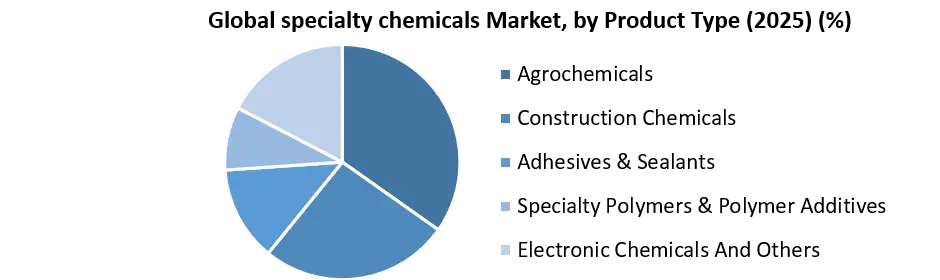
Based on Product type, The global specialty chemicals market covers a wide range of high-performance chemical products used across agriculture, construction, automotive, electronics, healthcare, consumer goods, and industrial manufacturing. Agrochemicals support crop protection and productivity, while construction chemicals, adhesives, sealants, and specialty polymers improve material performance and durability. Electronic chemicals, water treatment chemicals, and catalysts support advanced manufacturing and industrial processes. Surfactants, personal care ingredients, food additives, flavors, and fragrances serve consumer-focused industries. Demand also grows for lubricant additives, advanced ceramics, and specialty inorganic materials as industries adopt more efficient and application-specific solutions.
Global Specialty Chemicals Market Regional Insights
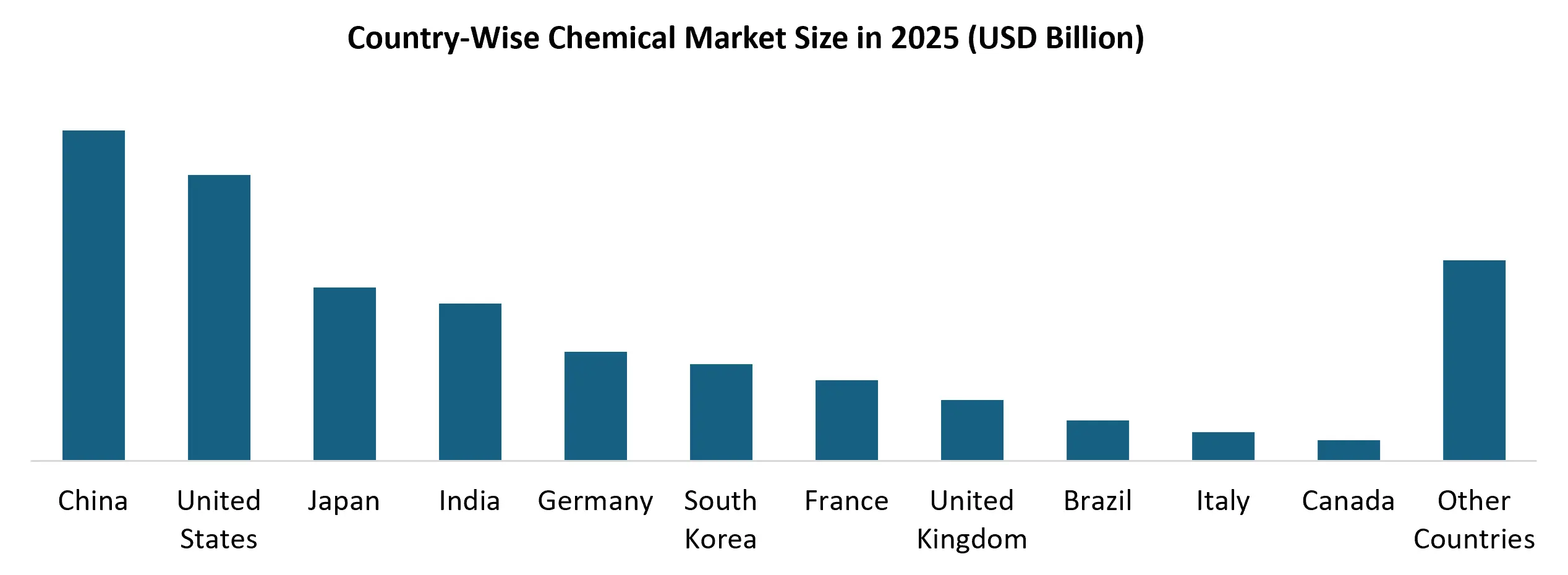
Asia Pacific holds the leading position in the global specialty chemicals market in 2025, driven by rapid industrialization, expanding manufacturing capabilities, and increasing demand from the automotive, electronics, construction, agriculture, healthcare, and personal care industries. China, India, Japan, and South Korea contribute significantly through established chemical production facilities, growing electric vehicle manufacturing, and rising investments in semiconductor production and renewable energy. China strengthens regional demand through large-scale production of specialty polymers, plastic additives, performance coatings, and electronic chemicals, while India supports market expansion through agrochemical manufacturing, pharmaceutical production, and infrastructure development. Increasing demand for high-performance materials, sustainable chemical formulations, advanced polymers, and customized chemical solutions reinforces Asia Pacific's market leadership.
North America maintains a significant share of the global specialty chemicals market, supported by advanced chemical manufacturing infrastructure, technological innovation, and strong demand from the automotive, aerospace, healthcare, electronics, and construction industries. The United States drives regional growth through investments in specialty polymers, pharmaceutical ingredients, high-performance coatings, and electronic-grade chemicals. Expanding electric vehicle production, battery manufacturing, and semiconductor fabrication increases demand for battery additives, specialty solvents, adhesives, and high-purity chemical formulations. The region also benefits from strong research and development capabilities, established petrochemical supply chains, and increasing adoption of sustainable manufacturing technologies. Rising demand for water treatment chemicals, industrial additives, bio-based formulations, and environmentally compatible products further strengthens North America's market position.
Europe represents a prominent market for specialty chemicals, driven by advanced industrial manufacturing, automotive production, technological innovation, and increasing emphasis on environmental sustainability. Germany, France, Italy, and the United Kingdom contribute through demand for specialty coatings, adhesives, construction chemicals, industrial lubricants, and high-performance polymers. The transition toward electric mobility, renewable energy, and energy-efficient manufacturing increases demand for battery materials, wind turbine lubricants, protective coatings, and advanced composite materials. Stringent environmental standards and sustainability initiatives encourage manufacturers to develop bio-based ingredients, low-emission formulations, recyclable materials, and safer chemical alternatives. Growing investments in pharmaceutical manufacturing, industrial modernization, and resource-efficient production support the regional specialty chemicals market.
South America experiences increasing demand for specialty chemicals, supported by agricultural expansion, mining operations, infrastructure development, and industrial modernization. Brazil and Argentina contribute significantly through demand for agrochemicals, crop protection formulations, industrial additives, paints, and coatings. The region's extensive agricultural activities increase the use of specialized chemical formulations that support crop protection, productivity, and agricultural efficiency. Mining operations generate demand for mineral processing chemicals, flotation reagents, corrosion inhibitors, and water treatment solutions. Infrastructure development and residential construction further support the consumption of construction chemicals, adhesives, sealants, and protective coatings. Growing investments in agricultural technology, industrial processing, and sustainable production create additional opportunities for specialty chemical manufacturers across South America.
The Middle East & Africa specialty chemicals market benefits from expanding petrochemical production, infrastructure investments, mining activities, and increasing water treatment requirements. Saudi Arabia and the United Arab Emirates support regional growth through industrial diversification, construction projects, and investments in advanced chemical manufacturing. South Africa contributes through demand for mining chemicals, industrial additives, water treatment formulations, and specialty products used in manufacturing. Expanding desalination capacity and wastewater treatment infrastructure increase demand for corrosion inhibitors, coagulants, scale inhibitors, and water treatment chemicals. Growing oil and gas operations, construction activities, renewable energy projects, and industrial development further support demand for specialty lubricants, protective coatings, adhesives, and performance-enhancing additives across the region.
 Global Specialty Chemicals Market Competitive Landscape
The global specialty chemicals market features strong competition among multinational manufacturers and specialized chemical producers, with market positioning driven by product innovation, advanced formulations, sustainable chemistry, and application-specific solutions. Key players, including BASF SE, Dow Inc., Evonik Industries AG, Arkema S.A., Clariant AG, Huntsman Corporation, Solvay S.A., and Eastman Chemical Company, strengthen their competitive presence through research and development, product portfolio expansion, and strategic collaborations. Asia Pacific maintains a strong manufacturing advantage through China, India, Japan, and South Korea, while North America and Europe emphasize high-performance materials, technological innovation, and sustainable chemical solutions.
Product Differentiation and Technological Innovation: Manufacturers focus on specialty polymers, high-performance coatings, electronic chemicals, adhesives, catalysts, and performance additives to meet evolving industrial requirements. Increasing demand from electric vehicles, semiconductor manufacturing, renewable energy, healthcare, and construction encourages investment in advanced formulations and customized chemical solutions.
Regional Manufacturing and Market Expansion: Asia Pacific benefits from large-scale chemical production, expanding industrial infrastructure, and growing downstream demand. North America strengthens its position through advanced materials and research capabilities, while Europe emphasizes sustainable formulations, specialty ingredients, and environmentally compliant manufacturing. South America and the Middle East & Africa support market opportunities through agrochemicals, mining chemicals, petrochemical integration, and infrastructure development.
Sustainability and Competitive Advantage: Market participants increasingly develop bio-based ingredients, low-emission formulations, recyclable materials, and resource-efficient production technologies. Strategic partnerships, manufacturing efficiency, supply chain resilience, product quality, and customer-specific formulations remain key competitive factors, enabling manufacturers to strengthen customer relationships and capture emerging opportunities across the global specialty chemicals value chain.
Global Specialty Chemicals Market Scope: Inquire before buying
| Global Specialty Chemicals Market | |||
|---|---|---|---|
| Report Coverage | Details | ||
| Base Year: | 2025 | Forecast Period: | 2026-2034 |
| Historical Data: | 2020 to 2025 | Market Size in 2025: | USD 315.85 Bn. |
| Forecast Period 2026 to 2034 CAGR: | 5.2% | Market Size in 2034: | USD 498.45 Bn. |
| Segments Covered: | by Product Type | Agrochemicals Construction Chemicals Adhesives & Sealants Specialty Polymers & Polymer Additives Electronic Chemicals Water Treatment Chemicals Oilfield & Mining Chemicals Surfactants & Cleaning Chemicals Dyes, Pigments & Textile Chemicals Food & Feed Additives Personal Care & Cosmetic Ingredients Flavors & Fragrances Catalysts Lubricant & Fuel Additives Advanced Ceramic & Specialty Inorganic Materials Others |
|
| by Feedstock Source | Fossil-Based Crude Oil & Naphtha Natural Gas & NGLs Coal-Derived Others Bio-Based Lignocellulosic/Wood Biomass Sugar & Starch Crops Vegetable Oils & Fats Other Bio-Based Feedstocks Mineral/Inorganic-Based Recycled/Circular Feedstock Others |
||
| by Form | Powder Granules, Flakes & Pellets Liquid Paste, Gel & Emulsion Others |
||
| by End-Use Industry | Agriculture Paints & Coatings Construction & Infrastructure Automotive & Transportation Packaging Pulp & Paper Electrical & Electronics Oil & Gas Water & Wastewater Treatment Personal Care & Cosmetics Food & Beverage Textiles & Apparel Mining & Minerals Pharmaceuticals & Healthcare Industrial Manufacturing Household & Institutional Consumer Goods Others |
||
Specialty Chemicals Market, by Region
North America (United States, Canada and Mexico)
Europe (UK, France, Germany, Italy, Spain, Sweden, Austria and Rest of Europe)
Asia Pacific (China, South Korea, Japan, India, Australia, Indonesia, Malaysia, Vietnam, Taiwan, Bangladesh, Pakistan and Rest of APAC)
Middle East and Africa (South Africa, GCC, Egypt, Nigeria and Rest of ME&A)
South America (Brazil, Argentina Rest of South America)
Specialty Chemicals Market, Key Players
North America
1. Dow Inc. — United States
2. DuPont de Nemours, Inc. — United States
3. Eastman Chemical Company — United States
4. Huntsman Corporation — United States
5. Ashland Inc. — United States
6. Albemarle Corporation — United States
7. Lubrizol Corporation — United States
8. PPG Industries, Inc. — United States
9. Cabot Corporation — United States
10.Celanese Corporation — United States
Others
Europe
11. BASF SE — Germany
12. Evonik Industries AG — Germany
13. Clariant AG — Switzerland
14. LANXESS AG — Germany
15. Covestro AG — Germany
16. Arkema S.A. — France
17. Solvay S.A. — Belgium
18. Nouryon — Netherlands
19. Croda International Plc — United Kingdom
20. Wacker Chemie AG — Germany
Others
Asia Pacific
21. Mitsubishi Chemical Group Corporation — Japan
22. Sumitomo Chemical Co., Ltd. — Japan
23. Shin-Etsu Chemical Co., Ltd. — Japan
24. DIC Corporation — Japan
25. Mitsui Chemicals, Inc. — Japan
26. Daicel Corporation — Japan
27. Tosoh Corporation — Japan
28. Toray Industries, Inc. — Japan
29. LG Chem Ltd. — South Korea
30. SONGWON Industrial Co., Ltd. — South Korea
31. Wanhua Chemical Group Co., Ltd. — China
32. Jiangsu Yangnong Chemical Co., Ltd. — China
33. Zhejiang Longsheng Group Co., Ltd. — China
34. Aarti Industries Limited — India
35. SRF Limited — India
Others
South America
36. Braskem S.A. — Brazil
37. Oxiteno — Brazil
38. Elekeiroz S.A. — Brazil
39. Unigel — Brazil
40. Química Anastacio — Brazil
Others
Middle East & Africa
41. SABIC — Saudi Arabia
42. Borouge Plc — United Arab Emirates
43. Tasnee — Saudi Arabia
44. Sipchem — Saudi Arabia
45. Advanced Petrochemical Company — Saudi Arabia
46. Gulf Advanced Chemical Industries — Saudi Arabia
47. National Industrialization Company (Tasnee) — Saudi Arabia
48. Qatar Chemical Company Ltd. (Q-Chem) — Qatar
49. OQ — Oman
50. Sasol Limited — South Africa
Others
Frequently Asked Questions:
1] What segments are covered in the Global Specialty Chemicals Market report?
Ans. The segments covered in the Market report are based on Product Type, Feedstock Source, Form, End-Use Industry and Region.
2] Which region held the largest Market share in 2025?
Ans. The Asia Pacific region held the largest Market share in 2025.
3] What is the expected Global Specialty Chemicals Market size by 2034?
Ans. The Specialty Chemicals Market size is expected to reach USD 498.45 Bn by 2034.
4] What was the restrains of the Global Specialty Chemicals Market?
Ans Fluctuations in prices of raw materials, geopolitical issues, and regulatory pressures hinder the market growth.
5] What is the expected CAGR of the Global Specialty Chemicals Market during the forecast period?
Ans. The expected CAGR of the Specialty Chemicals Market is 5.2% during the forecast period.