
GM1 Gangliosidosis Treatment Market Size, by Type, by Treatment Type, by Route of Administration, by Disease Type and End User
Overview
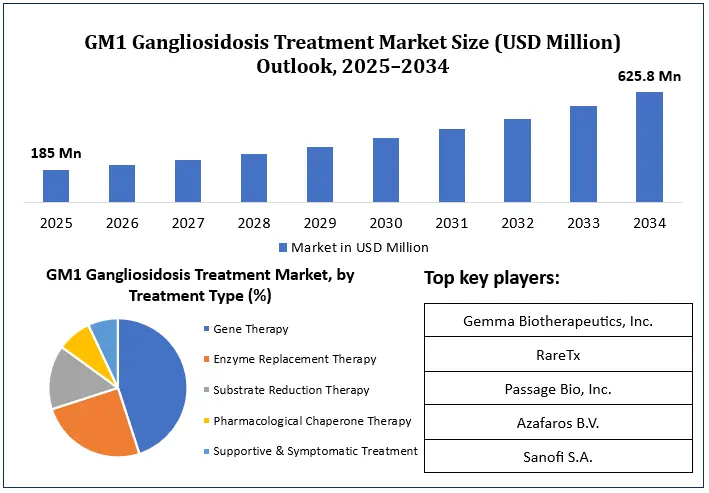
The GM1 Gangliosidosis Treatment Market size was valued at USD 185 Million in 2025 and is expected to grow at a CAGR of 14.5% from 2025 to 2034, reaching USD 625.8 Million by 2034.
GM1 Gangliosidosis Treatment Market Overview:
GM1 gangliosidosis is a rare inherited lysosomal storage disorder caused by mutations in the GLB1 gene, which leads to insufficient activity of the enzyme beta-galactosidase. As a result, GM1 ganglioside and other cellular materials gradually accumulate in tissues, particularly within the brain and nervous system. The condition can progressively affect a child’s development, movement, coordination, and neurological function, with severity varying according to the disease subtype.
For families, GM1 gangliosidosis begins with subtle developmental or neurological changes that may become more pronounced over time. Because there is currently no widely established curative treatment, management has traditionally centered on controlling symptoms and providing supportive care. However, the treatment landscape is evolving, with substrate reduction therapy, enzyme-based approaches, and gene therapy being investigated as potential strategies to address the underlying biological cause of the disease rather than only its symptoms. These emerging approaches are creating new possibilities for earlier intervention and more targeted disease management.
The GM1 Gangliosidosis Treatment Market Report highlights this shift from supportive care toward more targeted and potentially disease-modifying treatments. The GM1 Gangliosidosis Treatment Market Report explores the market size, growth outlook, treatment approaches, patient population, clinical pipeline, and emerging therapies shaping the future of GM1 treatment. It also examines key drivers, challenges, technological developments, and competitive dynamics, including promising AAV-based gene therapies and investigational treatments such as nizubaglustat. Commercially, the GM1 treatment market presents an emerging opportunity driven by unmet medical needs and growing investment in rare-disease therapies. Advances in gene therapy, substrate reduction therapy, and enzyme-based treatments are creating opportunities for biotechnology and pharmaceutical companies. Despite high development costs and regulatory challenges, successful disease-modifying therapies could unlock significant value in this underserved market through 2034.
GM1 Gangliosidosis Treatment Market Size, Share and Forecast Analysis
To know about the Research Methodology :- Request Free Sample Report
GM1 Gangliosidosis Treatment Market Key Highlight
Market Size: The GM1 Gangliosidosis Treatment Market was valued at USD 185.0 million in 2025, showing that although GM1 is a rare disease, there is already a defined treatment market.
Moving Beyond Supportive Care: The shift from simply managing symptoms toward disease-modifying treatments such as gene therapy, substrate reduction therapy, and enzyme-based approaches.
Gene Therapy is Gaining Attention: AAV-based gene therapy is becoming an important area of research because it aims to tackle the underlying genetic cause of GM1 rather than only treating its symptoms.
Diagnosis is Improving: Better genetic testing, molecular diagnosis, and awareness among healthcare professionals are making it easier to identify GM1 patients, particularly at earlier stages of the disease.
Clinical Research is Creating Momentum: More companies, research institutions, and clinical investigators are working on GM1 therapies, which is gradually expanding the treatment pipeline and creating new possibilities for patients.
Long-Term Opportunity: Looking ahead, successful clinical development and commercialization of advanced therapies could change the treatment landscape significantly, improve access to effective treatments, and expand the overall GM1 treatment market.
GM1 Gangliosidosis Treatment Market Trends
1. Shift Toward Disease-Modifying GM1 Therapies
The GM1 treatment landscape is gradually moving beyond supportive care toward disease-modifying therapies that aim to address the underlying GLB1-related enzyme deficiency. Gene therapy, enzyme replacement, and substrate-reduction approaches are increasingly shaping the future treatment pipeline.
2. Rapid Advancement of AAV-Based Gene Therapy
AAV-based gene therapy has become one of the most closely watched areas in the GM1 market. Recent clinical research using AAV9 to deliver β-galactosidase showed increases in enzyme activity and reductions in CSF GM1 levels, strengthening interest in one-time gene-replacement approaches.
3. Growing Emphasis on Early Genetic Diagnosis
As potential disease-modifying therapies develop, early diagnosis is becoming increasingly important. Genetic testing, patient registries, biomarker research, and screening initiatives can help identify patients earlier and support clinical-trial recruitment before significant neurological deterioration occurs.
4. Rising Interest in Enzyme Replacement and Oral Therapies
Gene therapy is not the only path being explored. Enzyme replacement therapy, substrate-reduction therapy, and pharmacological chaperones are attracting attention as alternative or complementary approaches. In 2025, the Cure GM1 Foundation committed additional funding toward ERT development, while current market research highlights continued interest in oral and CNS-targeted approaches.
5. Movement Toward Earlier Intervention
The market is increasingly looking at treating GM1 before irreversible neurological damage becomes extensive. This is pushing research toward earlier-stage patients and, at the experimental level, even prenatal intervention, reflecting a broader shift from symptom management toward prevention of disease progression.
6. Increasing Investment in Rare-Disease R&D
Growing scientific and commercial attention toward ultra-rare diseases is supporting investment in gene therapy platforms, biomarkers, clinical trials, and novel treatment technologies. The expansion of GM1 research programs is gradually creating a more visible therapeutic pipeline around a disease that historically had very limited treatment options.
GM1 Gangliosidosis Treatment Market Segment Analysis
GM1 Gangliosidosis Treatment Market Segment, by Treatment Type
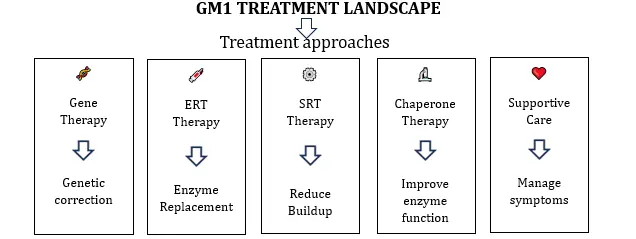
The Global GM1 Gangliosidosis Treatment Market is segmented into Gene Therapy, Enzyme Replacement Therapy (ERT), Substrate Reduction Therapy (SRT), Pharmacological Chaperone Therapy, and Supportive & Symptomatic Treatment. In 2025, gene therapy dominated GM1 Gangliosidosis Treatment Market Segment in 2025, particularly through AAV-based approaches designed to address the underlying GLB1 gene defect. ERT and SRT are also being explored as potential disease-modifying approaches by restoring enzyme activity or reducing the accumulation of GM1 ganglioside.
Pharmacological chaperone therapy represents another emerging strategy, while supportive and symptomatic treatment remains essential for managing neurological and other disease-related complications. During the 2026–2034 forecast period, continued research, clinical development, and investment in targeted therapies are expected to shape the evolution of the GM1 gangliosidosis treatment landscape, with organizations such as GEMMA Biotherapeutics, Azafaros, and Cure GM1 Foundation contributing to research and therapeutic development.
GM1 Gangliosidosis Treatment Market Dynamics
Growing Focus on Disease-Modifying and Gene Therapies to Drive GM1 Gangliosidosis Treatment Market
Increasing research into gene therapy, substrate-reduction therapy, enzyme replacement approaches, and other disease-modifying treatments is creating new growth potential in the GM1 Gangliosidosis treatment market. Advances in understanding GLB1 gene mutations and lysosomal storage mechanisms are supporting the development of therapies designed to address the underlying cause of the disease rather than only managing symptoms. Continued clinical research and investment in rare-disease therapies are expected to strengthen the treatment pipeline.
Small Patient Population and High Clinical Development Costs to Restraint Market Growth
GM1 gangliosidosis is an ultra-rare inherited disorder, resulting in a small patient pool for diagnosis, clinical-trial recruitment, and commercial treatment. The disease’s neurological involvement further complicates the development of therapies that can effectively reach the central nervous system. In addition, limited trial populations, long-term clinical evaluation requirements, specialized manufacturing processes, and complex regulatory pathways can increase research and development costs. These factors may make clinical development more challenging and reduce the commercial attractiveness of the GM1 gangliosidosis treatment market.
Advances in Genetic Diagnosis and Precision Medicine Create Opportunities
Improved genetic testing, molecular diagnosis, newborn screening research, and disease characterization are creating opportunities for earlier identification of GM1 Gangliosidosis patients. Greater understanding of the relationship between GLB1 mutations, enzyme activity, and disease severity may support more targeted treatment strategies and patient selection for clinical trials. Earlier diagnosis could also increase opportunities for intervention before irreversible neurological damage occurs.
Limited Treatment Options and High Unmet Medical Need Support Innovation
The absence of widely established disease-modifying treatments for GM1 Gangliosidosis leaves a significant unmet medical need, particularly for therapies capable of addressing neurological manifestations. Current management largely focuses on supportive and symptomatic care, creating an opportunity for therapies that can modify disease progression. This unmet need may encourage pharmaceutical and biotechnology companies to pursue innovative approaches, particularly CNS-targeted gene therapy and other molecular therapies.
High Treatment Costs and Limited Specialist Access Remain Key Challenges
The development and delivery of advanced therapies for ultra-rare neurological disorders can involve substantial costs. In addition, patients may face limited access to specialized metabolic-disease centers, genetic testing, and experienced clinicians, particularly in emerging healthcare markets. Delayed diagnosis and low disease awareness can further restrict treatment access. Improvements in specialist infrastructure, diagnostic capabilities, reimbursement mechanisms, and patient-support programs will be important for broader adoption.
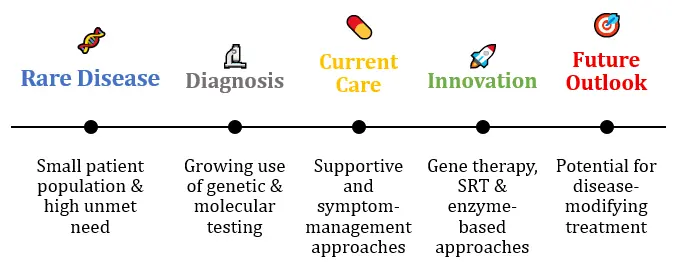
GM1 Gangliosidosis Treatment Market Evolution: From Diagnosis to Disease-Modifying Therapies
GM1 Gangliosidosis Treatment Market Regional Insights
North America — Leading Through Clinical Innovation: In 2025, North America held the largest GM1 gangliosidosis treatment Market in 2025, supported by its strong rare-disease research ecosystem, specialized clinical centers, biotechnology activity, and advanced regulatory environment. The region remains at the forefront of gene-therapy research, with the NIH-led AAV9 program and other clinical studies demonstrating continued progress toward disease-modifying approaches. During the 2026–2034 forecast period, continued investment in gene therapy, clinical research, and rare-disease infrastructure is expected to strengthen North America's position. The region also benefits from collaboration among academic institutions, biotechnology companies, and rare-disease organizations. Representative ecosystem participants include National Institutes of Health (NIH/NHGRI), Sio Gene Therapies, and academic gene-therapy research centers. The AAV9-GLB1 program represents an important example of North America's ongoing efforts to advance potential GM1-specific therapies.
Asia Pacific — Emerging Through Healthcare Development: In 2025, Asia Pacific represents an emerging opportunity in the GM1 gangliosidosis treatment landscape, supported by improvements in genetic testing, specialist healthcare services, and growing awareness of rare diseases. During the 2026–2034 forecast period, expanding healthcare infrastructure, biotechnology capabilities, and investments in genomic medicine are expected to gradually improve diagnosis and access to advanced therapies.
Country-Level Analysis
• Japan has a well-developed healthcare system and established capabilities in genetic medicine and rare-disease research, supporting the diagnosis and management of inherited disorders.
• China offers significant long-term potential due to its large patient population, expanding biotechnology sector, and increasing investment in rare-disease research and genetic testing.
• India is witnessing growing awareness of rare diseases and improvements in genetic diagnostics, although affordability and access to specialized treatment remain important considerations.
• South Korea is also strengthening its biotechnology and precision-medicine capabilities, which could support future rare-disease research and therapeutic development.
Companies such as Takeda Pharmaceutical Company Limited, along with regional biotechnology and pharmaceutical organizations, contribute to the broader rare-disease ecosystem. However, their presence should not be interpreted as current commercialization of a GM1-specific therapy.
|
GM1 Gangliosidosis Treatment Market Regional Insights Across the world, the story of Gangliosidosis care unfolds differently in every region. In North America, advanced infrastructure and dedicated rare-disease centers keep it firmly in the lead. Europe follows close behind, its orphan-drug programs and research networks steadily widening access. Further east, Asia Pacific is just beginning its chapter — better diagnostics and rising awareness slowly opening new doors. South America moves quietly forward, each improvement in healthcare access adding a new page. And in the Middle East & Africa, the story is only starting — but the foundation for tomorrow is already being laid. |

Global GM1 Gangliosidosis Treatment Market Competitive Landscape
The Global GM1 Gangliosidosis Treatment Market is gradually moving from a limited supportive-care landscape toward a more competitive rare-disease and disease-modifying therapy ecosystem. Competition is increasingly focused on gene therapy, enzyme replacement therapy, substrate reduction therapy, and pharmacological chaperones, with AAV-based gene therapy receiving particularly strong attention. Companies and organizations such as GEMMA Biotherapeutics, Azafaros, and Cure GM1 Foundation are contributing to the development of innovative treatment approaches. The recent clinical progress of AAV9-based gene therapy has further strengthened interest in therapies designed to address the underlying GLB1 gene defect.
As the market develops, CNS-targeted delivery, clinical efficacy, treatment durability, safety, biomarker development, and early diagnosis are becoming important competitive factors. Developers are exploring approaches such as AAV vectors, intrathecal or intracisternal administration, and CNS-directed enzyme replacement to overcome the challenges of treating neurological disease. Collaboration among biotechnology companies, research institutions, clinical centers, and patient organizations is also helping advance clinical research and patient identification. Overall, competition is shifting from “managing GM1 symptoms” to “modifying the underlying disease,” creating opportunities for companies that can combine innovative technology, strong clinical evidence, regulatory expertise, and improved patient access.
GM1 Gangliosidosis Treatment Market Scope: Inquire before buying
| GM1 Gangliosidosis Treatment Market | |||
|---|---|---|---|
| Report Coverage | Details | ||
| Base Year: | 2025 | Forecast Period: | 2026-2034 |
| Historical Data: | 2020 to 2025 | Market Size in 2025: | USD 5 Bn. |
| Forecast Period 2026 to 2034 CAGR: | 14.5% | Market Size in 2034: | USD 10 Bn. |
| Segments Covered: | by Treatment Type | Gene Therapy Enzyme Replacement Therapy Substrate Reduction Therapy Pharmacological Chaperone Therapy Supportive & Symptomatic Treatment |
|
| by Disease Type | Type I – Infantile Type II – Late-Infantile/Juvenile Type III – Adult/Chronic |
||
| by Route of Administration | Intrathecal / Intracisternal Intravenous Oral Intracerebroventricular |
||
| by Distribution Channel | Hospital Pharmacies Specialty Pharmacies Online Pharmacies Others |
||
| by End-Use Industry | Specialty Clinics & Rare-Disease Centers Research Institutes Home-Care Settings Others |
||
GM1 Gangliosidosis Treatment Market by region:
North America (United States Canada Mexico)
Europe (United Kingdom France Germany Italy Spain Sweden Russia Rest of Europe)
Asia Pacific (China, South Korea India Japan Australia Indonesia Philippines Malaysia Vietnam Thailand Rest of Asia Pacific)
Middle East and Africa (Saudi Arabia, United Arab Emirates (UAE), Qatar, Kuwait, Oman, Bahrain, Rest of ME&A)
South America (Brazil, Argentina, Chile, Colombia, Rest of South America)
GM1 Gangliosidosis Treatment Key Players
1. Gemma Biotherapeutics, Inc.
2. RareTx
3. Passage Bio, Inc.
4. Azafaros B.V.
5. Sanofi S.A.
6. Sio Gene Therapies
7. Lysogene S.A.
8. Takeda Pharmaceutical Company Limited
9. Amicus Therapeutics, Inc.
10. BioMarin Pharmaceutical Inc.
11. Ultragenyx Pharmaceutical Inc.
12. REGENXBIO Inc.
13. Taysha Gene Therapies, Inc.
14. Abeona Therapeutics Inc.
15. uniQure N.V.
16. Sarepta Therapeutics, Inc.
17. Orchard Therapeutics
18. AVROBIO, Inc.
19. Denali Therapeutics Inc.
20. Eli Lilly and Company
21. Novartis AG
22. Roche Holding AG
23. Spark Therapeutics, Inc.
24. JCR Pharmaceuticals Co., Ltd.
25. Chiesi Farmaceutici S.p.A.
26. Alexion Pharmaceuticals
27. GC Biopharma Corp.
28. CANbridge Pharmaceuticals Inc.
29. Voyager Therapeutics, Inc.
30. Capsida Biotherapeutics Inc.
31. Lexeo Therapeutics, Inc.
32. Neurogene Inc.
33. Silence Therapeutics plc
34. Alnylam Pharmaceuticals, Inc.
35. Ionis Pharmaceuticals, Inc.
36. PTC Therapeutics, Inc.
37. Moderna, Inc.
38. Pfizer Inc.
39. GSK plc
40. Bayer AG
41. CSL Behring
42. AstraZeneca plc
43. Inventiva S.A.
44. Gain Therapeutics, Inc.
45. M6P Therapeutics
46. Jaguar Gene Therapy
47. Lysoway Therapeutics
48. Freeline Therapeutics
49. Rocket Pharmaceuticals, Inc.
50. Asklepios BioPharmaceutical, Inc.
Frequently Asked Questions: Global GM1 Gangliosidosis Treatment Market
1)What is the size of the Global GM1 Gangliosidosis Treatment Market?
The Global GM1 Gangliosidosis Treatment Market was valued at USD 185.0 million in 2025 and is projected to reach around USD 625.8 million by 2034, expanding at a 14.5% CAGR from 2025 to 2034, driven by increasing development of disease-modifying therapies and advances in rare-disease research.
2)Which segment dominates the Global GM1 Gangliosidosis Treatment Market?
Gene Therapy is emerging as the leading treatment segment, supported by increasing development of AAV-based therapies targeting the underlying GLB1 gene defect. Enzyme replacement therapy, substrate reduction therapy, pharmacological chaperones, and supportive care also contribute to the treatment landscape
3)Which region is expected to grow fastest in the market?
Asia Pacific is expected to offer strong growth potential as genetic testing, rare-disease awareness, specialist healthcare infrastructure, and access to advanced therapies continue to improve. Increasing healthcare investment across countries such as China, Japan, India, South Korea, and Australia is supporting the region's long-term opportunity.
4)What are the major trends shaping the Global GM1 Gangliosidosis Treatment Market?
Key trends include the shift toward disease-modifying therapies, rapid advancement of AAV-based gene therapy, growing emphasis on early genetic diagnosis, development of substrate-reduction and chaperone therapies, CNS-targeted treatment delivery, and increasing collaboration between biotechnology companies, research institutions, and patient organizations.