
Vegan Cheese Market Size by Product, Source, End-User, Region, Industry-Wide Analysis, Competitive Landscape Assessment & Long-Term Forecast to 2034
Overview
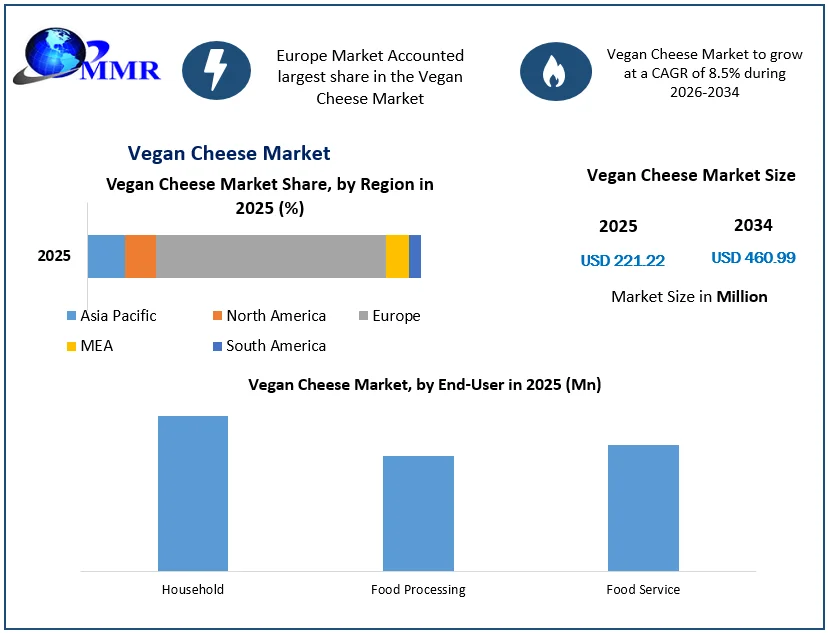
Global Vegan Cheese Market size was valued at USD 221.22 Million in 2025 and the total Vegan Cheese revenue is expected to grow by 8.5 % from 2026 to 2034, reaching nearly USD 460.99 Million.
Vegan Cheese Market Overview:
Vegan cheese is a type of non-dairy cheese that goes without any use of animal products in its production. Instead, it is crafted from a diverse range of plant-based sources, with nuts, particularly almonds, cashews, and macadamia (bush nut), being commonly utilized. This alternative to traditional cheese has gained traction as individuals look for healthier lifestyle choices, with dairy prevention being a fundamental step to drive the Vegan Cheese Market.
Cheese holds a valued place in the culinary world, enjoyed by people worldwide. The average person consumes approximately 38 pounds of cheese annually which is 17 kg, in the United States. The popularity of vegan and dairy-free diets continues to rise which has emerged to cater to this growing demand. These vegan cheeses offers a wide variety of styles and flavors suit diverse palates and are crafted from a mixture of plant-based ingredients. The Vegan Cheese Industry has began to gain traction as the consumption is increasing deu to various flavorful options.
Vegan Cheese Market Snapshot
To know about the Research Methodology :- Request Free Sample Report
Vegan Cheese Market Dynamics
Vegan cheese is conveniently purchased from stores or prepared at home, often incorporating unexpected ingredients to achieve its distinctive textures and flavors. The market has also seen major food companies like General Mills enter the fray, introducing non-dairy versions of popular products such as Yoplait's "Oui" French-style yogurt and cow milk-free Häagen-Dazs ice cream. Companies are responding to the shift in consumer preferences while maintaining their traditional product lines. Hence, the non-dairy market has expanded to attract not only vegans but also individuals exploring dairy-free alternatives, which has marked an important shift in the industry. Vegan cheese continues to evolve demand of consumers for healthier and more sustainable food options is driving the market growth. The report covered a detailed analysis of the Vegan Cheese Market trends, dynamics competitive analysis of major as well as local Vegan Cheese Market players in the industry.
Vegan cheese Price trend analysis
The price trend analysis of vegan cheese over the past few years has shown significant fluctuations and interesting patterns. The prices can vary according to the brand and geography which is important to know. Vegan cheese is more expensive than dairy. However, dairy cheese produced by more ethical companies is the most expensive of all cheeses on the Vegan Cheese Market. The following brands are commonly available at supermarkets, or places like Holland & Barrett and local retailers: Applewood, Cheezly, Follow Your Heart, Mexicana, Nurishh, Sheese, Violife, and Vitalite.
| Brand | Types of vegan cheese | Least expensive | Most expensive |
| Applewood | Block/cheddar, Grated, Slices | USD 2.73 (slices) | USD 3.34 (grated) |
| Cheezly | Block/cheddar | USD2.66 (block) | USD2.72 (block) |
| Follow Your Heart | Block/cheddar, Blue, Feta, Gouda, Mozzarella, Parmesan, Provolone, Slices | USD4.00 (slices) | USD5.70 |
| Green Vie | Block / cheddar, Blue, Spread, Feta, Gouda, Grated, Halloumi, Mozzarella, Slices | USD 3.30 (mozzarella slices) | USD 5.46 (parmesan) |
| Ilchester | Block/cheddar, Blue | USD 2.79 (block) | USD 3.64 (blue) |
| Size | Block/cheddar | USD 2.79 (block) | USD 2.79(block) |
| La Fauxmagerie | Artisan, Block/cheddar, Blue, Camembert, Spread, Feta, Goat, Grated, Mozzarella, Parmesan, Ricotta | USD 5.47 (block) | USD 7.29(camembert) |
| Mexicana | Block/cheddar | USD 2.79 (block) | USD 2.79 (block) |
| Mouse's Favourite | Artisan, Blue, Camembert, | USD 10.02 (artisan) | USD12.14 (blue) |
| Mozzarella | Blue, Spread, Mozzarella, Slices | USD 2.86 (slices) | USD 5.47 (mozzarella) |
| New Roots | Camembert, Spread, Fondue, Ricotta | USD 3.63 (spread) | USD 7.89 (ricotta) |
| Nurishh | Block/cheddar, Camembert, Spread, Grated, Mozzarella, Parmesan, Provolone, Slices | USD 3.04 (slices) | USD 4.25 (camembert) |
| Nushi | Spread | USD 3.34 (spread) | USD 3.34 (spread) |
| Sing | Block/cheddar, Blue, Spread, Feta, Gouda, Grated, Mozzarella, Slices | USD 2.73 (block) | USD 3.04 (mozzarella) |
| Tyne Chease | Artisan, Block/cheddar, Camembert, Spread | USD 9.66 (artisan) | USD 12.15 (artisan) |
| Violife | Block/cheddar, Camembert, Spread, Feta, Grated, Halloumi, Mozzarella, Parmesan, Slices | USD 2.79 (block) | USD 3.34 (feta) |
| Vitality | Block/cheddar, Grated, Slices | USD 2.79 (block) | USD 3.63 (block) |
The report covered a detailed analysis of market price by region and by brand and their impact on the Vegan Cheese Market growth and competition.
Vegan Cheese Gains Momentum as Consumer Preferences Shift
The vegan cheese is gaining popularity as it is rising due to changing consumer preferences. Health concerns among consumers increase the market of vegan cheese such as lactose intolerance and allergies, a desire for diverse culinary options, and environmental and animal welfare considerations are the various reasons. The trend of veganism and interest in vegan foods are growing which drives the production and demand for these alternatives to drive the market of Vegan Cheese.
The sales from the previous year have increased by 42.5% in the U.S. and reached nearly $270 million for Plant-based cheese. Focused on the nutritional aspects of non-dairy plant-based products such as milk and yogurt alternatives, highlighting their protein and nutrient content from various plant sources. Adults in the United States frequently or occasionally opt for vegan meals almost 25% and 3% of vegan diets, found in the survey.
Spain and the United Kingdom are the countries in Europe where some plant-based products are enriched with essential nutrients such as calcium, vitamin B12, and vitamin D. The presence of the Vegan Cheese Market in the U.S., there is a need to evaluate the range of plant-based cheese options available to American consumers. The main goal of this study was to examine the nutritional content of commonly available plant-based cheeses in the U.S. It also aimed to understand how product composition affects nutritional quality and the extent of fortification. It's important to note that this study only looked at entirely plant-based products. The findings from this research are valuable for both healthcare professionals and consumers, offering insights into product composition and ways to improve the nutritional quality of plant-based cheeses.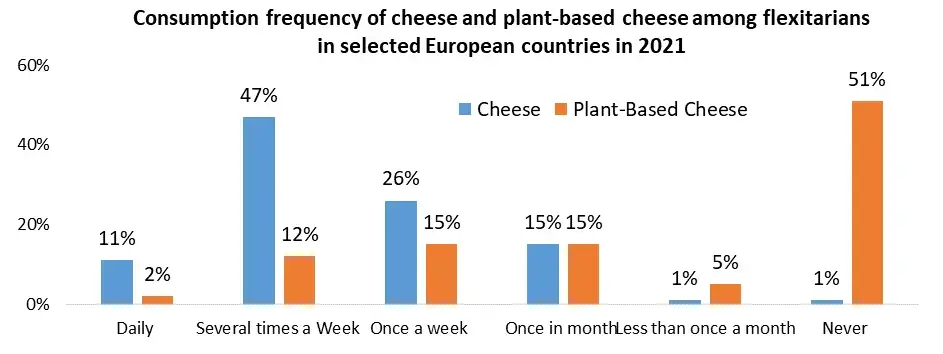 Based on the Product, Mozzarella dominated the market in the year 2025 with the largest market share in 2025 and is expected to dominate the market during the forecast period. The growing availability of diverse Mozzarella cheese options using non-animal rennet alternatives is a significant driving force in the Vegan Cheese Market. This expansion encompasses Mozzarella cheese crafted with microbial or vegetable rennet, as well as rennet-free Mozzarella cheese. Mozzarella cheese produced with microbial or vegetable rennet serves as a compelling choice for both vegetarians and vegans. These rennet alternatives are sourced from non-animal origins and do not incorporate any animal-derived components. As a result, an increasing number of cheese producers have embraced these alternatives, making it more convenient for consumers to access vegetarian-friendly Mozzarella cheese varieties.
Another avenue for vegetarian Mozzarella cheese involves formulations using lactic acid, lemon juice, or citric acid instead of traditional rennet. These substances are employed to acidify the milk, prompting coagulation and curd formation. The resultant cheese boasts a mild flavor and creamy consistency akin to conventional Mozzarella cheese. For individuals adhering to plant-based diets, vegan Mozzarella cheese substitutes have emerged as a noteworthy choice. These alternatives exclude dairy and animal-based ingredients, opting instead for plant-based constituents like coconut oil, tapioca starch, or cashew milk. These vegan Mozzarella cheeses exhibit a creamy flavor and texture while offering the versatility of traditional Mozzarella cheese. In today's grocery stores, a diverse array of vegan Mozzarella cheese alternatives is readily accessible, encompassing plant-based Mozzarella and vegan repetitions of Mozzarella cheese. This diversification of Mozzarella cheese options aligns with the growing demand for plant-based and vegetarian choices, propelling the plant based cheese market. In 2020, Miyoko made a significant entry into the vegan cheese market by introducing its plant-based mozzarella, targeting the food service sector.
Based on the Source, The cashew-based cheese dominated the market with the largest revenue share of more than 38.0% in the year 2025 and is expected to maintain its dominance during the forecast period.
 This type of vegan cheese contains the vitamins B2 and B12 which are low in fat. Consumption of cashew-based vegan cheese is increasing as it is gluten-free and cholesterol-free and hence it is favorable among health-conscious people. The almond segment is expected to register healthy growth during the forecast period. The almond-based vegan cheese contains vital nutrients such as proteins, fiber, vitamin E, magnesium, and healthy fats. Soy segment is also gaining popularity in the market as soy milk is a low-cost substitute for dairy and has a complete balance of amino acids and fatty acids which increases the demand for the fresh market of vegan cheese.
Vegan Cheese Market Regional Insights:
Europe dominates the market in the year 2025 and is expected to thrive Vegan Cheese market during the forecast period. In Europe, the plant-based cheese market has been closely monitored for over two years. Many new Vegan Cheese Market players, including start-ups, supermarkets, and even discount stores, have introduced their own plant-based cheese products. Germany (26%) and the UK (18%) are the countries that dominate the region as the consumption of vegan cheese in these countries is. Europe has a high purchasing power Additionally, some traditional dairy and FMCG companies have entered this Vegan Cheese Market.
As a result, there is now a wide variety of vegan cheese brands in Europe, varying in size, product range, and the reasons they are active in this Vegan Cheese Market. The industry is eagerly awaiting technological advancements to improve the taste and texture of vegan cheeses. Some dairy cheese manufacturers have even joined the trend by creating plant-based versions of their popular cheeses. This trend began in 2020 when studies showed a growing demand for plant-based products in general, including plant-based cheese. Despite the availability of some plant-based options, consumers wanted more and better choices in the Vegan Cheese Industry. This demand led to the development of two main types of plant-based cheeses.
Asia Pacific is the region that is expected to be the fastest-growing for the Vegan Cheese Market at a CAGR of 14.7% from 2023 to 2030. China, Japan, and Australia are the key contributors to the growth of the Asia-Pacific market. The demand for confectionery and plant-based bakery products in the Asia Pacific region is growing and is expected to fuel the sales of the product.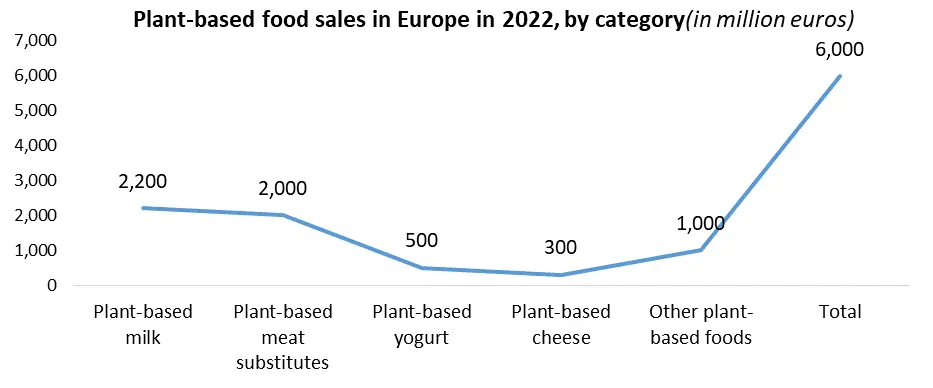 The first type includes "simple" cheese analogs that mimic cheeses like Gouda, Cheddar, and shredded pizza cheese. Brands like Violife, Simply V, Sheese, and Vegan Deli produce cheeses in this category, often using ingredients like coconut oil, water, and starches. These cheeses are relatively easy to make and don't require aging. This expansion in the European Vegan Cheese Market allowed many new players, including supermarkets, to offer their own generic plant-based cheeses under their labels. Examples include Penny's Food for Future, Albert Heijn, and Tesco.
Simultaneously, the Vegan Cheese Industry began developing more elaborate, fermented alternatives for cheeses like Camembert, Roquefort, Feta, and Mozzarella. Start-ups across Europe engaged in making these cheeses, primarily using nuts like cashews, macadamia, or almonds as their base. Other ingredients, such as soy, seeds, and rice, are also used. Bacterial cultures are employed in the fermentation process. Many of these cheese companies are small and operate on a local or regional scale, with numerous one-person businesses, especially in the UK.
However, some companies have expanded beyond their borders, making their products available all across Europe. Examples include Jay & Joy, Mondarella, Dr. Mannah's, Yogan Creamery, Mommus, Rosie and Riffy, and New Roots.
Even well-known dairy cheese brands like Bel Group and Dodoni have jumped on the vegan cheese wagon. Bel Group introduced plant-based versions of their famous Babybel snack cheese and Boursin creamy cheese. A plant-based variant of their Laughing Cow cheeses is expected in 2023. Dodoni, known for Greek Feta cheese, also launched a plant-based version made from coconut oil and potato starch, called Plant'd Greek White. Dutch favorite cream cheese Heksenkaas (Witches' Cheese) and Ilchester Vegan are other examples of dairy cheeses that have recently undergone a plant-based transformation.
Competitive landscape:
The Vegan Cheese Market is undergoing significant transformations and becoming a competitive arena in response to the growing demand for dairy-free and gluten-free options worldwide. Major grocery store chains are recognizing this shift and expanding their offerings of vegan cheeses. For instance, Dutch supermarket chain Albert Heijn expanded its vegan cheese range by over 50% in 2021, setting a precedent in the Netherlands, with other global grocery giants likely to follow suit. Several leading players are making their mark in the global vegan cheese market. One notable contender is Miyoko's Creamery, a U.S.-based company that has disrupted the dairy market since its inception in 2014. Following a substantial $52 million funding round, Miyoko's Creamery introduced its Liquid Vegan Pizza Mozzarella, boasting a 98% reduction in greenhouse emissions compared to traditional dairy mozzarella. Upfield-owned dairy-free cheese brand Violife is another significant player, offering a diverse range of vegan cheese products available in over 50 countries worldwide.
Innovation is a key driver in this space, with companies like Grounded Foods producing innovative plant-based cheeses from upcycled cauliflower and hemp, and Stockeld Dreamery crafting feta-style cheese using peas and fava beans. New Culture, an alt-dairy pioneer, is focused on animal-free mozzarella designed to mimic the stretch, melt, and bubble properties of dairy cheese. Plant-based mozzarella, a cornerstone of Formo's product portfolio, held the largest revenue share in the plant-based cheese category in 2020 and is expected to maintain its dominance, presenting opportunities for manufacturers in this segment.
The entrance of large multinational companies into the vegan cheese category is further intensifying the competition. Notably, General Mills, a U.S. food giant, has ventured into producing vegan cheeses using fermentation techniques under the brand Renegade Creamery. Additionally, publicly listed Canadian plant-based meat producer The Very Good Food Company has unveiled its vegan cheese line under The Very Good Cheese Co. brand. Beyond Meat, a U.S. giant has also made significant moves by filing for trademark applications, including Beyond Cheese. Perfect Day, a notable animal-free dairy producer, entered the vegan cheese market with its brand Modern Kitchen in 2021, leveraging its status as one of the most-funded companies in fermentation. This expansion reflects an emerging trend among plant-based companies to diversify their offerings, with a focus on mozzarella, feta-style vegan cheese, sliced cheese, soft cheese, and other vegan cheese variations. The Vegan Cheese Market is no longer a niche subcategory but is poised to become a major opportunity within the broader vegan food industry, driven by increased competition and innovation.
The objective of the report is to present a comprehensive analysis of the Vegan Cheese Market including all the stakeholders of the End User. The past and current status of the End User with forecasted market size and trends are presented in the report with the analysis of complicated data in simple language. The report covers all the aspects of the End User with a dedicated study of key players that includes market leaders, followers, and new entrants by region. PORTER, SVOR, and PESTEL analysis with the potential impact of micro-economic factors by region on the market have been presented in the report. External as well as internal factors that are supposed to affect the business positively or negatively have been analyzed, which will give a clear futuristic view of the End User to the decision-makers.
The report also helps in understanding the Vegan Cheese Market dynamics, and structure by analyzing the market segments and projecting the Vegan Cheese Market size. Clear representation of competitive analysis of key players By Grade, price, financial position, Derivatives portfolio, growth strategies, and regional presence in the Vegan Cheese Market makes the report an investor’s guide.
Vegan Cheese Market Scope: Inquiry Before Buying
| Vegan Cheese Market | |||
|---|---|---|---|
| Report Coverage | Details | ||
| Base Year: | 2025 | Forecast Period: | 2026-2034 |
| Historical Data: | 2020 to 2025 | Market Size in 2025: | US $ 221.22 Mn. |
| Forecast Period 2026 to 2034 CAGR: | 8.5% | Market Size in 2034: | US $ 460.99 Mn. |
| Segments Covered: | by Product | Parmesan Mozzarella Ricotta Cream cheese Cheddar Others |
|
| by Source | Coconut Almond Soy Cashew Others |
||
| by End-User | Household Food Processing Food Service |
||
Vegan Cheese Market, by Region
North America - (United States, Canada, and Mexico)
Europe - (UK, France, Germany, Italy, Spain, Sweden, Austria, and the Rest of Europe)
Asia Pacific - (China, South Korea, Japan, India, Australia, Indonesia, Malaysia, Vietnam, Taiwan, Bangladesh, Pakistan, and the Rest of APAC)
Middle East and Africa - (South Africa, GCC, Egypt, Nigeria, and the Rest of ME&A)
South America - (Brazil, Argentina Rest of South America)
Vegan Cheese Market Key Players
1. Daiya Foods Inc. - Canada
2. Follow Your Heart - United States
3. Tofutti Brands, Inc. - United States
4. Miyoko's Creamery - United States
5. Violife - Greece
6. Go Veggie - United States
7. Kite Hill - United States
8. Field Roast Grain Meat Co - United States
9. Wayfare - United States
10. Parmela Creamery - United States
11. Nush - United Kingdom
12. Good Planet Foods - United States
13. UPrise Foods - United States
14. Tyne Cheese Limited - United Kingdom
15. Vtopian Artisan Cheeses - United States
16. Regal Vegan - United States
17. Vermont Farmstead - United States
18. Bute Island Foods Ltd - United Kingdom
19. Galaxy Nutritional Foods - United States
20. Kinda Co - United Kingdom
Frequently Asked Questions:
1] What segments are covered in the Global Vegan Cheese Market report?
Ans. The segments covered in the Vegan Cheese Market report are based on Product, Source, End-User, and Region.
2] Which region is expected to hold the highest share of the Global Vegan Cheese Market?
Ans. The European region is expected to hold the highest share of the Vegan Cheese Market. The NHS in England is expected to lead the market and expected to grow at a certain CAGR during the forecast period.
3] What is the market size of the Global Vegan Cheese Market by 2034?
Ans. The market size of the Vegan Cheese Market by 2034 is expected to reach US$ 460.99 Mn.
4] What is the forecast period for the Global Vegan Cheese Market?
Ans. The forecast period for the Vegan Cheese Market is 2026-2034.
5] What was the market size of the Global Vegan Cheese Market in 2025?
Ans. The market size of the Vegan Cheese Market in 2025 was valued at US$ 221.22 Mn.