
Plant Based Protein Supplements Market Size by Product, Raw Material, Distribution Channel, Application and Region – Segment-Level Market Assessment, Growth Opportunity Analysis, Competitive Mapping & Forecast to 2032
Overview
The Global Plant-Based Protein Supplements Market size was valued at USD 6.27 Billion in 2024, and the total Plant-Based Protein Supplements Market size is expected to grow at a CAGR of 6.37% from 2025 to 2032, reaching nearly USD 10.17 Billion by 2032.
The report includes the analysis of impact of COVID-19 lock-down on the revenue of market leaders, followers, and disrupters. Since lock down was implemented differently in different regions and countries, impact of same is also different by regions and segments. The report has covered the current short term and long term impact on the market, same will help decision makers to prepare the outline for short term and long term strategies for companies by region.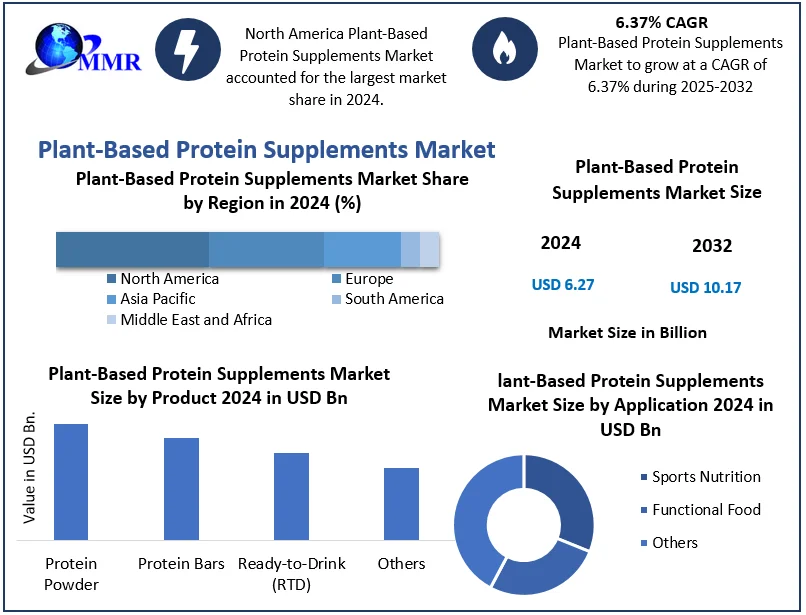 To know about the Research Methodology:-Request Free Sample Report
Global Plant-Based Protein Supplements Market Dynamics:
Based on raw material, soy segment is expected to propel the global plant-based protein supplements market in the forecast period. The increasing demand for vegan diet among the consumers across the globe is boosting demand for soy proteins. On the basis of form, protein isolate segment held the largest revenue share in the last decade as a growing preference for low-fat diet among population globally.
In terms of application, food and beverages segment is projected to fuel the global plant-based protein supplements market growth as increased population coupled with a rising spending power of middle-class population across the globe. The increasing number of animal stock which is leading demand for the animal feed with essential nutrients, high protein content, and vitamins.
The growing number of people who are adopting vegan lifestyles across the globe is boosting the global plant-based protein supplements market growth in a positive way. Global plant-based protein supplements market is witnessing vibrant growth as expanding the global vegan population. The rise in awareness regarding the health benefits of vegan diets among consumers globally is expected to propel the global plant-based protein supplements market growth during the forecast period.
The millennials in the developed as well as developing economies are inclining toward vegan diets as they provide more fiber, antioxidants, and beneficial plant compounds, which are booming the global plant-based protein supplements market growth. Growing demand for these diets as they help in improving kidney function and lowering blood sugar levels.
The growing trend of hygienic diet among consumers is also fueling the market growth. Rising health consciousness among consumers across the globe is one of the key trends in the global market, which is expected to surge the market growth. Increasing instances of obesity and other related diseases are making consumers health-conscious, which is boosting the consumption of products with low fat and calorie content. The growing popularity of premium brands of healthy products offering various functional benefits, which is another key trend in the global market.
Global Plant-Based Protein Supplements Market Regional Analysis:
Based on the Product, the Protein Powder segment dominates the market. Because of its adaptability, ease of use, and broad customer acceptance, protein powder continues to hold the top position in the market for plant-based protein supplements. Protein powders are preferred by fitness enthusiasts, vegans, and health-conscious people for their ability to promote nutrition, build muscle, and control weight.
The availability of different flavors, clean-label alternatives, and improved formulations with extra vitamins or minerals all contribute to the demand. Plant-based protein powders, especially those made from peas, rice, soy, and hemp, are becoming more and more popular on internet marketplaces and store shelves. Because of its increasing usage in both established and emerging markets, this category keeps growing.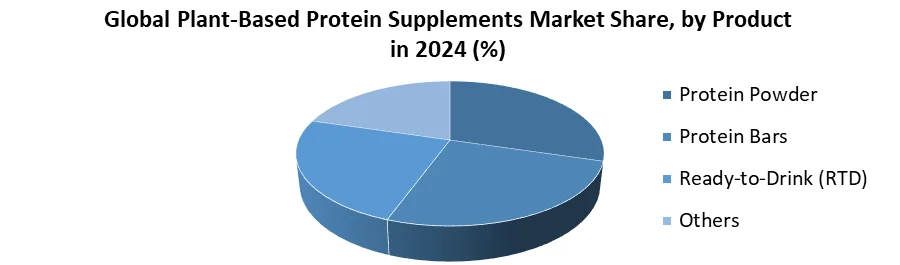
Based on the Raw Material, the Soy category has the highest market share in the market. The market for plant-based protein supplements is dominated by soy protein because of its complete amino acid profile, low cost, and wide range of functional applications. Because soy has been shown to provide health and muscle-building benefits, consumers looking for dairy substitutes and cholesterol-free protein prefer it. Fitness fanatics, vegans, and people with lactose sensitivity continue to have a high need for soy-based supplements. Because of its well-established customer base, affordability, and use in sports nutrition and general wellness goods, soy protein continues to be relevant even in the face of new substitutes like pea and rice protein. The market is still expanding gradually, particularly in North America, Europe, and Asia-Pacific.
Based on the Distribution Channel, In the market for Plant-Based Protein Supplements, Pharmacies/Drugstores holds the largest share. Pharmacies and drugstores are an important offline distribution channel for plant-based protein supplements, especially for customers looking for reliable, health-conscious, clinical-grade products. Customers in this market are driving demand because they place a higher value on immunity support, chronic illness management, and wellness than they do on exercise alone.
Pharmacy inventory of protein powders, ready-to-drink products, and pill supplements is growing because to increased demand from elderly people, health-conscious people, and people with dietary restrictions. Consumer trust in pharmacies is increased by their reputation as wellness centers, particularly when it comes to clean-label and functional plant-based protein products. This channel's growth is stable, especially in regions that are urban and health-focused.
Based on the Application, Sports Nutrition have a significant market share in the Plant-Based Protein Supplements industry. Growing health consciousness, fitness culture, and the trend toward sustainable diets among athletes and gym-goers are all factors contributing to the need for plant-based protein supplements in the sports nutrition sector.
For performance improvement, muscle regeneration, and endurance without the digestive problems frequently associated with animal-based proteins, consumers are looking for plant-based proteins like pea, soy, and hemp. Vegan fitness movements, clean-label trends, and growing consumer preference for allergen-free supplements all contribute to the need. In order to reach both elite athletes and fitness enthusiasts globally, sports nutrition companies are diversifying their plant-based product lines to include powders, bars, and ready-to-drink formulas.
Global Plant-Based Protein Supplements Market Regional Insights:
In 2024, the market for plant-based protein supplements in North America held the largest revenue share. The significant demand for sports nutrition products in nations like the United States and Canada is responsible for the increase. The availability of raw materials and a strong presence of major industry participants are also expected to support the market's expansion. In June 2020, the Canadian federal government announced plans to invest USD 74 million in Merit Functional Foods, a local producer of plant-based proteins. By addressing the growing demand, this program sought to increase the penetration of these items across the nation.
Europe is expected to grow at the fastest rate. During the forecast period, it is expected that the region's demand for these products would increase due to a number of factors, such as a tendency toward preventative healthcare, a growing emphasis on healthy living, and increased demand from nations like Germany and the UK as a result of the region's growing vegan population.
During the forecast period, the Asia Pacific market for plant-based protein supplements is anticipated to expand at the highest CAGR. Product consumption in Asia Pacific developing nations has increased as a result of health-conscious customers. During the forecast period, the market will grow due to the sharp rise in consumption of these products in nations like China, India, and Indonesia. In these countries, as customers' purchasing power increases and various brands become more accessible, it is expected that plant-based supplements would gain a substantial amount of popularity.
Global Plant-Based Protein Supplements Market, Key Highlights:
Global Plant-Based Protein Supplements Market analysis and forecast, in terms of value.
Comprehensive study and analysis of market drivers, restraints and opportunities influencing the growth of the Global Market
Global Market segmentation on the basis of type, source, end-user, and region (country-wise) has been provided.
Global Market strategic analysis with respect to individual growth trends, future prospects along with the contribution of various sub-market stakeholders have been considered under the scope of study.
Global Market analysis and forecast for five major regions namely North America, Europe, Asia Pacific, the Middle East & Africa (MEA) and Latin America along with country-wise segmentation.
Profiles of key industry players, their strategic perspective, market positioning and analysis of core competencies are further profiled.
Competitive developments, investments, strategic expansion and competitive landscape of the key players operating in the Global Market are also profiled.
Scope of the Report Plant-Based Protein Supplements Market: Inquire before buying
| Global Plant-Based Protein Supplements Market | |||
|---|---|---|---|
| Report Coverage | Details | ||
| Base Year: | 2024 | Forecast Period: | 2025-2032 |
| Historical Data: | 2019 to 2024 | Market Size in 2024: | USD 6.27 Bn. |
| Forecast Period 2025 to 2032 CAGR: | 6.37% | Market Size in 2032: | USD 10.17 Bn. |
| Segments Covered: | by Product | Protein Powder Protein Bars Ready-to-Drink (RTD) Others |
|
| by Raw Material | Soy Spirulina Pumpkin Seed Hemp Rice Pea Others |
||
| by Distribution Channel | Supermarkets/Hypermarkets Online Stores Pharmacies/Drugstores Specialty Stores Others |
||
| by Application | Sports Nutrition Functional Food Others |
||
Plant-Based Protein Supplements by Region
North America (United States, Canada and Mexico)
Europe (UK, France, Germany, Italy, Spain, Sweden, Austria and Rest of Europe)
Asia Pacific (China, South Korea, Japan, India, Australia, Indonesia, Malaysia, Vietnam, Taiwan, Bangladesh, Pakistan and Rest of APAC)
Middle East and Africa (South Africa, GCC, Egypt, Nigeria and Rest of ME&A)
South America (Brazil, Argentina Rest of South America)
Plant-Based Protein Supplements Key Players are:
1. Glanbia plc
2. Archer Daniels Midland Company (ADM)
3. Cargill, Incorporated
4. International Flavors & Fragrances, Inc.
5. Kerry Group
6. The Scoular Company
7. Roquette Frères
8. Axiom Foods, Inc.
9. Growing Naturals, LLC.
10. Manitoba Harvest Hemp Foods
11. Amway Corporation
12. AMCO Proteins
13. Quest Nutrition
14. MusclePharm Corporation
15. NOW Foods
16. Hormel Foods Corporation
17. Abbott Nutrition
18. Transparent Labs
19. Sakara Life
20. BENEO GmbH
21. Other Key Players
FAQs:
1. What are the growth drivers for the Plant-Based Protein Supplements Market?
Ans. Growing interest in plant-based diets and the trend of dietary supplements are the most significant factors driving the plant-based protein supplements market.
2. What are the major opportunities for growth in the Plant-Based Protein Supplements Market?
Ans. Growing interest in health, wellness, and fitness, as well as rising demand for vegan and plant-based lifestyles present substantial opportunities for the plant-based protein supplements sector.
3. Which region is expected to lead the Global Plant-Based Protein Supplements Market during the forecast period?
Ans. North America is expected to lead the Plant-Based Protein Supplements Market during the forecast period.
4. What is the projected market size and growth rate of the Plant-Based Protein Supplements Market?
Ans. The Plant-Based Protein Supplements Market size was valued at USD 6.27 Billion in 2024, and the total market revenue is expected to grow at a CAGR of 6.37% from 2025 to 2032, reaching nearly USD 10.17 Billion in 2032.
5. What segments are covered in the Plant-Based Protein Supplements Market report?
Ans. The segments covered in the Plant-Based Protein Supplements Market report are Product, Raw Material, Distribution Channel, Application, and Region.