
Germany Nutritional Supplements Market Size by Form, Ingredient, Product, Distribution Channel - Segment-Level Market Assessment, Growth Opportunity Analysis, Competitive Mapping & Forecast to 2030
Overview
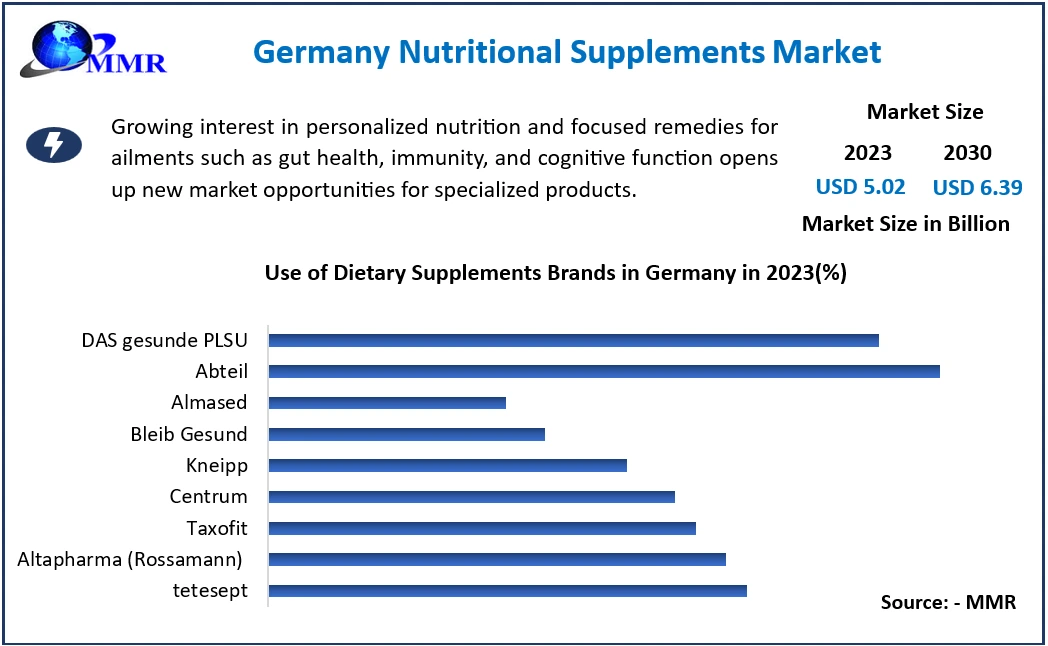
The Germany Nutritional Supplements Market size was valued at USD 5.02 Billion in 2023. The total Germany Nutritional Supplements Market revenue is expected to grow at a CAGR of 3.5% from 2023 to 2030, reaching nearly USD 6.39 Billion.
Germany Nutritional Supplements Market
Germany's market for nutritional supplements continues to grow thanks to rising health consciousness and an aging population. Demand for nutritional supplements is rising as a result of consumers looking increasingly more for preventive healthcare solutions. In Germany, the two main retail channels for nutritional supplement sales are pharmacies 25% and supermarkets at 65% of the market. At the same time, e-commerce platforms that provide competitive pricing and convenience are driving the rapid growth of online sales, which is expected to become a significant source of revenue by 2030. Consumer expenditure per customer is increasing, with a preference for premium, natural, and sustainably sourced supplements.
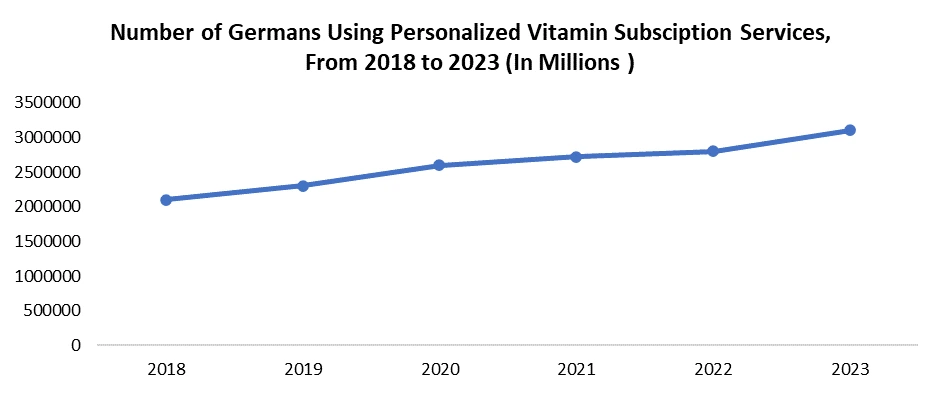
It reflects the increasing focus on product quality. In addition, there's a discernible shift in consumer behavior toward customized solutions, with people searching for supplements customized to their specific health requirements. which indicates a potential growth opportunity for the industry. The MMR Report provides comprehensive insights into the dynamic landscape of the German nutritional market, highlighting promising revenue streams, robust sales dynamics, and optimistic growth prospects. By understanding consumer trends, identifying specialized opportunities, and embracing innovative practices, brands capitalize on this dynamic market and secure profitable investments.
 To know about the Research Methodology :- Request Free Sample Report
The Rise of Sports Nutrition
The growing interest in fitness and sports-related activities in Australia is significantly impacting the supplement market, driving a surge in demand for sports nutrition products. Brand diversification has been observed in the constantly shifting sports nutrition market as well-known supplement companies increase their product offerings to include specialty lines. At the same time, there is an increase in the emergence of new brands that specialize exclusively in sports nutrition, suggesting the growing market for this industry. One significant trend is increased innovation and product creation, with research efforts focused on developing cutting-edge formulae, useful components, and practical delivery methods. Connecting the active consumer base requires effective marketing techniques, such as focused initiatives and partnerships with fitness influencers. Additionally, e-commerce plays a crucial role in providing sports nutrition items with easy access and affordable prices through online platforms.
Supply Chain Disruptions
External factors such as global events and disruptions in the supply chain can have a significant and descending impact on the market, affecting everything from the availability and cost of raw materials to manufacturing and distribution processes. Disruption results in longer lead times, which affects product availability by delaying shipments and causing shortages of raw materials. Price volatility, caused by increased demand and restricted supply, can push up raw material costs, resulting in higher product prices for customers. Manufacturers are expected to concentrate on their main offerings during interruptions, which results in a smaller selection and less availability of specialty or less valuable goods. According to MMR Research, 85% of German supplement stores reported stockouts of popular items in the previous year, and 40% reported that these disruptions negatively impacted their yearly profitability by more than XX5, according to a 2023 poll.
Germany Nutritional Supplements Market Segment Analysis
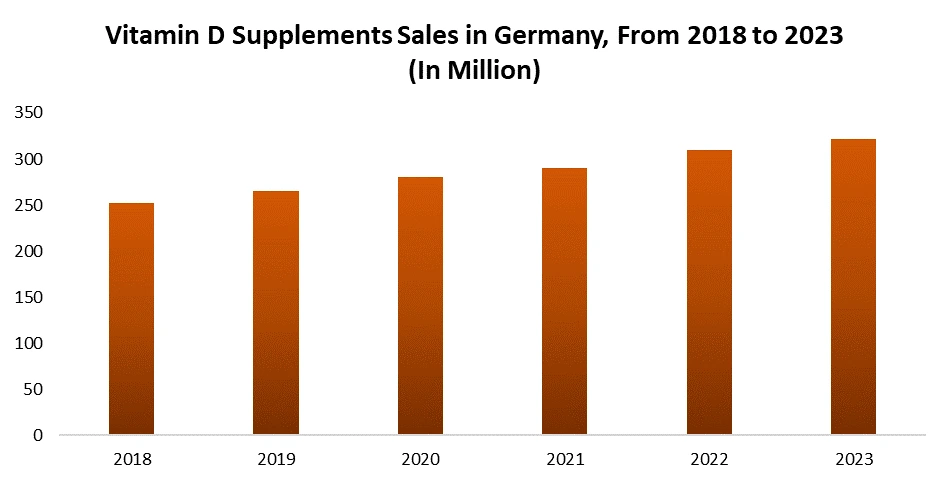
By Ingredients, the Fatty Acids Segment holds the dominant share of the German nutritional Supplements market, estimated at around 18%. The minerals subsegments in the fatty acids, especially magnesium supplements, could see an increase in sales because they support heart health and muscular function in addition to Omega-3 fatty acids. Vitamin D, which is necessary for the absorption of calcium and general health, becomes more in demand, which would be consistent with the beneficial benefits of omega-3 fatty acids. Within the protein industry, protein supplements promoted for muscle rehabilitation and athletic performance are susceptible to coming into contact with high-potency Omega-3 compositions designed specifically for athletes. The market for nutritional supplements as a whole is impacted by the popularity of Omega-3s in the German fatty acid Segment.
Germany Nutritional Supplements Market Scope: Inquire Before Buying
| Germany Nutritional Supplements Market | |||
|---|---|---|---|
| Report Coverage | Details | ||
| Base Year: | 2023 | Forecast Period: | 2024-2030 |
| Historical Data: | 2018 to 2023 | Market Size in 2023: | US $ 5.02 Bn. |
| Forecast Period 2024 to 2030 CAGR: | 3.5% | Market Size in 2030: | US $ 6.39 Bn. |
| Segments Covered: | by Form | Capsules Powder Tablet Liquid |
|
| by Ingredient | Fatty Acids Minerals Vitamin Protein Botanical |
||
| by Product | Dietary Supplements Sports Supplements Beauty Supplements |
||
| by Distribution Channel | Hypermarkets Supermarkets Pharmacy Stores Online Channels |
||
Key Players in the Germany Nutritional Supplements Market
1. Queisser Pharma GmbH & Company KG
2. Nutraceuticals Group
3. Dr. B. Scheffler Nachfolger GmbH & Co. KG
4. ZeinPharma Germany GmbH
5. Pamex Pharmaceuticals GmbH
6. Ayanda GmbH
7. Sabinsa Europe GmbH
8. Denk Pharma GmbH & Co
9. Nu3
10. Sana-Studienkreis
FAQs:
1. What types of nutritional supplements are popular in Germany?
Ans A wide range of nutritional supplements is popular in Germany, including vitamins, minerals, herbal supplements, sports nutrition, and weight management products. There's also a growing interest in organic and natural supplements.
2. What are the challenges faced by the nutritional supplements industry in Germany?
Ans. Challenges include increased competition, concerns about product authenticity, and the need for continuous innovation. Regulatory compliance and changing consumer preferences also present challenges for market players.
3. What is the projected market size & and growth rate of the Germany Neurology Devices Market?
Ans. The Germany Neurology Devices Market size was valued at USD 5.02 Billion in 2023. The total Australian Neurology Devices market revenue is expected to grow at a CAGR of % from 2023 to 2030, reaching nearly USD 6.39 Billion By 2030.