
Solar PV Backsheet Market By Product Type, By Material Type, By Thickness, By Module Technology, By Application, By End User, By Sales Channel and Regional Insights 2034
Overview
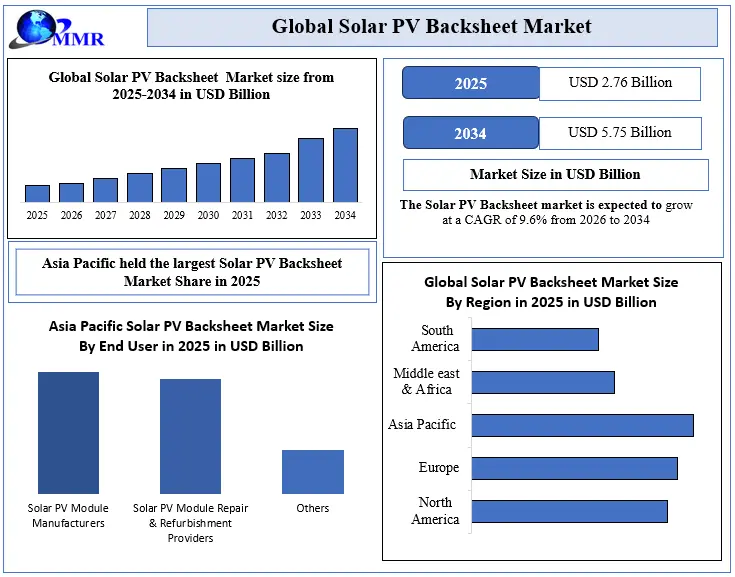
Global Solar PV Backsheet Market size was valued at USD 2.76 Billion in 2025, and the total revenue is expected to grow at a CAGR of 9.6% from 2026 to 2034, reaching nearly 5.75 Billion.
Solar PV Backsheet Market Overview
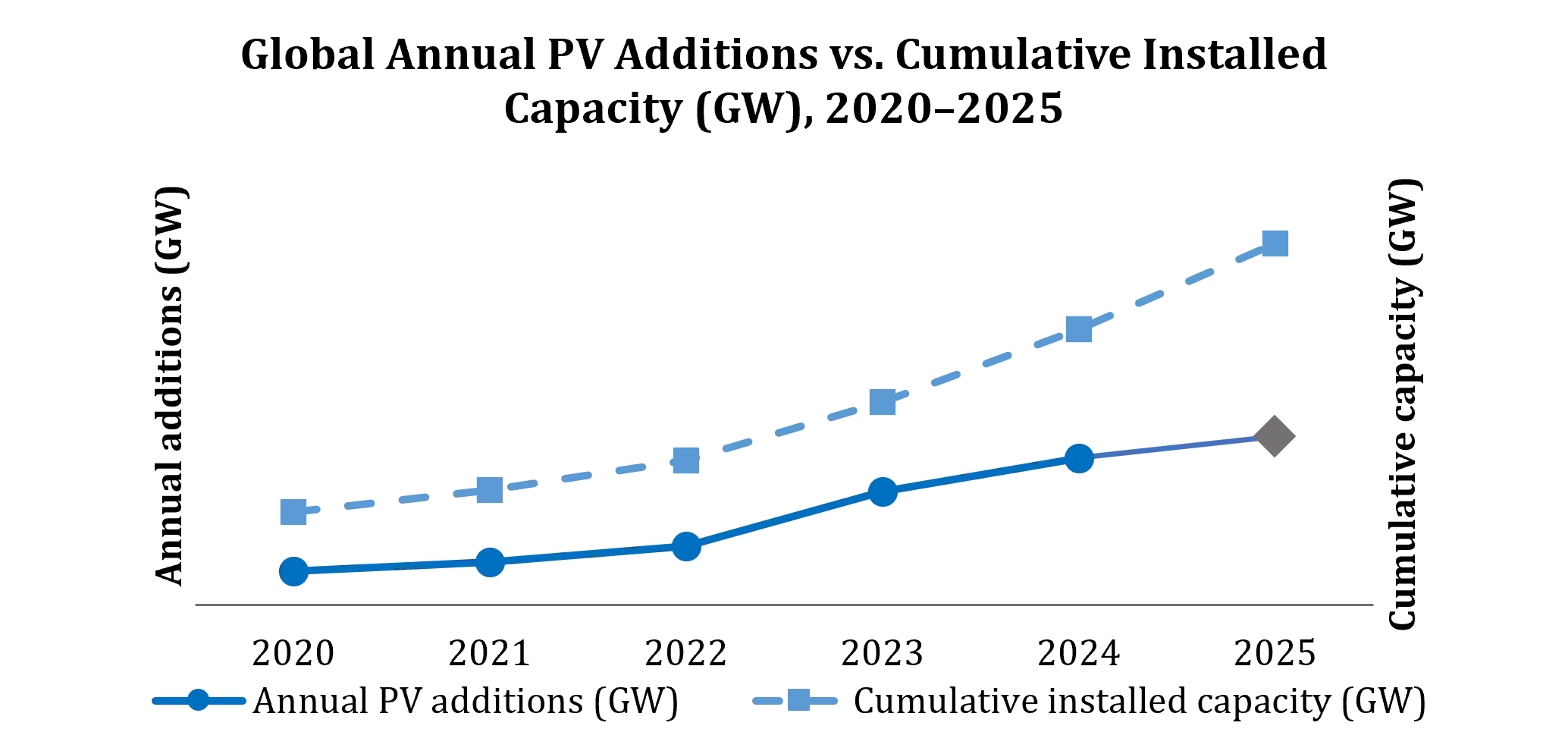
Solar backsheets provide electrical insulation, UV resistance, and moisture protection, enhancing module reliability. Rising adoption of high-performance fluoropolymer and non-fluoropolymer backsheets supports innovation, sustainability, and long-term solar panel efficiency worldwide. According to IEA-PVPS Trends in Photovoltaic Applications 2026, worldwide installed PV capacity reached 2.96 TW by the end of 2025, with approximately 690 GW commissioned during 2025. This creates a growing technical requirement for solar panel backsheet materials that maintain electrical insulation, UV resistance, and moisture protection throughout the module's service life. Demand for durable photovoltaic backsheet films increasingly depends on module construction, encapsulant compatibility, and performance under prolonged thermal and humidity exposure, which boosts Solar PV Backsheet Market growth.
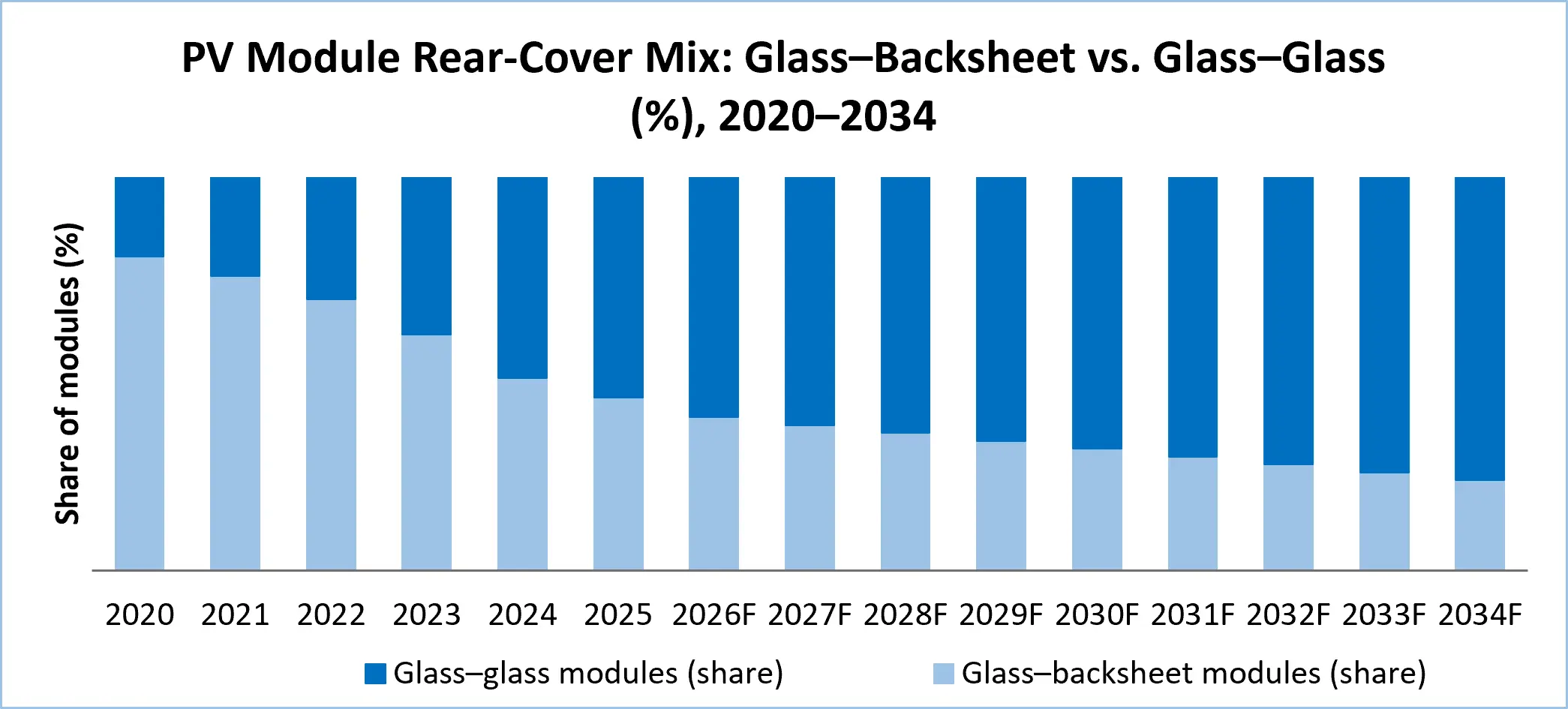
The International Energy Agency Photovoltaic Power Systems Programme reported that global installed solar PV capacity reached 2.96 TW at the end of 2025, with nearly 690 GW commissioned during 2025. This deployment increases the importance of backsheets as electrical-insulation and environmental-protection components in glass-backsheet modules. Material selection must account for ultraviolet exposure, water-vapour ingress, mechanical cracking, adhesion retention and compatibility with modern encapsulants. However, expansion of glass-glass modules can reduce backsheet demand per watt installed.
Solar PV Backsheet Market Key Highlights
• Solar deployment: Nearly 690 GW of global PV installed globally in 2025, creating a substantial downstream module-material requirement, though not all modules use backsheets.
• Manufacturing and technology: N-type crystalline-silicon wafers represented approximately 82% of wafer use in 2025, increasing the importance of material compatibility across evolving module architectures.
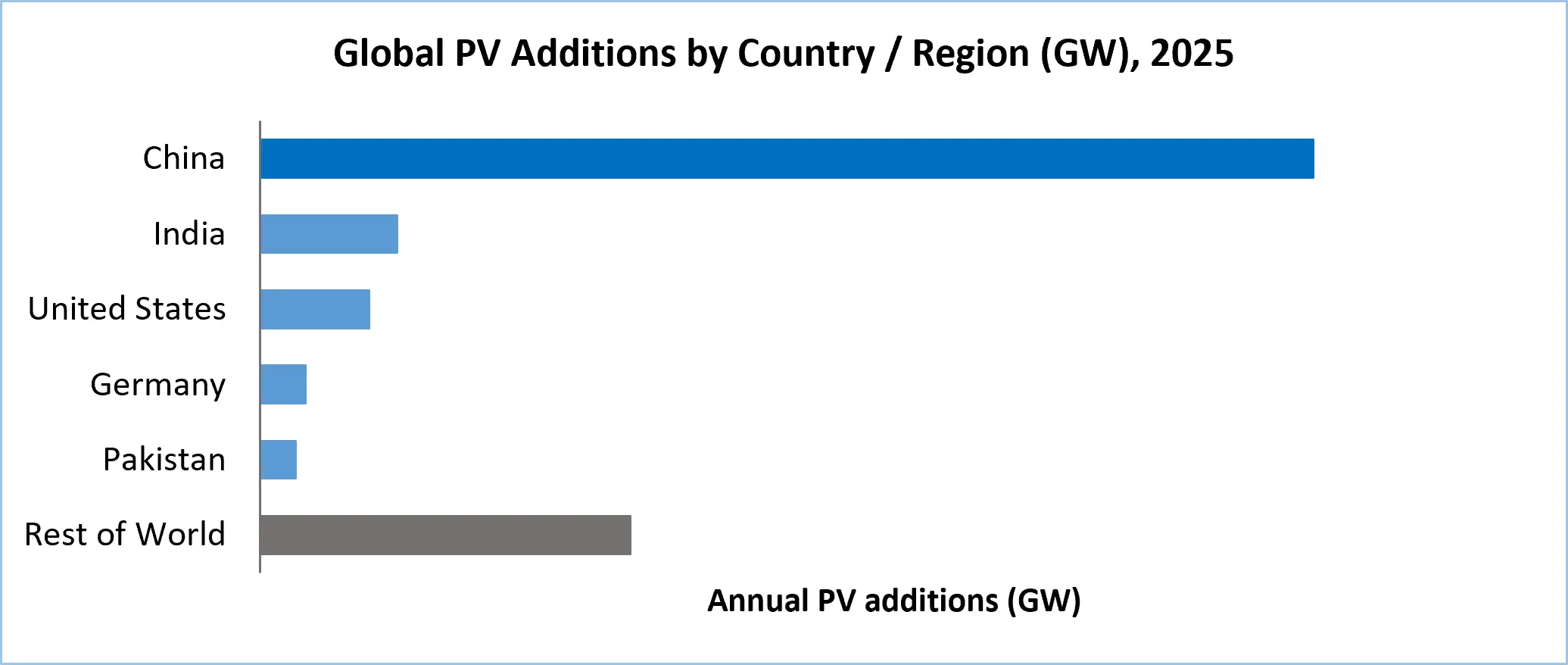
• Geographic demand signals: China installed about 415 GW, India about 54 GW and the United States about 43 GW of solar PV in 2025.
• Reliability priority: The need to correlate backsheet deterioration under sunlight, water, temperature, pollution and abrasion with actual field performance.
Solar PV Backsheet Market Growth and Share Analysis
To know about the Research Methodology :- Request Free Sample Report
Market Trends for the Solar PV Back Sheet Market
A key Solar PV Back Sheet market trend is the shift toward application-specific polymer structures rather than one universal film specification. With 2.96 TW of global installed PV capacity at the end of 2025, material reliability has implications across a large operating asset base. Suppliers are developing fluoropolymer-free PV backsheet alternatives, coated backsheet films, and recyclable multilayer constructions. At the same time, bifacial solar module adoption increases interest in transparent backsheets, although their suitability must be assessed against glass-glass modules. SEO-relevant technology themes include PET solar backsheet durability, UV-resistant PV films, and high-performance module insulation.
Solar PV Back Sheet Manufacturers are exploring new materials and technologies to enhance the performance and durability of back sheets. There is an increasing preference for non-fluoropolymer-based back sheets that offer improved weather resistance and reduced environmental impact compared to traditional fluoropolymer-based back sheets. This is due to the industry's focus on sustainability and the need for more efficient and eco-friendly solutions.
Rising demand for transparent back sheets: Transparent back sheets allow more light to pass through to the solar cells increasing the overall efficiency of solar panels driving the continuous growth of higher energy conversion rates and improved power output in solar PV systems. Manufacturers are developing transparent back sheets that maintain the necessary protective properties while maximizing the absorption of sunlight enhancing the performance of solar modules.
Growing emphasis on recyclability and circular economy: Sustainability is a key trend in the Solar PV Back Sheet Market, with a growing emphasis on recyclability and the circular economy. Development of back sheets that are recyclable at the end of their life cycle, reducing environmental impact and promoting a circular economy approach. Recycling technologies to recover valuable materials from used back sheets and reintroduce them into the production process are a recent trend among manufacturers. It helps with the industry's commitment to reducing waste and promoting the long-term sustainability of solar PV systems.
A major technology shift is the rise of n-type crystalline-silicon module designs, alongside glass-glass configurations and application-specific transparent backsheets. The resistance to potential-induced degradation, stable adhesion after damp-heat exposure, controlled optical properties and design for end-of-life separation.
Market Drivers for the Solar PV Back Sheet Market
Large-scale photovoltaic deployment strengthens the procurement outlook for solar PV backsheet manufacturers, which Solar PV Back Sheet Market growth. China installed nearly 415 GW of PV in 2025, India 54 GW, the United States 43 GW, and Germany 18 GW. For solar module manufacturers, fluoropolymer-based PV backsheets and cost-optimized non-fluoropolymer backsheets must satisfy reliability and processing requirements. The need for long-life solar panel protective films, dependable adhesion, and high-voltage electrical insulation is therefore a central purchasing driver.
The increasing global demand for renewable energy sources, especially solar energy is a major driver for the Solar PV Back Sheet due to its ease of implementation and affordability compared to other renewable energy sources. Governments and organizations worldwide are increasingly implementing favorable policies and incentives to promote the adoption of solar power, leading to a significant rise in the installation of solar PV systems, boosting the Solar PV Backsheet Market demand for high-quality back sheets. Technological advancements in back sheet materials and manufacturing processes are driving Solar PV Back Sheet manufacturers to continuously invest in research and development to enhance the performance and efficiency of back sheets.
Innovations include improved weatherability, enhanced electrical insulation properties and reduced costs to meet the evolving needs of the solar industry. These advancements are improving the overall reliability and durability of solar PV systems and also contributing to the growth of the Solar PV Backsheet Market . The increasing awareness and concern for environmental sustainability are playing a vital role in driving the demand for solar PV back sheets. Consumers and businesses are conscious of their carbon footprint with a growing concern towards clean and renewable energy sources further propelling Solar PV Back Sheet Industry.
Opportunities for the Solar PV Back Sheet Market
India offers a significant localization opportunity for photovoltaic backsheet suppliers. Suppliers can differentiate through lower moisture ingress, improved hydrolysis resistance, and compatibility with bifacial solar PV module designs.
The Solar PV Back Sheet Market presents several opportunities for manufacturers and stakeholders with immense potential for innovation and product development as there is a constant demand for back sheets that withstand diverse weather conditions, provide higher electrical insulation and deliver improved efficiency. Manufacturers capitalize on these opportunities by investing in research and development to create innovative back sheet solutions that meet the evolving demands of the solar industry. The emerging markets in the Asia-Pacific region present significant growth opportunities for the solar PV back sheet market.
Countries such as China, India and Japan are witnessing a surge in solar power installations due to government initiatives, rising energy demand and increasing investments in renewable energy projects. Expanding operations in these markets establishing strategic partnerships, local manufacturing facilities and distribution networks provides opportunities to grow in the market. With the growth of the industry there is a need for integrated solutions that improve the performance of solar PV systems. Collaborations between back sheet manufacturers and module manufacturers helps in development of customized solutions that enhances the overall efficiency and durability of solar panels.
Restraints
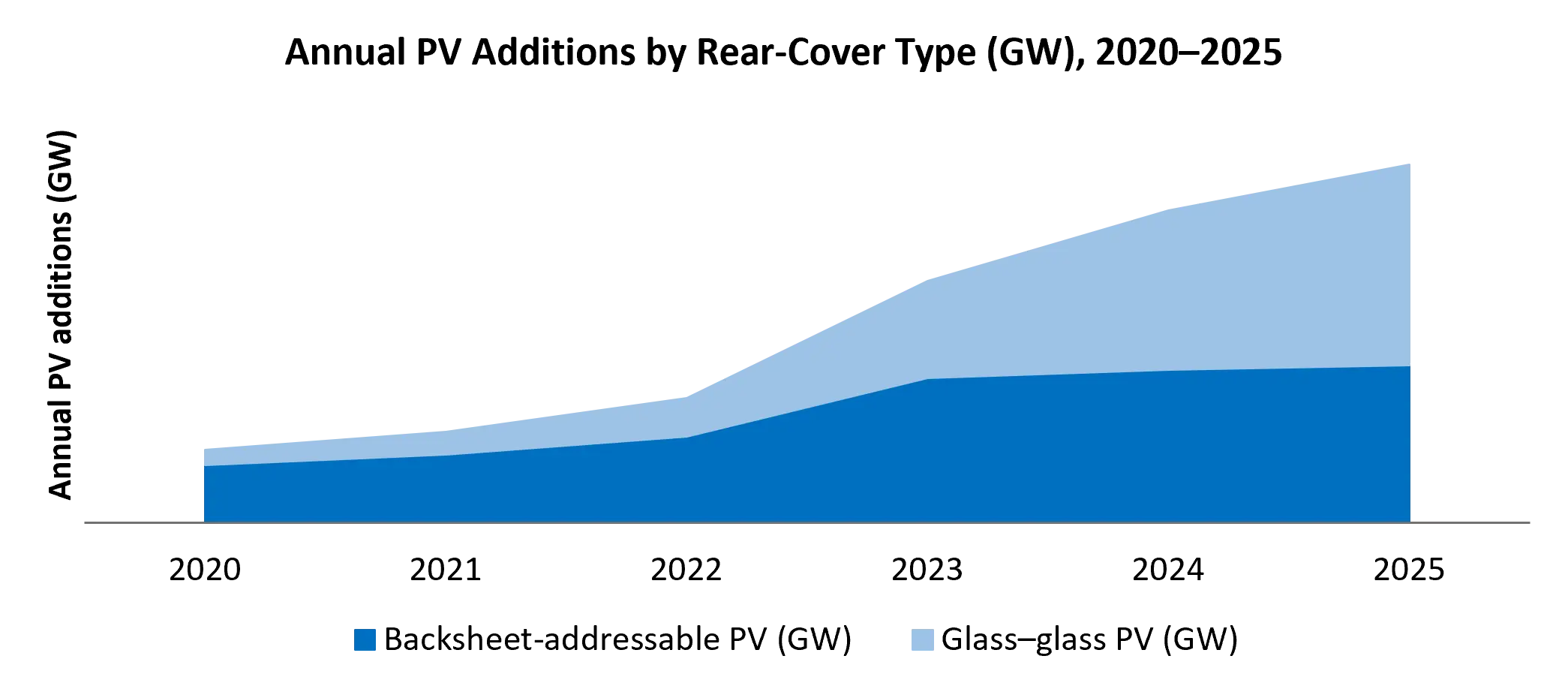
Pricing pressure is intensified by the scale and volatility of solar manufacturing. IEA-PVPS estimated approximately 690 GW of new global PV installations in 2025, but installation capacity should not be confused with backsheet material consumption because glass-glass modules may not require a conventional polymer backsheet. In this environment, solar PV backsheet film suppliers must balance resin procurement, multilayer conversion costs, and demanding customer qualification cycles. Non-fluoropolymer solar backsheets can improve cost positioning, yet any material substitution requires rigorous evaluation of UV stability, delamination risk, electrical insulation, and field durability.
A Solar PV Back Sheet Market restraint is substitution by dual-glass module construction, which can eliminate the conventional polymer backsheet. This distinction is essential because growth in installed solar capacity does not translate proportionally into backsheet material consumption. In addition, price pressure throughout PV manufacturing constrains the premium available for multilayer fluoropolymer products. Manufacturers therefore face the dual burden of competitive pricing and expensive long-duration product qualification.
Challenges
The rapid expansion of PV deployment raises the importance of quality assurance across solar module backsheet construction, hamper Solar PV Back Sheet Market growth. IEA-PVPS reported that nearly 36 countries installed more than 1 GW of PV in 2025, creating diverse operating environments for module manufacturers. Backsheets intended for hot, humid, coastal, or high-irradiance conditions require application-specific testing for cracking, moisture barrier integrity, adhesion retention, and dielectric strength. Bifacial photovoltaic modules also complicate product positioning because transparent polymer backsheets compete with glass-glass construction. Reliable product qualification, traceability, and long-term weathering performance remain essential differentiators.
Solar PV Back Sheet Market Segment Analysis
By Material Type
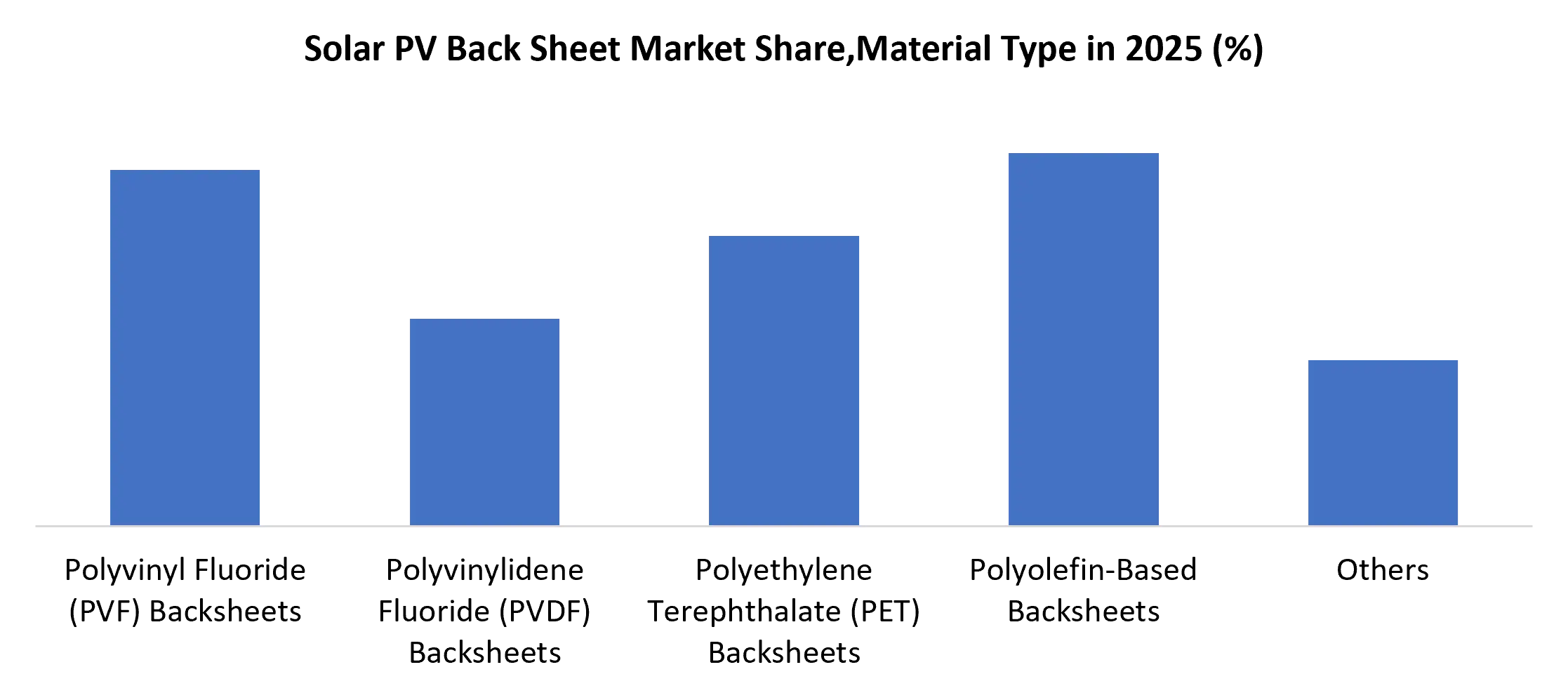
Fluoropolymer-Based Backsheets dominated the Solar PV Backsheet Market in 2025, supported by their superior UV resistance, moisture protection, electrical insulation, and long-term durability. These backsheets incorporate materials such as polyvinyl fluoride (PVF) and polyvinylidene fluoride (PVDF), providing reliable protection for solar modules operating under extreme environmental conditions. Their compatibility with photovoltaic modules designed for 25–30 years of operational life strengthens adoption across utility-scale and commercial solar installations. Growing demand for high-performance solar panel backsheets, particularly in harsh climatic regions, supports segment demand. However, non-fluoropolymer alternatives are gaining traction due to cost competitiveness and sustainability considerations.
By Module Technology
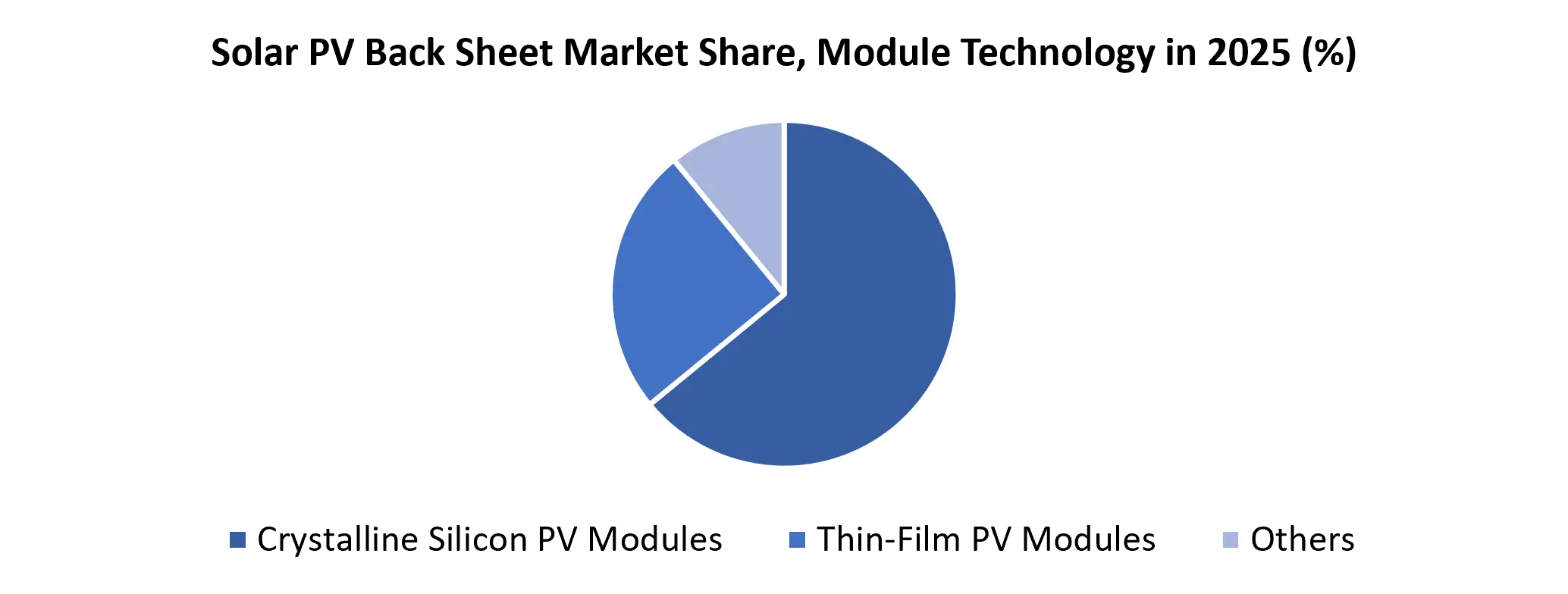
Crystalline Silicon PV Modules dominated the Solar PV Backsheet Market in 2025, supported by widespread adoption of monocrystalline and multicrystalline solar technologies. The crystalline silicon technology accounted for nearly 98% of global photovoltaic module production in 2024, highlighting its importance in solar panel manufacturing. Monocrystalline silicon modules, particularly TOPCon and PERC technologies, drive demand for high-performance solar PV backsheets offering UV resistance, moisture protection, and electrical insulation. Increasing deployment of utility-scale and rooftop solar installations supports segment demand. The growing adoption of glass-glass modules, however, creates competition for conventional polymer backsheets in bifacial photovoltaic applications.
Solar PV Back Sheet Market Regional Analysis
Asia Pacific dominated the Solar PV Back Sheet Market in 2025. Solar PV backsheet supply chain is supported by large photovoltaic installation volumes and module manufacturing ecosystems. Nearly 415 GW of solar PV additions in China and 54 GW in India in 2025. Strong government incentives, expanding domestic manufacturing capacities, increasing investments in renewable energy infrastructure, and growing demand for durable, weather-resistant, and high-performance solar PV backsheets are strengthening regional market growth. The technological advancements in fluoropolymer and non-fluoropolymer backsheets, alongside increasing adoption of high-efficiency solar modules, are creating opportunities for manufacturers across China, India, Japan, and Southeast Asia.
 The North American region, particularly the United States and Canada, is a prominent Solar PV Back Sheet Market. The region has witnessed significant growth in solar energy installations, driven by government incentives, supportive policies and increasing environmental awareness. The well-established renewable energy industry, technological advancements and robust research and development activities contribute to the demand for high-quality back sheets in this region.
Europe is another key market for solar PV back sheets, with countries such as Germany, France and the United Kingdom leading the adoption of solar energy. The region places a strong emphasis on sustainability and renewable energy targets, which drives the demand for efficient and reliable back sheets. The presence of stringent quality standards and regulations enhances the Solar PV Back Sheet Market potential for high-performance back sheets in Europe.
Competitive Analysis of the Solar PV Back Sheet Industry
Competition among Solar PV Back Sheet manufacturers increasingly centers on validated lifetime performance and supply-chain integration. Government of India has solar module manufacturing capacity of nearly 172 GW as of 31 March 2026, highlighting the potential importance of local procurement partnerships. For competitive benchmarking, suppliers of fluoropolymer-based backsheets, non-fluoropolymer solar backsheets, and coated PET films should be compared on dielectric performance, adhesion, UV resistance, weathering validation, delivery reliability, and OEM approval status. These product-level criteria are more defensible than inferring backsheet market share directly from national solar installation capacity.
The Solar PV Back Sheet Industry exhibits a moderately fragmented market structure with a mix of established players and smaller regional manufacturers. A few dominant companies have a significant market share and a wide product portfolio often having a strong brand recognition, extensive distribution networks and economies of scale. The industry also includes several niche players that cater to specific customer segments or offer specialized back sheet products. This diversification in market structure provides opportunities for both established and emerging companies to compete in the industry.
Solar PV Backsheet Market Recent Developments
| Date | Company | Development | Impact |
| 17 February 2026 | Cybrid Technologies Inc. | The company completed the acquisition of a controlling stake in GenerNano to bolster its nanomaterial capabilities for solar components. | This move strengthens Cybrid's R&D pipeline for high-performance fluorine-free backsheets and advanced encapsulation films. |
| 03 February 2026 | Arkema SA | Arkema signed a Memorandum of Understanding with Senior to advance innovation in high-performance PVDF-based protective materials. | The partnership aims to optimize Kynar PVDF applications for next-generation solar and battery systems, improving chemical resistance and durability. |
| 27 February 2025 | Jolywood (Suzhou) Sunwatt Co., Ltd. | The manufacturer released its 595 W Windproof module featuring a high-strength steel substrate and advanced backsheet design. | The integration of specialized backsheets allows for a 23.03% conversion efficiency in extreme, high-wind utility environments. |
Solar PV Back Sheet Market Scope: Inquire before buying
| Solar PV Backsheet Market | |||
|---|---|---|---|
| Report Coverage | Details | ||
| Base Year: | 2025 | Forecast Period: | 2026-2034 |
| Historical Data: | 2020 to 2025 | Market Size in 2025: | 2.76 USD Billion |
| Forecast Period 2026-2034 CAGR: | 9.6% | Market Size in 2034: | 5.75 USD Billion |
| Segments Covered: | by Product Type | Polyvinyl Fluoride (PVF) Backsheets Polyvinylidene Fluoride (PVDF) Backsheets Polyethylene Terephthalate (PET) Backsheets Polyolefin-Based Backsheets Others |
|
| by Material Type | Fluoropolymer-Based Backsheets Non-Fluoropolymer-Based Backsheets |
||
| by Thickness | Below 200 µm 200–300 µm Above 300 µm |
||
| by Module Technology | Crystalline Silicon PV Modules Monocrystalline Silicon Multicrystalline Silicon Thin-Film PV Modules Others |
||
| by Application | Monofacial Solar PV Modules Bifacial Solar PV Modules Others |
||
| by End User | Solar PV Module Manufacturers Solar PV Module Repair & Refurbishment Providers Others |
||
| by Sales Channel | Direct OEM Sales Distributors & Traders Others |
||
Solar PV Backsheet Market Region
North America (United States, Canada, and Mexico)
Europe (UK, France, Germany, Italy, Spain, Sweden, Austria, and the Rest of Europe)
Asia Pacific (China, South Korea, Japan, India, Australia, ASEAN, Indonesia, Philippines, Malaysia, Vietnam, Thailand, ASEAN, Rest of Asia Pacific)
Middle East & Africa (South Africa, GCC, Nigeria, Rest of ME&A)
South America (Brazil, Argentina, Rest of South America)
Solar PV Backsheet Market Key Players
Asia Pacific
1. Jolywood (Suzhou) Sunwatt Co., Ltd.
2. Cybrid Technologies Inc.
3. Hangzhou First Applied Material Co., Ltd.
4. Crown Advanced Material Co., Ltd.
5. Lucky Film Co., Ltd.
6. Jiangsu Zhongtian Technology Co., Ltd. (ZTT)
7. Huitian New Materials
8. Changzhou Betterial Film Technologies Co., Ltd.
9. Ningbo Zhongyi New Energy
10. Changzhou Yuxing Film Technology Co., Ltd.
11. Jiangsu Shuangxing Color Plastic New Materials Co., Ltd.
12. Sichuan EM Technology Co., Ltd.
13. Xintai New Materials
14. Hongfu Technology
15. Zhejiang Jufu Chemicals Co., Ltd.
16. Foremost Material Technology
17. Techwise Solar
18. REOO
19. Just Solar
20. Risheng New Material
21. Twinsel Electronic Technology
22. Duchamps New Materials
23. Yisheng Optical Material
24. Viki Sun Technology
25. RenewSys India Pvt. Ltd.
26. Vishakha Renewables Pvt. Ltd.
27. Knack Energy Pvt. Ltd.
28. Alishan Green Energy Pvt. Ltd.
29. Polycom Associates
30. Novanext Energies
31. Mitsubishi Chemical Corporation
32. Keiwa Incorporated
33. Toyobo Co., Ltd.
34. Toyo Aluminium K.K.
35. Hanwha Advanced Materials Corporation
Europe
36. Krempel GmbH
37. Aluminium Féron GmbH & Co. KG
38. Dr. Dietrich Müller GmbH
39. Folienwerk Wolfen GmbH
40. Eppsteinfoils GmbH & Co. KG
41. Coveme S.p.A.
42. Endurans Solar
43. Mylar Specialty Films
44. Serra Global Technology
North America
45. DuPont de Nemours, Inc.
46. Dunmore Corporation
47. FLEXcon Company, Inc.
48. The Griff Network
49. Madico, Inc.
Middle East
50. Sunensys
Frequently Asked Questions:
1. Which region has the largest share in Global Solar PV Backsheet Market?
Ans: Asia Pacific region held the highest share in 2025.
2. What is the growth rate of Global Solar PV Backsheet Market?
Ans: The Global Solar PV Backsheet Market is growing at a CAGR of 9.6% during forecasting period 2026-2034.
3. What is scope of the Global Solar PV Backsheet Market report?
Ans: Global Solar PV Backsheet Market report helps with the PESTEL, PORTER, COVID-19 Impact analysis, Recommendations for Investors & Leaders, and market estimation of the forecast period.
4. What is the study period of this Market?
Ans: The Global Solar PV Backsheet Market is studied from 2020 to 2034.