
Route Optimization Software Market – Industry Structure Evaluation, Demand Drivers Analysis, Regional Growth Analysis and Identification, Competitive Positioning Review & Global Market Size Forecast to 2030
Overview
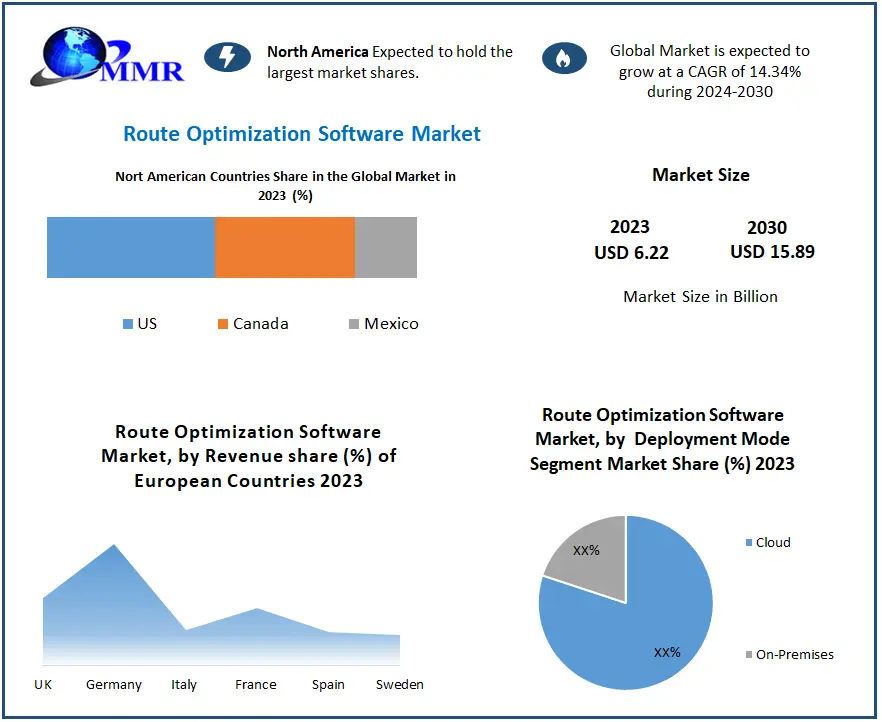
The Route Optimization Software Market size was valued at USD 6.22 Billion in 2023 and the total Route Optimization Software revenue is expected to grow at a CAGR of 14.34% from 2024 to 2030, reaching nearly USD 15.89 Billion by 2030.
Route Optimization Software Market Overview:
Route optimization software revolutionizes transportation management by automating route planning, minimizing travel time, and enhancing efficiency. It replaces outdated methods like manual mapping with advanced algorithms and data analytics to optimize routes, reduce fuel consumption, and ensure timely deliveries. With rising global trade complexities and urbanization challenges, businesses increasingly adopt route optimization to streamline operations and cut costs. Sustainability concerns drive demand, as optimized routes reduce carbon emissions. North America leads in adoption, while the Asia Pacific sees rapid growth, driven by booming e-commerce markets. Route optimization software adapts dynamically to changing conditions, further solidifying its role in the route optimization software market.
 To know about the Research Methodology :- Request Free Sample Report
Route Optimization Software Market Dynamics
Rising demand for streamlined transportation management is expected to fuel Route Optimization Software market growth.
The burgeoning demand for streamlined transportation management solutions is expected to be a significant catalyst for the growth of the route optimization software market. With the globalization of trade and the ever-growing complexities in supply chain logistics, businesses are increasingly seeking efficient ways to manage their transportation operations. Route Optimization Software offers a comprehensive solution by leveraging advanced algorithms and data analytics to optimize delivery routes, minimize fuel consumption, reduce vehicle wear and tear, and enhance overall operational efficiency. These software solutions enable businesses to strategically plan routes, allocate resources effectively, and ensure timely deliveries, thereby reducing costs and improving customer satisfaction.
Moreover, as sustainability becomes a growing concern, Route Optimization Software plays a vital role in promoting eco-friendly practices by reducing carbon emissions through optimized route planning. With such compelling benefits, the demand for route optimization software is poised to surge across various industries, ranging from transportation and logistics to e-commerce and retail, driving route optimization software market growth in the coming years. As businesses recognize the need for enhanced efficiency and cost savings, they are increasingly turning to Route Optimization Software solutions to streamline their transportation operations and gain a competitive edge in the market.
Route optimization software navigates urban challenges, drives market growth
As the global population grows & urbanization accelerates, transportation systems are encountering increasingly complex challenges such as congestion, delays, and inefficiencies. Urban areas especially grapple with traffic congestion and logistical bottlenecks, leading to delays in delivery schedules and increased operational costs for businesses. In such a landscape, route optimization software emerges as a valuable solution to mitigate these challenges and address the evolving demands of the route optimization software market.
Route optimization software utilizes advanced algorithms and data analytics to analyse various factors such as traffic patterns, road conditions, delivery locations, and vehicle capacities. By processing this information, the software determines the shortest and fastest routes for vehicles to navigate, optimizing delivery timelines and minimizing travel time. This optimization not only benefits businesses by ensuring timely deliveries but also contributes to overall transportation efficiency, driving the growth of the route optimization software market.
Global traffic congestion rankings
| Rank | City | Avg TCI | Max TCI |
| 1 | Paris | 51.03 | 93.9 |
| 2 | London | 42.82 | 83.57 |
| 3 | Moscow | 42.27 | 123.48 |
| 4 | Saint Petersburg | 39.96 | 133.4 |
| 5 | Lahore | 39.21 | 200 |
| 6 | New Delhi | 38.92 | 86.25 |
| 7 | Mexico City | 38.84 | 87 |
| 8 | Mumbai | 37.07 | 90.34 |
| 9 | Dublin | 34.69 | 87.43 |
| 10 | Tehran | 34.14 | 114.49 |
One of the key advantages of route optimization software is its ability to adapt dynamically to changing conditions in real-time. For example, if unexpected traffic congestion occurs along a planned route, the software can quickly recalculate alternative routes to avoid delays and optimize delivery schedules, further solidifying its role in the Route Optimization Software Market. This agility allows businesses to respond swiftly to unforeseen circumstances and maintain operational efficiency, enhancing the market demand for such software solutions.
Moreover, route optimization software contributes to cost savings and resource optimization within the Route Optimization Software Market. By reducing travel time and fuel consumption, businesses can lower their operational expenses and minimize their environmental footprint. Additionally, optimized routes enable companies to maximize the utilization of their fleet vehicles, ensuring that each vehicle operates at its full capacity and efficiency, thus driving market growth.
Furthermore, route optimization software enhances customer satisfaction by providing accurate and reliable delivery estimates. Customers receive their orders promptly, leading to increased trust and loyalty towards the business, which in turn drives market expansion in the Route Optimization Software Market. This positive customer experience can result in repeat business and positive word-of-mouth referrals, further fueling the demand for route optimization software solutions.
Route optimization software plays a crucial role in addressing the challenges faced by transportation systems in the modern era, thereby driving the Route Optimization Software Market. By providing optimized routes, minimizing travel time, and enhancing overall efficiency, this software contributes to improved transportation operations, cost savings, and enhanced customer satisfaction. As urbanization continues and transportation demands evolve, route optimization software will remain a valuable tool for businesses seeking to navigate complex logistical landscapes efficiently and effectively.
Cutting-Edge tech paves the way for route optimization software growth
The rapid progress in technology plays a crucial role in driving the route optimization software market's growth. The emergence of cutting-edge technologies like the Internet of Things (IoT), big data analytics, and cloud computing has revolutionized the landscape, enabling the generation of real-time insights and analytics. These advancements empower route optimization software to leverage historical data and forecast future traffic patterns, road closures, and weather conditions with precision. As a result, the software can make more accurate and efficient routing decisions, enhancing overall transportation efficiency. Furthermore, these technological innovations are assisting businesses in streamlining their transportation operations and curbing costs, positioning route optimization as an indispensable tool for companies operating in the logistics and transportation sectors.
The rising emphasis on sustainability is a key driver shaping the route optimization software market. With heightened awareness of the environmental consequences of transportation, both consumers and businesses are seeking more sustainable transportation solutions. Route optimization emerges as a solution to address this demand by enabling companies to reduce their carbon footprint through efficient route planning and vehicle utilization. By minimizing the distance travelled and optimizing vehicle usage, route optimization software plays a vital role in promoting sustainability within transportation operations. For example, by providing real-time updates and insights, the software empowers companies to respond promptly to traffic congestion or adverse weather conditions, allowing them to adjust routes accordingly. This proactive approach helps minimize unnecessary idling and fuel consumption, contributing to overall reductions in carbon emissions and environmental impact.
Free trials, flexible pricing: overcoming cost hurdles in route optimization market
The route optimization software market may encounter obstacles due to end-user businesses hesitating to invest in new technologies like route optimization, primarily due to cost concerns. However, there are strategies to address this challenge effectively. Market players could offer potential customers free trials or demonstrations of their applications, allowing them to experience the benefits first-hand before making a commitment. Moreover, introducing flexible pricing models such as pay-per-use or subscription-based services could lower the barrier to entry, enabling businesses to explore the software without a substantial upfront investment.
Furthermore, showcasing success stories through case studies and testimonials from satisfied customers can demonstrate the tangible benefits and return on investment (ROI) of route optimization tools. By alleviating concerns and illustrating the value proposition of their products, companies in the market can foster trust and confidence among businesses, thereby stimulating adoption rates and unlocking potential opportunities for market growth.
COVID-19 Impact
The route optimization software market experienced significant impacts from the COVID-19 pandemic, mirroring the broader challenges faced by the transportation industry. The pandemic-induced economic slowdown led to a reduction in transportation demand, with many businesses shuttering or scaling back operations. Consequently, the need for route optimization software dwindled as fewer vehicles were required for transporting goods and people. However, amidst these challenges, the pandemic also presented new opportunities for route optimization software market growth.
The surge in e-commerce and home delivery services emerged as a notable trend during the pandemic. As businesses pivoted to online operations and consumers increasingly relied on home deliveries, the demand for efficient route optimization soared. Companies sought ways to streamline their delivery processes, optimize routes, and minimize delivery times to meet the escalating demand for doorstep services. Furthermore, the pandemic underscored the critical importance of real-time route optimization and fleet management for businesses navigating uncertain times.
With supply chain disruptions and the imperative for contactless deliveries amid the pandemic, businesses faced heightened pressure to adapt swiftly. Route optimization tools emerged as invaluable assets, enabling companies to make agile, data-driven decisions in response to evolving circumstances. By leveraging real-time insights and analytics, businesses could optimize their routes dynamically, ensuring efficient and punctual deliveries while navigating the challenges posed by the pandemic. Thus, despite the initial setbacks, the COVID-19 pandemic served as a catalyst for highlighting the indispensable role of route optimization software in ensuring operational resilience and agility in the face of unprecedented disruptions.
Route Optimization Software Market Segment Analysis
Based on deployment segment, the market is segmented into on-premises and cloud solutions. In 2023, the on-premises segment held the majority share, accounting for over 53.96% of the total revenue. Many businesses favor on-premises deployment due to the autonomy it offers in managing their software and data. This level of control is particularly valued by organizations handling sensitive information or operating within regulated sectors that mandate stringent data privacy and security protocols. Moreover, on-premises deployment enables businesses to tailor the software to their specific requirements and seamlessly integrate it with existing business systems.
However, the cloud segment is poised to witness rapid growth, projected to achieve a CAGR of xx% during the forecast period. Cloud-based deployment presents a centralized approach to safeguarding sensitive data, including route optimization algorithms for delivery purposes. Additionally, cloud-deployed software minimizes the expenses associated with software upgrades and updates. Furthermore, organizations are increasingly drawn to cloud deployment due to its simplicity of implementation and enhanced scalability compared to on-premises solutions, all at a lower overall cost. These advantages are driving the upward trajectory of the cloud segment in the market landscape.

In terms of industry verticals, the market is segmented into several sectors, including retail & FMCG, on-demand food & grocery delivery, ride-hailing & taxi services, homecare & field services, logistics & transportation, and others. Among these, the on-demand food & grocery delivery segment emerged as the market leader in 202, capturing a revenue share of xx%, and is expected to maintain its dominant position throughout the forecast period.
Route optimization tools play a pivotal role in assisting on-demand food and grocery delivery companies in optimizing their delivery operations, a critical factor in this sector where swiftness of delivery provides a competitive advantage. Leveraging route analytics offered by route optimization software, companies can ensure expedited deliveries, outpacing their competitors in terms of service speed and efficiency. This capability not only enhances customer satisfaction but also contributes to operational excellence and market competitiveness within the rapidly growing on-demand delivery landscape.
Route Optimization Software Market Regional Analysis:
In 2023, North America emerged as the dominant force in the global market, capturing a substantial revenue share of 26.98%. This regional supremacy is underpinned by the presence of leading route optimization software providers such as ALK Technologies, Caliper, Descartes, ESRI, Google, LLamasoft, Omnitracs, Route4Me, Routific, and Verizon Connect. Renowned for its technological prowess, North America has been at the forefront of route optimization software adoption, leveraging cutting-edge solutions to enhance operational efficiency across various industries.
Moreover, the region's growing reliance on Software as a Service (SaaS)-based route optimization solutions presents significant growth opportunities for vendors aiming to bolster their market presence in North America. As businesses increasingly embrace cloud-based technologies for route optimization, the demand for innovative and scalable software solutions continues to surge, further driving market expansion in the region.
Asia Pacific (APAC) region is expected to witness the fastest Compound Annual Growth Rate (CAGR) of 14.7% during the forecast period. This rapid growth trajectory is fueled by the burgeoning e-commerce markets in key APAC countries such as China and India. As e-commerce continues its upward trajectory, the demand for streamlined and cost-effective logistics solutions, including route optimization software, is experiencing a surge. For example, according to the Federation of Indian Chambers of Commerce & Industry (FICCI), the Indian e-commerce sector is poised to reach a staggering USD 120 billion by 2026. This exponential growth underscores the critical need for robust logistics infrastructure and efficient route optimization tools to meet the escalating demands of online consumers. As a result, the APAC region presents a lucrative market opportunity for route optimization software providers seeking to capitalize on the region's dynamic e-commerce landscape.
Route Optimization Software Market Scope: Inquire before Buying
| Global Route Optimization Software Market | |||
|---|---|---|---|
| Report Coverage | Details | ||
| Base Year: | 2023 | Forecast Period: | 2024-2030 |
| Historical Data: | 2018 to 2023 | Market Size in 2023: | US $ 6.22 Bn. |
| Forecast Period 2024 to 2030 CAGR: | 14.34% | Market Size in 2030: | US $ 15.89 Bn. |
| Segments Covered: | by Deployment Type | Cloud On-Premises |
|
| by Solution | Software Services |
||
| by End User | Retail And FMCG On-Demand Food Delivery Taxi Homecare Field Services Others |
||
Route Optimization Software Market, by Region
North America (United States, Canada and Mexico)
Europe (UK, France, Germany, Italy, Spain, Sweden, Austria and Rest of Europe)
Asia Pacific (China, South Korea, Japan, India, Australia, Indonesia, Malaysia, Vietnam, Taiwan, Bangladesh, Pakistan and Rest of APAC)
Middle East and Africa (South Africa, GCC, Egypt, Nigeria and Rest of ME&A)
South America (Brazil, Argentina Rest of South America)
Route Optimization Software Market Key Players:
Route Optimization Software Providers in North America:
1. Descartes (Canada)
2. Esri (USA)
3. Google (USA)
4. Llamasoft (USA)
5. Omnitracs (USA)
6. Paragon Software (USA)
7. Verizon Connect (USA)
8. Workwave (USA)
9. Portatour (Germany; Regional Offices in Mexico)
10. Routific ,Canada
11. ALK Technologies (USA)
12. Caliper (USA)
Route Optimization Software Providers in Europe:
13. FLS (Germany)
14. Geoconcept (France)
15. Maxoptra (UK)
16. Microlise (UK)
17. ORTEC (Netherlands)
18. PTV Group (Germany)
19. Quintiq (Netherlands)
20. Scientific Logistics (UK)
21. Truckstops (UK)
Route Optimization Software Providers in Asia-Pacific:
22. AMCS( Australia)
FAQs:
1. Which region has the largest share in Global Route Optimization Software Market?
Ans: North America region holds the highest share in 2023.
2. What is the growth rate of Global Route Optimization Software Market?
Ans: The Global Route Optimization Software Market is growing at a CAGR of 14.34% during forecasting period 2024-2030.
3. What segments are covered in Global Route Optimization Software market?
Ans: Global Route Optimization Software Market is segmented into Deployment Type, Solution, End User and region.
4. Who are the key players in Global Route Optimization Software market?
Ans: The important key players in the Global Route Optimization Software Market are – Descartes (Canada), Esri (USA), Google (USA), Llamasoft (USA). Omnitracs (USA), Paragon Software (USA), Verizon Connect (USA), Workwave (USA).
5. What is the study period of this market?
Ans: The Global Route Optimization Software Market is studied from 2023 to 2030.