
Hydrogen Energy Storage Market - Industry Structure Evaluation, Demand Drivers Analysis, Regional Growth Analysis and Identification, Competitive Positioning Review & Global Market Size Forecast to 2034
Overview
Hydrogen Energy Storage Market size was valued USD 16.47 Bn. in 2025 and the total revenue is expected to grow at 7.90% through 2026 to 2034, reaching USD 32.66 Bn. by 2034
Hydrogen Energy Storage Market Overview:
The Hydrogen Energy Storage Market refers to the global industry involved in producing, storing, transporting, and utilizing hydrogen as an energy carrier for short-term and long-term energy storage. Hydrogen energy storage converts surplus electricity, particularly from renewable energy sources such as solar and wind, into hydrogen through electrolysis. The produced hydrogen is stored in compressed gas tanks, liquid hydrogen systems, underground storage facilities, or advanced material-based storage technologies. It can later be converted back into electricity through fuel cells or used directly in industrial processes, transportation, power generation, and other energy applications.
The Global Hydrogen Energy Storage Market is gaining momentum as countries and industries accelerate their transition towards clean energy, renewable power integration, and low-carbon energy systems. Increasing investments in green hydrogen production, electrolyzer installations, and hydrogen infrastructure support the adoption of hydrogen as a reliable energy storage solution. Hydrogen energy storage helps address the intermittency of renewable energy by storing excess electricity generated during periods of high production and making it available when energy demand increases.
Technological advancements in hydrogen compression, liquefaction, underground storage, and material-based storage systems improve storage efficiency, safety, and scalability. Industrial sectors such as chemicals, refining, steel manufacturing, and power generation increasingly explore hydrogen storage to support decarbonization and energy security. Growing government initiatives, clean energy targets, and investments in hydrogen infrastructure further strengthen market development. As a result, the global hydrogen energy storage industry continues to create opportunities for technology providers, energy companies, equipment manufacturers, and infrastructure developers.
Hydrogen Energy Storage Market Dynamics:
Rising demand for producing hydrogen from electrolysis by surplus renewable power is expected to drive the market during the forecast period. Growing End Uses of hydrogen across numerous sectors are anticipated to push the market growth towards north. For example, hydrogen made from electrolysis can be used for power generation, to decrease carbon intensity in gas pipelines.
Hydrogen Energy Storage Market Driver;
Rising demand for green hydrogen production through electrolysis using surplus renewable electricity is a major driver of the hydrogen energy storage market. Increasing installations of solar and wind power create opportunities to convert excess electricity into hydrogen and store it for later use. Hydrogen can support grid balancing, backup power generation, and long-duration energy storage while reducing dependence on fossil fuels. In addition, growing demand from industries such as chemicals, refining, steel manufacturing, and transportation increases the need for reliable hydrogen storage and supply systems. Government support for clean energy projects and investments in electrolyzers, hydrogen pipelines, and storage infrastructure further accelerate market growth.
Hydrogen Energy Storage Market Restraint:
High capital and operating costs remain significant restraints for the hydrogen energy storage market. Producing green hydrogen through electrolysis requires substantial investment in electrolyzers, renewable electricity, water treatment, compression, liquefaction, and storage infrastructure. Hydrogen storage also involves additional costs associated with high-pressure vessels, specialized materials, transportation systems, and safety equipment. Furthermore, energy losses during electrolysis, compression, liquefaction, and reconversion into electricity can reduce overall system efficiency compared with some alternative energy storage technologies. These economic and technical limitations can slow large-scale deployment, particularly in developing markets and regions with limited hydrogen infrastructure.
Hydrogen Energy Storage Market Opportunity:
The growing global focus on renewable energy integration and industrial decarbonization creates significant opportunities for the hydrogen energy storage market. Countries investing in green hydrogen production, renewable power projects, and clean energy infrastructure are creating demand for large-scale hydrogen storage facilities. Underground salt caverns, depleted gas reservoirs, and advanced material-based storage systems offer potential solutions for storing substantial hydrogen volumes over extended periods. Emerging applications in green steel production, ammonia manufacturing, sustainable aviation fuels, heavy-duty transportation, and hydrogen-based power generation further expand market opportunities. The development of integrated hydrogen hubs connecting production facilities, storage infrastructure, pipelines, and end users is also expected to support commercial adoption.
Hydrogen Energy Storage Market Challenge:
The hydrogen energy storage market faces challenges related to infrastructure development, technical complexity, and the safe handling of hydrogen. Hydrogen has a low volumetric energy density, requiring high-pressure compression, cryogenic liquefaction, or specialized storage materials to achieve practical storage volumes. Its small molecular size also creates concerns regarding leakage, material embrittlement, and equipment durability. In addition, the limited availability of dedicated hydrogen pipelines, refuelling stations, and large-scale storage facilities restricts market penetration. Regulatory differences, uncertain project economics, and the need for skilled technical expertise further challenge the commercial expansion of hydrogen energy storage solutions.
Hydrogen Energy Storage Market Trend:
The market is witnessing a growing shift towards large-scale underground hydrogen storage, particularly through salt caverns and engineered rock caverns. Energy companies and infrastructure developers are increasingly exploring the conversion of existing natural gas storage facilities into hydrogen storage sites. Another important trend is the development of integrated hydrogen ecosystems that connect renewable electricity generation, electrolyzers, compression systems, storage facilities, pipelines, and industrial consumers. Advancements in solid-state and material-based hydrogen storage, digital monitoring, and automated safety systems are also improving storage performance and operational reliability. Increasing investment in renewable hydrogen projects and cross-border hydrogen infrastructure further supports the market's long-term development.
Hydrogen Energy Storage Market Growth Outlook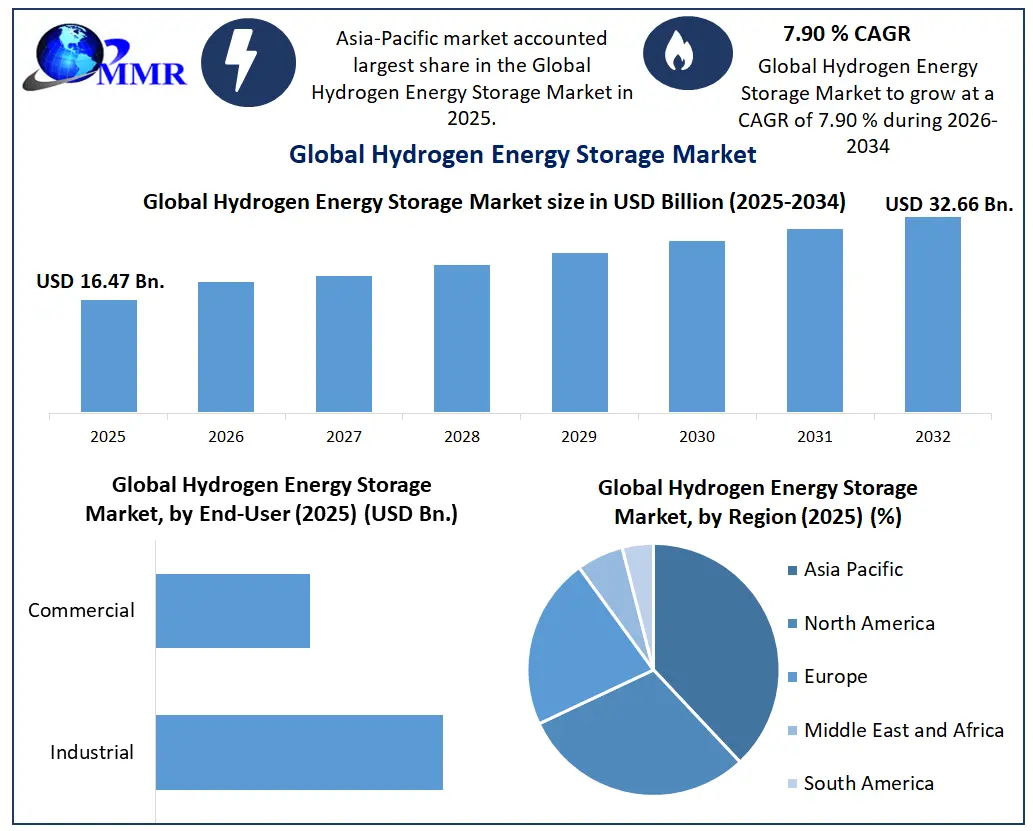
To know about the Research Methodology :- Request Free Sample Report
In the United States the market is expected to witness a major growth rate due to ongoing R&D and construction of full-scale storage plans in the country. For example, in the year 2022, Magnum Developer & Mitsubishi Hitachi Power Systems said that the companies are planning to make a 1 GW energy storage facility to deliver power using renewable hydrogen, solid oxide fuel cells, & compressed air energy storage.
Decreasing cost of renewable power generation from solar & wind energy is expected to further increase the market for hydrogen energy storage. According to the International Renewable Energy Agency for renewable hydrogen to be inexpensive with fossil fuel made hydrogen, it should be produced at less than USD 2.5 per kg. The rate depends on numerous factors like production place, market sector, renewable energy power tariffs, & investments in upcoming electrolyzes. Low hydrogen production costs will lead to higher deployment of its energy storage systems. Key players operating in the market for hydrogen energy storage are severely forward integrated.
Hydrogen Energy Storage Market Segment Analysis
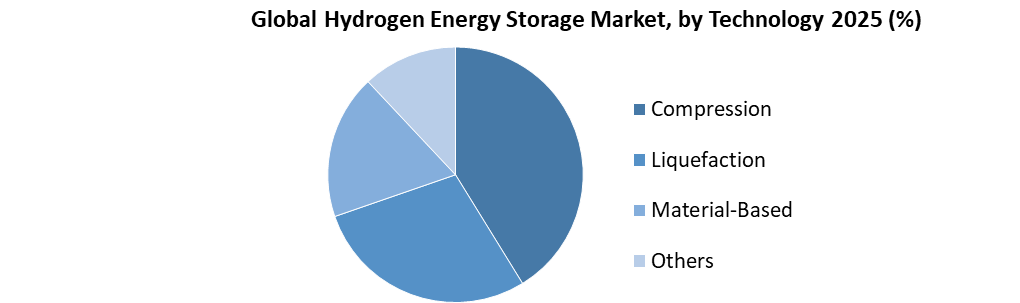
By Technology, The Global Hydrogen Energy Storage Market is segmented by technology into Compression, Liquefaction, Material-Based Storage, and Others. Compression technology represents a major segment due to its established infrastructure, commercial availability, and suitability for storing hydrogen under high pressure in cylinders and pressure vessels. Liquefaction technology supports large-scale hydrogen storage and transportation by cooling hydrogen to extremely low temperatures, making it suitable for industrial applications and long-distance distribution. Material-based storage includes metal hydrides, chemical hydrogen storage, and adsorption-based technologies, which offer opportunities for improved storage density, safety, and efficiency. Other technologies include emerging underground hydrogen storage and alternative storage approaches. Increasing investments in hydrogen infrastructure, renewable energy integration, and advanced storage systems support technological development across the market.
By End-User, The Global Hydrogen Energy Storage Market is segmented by end-user into Industrial and Commercial sectors. The Industrial segment accounts for significant demand due to hydrogen consumption in chemical manufacturing, petroleum refining, ammonia production, steel manufacturing, and other energy-intensive industrial operations. Hydrogen storage systems help industrial facilities maintain a reliable supply, manage fluctuations in production, and support the transition toward low-carbon manufacturing. The Commercial segment includes hydrogen storage applications in commercial buildings, energy infrastructure, distributed power systems, and facilities requiring backup energy solutions. Growing adoption of clean energy technologies, increasing demand for reliable power supply, and investments in hydrogen-based energy infrastructure support both end-user segments.
Hydrogen Energy Storage Market Regional Analysis
North America represents a significant market for hydrogen energy storage, driven by increasing investments in clean hydrogen production, renewable energy integration, and large-scale energy infrastructure. The United States leads regional development through government-supported hydrogen initiatives, clean energy incentives, and investments in hydrogen hubs. Projects involving underground salt cavern storage, compressed hydrogen systems, and electrolyzer installations strengthen the regional market. Canada also supports market expansion through clean hydrogen investments and renewable energy development, while Mexico offers emerging opportunities through industrial decarbonization and clean energy projects. Growing applications in power generation, oil and gas, chemicals, transportation, and industrial manufacturing further support demand for hydrogen storage solutions.
Europe maintains a strong position in the hydrogen energy storage market due to its ambitious climate targets, renewable energy transition, and supportive hydrogen policies. Countries such as Germany, France, the Netherlands, the United Kingdom, Norway, and Denmark are investing in hydrogen production, underground storage facilities, and pipeline infrastructure. Germany and the Netherlands are particularly active in developing underground hydrogen storage projects using salt caverns and existing gas infrastructure. Increasing demand for green hydrogen in steel manufacturing, chemicals, refining, and power generation creates opportunities for large-scale storage technologies. European initiatives supporting cross-border hydrogen networks and renewable hydrogen production further strengthen regional market development.
Asia-Pacific dominates the global hydrogen energy storage market, supported by increasing investments in green hydrogen production, renewable energy capacity, and hydrogen infrastructure. China, Japan, South Korea, India, and Australia are major contributors to regional development. China drives demand through large-scale renewable energy projects, electrolyzer manufacturing, and industrial hydrogen applications. Japan and South Korea focus on hydrogen imports, fuel cell technologies, power generation, and advanced liquid hydrogen storage systems. India creates emerging opportunities through the National Green Hydrogen Mission and growing investments in domestic hydrogen production and clean energy infrastructure. Increasing demand for long-duration energy storage, industrial decarbonization, and energy security continues to strengthen the Asia-Pacific hydrogen energy storage industry.
South America represents an emerging market for hydrogen energy storage, supported by abundant renewable energy resources, particularly solar, wind, and hydropower. Countries such as Chile, Brazil, Argentina, and Colombia are developing green hydrogen strategies and renewable hydrogen production projects. Chile benefits from strong solar and wind energy potential, creating opportunities for hydrogen production, storage, and export infrastructure. Brazil supports regional development through renewable energy investments and industrial hydrogen applications, while Argentina explores opportunities in wind-powered green hydrogen production. Growing interest in green ammonia, industrial decarbonization, and hydrogen exports is expected to encourage investment in compressed hydrogen storage, liquid hydrogen systems, and large-scale storage facilities.
The Middle East & Africa hydrogen energy storage market is developing through increasing investments in green hydrogen, renewable energy infrastructure, and industrial diversification. Saudi Arabia, the United Arab Emirates, Oman, Egypt, and South Africa are emerging as important markets for hydrogen production and storage projects. Saudi Arabia and the UAE are investing in large-scale clean hydrogen and ammonia initiatives, while Oman and Egypt are developing renewable hydrogen production and export opportunities. South Africa offers potential through renewable energy resources and industrial applications, including chemicals and mining. Increasing demand for energy diversification, export-oriented hydrogen production, and low-carbon industrial operations is expected to support the adoption of advanced hydrogen storage technologies across the region.
Hydrogen Energy Storage Market Competitive Landscape
The Global Hydrogen Energy Storage Market is highly competitive and evolving, with participation from industrial gas suppliers, hydrogen technology developers, storage equipment manufacturers, electrolyzer companies, and energy infrastructure providers. Leading companies compete through technological innovation, product development, strategic partnerships, infrastructure expansion, and investment in large-scale hydrogen projects. Major players such as Linde plc, Air Liquide S.A., Air Products and Chemicals, Inc., and Chart Industries, Inc. strengthen their market positions through established hydrogen production, compression, liquefaction, storage, and distribution capabilities.
The MMR reports cover key developments in the Hydrogen Energy Storage Market as organic and inorganic growth strategies. Various companies are focusing on organic growth strategies such as product approvals product launches, and others. Inorganic growth strategies activities witnessed in the Hydrogen Energy Storage Market were merges & acquisitions and collaborations & partnership.
The objective of the report is to present a comprehensive analysis of the Global Market including all the stakeholders of the industry. The past and current status of the industry with forecasted market size and trends are presented in the report with the analysis of complicated data in simple language. The report covers all the aspects of the industry with a dedicated study of key players that includes market leaders, followers and new entrants.
PORTER, SVOR, PESTEL analysis with the potential impact of micro-economic factors of the market has been presented in the report. External as well as internal factors that are supposed to affect the business positively or negatively have been analyzed, which will give a clear futuristic view of the industry to the decision-makers.
The report also helps in understanding Global Market dynamics, structure by analyzing the market segments and projects the Global Market size. Clear representation of competitive analysis of key players by End Use, price, financial position, Product portfolio, growth strategies, and regional presence in the Global Market make the report investor’s guide.
Hydrogen Energy Storage Market Recent Development
- 11 November 2026 – EWE advances underground hydrogen storage project in Germany: EWE announces that its existing natural gas cavern at Huntorf successfully passes a hydrogen leak-tightness test, confirming its suitability for future hydrogen storage. The company plans to convert seven former natural gas storage facilities, targeting a combined working gas volume of approximately 16 million cubic metres of hydrogen from 2028. The project also involves hydrogen compressors, gas-drying technology, and pipeline connections to the wider hydrogen network.
- 29 October 2026 – EUH2STARS strengthens underground hydrogen storage collaboration: Around 40 partners meet in Brussels for the EUH2STARS Plenary Consortium Meeting to review progress on underground hydrogen storage in depleted natural gas reservoirs. Discussions focus on subsurface engineering, societal readiness, and demonstration activities at sites in Austria and Hungary. The collaboration supports the development of technical and operational knowledge required for large-scale underground hydrogen storage across Europe.
- 8 October 2026 – HyStock receives government designation for underground hydrogen storage in the Netherlands: Gasunie receives a Service of General Economic Interest designation for the HyStock project, supporting the development of the Netherlands' first large-scale underground hydrogen storage facility. The designation helps address early-stage project risks, including market uncertainty, buffer-gas costs, and facility utilization. It represents progress towards integrating hydrogen production, infrastructure, storage, and industrial consumption.
- 14 September 2026 – H2CAST Etzel progresses above-ground hydrogen storage infrastructure: The H2CAST Etzel project in Germany reports progress on its above-ground installation, including the development of compressor, drying, and gas-purification systems. The project supports the conversion of existing salt caverns for hydrogen storage and demonstrates the infrastructure requirements involved in connecting underground storage with hydrogen processing facilities.
Hydrogen Energy Storage Industry Ecosystem
Hydrogen Energy Storage Market Scope: Inquire Before Buying
| Global Hydrogen Energy Storage Market | |||
|---|---|---|---|
| Report Coverage | Details | ||
| Base Year: | 2025 | Forecast Period: | 2026-2034 |
| Historical Data: | 2020 to 2025 | Market Size in 2025: | USD 16.47 Bn. |
| Forecast Period 2026 to 2034 CAGR: | 7.9% | Market Size in 2034: | USD 32.66 Bn. |
| Segments Covered: | by Technology | Compression Liquefaction Material-Based Others |
|
| by Physical State | Liquid Gas Solid |
||
| by Applications | Stationary Power Transportation Chemicals Metal Working Utility Oil Refining Others |
||
| by End-User | Industrial Commercial |
||
Hydrogen Energy Storage Market, by Region
North America (United States, Canada and Mexico)
Europe (UK, France, Germany, Italy, Spain, Sweden, Austria, Turkey, Russia and Rest of Europe)
Asia Pacific (China, India, Japan, South Korea, Australia, ASEAN and Rest of APAC)
Middle East and Africa (South Africa, GCC, Egypt, Nigeria and Rest of ME&A)
South America (Brazil, Argentina, Columbia and Rest of South America)
Hydrogen Energy Storage Market, Key players are:
1. Linde plc
2. Air Liquide S.A.
3. Air Products and Chemicals, Inc.
4. Plug Power Inc.
5. Chart Industries, Inc.
6. Nel ASA (Nel Hydrogen)
7. Hexagon Purus AS
8. Siemens Energy
9. Ballard Power Systems
10. ITM Power
11. McPhy Energy S.A.
12. FuelCell Energy, Inc.
13. Hydrogenics (Cummins Inc.)
14. NPROXX
15. GKN Hydrogen
16. MAHYTEC
17. GRZ Technologies Ltd.
18. H2GO Power
19. Hy Stor Energy
20. Hydrogen Prospect
21. Bloom Energy
22. Engie S.A.
23. TotalEnergies SE
24. Shell plc
25. BP plc
26. Toyota Motor Corporation
27. ENEOS Corporation
28. Messer Group
29. Lhyfe
30. HySiLabs
31. Others
Frequently Asked Questions:
1. What is the growth rate of Global Hydrogen Energy Storage Market?
Ans: The Global Hydrogen Energy Storage Market is growing at a CAGR of 7.9% during forecasting period 2026-2034.
2. What is scope of the Global Hydrogen Energy Storage market report?
Ans: Global Hydrogen Energy Storage Market report helps with the PESTEL, PORTER, COVID-19 Impact analysis, Recommendations for Investors & Leaders, and market estimation of the forecast period.
3. Who are the key players in Global Hydrogen Energy Storage market?
Ans: The important key players in the Global Hydrogen Energy Storage Market are – VRV S.P.A, HBank Technologies Inc., Inoxcva, Mcphy Energy S.A, Luxfer Holdings Plc., Worthington Industries Inc., Praxair Inc., Linde AG, Air Liquide, ITM Power (U.K), Hydrogenics (Canada), Hexagon Composites (Norway), Nel Hydrogen (Norway), Plug Power, Hydrogenious, Air Products and Chemicals, Chart Industries, and FuelCell Energy
4. What is the study period of this market?
Ans: The Global Hydrogen Energy Storage Market is studied from 2020 to 2034.