
Smartwatch Market – Industry Structure Evaluation, Demand Drivers Analysis, Regional Growth Analysis and Identification, Competitive Positioning Review & Global Market Size Forecast to 2032
Overview
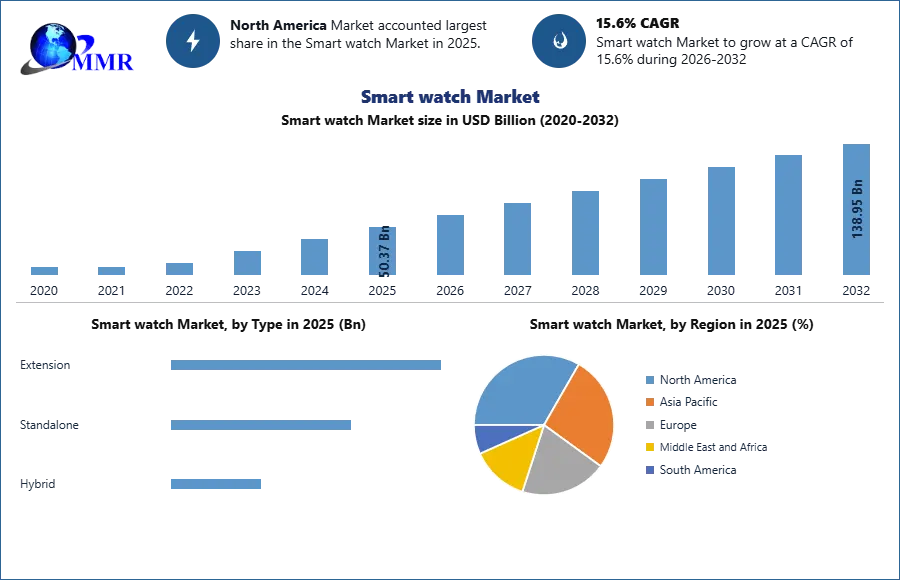
The Smartwatch Market size was valued at USD 50.37 Billion in 2025, and the total revenue is expected to grow at CAGR of 15.6 % from 2026 to 2032, reaching nearly USD 138.95 Billion.
The MMR report provides an in-depth analysis of the global Smartwatch Market, covering key aspects such as user penetration, ARPU, and regional pricing trends. It includes detailed insights into demand dynamics across fitness, lifestyle, and healthcare segments, along with consumer behavior, purchasing drivers, and evolving retail landscapes. The report further examines supply chain structures, import-export trends, and trade policies impacting smartwatch components. Additionally, it highlights advancements in technology, connectivity, and sensor innovation, while also assessing sustainability efforts, regulatory frameworks, and data compliance standards shaping the industry’s future growth.
The global Smartwatch Market is facing a pivotal structural shift as the 2026 Middle East crisis destabilizes the high-tech component supply chain. With the Hormuz blockade driving crude to $120/bbl, energy-intensive semiconductor fabrication overheads have surged 30%, while 400% maritime freight surcharges disrupt global trade. Market leaders are aggressively prioritizing near-shoring and AI-driven logistics to bypass volatile corridors. This strategic transition toward localized, resilient production is critical for protecting margins and sustaining the sector’s projected 15.68% CAGR amidst historic geopolitical volatility.
Smartwatch Market Overview
A smart watch is a wearable device that typically resembles a wristwatch but comes with advanced functionalities beyond timekeeping. Smartwatches are equipped with various features such as fitness tracking, heart rate monitoring, GPS navigation, notifications for calls and messages, music playback control, and in some cases, even mobile payment capabilities. These devices often connect to smartphones via Bluetooth or Wi-Fi to synchronize data, display notifications, and sometimes even make calls directly from the watch itself. Smartwatches also support third-party apps, allowing users to expand their functionality according to their preferences. Smartwatches have gained popularity due to their convenience, versatility, and ability to integrate with daily activities and fitness routines. They serve as a companion to smartphones, offering quick access to information and functionalities without the need to take out the phone from one's pocket or bag.
 To know about the Research Methodology :- Request Free Sample Report
The smartwatch market is the increasing emphasis on health and fitness tracking. More than 200 million people use smartwatches globally.
Smartwatches have evolved beyond basic timekeeping to incorporate a wide range of features such as fitness and health tracking (including heart rate monitoring, sleep tracking, activity tracking), GPS navigation, notifications (calls, messages, social media), music playback control, contactless payments, and even integration with voice assistants like Siri, Google Assistant, and Alexa. The smart watch market include the increasing adoption of smartwatches by older demographics for health monitoring, the rise of hybrid smartwatches that combine traditional watch designs with smart features, and the continued focus on improving battery life and overall performance.
Smartwatch Market Dynamics
Health and Fitness Tracking to boost the Smart Watch Market growth
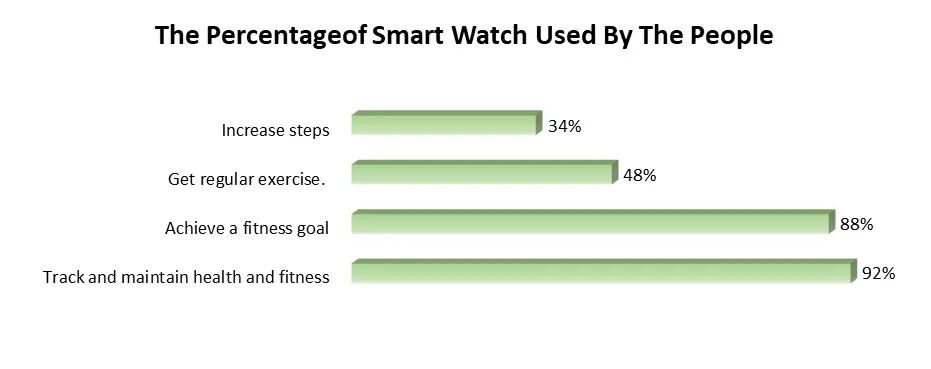
With growing awareness about the importance of leading a healthy lifestyle, consumers are turning to wearable devices like smartwatches to monitor their physical activity, track workouts, monitor heart rate, and even analyze sleep patterns. Smartwatches equipped with advanced sensors and health monitoring features cater to this demand, empowering users to take control of their well-being. Rapid advancements in technology have played a significant role in driving the smart watch market forward. Smart watch manufacturers are constantly innovating to incorporate new features and functionalities into their devices, such as GPS tracking, waterproofing, blood oxygen monitoring, and ECG capabilities. These technological advancements not only enhance the user experience but also contribute to the overall attractiveness and appeal of smartwatches. Nearly 180 million of smart watch are predicted to be shipped at the end of 2025. 92% of people use smartwatches to maintain their health and fitness. 88% of the people reported that smartwatches helped them achieve their fitness goals. Besides, almost 1 in 2 smart watch users used smartwatches to exercise regularly.
Smartwatches are increasingly being positioned as companions to smartphones, offering seamless integration with mobile devices and ecosystems. The ability to receive notifications, make calls, send messages, and control smartphone functions directly from the wrist appeals to consumers seeking convenience and connectivity. Smart Watch manufacturers are leveraging this integration to create cohesive ecosystems that enhance the overall user experience and drive adoption of their smart watch products. The convergence of technology and fashion has led to the emergence of stylish and aesthetically pleasing smartwatches that appeal to fashion-conscious consumers. Smart Watch manufacturers are investing in design and aesthetics, offering a wide range of options in terms of materials, finishes, and customization features. Whether it's traditional round-faced watches or sleek, modern designs, smartwatches are increasingly seen as fashion accessories that complement personal style and individual preferences.
High Cost of watches to restrain the Smart Watch Market growth
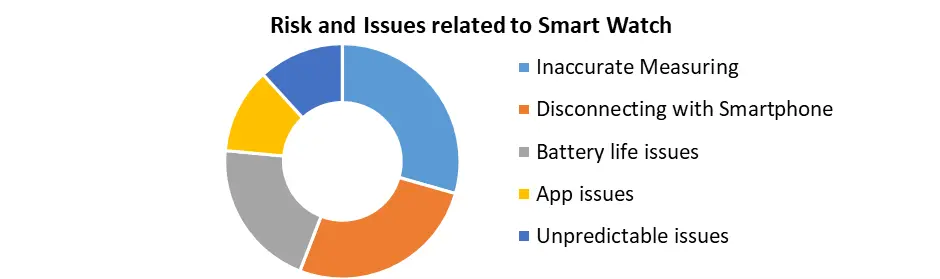
Despite the availability of budget-friendly options, many smartwatches, especially those with advanced features and premium designs, come with a high price tag. This deter price-sensitive consumers from purchasing smartwatches, limiting Smart Watch market penetration, particularly in developing regions where affordability is a significant concern. Battery life remains a persistent issue for many smart watch users. Most smartwatches need to be charged daily or every few days, which is inconvenient for users accustomed to traditional watches that require minimal maintenance. Limited battery life also restricts the use of certain features, such as continuous heart rate monitoring or GPS tracking, which drain the battery quickly. The smart watch market is characterized by a wide variety of devices running different operating systems, such as watchOS, Wear OS, and proprietary platforms. This fragmentation lead to compatibility issues with smartphones and other devices, as well as inconsistencies in user experience and app availability across different platforms.
Smartwatch Market Segment Analysis
Based on type, the smartwatch market is segmented into Extension, Standalone, and Hybrid. In 2025, the Extension segment dominated the market, functioning as an extension of smartphones through Bluetooth connectivity, enabling users to access notifications, calls, and messages directly from their wrist. Standalone smartwatches, equipped with SIM or eSIM support, operate independently without a smartphone, appealing to users who prefer full connectivity on the go. Hybrid smartwatches combine traditional analog designs with basic smart features like activity tracking and notifications, catering to consumers seeking style, simplicity, and long battery life. Overall, Extension smartwatches led the market, followed by Standalone and Hybrid types.
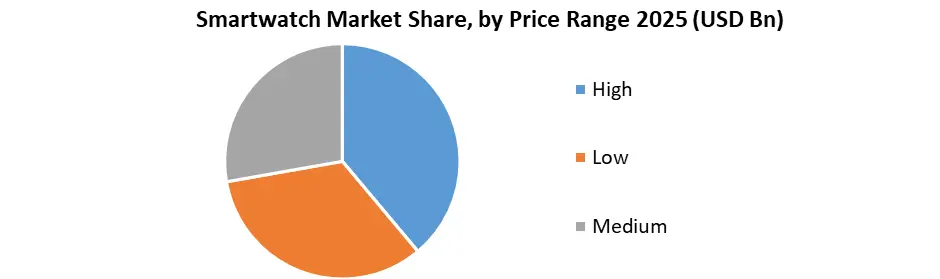
Based on Price Range, in 2025, the High-end segment dominated the global Smartwatch Market, driven by strong consumer preference for premium brands offering advanced health tracking, superior build quality, and seamless integration with smartphone ecosystems. The Medium price range segment followed, attracting tech-savvy consumers seeking balanced performance and affordability, featuring essential fitness and connectivity features without luxury pricing. The Low-price segment, while holding a smaller share, continues to grow rapidly in emerging markets, supported by local brands offering cost-effective models with basic smart functionalities. Overall, the High segment leads the market due to strong brand loyalty and innovation, while the Medium and Low segments contribute significantly to volume growth across price-sensitive regions.
Smartwatch Market Regional Insight
Increasing focus on health and fitness tracking among consumers to boost North America Smart Watch Market growth
North America dominated the market in 2025 and is expected to hold the largest Smart Watch market share over the forecast period. With rising awareness about the importance of leading a healthy lifestyle, more individuals are turning to wearable devices like smartwatches to monitor their physical activity, track workouts, and manage their overall well-being. Smart watches equipped with advanced health and fitness features, such as heart rate monitoring, sleep tracking, and activity tracking, cater to this growing demand. These devices allow users to set fitness goals, track their progress over time, and receive personalized insights and recommendations to improve their health and fitness levels.
In 2025, North America maintained its leading position in the smart watch market, capturing 29% of total sales. India emerged as a notable contender, experiencing remarkable growth to claim the second-largest share of smart watch sales. China, previously holding the second spot, slipped to third place. Despite this shift, the market for budget-friendly smartwatches priced at $100 or lower continued to hold significance, constituting 35% of total smart watch sales. Conversely, the segment for higher-priced smartwatches exceeding $400 witnessed a remarkable surge in shipments, marking a notable 129% year-on-year increase. This growth is largely propelled by the introduction of the latest Apple Watch models, which fell within this price category. 12.2% of Americans use smart watch as a fitness tracker, which significantly boosts the Smart watch market growth.
12.2% of the American population utilizes either a smart watch or a fitness tracker, while globally, 14.4% of individuals rely on smart wristband devices for various purposes. Poland boasts the highest proportion of internet users engaging with smart watch or fitness tracker technology, with 26.5% of its online population employing smart wristbands. Morocco exhibits the lowest adoption rate, with merely 2.1% of its internet users opting for smart wristbands as wearable technology.
Smart Watch Market Competitive Landscape
Apple continues to be the leader in the global smart watch market, with a share of 34.1% in total shipments. The tech giant also holds a record 60% of the industry’s revenues, making it the dominant player in the market. Analysts attribute this growth to the high demand for the latest Apple Watch models, including the Apple Watch Series 8, Apple Watch Ultra, and Apple Watch SE, which were all released in the fall.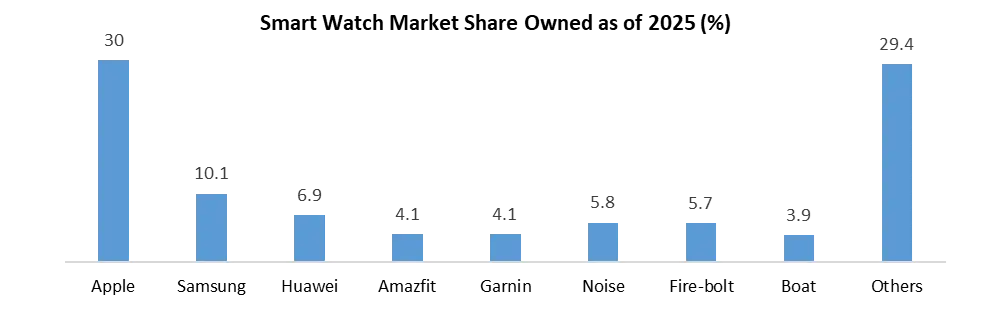 Apple commands 30% of the smart watch market, holding the largest share among all competitors. This significant market dominance is attributed to the impressive array of features offered by Apple watches. These devices ensure seamless connectivity, integrate with Siri for reminders, and boast innovative safety features, enhancing user experience and satisfaction. Samsung holds the second-highest share of the smart watch market, followed by Huawei and Noise.
Recent Industry Developments
| Exact Date | Company | Development | Impact |
|---|---|---|---|
| 12 February 2026 | Apple | Launched a new generation of AI-driven wearables with advanced Siri integration and predictive health monitoring. | Strengthens ecosystem lock-in and sets a new benchmark for generative AI performance in wrist-worn devices. |
| 15 January 2026 | Samsung Electronics | Announced the commercial rollout of non-invasive glucose monitoring features for its premium smartwatch lineup. | Accelerates the transition of smartwatches into essential medical-grade equipment for chronic disease management. |
| 22 October 2025 | Garmin Ltd. | Partnered with a global insurance provider to integrate real-time biometric data into personalized premium discount programs. | Expands the B2B market segment by linking wearable data directly to the financial services sector. |
| 14 August 2025 | Huawei Technologies | Introduced a solar-charging hybrid model capable of 60-day battery life in power-saving mode. | Directly addresses battery life constraints, a primary consumer pain point, increasing competitiveness in the outdoor segment. |
| 05 June 2025 | Xiaomi Corporation | Expanded its manufacturing capacity in Southeast Asia with a new facility dedicated to budget-friendly smartwatches. | Optimizes supply chain resilience and supports aggressive pricing strategies in emerging high-growth markets. |
Smart watch Market Scope: Inquire before buying
| Smart watch Market | |||
|---|---|---|---|
| Report Coverage | Details | ||
| Base Year: | 2025 | Forecast Period: | 2026-2032 |
| Historical Data: | 2020 to 2025 | Market Size in 2025: | 50.37 USD Billion |
| Forecast Period 2026-2032 CAGR: | 15.6% | Market Size in 2032: | 138.95 USD Billion |
| Segments Covered: | by Type | Extension Standalone Hybrid |
|
| by Operating System | watchOS Wear OS HarmonyOS Proprietary / RTOS |
||
| by Display Technology | AMOLED Micro-LED TFT-LCD |
||
| by Connectivity | Bluetooth-only Cellular (4G/LTE) 5G-enabled |
||
| by Price Range | High Medium Low |
||
| by Application | Fitness and Wellness Healthcare & Medical Personal Assistance and Payments Others |
||
| by End User | Adults Children Others |
||
| by Distribution Channel | Online Offline |
||
Smart watch Market, by Region
North America (United States, Canada and Mexico)
Europe (UK, France, Germany, Italy, Spain, Sweden, Austria and Rest of Europe)
Asia Pacific (China, South Korea, Japan, India, Australia, Indonesia, Malaysia, Vietnam, Taiwan, Bangladesh, Pakistan and Rest of APAC)
Middle East and Africa (South Africa, GCC, Egypt, Nigeria and Rest of ME&A)
South America (Brazil, Argentina Rest of South America)
Key Players / Competitors Profiles Covered in Brief in Global Smart watch Market Report in Strategic Perspective:
- Apple Inc.
- Samsung Electronics
- Garmin Ltd.
- Huawei Technologies
- Fitbit
- Xiaomi Corporation
- Fossil Group, Inc.
- Sony Corporation
- Amazfit (Zepp Health Corporation)
- Noise (Gursaurabh Singh)
- BoAt (Imagine Marketing Limited)
- Fire-Boltt
- Realme
- Polar Electro
- Casio Computer Co., Ltd.
- Titan Company Limited
- Mobvoi Information Technology
- Withings
- Google (Pixel Watch)
- OPPO
- Vivo Communication Technology
- ZTE Corporation
- Imoo (BBK Electronics)
- Pebble (Mensa Brands)
- Tag Heuer
Frequently Asked Questions
1.What is the projected size and growth rate of the global Smartwatch Market?
Ans. The market reached USD 50.37 Billion in 2025. It targets USD 138.95 Billion by 2032, driven by a 15.6% CAGR and Smartwatch Market Trends 2026.
2. Which region currently leads the Smartwatch Market in terms of consumption?
Ans. North America dominates with a 29% market share. Rapid healthcare integration and high consumer demand for premium wearables sustain North America Smartwatch Market Share Analysis.
3. How is generative AI impacting the evolution of the Smartwatch Market?
Ans. AI-driven wearables accelerate Industry Growth Drivers by enabling predictive health monitoring and advanced Siri integration, fostering deeper ecosystem lock-in for premium brands like Apple.
4. What role does non-invasive medical technology play in future industry growth?
Ans. Medical-grade features like non-invasive glucose monitoring revolutionize the Healthcare & Medical segment, shifting consumer demand toward essential chronic disease management tools and premium devices.
5. How are manufacturers addressing the primary consumer pain point of battery life?
Ans. Innovation in solar-charging hybrid models and power-efficient displays directly addresses battery constraints, enhancing competitiveness within the outdoor segment and overall Smartwatch Market Forecast.
6. Which price segment is currently driving the highest volume of global shipments?
Ans. While high-end models lead revenue, budget-friendly smartwatches under $100 represent 35% of sales, fueling expansion across emerging markets like India and Southeast Asia.
7. What are the emerging distribution trends for the global Smartwatch Market?
Ans. The evolving retail landscape prioritizes seamless omnichannel experiences, combining online accessibility with offline premium showcases to capture diverse demographics across the Smartwatch Market Segment Analysis.