
Non-Invasive Prenatal Testing Market – Industry Structure Evaluation, Demand Drivers Analysis, Regional Growth Analysis and Identification, Competitive Positioning Review & Global Market Size Forecast to 2030
Overview
The Non-Invasive Prenatal Testing Market size was valued at USD 5.12 Billion in 2023 and the total Non-Invasive Prenatal Testing revenue is expected to grow at a CAGR of 10.08% from 2024 to 2030, reaching nearly USD 10.03 Billion by 2030.
Non-Invasive Prenatal Testing Market Overview:
Noninvasive prenatal testing/ screening (NIPT/NIPS) measures fetal genetic abnormalities by analyzing cell-free DNA (cfDNA) in a pregnant woman's blood. These fragments, not contained within cells, originate from placental and maternal cells, aiding in early detection without endangering the fetus. Primarily targeting chromosomal disorders like Down syndrome (trisomy 21), trisomy 18, and trisomy 13, NIPT screens for additional chromosome variations and emerging, single-gene mutations. This method, noninvasive and drawn solely from the mother, estimates risks without definitive diagnostic outcomes. Despite its advantages, NIPT yields false positives or negatives, potentially detecting genetic conditions in the mother. Accurate testing relies on a fetal fraction above 4% in maternal blood, affected by factors like gestational timing and maternal health. Various NIPT methods assess cfDNA, comparing expected and observed chromosome fragment percentages to signal potential risks, necessitating further diagnostic testing for confirmation.
The rise in awareness regarding the safety and efficacy of non-invasive prenatal testing (NIPT) has contributed to its increased demand among pregnant individuals and healthcare providers, further increasing the global non-invasive prenatal testing market size. The demand for non-invasive prenatal testing has witnessed significant growth in recent years, thanks to advancements in technology, increased awareness among expecting parents, and its high accuracy in detecting certain genetic abnormalities. Thus, this increasing demand has benefited the non-invasive prenatal testing market growth. Technological advancements ensuring precise tests, greater awareness and acceptance among parents and healthcare providers, and a rising occurrence of fetal chromosomal abnormalities have further boosted the global non-invasive prenatal testing industry's growth in recent years. The ease and safety of NIPT with maternal blood sampling also drive demand. Its widened scope to identify diverse genetic conditions amplifies market interest and investment.
The NIPT market exhibits the highest potential in countries with robust healthcare infrastructures, proactive regulatory frameworks supporting innovation, and higher disposable incomes facilitating wider access to advanced healthcare. Countries like the United States, China, Japan, and parts of Europe show promising non-invasive prenatal testing market potential due to their technological prowess, regulatory support, and increasing awareness about prenatal care. These countries often have well-established healthcare systems, significant research investments, and a growing emphasis on personalized medicine, all contributing to the substantial potential for non-invasive prenatal testing market growth.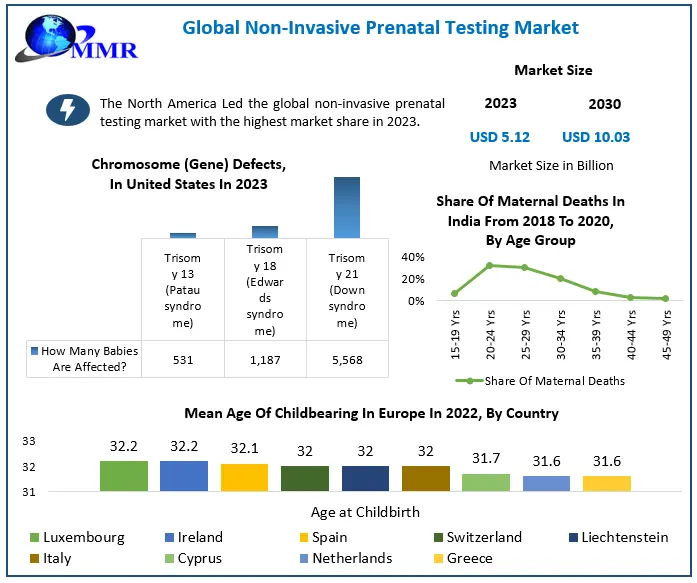 To know about the Research Methodology :- Request Free Sample Report
Non-Invasive Prenatal Testing Market Dynamics:
Advanced Maternal Age all across the world
The term "advanced maternal age" refers to mothers who will be 35 or older at their estimated due date. Over the past few decades, there's been a noticeable shift in the age of mothers giving birth, with the median age rising from 27 in 1990 to 30 in 2019, as reported by U.S. Census data. While many women over 35 have healthy pregnancies, statistics reveal an increase in the risk of maternal mortality with age. In the U.S. in 2021, the rate of maternal mortality was 20.4 per 100,000 live births for women under 25, rising to 31.3 for women ages 25 to 39, and significantly higher at 138.5 per 100,000 births for women ages 40 and older.
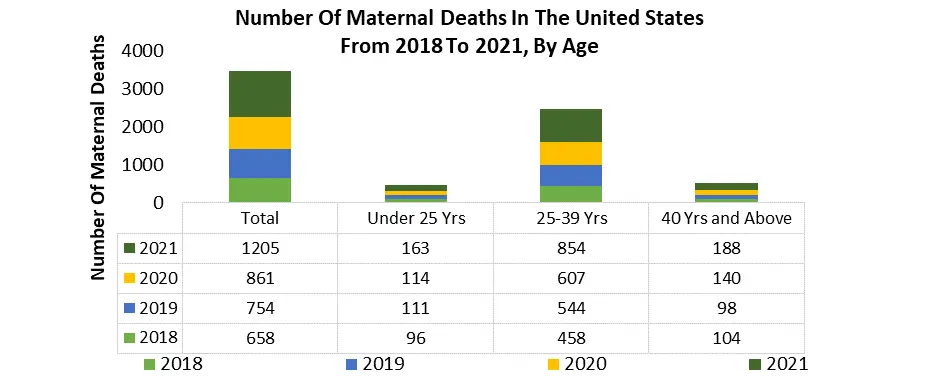 Experts highlight that health risks escalate with age, making older women more prone to health conditions when pregnant. For instance, women over 35 faces an elevated risk of complications such as gestational diabetes and preeclampsia. Moreover, they're more likely to encounter labor-related challenges, leading to a higher incidence of Cesarean sections and postpartum bleeding. Additionally, this age group has an increased likelihood of carrying multiples (twins or triplets), heightening the risk of pre-term delivery and other associated complications. These health considerations underscore the importance of comprehensive prenatal testing like non-invasive prenatal testing (NIPT) in assessing fetal health, particularly among expectant mothers of advanced maternal age, to mitigate potential risks and ensure a healthier pregnancy journey.
Thus, the rising maternal age is expected to be the major factor driving the non-invasive prenatal testing market growth during the forecast period. As societal norms evolve, more individuals are choosing to delay childbirth for various reasons, such as pursuing careers, financial stability, or personal choices. However, an inherent correlation exists between advanced maternal age and an increased risk of chromosomal abnormalities in fetuses, notably with conditions like Down syndrome. Statistics over recent years, such as those from the Centers for Disease Control and Prevention (CDC), highlight a noticeable shift in maternal age at childbirth, with a rising number of pregnancies occurring in women over 35.
This trend significantly contributes to the demand for prenatal testing aimed at assessing fetal health. Expectant parents, particularly those of advanced maternal age, are increasingly seeking comprehensive screening options like NIPT to evaluate the genetic well-being of the fetus. As a result, this growing inclination towards prenatal testing to mitigate the heightened risk of chromosomal abnormalities among older expectant mothers significantly boosts the NIPT market's growth. The increase in demand for these non-invasive, early assessment methods aligns with the need for accurate, reliable, and safe diagnostic tools, thereby boosting the non-invasive prenatal testing market's size and relevance in modern prenatal care.
Increasing Prevalence Of Down Syndrome
The increasing prevalence of Down syndrome all across the world has particularly influenced the growth of the Non-Invasive Prenatal Testing market in recent years. Down syndrome, a chromosomal abnormality characterized by an extra copy of chromosome 21, has seen a rising prevalence in recent years due to multiple factors. Advanced maternal age, typically defined as being 35 years or older at the time of childbirth, significantly contributes to the increased incidence of Down syndrome. As more individuals delay childbirth for various reasons such as pursuing careers or personal choices, the likelihood of chromosomal abnormalities, including Down syndrome, rises with maternal age.
According to statistics from various global health organizations, the prevalence of Down syndrome is estimated to be approximately 1 in 800 to 1 in 1000 live births globally. Regions with advanced healthcare systems and longer life expectancies tend to have higher prevalence rates due to older maternal age demographics, with countries like the United States, some parts of Europe, and Japan reporting relatively higher rates.
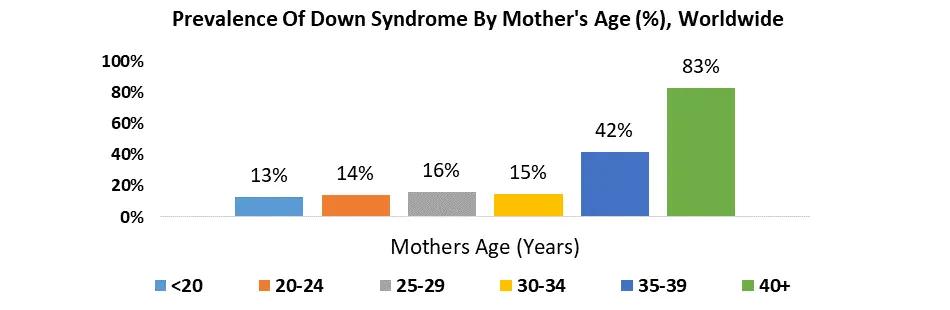 This increasing prevalence of Down syndrome has directly contributed to the growth of the NIPT market. Expectant parents, particularly those at an increased risk due to advanced maternal age or other factors, are increasingly seeking accurate and early detection methods for chromosomal abnormalities. NIPT offers a non-invasive and highly accurate means of assessing fetal health, especially in identifying conditions like Down syndrome, with detection rates reaching upwards of 99%. As awareness regarding the benefits of early detection and prenatal screening grows among healthcare providers and expectant parents, the demand for NIPT has surged. This heightened demand is particularly prominent in regions with higher prevalence rates of Down syndrome, where individuals are more inclined to opt for comprehensive prenatal testing methods to assess fetal health accurately.
The increasing prevalence of Down syndrome all across the globe acts as a significant driver for the non-invasive prenatal testing market by fostering greater awareness and acceptance of advanced prenatal testing methods. It underscores the importance of accurate and early detection of chromosomal abnormalities, particularly among expectant parents at higher risk, thus bolstering the demand for NIPT services. This growing demand contributes to the non-invasive prenatal testing industry growth, prompting advancements in technology and facilitating broader accessibility to NIPT, ultimately ensuring more comprehensive and inclusive prenatal care globally.
High Cost of Non-Invasive Prenatal Testing
The high cost associated with Non-Invasive Prenatal Testing is a significant factor restraining the non-invasive prenatal testing market growth. While NIPT offers substantial advantages in terms of accuracy and safety compared to traditional invasive prenatal procedures, its cost remains a considerable barrier to widespread adoption. The pricing of NIPT significantly varies globally, typically ranging from a few hundred to over a thousand dollars per test, making it substantially more expensive than conventional prenatal screening tests.
This high cost becomes a restricting factor, particularly in regions or socio-economic groups where healthcare resources are limited or insurance coverage is inadequate. This cost constraint affects the global non-invasive prenatal testing market growth in several ways. The affordability factor impedes accessibility for a considerable segment of the population. Many expectant parents might not have the financial means to cover the expenses of NIPT, resulting in disparities in access to advanced prenatal testing. Consequently, this restricts the non-invasive prenatal testing market's penetration, limiting its utilization to individuals or regions with better financial resources or comprehensive insurance coverage.
Moreover, the global discrepancy in NIPT pricing across regions exacerbates the issue of accessibility. In some developed regions with comprehensive healthcare systems, the cost is partly covered by insurance, making it more accessible to a larger population. However, in developing countries or regions with less developed healthcare infrastructure, the high out-of-pocket cost often renders NIPT unattainable for many prospective parents. For instance,
In countries like the United States or parts of Europe where NIPT is more established and available, the cost can range from $500 to $2000 or more per test. Contrastingly, in some developing regions or countries with limited access to advanced medical facilities, the cost might still be prohibitive, reaching amounts that surpass the means of many expectant parents.
As a result, the high cost of NIPT acts as a significant market restraint, limiting its accessibility and utilization, particularly in regions or among socio-economic groups with constrained financial resources or inadequate insurance coverage. Addressing this restraint requires concerted efforts to reduce the cost of testing through advancements in technology, improved healthcare policies for broader coverage, and initiatives aimed at ensuring equitable access to these advanced prenatal screening methods, ultimately fostering inclusivity and rapidly growing the market reach of NIPT.
Non-Invasive Prenatal Testing Market Segment Analysis:
By Application, the Trisomy segment led the global non-invasive prenatal testing market due to the increasing incidence of chromosomal abnormalities in prenatal. Advances in technology have broadened testing capabilities to encompass whole-genome sequencing, allowing the detection of numerous additional chromosomal anomalies, including microdeletions and sex chromosomal abnormalities. However, the microdeletion syndrome segment is expected to experience rapid growth during the forecast period. This surge is attributed to various factors such as the increasing prevalence of microdeletion syndromes, heightened awareness among individuals regarding chromosomal abnormalities, and technological advancements in screening tests. These advancements have led to the integration of microdeletion syndrome screening into standard Non-Invasive Prenatal Testing (NIPT) protocols, fostering a significant surge in demand for these comprehensive screening measures.
Non-Invasive Prenatal Testing (NIPT) Detection Rates and False Positive Rates for Chromosomal Abnormalities
| Trisomy | Detection rates | False positive rates (PR) |
| Trisomy 21 | Detection Rate 99.5% | False PR 0.05% |
| Trisomy 18 | Detection Rate 97.7% | False PR 0.04% |
| Trisomy 13 | Detection Rate 96.1% | False PR 0.06% |
| Sex Chromosome | Detection Rate 90.3% | False PR 0.23% |
By End-User, the Diagnostic Laboratories held the largest revenue share of more than 45% and dominated the global non-invasive prenatal testing market in 2023. The segment is expected to maintain its growth trend during the forecast period. Diagnostic laboratories serve as pivotal hubs for NIPT thanks to several reasons contributing to the increasing demand for such testing in these facilities. Diagnostic laboratories possess the advanced technological infrastructure required for conducting intricate genetic analyses essential for NIPT. This is expected to be the major factor driving the segment growth. These labs are equipped with state-of-the-art equipment and specialized protocols tailored for handling and analyzing biological samples, such as blood samples containing cell-free fetal DNA.
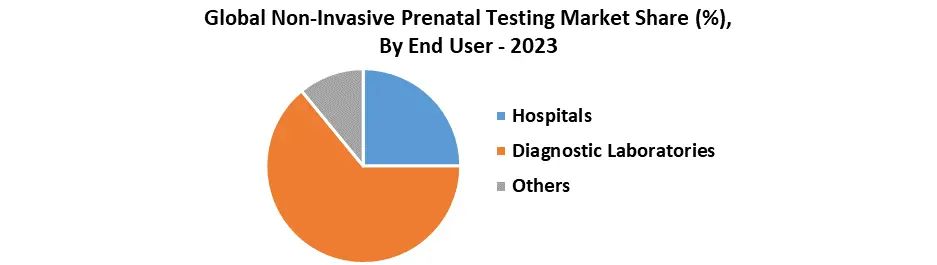 Moreover, the expertise and experience housed within these laboratories ensure accurate and reliable results, crucial for identifying potential fetal abnormalities like Down syndrome or Trisomy 18, attracting a vast consumer base. Additionally, the collaboration between diagnostic laboratories and healthcare providers facilitates seamless accessibility for expectant parents, as healthcare professionals often refer patients directly to these specialized facilities. Moreover, the continuous advancements and investments in research and development by these laboratories further enhance the precision and scope of NIPT, driving the demand for these tests, and eventually boosting the global non-invasive prenatal testing market revenue growth during the forecast period.
Non-Invasive Prenatal Testing Market Regional Insights:
North America region led the global non-invasive prenatal testing market with the highest revenue share of 43.78% in 2023. The region is further expected to grow at a CAGR of 9.24% during the forecast period. Heightened awareness among expectant parents about the benefits of early and non-invasive prenatal screenings has significantly increased the demand for NIPT services across the region, thereby contributing to the North American non-invasive prenatal testing market size. This increased awareness is often fueled by robust healthcare education and advocacy efforts, leading to a greater emphasis on proactive prenatal care. For instance, over the past five years, various healthcare organizations, like the American College of Obstetricians and Gynecologists (ACOG), have been actively promoting educational campaigns emphasizing the importance of prenatal screenings.
These efforts often include disseminating information through seminars, online resources, and pamphlets distributed in healthcare facilities, ensuring a wider reach among prospective parents. Additionally, patient advocacy groups, such as the National Society of Genetic Counselors (NSGC), have played a pivotal role by organizing awareness events, webinars, and support groups that provide firsthand information about the benefits and significance of early prenatal screenings. These collective initiatives have led to a shift in societal perception, prompting more expectant parents to proactively seek out NIPT services as part of their prenatal care journey, thereby contributing to the burgeoning growth of the North American non-invasive prenatal testing (NIPT) market.
Meanwhile, the California Prenatal Screening Program stands as a key healthcare initiative offering non-invasive prenatal testing (NIPT) services to pregnant individuals statewide. It's a proactive approach ensuring comprehensive prenatal care. This program's reach and accessibility, backed by state endorsement, foster trust, and credibility among the populace, driving wider acceptance. By focusing on early detection of specific genetic conditions like Down syndrome and neural tube defects, the initiative emphasizes timely interventions and support. The provision of genetic counseling and follow-up services through Prenatal Diagnosis Centers establishes a supportive framework, aiding informed decision-making and continued care for at-risk individuals.
This initiative's impact on the non-invasive prenatal testing market growth is evident through increased awareness, acceptance, and demand for advanced NIPT services beyond its scope. The program's coverage by insurance with minimal out-of-pocket expenses removes financial barriers, enhancing accessibility and contributing to greater utilization of NIPT. Furthermore, the positive societal perception and trust garnered from state-supported programs significantly influence more individuals to opt for NIPT services, driving the growth of the non-invasive prenatal testing market in the North American region.
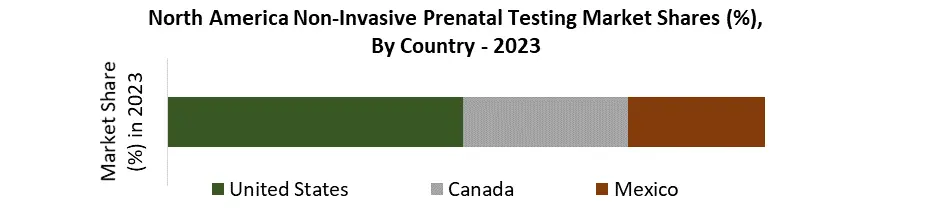 In addition, the presence of well-established healthcare infrastructure and advanced technological capabilities in countries like the United States and Canada has facilitated the widespread adoption of NIPT. The accessibility of advanced genetic testing facilities and the preference for safer, non-invasive testing methods have further bolstered the North America non-invasive prenatal testing industry growth. Additionally, the proactive regulatory environment in North America, which supports the integration of innovative medical technologies, has encouraged the development and adoption of NIPT. A cultural shift toward family planning and a growing trend of later-age pregnancies have contributed to the rising demand for comprehensive prenatal screening options, driving the growth of the non-invasive prenatal testing market in North American countries.
Key players in the non-invasive prenatal testing market in North America included companies like Illumina, Natera, PerkinElmer, Roche Diagnostics, etc. These companies continuously adopt various strategies to increase their market share including research and development investment, partnerships and mergers, technological developments, etc. For instance,
Illumina's VeriSeq NIPT Solution v2, launched in early 2021, showcased improved accuracy and broader genomic coverage for detecting fetal aneuploidies, signifying their commitment to technological innovation.
Natera pursued market growth through strategic collaborations, notably partnering with the Mayo Clinic in 2020. This collaboration aimed at conducting clinical studies and amplifying awareness about NIPT. PerkinElmer's focus on product differentiation with its Vanadis NIPT platform, utilizing digital analysis instead of sequencing, aimed to simplify the testing process, potentially reducing costs and time.
Simultaneously, companies like Roche Diagnostics emphasized regulatory approvals, exemplified by the FDA's 2021 approval for the expanded indications of its Harmony Prenatal Test, illustrating adherence to quality standards and broadening the non-invasive prenatal testing market potential. These strategies collectively underscore the multifaceted approaches employed by key players to innovate, expand, differentiate, and comply, enhancing their competitive edge in the dynamic NIPT market landscape.
Non-Invasive Prenatal Testing Market Scope: Inquire before buying
| Global Non-Invasive Prenatal Testing Market | |||
|---|---|---|---|
| Report Coverage | Details | ||
| Base Year: | 2023 | Forecast Period: | 2024-2030 |
| Historical Data: | 2018 to 2023 | Market Size in 2023: | US $ 5.12 Bn. |
| Forecast Period 2024 to 2030 CAGR: | 10.08% | Market Size in 2030: | US $ 10.03 Bn. |
| Segments Covered: | By Gestation Period | 0-12 Weeks 13-24 Weeks 25-36 Weeks |
|
| By Pregnancy Risk | High & Average Risk Low Risk |
||
| By Method | Ultrasound Detection Biochemical Screening Tests Cell-free DNA in Maternal Plasma Tests |
||
| By Technology | NGS Array Technology PCR Others |
||
| By Product | Consumables & Reagents Instruments |
||
| By Application | Trisomy Microdeletion Syndrome Other Applications |
||
| By End-User | Hospitals Diagnostic Laboratories Others |
||
Global Non-Invasive Prenatal Testing Market, by Region
North America (United States, Canada and Mexico)
Europe (UK, France, Germany, Italy, Spain, Sweden, Austria and Rest of Europe)
Asia Pacific (China, South Korea, Japan, India, Australia, Indonesia, Malaysia, Vietnam, Taiwan, Bangladesh, Pakistan and Rest of APAC)
Middle East and Africa (South Africa, GCC, Egypt, Nigeria and Rest of ME&A)
South America (Brazil, Argentina Rest of South America)
Non-Invasive Prenatal Testing Market Key Players:
Leading Non-invasive prenatal testing services providers in the North America:
1. Laboratory Corporation of America Holdings (LabCorp) - (Carolina, USA)
2. Agilent Technologies, Inc. - (California, USA)
3. Thermo Fisher Scientific Inc. - (Massachusetts, USA)
4. GE Healthcare - (Chicago, Illinois, USA; part of General Electric Company)
5. Progenity, Inc. - (San Diego, California, USA)
6. Genesis Genetics (CooperSurgical, Inc.) - (Livingston, New Jersey, USA)
7. Natera, Inc. - (San Carlos, California, USA)
8. Illumina, Inc. (Verinata Health, Inc.) - (San Diego, California, USA)
9. Myriad Women’s Health, Inc. (Counsyl, Inc.) - (South San Francisco, California, USA)
10. Quest Diagnostics, Inc. - (Secaucus, New Jersey, USA)
Major non-prenatal testing solution providers in Europe:
1. Eurofins LifeCodexx AG - (Konstanz, Germany)
2. Yourgene Health - (Manchester, United Kingdom)
3. Centogene N.V. - (Rostock, Germany)
4. F. Hoffmann-La Roche Ltd. (Ariosa Diagnostics) - (Basel, Switzerland)
5. IGENOMIX - (Valencia, Spain)
6. Qiagen - (Venlo, Netherlands)
List of non-invasive prenatal testing services providers in Asia:
1. BGI (Beijing Genomics Institute) - (Shenzhen, China)
2. MedGenome Labs Ltd. - (Bangalore, India)
3. Eisai (Japan)
4. Nihon Gene Research Laboratories (NGRL) (Japan)
5. Seegene (South Korea)
6. Genetic Diagnostics Singapore (GDS) (Singapore)
FAQs:
1. What are the growth drivers for the Non-Invasive Prenatal Testing market?
Ans. The rising maternal age is expected to be the major factor driving the non-invasive prenatal testing market growth during the forecast period.
2. What is the major restraint for the Non-Invasive Prenatal Testing market growth?
Ans. The high cost of non-invasive prenatal testing is expected to be the major restraining factor for the Non-Invasive Prenatal Testing market growth.
3. Which region is expected to lead the global Non-Invasive Prenatal Testing market during the forecast period?
Ans. North America is expected to lead the global Non-Invasive Prenatal Testing market during the forecast period owing to the growing average maternal age, increasing healthcare expenditure, growing demand for initial and non-invasive procedures, and increasing prevalence of chromosome syndromes in the region.
4. What is the projected market size and growth rate of the Non-Invasive Prenatal Testing Market?
Ans. The Non-Invasive Prenatal Testing Market size was valued at USD 5.12 Billion in 2023 and the total Non-Invasive Prenatal Testing revenue is expected to grow at a CAGR of 10.08% from 2024 to 2030, reaching nearly USD 10.03 Billion by 2030.
5. What segments are covered in the Non-Invasive Prenatal Testing Market report?
Ans. The segments covered in the Non-Invasive Prenatal Testing market report are Technology, Method, Pregnancy Risk, Gestation Period, Product, Applications, End-User, and Region.