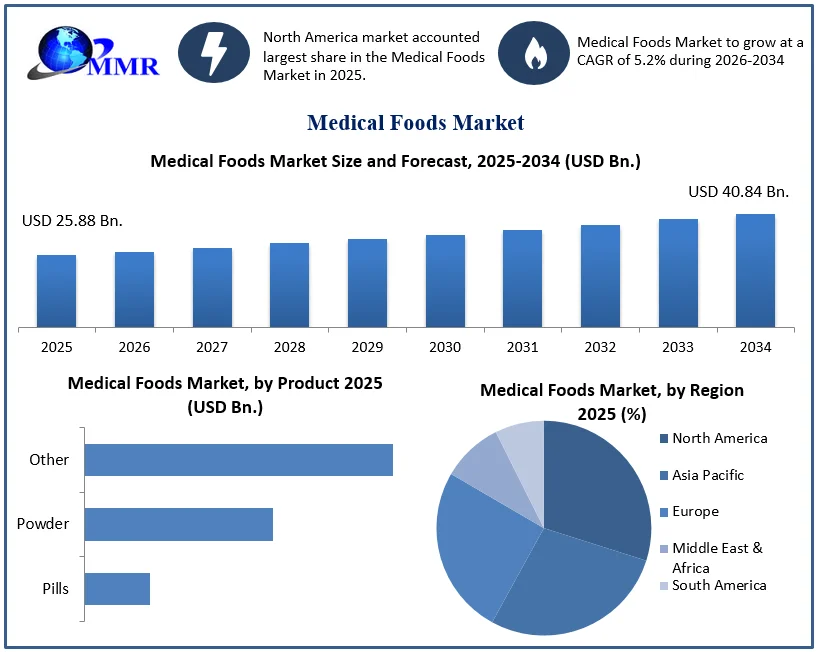
1. Medical Foods Market Introduction
1.1. Study Assumption and Market Definition
1.2. Scope of the Study
1.3. Executive Summary
2. Global Medical Foods Market: Competitive Landscape
2.1. MMR Competition Matrix
2.2. Competitive Landscape
2.3. Key Players Benchmarking
2.3.1. Company Name
2.3.2. Business Segment
2.3.3. End-user Segment
2.3.4. Revenue (2025)
2.3.5. Company Locations
2.4. Leading Medical Foods Market Companies, by market capitalization
2.5. Market Structure
2.5.1. Market Leaders
2.5.2. Market Followers
2.5.3. Emerging Players
2.6. Mergers and Acquisitions Details
3. Medical Foods Market: Dynamics
3.1. Medical Foods Market Trends by Region
3.1.1. North America Medical Foods Market Trends
3.1.2. Europe Medical Foods Market Trends
3.1.3. Asia Pacific Medical Foods Market Trends
3.1.4. Middle East and Africa Medical Foods Market Trends
3.1.5. South America Medical Foods Market Trends
3.2. Medical Foods Market Dynamics by Region
3.2.1. North America
3.2.1.1. North America Medical Foods Market Drivers
3.2.1.2. North America Medical Foods Market Restraints
3.2.1.3. North America Medical Foods Market Opportunities
3.2.1.4. North America Medical Foods Market Challenges
3.2.2. Europe
3.2.2.1. Europe Medical Foods Market Drivers
3.2.2.2. Europe Medical Foods Market Restraints
3.2.2.3. Europe Medical Foods Market Opportunities
3.2.2.4. Europe Medical Foods Market Challenges
3.2.3. Asia Pacific
3.2.3.1. Asia Pacific Medical Foods Market Drivers
3.2.3.2. Asia Pacific Medical Foods Market Restraints
3.2.3.3. Asia Pacific Medical Foods Market Opportunities
3.2.3.4. Asia Pacific Medical Foods Market Challenges
3.2.4. Middle East and Africa
3.2.4.1. Middle East and Africa Medical Foods Market Drivers
3.2.4.2. Middle East and Africa Medical Foods Market Restraints
3.2.4.3. Middle East and Africa Medical Foods Market Opportunities
3.2.4.4. Middle East and Africa Medical Foods Market Challenges
3.2.5. South America
3.2.5.1. South America Medical Foods Market Drivers
3.2.5.2. South America Medical Foods Market Restraints
3.2.5.3. South America Medical Foods Market Opportunities
3.2.5.4. South America Medical Foods Market Challenges
3.3. PORTER's Five Forces Analysis
3.4. PESTLE Analysis
3.5. Technology Roadmap
3.6. Regulatory Landscape by Region
3.6.1. North America
3.6.2. Europe
3.6.3. Asia Pacific
3.6.4. Middle East and Africa
3.6.5. South America
3.7. Key Opinion Leader Analysis in the Medical Foods Market
3.8. Analysis of Government Schemes and Initiatives For Global Industry
3.9. Medical Foods Market Trade Analysis
3.10. The Global Pandemic Impact on Medical Foods Market
4. Medical Foods Market: Global Market Size and Forecast by Segmentation (in Bn.) 2025-2034
4.1. Medical Foods Market Size and Forecast, by Route of Administrations (2025-2034)
4.1.1. Oral
4.1.2. Enteral
4.2. Medical Foods Market Size and Forecast, by Product (2025-2034)
4.2.1. Pills
4.2.2. Powder
4.2.3. Other
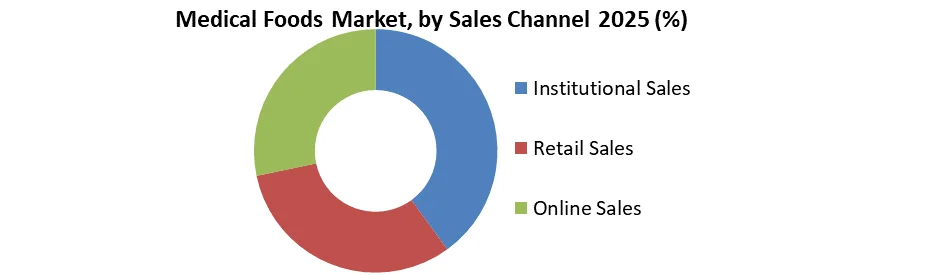
4.3. Medical Foods Market Size and Forecast, by Sales Channel (2025-2034)
4.3.1. Online Sales
4.3.2. Retail Sales
4.3.3. Institutional Sale
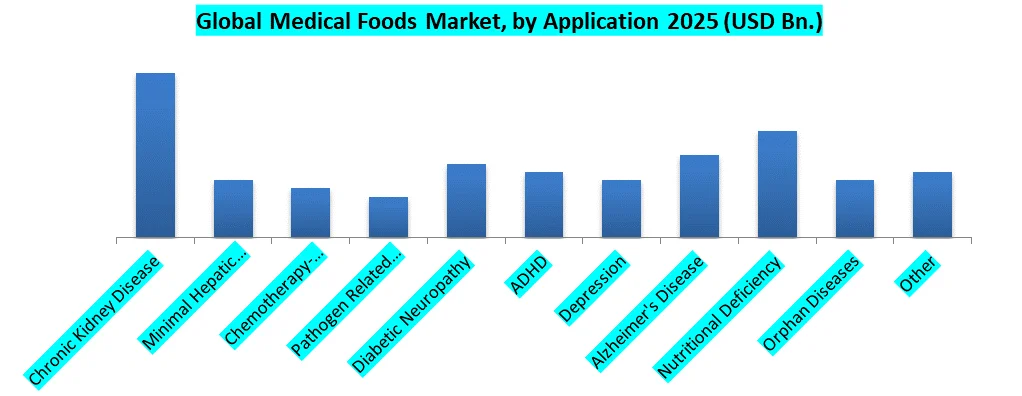
4.4. Medical Foods Market Size and Forecast, by Application (2025-2034)
4.4.1. Chronic Kidney Disease
4.4.2. Minimal Hepatic Encephalopathy,
4.4.3. Chemotherapy-induced Diarrhea,
4.4.4. Pathogen Related Infections,
4.4.5. Diabetic Neuropathy,
4.4.6. ADHD,
4.4.7. Depression,
4.4.8. Alzheimer's Disease,
4.4.9. Nutritional Deficiency,
4.4.10. Orphan Diseases,
4.4.11. Other,
4.5. Medical Foods Market Size and Forecast, by Region (2025-2034)
4.5.1. North America
4.5.2. Europe
4.5.3. Asia Pacific
4.5.4. Middle East and Africa
4.5.5. South America
5. North America Medical Foods Market Size and Forecast by Segmentation (in Bn.) 2025-2034
5.1. North America Medical Foods Market Size and Forecast, by Route of Administrations (2025-2034)
5.1.1. Oral
5.1.2. Enteral
5.2. North America Medical Foods Market Size and Forecast, by Product (2025-2034)
5.2.1. Pills
5.2.2. Powder
5.2.3. Other
5.3. North America Medical Foods Market Size and Forecast, by Sales Channel (2025-2034)
5.3.1. Online Sales
5.3.2. Retail Sales
5.3.3. Institutional Sale
5.4. North America Medical Foods Market Size and Forecast, by Application (2025-2034)
5.4.1. Chronic Kidney Disease
5.4.2. Minimal Hepatic Encephalopathy,
5.4.3. Chemotherapy-induced Diarrhea,
5.4.4. Pathogen Related Infections,
5.4.5. Diabetic Neuropathy,
5.4.6. ADHD,
5.4.7. Depression,
5.4.8. Alzheimer's Disease,
5.4.9. Nutritional Deficiency,
5.4.10. Orphan Diseases,
5.4.11. Other,
5.5. North America Medical Foods Market Size and Forecast, by Country (2025-2034)
5.5.1. United States
5.5.1.1. United States Medical Foods Market Size and Forecast, by Route of Administrations (2025-2034)
5.5.1.1.1. Oral
5.5.1.1.2. Enteral
5.5.1.2. United States Medical Foods Market Size and Forecast, by Product (2025-2034)
5.5.1.2.1. Pills
5.5.1.2.2. Powder
5.5.1.2.3. Other
5.5.1.3. United States Medical Foods Market Size and Forecast, by Sales Channel (2025-2034)
5.5.1.3.1. Online Sales
5.5.1.3.2. Retail Sales
5.5.1.3.3. Institutional Sale
5.5.1.4. United States Medical Foods Market Size and Forecast, by Application (2025-2034)
5.5.1.4.1. Chronic Kidney Disease
5.5.1.4.2. Minimal Hepatic Encephalopathy,
5.5.1.4.3. Chemotherapy-induced Diarrhea,
5.5.1.4.4. Pathogen Related Infections,
5.5.1.4.5. Diabetic Neuropathy,
5.5.1.4.6. ADHD,
5.5.1.4.7. Depression,
5.5.1.4.8. Alzheimer's Disease,
5.5.1.4.9. Nutritional Deficiency,
5.5.1.4.10. Orphan Diseases,
5.5.1.4.11. Other,
5.5.2. Canada
5.5.2.1. Canada Medical Foods Market Size and Forecast, by Route of Administrations (2025-2034)
5.5.2.1.1. Oral
5.5.2.1.2. Enteral
5.5.2.2. Canada Medical Foods Market Size and Forecast, by Product (2025-2034)
5.5.2.2.1. Pills
5.5.2.2.2. Powder
5.5.2.2.3. Other
5.5.2.3. Canada Medical Foods Market Size and Forecast, by Sales Channel (2025-2034)
5.5.2.3.1. Online Sales
5.5.2.3.2. Retail Sales
5.5.2.3.3. Institutional Sale
5.5.2.4. Canada Medical Foods Market Size and Forecast, by Application (2025-2034)
5.5.2.4.1. Chronic Kidney Disease
5.5.2.4.2. Minimal Hepatic Encephalopathy,
5.5.2.4.3. Chemotherapy-induced Diarrhea,
5.5.2.4.4. Pathogen Related Infections,
5.5.2.4.5. Diabetic Neuropathy,
5.5.2.4.6. ADHD,
5.5.2.4.7. Depression,
5.5.2.4.8. Alzheimer's Disease,
5.5.2.4.9. Nutritional Deficiency,
5.5.2.4.10. Orphan Diseases,
5.5.2.4.11. Other,
5.5.3. Mexico
5.5.3.1. Mexico Medical Foods Market Size and Forecast, by Route of Administrations (2025-2034)
5.5.3.1.1. Oral
5.5.3.1.2. Enteral
5.5.3.2. Mexico Medical Foods Market Size and Forecast, by Product (2025-2034)
5.5.3.2.1. Pills
5.5.3.2.2. Powder
5.5.3.2.3. Other
5.5.3.3. Mexico Medical Foods Market Size and Forecast, by Sales Channel (2025-2034)
5.5.3.3.1. Online Sales
5.5.3.3.2. Retail Sales
5.5.3.3.3. Institutional Sale
5.5.3.4. Mexico Medical Foods Market Size and Forecast, by Application (2025-2034)
5.5.3.4.1. Chronic Kidney Disease
5.5.3.4.2. Minimal Hepatic Encephalopathy,
5.5.3.4.3. Chemotherapy-induced Diarrhea,
5.5.3.4.4. Pathogen Related Infections,
5.5.3.4.5. Diabetic Neuropathy,
5.5.3.4.6. ADHD,
5.5.3.4.7. Depression,
5.5.3.4.8. Alzheimer's Disease,
5.5.3.4.9. Nutritional Deficiency,
5.5.3.4.10. Orphan Diseases,
5.5.3.4.11. Other,
6. Europe Medical Foods Market Size and Forecast by Segmentation (in Bn.) 2025-2034
6.1. Europe Medical Foods Market Size and Forecast, by Route of Administrations (2025-2034)
6.1.1. Oral
6.1.2. Enteral
6.2. Europe Medical Foods Market Size and Forecast, by Product (2025-2034)
6.2.1. Pills
6.2.2. Powder
6.2.3. Other
6.3. Europe Medical Foods Market Size and Forecast, by Sales Channel (2025-2034)
6.3.1. Online Sales
6.3.2. Retail Sales
6.3.3. Institutional Sale
6.4. Europe Medical Foods Market Size and Forecast, by Application (2025-2034)
6.4.1. Chronic Kidney Disease
6.4.2. Minimal Hepatic Encephalopathy,
6.4.3. Chemotherapy-induced Diarrhea,
6.4.4. Pathogen Related Infections,
6.4.5. Diabetic Neuropathy,
6.4.6. ADHD,
6.4.7. Depression,
6.4.8. Alzheimer's Disease,
6.4.9. Nutritional Deficiency,
6.4.10. Orphan Diseases,
6.4.11. Other,
6.5. Europe Medical Foods Market Size and Forecast, by Country (2025-2034)
6.5.1. United Kingdom
6.5.1.1. United Kingdom Medical Foods Market Size and Forecast, by Route of Administrations (2025-2034)
6.5.1.1.1. Oral
6.5.1.1.2. Enteral
6.5.1.2. United Kingdom Medical Foods Market Size and Forecast, by Product (2025-2034)
6.5.1.2.1. Pills
6.5.1.2.2. Powder
6.5.1.2.3. Other
6.5.1.3. United Kingdom Medical Foods Market Size and Forecast, by Sales Channel (2025-2034)
6.5.1.3.1. Online Sales
6.5.1.3.2. Retail Sales
6.5.1.3.3. Institutional Sale
6.5.1.4. United Kingdom Medical Foods Market Size and Forecast, by Application (2025-2034)
6.5.1.4.1. Chronic Kidney Disease
6.5.1.4.2. Minimal Hepatic Encephalopathy,
6.5.1.4.3. Chemotherapy-induced Diarrhea,
6.5.1.4.4. Pathogen Related Infections,
6.5.1.4.5. Diabetic Neuropathy,
6.5.1.4.6. ADHD,
6.5.1.4.7. Depression,
6.5.1.4.8. Alzheimer's Disease,
6.5.1.4.9. Nutritional Deficiency,
6.5.1.4.10. Orphan Diseases,
6.5.1.4.11. Other,
6.5.2. France
6.5.2.1. France Medical Foods Market Size and Forecast, by Route of Administrations (2025-2034)
6.5.2.1.1. Oral
6.5.2.1.2. Enteral
6.5.2.2. France Medical Foods Market Size and Forecast, by Product (2025-2034)
6.5.2.2.1. Pills
6.5.2.2.2. Powder
6.5.2.2.3. Other
6.5.2.3. France Medical Foods Market Size and Forecast, by Sales Channel (2025-2034)
6.5.2.3.1. Online Sales
6.5.2.3.2. Retail Sales
6.5.2.3.3. Institutional Sale
6.5.2.4. France Medical Foods Market Size and Forecast, by Application (2025-2034)
6.5.2.4.1. Chronic Kidney Disease
6.5.2.4.2. Minimal Hepatic Encephalopathy,
6.5.2.4.3. Chemotherapy-induced Diarrhea,
6.5.2.4.4. Pathogen Related Infections,
6.5.2.4.5. Diabetic Neuropathy,
6.5.2.4.6. ADHD,
6.5.2.4.7. Depression,
6.5.2.4.8. Alzheimer's Disease,
6.5.2.4.9. Nutritional Deficiency,
6.5.2.4.10. Orphan Diseases,
6.5.2.4.11. Other,
6.5.3. Germany
6.5.3.1. Germany Medical Foods Market Size and Forecast, by Route of Administrations (2025-2034)
6.5.3.1.1. Oral
6.5.3.1.2. Enteral
6.5.3.2. Germany Medical Foods Market Size and Forecast, by Product (2025-2034)
6.5.3.2.1. Pills
6.5.3.2.2. Powder
6.5.3.2.3. Other
6.5.3.3. Germany Medical Foods Market Size and Forecast, by Sales Channel (2025-2034)
6.5.3.3.1. Online Sales
6.5.3.3.2. Retail Sales
6.5.3.3.3. Institutional Sale
6.5.3.4. Germany Medical Foods Market Size and Forecast, by Application (2025-2034)
6.5.3.4.1. Chronic Kidney Disease
6.5.3.4.2. Minimal Hepatic Encephalopathy,
6.5.3.4.3. Chemotherapy-induced Diarrhea,
6.5.3.4.4. Pathogen Related Infections,
6.5.3.4.5. Diabetic Neuropathy,
6.5.3.4.6. ADHD,
6.5.3.4.7. Depression,
6.5.3.4.8. Alzheimer's Disease,
6.5.3.4.9. Nutritional Deficiency,
6.5.3.4.10. Orphan Diseases,
6.5.3.4.11. Other,
6.5.4. Italy
6.5.4.1. Italy Medical Foods Market Size and Forecast, by Route of Administrations (2025-2034)
6.5.4.1.1. Oral
6.5.4.1.2. Enteral
6.5.4.2. Italy Medical Foods Market Size and Forecast, by Product (2025-2034)
6.5.4.2.1. Pills
6.5.4.2.2. Powder
6.5.4.2.3. Other
6.5.4.3. Italy Medical Foods Market Size and Forecast, by Sales Channel (2025-2034)
6.5.4.3.1. Online Sales
6.5.4.3.2. Retail Sales
6.5.4.3.3. Institutional Sale
6.5.4.4. Italy Medical Foods Market Size and Forecast, by Application (2025-2034)
6.5.4.4.1. Chronic Kidney Disease
6.5.4.4.2. Minimal Hepatic Encephalopathy,
6.5.4.4.3. Chemotherapy-induced Diarrhea,
6.5.4.4.4. Pathogen Related Infections,
6.5.4.4.5. Diabetic Neuropathy,
6.5.4.4.6. ADHD,
6.5.4.4.7. Depression,
6.5.4.4.8. Alzheimer's Disease,
6.5.4.4.9. Nutritional Deficiency,
6.5.4.4.10. Orphan Diseases,
6.5.4.4.11. Other,
6.5.5. Spain
6.5.5.1. Spain Medical Foods Market Size and Forecast, by Route of Administrations (2025-2034)
6.5.5.1.1. Oral
6.5.5.1.2. Enteral
6.5.5.2. Spain Medical Foods Market Size and Forecast, by Product (2025-2034)
6.5.5.2.1. Pills
6.5.5.2.2. Powder
6.5.5.2.3. Other
6.5.5.3. Spain Medical Foods Market Size and Forecast, by Sales Channel (2025-2034)
6.5.5.3.1. Online Sales
6.5.5.3.2. Retail Sales
6.5.5.3.3. Institutional Sale
6.5.5.4. Spain Medical Foods Market Size and Forecast, by Application (2025-2034)
6.5.5.4.1. Chronic Kidney Disease
6.5.5.4.2. Minimal Hepatic Encephalopathy,
6.5.5.4.3. Chemotherapy-induced Diarrhea,
6.5.5.4.4. Pathogen Related Infections,
6.5.5.4.5. Diabetic Neuropathy,
6.5.5.4.6. ADHD,
6.5.5.4.7. Depression,
6.5.5.4.8. Alzheimer's Disease,
6.5.5.4.9. Nutritional Deficiency,
6.5.5.4.10. Orphan Diseases,
6.5.5.4.11. Other,
6.5.6. Sweden
6.5.6.1. Sweden Medical Foods Market Size and Forecast, by Route of Administrations (2025-2034)
6.5.6.1.1. Oral
6.5.6.1.2. Enteral
6.5.6.2. Sweden Medical Foods Market Size and Forecast, by Product (2025-2034)
6.5.6.2.1. Pills
6.5.6.2.2. Powder
6.5.6.2.3. Other
6.5.6.3. Sweden Medical Foods Market Size and Forecast, by Sales Channel (2025-2034)
6.5.6.3.1. Online Sales
6.5.6.3.2. Retail Sales
6.5.6.3.3. Institutional Sale
6.5.6.4. Sweden Medical Foods Market Size and Forecast, by Application (2025-2034)
6.5.6.4.1. Chronic Kidney Disease
6.5.6.4.2. Minimal Hepatic Encephalopathy,
6.5.6.4.3. Chemotherapy-induced Diarrhea,
6.5.6.4.4. Pathogen Related Infections,
6.5.6.4.5. Diabetic Neuropathy,
6.5.6.4.6. ADHD,
6.5.6.4.7. Depression,
6.5.6.4.8. Alzheimer's Disease,
6.5.6.4.9. Nutritional Deficiency,
6.5.6.4.10. Orphan Diseases,
6.5.6.4.11. Other,
6.5.7. Austria
6.5.7.1. Austria Medical Foods Market Size and Forecast, by Route of Administrations (2025-2034)
6.5.7.1.1. Oral
6.5.7.1.2. Enteral
6.5.7.2. Austria Medical Foods Market Size and Forecast, by Product (2025-2034)
6.5.7.2.1. Pills
6.5.7.2.2. Powder
6.5.7.2.3. Other
6.5.7.3. Austria Medical Foods Market Size and Forecast, by Sales Channel (2025-2034)
6.5.7.3.1. Online Sales
6.5.7.3.2. Retail Sales
6.5.7.3.3. Institutional Sale
6.5.7.4. Austria Medical Foods Market Size and Forecast, by Application (2025-2034)
6.5.7.4.1. Chronic Kidney Disease
6.5.7.4.2. Minimal Hepatic Encephalopathy,
6.5.7.4.3. Chemotherapy-induced Diarrhea,
6.5.7.4.4. Pathogen Related Infections,
6.5.7.4.5. Diabetic Neuropathy,
6.5.7.4.6. ADHD,
6.5.7.4.7. Depression,
6.5.7.4.8. Alzheimer's Disease,
6.5.7.4.9. Nutritional Deficiency,
6.5.7.4.10. Orphan Diseases,
6.5.7.4.11. Other,
6.5.8. Rest of Europe
6.5.8.1. Rest of Europe Medical Foods Market Size and Forecast, by Route of Administrations (2025-2034)
6.5.8.1.1. Oral
6.5.8.1.2. Enteral
6.5.8.2. Rest of Europe Medical Foods Market Size and Forecast, by Product (2025-2034)
6.5.8.2.1. Pills
6.5.8.2.2. Powder
6.5.8.2.3. Other
6.5.8.3. Rest of Europe Medical Foods Market Size and Forecast, by Sales Channel (2025-2034)
6.5.8.3.1. Online Sales
6.5.8.3.2. Retail Sales
6.5.8.3.3. Institutional Sale
6.5.8.4. Rest of Europe Medical Foods Market Size and Forecast, by Application (2025-2034)
6.5.8.4.1. Chronic Kidney Disease
6.5.8.4.2. Minimal Hepatic Encephalopathy,
6.5.8.4.3. Chemotherapy-induced Diarrhea,
6.5.8.4.4. Pathogen Related Infections,
6.5.8.4.5. Diabetic Neuropathy,
6.5.8.4.6. ADHD,
6.5.8.4.7. Depression,
6.5.8.4.8. Alzheimer's Disease,
6.5.8.4.9. Nutritional Deficiency,
6.5.8.4.10. Orphan Diseases,
6.5.8.4.11. Other,
7. Asia Pacific Medical Foods Market Size and Forecast by Segmentation (in Bn.) 2025-2034
7.1. Asia Pacific Medical Foods Market Size and Forecast, by Route of Administrations (2025-2034)
7.1.1. Oral
7.1.2. Enteral
7.2. Asia Pacific Medical Foods Market Size and Forecast, by Product (2025-2034)
7.2.1. Pills
7.2.2. Powder
7.2.3. Other
7.3. Asia Pacific Medical Foods Market Size and Forecast, by Sales Channel (2025-2034)
7.3.1. Online Sales
7.3.2. Retail Sales
7.3.3. Institutional Sale
7.4. Asia Pacific Medical Foods Market Size and Forecast, by Application (2025-2034)
7.4.1. Chronic Kidney Disease
7.4.2. Minimal Hepatic Encephalopathy,
7.4.3. Chemotherapy-induced Diarrhea,
7.4.4. Pathogen Related Infections,
7.4.5. Diabetic Neuropathy,
7.4.6. ADHD,
7.4.7. Depression,
7.4.8. Alzheimer's Disease,
7.4.9. Nutritional Deficiency,
7.4.10. Orphan Diseases,
7.4.11. Other,
7.5. Asia Pacific Medical Foods Market Size and Forecast, by Country (2025-2034)
7.5.1. China
7.5.1.1. China Medical Foods Market Size and Forecast, by Route of Administrations (2025-2034)
7.5.1.1.1. Oral
7.5.1.1.2. Enteral
7.5.1.2. China Medical Foods Market Size and Forecast, by Product (2025-2034)
7.5.1.2.1. Pills
7.5.1.2.2. Powder
7.5.1.2.3. Other
7.5.1.3. China Medical Foods Market Size and Forecast, by Sales Channel (2025-2034)
7.5.1.3.1. Online Sales
7.5.1.3.2. Retail Sales
7.5.1.3.3. Institutional Sale
7.5.1.4. China Medical Foods Market Size and Forecast, by Application (2025-2034)
7.5.1.4.1. Chronic Kidney Disease
7.5.1.4.2. Minimal Hepatic Encephalopathy,
7.5.1.4.3. Chemotherapy-induced Diarrhea,
7.5.1.4.4. Pathogen Related Infections,
7.5.1.4.5. Diabetic Neuropathy,
7.5.1.4.6. ADHD,
7.5.1.4.7. Depression,
7.5.1.4.8. Alzheimer's Disease,
7.5.1.4.9. Nutritional Deficiency,
7.5.1.4.10. Orphan Diseases,
7.5.1.4.11. Other,
7.5.2. S Korea
7.5.2.1. S Korea Medical Foods Market Size and Forecast, by Route of Administrations (2025-2034)
7.5.2.1.1. Oral
7.5.2.1.2. Enteral
7.5.2.2. S Korea Medical Foods Market Size and Forecast, by Product (2025-2034)
7.5.2.2.1. Pills
7.5.2.2.2. Powder
7.5.2.2.3. Other
7.5.2.3. S Korea Medical Foods Market Size and Forecast, by Sales Channel (2025-2034)
7.5.2.3.1. Online Sales
7.5.2.3.2. Retail Sales
7.5.2.3.3. Institutional Sale
7.5.2.4. S Korea Medical Foods Market Size and Forecast, by Application (2025-2034)
7.5.2.4.1. Chronic Kidney Disease
7.5.2.4.2. Minimal Hepatic Encephalopathy,
7.5.2.4.3. Chemotherapy-induced Diarrhea,
7.5.2.4.4. Pathogen Related Infections,
7.5.2.4.5. Diabetic Neuropathy,
7.5.2.4.6. ADHD,
7.5.2.4.7. Depression,
7.5.2.4.8. Alzheimer's Disease,
7.5.2.4.9. Nutritional Deficiency,
7.5.2.4.10. Orphan Diseases,
7.5.2.4.11. Other,
7.5.3. Japan
7.5.3.1. Japan Medical Foods Market Size and Forecast, by Route of Administrations (2025-2034)
7.5.3.1.1. Oral
7.5.3.1.2. Enteral
7.5.3.2. Japan Medical Foods Market Size and Forecast, by Product (2025-2034)
7.5.3.2.1. Pills
7.5.3.2.2. Powder
7.5.3.2.3. Other
7.5.3.3. Japan Medical Foods Market Size and Forecast, by Sales Channel (2025-2034)
7.5.3.3.1. Online Sales
7.5.3.3.2. Retail Sales
7.5.3.3.3. Institutional Sale
7.5.3.4. Japan Medical Foods Market Size and Forecast, by Application (2025-2034)
7.5.3.4.1. Chronic Kidney Disease
7.5.3.4.2. Minimal Hepatic Encephalopathy,
7.5.3.4.3. Chemotherapy-induced Diarrhea,
7.5.3.4.4. Pathogen Related Infections,
7.5.3.4.5. Diabetic Neuropathy,
7.5.3.4.6. ADHD,
7.5.3.4.7. Depression,
7.5.3.4.8. Alzheimer's Disease,
7.5.3.4.9. Nutritional Deficiency,
7.5.3.4.10. Orphan Diseases,
7.5.3.4.11. Other,
7.5.4. India
7.5.4.1. India Medical Foods Market Size and Forecast, by Route of Administrations (2025-2034)
7.5.4.1.1. Oral
7.5.4.1.2. Enteral
7.5.4.2. India Medical Foods Market Size and Forecast, by Product (2025-2034)
7.5.4.2.1. Pills
7.5.4.2.2. Powder
7.5.4.2.3. Other
7.5.4.3. India Medical Foods Market Size and Forecast, by Sales Channel (2025-2034)
7.5.4.3.1. Online Sales
7.5.4.3.2. Retail Sales
7.5.4.3.3. Institutional Sale
7.5.4.4. India Medical Foods Market Size and Forecast, by Application (2025-2034)
7.5.4.4.1. Chronic Kidney Disease
7.5.4.4.2. Minimal Hepatic Encephalopathy,
7.5.4.4.3. Chemotherapy-induced Diarrhea,
7.5.4.4.4. Pathogen Related Infections,
7.5.4.4.5. Diabetic Neuropathy,
7.5.4.4.6. ADHD,
7.5.4.4.7. Depression,
7.5.4.4.8. Alzheimer's Disease,
7.5.4.4.9. Nutritional Deficiency,
7.5.4.4.10. Orphan Diseases,
7.5.4.4.11. Other,
7.5.5. Australia
7.5.5.1. Australia Medical Foods Market Size and Forecast, by Route of Administrations (2025-2034)
7.5.5.1.1. Oral
7.5.5.1.2. Enteral
7.5.5.2. Australia Medical Foods Market Size and Forecast, by Product (2025-2034)
7.5.5.2.1. Pills
7.5.5.2.2. Powder
7.5.5.2.3. Other
7.5.5.3. Australia Medical Foods Market Size and Forecast, by Sales Channel (2025-2034)
7.5.5.3.1. Online Sales
7.5.5.3.2. Retail Sales
7.5.5.3.3. Institutional Sale
7.5.5.4. Australia Medical Foods Market Size and Forecast, by Application (2025-2034)
7.5.5.4.1. Chronic Kidney Disease
7.5.5.4.2. Minimal Hepatic Encephalopathy,
7.5.5.4.3. Chemotherapy-induced Diarrhea,
7.5.5.4.4. Pathogen Related Infections,
7.5.5.4.5. Diabetic Neuropathy,
7.5.5.4.6. ADHD,
7.5.5.4.7. Depression,
7.5.5.4.8. Alzheimer's Disease,
7.5.5.4.9. Nutritional Deficiency,
7.5.5.4.10. Orphan Diseases,
7.5.5.4.11. Other,
7.5.6. Indonesia
7.5.6.1. Indonesia Medical Foods Market Size and Forecast, by Route of Administrations (2025-2034)
7.5.6.1.1. Oral
7.5.6.1.2. Enteral
7.5.6.2. Indonesia Medical Foods Market Size and Forecast, by Product (2025-2034)
7.5.6.2.1. Pills
7.5.6.2.2. Powder
7.5.6.2.3. Other
7.5.6.3. Indonesia Medical Foods Market Size and Forecast, by Sales Channel (2025-2034)
7.5.6.3.1. Online Sales
7.5.6.3.2. Retail Sales
7.5.6.3.3. Institutional Sale
7.5.6.4. Indonesia Medical Foods Market Size and Forecast, by Application (2025-2034)
7.5.6.4.1. Chronic Kidney Disease
7.5.6.4.2. Minimal Hepatic Encephalopathy,
7.5.6.4.3. Chemotherapy-induced Diarrhea,
7.5.6.4.4. Pathogen Related Infections,
7.5.6.4.5. Diabetic Neuropathy,
7.5.6.4.6. ADHD,
7.5.6.4.7. Depression,
7.5.6.4.8. Alzheimer's Disease,
7.5.6.4.9. Nutritional Deficiency,
7.5.6.4.10. Orphan Diseases,
7.5.6.4.11. Other,
7.5.7. Malaysia
7.5.7.1. Malaysia Medical Foods Market Size and Forecast, by Route of Administrations (2025-2034)
7.5.7.1.1. Oral
7.5.7.1.2. Enteral
7.5.7.2. Malaysia Medical Foods Market Size and Forecast, by Product (2025-2034)
7.5.7.2.1. Pills
7.5.7.2.2. Powder
7.5.7.2.3. Other
7.5.7.3. Malaysia Medical Foods Market Size and Forecast, by Sales Channel (2025-2034)
7.5.7.3.1. Online Sales
7.5.7.3.2. Retail Sales
7.5.7.3.3. Institutional Sale
7.5.7.4. Malaysia Medical Foods Market Size and Forecast, by Application (2025-2034)
7.5.7.4.1. Chronic Kidney Disease
7.5.7.4.2. Minimal Hepatic Encephalopathy,
7.5.7.4.3. Chemotherapy-induced Diarrhea,
7.5.7.4.4. Pathogen Related Infections,
7.5.7.4.5. Diabetic Neuropathy,
7.5.7.4.6. ADHD,
7.5.7.4.7. Depression,
7.5.7.4.8. Alzheimer's Disease,
7.5.7.4.9. Nutritional Deficiency,
7.5.7.4.10. Orphan Diseases,
7.5.7.4.11. Other,
7.5.8. Vietnam
7.5.8.1. Vietnam Medical Foods Market Size and Forecast, by Route of Administrations (2025-2034)
7.5.8.1.1. Oral
7.5.8.1.2. Enteral
7.5.8.2. Vietnam Medical Foods Market Size and Forecast, by Product (2025-2034)
7.5.8.2.1. Pills
7.5.8.2.2. Powder
7.5.8.2.3. Other
7.5.8.3. Vietnam Medical Foods Market Size and Forecast, by Sales Channel (2025-2034)
7.5.8.3.1. Online Sales
7.5.8.3.2. Retail Sales
7.5.8.3.3. Institutional Sale
7.5.8.4. Vietnam Medical Foods Market Size and Forecast, by Application (2025-2034)
7.5.8.4.1. Chronic Kidney Disease
7.5.8.4.2. Minimal Hepatic Encephalopathy,
7.5.8.4.3. Chemotherapy-induced Diarrhea,
7.5.8.4.4. Pathogen Related Infections,
7.5.8.4.5. Diabetic Neuropathy,
7.5.8.4.6. ADHD,
7.5.8.4.7. Depression,
7.5.8.4.8. Alzheimer's Disease,
7.5.8.4.9. Nutritional Deficiency,
7.5.8.4.10. Orphan Diseases,
7.5.8.4.11. Other,
7.5.9. Taiwan
7.5.9.1. Taiwan Medical Foods Market Size and Forecast, by Route of Administrations (2025-2034)
7.5.9.1.1. Oral
7.5.9.1.2. Enteral
7.5.9.2. Taiwan Medical Foods Market Size and Forecast, by Product (2025-2034)
7.5.9.2.1. Pills
7.5.9.2.2. Powder
7.5.9.2.3. Other
7.5.9.3. Taiwan Medical Foods Market Size and Forecast, by Sales Channel (2025-2034)
7.5.9.3.1. Online Sales
7.5.9.3.2. Retail Sales
7.5.9.3.3. Institutional Sale
7.5.9.4. Taiwan Medical Foods Market Size and Forecast, by Application (2025-2034)
7.5.9.4.1. Chronic Kidney Disease
7.5.9.4.2. Minimal Hepatic Encephalopathy,
7.5.9.4.3. Chemotherapy-induced Diarrhea,
7.5.9.4.4. Pathogen Related Infections,
7.5.9.4.5. Diabetic Neuropathy,
7.5.9.4.6. ADHD,
7.5.9.4.7. Depression,
7.5.9.4.8. Alzheimer's Disease,
7.5.9.4.9. Nutritional Deficiency,
7.5.9.4.10. Orphan Diseases,
7.5.9.4.11. Other,
7.5.10. Rest of Asia Pacific
7.5.10.1. Rest of Asia Pacific Medical Foods Market Size and Forecast, by Route of Administrations (2025-2034)
7.5.10.1.1. Oral
7.5.10.1.2. Enteral
7.5.10.2. Rest of Asia Pacific Medical Foods Market Size and Forecast, by Product (2025-2034)
7.5.10.2.1. Pills
7.5.10.2.2. Powder
7.5.10.2.3. Other
7.5.10.3. Rest of Asia Pacific Medical Foods Market Size and Forecast, by Sales Channel (2025-2034)
7.5.10.3.1. Online Sales
7.5.10.3.2. Retail Sales
7.5.10.3.3. Institutional Sale
7.5.10.4. Rest of Asia Pacific Medical Foods Market Size and Forecast, by Application (2025-2034)
7.5.10.4.1. Chronic Kidney Disease
7.5.10.4.2. Minimal Hepatic Encephalopathy,
7.5.10.4.3. Chemotherapy-induced Diarrhea,
7.5.10.4.4. Pathogen Related Infections,
7.5.10.4.5. Diabetic Neuropathy,
7.5.10.4.6. ADHD,
7.5.10.4.7. Depression,
7.5.10.4.8. Alzheimer's Disease,
7.5.10.4.9. Nutritional Deficiency,
7.5.10.4.10. Orphan Diseases,
7.5.10.4.11. Other,
8. Middle East and Africa Medical Foods Market Size and Forecast by Segmentation (in Bn.) 2025-2034
8.1. Middle East and Africa Medical Foods Market Size and Forecast, by Route of Administrations (2025-2034)
8.1.1. Oral
8.1.2. Enteral
8.2. Middle East and Africa Medical Foods Market Size and Forecast, by Product (2025-2034)
8.2.1. Pills
8.2.2. Powder
8.2.3. Other
8.3. Middle East and Africa Medical Foods Market Size and Forecast, by Sales Channel (2025-2034)
8.3.1. Online Sales
8.3.2. Retail Sales
8.3.3. Institutional Sale
8.4. Middle East and Africa Medical Foods Market Size and Forecast, by Application (2025-2034)
8.4.1. Chronic Kidney Disease
8.4.2. Minimal Hepatic Encephalopathy,
8.4.3. Chemotherapy-induced Diarrhea,
8.4.4. Pathogen Related Infections,
8.4.5. Diabetic Neuropathy,
8.4.6. ADHD,
8.4.7. Depression,
8.4.8. Alzheimer's Disease,
8.4.9. Nutritional Deficiency,
8.4.10. Orphan Diseases,
8.4.11. Other,
8.5. Middle East and Africa Medical Foods Market Size and Forecast, by Country (2025-2034)
8.5.1. South Africa
8.5.1.1. South Africa Medical Foods Market Size and Forecast, by Route of Administrations (2025-2034)
8.5.1.1.1. Oral
8.5.1.1.2. Enteral
8.5.1.2. South Africa Medical Foods Market Size and Forecast, by Product (2025-2034)
8.5.1.2.1. Pills
8.5.1.2.2. Powder
8.5.1.2.3. Other
8.5.1.3. South Africa Medical Foods Market Size and Forecast, by Sales Channel (2025-2034)
8.5.1.3.1. Online Sales
8.5.1.3.2. Retail Sales
8.5.1.3.3. Institutional Sale
8.5.1.4. South Africa Medical Foods Market Size and Forecast, by Application (2025-2034)
8.5.1.4.1. Chronic Kidney Disease
8.5.1.4.2. Minimal Hepatic Encephalopathy,
8.5.1.4.3. Chemotherapy-induced Diarrhea,
8.5.1.4.4. Pathogen Related Infections,
8.5.1.4.5. Diabetic Neuropathy,
8.5.1.4.6. ADHD,
8.5.1.4.7. Depression,
8.5.1.4.8. Alzheimer's Disease,
8.5.1.4.9. Nutritional Deficiency,
8.5.1.4.10. Orphan Diseases,
8.5.1.4.11. Other,
8.5.2. GCC
8.5.2.1. GCC Medical Foods Market Size and Forecast, by Route of Administrations (2025-2034)
8.5.2.1.1. Oral
8.5.2.1.2. Enteral
8.5.2.2. GCC Medical Foods Market Size and Forecast, by Product (2025-2034)
8.5.2.2.1. Pills
8.5.2.2.2. Powder
8.5.2.2.3. Other
8.5.2.3. GCC Medical Foods Market Size and Forecast, by Sales Channel (2025-2034)
8.5.2.3.1. Online Sales
8.5.2.3.2. Retail Sales
8.5.2.3.3. Institutional Sale
8.5.2.4. GCC Medical Foods Market Size and Forecast, by Application (2025-2034)
8.5.2.4.1. Chronic Kidney Disease
8.5.2.4.2. Minimal Hepatic Encephalopathy,
8.5.2.4.3. Chemotherapy-induced Diarrhea,
8.5.2.4.4. Pathogen Related Infections,
8.5.2.4.5. Diabetic Neuropathy,
8.5.2.4.6. ADHD,
8.5.2.4.7. Depression,
8.5.2.4.8. Alzheimer's Disease,
8.5.2.4.9. Nutritional Deficiency,
8.5.2.4.10. Orphan Diseases,
8.5.2.4.11. Other,
8.5.3. Nigeria
8.5.3.1. Nigeria Medical Foods Market Size and Forecast, by Route of Administrations (2025-2034)
8.5.3.1.1. Oral
8.5.3.1.2. Enteral
8.5.3.2. Nigeria Medical Foods Market Size and Forecast, by Product (2025-2034)
8.5.3.2.1. Pills
8.5.3.2.2. Powder
8.5.3.2.3. Other
8.5.3.3. Nigeria Medical Foods Market Size and Forecast, by Sales Channel (2025-2034)
8.5.3.3.1. Online Sales
8.5.3.3.2. Retail Sales
8.5.3.3.3. Institutional Sale
8.5.3.4. Nigeria Medical Foods Market Size and Forecast, by Application (2025-2034)
8.5.3.4.1. Chronic Kidney Disease
8.5.3.4.2. Minimal Hepatic Encephalopathy,
8.5.3.4.3. Chemotherapy-induced Diarrhea,
8.5.3.4.4. Pathogen Related Infections,
8.5.3.4.5. Diabetic Neuropathy,
8.5.3.4.6. ADHD,
8.5.3.4.7. Depression,
8.5.3.4.8. Alzheimer's Disease,
8.5.3.4.9. Nutritional Deficiency,
8.5.3.4.10. Orphan Diseases,
8.5.3.4.11. Other,
8.5.4. Rest of ME&A
8.5.4.1. Rest of ME&A Medical Foods Market Size and Forecast, by Route of Administrations (2025-2034)
8.5.4.1.1. Oral
8.5.4.1.2. Enteral
8.5.4.2. Rest of ME&A Medical Foods Market Size and Forecast, by Product (2025-2034)
8.5.4.2.1. Pills
8.5.4.2.2. Powder
8.5.4.2.3. Other
8.5.4.3. Rest of ME&A Medical Foods Market Size and Forecast, by Sales Channel (2025-2034)
8.5.4.3.1. Online Sales
8.5.4.3.2. Retail Sales
8.5.4.3.3. Institutional Sale
8.5.4.4. Rest of ME&A Medical Foods Market Size and Forecast, by Application (2025-2034)
8.5.4.4.1. Chronic Kidney Disease
8.5.4.4.2. Minimal Hepatic Encephalopathy,
8.5.4.4.3. Chemotherapy-induced Diarrhea,
8.5.4.4.4. Pathogen Related Infections,
8.5.4.4.5. Diabetic Neuropathy,
8.5.4.4.6. ADHD,
8.5.4.4.7. Depression,
8.5.4.4.8. Alzheimer's Disease,
8.5.4.4.9. Nutritional Deficiency,
8.5.4.4.10. Orphan Diseases,
8.5.4.4.11. Other,
9. South America Medical Foods Market Size and Forecast by Segmentation (in Bn.) 2025-2034
9.1. South America Medical Foods Market Size and Forecast, by Route of Administrations (2025-2034)
9.1.1. Oral
9.1.2. Enteral
9.2. South America Medical Foods Market Size and Forecast, by Product (2025-2034)
9.2.1. Pills
9.2.2. Powder
9.2.3. Other
9.3. South America Medical Foods Market Size and Forecast, by Sales Channel (2025-2034)
9.3.1. Online Sales
9.3.2. Retail Sales
9.3.3. Institutional Sale
9.4. South America Medical Foods Market Size and Forecast, by Application (2025-2034)
9.4.1. Chronic Kidney Disease
9.4.2. Minimal Hepatic Encephalopathy,
9.4.3. Chemotherapy-induced Diarrhea,
9.4.4. Pathogen Related Infections,
9.4.5. Diabetic Neuropathy,
9.4.6. ADHD,
9.4.7. Depression,
9.4.8. Alzheimer's Disease,
9.4.9. Nutritional Deficiency,
9.4.10. Orphan Diseases,
9.4.11. Other,
9.5. South America Medical Foods Market Size and Forecast, by Country (2025-2034)
9.5.1. Brazil
9.5.1.1. Brazil Medical Foods Market Size and Forecast, by Route of Administrations (2025-2034)
9.5.1.1.1. Oral
9.5.1.1.2. Enteral
9.5.1.2. Brazil Medical Foods Market Size and Forecast, by Product (2025-2034)
9.5.1.2.1. Pills
9.5.1.2.2. Powder
9.5.1.2.3. Other
9.5.1.3. Brazil Medical Foods Market Size and Forecast, by Sales Channel (2025-2034)
9.5.1.3.1. Online Sales
9.5.1.3.2. Retail Sales
9.5.1.3.3. Institutional Sale
9.5.1.4. Brazil Medical Foods Market Size and Forecast, by Application (2025-2034)
9.5.1.4.1. Chronic Kidney Disease
9.5.1.4.2. Minimal Hepatic Encephalopathy,
9.5.1.4.3. Chemotherapy-induced Diarrhea,
9.5.1.4.4. Pathogen Related Infections,
9.5.1.4.5. Diabetic Neuropathy,
9.5.1.4.6. ADHD,
9.5.1.4.7. Depression,
9.5.1.4.8. Alzheimer's Disease,
9.5.1.4.9. Nutritional Deficiency,
9.5.1.4.10. Orphan Diseases,
9.5.1.4.11. Other,
9.5.2. Argentina
9.5.2.1. Argentina Medical Foods Market Size and Forecast, by Route of Administrations (2025-2034)
9.5.2.1.1. Oral
9.5.2.1.2. Enteral
9.5.2.2. Argentina Medical Foods Market Size and Forecast, by Product (2025-2034)
9.5.2.2.1. Pills
9.5.2.2.2. Powder
9.5.2.2.3. Other
9.5.2.3. Argentina Medical Foods Market Size and Forecast, by Sales Channel (2025-2034)
9.5.2.3.1. Online Sales
9.5.2.3.2. Retail Sales
9.5.2.3.3. Institutional Sale
9.5.2.4. Argentina Medical Foods Market Size and Forecast, by Application (2025-2034)
9.5.2.4.1. Chronic Kidney Disease
9.5.2.4.2. Minimal Hepatic Encephalopathy,
9.5.2.4.3. Chemotherapy-induced Diarrhea,
9.5.2.4.4. Pathogen Related Infections,
9.5.2.4.5. Diabetic Neuropathy,
9.5.2.4.6. ADHD,
9.5.2.4.7. Depression,
9.5.2.4.8. Alzheimer's Disease,
9.5.2.4.9. Nutritional Deficiency,
9.5.2.4.10. Orphan Diseases,
9.5.2.4.11. Other,
9.5.3. Rest Of South America
9.5.3.1. Rest Of South America Medical Foods Market Size and Forecast, by Route of Administrations (2025-2034)
9.5.3.1.1. Oral
9.5.3.1.2. Enteral
9.5.3.2. Rest Of South America Medical Foods Market Size and Forecast, by Product (2025-2034)
9.5.3.2.1. Pills
9.5.3.2.2. Powder
9.5.3.2.3. Other
9.5.3.3. Rest Of South America Medical Foods Market Size and Forecast, by Sales Channel (2025-2034)
9.5.3.3.1. Online Sales
9.5.3.3.2. Retail Sales
9.5.3.3.3. Institutional Sale
9.5.3.4. Rest Of South America Medical Foods Market Size and Forecast, by Application (2025-2034)
9.5.3.4.1. Chronic Kidney Disease
9.5.3.4.2. Minimal Hepatic Encephalopathy,
9.5.3.4.3. Chemotherapy-induced Diarrhea,
9.5.3.4.4. Pathogen Related Infections,
9.5.3.4.5. Diabetic Neuropathy,
9.5.3.4.6. ADHD,
9.5.3.4.7. Depression,
9.5.3.4.8. Alzheimer's Disease,
9.5.3.4.9. Nutritional Deficiency,
9.5.3.4.10. Orphan Diseases,
9.5.3.4.11. Other,
10. Company Profile: Key Players
10.1. Abbott Laboratories
10.1.1. Company Overview
10.1.2. Business Portfolio
10.1.3. Financial Overview
10.1.4. SWOT Analysis
10.1.5. Strategic Analysis
10.1.6. Scale of Operation (small, medium, and large)
10.1.7. Details on Partnership
10.1.8. Regulatory Accreditations and Certifications Received by Them
10.1.9. Awards Received by the Firm
10.1.10. Recent Developments
10.2. Nestlé Health Science
10.3. Danone (Nutricia)
10.4. Fresenius Kabi AG
10.5. Primus Pharmaceuticals
10.6. Targeted Medical Pharma
10.7. Mead Johnson Nutrition / Reckitt
10.8. B. Braun Melsungen AG
10.9. Meiji Holdings Co., Ltd.
10.10. Metagenics
10.11. Medtrition
10.12. Cerecin
10.13. Entera Health
10.14. Alfasigma
10.15. Bausch Health Companies
10.16. Upsher-Smith Laboratories
10.17. Victus
10.18. Kate Farms
10.19. Ajinomoto Cambrooke
10.20. Nutricia North America
10.21. GlaxoSmithKline
10.22. BioCare
10.23. NutriScience Innovations
10.24. Lyons Magnus
10.25. Horner Health Labs
10.26. Balchem Corporation
10.27. Baxter International
10.28. FrieslandCampina
10.29. Galen Medical Nutrition
10.30. Morinaga Milk Industry Co., Ltd.
10.31. Vitaflo International
10.32. Otsuka Pharmaceutical Co., Ltd.
10.33. Applied Food Sciences
10.34. Solace Nutrition
10.35. VAYA Pharma
10.36. Health and Happiness (H&H) Group
10.37. RFI Ingredients
10.38. Fresenius Medical Care
10.39. NutraSource Diagnostics
10.40. DuPont Nutrition & Biosciences
10.41. DSM-Firmenich
10.42. Total Parenteral Nutrition Solutions
10.43. ZOIA Pharma
10.44. mBIOTA Labs
10.45. KetoVie
11. Key Findings
12. Industry Recommendations
13. Medical Foods Market: Research Methodology
14. Terms and Glossary