
Global Kombucha Market by Drugs (Antipsychotic Medication, Mood Stabilizers, Antidepressant Medication, Anticonvulsants), End User (Hospitals, Clinics, Other) - Forecast to 2030
Overview
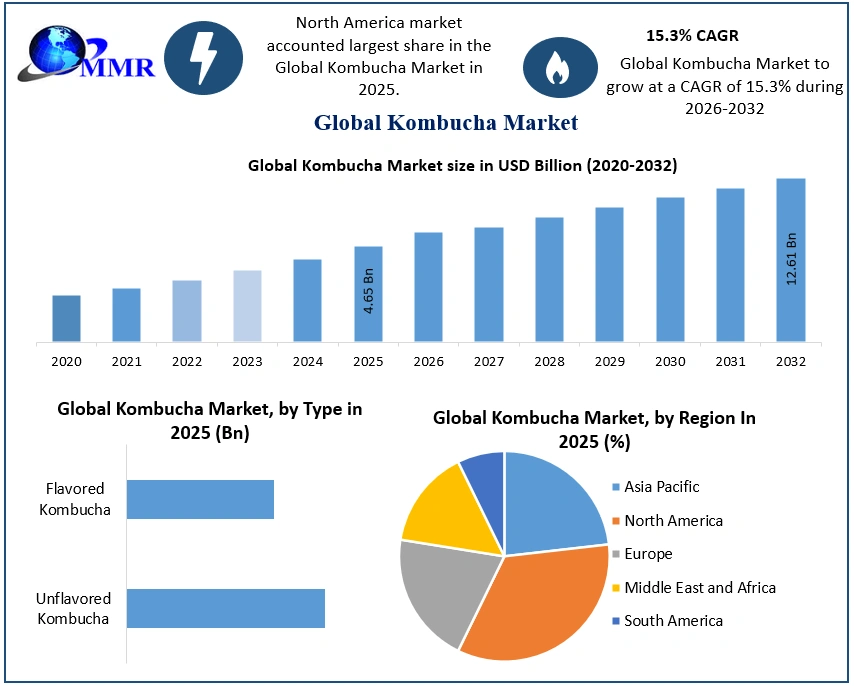
The Kombucha Market size was valued at USD 4.65 Billion in 2025 and the total Kombucha revenue is expected to grow at a CAGR of 15.3% from 2025 to 2032, reaching nearly USD 12.61 Billion by 2032.
Kombucha Market Overview:
Kombucha is a fermented functional beverage, that has experienced a meteoric rise in popularity, evolving from a niche health elixir to a mainstream staple in the American beverage market by the early 21st century. This fermented functional beverage, revered for its purported health benefits, has sparked a flurry of commercial activity, with an increasing number of companies vying for a slice of the lucrative Kombucha Market.
To know about the Research Methodology :- Request Free Sample Report
The growing awareness of the health benefits associated with consuming probiotics. Probiotics, known for their positive effects on gut health and immunity, have gained widespread recognition among consumers seeking functional beverages. Kombucha, with its natural fermentation process, is perceived as a convenient and tasty way to incorporate probiotics into one's diet, boosting the popularity of kombucha. Increasing focus on natural and organic products has driven the demand for Kombucha. Consumers are gravitating towards beverages made from wholesome, natural ingredients, free from artificial additives and preservatives. Kombucha, typically made from tea, sugar, water, and a symbiotic culture of bacteria and yeast (SCOBY), aligns with this preference for clean-label products, driving its Kombucha market growth.
Kombucha Market Dynamics
Driver
Health and Wellness Trend Boost the Kombucha Market Growth
Increasing emphasis on health and wellness among consumers. As people become more health-conscious and seek out natural alternatives to sugary beverages, kombucha emerges as a popular choice due to its perceived health benefits. Kombucha is lauded for its probiotic properties, which are believed to support gut health and immunity. It is low in calories and sugar compared to many other carbonated drinks, making it appealing to those looking to maintain a healthy lifestyle and manage their weight.
The rise of wellness culture and the growing interest in holistic approaches to health have boosted the demand for functional beverages such as kombucha. Consumers are increasingly seeking products that quench their thirst and provide tangible health benefits. Kombucha's association with traditional medicine and its inclusion of ingredients like tea, which is rich in antioxidants, which aligns it with the wellness trend. Also, manufacturers are innovating to cater to this demand, introducing new flavors, variations, and packaging formats to appeal to health-conscious consumers. The health and wellness driver continues to boost the growth of the kombucha market, positioning it as a staple in the beverage industry for consumers seeking both refreshment and functional benefits.
Regulatory Challenges limits the Kombucha Market Growth
The kombucha market faces regulatory challenges that hinder its full potential. One significant restraint is the ambiguity surrounding the classification and regulation of kombucha by health authorities. Kombucha's fermentation process produces trace amounts of alcohol, which vary depending on factors such as brewing time and conditions. This has led to uncertainty and inconsistency in how kombucha products are regulated, with some jurisdictions treating them as non-alcoholic beverages while others classify them as alcoholic beverages, subjecting them to stricter regulations and taxation.
The lack of standardized regulations creates confusion for manufacturers and poses challenges for distribution and marketing efforts. The concerns about food safety and quality control in the production of kombucha have prompted regulatory bodies to impose stringent requirements, complicating compliance for producers. Navigating this regulatory landscape adds complexity and costs to operating in the Kombucha Market, particularly for small and medium-sized businesses. Until clear and consistent regulations are established, the uncertainty surrounding the regulatory environment remains a significant restraint on the growth of the kombucha market.
Diversification And Innovation Creates Lucrative Growth Opportunities for The Kombucha Market Growth
While traditional kombucha made from fermented tea remains popular, there is ample room for growth by introducing new flavors, formulations, and product lines to provide to diverse consumer preferences. The development of flavored kombucha variants, leveraging a wide array of fruits, herbs, and spices to create unique taste profiles that appeal to different palates. By offering a variety of flavors such as mango, ginger, and berry, kombucha brands attract a broader audience and encourage repeat purchases from existing customers seeking novelty and variety. Also, there is potential for kombucha to be incorporated into other food and beverage categories, such as cocktails, mocktails, and functional foods. By partnering with mixologists, chefs, and food scientists, kombucha manufacturers explore creative applications and collaborations that capitalize on its versatility and health-conscious image.
The packaging innovation presents an opportunity for Kombucha market to differentiate kombucha products and enhance convenience for consumers. Formats such as single-serve bottles, cans, or on-the-go pouches provide to different consumption occasions and lifestyles, increasing the market reach of kombucha beyond traditional channels.
Kombucha Market Segment Analysis
Based on Flavor, the market is segmented into citrus, berries, apple, ginger, herbal, and others. Citrus flavors like lemon and orange are popular for their tangy taste and refreshing appeal, often linked with detox benefits. Berries, including blueberry and raspberry, are favored for their antioxidant properties and natural sweetness. Apple-flavored kombucha offers a crisp, fruity profile that appeals to a broad consumer base. Ginger remains a top-selling variant due to its digestive health benefits and spicy edge. Herbal flavors, such as mint and lavender, cater to wellness-conscious consumers seeking calming or therapeutic effects.
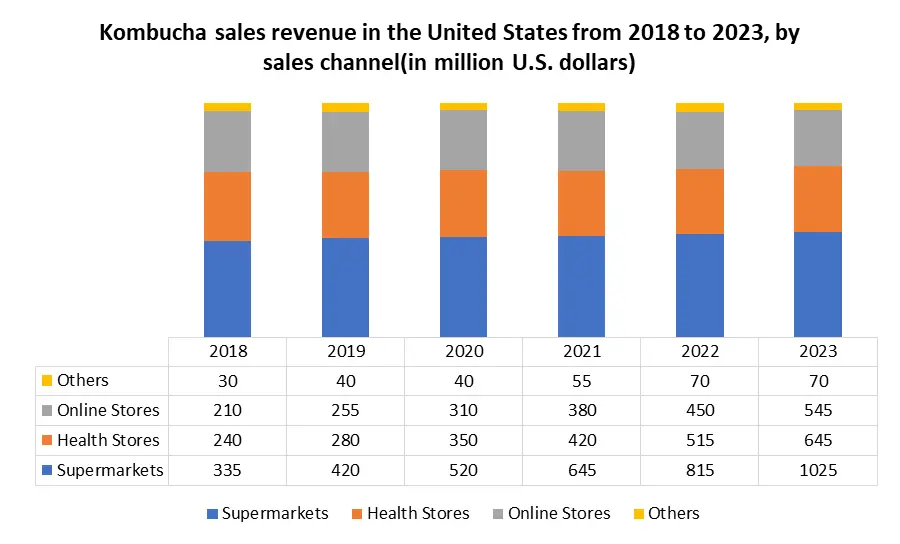
Based on the Distribution Channel, the supermarkets segment dominated the Distribution Channel segment of the Kombucha Market in the year 2025. Supermarkets provide a wide range of products, offering consumers convenience and accessibility. Kombucha brands capitalize on this by ensuring their products are prominently displayed and readily available, increasing visibility and consumer reach. The supermarkets have well-established distribution networks and strong supplier relationships, enabling efficient product distribution across various regions. Supermarkets also often dedicate sections to health and wellness products, where Kombucha fits naturally due to its perceived health benefits. This strategic placement enhances product visibility and attracts health-conscious consumers. The supermarkets frequently run promotional campaigns and offer discounts on Kombucha products, driving sales and reinforcing their dominance in the distribution channel. Overall, the dominance of supermarkets in the Kombucha Market distribution channel is driven by their convenience, extensive reach, strategic positioning, and promotional efforts.

Kombucha Market Regional Analysis:
North America dominated the Kombucha Market in the year 2025. North America's dominance in the Kombucha market stems from factors like the region's growing population of health-conscious consumers, who are increasingly seeking out natural and functional beverages such as Kombucha. This aligns well with Kombucha's image as a probiotic-rich, low-sugar drink with potential health benefits. Also, North America's vibrant culture of innovation and entrepreneurship has spurred the emergence of numerous Kombucha brands.
These companies leverage creative marketing strategies, eye-catching packaging, and a wide variety of flavors to appeal to diverse consumer preferences. The well-established distribution networks and retail channels in North America ensure the widespread availability of Kombucha products, making them easily accessible to consumers across different demographics. The rising popularity of vegan and gluten-free diets in the region has further boosted demand for Kombucha, as it is often perceived as a healthier alternative to traditional sugary beverages. North America's combination of health-conscious consumers, innovative brands, efficient distribution channels, and dietary trends has solidified its position as a dominant force in the global Kombucha Market.
Kombucha Market Competitive Analysis:
The Kombucha market is undergoing a significant transformation driven by a combination of innovative product offerings, strategic growth, and shifting consumer preferences toward healthier beverage options. The multiple key players are dominating the Kombucha Market. The Key players mainly focus on innovation collaboration and expansion. Growth Remedy Drinks' development into the UK market with its new Wild Berry flavor, exclusively stocked at Tesco stores, signifies a concerted effort to capture a broader consumer base and increase Kombucha market share. Their plan to introduce additional flavors and expand distribution reflects a proactive approach to meet the growing demand for healthier drink alternatives. The collaboration between Remedy Drinks and RooLife Group Ltd. in China highlights the global appeal of kombucha as consumers worldwide embrace the trend towards healthier lifestyles. This partnership capitalizes on the increasing popularity of "better for you" beverages in China, presenting a lucrative opportunity for market growth and brand expansion.
Nova Easy Kombucha's introduction of performance-oriented blends further diversifies the Kombucha market, catering to health-conscious consumers seeking functional beverages. By offering blends such as the 'POWER' kombucha blend with naturally derived caffeine for pre-workout energy and the 'RECOVERY' blend with probiotics for gut health, Nova Easy Kombucha targets specific consumer needs and preferences. These developments underscore the competitive landscape of the Kombucha market, characterized by innovation, expansion, and a focus on meeting evolving consumer demands for healthier, functional beverage options.
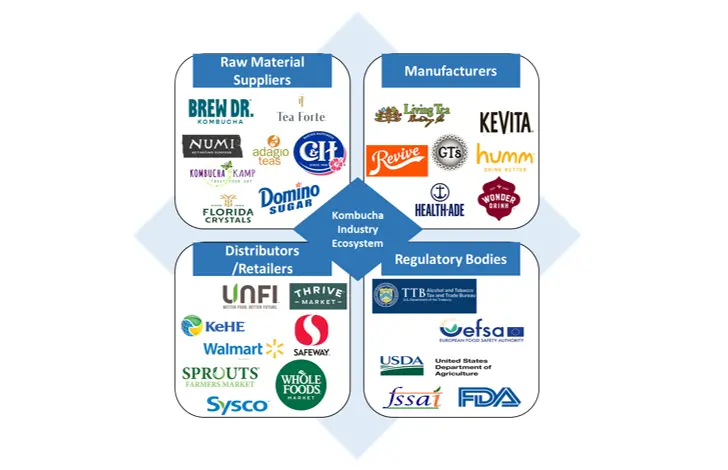
Kombucha Industry Ecosystem
Kombucha Market Scope: Inquire before buying
| Global Kombucha Market | |||
|---|---|---|---|
| Report Coverage | Details | ||
| Base Year: | 2025 | Forecast Period: | 2026-2032 |
| Historical Data: | 2020 to 2025 | Market Size in 2025: | USD 4.65 Bn. |
| Forecast Period 2026 to 2032 CAGR: | 15.3% | Market Size in 2032: | USD 12.61 Bn. |
| Segments Covered: | by Type | Unflavored Kombucha Flavored Kombucha |
|
| by Flavour | Citrus Berries Apple Ginger Herbal Others |
||
| by Nature | Organic Conventional |
||
| by Packaging | Glass Bottles Cans Plastic Bottles Others |
||
| by Distribution Channel | Supermarkets/Hypermarkets Health Stores Convenience Stores Online Retail Others |
||
Kombucha Market, by Region
North America (United States, Canada, and Mexico)
Europe (UK, France, Germany, Italy, Spain, Sweden, Austria, and the Rest of Europe)
Asia Pacific (China, South Korea, Japan, India, Australia, Indonesia, Malaysia, Vietnam, Taiwan, and the Rest of APAC)
Middle East and Africa (South Africa, GCC, Egypt, Nigeria, and the Rest of ME&A)
South America (Brazil, Argentina Rest of South America)
Kombucha Market, Key Players:
North America
1. GT's Kombucha (United States)
2. KeVita Inc. (United States)
3. The Humm Kombucha (United States)
4. Health-Ade Kombucha (United States)
5. Brew Dr. Kombucha (United States)
6. Kombucha Wonder Drink (United States)
7. Reed's Inc. (United States)
8. Búcha Live Kombucha (United States)
9. Hain Celestial (United States)
10. Townshend's Tea Company (United States)
11. Clear Coast Fresh (United States)
12. Flying Embers (United States)
13. Kosmic Kombucha (Canada)
14. Booch Organic Kombucha (Canada)
Europe
1. Remedy Drinks (Australia)
2. Lo Bros Kombucha (Australia)
3. Love Kombucha (United Kingdom)
4. Equinox Kombucha (United Kingdom)
5. Captain Kombucha (Portugal)
6. Fix8 (United Kingdom)
Kombucha FAQs
1] What segments are covered in the Global Kombucha Market report?
Ans. The segments covered in the Kombucha Market report are based on Type, Flavor, Nature, Packaging, Distribution Channel, and Regions.
2] Which region is expected to hold the highest share of the Global Kombucha Market?
Ans. The North America region is expected to hold the highest share of the Kombucha Market.
3] What is the market size of the Global Kombucha Market by 2032?
Ans. The market size of the Kombucha Market by 2032 is expected to reach USD 12.61 Bn.
4] What was the market size of the Global Kombucha Market in 2025?
Ans. The market size of the Kombucha Market in 2025 was valued at USD 4.65 Bn.
5] Key players in the Kombucha Market.
Ans. GT's Living Foods (United States), KeVita (United States), The Humm Kombucha (United States), Health-Ade Kombucha (United States) and Brew Dr. Kombucha (United States) .