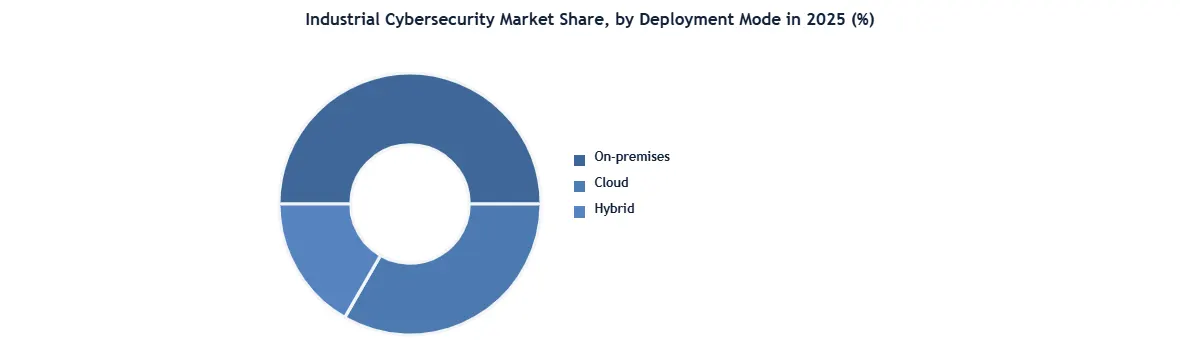
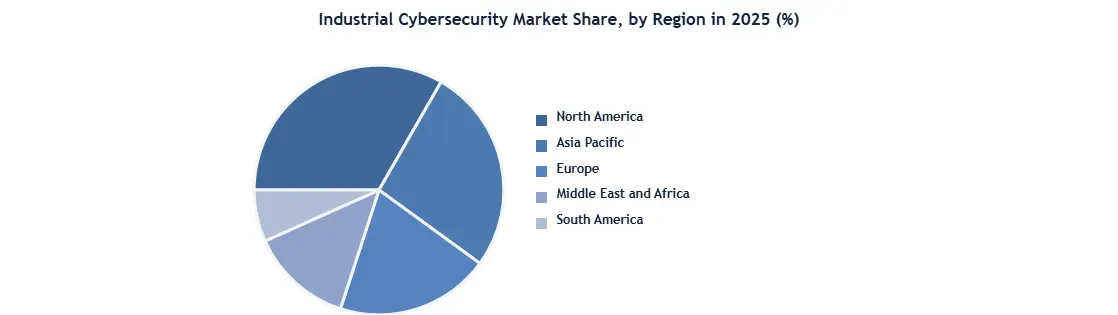
1. Industrial Cybersecurity Market : Market Introduction
1.1. Executive Summary
1.2. Market Size (2025) & Forecast (2026-2032)
1.3. Market Size (Value USD Billion) and Market Share (%) - By Segments, Regions, and Country
2. Industrial Cybersecurity Market Competitive Landscape
2.1. MMR Competition Matrix
2.2. Competitive Positioning of Top Key Players
2.3. Key Players Benchmarking
2.3.1 Company Name
2.3.2 Headquarters
2.3.3 Business Portfolio
2.3.4 Technology & Innovation Capability
2.3.5 Patent Portfolio Strength
2.3.6 Threat Detection Accuracy (%)
2.3.7 Consulting & Integration Capabilities
2.3.8 Customer Retention Rate (%)
2.3.9 Sustainability Initiatives
2.3.10 Certifications
2.3.11 Revenue (2025)
2.3.12 Market Share (%) 2025
2.3.13 Growth Rate (%)
2.3.14 R&D Investment (%)
2.3.15 Geographical Presence
2.4. Market Structure
2.4.1 Market Leaders
2.4.2 Market Followers
2.4.3 Emerging Players
2.5 Market Share Distribution of Leading Industrial Cybersecurity Vendors 2025
2.5.1 Market share and revenue analysis of top industrial cybersecurity companies
2.5.2 Global leaders in industrial cybersecurity: revenue scale, OT/ICS deployments, and platform capabilities
2.5.3 Vendor concentration ratio (Top 5 vs Top 10 share)
2.5.4 Market fragmentation assessment across global, niche, and OT-focused players
2.5.5 Regional market share variations among key vendors (North America, Europe, APAC)
2.5.6 Competitive intensity analysis across IT vs OT cybersecurity providers
2.5.7 Historical market share shifts driven by Industry 4.0 and IIoT adoption
2.6 Strategic Partnerships & Ecosystem Alliances
2.6.1 Strategic collaborations between cybersecurity vendors and industrial enterprises
2.6.2 Partnerships with industrial OEMs (automation, energy, manufacturing players)
2.6.3 Alliances with cloud providers for industrial cybersecurity platforms
2.6.4 Collaboration between IT security vendors and OT/ICS solution providers
2.6.5 Joint ventures supporting smart factory and critical infrastructure security
2.6.6 Ecosystem partnerships with system integrators and managed security providers
2.7 Technology Leadership & Innovation Benchmarking
2.7.1 Leadership in OT/ICS cybersecurity technologies and industrial protocols
2.7.2 AI-driven threat detection and automated incident response capabilities
2.7.3 Innovation in Zero Trust architecture for industrial environments
2.7.4 Cloud-native and edge security platform innovation benchmarking
2.7.5 Adoption of XDR, SIEM, and SOAR in industrial cybersecurity
2.7.6 R&D investment intensity among leading industrial cybersecurity providers
2.8 Competitive Differentiation & Strategic Positioning
2.8.1 Platform-based vs service-led industrial cybersecurity strategies
2.8.2 Differentiation through OT-native and ICS-specific security solutions
2.8.3 Competitive positioning based on scalability, real-time response, and reliability
2.8.4 Capability to secure multi-site industrial operations and distributed assets
2.8.5 Vendor specialization across network security, endpoint security, and OT protection
2.8.6 Long-term strategic positioning for Industry 4.0 and smart infrastructure security
3. Industrial Cybersecurity Market Dynamics
3.1. Industrial Cybersecurity Market Trends
3.2. Industrial Cybersecurity Market Dynamics
3.2.1 Drivers
3.2.2 Restraints
3.2.3 Opportunities
3.2.4 Challenges
3.3. PORTER’s Five Forces Analysis
3.4. PESTLE Analysis
3.5. Key Opinion Leader Analysis For the Global Industry
4. Industrial Threat Landscape & Cyber Risk Exposure Analysis 2025
4.1 Evolution of cyberattacks targeting OT/ICS environments
4.2 Ransomware, ICS malware, and supply chain attack trends
4.3 Industrial Control Systems (ICS) Threat Landscape
4.3.1 Common attack vectors (malware, ransomware, phishing, insider threats)
4.3.2 Case studies (Stuxnet, Colonial Pipeline, etc.)
4.3.3 Sector-wise vulnerability assessment
4.4 Industry-wise cyber risk exposure index (manufacturing, energy, etc.)
4.5 Attack surface expansion due to IT–OT convergence
4.6 Frequency and severity of cyber incidents in industrial systems
4.7 Financial and operational impact of industrial cyber breaches
4.8 Future threat outlook for critical infrastructure
5. Regional Cyber Attack Exposure & Threat Intelligence Analysis
5.1 Average cyberattack frequency on industrial systems (2020–2025)
5.2 Data breach incidents across critical infrastructure sectors
5.3 Attack rates on OT/ICS environments by region
5.4 Emerging attack vectors targeting industrial systems (ransomware, ICS malware, IIoT exploits)
6. OT–IT Convergence & Security Architecture Complexity Analysis 2025
6.1 Differences between IT (Information Technology) and OT (Operational Technology) environments
6.2 Challenges in securing legacy industrial control systems (ICS, SCADA)
6.3 Increasing convergence and its impact on cybersecurity demand
6.4 Integration of IT and OT networks: architecture transformation
6.5 Security challenges in legacy industrial control systems (ICS)
6.6 Network segmentation vs unified architecture trade-offs
6.7 Zero Trust implementation in industrial environments
6.8 Visibility gaps across OT assets and endpoints
6.9 Impact of IIoT expansion on cybersecurity complexity
6.10 Future-ready secure architecture models for smart factories
7. Pricing, Licensing & Commercial Model Analysis 2025
7.1 Pricing models across industrial cybersecurity solutions (license vs subscription)
7.2 Price Trend of Industrial Cybersecurity by Offering by region
7.3 Tiered pricing based on asset size, plant scale, and industry complexity
7.4 Total Cost of Ownership (TCO) for industrial cybersecurity deployment
7.5 ROI and payback period across industries (manufacturing, energy, etc.)
7.6 Shift toward managed security services and subscription-based models
8. Sector-wise Cybersecurity Demand Analysis
8.1 Energy & Power (critical infrastructure protection)
8.2 Oil & Gas (pipeline and refinery security)
8.3 Manufacturing (smart factories, Industry 4.0)
8.4 Utilities, Transportation, and Water Treatment
9. Deployment Architecture & Infrastructure Strategy Analysis 2025
9.1 On-premise vs cloud vs hybrid deployment trade-offs
9.2 Cybersecurity Architecture for Industrial Environments
9.2.1 Network segmentation, zero-trust architecture, and defense-in-depth strategies
9.2.2 Role of firewalls, IDS/IPS, endpoint security, and SIEM in OT environments
9.3 Latency, uptime, and reliability requirements in industrial systems
9.4 Edge security architecture for real-time industrial environments
9.5 Cloud security adoption in critical infrastructure sectors
9.6 Scalability and redundancy planning for industrial cybersecurity
9.7 Vendor lock-in risks and platform flexibility considerations
9.8 Infrastructure readiness for next-gen industrial security frameworks
10. Industrial Enterprise Adoption & Procurement Behavior Analysis 2025
10.1 Decision-making criteria for OT cybersecurity investments
10.2 Adoption rates by enterprise size (SMEs vs Large Enterprises)
10.3 Industry-wise adoption of industrial cybersecurity solutions
10.4 Integration with existing IT–OT infrastructure in industrial environments
10.5 Budget allocation trends across IT vs OT security
10.6 Preference for integrated platforms vs best-of-breed solutions
10.7 Role of OEMs, system integrators, and cybersecurity vendors
10.8 Buy vs build vs outsource security strategy decisions
10.9 Contract structures, SLAs, and managed service adoption
10.10 Adoption barriers among SMEs vs large industrial enterprises
11. Smart Manufacturing & IIoT Security Demand Analysis 2025
11.1 Cybersecurity demand driven by Industry 4.0 adoption
11.2 Security requirements for connected factories and automation
11.3 Risks associated with IIoT device proliferation
11.4 Integration of cybersecurity in digital twin environments
11.5 Role of edge computing in industrial security frameworks
11.6 Future demand outlook for smart factory cybersecurity
12. Industrial Cybersecurity Technology & Innovation Landscape 2025
12.1 Evolution of Industrial Cybersecurity Technologies
12.2 Core Technology Stack & Architecture Innovation
12.3 AI, Machine Learning & Automation in Cybersecurity
12.4 ICS, SCADA & OT-Specific Security Innovations
12.5 Cloud, Edge & Hybrid Security Advancements
12.6 Device-Level, Firmware & Embedded Security Innovation
12.7 Emerging Technologies Shaping Industrial Cybersecurity
13. Industrial Data Flow & Asset Connectivity Analysis 2025
13.1 End-to-end data flow across industrial control systems
13.2 Connectivity between SCADA, PLCs, IoT devices, and cloud platforms
13.3 Average number of connected assets per industrial facility
13.4 Data exchange bottlenecks and security vulnerabilities
13.5 Real-time vs batch data processing requirements
13.6 Impact of IIoT and smart manufacturing on data traffic growth
13.7 Infrastructure scaling requirements for secure data exchange
14. Industrial Cybersecurity Maturity Index Assessment 2025
14.1 Cybersecurity maturity scoring model for industrial enterprises
14.2 Adoption levels across industries and regions
14.3 Gap analysis between current and required security levels
14.4 Maturity models for industrial enterprises
14.5 Benchmarking companies by security capability level
14.6 Maturity comparison: SMEs vs large industrial enterprises
14.7 Correlation between digitalization and cybersecurity maturity
14.8 Regional variation in industrial cybersecurity readiness
14.9 Maturity roadmap for industrial organizations
15. Cyber Incident Response & Recovery Performance Analysis
15.1 Average detection and response time benchmarks
15.2 Incident containment and recovery timelines
15.3 Effectiveness of automated vs manual response systems
15.4 Role of SOC (Security Operations Centers) in industrial security
15.5 Post-incident operational stabilization metrics
15.6 Lessons learned from major industrial cyber incidents
16. Industrial Cybersecurity Platform Performance Benchmarking 2025
16.1 Threat detection accuracy and false positive rates
16.2 System uptime and availability benchmarking
16.3 Latency in threat detection and response
16.4 Scalability under high data and device loads
16.5 Comparative benchmarking of leading cybersecurity platforms
16.6 Performance under real-time industrial environments
17. Intellectual Property & Patent Landscape Analysis 2025
17.1 Patent filing trends in industrial cybersecurity technologies
17.2 Key innovation areas (AI security, ICS protection, encryption)
17.3 Company-wise patent leadership analysis
17.4 Collaboration between industry and research institutions
17.5 Technology commercialization trends
18. Human Factor & Cybersecurity Workforce Readiness Analysis 2025
18.1 Skill gap analysis in industrial cybersecurity workforce
18.2 Training and awareness programs across industrial enterprises
18.3 Role of human error in industrial cyber incidents (%)
18.4 Cybersecurity talent demand vs supply gap
18.5 Impact of workforce readiness on security posture
19. Industrial Cybersecurity Investment Landscape 2025
19.1 Global investment trends in industrial cybersecurity solutions
19.2 Venture capital and private equity funding in OT security startups
19.3 Mergers, acquisitions, and strategic partnerships
19.4 Investment focus areas: AI security, ICS protection, cloud security
19.5 Spending distribution across industries and regions
19.6 Future funding outlook for critical infrastructure protection
20. ROI & Cost-Benefit Analysis of Industrial Cybersecurity 2025
20.1 Cost of cyberattack vs cost of prevention (comparative analysis)
20.2 ROI on industrial cybersecurity investments (%)
20.3 Payback period and long-term cost savings
20.4 Productivity gains from secure and automated operations
20.5 Cyber insurance and risk mitigation cost modeling
20.6 Sensitivity analysis of investment vs risk exposure reduction
21. Industrial Cybersecurity Ecosystem & Value Chain Analysis 2025
21.1 Value chain mapping: OEMs, cybersecurity vendors, integrators, end-users
21.2 Role of industrial OEMs vs pure-play cybersecurity providers
21.3 Cloud, edge, and platform providers in industrial security ecosystem
21.4 Startups and niche players driving OT cybersecurity innovation
21.5 Strategic collaborations and partnerships across the ecosystem
22. Industrial Operations Impact & Downtime Risk Analysis 2025
22.1 Cost of downtime due to cyber incidents (USD/hour analysis)
22.2 Production loss and operational disruption case analysis
22.3 Impact on safety-critical systems and human risk factors
22.4 Cybersecurity role in maintaining operational continuity
22.5 Incident response time vs operational recovery metrics
22.6 Business continuity planning and disaster recovery readiness
22.7 Quantifiable benefits of proactive cybersecurity deployment
23. Industrial Cybersecurity Sustainability Landscape 2025
23.1 Role of cybersecurity in enabling sustainable and energy-efficient industrial operations
23.2 Energy consumption and carbon footprint analysis of cybersecurity infrastructure
23.3 Adoption of green IT practices in industrial cybersecurity
23.4 Cybersecurity’s role in preventing environmental and operational risks
23.5 Integration of cybersecurity within ESG frameworks
23.6 Sustainable supply chain and vendor risk management
23.7 Lifecycle management and e-waste reduction
24. Data Security, Compliance & Regulatory Impact Analysis 2025
24.1 Industrial cybersecurity regulations across key regions
24.2 Compliance requirements for critical infrastructure sectors
24.3 Data protection, encryption, and access control mandates
24.4 Impact of regulatory frameworks on solution adoption
24.5 Cost of compliance vs non-compliance risk analysis
24.6 Role of cybersecurity in audit readiness and reporting
24.7 Future regulatory trends shaping industrial cybersecurity
25. Industrial Cybersecurity Market : Global Industrial Cybersecurity Market Size and Forecast by Segmentation (by Value in USD Billion) (2025-2032)
25.1. Global Industrial Cybersecurity Market Size and Forecast, By Deployment Mode
25.1.1 Cloud
25.1.2 On-premises
25.1.3 Hybrid
25.2. Global Industrial Cybersecurity Market Size and Forecast, By Security
25.2.1 Network Security
25.2.2 Endpoint Security
25.2.3 Application Security
25.2.4 Cloud Security
25.2.5 Wireless Security
25.2.6 Others
25.3. Global Industrial Cybersecurity Market Size and Forecast, By Solution Type
25.3.1 Antivirus/Malware Solutions
25.3.2 Firewall Solutions
25.3.3 Proxy Firewall
25.3.4 Packet-Filtering Firewall
25.3.5 Stateful Inspection Firewall
25.3.6 Next-Generation Firewall (NGFW)
25.3.7 Data Loss Prevention (DLP)
25.3.8 Security Information and Event Management (SIEM)
25.3.9 Intrusion Detection and Prevention Systems (IDS/IPS)
25.3.10 Identity and Access Management (IAM)
25.3.11 Others
25.4. Global Industrial Cybersecurity Market Size and Forecast, By Offering
25.4.1 Hardware
25.4.2 Gateways
25.4.3 Networking Devices
25.4.4 Hardware Security Modules (HSM)
25.4.5 Encryption Storage Devices
25.4.6 Network Encryption Appliances
25.4.7 Secure USB Drives
25.4.8 Hardware Tokens
25.4.9 Network Access Control Devices
25.4.10 Software
25.4.11 Antivirus and Malware Protection Software
25.4.12 SCADA Security Software
25.4.13 SIEM Software
25.4.14 Encryption Software
25.4.15 Services
25.4.16 Managed Services
25.4.17 Network Monitoring
25.4.18 Threat Intelligence & Incident Response
25.4.19 Professional Services
25.4.20 Consulting
25.4.21 Integration & Deployment
25.4.22 Training & Support
25.5. Global Industrial Cybersecurity Market Size and Forecast, By Enterprise Size
25.5.1 Small & Medium Enterprises
25.5.2 Large Enterprises
25.6. Global Industrial Cybersecurity Market Size and Forecast, By Vertical
25.6.1 Healthcare & Life Sciences
25.6.2 Hospitals
25.6.3 Medical Device Manufacturers
25.6.4 Pharmaceutical Companies
25.6.5 Aerospace & Defense
25.6.6 Military Systems
25.6.7 Aviation Manufacturing
25.6.8 Defense Contractors
25.6.9 Manufacturing
25.6.10 Automotive
25.6.11 Machine Manufacturing
25.6.12 Semiconductor & Electronics
25.6.13 Others
25.6.14 Energy & Utilities
25.6.15 Power Generation Plants
25.6.16 Nuclear Power Plants
25.6.17 Thermal & Hydropower Plants
25.6.18 Renewable Energy Power Plants
25.6.19 Power Grids
25.6.20 Oil & Gas Pipelines
25.6.21 Electric Power Transmission
25.6.22 Water Treatment and Distribution
25.6.23 Wastewater Collection and Treatment
25.6.24 Telecommunications
25.6.25 Network Operators
25.6.26 Data Centers
25.6.27 Internet Service Providers
25.6.28 Others
25.7. Global Industrial Cybersecurity Market Size and Forecast, by Region
25.7.1 North America
25.7.2 United States
25.7.3 Mexico
25.7.4 Canada
25.7.5 Europe
25.7.6 United Kingdom
25.7.7 France
25.7.8 Germany
25.7.9 Italy
25.7.10 Spain
25.7.11 Sweden
25.7.12 Russia
25.7.13 Rest of Europe
25.7.14 Asia Pacific
25.7.15 China
25.7.16 South Korea
25.7.17 Japan
25.7.18 India
25.7.19 Australia
25.7.20 Indonesia
25.7.21 Philippines
25.7.22 Malaysia
25.7.23 Vietnam
25.7.24 Thailand
25.7.25 Rest of Asia Pacific
25.7.26 Middle East and Africa
25.7.27 South Africa
25.7.28 GCC
25.7.29 Egypt
25.7.30 Nigeria
25.7.31 Rest of ME&A
25.7.32 South America
25.7.33 Brazil
25.7.34 Argentina
25.7.35 Colombia
25.7.36 Chile
25.7.37 Peru
25.7.38 Rest Of South America
26. Company Profile: Key Players
26.01.Cisco Systems, Inc.
26.01.1 Company Overview
26.01.2 Business Portfolio
26.01.3 Financial Overview
26.01.4 SWOT Analysis
26.01.5 Strategic Analysis
26.01.6 Recent Developments
26.02.Microsoft Corporation
26.03.IBM Corporation
26.04.Palo Alto Networks, Inc.
26.05.Fortinet, Inc.
26.06.Thales Group
26.07.NTT Data Corporation
26.08.Honeywell International Inc.
26.09.Siemens AG
26.10.Schneider Electric SE
26.11.ABB Ltd.
26.12.Rockwell Automation, Inc.
26.13.Broadcom Inc. (Symantec)
26.14.AO Kaspersky Lab
26.15.Trend Micro Incorporated
26.16.Dragos, Inc.
26.17.Claroty Ltd.
26.18.Nozomi Networks Inc.
26.19.OPSWAT Inc.
26.20.Musarubra US LLC (Trellix)
26.21.Dell Inc.
26.22.Accenture plc
26.23.BAE Systems plc
26.24.Forescout Technologies Inc.
26.25.Wipro Limited
26.26.General Electric Company
26.27.HCL Technologies Limited
26.28.Tata Consultancy Services (TCS)
26.29.Check Point Software Technologies Ltd.
26.30.CyberArk Software Ltd.
26.30.1 Others
27. Key Findings
28. Future Outlook & Analyst Recommendations
29. Industrial Cybersecurity Market : Research Methodology

 To know about the Research Methodology :- Request Free Sample Report