
Fungicides Market – Industry Structure Evaluation, Demand Drivers Analysis, Regional Growth Analysis and Identification, Competitive Positioning Review & Global Market Size Forecast to 2034
Overview
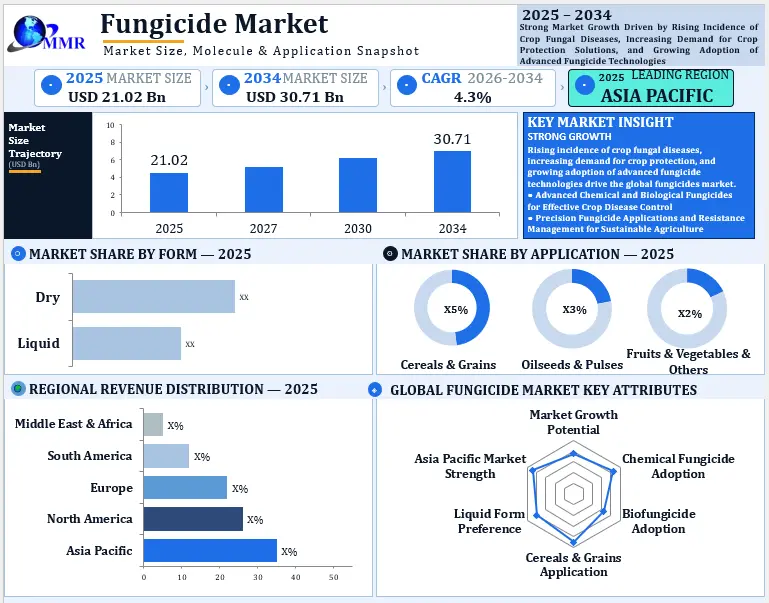
The Fungicides Market size was valued at USD 21.02 Billion in 2025 and the total Fungicides revenue is expected to grow at a CAGR of 4.3% from 2026 to 2034, reaching nearly USD 30.71 Billion.
Fungicides Market Overview:
Fungi are a major cause of crop damage all around the world. Viruses, nematodes, and bacteria are examples of pathogens. Pathogens cause symptoms similar to crop damage, which can also be caused by abiotic (non-living) factors such as nutrient inadequacy and air pollution, as well as insects. Pesticides used for plant protection include fungicides, herbicides, and insecticides. A fungicide is a chemical that is used to control fungal illness by suppressing or killing the fungus that causes the disease. Fusarium and Verticillium wilt are two vascular fungal crop diseases. Fungicides do not control diseases produced by other organisms, problems induced by other variables such as abiotic conditions, or insect damage. As a result, before using a fungicide on plants, it is vital to first ascertain the origin of the symptoms.
Fungicides Market Size, Growth and Share Analysis
To know about the Research Methodology :- Request Free Sample Report
Global Fungicides Market: Key Highlights
• Market Size and Growth: The global fungicides market is valued at USD 21.02 billion in 2025 and is projected to grow at a CAGR of 4.3% from 2026 to 2034, according to the provided market estimates.
• Regional Leadership: Asia Pacific leads the global fungicides market in 2025, supported by extensive agricultural production, increasing food demand, and growing adoption of crop protection products.
• Key Growth Drivers: Rising fungal disease incidence, the need to protect crop yields, increasing food security requirements, and advancements in fungicide formulations drive market demand.
• Product Innovation: The development of systemic fungicides, combination formulations, biological fungicides, and resistance-management solutions supports innovation in agricultural disease control.
• Major Application Segment: Cereals and grains represent a key application segment, driven by the need to protect major food crops against fungal diseases and minimize yield losses.
• Competitive Landscape: Major companies, including BASF SE, Bayer AG, Corteva, Inc., Syngenta AG, FMC Corporation, and UPL Limited, compete through product development, research and development, strategic partnerships, and geographic expansion.
• Emerging Opportunities: Growing interest in biological crop protection, precision agriculture, and integrated pest management creates opportunities for sustainable fungicide solutions.
• Key Market Challenges: Fungicide resistance, stringent regulatory requirements, fluctuating raw material costs, and changing weather patterns influence product development, pricing, and market adoption.
Global Fungicides Market Dynamics:
Global Fungicides Market Drivers
Rising Incidence of Fungal Diseases in Crops: Increasing fungal infections, including rust, powdery mildew, blight, and downy mildew, drive demand for effective fungicides across major agricultural crops. Plant pests and diseases cause 20–40% of global crop losses annually, increasing the need for reliable crop protection solutions. Fungicides help farmers protect crop yields, maintain product quality, and reduce losses across cereals, grains, fruits, and vegetables.
Growing Demand for Food Security and Higher Agricultural Productivity: Rising food demand encourages farmers to adopt crop protection products that preserve agricultural productivity and improve crop quality. Cereals, grains, fruits, and vegetables require effective fungal disease management to maintain consistent yields. The global fungicides market reaches USD 21.02 billion in 2025, reflecting the importance of fungal disease control in modern agricultural production.
Advancements in Fungicide Formulations and Application Technologies: Developments in systemic fungicides, combination formulations, biological products, and precision spraying improve disease control and application efficiency. Sensor-based crop monitoring and precision agriculture help farmers apply fungicides according to crop conditions and disease risks. These technologies support more targeted treatment, reduce unnecessary applications, and improve the effectiveness of crop protection programs.
Global Fungicides Market Restraints
Development of Fungicide Resistance: Repeated use of fungicides with the same mode of action increases the risk of resistant fungal populations. Resistance reduces treatment effectiveness and encourages farmers to rotate active ingredients or adopt integrated disease management strategies. The need for new modes of action and resistance-management programs increases research costs and complicates fungicide selection.
Stringent Environmental and Regulatory Requirements: Regulatory authorities impose requirements for pesticide registration, residue limits, environmental safety, and human health protection. Manufacturers must conduct extensive safety assessments and maintain compliance with regional regulations before introducing new fungicide products. These requirements increase development costs and can restrict the use of certain active ingredients, particularly products associated with environmental concerns.
Global Fungicides Market Opportunities
Expansion of Biological Fungicides: Growing interest in sustainable agriculture creates opportunities for biological fungicides based on beneficial microorganisms and naturally derived substances. Biological products offer additional disease-management options within integrated pest management programs and support efforts to reduce dependence on conventional chemical treatments. Innovation in microbial formulations, product stability, and field performance strengthens opportunities for biological crop protection.
Growing Adoption of Precision Agriculture: Digital farming tools, disease forecasting systems, remotevsensing, and precision spraying create opportunities to improve fungicide application. These technologies help farmers identify disease risks, optimize application timing, and target affected crop areas. Wider adoption of precision agriculture supports efficient product use and creates demand for advanced fungicide formulations compatible with modern farm equipment.
Global Fungicides Market Challenges
Fluctuating Raw Material Costs and Supply Chain Disruptions: Changes in the cost and availability of active ingredients, chemical intermediates, energy, and packaging materials affect fungicide manufacturing expenses. Supply chain disruptions and transportation costs create additional pressure on manufacturers and distributors. These factors influence product pricing and farmers' purchasing decisions, particularly in price-sensitive agricultural markets.
Weather Variability and Changing Disease Patterns: Irregular rainfall, temperature fluctuations, and changing humidity conditions influence fungal disease development and fungicide demand. Some conditions increase disease pressure, while prolonged dry periods can reduce the need for certain treatments. Manufacturers and farmers must adapt disease-management strategies to changing weather patterns, regional crop conditions, and evolving pathogen risks.
Fungicides Market segment analysis:
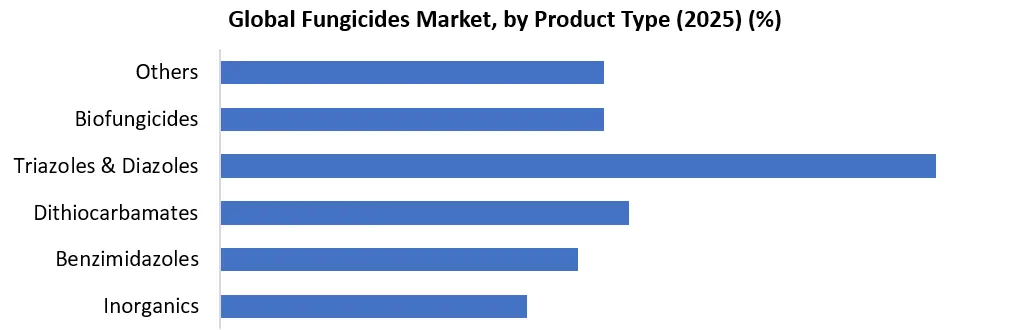
Based on Product Type, Inorganics segment held largest market share of xx% in 2025, owing to its features like it is fast acting fertilizer, easy to use, this fertilizer having low cost, pet friendliness. Another advantage that inorganic fertilizers are helpful in precise content of nutrients is guaranteed by law. Inorganic growth or external growth required alliances, mergers, joint ventures and franchising, and acquisitions. Inorganic growth provides a fast way to enter new markets and product categories, which is helpful for improving the inorganics segment growth.
Based on application, Cereals & Grains segment held largest market share of xx% in 2025.The Cereals and grains are provide more proteins than meat, mail, egg, this segment is making the important protein source over the half of the world population. The main reason behind the increasing the segment is to increase the population and increasing demand for food materials. This rising the demand for usage of crop protection chemicals are helpful to increases the demand for innovative fungicides.
Global Fungicides Market Regional Insight:
Asia Pacific holds the leading position in the global fungicides market in 2025, driven by extensive agricultural activities, large crop production volumes, and increasing demand for effective crop protection solutions. Countries such as China, India, Japan, Indonesia, and Thailand support regional market growth through the cultivation of cereals, grains, fruits, and vegetables. Rising awareness of modern farming practices, integrated pest management, and sustainable crop protection strengthens the adoption of chemical and biological fungicides. Government initiatives promoting agricultural productivity and improved disease management further support the Asia Pacific fungicides market.
North America represents a significant share of the global fungicides market, supported by advanced agricultural practices, large-scale commercial farming, and widespread adoption of crop protection technologies. The United States and Canada contribute to regional demand through the cultivation of corn, wheat, soybeans, fruits, and vegetables. Increasing emphasis on crop yield optimization, fungal disease prevention, precision agriculture, and resistance management supports the use of advanced fungicide formulations. The growing adoption of integrated crop management practices further strengthens the North America fungicides market.
Europe maintains a strong position in the global fungicides market, supported by established agricultural infrastructure, intensive crop production, and demand for effective fungal disease management. Germany, France, Italy, Spain, and the United Kingdom contribute through cereal cultivation, horticulture, vineyards, and fruit production. Strict pesticide regulations, residue requirements, and environmental protection policies influence product development and application practices. Increasing interest in biological fungicides, sustainable agriculture, and integrated pest management creates opportunities for innovative crop protection solutions across the Europe fungicides market.
South America experiences growing demand in the fungicides market, supported by extensive agricultural production and the expansion of commercial farming. Brazil and Argentina contribute significantly through soybean, corn, wheat, fruit, and other crop cultivation. Warm temperatures, humidity, and seasonal rainfall increase fungal disease risks in several agricultural areas, strengthening demand for effective fungicide treatments. Rising adoption of modern farming techniques, crop protection programs, and advanced fungicide formulations supports the South America fungicides market.
Middle East and Africa present emerging opportunities in the global fungicides market through agricultural modernization, expanding irrigation infrastructure, and increasing emphasis on food security. Countries such as South Africa, Egypt, Saudi Arabia, and Morocco support demand through fruit, vegetable, cereal, and horticultural production. Water management practices, greenhouse cultivation, and improved crop disease monitoring encourage the adoption of fungicides. However, limited access to agricultural inputs, affordability constraints, and varying levels of farming technology influence market penetration across the Middle East and Africa fungicides market.
Global Fungicides Market Competitive Landscape
The global fungicides market features strong competition among multinational agrochemical companies and regional crop protection manufacturers. Leading players compete through product innovation, advanced fungicide formulations, research and development, distribution networks, and strategic partnerships. Companies focus on developing effective solutions against fungal diseases affecting cereals, grains, fruits, vegetables, and specialty crops. The market also experiences increasing interest in biological fungicides, resistance-management technologies, and sustainable crop protection products. Product registration, pricing, manufacturing capabilities, and regional agricultural requirements influence competitive positioning across the industry.
Key Competitive Strategies
• Product Innovation: Companies develop advanced chemical and biological fungicides to improve disease control and address evolving pathogen resistance.
• Research and Development: Investment in new active ingredients, formulation technologies, and alternative modes of action supports product differentiation.
• Strategic Partnerships: Collaborations, licensing agreements, and acquisitions help companies expand their product portfolios and geographic reach.
• Sustainable Crop Protection: Manufacturers strengthen biological fungicide offerings and integrated disease-management solutions to meet changing agricultural requirements.
• Geographic Expansion: Companies increase distribution and market access across major agricultural regions, including Asia Pacific, Europe, and South America.
• Resistance Management: Fungicide rotation strategies, combination products, and multiple modes of action help growers manage resistant fungal pathogens.
Fungicides Market Recent Development
| Date | Company | Development | Impact |
| September 29, 2026 | ADAMA Ltd. | Launches Rexaro fungicide in India for specialty crops, including grapes, potatoes, and vegetables, targeting Oomycete diseases. | Strengthens specialty crop protection and expands solutions for downy mildew and late blight management. |
| September 16, 2026 | Koppert | Launches Macan, a biological foliar fungicide in Brazil for soybean, corn, and sugarcane crops. | Expands biological crop protection options and supports integrated fungal disease management. |
| September 15, 2026 | Corteva Agriscience | Announces Emiox specialty fungicide with Adavelt active for golf turf, with a planned launch in fall 2027. | Adds a new mode of action for turf disease control and supports fungicide resistance management. |
| June 30, 2026 | BASF Agricultural Solutions | Launches Melyra fungicide in India to support disease management across crops such as cotton, groundnut, soybean, chilli, and tomato. | Expands the fungicide portfolio and strengthens crop disease protection in India's agricultural market. |
| May 13, 2026 | Corteva Agriscience | Launches Verpixo fungicide with Adavelt active for the US sugarbeet market following EPA registration, targeting Cercospora leaf spot. | Introduces a new FRAC Group 21 mode of action and supports resistance management in sugarbeet production. |
| January 27, 2026 | BASF Agricultural Solutions and ADAMA Ltd. | Enter a strategic co-development and commercialization agreement for Gilboa fungicide technology, with planned launches in Great Britain in 2027 and broader Europe in 2029. | Strengthens collaboration on next-generation fungicide formulations and expands future disease management options for European cereal growers. |
Fungicides Market Scope: Inquiry Before Buying
| Fungicides Market | |||
|---|---|---|---|
| Report Coverage | Details | ||
| Base Year: | 2025 | Forecast Period: | 2026-2034 |
| Historical Data: | 2020 to 2025 | Market Size in 2025: | USD 21.02 Bn. |
| Forecast Period 2026 to 2034 CAGR: | 4.3 % | Market Size in 2034: | USD 30.71 Bn. |
| Segments Covered: | by Product Type | Inorganics Benzimidazoles Dithiocarbamates Triazoles & Diazoles Biofungicides Others |
|
| by Application | Cereals & Grains Oilseeds & Pulses Fruits & Vegetables Others |
||
| by Mode of action | Contact Systemic |
||
| by Form | Liquid Dry |
||
Fungicides Market, by Region
North America (United States, Canada and Mexico)
Europe (UK, France, Germany, Italy, Spain, Sweden, Austria and Rest of Europe)
Asia Pacific (China, South Korea, Japan, India, Australia, Indonesia, Malaysia, Vietnam, Taiwan, Bangladesh, Pakistan and Rest of APAC)
Middle East and Africa (South Africa, GCC, Egypt, Nigeria and Rest of ME&A)
South America (Brazil, Argentina Rest of South America)
Global Fungicides Market Key Players are:
1. BASF SE
2. Bayer AG
3. Corteva, Inc.
4. Syngenta AG
5. FMC Corporation
6. UPL Limited
7. ADAMA Ltd.
8. Sumitomo Chemical Co., Ltd.
9. Nufarm Limited
10. Isagro S.p.A.
11. Dhanuka Agritech Limited
12. Nippon Soda Co., Ltd.
13. LANXESS AG
14. AMVAC Chemical Corporation
15. Nissan Chemical Corporation
16. Ishihara Sangyo Kaisha, Ltd.
17. Tata Chemicals Limited
18. Gowan Company
19. American Vanguard Corporation
20. Albaugh LLC
21. Sipcam Oxon S.p.A.
22. Kumiai Chemical Industry Co., Ltd.
23. Certis Biologicals
24. Valent BioSciences LLC
25. Koppert
26. BioWorks, Inc.
27. STK Bio-Ag Technologies
28. Seipasa S.A.
29. Lallemand Plant Care
30. Biobest Group
31. Verdesian Life Sciences
32. Vive Crop Protection
33. PI Industries Limited
34. Rallis India Limited
35. Crystal Crop Protection Limited
36. Sharda Cropchem Limited
37. Heranba Industries Limited
38. NACL Industries Limited
39. Meghmani Organics Limited
40. Tagros Chemicals India Private Limited
41. Jiangsu Yangnong Chemical Co., Ltd.
42. Rainbow Agro
43. Nutrichem Co., Ltd.
44. Rotam CropSciences Ltd.
45. Hailir Pesticides and Chemicals Group Co., Ltd.
46. Limin Group Co., Ltd.
47. CAC Nantong Chemical Co., Ltd.
48. Shandong Weifang Rainbow Chemical Co., Ltd.
49. Jiangsu Flag Chemical Industry Co., Ltd.
50. Bioceres Crop Solutions Corp.
Frequently Asked Questions:
1. Which region has the largest share in Global Fungicides Market?
Ans: Asia Pacific region held the highest share in 2025.
2. What is the growth rate of Global Fungicides Market?
Ans: The Global Fungicides Market is growing at a CAGR of 4.3% during forecasting period 2026-2034.
3. What is scope of the Global Fungicides market report?
Ans: Global Fungicides Market report helps with the PESTEL, PORTER, COVID-19 Impact analysis, Recommendations for Investors & Leaders, and market estimation of the forecast period.
4. Who are the key players in Global Fungicides market?
Ans: The important key players in the Global Fungicides Market are – BASF SE, Bayer AG., Corteva Inc., Syngenta AG, FMC Corporation, UPL Ltd., Adama Ltd., Sumitomo Chemical Co. Ltd., Nufarm Limited, Isagro SpA, Dhanuka Agritech, Nippon Soda Co. Ltd., Lanxess, AMVAC Chemical Corporation, Nissan Chemical Corporation, Ishihara Sangyo Kaisha Ltd., Tata Chemicals Ltd., and Novo Nordisk A/S
5. What was the Global Fungicides Market size in 2025?
Ans: The Global Fungicides Market size was USD 21.02 Billion in 2025.