
Drug Delivery Devices Market by Route of Administration, Application, End-User and Region - Global Market Size Estimation, Industry-Wide Analysis, Competitive Landscape Assessment & Long-Term Forecast to 2034
Overview
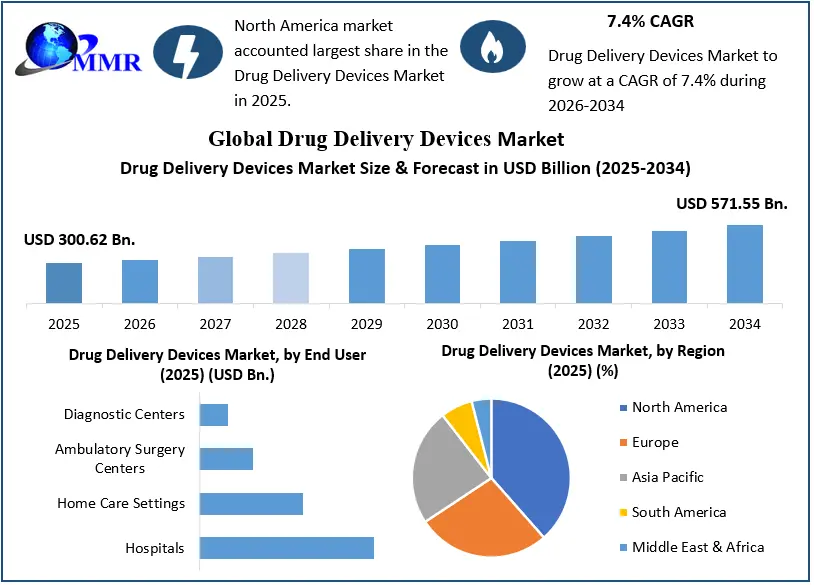
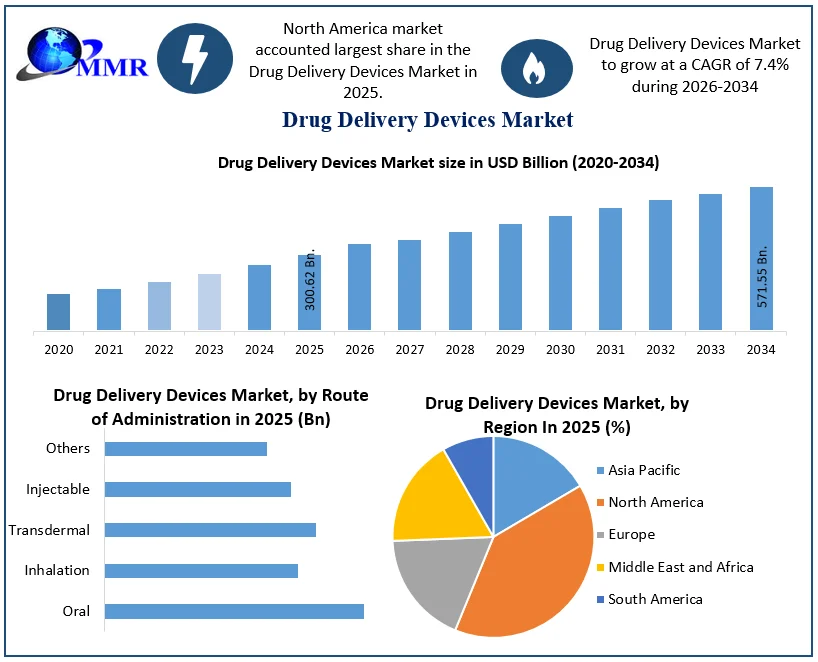
The Drug Delivery Devices Market size was valued at USD 300.62 Billion in 2025 and the total Drug Delivery Devices revenue is expected to grow at a CAGR of 7.4% from 2026 to 2034, reaching nearly USD 571.55 Billion.
Drug Delivery Devices Market Overview:
The Global Drug Delivery Devices Market consists of medical devices that are needed to ensure safe, accurate, and effective introduction of medicinal substances into the human body. The devices include syringes, injection pens, inhalers, infusion pumps, auto-injectors, and wearable drug delivery devices. They play an important role in helping patients get proper doses of medicine and make the therapy process comfortable and convenient. Hospitals and pharmaceutical companies use drug delivery devices to manage chronic diseases, including diabetes, asthma, cancer, and cardiovascular diseases. Increasing healthcare expenditures, as well as the rising number of chronic illnesses, especially in developing countries, are the main factors driving the market growth and market size.
Drug Delivery Devices Market is undergoing a significant transformation as manufacturers keep developing smart injection devices, connected inhalers, wearable injectors, and automated drug delivery systems. Moreover, hospitals, clinics, pharmaceutical companies, home healthcare providers, and patients are turning to be major market players as they are increasingly investing in self-administered devices and personalized treatment options. At the same time, a high cost of medical devices, regulatory constraints in the medical industry, and lack of access to affordable healthcare facilities make a competitive market environment and limit industry growth. A growing number of digital health technologies and innovations in medical devices contribute to the CAGR and market potential of the market.
North America is often considered to be the most attractive market for manufacturers and investors in the global drug delivery devices market. The region accounts for the largest share due to a high level of healthcare development, well-established pharmaceutical networks, and widespread use of medical technology and equipment. Asia Pacific is expected to witness exponential growth as countries like China, India, and Japan continue to invest in the development of the healthcare industry. Key manufacturers of drug delivery devices worldwide include Becton, Dickinson and Company (BD), Medtronic, Baxter International, Ypsomed, and West Pharmaceutical Services. BD focuses on developing advanced injection technologies, while Medtronic offers diabetes care products and solutions. The research report by Maximize Market Research (MMR) aims to help companies understand market size, market share, product demand, regional differences, competitive forces, and opportunities for growth and profitability in the drug delivery devices market. The analysis covers the key issues that manufacturers and investors should consider when entering the market or continuing to operate as a stable provider of medical equipment.
Drug Delivery Devices Market Size, Growth and Share Analysis
To Know About The Research Methodology :- Request Free Sample Report
Drug Delivery Devices Market Dynamics:
Increasing Cases of Chronic Diseases and Growing Demand for Long-Term Treatment Driving Market Growth
The rising number of patients suffering from diabetes, asthma, cancer, and cardiovascular diseases is a major driver of the Drug Delivery Devices Market. These conditions often require regular medication, creating a continuous demand for reliable and easy-to-use drug delivery products. Patients with diabetes usually use insulin pens and insulin pumps to control blood sugar levels. Asthma requires the use of inhalers for appropriate treatment. Standard insulin concentrations typically include 100 units per milliliter (U-100). The growing elderly population creates a demand for medical devices that simplify medicine administration and reduce treatment issues. Healthcare providers encourage suitable patients to use self-administration devices to get treatment outside hospitals. Increasing awareness of chronic disease management and better access to healthcare services boost the market demand. These factors support the market growth, market size increase, and long-term market potential, especially in countries with increased chronic disease treatment requirements.
High Device Costs and Limited Insurance Reimbursement Restricting Access to Advanced Drug Delivery Technologies
The high cost of advanced medical devices is a significant restraint for the Global Drug Delivery Devices Market, especially in the developing healthcare economy. Smart insulin pumps, connected inhalers, wearable injectors, and automated infusion systems require specialized components, electronic sensors, and regular maintenance. Some advanced insulin pump systems have an initial expenditure cost of several thousand US Dollars (excluding recurring expenses for infusion sets, reservoirs, and other supplies). These expenses can hinder treatment for patients with low income or inadequate insurance coverage. Hospitals also experience financial pressures during purchasing modern infusion systems and replacing old medical equipment. In several countries, the insurance reimbursement policies do not cover all the device types or associated consumables. The gap in the healthcare funding and device affordability creates a market gap between patients that need advanced drug delivery solutions and those that can afford it. These financial limitations impact the purchasing decision, adoption rate of the technology, and restrict the market share in the price-sensitive region.
Expansion of Home Healthcare and Self-Administration Devices Creating New Market Opportunities
The increasing preference for home-based treatment creates major market opportunities for manufacturers operating in the Drug Delivery Devices Market. Patients use auto-injectors, prefilled syringes, wearable injectors, and portable infusion devices to get suitable medicine without visiting the hospitals. This creates a demand for compact, lightweight, and easy-to-operate medical devices to help with independent treatment. Many prefilled syringes are available in common fill volumes such as 0.5 mL and 1 mL for the medicine and treatment needs. Pharmaceutical companies have opportunities to develop combination products that include both the medicine and compatible delivery device. Increasing healthcare investment in India, China, Brazil, and other emerging economies boosts the home healthcare service and medical device distribution network. Manufacturers can strengthen their competitive position through affordable product design, partnering with pharmaceutical companies, and improved patient training programs. Greater demand for convenient treatment creates additional market potential, while limited access to user-friendly devices in the untapped area offers opportunities to address the market gap.
Maintaining Device Safety, Dosage Accuracy, and Regulatory Compliance Creating Operational Challenges
Maintaining consistent drug delivery accuracy and patient safety is an important challenge in the Global Drug Delivery Devices Market. Manufacturers have to ensure that the medical devices deliver the intended medicine dose without leakage, contamination, mechanical failure, or incorrect operation. Infusion pumps and injection devices require proper design to reduce the impact of dosage errors on the patient treatment. Device developers also have to evaluate the product material, medicine compatibility, sterility, and long-term reliability before launching the product. Some infusion systems deliver medicines at programmed rates measured in milliliters per hour (mL/h), making the flow control an essential feature for clinical use. Strict regulatory approval process and extensive product testing increase the research, manufacturing, and quality assurance expenditure. Companies experience challenges related to product recall, user training, and the safe disposal of used needles and other medical components. Smaller manufacturers struggle to meet the international regulatory standards and maintain advanced testing facilities. These difficulties impact the production cost, customer confidence, and competitive market share, making the product reliability an important factor in the long-term market performance.
Global Drug Delivery Devices Market Trend
Growing Adoption of Smart, Connected, and Needle-Free Technologies Transforming Drug Delivery Systems
The Global Drug Delivery Devices Market is witnessing increased adoption of smart medical devices, connected drug delivery systems, and technologies designed to improve treatment convenience. Manufacturers offer Bluetooth-enabled injection pens, connected inhalers, wearable drug delivery devices, and digitally monitored infusion pumps. These technologies allow the patients and healthcare providers to track medicine usage, monitor the treatment schedule, and know of any missed dose. For example, some connected insulin pens record the injection doses and timing, while certain automated insulin delivery systems adjust the insulin delivery using glucose sensor information. Another emerging trend is the development of needle-free injection technologies that deliver the selected medicine without using the conventional hypodermic needles. Manufacturers are also exploring microneedle patches and controlled-release drug delivery platforms to improve the treatment convenience for suitable applications. The increased use of digital healthcare platform and personalized medicine encourages the companies to invest in connected device development. These innovations create new market opportunities for medical technology companies and pharmaceutical manufacturers. Growing demand for automated, portable, and patient-friendly products boosts the market potential and influences the Drug Delivery Devices Market forecast as companies focus on improving the treatment efficiency and expanding their technology portfolio.
Global Drug Delivery Devices Market Segment Analysis
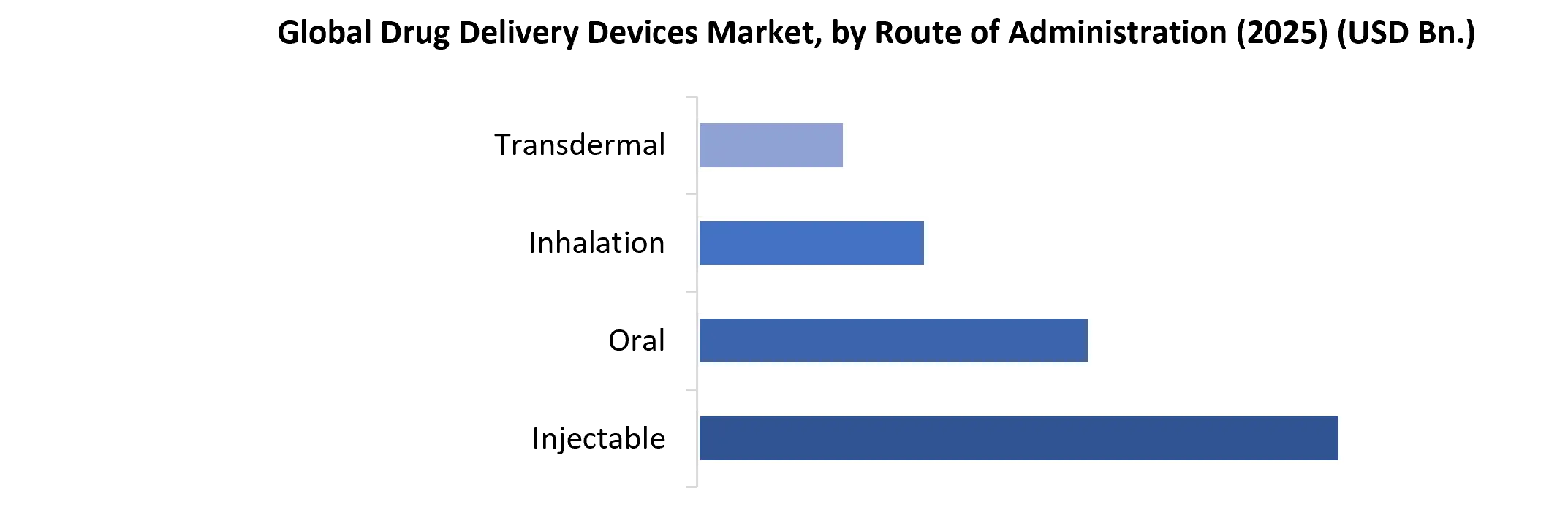
By Route of Administration, The Drug Delivery Devices Market is segmented into Oral, Inhalation, Transdermal, Injectable, and Others. The segment of Injectable is dominated by the market share due to the growing use of syringes, insulin pens, auto-injectors, and infusion pumps. The increased need for chronic disease treatment boosts the market size and the market growth. Oral can easily provide medicine convenience. Inhalation is booming due to the increasing demand for asthma and respiratory treatments. Transdermal is gaining popularity because of the drug delivery patches and microneedle technologies. The segment of Others mainly comprises nasal and ocular delivery systems. The high device costs create a market gap, and the growing demand for smart and needle-free devices can create new market opportunities and a positive market forecast for the market.
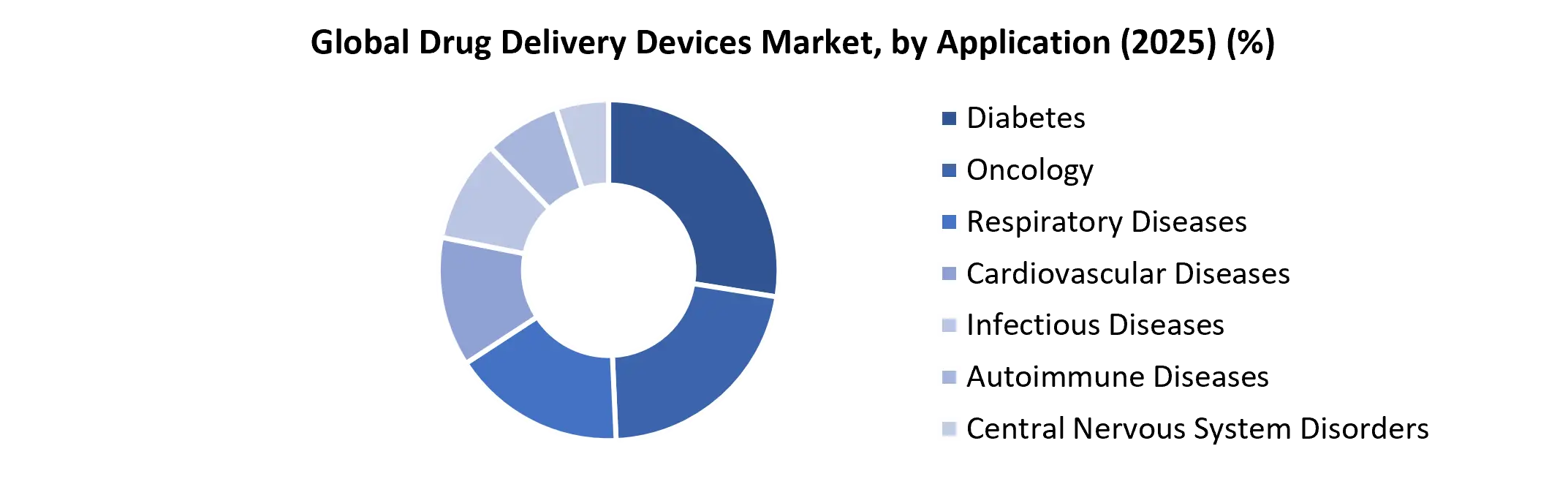
 By Application, The Drug Delivery Devices Market is divided into Oncology, Infectious Diseases, Respiratory Diseases, Diabetes, Cardiovascular Diseases, Autoimmune Diseases, and Central Nervous System Disorders. The segment of Diabetes has a significant market share due to the increasing use of insulin pens, pumps, and smart injection devices. The segment of Oncology is growing due to the rising demand for targeted cancer treatment. The segment of respiratory diseases is booming due to the increasing use of inhalers and nebulizers. Infectious Diseases and Cardiovascular Diseases can boost the market size due to the regular medication use. Autoimmune Diseases and Central Nervous System Disorders can create new market opportunities for advanced drug delivery technologies. However, the high treatment costs and limited device access create a market gap, and the increasing healthcare expenditures and product innovation can strengthen the market growth, market potential, and market forecast.
 Drug Delivery Devices Market Regional Insights:
North America possesses a leading market share in the Global Drug Delivery Devices Market due to sophisticated healthcare infrastructure, substantial healthcare expenditure, and a growing demand for smart medical devices. The United States dominates regional demand with the increasing adoption of insulin pumps, auto-injectors, and wearable drug delivery systems. Robust pharmaceutical research and mounting home healthcare services propel the market size, market growth trajectory and a positive market forecast.
Europe holds a substantial market share in the Drug Delivery Devices Market due to established pharmaceutical industries and advanced medical technologies. Germany, France, and the United Kingdom are significant contributors to the regional demand. The increasing preference for prefilled syringes, inhalers and connected injection devices propel the market growth. Growing investment in patient-friendly drug delivery technologies unveil new market opportunities, whereas stringent regulatory requirements present a market gap for smaller manufacturers.
Asia Pacific demonstrates vast market growth potential due to expanding healthcare infrastructure, surging chronic disease prevalence, and mounting pharmaceutical production. China, India, Japan, South Korea and other regional countries play a vital role in meeting the demand. Increasing healthcare expenditure and greater adoption of affordable injection devices fuel market size expansion. Growing need for home healthcare and self-administration devices open new market opportunities, as well as improve the regional market forecast.
The Middle East & Africa Drug Delivery Devices Market experiences gradual market growth due to rising investment in healthcare facilities and growing chronic disease prevalence. Saudi Arabia, the UAE, and South Africa are key contributors to the regional demand. The increasing use of insulin pens, inhalers, and infusion systems drive the market size expansion. Nevertheless, high expenditure on devices and limited availability of advanced technologies create a market gap. Expanding healthcare services and medical device distribution networks enhance the market potential.
South America exhibits burgeoning market potential due to improving healthcare infrastructure and rising demand for convenient medicine administration. Brazil, Argentina, Chile, Colombia and other countries play an important role in meeting the demand. Growing adoption of prefilled syringes, injection pens, and respiratory drug delivery devices drive market growth. Increasing healthcare expenditure and expanding pharmaceutical manufacturing unveil new market opportunities, as affordability challenges and reliance on imported medical devices influence the regional market forecast.
Drug Delivery Devices Market Recent Development
| Date | Recent Developments |
| September-2026 | Ypsomed and ten23 health have expanded their collaboration to support the YpsoDose large-volume wearable injector. The companies will provide new device assembly capabilities to enhance manufacturing services and help pharmaceutical companies to develop injectable therapies for home use. |
| July-2026 | Insulet Corporation has launched its Omnipod 5 Automated Insulin Delivery System and Omnipod Discover data management platform in Spain. The country is one of the latest markets to adopt the tube-free insulin delivery technology, which provides patients with reliable convenience and improves the management of their care. |
| March-2026 | SHL Medical has announced a strategic partnership with Thermo Fisher Scientific to offer integrated manufacturing services for its Molly autoinjector platform. The collaboration will enable SHL Medical to provide customers with sterile drug filling and final system assembly at Thermo Fisher Scientific's facility in the state of New Jersey to shorten the development cycle of autoinjectable pharmaceutical products. |
| February-2026 | Medtronic announced the European commercial launch of its MiniMed Go Smart Multiple Daily Injection system with the Simplera sensor. The connected care technology links insulin injection data and glucose information through a mobile application that helps the users to manage their diabetes treatment effectively. |
| January-2026 | Becton, Dickinson and Company (BD) has expanded its partnership with Ypsomed to develop a 5.5 mL Neopak XtraFlow prefillable syringe, designed to work with the YpsoMate 5.5 autoinjector. The collaboration aims to support the self-administration of larger-volume biological medicines and advance a variety of drug delivery options for pharmaceutical manufacturers. |
Global Drug Delivery Devices Market Competitive Landscape and Benchmarking
Drug Delivery Devices Market is highly competitive, with major players such as Becton, Dickinson and Company (BD), Medtronic, Baxter International, Insulet Corporation, Ypsomed, West Pharmaceutical Services, and SHL Medical. The industry is characterized by a focus on product development, cutting-edge technologies, partnerships, and business growth to drive market share growth. Leading companies offer a wide range of drug delivery devices, including insulin pumps, auto-injectors, prefilled syringes, infusion systems, and wearable drug delivery devices. The growing need for home healthcare, chronic disease management, and smart medical devices has fueled the market size and growth of the market. Companies are investing in research and development to improve device safety, dosage accuracy, and convenience for patients. However, the high cost of devices, regulatory hurdles, and a lack of access to cutting-edge technologies can limit the market potential in developing regions. The rising adoption of connected devices, needle-free technologies, and self-administration systems can open up new opportunities in the market. Finally, manufacturers are expanding their production capacities and distribution networks to drive their market potential and favorable forecasts.
Drug Delivery Devices Market Scope: Inquire before buying
| Drug Delivery Devices Market | |||
|---|---|---|---|
| Report Coverage | Details | ||
| Base Year: | 2025 | Forecast Period: | 2026-2034 |
| Historical Data: | 2020 to 2025 | Market Size in 2025: | USD 300.62 Billion |
| Forecast Period 2026 to 2034 CAGR: | 7.4 % | Market Size in 2034: | USD 571.55 Billion |
| Segments Covered: | by Route of Administration | Oral Inhalation Transdermal Injectable Others |
|
| by Application | Oncology Infectious Diseases Respiratory Diseases Diabetes Cardiovascular Diseases Autoimmune Diseases Central Nervous System Disorders Others |
||
| by End-User | Hospitals Diagnostic Centers Ambulatory Surgery Centers/Clinics Home Care Settings Others |
||
Drug Delivery Devices Market, by Region
North America (United States, Canada, and Mexico)
Europe (UK, France, Germany, Italy, Spain, Sweden, Austria, and the Rest of Europe)
Asia Pacific (China, South Korea, Japan, India, Australia, ASEAN, Indonesia, Philippines, Malaysia, Vietnam, Thailand, ASEAN, Rest of Asia Pacific)
Middle East & Africa (South Africa, GCC, Nigeria, Rest of ME&A)
South America (Brazil, Argentina, Rest of South America)
Drug Delivery Devices Market Key Players are:
The Drug Delivery Devices includes the global economic activity, revenue, and manufacturing of specialized medical equipment and hardware designed to introduce therapeutic pharmaceutical substances into the human body safely, precisely, and in a controlled manner. This market strictly measures spending on the administration tools themselves such as inhalers, auto-injectors, infusion pumps, and transdermal patchesrather than the chemical drugs they carry.
North America
1. Becton, Dickinson and Company (BD) – USA
2. Baxter International Inc. – USA
3. West Pharmaceutical Services, Inc. – USA
4. Abbott Laboratories – USA
5. Insulet Corporation – USA
6. Tandem Diabetes Care, Inc. – USA
7. ICU Medical, Inc. – USA
8. AptarGroup, Inc. – USA
9. Enable Injections, Inc. – USA
10. KORU Medical Systems, Inc. – USA
11. Moog Inc. – USA
12. Teleflex Incorporated – USA
13. Eitan Medical – Israel
14. embecta Corp. – USA
15. Phillips-Medisize – USA
16. Novo Nordisk A/S – Denmark
17. Eli Lilly and Company – USA
18. Amgen Inc. – USA
Europe
19. Medtronic plc – Ireland
20. B. Braun Melsungen AG – Germany
21. Fresenius Kabi AG – Germany
22. Gerresheimer AG – Germany
23. SCHOTT Pharma AG & Co. KGaA – Germany
24. Ypsomed Holding AG – Switzerland
25. SHL Medical AG – Switzerland
26. Nemera – France
27. Stevanato Group S.p.A. – Italy
28. Owen Mumford Ltd. – United Kingdom
29. F. Hoffmann-La Roche Ltd. – Switzerland
30. Sanofi S.A. – France
31. AstraZeneca plc – United Kingdom
32. GSK plc – United Kingdom
33. Boehringer Ingelheim International GmbH – Germany
34. Vectura Group Ltd. – United Kingdom
35. H&T Presspart – Germany
36. Kindeva Drug Delivery – United Kingdom/USA
37. Diabeloop SA – France
38. ViCentra B.V. – Netherlands
39. CeQur SA – Switzerland
40. Debiotech SA – Switzerland
Asia Pacific
41. Terumo Corporation – Japan
42. Nipro Corporation – Japan
43. JMS Co., Ltd. – Japan
44. SOOIL Development Co., Ltd. – South Korea
45. EOFlow Co., Ltd. – South Korea
46. Medtrum Technologies Inc. – China
47. Jiangsu Delfu Medical Device Co., Ltd. – China
48. Shenzhen Mindray Bio-Medical Electronics Co., Ltd. – China
49. Biocon Biologics Limited – India
50. Wego Group – China
Frequently Asked Questions:
1. What was the Global Drug Delivery Devices Market size in 2025?
Ans: The Global Drug Delivery Devices Market size was USD 300.62 Billion in 2025.
2. What is the Forecast Period of the global Drug Delivery Devices Market?
Ans. Forecast Period for Drug Delivery Devices Market in 2026-2034.
3. What is the projected market size & growth rate of the global Drug Delivery Devices Market?
Ans. The Drug Delivery Devices Market size was valued at USD 300.62 Billion in 2025 and the total Drug Delivery Devices revenue is expected to grow at a CAGR of 7.4% from 2026 to 2034, reaching nearly USD 571.55 Billion.
4. What segments are covered in the global Drug Delivery Devices Market report?
Ans. The segments covered are Route of Administration, Application, End-User, and Region.
5. What are the major key players of global Drug Delivery Devices Market report?
Ans. major key players are- Becton, Dickinson and Company (BD), Baxter International Inc., West Pharmaceutical Services Inc., Medtronic plc, B. Braun Melsungen AG, Fresenius Kabi AG, Gerresheimer AG, Ypsomed Holding AG, Insulet Corporation, Terumo Corporation.