
Bladder Cancer Treatment Market Size by Type, Diagnosis Method, Treatment Method, Treatment Channel, Region – Segment-Level Market Assessment, Growth Opportunity Analysis, Competitive Mapping & Forecast to 2032
Overview
Bladder Cancer Treatment Market Size was valued at USD 4.70 Bn in 2024, and total global Bladder Cancer Treatment Market revenue is expected to grow at CAGR of 9.2% & reaching nearly USD 9.50 Bn from 2025-2032, driven by innovation and demand
Bladder Cancer Treatment Market Overview
Bladder Cancer Treatment is diagnosing, managing and treating various forms of bladder cancer through pharmaceutical, biologic and advanced therapy. Bladder Cancer Treatment Market growth is fueled by rising bladder cancer incidence, advancements in immunotherapy and increasing elderly population globally. Market is evolving with integration of immune checkpoint inhibitors, antibody drug conjugates (ADCs) and gene therapies, offering targeted and effective treatment options. High adoption of drugs like Keytruda, Tecentriq and Padcev, mainly in North America and Europe is reshaping clinical practice.
Asia Pacific region is emerging due to growing awareness, improved diagnostic and regulatory support for new therapies. Leading companies like Pfizer, F. Hoffmann-La Roche, Astellas Pharma and Merck & Co. are doing heavy investments in R&D, clinical trials and strategic partnerships to expand their portfolio. Recent U.S. and China trade tariffs on pharmaceutical ingredients and finished drugs are disrupting global supply chain and driving up treatment cost, pushing key players like Roche and AstraZeneca to invest heavily in local production to mitigate future risks.
Report covers the Bladder Cancer Treatment Market dynamic, structure by analysing the market segments and projecting Bladder Cancer Treatment Market size. Clear representation of competitive analysis of key players by type, price, financial position, product portfolio, growth strategies and regional presence in the Bladder Cancer Treatment Market.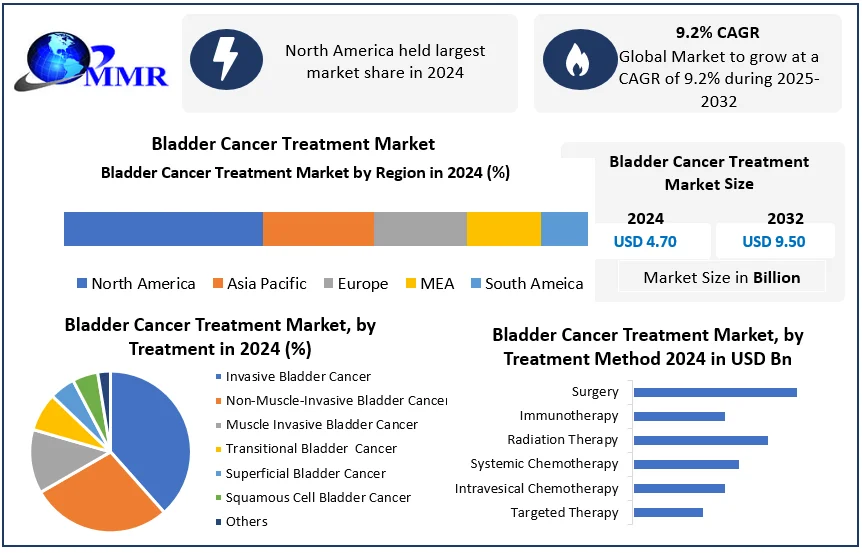 To know about the Research Methodology :- Request Free Sample Report
Bladder Cancer Treatment Market Dynamic
The increasing incidence of bladder cancer drives the Bladder Cancer Treatment Market
According to the American Cancer Society, about 82,290 new cases of bladder cancer were diagnosed in 2022. Bladder cancer mostly affects older people and about 90% of people with bladder cancer are older than 55. Bladder cancer is more common in developed countries because of smoking, exposure to industrial chemicals, and other environmental factors. There is a growing need for effective treatments for this treatment, therefore the bladder cancer treatment industry is expected to rise during the forecast period.
Furthermore, Urothelial cell bladder cancer accounts for 89% of bladder cancer cases worldwide and is especially common in developed nations. Urothelial cell bladder cancer is highly associated with occupational exposure or tobacco smoke. The market key players are investing in research and development of new treatments, including immunotherapies, targeted therapies, and other innovative approaches to remain competitive in the global market. North America has one of the largest markets for bladder cancer treatment because of the high incidence of bladder cancer in this region and the availability of advanced healthcare infrastructure.
In 2022, an estimated 212,536 people worldwide died from bladder cancer. Bladder cancer is the eighth most common cause of cancer death among men in the United States. However, the death rate for bladder cancer decreased by over 2% in recent years because of the introduction of new technologies in Bladder cancer therapies. Thus, the Bladder Cancer Treatment Market is expected to grow during the forecast period.
The Technological advancements and availability of new treatment options Drive the Bladder Cancer Treatment Market
The diagnostic tools and treatment options for bladder cancer have been developing in recent years. The recent advances in the diagnosis and therapy of bladder cancer have provided new and improved treatment options for patients. These developments have led to better outcomes and improved quality of life for those affected by this disease. The treatment options for bladder cancer depend on the stage and grade of the cancer as well as the patient's overall health. The most common types of treatments used for bladder cancer are described below.
Radiation therapy
Robotic surgery is a minimally invasive surgical technique that uses a robot to perform surgery. This technique allows for greater precision and control during surgery, resulting in less damage to surrounding tissues and faster recovery times. Robotic surgery is increasingly being used to treat bladder cancer, particularly in cases where the cancer has not spread beyond the bladder. In addition, the increasing availability of precision medicine and liquid biopsies is expected to drive the growth of the Bladder cancer treatment Market for advanced diagnosis and monitoring.
The increasing awareness of bladder cancer therapies among people drives the Bladder Cancer Treatment Market
Raising awareness about Bladder Cancer is an important step in taking control of health and safeguarding those we love. It is now easier than ever to share information about Bladder Cancer thanks to the power of social media. Many organizations are arranging Bladder Cancer awareness campaigns and fundraising walks to spread the word about this life-changing disease. Sometimes patients are hesitant to seek treatment due to fear of the side effects of treatment or the potential impact on their quality of life. By raising awareness and providing accurate information about the benefits and risks of different treatment options, patients can make informed decisions about their care. Thus, the launch of new products, a rise in investments to conduct research and development (R&D), and increasing efforts from market participants to strengthen their position are all expected to promote the growth rate of the bladder cancer treatment market.
High Cost to Restraint the Bladder Cancer Treatment Market
The high costs associated with medical devices used in bladder cancer therapeutics and stringent regulations are two major factors that are hampering the growth rate of the bladder cancer treatment market. The cost of medical devices used in bladder cancer treatment is prohibitive for some patients, limiting their access to treatment options. Moreover, stringent regulations create barriers to entry for new products and technologies, further inhibiting Bladder Cancer Treatment Market growth.
In addition, the lack of healthcare infrastructure and limited adoption of advanced cancer therapies in some countries worldwide are having a negative impact and Patients in these countries may have limited access to diagnostic and treatment facilities, which limits their options for bladder cancer treatment. The scarcity of skilled professionals in diagnostic labs is also a significant barrier to the market's growth. Accurate diagnosis and staging of bladder cancer are critical for determining the most appropriate treatment plan for patients
Bladder Cancer Treatment Market Segment Analysis
Based on the type, the Transitional Bladder Cancer segment held the largest revenue share of 21 % in 2024 and is expected to grow in the coming years. This is the most common type of bladder cancer accounting for around 90% of all bladder cancer cases. Advances in diagnostic techniques and treatment options, such as immunotherapy and targeted therapies, have greatly improved the outlook for patients with Transitional Cell Bladder Cancer. These new treatment options have demonstrated improved response rates and survival rates compared to traditional chemotherapy. The growing prevalence of bladder cancer globally, particularly among aging populations is expected to drive demand for more effective treatments. The availability of new drugs and devices along with increased awareness and screening also contribute to the growth of the Transitional Cell Bladder Cancer segment during the forecast period.
Based on the diagnosis method, the Cystoscopy segment is expected to grow during the forecast period. The Advances in cystoscopy technology such as the development of high-resolution cameras and improved imaging software have increased the accuracy of the procedure and reduced the risk of complications. The effectiveness in detecting bladder cancer, the availability of advanced technology, and the increasing demand for early detection and diagnosis of bladder cancer are expected to increase the demand for the Cystoscopy segment and therefore increased the growth of the Bladder cancer treatment Market during the forecast period.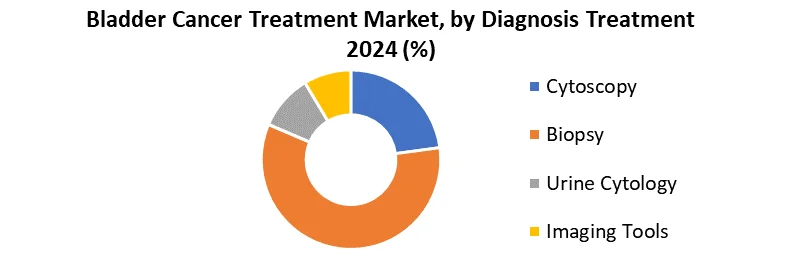
Bladder Cancer Treatment Market Regional Analysis
Bladder cancer treatment market in the North American region is expected to grow during the forecast period from 2025-2032 due to the increasing prevalence of bladder cancer, the rising geriatric population, and the availability of advanced medical technologies. Surgery is still the most common treatment for bladder cancer in the United States. However, the use of robotic-assisted surgery has been increasing, as it offers a less invasive option with quicker recovery times. The use of personalized medicine has been gaining momentum in the treatment of bladder cancer. This involves identifying genetic mutations in the tumor that can be targeted with specific therapies. The above-mentioned approaches have shown promising results in clinical trials and are expected to become more widespread in the future. Additionally, the high healthcare expenditure and the presence of leading pharmaceutical and biotechnology companies in the region are expected to boost the bladder cancer treatment market growth during the forecast period.
Bladder Cancer Treatment Market Competitive Landscape
Pfizer Inc., F. Hoffmann La Roche Ltd. and Astellas Pharma Inc. are at forefront of innovation in bladder cancer treatment, leveraging targeted therapies, immunotherapies and strategic collaborations to maintain competitive edge. Pfizer is heavily invested in antibody drug conjugates like Padcev (co-developed with Astellas) and partners on Bavencio, immune checkpoint inhibitor approved for urothelial carcinoma. Company continues to expand its oncology pipeline through R&D investments exceeding USD 10 billion annually, focusing on precision oncology and next-gen biologics. F. Hoffmann La Roche leads in immuno-oncology with Tecentriq (atezolizumab), used as monotherapy and in combination settings for bladder cancer.
Backed by one of the world's largest oncology research budgets of approximately. CHF 12 billion in R&D annually, Roche also focus on biomarker driven trials and personalized medicine. Astellas Pharma has solidified its leadership via Padcev, playing vital role in non muscle invasive and metastatic bladder cancer treatment. Astellas is expanding into next-gen ADCs, investing heavily in late phase trials and companion diagnostics. These three companies are engaging in licensing deals, global clinical trials and biomarker research to improve outcomes and secure regulatory approvals across regions, continuing their dominance in Bladder Cancer Treatment Market.
Bladder Cancer Treatment Market Key Trends
| Trend | Details | Impact on Market |
| Rise of Immunotherapy | Increased adoption of immune checkpoint inhibitor like Keytruda, Tecentriq, and Bavencio in treating advanced urothelial carcinoma. | Driving growth in advanced stage bladder cancer treatment and improving survival rates. |
| Shift Toward Targeted Therapies | Development of Antibody Drug Conjugates (ADCs) like Padcev and FGFR inhibitors (e.g., Balversa). | Offers more personalized treatment options mainly for patients with specific biomarkers. |
| Growth in Non Muscle Invasive Bladder Cancer (NMIBC) Therapies | Rising focus on treatments like Jelmyto and gene therapy (Adstiladrin) for early stage disease. | Expanding treatment scope beyond surgery, reducing recurrence and enabling bladder preservation. |
Bladder Cancer Treatment Market Recent Development
• 9 May 2025, Pfizer (U.S), the Phase 3 POTOMAC trial data revealed that durvalumab (Imfinzi) plus BCG improved disease free survival in high-risk NMIBC patients, making it the first PD-L1 inhibitor to show this benefit.
• 26 April 2025, Pfizer (U.S), at AUA, detailed CREST results showed a 32% risk reduction in disease events and an 82% 36 month EFS rate for the combo versus 75% for BCG.
• 10 January 2025, Pfizer (U.S). antiPD 1 antibody sasanlimab, combined with BCG, met the primary endpoint in the pivotal Phase 3 CREST trial for high risk non muscle invasive bladder cancer (NMIBC), significantly extending event free survival compared to BCG alone.
• 28 August 2024, F.Hoffmann (Switzerland) approved the PADCEV + Pembrolizumab combo (first line advanced urothelial cancer), showing nearly doubled overall survival and 12.5 month progression free survival vs. chemotherapy.
• 20 August 2024, Astellas Pharma (Japan) NMPA approved PADCEV (enfortumab vedotin) for locally advanced or metastatic urothelial cancer based on safety and efficacy demonstrated in the EV 301 and China EV 203 trials.
Bladder Cancer Treatment Market Scope: Inquire before buying
| Global Bladder Cancer Treatment Market | |||
|---|---|---|---|
| Report Coverage | Details | ||
| Base Year: | 2024 | Forecast Period: | 2025-2032 |
| Historical Data: | 2019 to 2024 | Market Size in 2024: | USD 4.70 Bn. |
| Forecast Period 2025 to 2032 CAGR: | 9.2% | Market Size in 2032: | USD 9.50 Bn. |
| Segments Covered: | by Type | Invasive Bladder Cancer Non-Muscle-Invasive Bladder Cancer Muscle-Invasive Bladder Cancer Transitional Bladder Cancer Superficial Bladder Cancer Squamous Cell Bladder Cancer Others |
|
| by Diagnosis Method | Cytoscopy Biopsy Urine Cytology Imaging Tools |
||
| by Treatment Method | Surgery Intravesical Chemotherapy Systemic Chemotherapy Radiation Therapy Immunotherapy Targeted Therapy |
||
| by Treatment Channel | Public Private |
||
Bladder Cancer Treatment Market, By Region
North America (United states, Canada, Mexico)
Europe (Germany, United Kingdom, France, Italy, Spain, Netherland, Sweden, Switzerland, Belgium, Russia, Poland, Finland, Norway, Austria, Ireland, Greece)
South America (Brazil, Argentina, Chile, Colombia, Peru, Paraguay, Bolivia, Venezuela)
Asia Pacific (China, India, Japan, Australia, South Korea, New Zealand, Singapore, Indonesia, Malaysia, Thailand, Vietnam, Philippines, Bangladesh)
Middle East and Africa (Saudi Arabia, Qatar, Kuwait, Oman, South Africa, Nigeria, Israel, Jordan)
Bladder Cancer Treatment Market key players
North America
1. Pfizer Inc. (U.S)
2. Merck & Co., Inc. (U.S)
3. Bristol-Myers Squibb Company (U.S)
4. Johnson & Johnson (U.S)
5. Seagen Inc. (U.S)
6. Incyte Corporation (U.S)
7. UroGen Pharma Ltd. (U.S)
8. Sesen Bio, Inc. (U.S)
9. CG Oncology, Inc. (U.S)
10. Exact Sciences Corporation (U.S)
Europe
11. F. Hoffmann-La Roche Ltd. (Switzerland)
12. AstraZeneca plc (UK)
13. GlaxoSmithKline plc (UK)
14. Sanofi S.A. (France)
15. Novartis AG (Switzerland)
16. QIAGEN N.V. (Netherlands)
17. MDxHealth SA (Belgium)
Asia-Pacific
18. Astellas Pharma Inc. (Japan)
19. Ferring Pharmaceuticals (China)
20. Kissei Pharmaceutical Co., Ltd. (Japan)
Middle East & Africa
21. EIMC United Pharmaceuticals (Egypt)
22. Pharco Pharmaceuticals (Egypt)
23. Tabuk Pharmaceuticals (Saudi Arabia)
South America
24. Eurofarma Laboratorios S.A. (Brazil)
25. Blau Farmaceutica S.A. (Brazil)
Bladder Cancer Treatment Market Frequently Asked Questions
1. Who are the key players in the Bladder Cancer Treatment Market?
Ans. Pfizer Inc. (U.S), Merck & Co., Inc. (U.S), Bristol-Myers Squibb Company (U.S), Johnson & Johnson (U.S), Seagen Inc. (U.S.) are the major companies operating in the Bladder cancer treatment market.
2. Which diagnosis method segment dominates the Bladder Cancer Treatment Market?
Ans. The Cystoscopy segment accounted for the largest share of the global Bladder cancer treatment market in 2024.
3. How big is the Bladder Cancer Treatment Market?
Ans. The Global Bladder Cancer Treatment Market size reached USD 4.70 Bn in 2024 and is expected to reach USD 9.50 Bn by 2032, growing at a CAGR of 9.2% during the forecast period.
4. What are the key regions in the global Bladder Cancer Treatment Market?
Ans. Based On the region, the Bladder cancer treatment Market has been classified into North America, Europe, Asia Pacific, the Middle, East and Africa, and Latin America. North America dominates the global Bladder cancer treatment market.
5. What is the study period of this market?
Ans. The Global Market is studied from 2025 to 2032.