
Artificial Intelligence in Retail Market- Industry Structure Evaluation, Demand Drivers Analysis, Regional Growth Analysis and Identification, Competitive Positioning Review & Global Market Size Forecast to 2030
Overview
The Artificial Intelligence in Retail Market size was valued at USD 8.24 Billion in 2023 and the total Artificial Intelligence in Retail revenue is expected to grow at a CAGR of 23.87% from 2024 to 2030, reaching nearly USD 36.87 Billion by 2030.
Artificial Intelligence in Retail Market Overview:
Artificial intelligence in the retail industry encompasses a spectrum of technologies, including AI-driven analytics, natural language processing, computer vision, and robotics, among others. These technologies exhibit human-like intelligence and emulate human actions, and their applications extend across various retail operations. Machine learning in retail serves as a closely integrated companion to AI, enhancing the adaptive learning capabilities within the industry.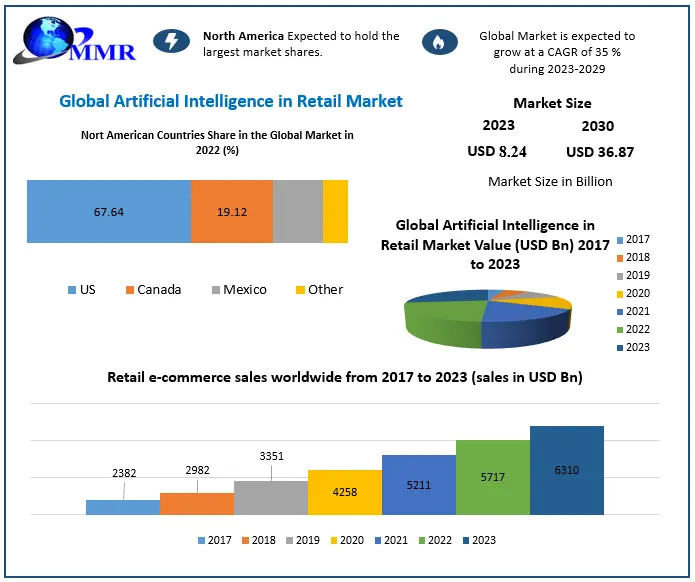 To know about the Research Methodology :- Request Free Sample Report
Artificial Intelligence in Retail Market Dynamics:
The Global Artificial Intelligence in Retail Market is experiencing a significant surge in the retail industry's adoption of big data analytics and AI, driven by technological advancements, increased application and smart device penetration, cloud services adoption, and the proliferation of IoT. A noteworthy example within the Global Artificial Intelligence in Retail Industry is the collaboration between Baker Hughes, a prominent oil field services provider, and C3.ai in February 2020. They jointly introduced BH3 Production Optimization, an AI-based application that plays a pivotal role in real-time production monitoring, operations optimization, and improved forecasting for enhanced gas and oil production rates.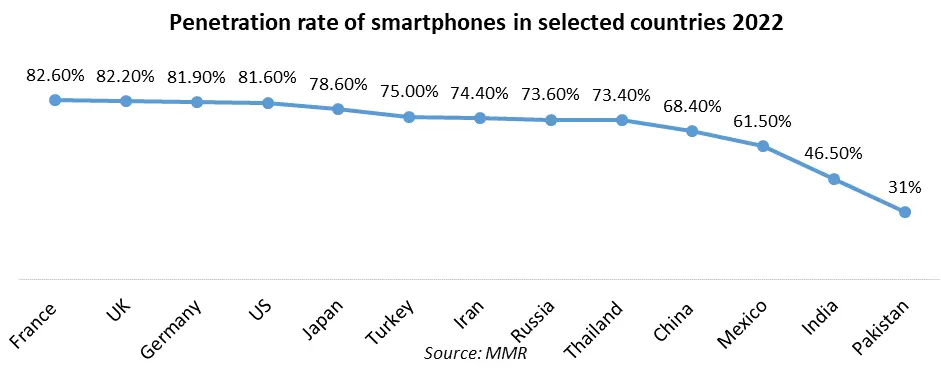 The impact of AI in the Global Artificial Intelligence in Retail Market is evident in its transformative role in decision-making processes within the retail sector. It actively narrows the gap from insights to implementation across various business domains, including product management, marketing, e-commerce, and more. A compelling illustration within the Global Artificial Intelligence in Retail Market is Talkdesk, Inc.'s groundbreaking introduction of Talkdesk Retail Smart Service in June 2021. This innovative AI-driven service automates self-services for both consumers and support agents, delivering personalized recommendations and improved engagement. Such advancements allow agents within the industry to concentrate on key revenue-generating tasks.
The rising popularity of AI-based chatbot assistance is a notable trend within the Global Artificial Intelligence in Retail Market, driven by its highly efficient customer service capabilities. These chatbots provides personalized and dedicated responses, significantly enhancing overall consumer satisfaction. Notably, technological advancements such as computer vision are gaining substantial traction in brick-and-mortar outlets, opening up numerous opportunities within the Industry. These opportunities span across inventory management, demand forecasting, and optimizing the overall customer experience.
In June 2022, a groundbreaking collaboration involving Intel Corporation, ASUSTeK Computer Inc., and Microsoft Corporation resulted in the launch of the world's first AI on PC Development Kit, known as AI DevKit. This pioneering kit is a significant milestone within the Global Artificial Intelligence in Retail industry, incorporating deep neural networks and computer vision applications for PCs. It facilitates the development of compelling AI applications through seamlessly integrated software and hardware. Tutorials and source code accompanying AI DevKit further support the creation of innovative applications, thereby opening new and exciting possibilities across various domains within the Global Artificial Intelligence in Retail Market.
Demand forecasting
The significance of predicting demand lies in its ability to furnish insights into the required inventory, its optimal timing, and specific locations aligned with customer preferences, both current and future, thereby shaping the trajectory of the Global Artificial Intelligence in Retail Market.
Traditionally, retailers grappling with cumbersome and error-prone spreadsheets encounter limitations in effectively forecasting demand within the Global Artificial Intelligence in Retail Market. The sheer volumes of data, coupled with the absence of efficient analysis tools within these spreadsheets, impede the ability of retailers to generate timely and high-accuracy demand forecasts, highlighting the need for advanced solutions in the Global Artificial Intelligence in Retail Market. Contrastingly, leading retailers proactively harness modern AI technology, specifically AI-driven analytics, to optimize the demand forecasting process. By integrating Artificial Intelligence in Retail, these retail leaders gain access to sophisticated algorithms and machine learning models capable of handling large volumes of data swiftly and accurately. This technological leap empowers a more nuanced understanding of customer behavior, preferences, and market trends, facilitating faster and more precise demand forecasts. This, in turn, contributes to the overarching goal of optimizing the overall supply chain and operational efficiency within the dynamic context of the Global Artificial Intelligence in Retail Market.
Artificial Intelligence in Retail Market Segment Analysis:
The Global Artificial Intelligence in Retail Market saw the machine learning segment take the lead, commanding a substantial revenue share of 41.2% in 2022. The machine learning operates with speed and depth in analysing gathered data, making it particularly well-suited for delivering personalized experiences to consumers. Its role in boosting inventory efficiency aids retail vendors in enhancing supply chain systems and refining demand forecasts. A notable example is Amazon Inc.'s Amazon SageMaker, which stands out as a fully organized service utilizing machine learning techniques across various applications, ranging from predictive analytics to enhancing the consumer experience.
The natural language processing (NLP) is positioned for significant advancements and expected to undergo rapid growth throughout the forecast period. The exponential surge in data analysis and the increasing reliance on AI-driven chatbots will contribute to the progress of NLP. NLP-powered chatbots, spanning mobile interfaces and touchscreens, are expected to foster interactive customer experiences within the dynamic landscape of the Global Artificial Intelligence in Retail Market. Additionally, NLP is projected to play a crucial role in sentiment analysis, evaluating call center interactions, customer messages, social media posts, and online reviews.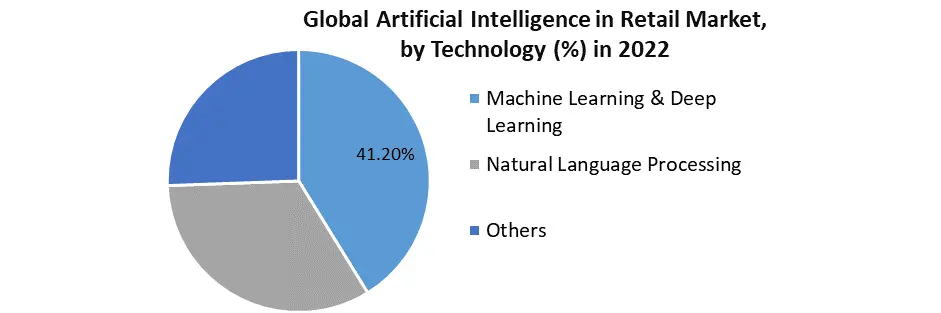 The segment dedicated to image and video analytics is forecasted to exhibit substantial growth in the Global Artificial Intelligence in Retail Market during the forecast period. The trend for retail video analytics stems from the escalating popularity of business intelligence tools, offering valuable insights into in-store promotional strategies, queue data, and bolstering security measures in malls and chain shops within the expansive landscape of the Global Artificial Intelligence in Retail Industry.
The Omni channel segment held the largest share of revenue, nearly 43.3% in 2023. The prevailing adoption of Omni channel strategies has gained immense popularity, propelled by the expansive global digitization in both developing and developed countries. Additionally, the emergence of headless commerce has set a trend, empowering retailers to seamlessly offer payment gateways and products across diverse platforms, including kiosk screens, progressive web apps, smart watches, and mobile apps. The prominence of the Omni channel experience is expected to increase further, particularly in light of the digitized supply chain and a dedicated focus on delivering a seamless customer experience within the expansive realm of the Global Artificial Intelligence in Retail Market.
Pure-play online retailers are poised for accelerated growth, driven by the escalating prevalence of online and virtual shopping. The widespread integration of cutting-edge technologies such as IoT, AI, and social media is anticipated to contribute significantly to the overall growth of the Global Artificial Intelligence in Retail Market. In response to these prevailing trends, numerous retail vendors are actively enhancing their online customer service capabilities by embracing advanced artificial intelligence solutions.
Artificial Intelligence in Retail Market Regional Insights:
In 2022, North America solidified its position as the dominant force within the Global Artificial Intelligence in Retail Market, boasting a commanding revenue share of 38.5%. The region presents robust opportunities for industry expansion, driven by substantial investments in AI projects and concurrent research and development endeavors. Moreover, regional retail vendors actively capitalize on available customer preference data to enhance the efficiency of customer service within the expansive landscape of the Global Artificial Intelligence in Retail Market.
Prominent industry players, such as Google Inc., Microsoft, IBM Corporation, Salesforce, and Amazon Web Services, strategically employ a combination of organic and inorganic strategies within the Global Artificial Intelligence in Retail Market. A noteworthy illustration is Google Cloud's impactful launch of Product Discovery Solutions for retail in January 2021, aimed at cultivating personalized online shopping experiences within the dynamic context of the
Global Artificial Intelligence in Retail Industry.
Looking ahead, Asia Pacific is expected to witness the fastest Compound Annual Growth Rate (CAGR) of 31.6% from 2024 to 2030 within the Global Artificial Intelligence in Retail industry. This remarkable growth trajectory can be attributed to technological advancements in countries such as China, Japan, and India. The rapid adoption of smart devices and the widespread implementation of 5G technology within the retail sector emerge as primary factors propelling the noteworthy expansion of the Asia Pacific AI in the retail market, contributing to the global landscape of the Global Artificial Intelligence in Retail Market.
Artificial Intelligence in Retail Market Scope: Inquiry Before Buying
| Artificial Intelligence in Retail Market | |||
|---|---|---|---|
| Report Coverage | Details | ||
| Base Year: | 2023 | Forecast Period: | 2024-2030 |
| Historical Data: | 2018 to 2023 | Market Size in 2023: | US $ 8.24 Bn. |
| Forecast Period 2024 to 2030 CAGR: | 23.87% | Market Size in 2030: | US $ 36.87 Bn. |
| Segments Covered: | by Type | Online Offline |
|
| by Solution | Product Recommendation & Planning Customer Relationship Management Visual Search Virtual Assistant Price Optimization Payment Services management Supply chain management & Demand Planning Others |
||
| by Technology | Machine Learning & Deep Learning Natural Language Processing Others |
||
| by Deployment Mode | Cloud On-Premises |
||
| by Application | Predictive Merchandising Programmatic Advertising Market Forecasting In-Store Visual Monitoring and Surveillance Location-Based Marketing Other |
||
Artificial Intelligence in Retail Market by Region:
North America (United States, Canada, and Mexico)
Europe (UK, France, Germany, Italy, Spain, Sweden, Austria, and the Rest of Europe)
Asia Pacific (China, South Korea, Japan, India, Australia, Indonesia, Malaysia, Vietnam, Taiwan, Bangladesh, Pakistan, and the Rest of APAC)
Middle East and Africa (South Africa, GCC, Egypt, Nigeria, and the Rest of ME&A)
South America (Brazil, Argentina Rest of South America)
Artificial Intelligence in Retail Market Key Players:
Artificial Intelligence in Retail Solution Providers in North America:
1. IBM Corporation
2. Microsoft Corporation
3. Amazon Web Services
4. Oracle
5. SAP
6. Google Inc.
7. NVIDIA Corporation
8. Intel Corporation
9. Sentient Technologies
10. Numenta Inc.
11. Salesforce
12. ViSenze
13. Inbenta Technologies
14. Interactions LLC
15. Lexalytics Inc.
Artificial Intelligence in Retail Solution Providers in Asia Pacific:
1. Baidu Inc.
Artificial Intelligence in Retail Solution Providers across the world:
1. BloomReach Inc.
2. CognitiveScale Inc.
3. NEXT IT Corp.
4. RetailNext Inc.
5. Salesforce.com Inc.
FAQs:
1. How is Artificial Intelligence (AI) being used in the retail industry?
Answer: AI is being used in the retail industry for various purposes, including personalized shopping experiences, demand forecasting, inventory management, recommendation systems, fraud detection, and chatbots for customer service. These applications enhance efficiency, optimize operations, and improve the overall customer experience.
2. How does AI contribute to personalized shopping experiences in retail?
Answer: AI analyzes customer data, such as purchase history and preferences, to provide personalized product recommendations. Machine learning algorithms help retailers understand individual customer behavior, enabling them to offer targeted promotions, personalized discounts, and a more tailored shopping experience both online and in-store.
3. What role does AI play in inventory management for retailers?
Answer: AI helps retailers optimize inventory management by predicting demand patterns, identifying potential stockouts or overstock situations, and automating restocking processes. This minimizes the likelihood of products being out of stock, reduces excess inventory costs, and improves overall supply chain efficiency.
4. How can AI enhance fraud detection in the retail sector?
Answer: AI algorithms analyze transactions and customer behavior to detect anomalies that may indicate fraudulent activities. By continuously learning from patterns, AI systems can quickly identify and flag suspicious transactions, protecting retailers from financial losses and maintaining the integrity of online and offline transactions.
5. What impact does AI have on customer service in retail?
Answer: AI-powered chatbots and virtual assistants are transforming customer service in retail. These tools can handle routine queries, provide product information, process orders, and offer support, improving response times and customer satisfaction. AI also enables sentiment analysis, helping retailers understand customer feedback and preferences for continuous improvement