
LGBTQ+ Families and Changing Family Structures Are Creating New Opportunities in The Surrogacy Market
The concept of family is evolving rapidly across the world. While surrogacy was traditionally associated with couples facing infertility challenges, the industry is now serving a much broader group of intended parents. Growing acceptance of diverse family structures, increasing legal recognition of LGBTQ+ rights, and changing social attitudes are transforming surrogacy into a mainstream family-building solution.
Today, surrogacy is helping thousands of individuals achieve parenthood regardless of marital status, gender, or medical circumstances. This shift is creating significant opportunities for fertility clinics, reproductive healthcare providers, and surrogacy agencies worldwide.
According to Maximize Market Research, the Global Surrogacy Market was valued at USD 31.95 Billion in 2025 and is expected to reach nearly USD 145.18 Billion by 2032, growing at a remarkable CAGR of 24.14% during the forecast period.
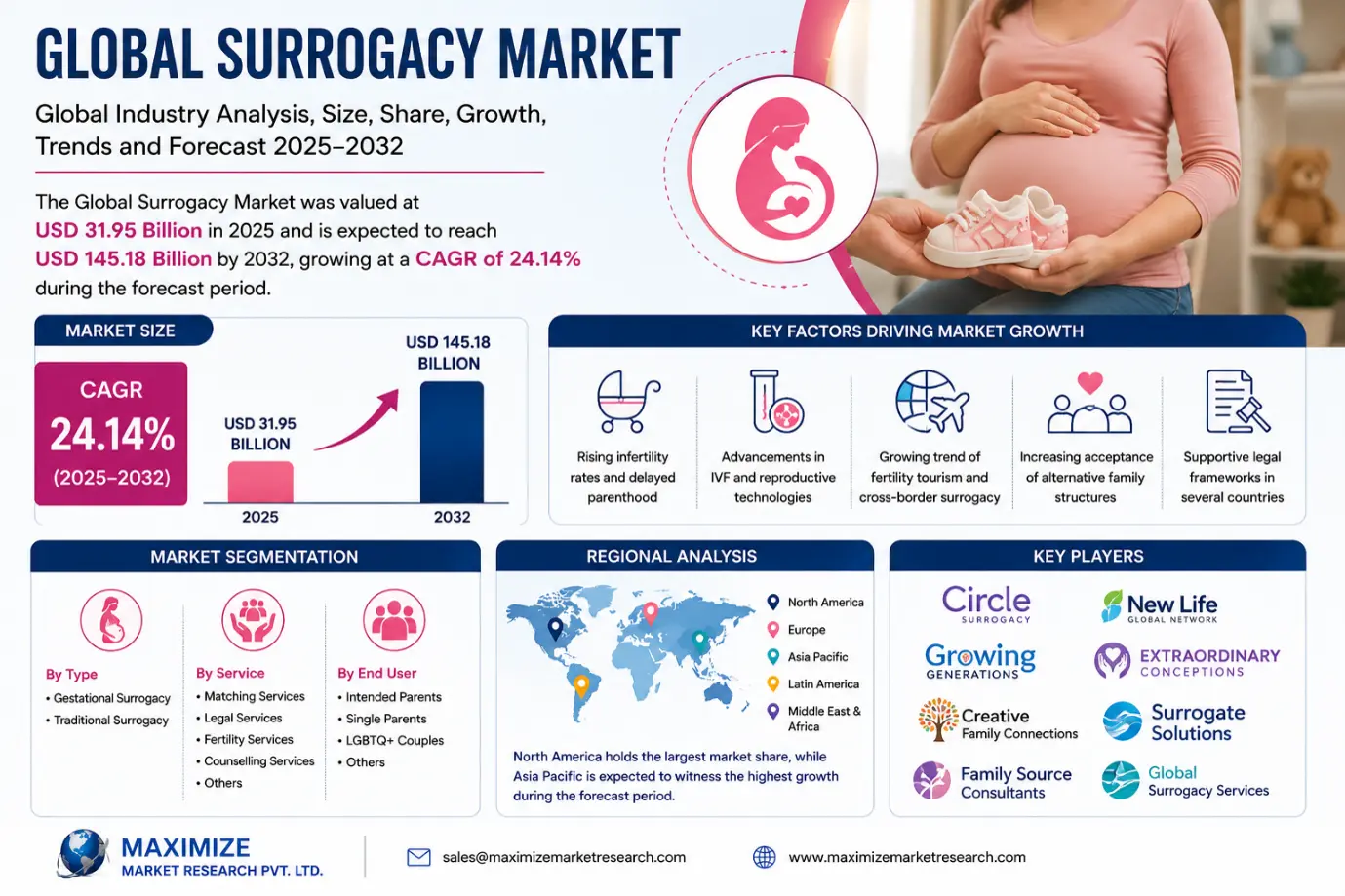
Diverse Family Structures Are Expanding the Consumer Base
One of the biggest changes within the surrogacy industry is the expansion of the potential customer base. Surrogacy is increasingly being chosen by:
- Same-Sex Couples
- Single Parents
- Cancer Survivors
- Individuals With Medical Conditions
- People Facing Pregnancy Risks
For many intended parents, surrogacy provides an opportunity to have a biological connection to their child while overcoming physical or medical barriers to pregnancy. Growing social acceptance of alternative family structures is helping normalize surrogacy and encouraging more individuals to explore reproductive healthcare options.
MMR Insight: – The surrogacy industry is evolving beyond infertility treatment and becoming an important family-building platform for a diverse range of intended parents.
Legal Recognition Is Supporting Industry Growth
Several countries have introduced legal frameworks that provide greater clarity and protection for intended parents, surrogates, and healthcare providers. Improved regulations are helping create a more structured environment for surrogacy arrangements by addressing issues such as:
- Parental Rights
- Birth Registration Procedures
- Medical Responsibilities
- Legal Agreements
- Child Citizenship Considerations
While regulations vary significantly across regions, growing legal recognition is improving confidence among intended parents and encouraging greater participation in surrogacy programs. The development of transparent legal processes is expected to remain an important factor supporting long-term market expansion.
Fertility Clinics Are Expanding Specialized Services
As demand grows, fertility clinics are increasingly developing dedicated surrogacy programs designed to provide end-to-end support. Modern providers now offer:
- Medical Consultation Services
- Embryo Transfer Programs
- Psychological Counseling
- Legal Coordination
- Parent Support Networks
This integrated approach helps improve patient experience while simplifying what can often be a complex process. Many healthcare organizations are also investing in multilingual support teams and international service capabilities to accommodate growing global demand. As competition increases, clinics that provide comprehensive care are likely to gain a significant advantage.
Leading Industry Participants Continue to Expand Globally
Several organizations have strengthened their presence by offering specialized surrogacy and fertility support services. Key participants include:
- Creative Family Connections
- Family Source Consultants
- Surrogate Solutions
- Global Surrogacy Services
These companies continue expanding their international networks while improving support programs for intended parents. Many providers are also investing in digital platforms that improve communication, documentation, and case management throughout the surrogacy journey. The growing use of technology is helping make services more accessible and efficient.
International Demand Continues to Increase
Cross-border surrogacy remains an important segment of the industry. Intended parents often seek international options because of:
- Specialized Medical Expertise
- Availability of Surrogacy Programs
- Advanced Fertility Infrastructure
- Support Services
- Treatment Accessibility
The globalization of reproductive healthcare is creating new opportunities for agencies and fertility providers that can effectively manage international programs. As awareness increases and healthcare systems become more interconnected, cross-border fertility services are expected to remain an important growth driver.
Technology Is Improving Patient Experience
Digital transformation is helping improve efficiency throughout the surrogacy process. Modern platforms now support:
- Virtual Consultations
- Electronic Documentation
- Treatment Tracking
- Secure Communication Systems
- Patient Education Programs
These tools help intended parents remain informed and connected throughout every stage of their journey. Technology is also enabling fertility clinics and agencies to streamline operations while providing a more personalized experience.
Final Take
The future of the surrogacy industry is being shaped not only by medical advances but also by changing social realities. Growing acceptance of diverse family structures, expanding legal recognition, and increasing access to reproductive healthcare are creating strong momentum for market growth. As surrogacy becomes a more widely accepted pathway to parenthood, healthcare providers, fertility clinics, and specialized agencies are expected to play an increasingly important role in helping individuals and families achieve their dream of having children.