
US Beta-Glucan Market Analysis, Demand Drivers, Segment Performance, Competitive Landscape
Overview
US Beta-Glucan Market- Key Highlights
• US Beta-Glucan Market is estimated to grow from USD 207 Million in 2025 to USD 345 Million by 2032, registering a CAGR of 6.5% during the forecast period.
• The United States remains one of the world's largest nutraceutical, dietary supplement, and functional food markets, driving strong demand for beta-glucan ingredients.
• Rising prevalence of cardiovascular diseases, diabetes, obesity, and immune-related disorders is accelerating the adoption of clinically validated functional ingredients.
• Increasing consumer preference for preventive healthcare, clean-label nutrition, plant-based ingredients, and scientifically backed wellness products is fueling product innovation.
• Strong post-pandemic focus on immune health, gut health, and healthy aging continues to boost demand for beta-glucan-enriched dietary supplements and functional foods.
• Growing investments in nutraceutical research, biotechnology, and functional ingredient innovation are supporting the commercialization of advanced beta-glucan formulations.
• Expanding e-commerce platforms, pharmacy chains, supermarkets, and specialty nutrition retailers are improving nationwide accessibility of beta-glucan-based products.
• FDA regulations and increasing emphasis on evidence-based health claims are encouraging manufacturers to invest in clinical research, quality assurance, and regulatory compliance.
• Oat-, yeast-, barley-, and mushroom-derived beta-glucans are witnessing increasing adoption across dietary supplements, pharmaceuticals, functional foods, beverages, sports nutrition, and personal care products.
• Rising demand for heart health, cholesterol management, blood glucose control, digestive wellness, and immune support is expanding the application scope of beta-glucan across multiple end-use industries.
• Strategic collaborations between ingredient manufacturers, nutraceutical companies, food producers, and research organizations are accelerating product development and strengthening market competitiveness.
• Increasing consumer spending on premium wellness products, personalized nutrition, and functional foods is expected to create attractive investment opportunities for manufacturers and stakeholders throughout the forecast period.
US Beta-Glucan Market Overview
The US Beta-Glucan Market was valued at an estimated USD 207 million in 2025 and is projected to reach USD 345 million by 2032, registering a CAGR of 6.5% during the forecast period. The United States represents one of the largest and most mature markets for beta-glucan, driven by the country's well-established nutraceutical, dietary supplement, functional food, and pharmaceutical industries. Rising consumer awareness of preventive healthcare, healthy aging, and evidence-based nutrition, coupled with increasing healthcare expenditure, is accelerating the adoption of scientifically validated functional ingredients such as beta-glucan. The growing prevalence of chronic diseases—including cardiovascular disorders, diabetes, obesity, and weakened immunity—is further supporting demand for products that promote heart health, metabolic wellness, digestive health, and immune function.
Beta-glucan has gained significant commercial importance due to its clinically supported benefits for cholesterol reduction, immune modulation, blood glucose management, and gut health. Increasing consumer preference for clean-label, plant-based, non-GMO, and naturally derived ingredients is encouraging manufacturers to incorporate oat-, barley-, yeast-, and mushroom-derived beta-glucans into dietary supplements, functional foods, beverages, sports nutrition products, pharmaceuticals, and personal care formulations. Growing demand for personalized nutrition and premium wellness products is creating attractive opportunities for ingredient suppliers, nutraceutical companies, food manufacturers, and investors across the U.S. health and wellness ecosystem.
The market is further supported by robust investments in biotechnology, clinical nutrition research, functional ingredient innovation, and advanced manufacturing technologies. The expansion of e-commerce platforms, online pharmacies, supermarket chains, warehouse clubs, and specialty nutrition retailers has significantly improved consumer access to beta-glucan-based products across the country.
In addition, increasing collaboration between ingredient manufacturers, research institutions, and consumer health companies is accelerating the development of clinically validated formulations targeting immunity, cardiovascular health, gut microbiome support, metabolic health, and healthy aging.
Despite favorable market fundamentals, the industry faces challenges including stringent U.S. Food and Drug Administration (FDA) regulations governing health claims, intense competition from alternative functional ingredients such as probiotics, omega-3 fatty acids, collagen, and botanical extracts, and fluctuations in raw material availability and production costs. Nevertheless, continuous investment in clinical research, increasing consumer demand for scientifically proven wellness solutions, and the growing adoption of functional nutrition across multiple end-use industries are expected to strengthen the competitive landscape and support the long-term expansion of the US Beta-Glucan Market.
This report provides comprehensive insights into market size and forecasts, emerging industry trends, growth drivers, competitive benchmarking, regional analysis, company profiles, investment opportunities, and strategic developments, enabling manufacturers, investors, distributors, and other stakeholders to identify high-growth opportunities and make informed business decisions in the evolving US Beta-Glucan Market.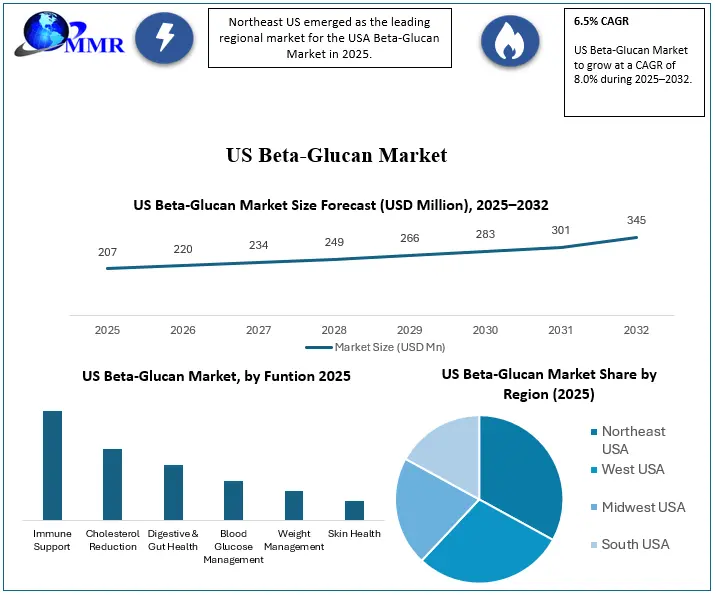
To know about the Research Methodology :- Request Free Sample Report
US Beta-Glucan Market Trends
The US Beta-Glucan Market is experiencing strong growth as consumers increasingly prioritize preventive healthcare, personalized nutrition, and scientifically validated functional ingredients. The growing demand for immune-support products, heart-health formulations, digestive wellness solutions, and healthy aging supplements is accelerating the incorporation of beta-glucan into dietary supplements, functional beverages, breakfast cereals, dairy products, sports nutrition, and medical nutrition products. As one of the world's largest nutraceutical and dietary supplement markets, the United States provides an ideal environment for the widespread adoption of value-added functional ingredients.
Manufacturers are expanding their product portfolios with oat-, barley-, yeast-, and mushroom-derived beta-glucan formulations to meet increasing demand for immune support, cholesterol reduction, blood glucose management, gut health, and metabolic wellness. At the same time, growing consumer preference for plant-based, vegan, non-GMO, and clean-label products is encouraging innovation across food, beverage, pharmaceutical, clinical nutrition, and personal care applications.
Digital health and direct-to-consumer retail continue to reshape the competitive landscape. The rapid expansion of e-commerce platforms, online pharmacies, subscription-based wellness services, and personalized nutrition platforms is improving consumer access to premium beta-glucan products across the United States. In addition, collaborations between ingredient manufacturers, biotechnology companies, pharmaceutical firms, and research institutions are accelerating clinical research, product innovation, and the commercialization of next-generation beta-glucan formulations. These trends are expected to enhance market competitiveness and create substantial growth opportunities throughout the forecast period.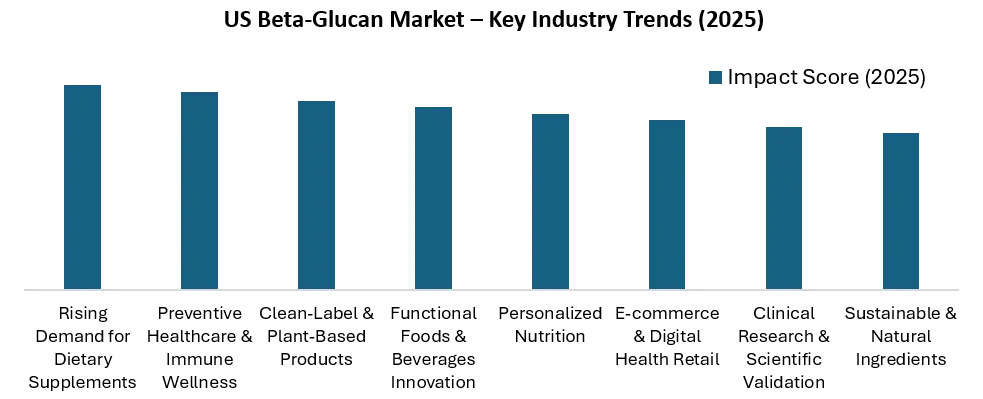
US Beta-Glucan Market Dynamics: Growth Drivers, Emerging Opportunities & Competitive Challenges
The US Beta-Glucan Market is being driven by strong consumer demand for preventive healthcare, continuous innovation in functional ingredients, and the rapid expansion of the nutraceutical and dietary supplement industries. With the market projected to increase from USD 207.0 million in 2025 to USD 345.0 million by 2032, manufacturers are benefiting from growing healthcare expenditure, increasing adoption of evidence-based nutrition, and rising demand for clinically supported ingredients.
At the same time, evolving FDA regulations, technological advancements, competitive product innovation, and changing consumer purchasing behavior continue to shape the market landscape. The following analysis highlights the major drivers, restraints, opportunities, and challenges influencing the future growth of the US Beta-Glucan Market.
US Beta-Glucan Market Drivers
The United States has one of the world's most developed nutraceutical and dietary supplement industries, making it a major growth driver for the Beta-Glucan Market. Rising healthcare awareness, increasing disposable incomes, and strong consumer spending on preventive nutrition continue to accelerate product adoption.
According to the CDC, approximately 129 million U.S. adults live with at least one major chronic disease, while cardiovascular disease remains the leading cause of death, creating sustained demand for ingredients that support heart health, cholesterol management, immune function, and metabolic wellness.
In addition, growing consumer interest in healthy aging, gut health, and personalized nutrition, combined with continued post-pandemic focus on immune health, is driving demand for beta-glucan-based dietary supplements and functional foods. Continuous investments in biotechnology, clinical nutrition research, food innovation, and premium wellness products further strengthen the long-term growth prospects of the US Beta-Glucan Market.
US Beta-Glucan Market Restraints
Despite strong market fundamentals, several factors continue to restrain the growth of the US Beta-Glucan Market. Stringent regulatory requirements and health claim regulations enforced by the U.S. Food and Drug Administration (FDA) require manufacturers to invest significantly in clinical validation, product testing, and regulatory compliance before commercializing new beta-glucan formulations.
In addition, beta-glucan competes with well-established functional ingredients such as probiotics, prebiotics, collagen peptides, omega-3 fatty acids, curcumin, and botanical extracts, which already enjoy strong consumer recognition. Premium pricing associated with high-purity beta-glucan ingredients may also limit adoption among price-sensitive consumers, particularly in mainstream food applications.
Furthermore, fluctuations in raw material prices and supply chain disruptions for oat-, barley-, and mushroom-derived ingredients continue to impact manufacturing costs and profit margins.
US Beta-Glucan Market Opportunities
The US Beta-Glucan Market offers substantial growth opportunities, supported by the country's leadership in nutraceutical innovation, biotechnology, and functional food development. Rising consumer demand for personalized nutrition, healthy aging solutions, immune-support products, and metabolic health supplements is creating strong demand for scientifically validated beta-glucan ingredients.
Increasing investments in clinical research, precision nutrition, and microbiome science are expanding the commercial applications of beta-glucan across dietary supplements, pharmaceuticals, functional beverages, medical nutrition, and sports nutrition products. The continued growth of direct-to-consumer brands, e-commerce platforms, specialty nutrition retailers, and pharmacy chains is further improving market accessibility.
In addition, strategic collaborations between ingredient suppliers, biotechnology companies, universities, and consumer health brands are accelerating product innovation and creating attractive long-term investment opportunities.
US Beta-Glucan Market Challenges
Manufacturers in the US Beta-Glucan Market continue to face challenges related to regulatory compliance, intense market competition, and evolving consumer preferences. Demonstrating scientifically substantiated health claims requires significant investments in clinical trials and product development, increasing both development timelines and commercialization costs. Competition from alternative functional ingredients—including probiotics, postbiotics, fiber blends, collagen, and botanical extracts—remains intense across the dietary supplement and functional food industries.
Additionally, fluctuations in agricultural raw material supply, global sourcing risks, and transportation costs can affect ingredient availability and pricing. Maintaining consumer trust through transparent labeling, product quality, and scientific evidence remains essential as consumers become increasingly selective when purchasing premium wellness products.
US Beta-Glucan Market Regional Insights
The Northeast US emerged as the leading regional market for the US Beta-Glucan Market in 2025, driven by high consumer awareness of preventive healthcare, strong purchasing power, and the concentration of leading biotechnology, pharmaceutical, and nutraceutical companies. States such as New York, Massachusetts, and New Jersey serve as major hubs for life sciences, clinical research, and premium health and wellness products. The region also benefits from a well-developed retail network, advanced healthcare infrastructure, and high adoption of dietary supplements and functional foods.
The West US represents another major market, supported by the strong presence of health-conscious consumers, innovative food manufacturers, and biotechnology companies across California, Washington, and Oregon. The region leads the adoption of plant-based nutrition, clean-label products, personalized nutrition, and premium dietary supplements, making it an important center for beta-glucan innovation and commercialization.
The Midwest US continues to witness steady growth due to its strong agricultural base, extensive oat and barley production, and well-established food processing industry. States including Minnesota, Illinois, and Wisconsin play an important role in supplying raw materials and supporting the production of functional food ingredients.
The Southern US is emerging as a high-growth market, driven by increasing healthcare awareness, rising prevalence of obesity and diabetes, expanding pharmaceutical manufacturing, and the rapid growth of organized retail and e-commerce, creating significant opportunities for beta-glucan manufacturers to expand their market presence.
US Beta-Glucan Market Competitive Insights
The US Beta-Glucan Market is highly competitive, with the presence of leading global ingredient manufacturers, biotechnology companies, nutraceutical firms, pharmaceutical companies, and functional food producers. Competition is driven by continuous innovation in functional ingredients, clinical research, product differentiation, and strong distribution networks. Global suppliers primarily focus on manufacturing high-purity oat-, yeast-, barley-, and mushroom-derived beta-glucan ingredients, while U.S.-based companies leverage advanced formulation capabilities, brand recognition, and extensive retail distribution to strengthen their market position across dietary supplements, functional foods, beverages, sports nutrition, and clinical nutrition products.
Leading market participants are making substantial investments in research and development, clinical trials, clean-label innovation, personalized nutrition, and next-generation functional ingredients to enhance product efficacy and consumer confidence. Strategic initiatives including mergers and acquisitions, long-term supply agreements, technology partnerships, capacity expansions, and new product launches remain key competitive strategies. Companies are also expanding their omnichannel presence through e-commerce platforms, pharmacy chains, supermarkets, warehouse clubs, and specialty nutrition retailers to improve product accessibility and strengthen brand visibility.
The market is witnessing increasing demand for oat-, yeast-, barley-, and mushroom-derived beta-glucans, encouraging manufacturers to diversify their product portfolios with formulations targeting immune health, cardiovascular wellness, cholesterol management, gut health, healthy aging, metabolic health, and sports nutrition. Growing consumer preference for plant-based, vegan, non-GMO, and scientifically validated products is further accelerating product innovation across multiple end-use industries.
As FDA regulations continue to emphasize scientifically substantiated health claims, companies with strong clinical evidence, regulatory compliance, advanced manufacturing capabilities, and well-established supply chains are expected to strengthen their competitive advantage. Furthermore, increasing investments in biotechnology, precision nutrition, functional food innovation, and strategic collaborations between ingredient suppliers, research institutions, and consumer health companies are expected to intensify competition while creating significant long-term growth opportunities across the US Beta-Glucan Market.
US Beta-Glucan Market Scope: Inquire before buying
| US Beta-Glucan Market | |||
|---|---|---|---|
| Report Coverage | Details | ||
| Base Year: | 2025 | Forecast Period: | 2026-2032 |
| Historical Data: | 2020 to 2025 | Market Size in 2025: | USD 207 Million |
| Forecast Period 2026 to 2032 CAGR: | 6.5% | Market Size in 2032: | USD 345 Million |
| Segments Covered: | By Product Type | Oat Beta-Glucan Barley Beta-Glucan Yeast Beta-Glucan Mushroom Beta-Glucan Algae Beta-Glucan |
|
| By Form | Powder Liquid Capsules & Tablets |
||
| By Application | Functional Foods & Beverages Dietary Supplements Pharmaceuticals Animal Feed & Pet Nutrition Personal Care & Cosmetics |
||
| By Function | Immune Support Cholesterol Reduction Digestive & Gut Health Blood Glucose Management Weight Management Skin Health |
||
| By Distribution Channel | Business-to-Consumer (B2C) Online Retail Supermarkets & Hypermarkets Pharmacies & Drug Stores Health & Specialty Stores |
||
| By End User | Food & Beverage Manufacturers Nutraceutical Companies Pharmaceutical Companies Cosmetic & Personal Care Manufacturers Animal Nutrition Manufacturers |
||
US Beta-Glucan Market Key Players
| Company | Headquarters (US) | Core Competencies |
| Cargill, Incorporated | Wayzata, Minnesota | Oat ingredients, functional food ingredients, food innovation |
| Kerry Group US | Beloit, Wisconsin | Functional ingredients, nutraceutical solutions, food technologies |
| ADM (Archer Daniels Midland) | Chicago, Illinois | Plant-based ingredients, nutrition solutions, grain processing |
| Kemin Industries | Des Moines, Iowa | Nutraceutical ingredients, immune health, food technologies |
| Glanbia Nutritionals (US) | Downers Grove, Illinois | Functional ingredients, sports nutrition, dietary supplements |
| Bioriginal Food & Science Corp. US | Irvine, California | Functional oils, nutraceutical ingredients, specialty ingredients |
| Balchem Corporation | Montvale, New Jersey | Microencapsulation, functional nutrition, health ingredients |
| Lonza America Inc. | Morristown, New Jersey | Nutraceutical ingredients, pharmaceutical ingredients, CDMO services |
| DSM-Firmenich North America | Parsippany, New Jersey | Health ingredients, nutritional solutions, life sciences |
| International Flavors & Fragrances (IFF) | New York, New York | Functional ingredients, probiotics, food innovation |
| Nature's Way Products LLC | Green Bay, Wisconsin | Dietary supplements, botanical and immune health products |
| NOW Foods | Bloomingdale, Illinois | Natural supplements, functional nutrition, wellness products |
| Garden of Life LLC | Palm Beach Gardens, Florida | Organic supplements, probiotics, immune nutrition |
| The Nature's Bounty Co. | Ronkonkoma, New York | Vitamins, minerals, dietary supplements |
| Herbalife Nutrition | Los Angeles, California | Sports nutrition, meal replacements, immune support |
| Amway North America | Ada, Michigan | Nutritional supplements, wellness products, direct selling |
| USNA Health Sciences | Salt Lake City, Utah | Premium dietary supplements, personalized nutrition |
| Nestlé Health Science US | Bridgewater, New Jersey | Clinical nutrition, medical foods, functional nutrition |
| Abbott Nutrition | Columbus, Ohio | Clinical nutrition, therapeutic nutrition, adult nutrition |
| General Mills Inc. | Minneapolis, Minnesota | Functional cereals, oat-based food products, fiber innovation |
| PepsiCo (Quaker Oats) | Chicago, Illinois | Oat-based functional foods, heart-health nutrition |
| Kellogg Company (WK Kellogg Co.) | Battle Creek, Michigan | Breakfast cereals, fiber-rich functional foods |
| Post Consumer Brands | Lakeville, Minnesota | Ready-to-eat cereals, fiber-enriched food products |
| Bob's Red Mill Natural Foods | Milwaukie, Oregon | Whole grains, oat ingredients, natural foods |
| GNC Holdings LLC | Pittsburgh, Pennsylvania | Dietary supplements, sports nutrition, retail distribution |
| Pharmavite LLC | West Hills, California | Vitamins, dietary supplements, wellness nutrition |
| Thorne HealthTech | Summerville, South Carolina | Premium supplements, personalized health solutions |
| Life Extension | Fort Lauderdale, Florida | Healthy aging, evidence-based nutraceuticals |
| Jarrow Formulas Inc. | Los Angeles, California | Probiotics, immune health, dietary supplements |
| Designs for Health Inc. | Palm Coast, Florida | Practitioner-grade nutraceuticals, functional medicine products |
Frequently Asked Questions
Q1. What is the current size of the US Beta-Glucan Market?
The US Beta-Glucan Market was valued at USD 207 million in 2025 and is projected to reach USD 345 million by 2032, growing at a CAGR of 6.5% during the forecast period.
Q2. What are the major factors driving the growth of the US Beta-Glucan Market?
The market is driven by increasing consumer awareness of preventive healthcare, rising demand for dietary supplements and functional foods, growing prevalence of cardiovascular diseases, diabetes, and obesity, strong adoption of clean-label and plant-based nutrition, and continuous innovation in nutraceutical and pharmaceutical products.
Q3. Which product types are covered in the US Beta-Glucan Market?
The market includes Oat Beta-Glucan, Barley Beta-Glucan, Yeast Beta-Glucan, Mushroom Beta-Glucan, and Algae Beta-Glucan, with oat- and yeast-derived beta-glucans accounting for a significant market share due to their clinically proven health benefits.
Q4. Which application segment dominates the US Beta-Glucan Market?
The Dietary Supplements segment holds the largest market share, followed by Functional Foods & Beverages, supported by increasing demand for immune support, heart health, cholesterol management, digestive wellness, and healthy aging products.
Q5. What are the major challenges facing the US Beta-Glucan Market?
Key challenges include stringent FDA regulations for health claims, intense competition from other functional ingredients such as probiotics, omega-3 fatty acids, collagen, and botanical extracts, fluctuations in raw material costs, and the need for continuous clinical validation to strengthen consumer confidence and regulatory compliance.