
Tourism Event Market – Global Market Size, Strategic Growth Drivers, Risk Assessment Framework, Regulatory Landscape Review, Competitive Intensity Mapping & Long-Term Industry Outlook to 2034
Overview
Global Tourism Event Market size was valued at USD 1804.98 Bn in 2025 and Tourism Event market revenue is expected to reach USD 2591.36 Bn by 2034, at a CAGR of 4.1% over the forecast period (2026-2034).
Tourism Event Market Overview
Event tourism relates to private and public event. It brings out lot of money onto host community with valuable contributor to tourism economy. Events are very important part of tourism industry, but now tourism events has its own tourism industry spreaded in many regions. Events attract people and people spend money, which is expected to boost the market growth.
Tourism Event Market Dynamics
Economic conditions play a significant role in driving the tourism event market. The attractiveness of a destination is a crucial driver for tourism events. Unique natural landscapes, cultural heritage, historical sites, and modern infrastructure draw visitors to a location. Events organized in popular tourist destinations or those with a distinctive appeal tend to attract more attendees, leading to increased demand for tourism event experiences. Effective marketing and promotion strategies play a vital role in driving the tourism event industry. Creative advertising campaigns targeted online marketing, social media presence, and collaborations with influencers can generate buzz and awareness about the event, attracting a larger audience. Strategic partnerships with travel agencies, airlines, and hotels help in promoting the event and driving attendance.
Shifts in consumer preferences and behavior significantly contribute for the Tourism Event Market growth. Today's travelers often seek unique and immersive experiences, and attending events can fulfill this desire. Consumers are increasingly looking for events that align with their interests, such as music festivals, sports competitions, cultural celebrations, and culinary experiences. Event organizers that cater to these evolving preferences have the potential to attract more attendees. Sustainability has become a significant market driver in the tourism industry, including tourism events. Today's travelers are increasingly conscious of their environmental impact and seek events that prioritize sustainability practices. Events that incorporate eco-friendly initiatives, promote local cultures, support local communities, and minimize waste attract environmentally conscious attendees and gain a competitive edge and helps to increase Event Tourism Market share.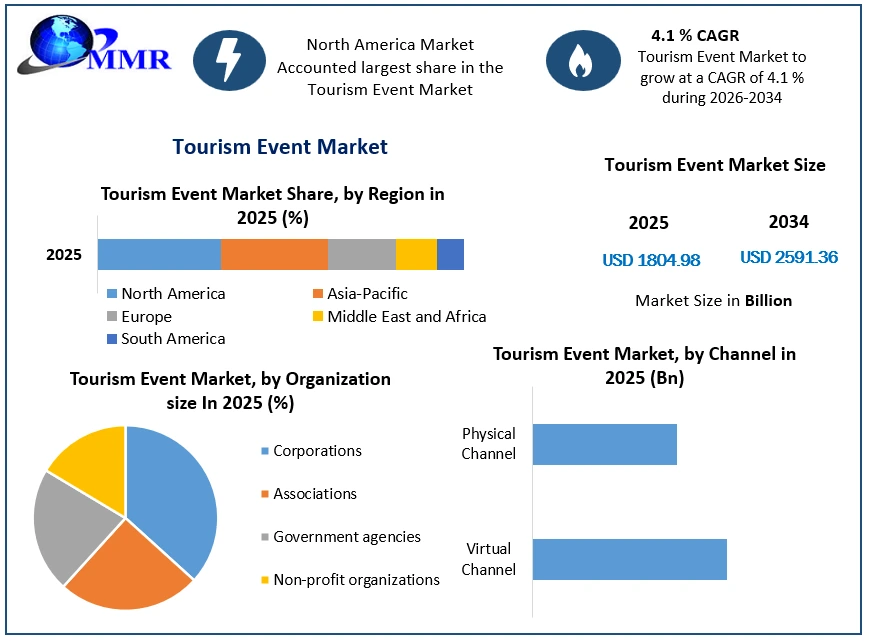
To know about the Research Methodology :- Request Free Sample Report
Benefits of Event Tourism
Destination Promotion and Branding: Hosting events can significantly enhance the promotion and branding of a destination. High-profile events attract media attention and provide an opportunity for the destination to showcase its attractions, culture, and hospitality. Positive exposure through event coverage can lead to increased tourism beyond the event period, as attendees may be inspired to return for future visits or recommend the destination to others. Event tourism helps create a positive image and enhances the visibility and reputation of the host destination.
Cultural Exchange and Community Engagement: Events often celebrate local traditions, arts, and cultural heritage, providing opportunities for cultural exchange between visitors and the local community. Event tourism allows visitors to experience the destination's unique customs, traditions, and artistic expressions, fostering cross-cultural understanding and appreciation. Moreover, events can strengthen community engagement by involving local businesses, artists, performers, and volunteers, promoting a sense of pride and unity among residents.
Social and Cultural Legacy: Events can leave a lasting social and cultural legacy in the host destination. They provide opportunities to develop and improve local infrastructure, such as event venues, transportation systems, and accommodations. These infrastructure developments can benefit the local community beyond the event, attracting further tourism and enhancing the quality of life for residents. Events can also support the preservation and revitalization of cultural traditions, encouraging the local community to value and protect their heritage.
Boost to Ancillary Industries: Event tourism benefits various ancillary industries that support the event and its attendees. These include event management companies, catering services, transportation providers, accommodation providers, equipment rental companies, and local retailers. The increased demand for goods and services from these industries during events stimulates their growth and generates employment opportunities.
Types of Tourism Events
1. Cultural or Festival Event Tourism Fair
2. Sports Event Tourism
3. Business Events
4. Music and Entertainment Events
5. Spiritual and Religious Tourism
6. Travel Trade Shows
Strategic growth opportunities in Event Tourism Market
Currently, the ecosystem is very vibrant and robust in many ways. In order to build upon the opportunities for advancing cultural tourism there are three keys fundamentally necessary and oriented towards actionable items. Opportunities are:
Invest in Excellence
The ability to offer excellence is critical to competitiveness as a distinct, authentic, and cultural brand. Such, the pursuit of investment in excellence is necessary for all creative endeavors that have the potential to be attractive to cultural tourists. Organizations that administer existing pools of money to fund creative projects, and new or future trends become part of the economic mechanism of growing the creative sector and is expected to present a lucrative opportunity for the Event Tourism Market growth.
Concerted action
To leverage the investments and efforts in the creative and tourism industries, the industries need to work together toward the common goal of making more attractive cities and therefore destinations for cultural tourists contributing to grow overall revenue and direct local spending. Advancing event tourism presents an opportunity for a collaborative effort among the parties.
Discover, Share, and connect the story
Cohesiveness and articulate marketing are essential to spread the world beyond what’s happening in the cultural realm. As in the case for concerted action, multiple parties are involved in and take responsibility for these efforts. The creative industries plays a critical role in a global marketplace. The cultural heritage is one of its most valuable assets, which is expected to boost the Event tourism market penetration.
Restraints of Event Tourism Market
Seasonality and Dependence on Specific Events to restrain the Tourism Event Market Growth
Many events are seasonal or limited to specific dates, which creates challenges for the event tourism market. Visitors travel to a destination during the event period, leading to fluctuations in demand throughout the year. Dependence on specific events also means that if an event is canceled or faces challenges, and has a significant negative impact on the tourism market in that destination. Events bring many unwanted social impacts and environmental impacts too. It encourage economic leakage in the event tourism industry. The negative impact of event tourism is increased cost of living, traffic congestion, crowding, crime, property damage, deterioration of natural, cultural, or historical resources, and discomfort experienced by residents and local businesses. During periods of economic recession or instability, individuals and organizations back on travel and discretionary spending, affecting event attendance and participation. Fluctuations in exchange rates impact the cost of traveling to and attending events, making it more expensive for international visitors and potentially reducing their numbers and is expected to restrain the Tourism Event Market Growth.
Events held in regions or countries experiencing political unrest or instability may face reduced attendance due to safety concerns and travel advisories. High-profile events are potential targets for security threats, leading to increased security measures and potential deterrents for attendees. Increasing concerns about climate change and the occurrence of natural disasters affect event planning and attendance, particularly for outdoor events in vulnerable regions. There is a growing demand for sustainable event practices, which present challenges for organizers in terms of resource management, waste reduction, and carbon footprint mitigation, and restaurants the Tourism Event industry growth. Multiple events occurring simultaneously in the same location or targeting the same audience lead to a dilution of attendance and competition for resources, sponsors, and exhibitors. The proliferation of events in certain sectors or destinations results in oversaturation, making it challenging for organizers to attract attendees and differentiate their offerings.
Tourism Event Market Regional Insight
North America region dominated the Tourism event market in 2025 and is expected to hold the largest tourism event market share over the forecast period. The North American tourism event market is a dynamic and vibrant industry that offer a wide range of events attracting domestic and international travelers. The region hosts music festivals such as Coachella, Lollapalooza, and Bonnaroo with enthusiasts from around the world. North America celebrates its multiculturalism through events like Pride Parades, cultural heritage festivals, and ethnic celebrations, promoting inclusivity and attracting visitors from diverse backgrounds. Golf courses and tennis tournaments such as Masters Tournament, US Open, and Wimbledon are famous especially in the United States. New York City's Broadway theater district is popular for its performances such as musicals, plays, and live shows, which is mostly attracting tourists. The North America region heavily spends on adventure activities such as skiing, snowboarding, surfing, rock climbing and many more including many more.
Asia Pacific region is expected to boost the Tourism Event Market over the forecast period. Countries like Japan, Thailand, and India host vibrant and culturally significant events that attract domestic and international tourists. Realizing the opportunities that sustainable tourism provides economic growth for future and a pathway to self-efficiency to achieve social and economic priorities in pacific island countries, which is expected to boost the regional Tourism Event industry growth. Economic growth in Asia Pacific was strong before COVID-19, as average annual gross domestic product (GDP) in 19 countries reached 4.0% or higher; led by Bangladesh (8.2%), Armenia (7.6%), Nepal (7.0%), and Viet Nam (7.0%). In 2020, 3.15 Bn people in Asia Pacific had internet access, up 1 billion in just 5 years, 6 with 53.4% of all households having access.Generation Z and Millennials comprise the largest share of population, particularly in India, Indonesia, Malaysia, Pakistan, and the Philippines, thus constituting an important consumer group in these countries.
Tourism Event Market Recent Industry Development
| Date | Company / Organization | Development | Impact |
|---|---|---|---|
| 25 March 2026 | GL events | The French competition authority cleared the acquisition of the entertainment venue and exhibition center management activities of the Fimalac group by GL events via S-Pass. | The acquisition significantly expands the group's tourism event infrastructure footprint by adding 23 new venues to its global portfolio. |
| 24 June 2026 | RX Global | Event organizer RX Global officially opened registration for WTM London 2026 and announced a major strategic premier partnership with the Egyptian Tourism Authority. | The collaboration aims to capitalize on Egypt's 21% surge in inbound travelers and introduce a redesigned, larger conference framework centered around market resilience and travel tech innovations. |
| 01 July 2026 | World MICE Awards | The organizers of the World MICE Awards officially opened the international public voting period for its 6th annual global business travel honors. | The high-profile destination ranking drives substantial brand equity and international visitor awareness for top-tier tourism event hubs like Dubai and Bahrain. |
Tourism Event Market Segment Analysis
Based on Event type, the market is segmented into Cultural or Festival Event Tourism Fair, Sports Event Tourism, Business Events, Music and Entertainment Events, Spiritual and Religious Tourism, and Travel Trade Shows. Sports Event Tourism segment held the largest Tourism Event Market share in 2025 and is expected to dominate the market over the forecast period. Sports tourism is the fastest growing sector in tourism. Tourist are intrested in sports activities during trips even though their main objective is not sports activities. Various sports events attracts participants and destinations try to add local flavours to distinguish themselves and provide authentic local experience. Mega sports events such as Olympics and World Cups are catalyst for tourism developme nt including destination branding, infrastructure development, and other economic and social benefits and all these factors is expected to boost the segment growth in the Tourism Event Market.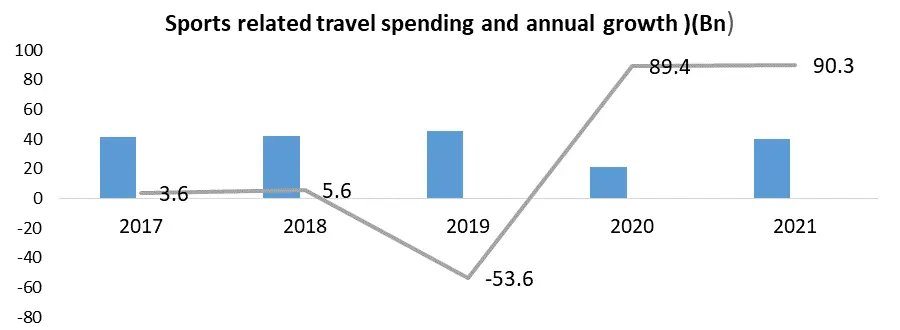 Based on Channel, the market is segmented into Virtual channel and physical channel. Physical channel is expected to hold the largest market share in 2025 and is expected to dominate the Tourism Event Market over the forecast period. Physical events build more memorable connections wiyh personal contact that has no replacement. Face to face event add more interactions to distinctive element and creates long-lasting impact, which is expected to boost the market growth. Physical channel provides personalized feedback, which is most importan thing in any event and helps to boost the Tourism Event Market penetration.
Based on organization size, the market is segmented into Corporations, Associations, Government agencies, and Non-profit organizations. Non-Profit organizations segment is expected to dominate the market over the forecast period. The organizations helps to create an incredible travel experience. Non-profit is integrating health technology into indigenous societies, or exploring the culture around Cuzco, Peru. It ensure federal reimbursement requirements and provide an unprecedented audit trail of all transactions, which is expected to boost the Tourism event market growth.
Tourism Event Market Competitive Landscape
Tourism Event key players are adopting innovative growth strategies to boost the market growth over the forecast period. The competitive landscape of the Tourism Event Sensors market is characterized by the presence of several established players and a growing number of new entrants. The competitive landscape of the Tourism Event market is shaped by strategic partnerships, collaborations, acquisitions and Tourism Event Market penetration. Tourism Event services providers are partnering with each other to leverage their respective strengths and capabilities to develop new and innovative solutions. Companies are acquiring players in the market to expand their product offerings, enhance their market reach, and gain a competitive advantage in the market.
Tourism Event Market Scope: Inquire before buying
| Tourism Event Market | |||
|---|---|---|---|
| Report Coverage | Details | ||
| Base Year: | 2025 | Forecast Period: | 2026-2034 |
| Historical Data: | 2020 to 2025 | Market Size in 2025: | 1804.98 USD Billion |
| Forecast Period 2026-2034 CAGR: | 4.1% | Market Size in 2034: | 2591.36 USD Billion |
| Segments Covered: | by Event Type | Cultural or Festival Event Tourism Fair Sports Event Tourism Business Events Music and Entertainment Events Spiritual and Religious Tourism Travel Trade Shows |
|
| by Channel | Virtual Channel Physical Channel |
||
| by Revenue Source | On-line registration Off-line registration Sponsorship Others |
||
| by Age group | Below 18 years 18 – 50 years Above 50 years |
||
| by Organization size | Corporations Associations Government agencies Non-profit organizations |
||
Tourism Event Market by Region
North America (United States, Canada and Mexico)
Europe (UK, France, Germany, Italy, Spain, Sweden, Austria and Rest of Europe)
Asia Pacific (China, South Korea, Japan, India, Australia, Indonesia, Malaysia, Vietnam, Taiwan, Bangladesh, Pakistan and Rest of APAC)
Middle East and Africa (South Africa, GCC, Egypt, Nigeria and Rest of ME&A)
South America (Brazil, Argentina Rest of South America)
Tourism Event key players include
1. Reed Exhibitions
2. Informa Markets
3. Messe Frankfurt
4. Clarion Events
5. Emerald Expositions
6. ITE Group
7. Tarsus Group
8. GL Events
9. Comexposium
10. Messe München
11. Fiera Milano
12. Koelnmesse
13. Messe Düsseldorf
14. Easyfairs
15. Deutsche Messe
16. Messe Berlin
17. U.S. Sports Congress
18. International Association of Exhibitions and Events (IAEE)
19. Professional Convention Management Association (PCMA)