Global Pasta Sauce Market – Industry Analysis and Forecast to 2034, by Product Type, by Application, by Packaging Type, by Price, by Nature, by Sales Channel, by End User, and by Region

5.97%
CAGR (2026-2034)
12.04 USD Bn.
Forecast Market Size
323
Report Pages
131
Market Tables

Overview

The Global Pasta Sauce Market was valued at USD 12.04 Billion in 2025 and is projected to reach USD 20.28 Billion by 2034, growing at a CAGR of 5.97% during the forecast period 2026–2034.

Pasta Sauce Market Overview

Pasta sauce is a liquid or semi-soft paste of cream food used to garnish pasta and Italian foods like lasagne and pizza. They make the pasta taste better, feel better to the touch, and smell better. Thus, the consumption of pasta and pasta sauce has been increasing in the Pasta Sauce Market as well. Pasta sauce is also very popular because or its nice taste that makes most people love it. Common ingredients include cheese, herbs, garlic, tomatoes, onions and seasonings and is often prepared from a combination of these to get a special taste and flavor. Besides, it contains a number of fibres the vitamins, the minerals, and the macronutrients. Such colours as red, green and white are preferred and those based on meat, emulsified butter and vegetables are favourite types.

The need for Pasta Sauce is increasing with pasta consumption. Another savoury food fit for really hungry people is pasta sauce since it also has a yummy taste. It is usually prepared using cheese, herbs, garlic and tomatoes, onions, and spices that gives the food a peculiar taste and flavor. Further, it contains some fibres vitamins minerals macronutrients and other related nutrients. Thus, there are pasta sauces in red, green, and white and the ones based on meat, emulsified butter, and vegetables.

Some of the many fast-food stations including Pasta Flyer, Olive Garden, and Maggiano are some of the places that have quickly popularized the delicacy among the people. Therefore, apart from eating various pasta dishes outside, many also prepare these dishes at home using the easy to find ready-made sauce in most stores. For this reason, factors that increase the nutritional value of the meal have become very important and thus; freshness, organicity and low sodium have become the key deciding factors in the pasta sauce industry. Over the coming years, it is anticipated that the company's market share is maintained via the creation of goods in response to specific customer requirements in the Pasta Sauce Market.

Global Pasta Sauce Market Growth Outlook
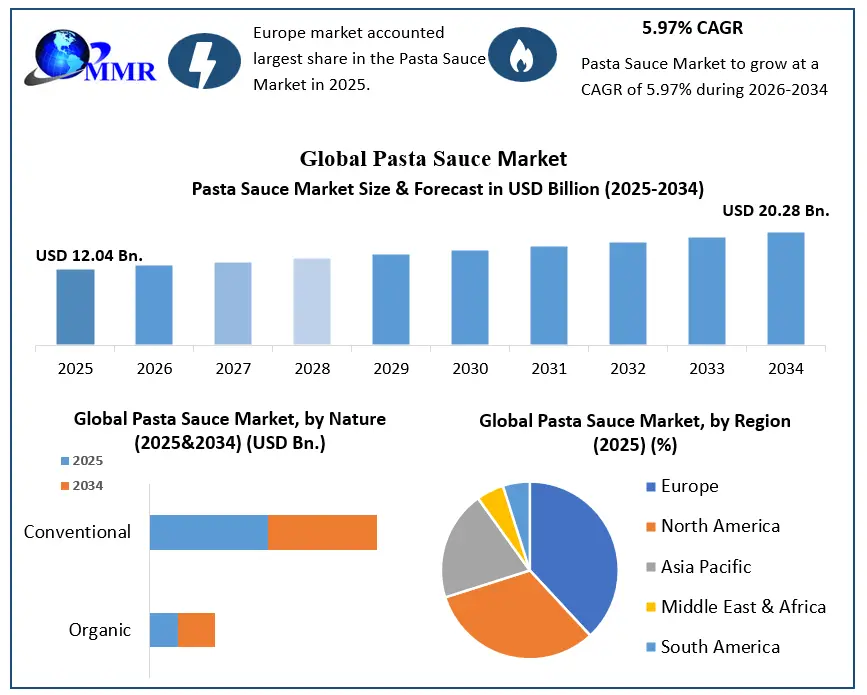
Pasta Sauce Growth Outlook

To know about the Research Methodology :- Request Free Sample Report

Pasta Sauce Market Dynamics

Drivers

Ready-to-Eat Pasta Sauces from Convenience to Health and Flavour

The expanding food and beverage industry and consumer's increasing desire for ready-to-eat items are two major factors driving Pasta Sauce Market growth. The diverse types of pasta sauces which are consumed by people depend on factors such as eating trends, culture, and growth in the consumption of convenience food. Indeed, there is a rise in demand of the packaged and ready to cook pasta sauces due to the increase in the population of those who work In this form of industry, manufacturers of pasta sauce are continually introducing new tastes and components in their products. Furthermore, the industry is expanding with the citizens’ desire for quality, international foods, and meals with a rich taste. These include international flavours, organic components, and healthier substitutes. Thus, the awareness of health and well-being play a big role in the market growth. An increase in health awareness among people resulted in the enhancement of calls for healthful nutritious product types. What consumers want today are pastas with fewer sugars, less sodium with natural products incorporated in the sauces they use.

Manufactures are coming up with pasta sauces that will have organic and gluten free ingredients added to them. Pursuit of a sustainable marketing plan and the origin of the ingredients are also much emphasized on. On the same note, other outlet like cafés and restaurants are also trying to come up with different taste and gravy so that customers being served with new and delicious pastas. Ultimately, the modern customer is completely supportive of fresh, locally sourced organic and sustainably produced ingredients within their pasta sauces and pasta sauce producers are striving to meet this demand, thus, the global market for pasta sauces is expected to grow. More factors are hoped to boost the industry in future, such as whereas per capita disposable income and fast urbanization rate. Modern customers' convenience-driven lifestyles have increased demand for pasta sauces that are ready to use.

Restraints

Regulatory Hurdles, Consumer Trends, Health Concerns and Economic Factors restraining market

Throughout the forecast period, the market is impacted by the ease of access to frozen and ready-to-eat pasta as well as the price volatility of raw materials. The main drawback to the market's expansion is the growing number of government laws about the usage of preservatives. Since consumers’ awareness of healthy foods and diets is increasing, there is a steady demand for lower calorie spaghetti sauce. The unfamiliarity of traditional pasta sauces with health issues concerning high sugar, sodium, or preservatives poses problems, which is likely to slow the pasta sauce market. Food’s prices change in their raw forms, meaning, the costs of preparing them push up the prices of the finished products. The preparation of spaghetti sauce requires certain stock ingredients, which is a problem when some of these ingredients like fresh tomatoes come in one particular season only.

It is difficult for brands that depend mostly on fresh ingredients to keep their products accessible all year round. Changes in consumer tastes—like a shift toward natural, organic, or ethnic flavours—mean that firms must modify their product lineups up to date with emerging trends. Private-label pasta sauces from Cansers frequently offer more affordable options to well-known brands, making it difficult for those firms to continue charging premium prices. Recessions and crises in the economy cause customers to reduce their extra spending, which has an impact on the demand for expensive pasta sauces. Demand for environmentally friendly packaging solutions has increased as environmental issues have gained more attention. Brands that do not put an emphasis on environmentally friendly packaging risk a bad reputation with consumers and hinder the expansion of the pasta sauce market.

Pasta Sauce Market Segment Analysis

Pasta Sauce Market by,Packaging Type

The Global Pasta Sauce Market is segmented by packaging type into Glass Bottles & Jars, Plastic Bottles, Jars & Containers, Pouches, Cans, Cartons, and Others. Glass Bottles & Jars dominate the pasta sauce market, supported by superior product preservation, premium packaging appeal, recyclability, and strong consumer preference for convenient food packaging. Plastic containers maintain significant demand due to their lightweight structure, affordability, and ease of handling, while pouches gain traction through flexible packaging innovations and convenient storage. Cans and cartons support shelf-stable pasta sauce distribution, while sustainable packaging solutions, ready-to-use pasta sauces, and growing demand for packaged Italian food products influence global pasta sauce market trends.Pasta Sauce by Packaging Type
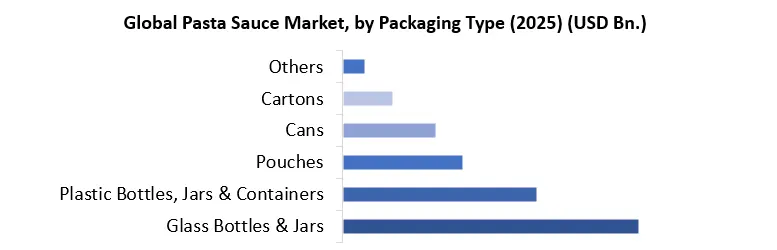
Global Pasta Sauce Market, by Application

The Global Pasta Sauce Market is segmented by application into Dried Pasta, Fresh Pasta, and Others. Dried Pasta dominates the pasta sauce market, supported by widespread household consumption, extended shelf life, affordability, and strong demand for convenient ready-to-cook meals. Fresh Pasta maintains significant demand through premium Italian cuisine, restaurants, and foodservice establishments, while the Others segment includes pasta sauce applications in baked dishes, pizza, casseroles, and ready-to-eat meals. Rising demand for ready-to-use pasta sauces, Italian food products, convenience foods, and premium pasta recipes supports global pasta sauce market growth.
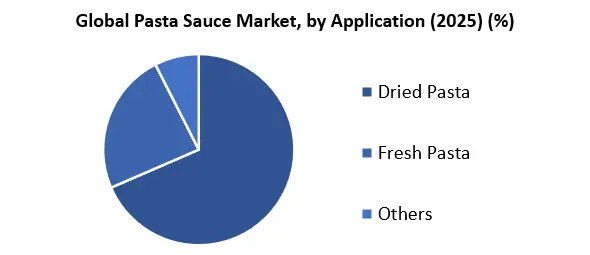
Pasta Sauce by Application

Pasta Sauce Market Regional Insights

In 2025, Europe was in a dominant position in the pasta sauce market. Pasta's introduction to the area and widespread adoption in European nations contributed to the expansion of the regional market. After Europe, it is predicted that Asia Pacific will be the region that grows the fastest in the market of pasta sauce. Because of the food globalization, pasta and more specifically pasta sauce can be easily found in the area. more so fast foods restaurants have greatly helped in the marketing of the pasta. Since pasta had remained the main staple for diet, pasta sauce has steadily gained popularity in the area. Asia-Pacific is expected to continue to do so during the projection period due to increasing urbanization, globalization, the emergence and growth for the segment of the organic foods industry, change in people’s lifestyles, and increasing levels of disposable income. The increasing awareness and appreciation of pasta sauce’s nutritional value will create more rewarding business expansion customers.

North America is the most significant regional market in terms of geography. This is linked to the highly developed Cans sector as well as the increased pasta sauce consumption brought about by aggressive marketing and celebrity brand endorsements. Pasta sauce is also more popular in this area since people spend more money on ready-to-eat and quick food because it's seen as a fashion statement. To increase profitability and strengthen their position in the pasta sauce market share, the market players are selecting acquisition and growth as their primary development methods. To expand their product offerings and maintain their relevance in the global market, the major firms have also depended on product launches.

Pasta Sauce Market Recent Industry Developments

Exact Date Company Development Impact
15 January 2025 Unilever The company announced the sale of its Tomato al Gusto and Speciale al Gusto pasta sauce ranges in Germany to the Italian food group Casalasco. The divestment allows the company to streamline its foods portfolio while enabling Casalasco to expand its presence in the European condiments market.
24 March 2025 Mutti S.p.A. The producer unveiled the "Lion Jar", a new sustainable glass packaging line for its range of ready-made tomato sauces. This initiative targets a 7% reduction in CO2 emissions, strengthening the brand’s position in the premium and eco-conscious sauce segments.
09 December 2025 The Campbell’s Company The company reached an agreement to pay $286 million for a 49% stake in La Regina di San Marzano, a key supplier for the Rao's brand. The deal secures the supply chain for its high-growth premium sauce portfolio and supports the goal of turning Rao's into a $1 billion brand.
14 January 2026 Conagra Brands The company released its "Future of Frozen Food 2026" report, detailing a shift toward restaurant-inspired flavor profiles in meal-complementing sauces. This strategic insight drives new R&D investments to align shelf-stable and frozen sauce offerings with Gen Z consumer preferences.
18 March 2026 The Kraft Heinz Company The company signed a five-year global partnership with the National Football League (NFL) to feature brands like Classico and Heinz as official condiment partners. The collaboration aims to drive incremental retail opportunities and expand brand visibility during high-impact sports consumption occasions.
25 March 2026 The Campbell’s Company The company officially launched a strategy to democratize high-quality food by expanding the retail footprint of Rao’s and Prego across value-focused channels. This move is designed to increase household penetration by bridging the gap between mainstream and premium sauce categories.

Pasta Sauce Market Report Scope: Inquire Before Buying

Pasta Sauce Market
Report Coverage Details
Base Year: 2025 Forecast Period: 2026-2034
Historical Data: 2020 to 2025 Market Size in 2025: USD 12.04 Billion
Forecast Period 2026-2034 CAGR: 5.97% Market Size in 2034: USD 20.28 Billion
Segments Covered: by Product Type Tomato-Based Sauces
Marinara Sauce
Arrabbiata Sauce
Pomodoro Sauce
Tomato Basil Sauce
Roasted Garlic Tomato Sauce
Bolognese / Meat Tomato Sauce
Other Tomato-Based Sauces
Cream-Based Sauces
Alfredo Sauce
Carbonara Sauce
Four Cheese Sauce
Garlic Cream Sauce
Other Cream-Based Sauces
Pesto-Based Sauces
Traditional Basil Pesto
Red Pesto (Sun-Dried Tomato Based)
White Pesto
Other Pesto-Based Sauces
Oil-Based & Herb-Based Sauces
Aglio e Olio Sauce
Garlic & Herb Sauces
Basil Oil-Based Sauces
Other Oil-Based Sauces
by Application Dried Pasta
Fresh Pasta
Others
by Packaging Type Glass Bottles & Jars
Plastic Bottles, Jars & Containers
Pouches
Cans
Cartons
Others
by Price Economy
Mid Range
Premium
by Nature Organic
Conventional
by Sales Channel Direct Sales
Company Websites
B2B Direct Supply
Indirect Sales
Offline Retail
Supermarkets & Hypermarkets
Specialty Stores
Convenience Stores
Grocery Stores
Online Retail
E-commerce Platforms
Direct-to-Consumer Platforms
by End User Household Consumers
Foodservice Industry
Full-Service Restaurants (FSR)
Quick Service Restaurants (QSR)
Cafés & Bistros
Catering Services
Institutional Foodservice

Pasta Sauce Market, by Region

North America (United States, Canada and Mexico)
Europe (UK, France, Germany, Italy, Spain, Sweden, Austria and the Rest of Europe)
Asia Pacific (China, South Korea, Japan, India, Australia, Indonesia, Malaysia, Vietnam, Taiwan, Bangladesh, Pakistan and the Rest of APAC)
South America (Brazil, Argentina Rest of South America)
Middle East & Africa (South Africa, GCC, Egypt, Nigeria and the Rest of ME&A)

Pasta Sauce Market Key Players

North America
1. Conagra Brands, Inc.
2. Del Monte Foods, Inc.
3. The Campbell’s Company
4. The Kraft Heinz Company
5. Mars, Incorporated
6. General Mills, Inc.
7. B&G Foods, Inc.
8. Newman’s Own, Inc.
9. Amy’s Kitchen, Inc.
10. Sovos Brands (The Campbell’s Company)
11. Cento Fine Foods
12. Victoria Fine Foods, LLC
13. Rao’s Specialty Foods
14. Mid’s True Sicilian Pasta Sauce
15. Hormel Foods Corporation
16. Mezzetta Family Co.
17. Red Gold, Inc.
18. CSC Brands LP
19. International Gourmet Specialties
20. No Limit, LLC
21. Trader Joe’s
22. Frontier Co-op
23. Lassonde Industries Inc.
24. McCormick & Company, Inc.
25. LiDestri Food and Drink
26. Goya Foods, Inc.
27. La Preferida

Europe
1. Barilla G. e R. Fratelli S.p.A.
2. F.lli Saclà S.p.A. / Saclà Italia S.p.A.
3. Unilever PLC
4. F.lli De Cecco di Filippo Fara San Martino S.p.A.
5. Conserve Italia S.c.a.
6. The Hain Celestial Group, Inc.
7. Giovanni Rana S.p.A.
8. Oetker Group
9. Nestlé S.A.
10. Premier Foods Group Limited
11. CPC Foods Limited
12. Napolina
13. Mutti S.p.A. Industria Conserve Alimentari

Asia Pacific
1. Mizkan Group / Mizkan Holdings Co., Ltd.
2. Tata Group

South America
1. Ebro Foods S.A.
2. NutriAsia Inc.

Middle East & Africa
1. Saporina
2. Americana Group

FAQ

1. What is the Global Pasta Sauce Market size in 2025?
The Global Pasta Sauce Market is valued at USD 12.04 Billion in 2025.

2. What is the expected CAGR of the Pasta Sauce Market during 2026–2034?
The Pasta Sauce Market is projected to grow at a CAGR of 5.97%, reaching USD 20.28 Billion by 2034.

3. What are the key factors driving Pasta Sauce Market growth?
Increasing demand for convenience foods, ready-to-use pasta sauces, organic ingredients, and premium Italian cuisine drives market growth.

4. Which region dominates the Global Pasta Sauce Market?
Europe dominates the Global Pasta Sauce Market in 2025, supported by established pasta consumption and strong demand for traditional Italian sauces.

5. Who are the major players in the Global Pasta Sauce Market?
Major players include Barilla, Conagra Brands, The Campbell’s Company, Kraft Heinz, Mars, Unilever, Mutti, and Mizkan Group.

Table of Contents

1. Executive Market Landscape and Industry Overview 1.1. Global Pasta Sauce Market Size Valuation Tracking and Projections (Value in USD Mn & Volume in Kilotons), 2026–2034 1.2. Market Structure Assessment Across Pasta Sauce Manufacturers, Ingredient Suppliers, Brand Owners, Private Label Producers, Distributors, Retailers, and Foodservice Operators 1.3. Pasta Sauce Consumption Assessment Across Household Consumers, Restaurants, Cafés, Quick Service Restaurants, Catering Services, and Institutional Foodservice Operators 1.4. Market Evolution Assessment Covering Convenience Food Adoption, Premiumization, Clean Label Movement, Product Innovation, and Digital Commerce Expansion 2. Global Pasta Sauce Market Dynamics & Strategic Predictive Frameworks 2.1. Global Pasta Sauce Market Trends and Industrial Sector Transformations 2.2. Global Pasta Sauce Market DROC Framework Analysis: 2.2.1. Drivers 2.2.2. Restraints 2.2.3. Opportunities 2.2.4. Challenges 2.3. PORTER’S Five Forces Analytical Framework: 2.3.1. Supplier Power 2.3.2. Buyer Power 2.3.3. Threat of New Entrants 2.3.4. Threat of Substitutes 2.3.5. Competitive Rivalry 2.4. PESTLE Macroeconomic Influence Grid Analysis (Political, Economic, Social, Technological, Legal, and Environmental Indicators) 3. Pasta Sauce Industry Ecosystem Analysis 3.1. Industry Ecosystem Mapping Across Tomato Suppliers, Ingredient Providers, Packaging Manufacturers, Sauce Producers, Brand Owners, Distributors, Retailers, Foodservice Operators, and Consumers 3.2. Stakeholder Relationship Mapping Across Suppliers, Manufacturers, Private Label Producers, Brand Owners, Retailers, E-Commerce Platforms, and Foodservice Buyers 3.3. Brand–Company Ecosystem Mapping Covering Parent Companies, Subsidiaries, Pasta Sauce Brands, Regional Brands, Premium Brands, and Retailer-Owned Brands 3.4. Product Ecosystem Mapping Across Tomato-Based Sauces, Cream-Based Sauces, Pesto-Based Sauces, Oil-Based & Herb-Based Sauces, and Specialty Sauce Categories 3.5. Ecosystem Integration Assessment Covering Supplier Partnerships, Manufacturing Relationships, Retail Collaboration, Distribution Networks, and Foodservice Connections 3.6. Ecosystem Evolution Assessment Covering Industry Consolidation, Vertical Integration, Private Label Expansion, Direct-to-Consumer Growth, and Digital Retail Transformation 4. Pasta Sauce Consumer Demand, Behaviour and Adoption Analysis 4.1. Consumer Demand Assessment Across Household Consumers, Restaurants, Cafés, Quick Service Restaurants, Catering Services, and Institutional Foodservice Segments 4.2. Consumer Segmentation Assessment Covering Age Groups, Income Levels, Geographic Markets, Cooking Behaviour, Dietary Preferences, and Lifestyle Patterns 4.3. Consumer Purchase Decision Analysis Covering Taste Preference, Brand Recognition, Price Sensitivity, Ingredient Transparency, Packaging Convenience, and Product Availability 4.4. Consumer Preference Assessment Across Tomato-Based Sauces, Cream-Based Sauces, Pesto Sauces, Oil-Based Sauces, Organic Products, and Specialty Sauces 4.5. Consumer Behaviour Assessment Covering Brand Loyalty, Repeat Purchase Patterns, Premium Product Adoption, Private Label Acceptance, and Switching Behaviour 4.6. Future Consumer Adoption Assessment Covering Convenience Foods, Health-Oriented Products, Digital Purchasing, and Personalized Food Preferences 5. Pasta Sauce Product Portfolio, Formulation and Innovation Analysis 5.1. Product Portfolio Mapping Across Tomato-Based Sauces, Cream-Based Sauces, Pesto-Based Sauces, Oil-Based & Herb-Based Sauces, and Specialty Sauce Categories 5.2. Product Formulation Assessment Covering Tomatoes, Vegetables, Herbs, Spices, Dairy Ingredients, Cheese, Oils, Natural Flavors, and Functional Ingredients 5.3. Flavor Innovation Assessment Covering Authentic Italian Recipes, Regional Flavors, Fusion Sauces, Gourmet Ingredients, and Consumer-Specific Preferences 5.4. Health-Oriented Product Assessment Covering Clean Label Sauces, Organic Products, Vegan Sauces, Gluten-Free Options, and Low-Sodium Formulations 5.5. Product Development Opportunity Assessment Covering Functional Pasta Sauces, Sustainable Formulations, Specialty Flavors, Convenience Products, and Premium Categories 5.6. Private Label and Brand Portfolio Expansion Assessment Covering Retailer-Owned Brands, Value Products, Premium Private Labels, and Differentiated Offerings 6. Pasta Sauce Manufacturing, Production and Operational Analysis 6.1. Pasta Sauce Manufacturing Process Assessment Covering Ingredient Preparation, Cooking, Blending, Formulation, Filling, Packaging, and Quality Testing 6.2. Manufacturing Technology Assessment Covering Automated Production Lines, Advanced Processing Technologies, Preservation Systems, and Digital Manufacturing Solutions 6.3. Production Capacity Assessment Across Global Manufacturers, Regional Producers, Contract Manufacturers, and Private Label Production Facilities 6.4. Manufacturing Cost Structure Assessment Covering Raw Materials, Labour, Energy, Packaging, Processing Costs, and Logistics Expenses 6.5. Operational Efficiency Assessment Covering Capacity Utilization, Automation Adoption, Waste Reduction, Inventory Management, and Production Optimization 6.6. Quality Management Assessment Covering Food Safety Testing, Shelf-Life Management, Product Consistency, Traceability, and Regulatory Compliance 7. Pasta Sauce Raw Material Sourcing Analysis 7.1. Raw Material Supply Chain Mapping Across Tomato Producers, Vegetable Suppliers, Dairy Ingredient Suppliers, Herb and Spice Suppliers, Packaging Providers, Manufacturers, Distributors, and Retail Networks 7.2. Ingredient Sourcing Assessment Covering Tomatoes, Vegetables, Cheese, Cream, Herbs, Spices, Oils, Natural Ingredients, Preservatives, and Functional Ingredients 7.3. Tomato Supply Chain Assessment Covering Cultivation Regions, Agricultural Production, Seasonal Availability, Processing Infrastructure, Supplier Networks, and Quality Standards 7.4. Packaging Material Supply Chain Assessment Covering Glass Bottles, Plastic Containers, Pouches, Cans, Cartons, and Sustainable Packaging Materials 8. Pasta Sauce Market Channel Economics and Retailer Landscape Analysis 8.1. Retailer Landscape Assessment Covering Supermarkets, Hypermarkets, Specialty Stores, Convenience Stores, Online Grocery Platforms, and Foodservice Distribution Networks 8.2. Channel Economics Assessment Covering Manufacturer Margins, Distributor Margins, Retailer Margins, Promotional Spending, Pricing Strategies, and Trade Marketing Activities 8.3. Retailer Buying Behaviour Assessment Covering Supplier Selection Criteria, Product Placement Decisions, Private Label Development, and Category Management Strategies 8.4. Online Channel Performance Assessment Covering E-Commerce Adoption, Digital Shelf Visibility, Consumer Reviews, Subscription Models, and Direct Brand Sales 8.5. Future Channel Evolution Assessment Covering Omnichannel Retail Expansion, Digital Commerce Growth, Retail Automation, and Changing Consumer Purchase Patterns 9. Pasta Sauce Market Consumer Health, Nutrition and Dietary Preference Analysis 9.1. Nutritional Profile Assessment Covering Calorie Content, Sodium Levels, Sugar Content, Ingredient Transparency, Protein Content, and Functional Nutrition Attributes 9.2. Dietary Preference Assessment Covering Vegan Products, Vegetarian Products, Organic Products, Gluten-Free Products, Clean Label Products, and Allergen-Free Alternatives 9.3. Health-Conscious Consumer Trend Assessment Covering Demand for Natural Ingredients, Reduced Additives, Low-Sodium Products, and Wellness-Oriented Food Choices 9.4. Ingredient Transparency Assessment Covering Label Awareness, Traceability Requirements, Natural Ingredient Claims, and Consumer Trust Factors 9.5. Future Nutrition Trend Assessment Covering Functional Foods, Personalized Nutrition, Plant-Based Innovation, and Health-Oriented Product Development 10. Pasta Sauce Market Private Label and Retail Brand Expansion Analysis 10.1. Private Label Market Assessment Covering Retailer-Owned Brands, Value Products, Premium Private Labels, and Competitive Impact on Branded Manufacturers 10.2. Private Label Growth Drivers Assessment Covering Pricing Advantage, Retailer Control, Consumer Acceptance, Product Quality Improvement, and Category Expansion 10.3. Branded vs Private Label Comparison Assessment Covering Pricing, Consumer Loyalty, Innovation Capability, Distribution Strength, and Market Positioning 10.4. Retailer Brand Strategy Assessment Covering Product Development, Supplier Partnerships, Packaging Differentiation, and Category Management 10.5. Future Private Label Outlook Assessment Covering Market Share Expansion, Premium Private Labels, Sustainability Positioning, and Competitive Pressure on Global Brands 11. Pasta Sauce Market Risk Assessment and Strategic Mitigation Analysis 11.1. Industry Risk Assessment Covering Raw Material Dependency, Agricultural Risks, Supply Chain Disruptions, Regulatory Changes, Consumer Behaviour Shifts, and Competitive Pressure 11.2. Operational Risk Assessment Covering Manufacturing Dependency, Production Capacity Constraints, Quality Control Issues, Packaging Availability, and Logistics Challenges 11.3. Market Risk Assessment Covering Economic Uncertainty, Inflation Impact, Changing Dietary Preferences, and Consumer Spending Behaviour 11.4. Strategic Mitigation Assessment Covering Supplier Diversification, Local Sourcing, Manufacturing Expansion, Product Innovation, and Digital Channel Development 11.5. Long-Term Risk Outlook Assessment Covering Industry Resilience, Market Adaptation, Sustainability Pressure, and Future Business Continuity Strategies 12. Pasta Sauce Distribution Network and Market Access Analysis 12.1. Distribution Ecosystem Mapping Across Manufacturers, Wholesalers, Distributors, Supermarkets, Hypermarkets, Specialty Stores, Convenience Stores, Online Retailers, and Foodservice Operators 12.2. Retail Channel Assessment Covering Modern Trade, Traditional Retail, Premium Grocery Stores, Specialty Food Retailers, and Convenience Channels 12.3. E-Commerce Channel Assessment Covering Online Grocery Platforms, Marketplace Sales, Direct-to-Consumer Platforms, Subscription Models, and Digital Food Retail 12.4. Foodservice Distribution Assessment Covering Restaurants, Cafés, Quick Service Restaurants, Catering Companies, Hotels, and Institutional Buyers 12.5. Distributor and Retailer Relationship Assessment Covering Pricing Structure, Product Placement, Inventory Management, Margins, and Market Coverage 12.6. Future Distribution Evolution Assessment Covering Omnichannel Retailing, Digital Commerce Growth, Direct Brand Sales 13. Pasta Sauce Brand Strategy, Marketing and Consumer Engagement Analysis 13.1. Brand Ecosystem Mapping Across Parent Companies, Subsidiaries, Global Brands, Regional Brands, Premium Brands, Organic Brands, and Retailer-Owned Private Labels 13.2. Brand Positioning Assessment Covering Authentic Italian Positioning, Premium Gourmet Positioning, Health-Oriented Positioning, Convenience-Focused Positioning, and Affordable Value Positioning 13.3. Marketing Strategy Assessment Covering Traditional Advertising, Digital Marketing, Social Media Campaigns, Influencer Engagement, Consumer Promotions, and Brand Communication 13.4. Consumer Brand Perception Assessment Covering Brand Awareness, Quality Perception, Taste Association, Ingredient Transparency, Trust, and Purchase Preference 13.5. Brand Loyalty Assessment Covering Repeat Purchase Behaviour, Customer Engagement, Private Label Competition, Consumer Switching Patterns, and Long-Term Brand Value 14. Pasta Sauce Regulatory Framework, Food Safety and Quality Compliance Analysis 14.1. Global Pasta Sauce Regulatory Framework Assessment Across North America, Europe, Asia-Pacific, Latin America, and Middle East & Africa 14.2. Food Regulation Assessment Covering Product Classification, Ingredient Approval, Food Additives, Preservatives, Processing Standards, and Import Requirements 14.3. Product Labelling Assessment Covering Nutritional Information, Ingredient Declaration, Allergen Disclosure, Health Claims, and Consumer Transparency 14.4. Food Safety Standard Assessment Covering HACCP, ISO Standards, GMP Practices, Quality Certifications, and Manufacturing Compliance 14.5. Organic and Clean Label Certification Assessment Covering Organic Standards, Non-GMO Certifications, Natural Ingredients, and Sustainability Claims 14.6. Regulatory Impact Assessment Covering Market Entry Requirements, Cross-Border Compliance, Product Registration, and Regional Food Regulations 15. Pasta Sauce Pricing Structure, Cost Economics and Consumer Value Analysis (2020-2025) 15.1. Pasta Sauce Pricing Trend Assessment Covering Economy, Mid-Range, and Premium Product Categories Across Global Markets 15.2. Product Price Benchmarking Assessment Covering Branded Products, Private Label Products, Organic Sauces, Imported Sauces, and Specialty Sauce Categories 15.3. Cost Structure Analysis Covering Raw Materials, Manufacturing Expenses, Packaging Costs, Distribution Expenses, Marketing Investments, and Retail Margins 15.4. Raw Material Cost Impact Assessment Covering Tomato Prices, Agricultural Inputs, Dairy Costs, Oil Prices, Packaging Materials, and Supply Chain Expenses 15.5. Consumer Price Sensitivity Assessment Covering Household Buyers, Premium Consumers, Budget Consumers, Foodservice Operators, and Private Label Adoption 15.6. Future Pricing Outlook Assessment Covering Inflation Impact, Cost Optimization, Premiumization, Value-Based Pricing, and Competitive Pricing Strategies 16. Pasta Sauce Industry Value Chain and Stakeholder Analysis 16.1. End-to-End Pasta Sauce Value Chain Mapping Across Agricultural Suppliers, Ingredient Processors, Sauce Manufacturers, Packaging Providers, Brand Owners, Distributors, Retailers, Foodservice Operators, and Consumers 16.2. Value Chain Assessment Covering Raw Material Production, Ingredient Processing, Sauce Formulation, Manufacturing Operations, Packaging Development, Distribution Management, Retail Sales, and Consumer Consumption 16.3. Stakeholder Role Assessment Across Tomato Producers, Vegetable Suppliers, Dairy Suppliers, Packaging Companies, Logistics Providers, Retailers, Restaurants, and End Users 16.4. Value Addition Assessment Across Supply Chain Stages Covering Ingredient Quality, Product Development, Manufacturing Efficiency, Branding, Packaging Innovation, Distribution Strength, and Consumer Engagement 16.5. Supplier–Manufacturer Relationship Assessment Covering Procurement Practices, Quality Standards, Strategic Sourcing, Contract Agreements, and Supplier Development Programs 16.6. Value Chain Evolution Assessment Covering Sustainable Sourcing, Digital Supply Networks, Automation Adoption, Direct-to-Consumer Models, and Changing Industry Roles 17. Pasta Sauce Supply Chain, Procurement and Operational Risk Analysis 17.1. Supply Chain Network Mapping Across Agricultural Suppliers, Ingredient Providers, Manufacturing Facilities, Packaging Suppliers, Warehouses, Logistics Providers, Distributors, Retail Networks, and Foodservice Channels 17.2. Procurement Strategy Assessment Covering Local Sourcing, International Supplier Networks, Contract Farming Models, Supplier Partnerships, and Procurement Optimization 17.3. Raw Material Availability Assessment Covering Tomatoes, Vegetables, Cheese, Cream, Herbs, Spices, Oils, Natural Ingredients, and Packaging Materials 17.4. Supply Chain Risk Assessment Covering Climate Change Impact, Agricultural Yield Fluctuation, Commodity Price Volatility, Supplier Dependency, Transportation Disruptions, and Material Shortages 17.5. Manufacturing and Logistics Risk Assessment Covering Production Capacity, Facility Location, Equipment Availability, Inventory Management, Distribution Efficiency, and Operational Continuity 18. Pasta Sauce Import-Export and International Trade Flow Analysis (2025) 18.1. Global Pasta Sauce Trade Flow Assessment Covering Major Producing Countries, Exporting Countries, Importing Countries, Consumption Markets, and International Distribution Networks (2025) 18.2. Export Market Assessment Covering Tomato-Based Sauces, Cream-Based Sauces, Pesto-Based Sauces, Oil-Based Sauces, Specialty Sauces, and Premium Imported Products 18.3. Import Dependency Assessment Covering Regional Production Capability, Domestic Manufacturing Capacity, Consumer Demand, and International Brand Adoption 18.4. Major Exporting Country Assessment Covering Production Strength, Agricultural Availability, Processing Infrastructure, Brand Presence, and Global Distribution Reach 18.5. Major Importing Country Assessment Covering Consumption Demand, Retail Adoption, Foodservice Requirements, Premium Product Demand, and Consumer Preferences 18.6. International Trade Barrier Assessment Covering Tariffs, Food Safety Regulations, Import Standards, Packaging Requirements, Labelling Regulations, and Certification Requirements 19. Pasta Sauce Technology, Digital Transformation and Innovation Analysis 19.1. Food Processing Technology Assessment Covering Advanced Cooking Systems, Automated Mixing, Thermal Processing, Preservation Technologies, Quality Monitoring Systems, and Production Optimization 19.2. Manufacturing Automation Assessment Covering Robotics, Smart Production Lines, Digital Quality Control, Predictive Maintenance, Process Automation, and Operational Efficiency Enhancement 19.3. Product Innovation Technology Assessment Covering Clean Label Formulations, Natural Preservation Methods, Plant-Based Ingredient Development, Functional Ingredients, and Advanced Recipe Engineering 19.4. Packaging Innovation Assessment Covering Smart Packaging Solutions, Sustainable Packaging Materials, Convenience-Oriented Formats, Portion-Control Packaging, and Shelf-Life Improvement Technologies 19.5. Digital Transformation Assessment Covering Digital Supply Chain Management, Demand Forecasting Systems, Inventory Optimization, Data Analytics, and E-Commerce Integration 20. Pasta Sauce Investment Landscape, Strategic Partnerships and Mergers & Acquisitions Analysis 20.1. Investment Landscape Assessment Across Pasta Sauce Manufacturers, Food Processing Companies, Ingredient Suppliers, Packaging Providers, and Retail-Focused Food Companies 20.2. Strategic Investment Assessment Covering Manufacturing Capacity Expansion, Product Portfolio Development, Geographic Expansion, Digital Commerce Capabilities, and Innovation Initiatives 20.3. Merger and Acquisition Analysis Covering Brand Acquisitions, Portfolio Consolidation, Market Expansion Strategies, Competitive Strengthening, and Industry Consolidation Trends 20.4. Partnership Ecosystem Assessment Covering Ingredient Supplier Partnerships, Retail Collaborations, Foodservice Agreements, Distribution Alliances, and Technology Partnerships 20.5. Corporate Expansion Strategy Assessment Covering International Market Entry, Premium Product Development, Private Label Growth, Manufacturing Partnerships, and Brand Portfolio Optimization 21. Pasta Sauce Sustainability, ESG and Environmental Impact Analysis 21.1. Sustainability Ecosystem Mapping Across Ingredient Sourcing, Agricultural Practices, Manufacturing Operations, Packaging Systems, Logistics Networks, Waste Management, and Product Lifecycle Management 21.2. Sustainable Ingredient Sourcing Assessment Covering Organic Tomatoes, Responsible Farming Practices, Ethical Procurement, Traceable Supply Chains, and Supplier Sustainability Programs 21.3. Sustainable Packaging Assessment Covering Recyclable Packaging, Lightweight Materials, Glass Bottles, Reduced Plastic Usage, Paper-Based Packaging, and Eco-Friendly Packaging Solutions 21.4. Environmental Impact Assessment Covering Carbon Emissions, Water Consumption, Energy Usage, Food Waste Generation, Packaging Waste Reduction, and Resource Optimization 21.5. ESG Strategy Assessment Across Leading Pasta Sauce Companies Covering Sustainability Targets, Responsible Sourcing Initiatives, Community Programs, Environmental Commitments, and Corporate Responsibility Practices 22. Pasta Sauce Market Future Outlook, Emerging Trends and Strategic Opportunities 22.1. Future Market Transformation Assessment Covering Consumer Behaviour Evolution, Product Innovation, Technology Adoption, Sustainability Integration, Premiumization Trends, and Competitive Landscape Changes Through 2032 22.2. Emerging Consumer Trend Assessment Covering Health-Conscious Food Choices, Clean Label Preferences, Organic Ingredient Demand, Vegan and Plant-Based Consumption, Functional Food Preferences, and Premium Food Experiences 22.3. Future Product Development Opportunity Assessment Covering Functional Pasta Sauces, Personalized Nutrition-Based Sauces, Sustainable Product Formulations, Specialty Regional Flavors, Convenience-Oriented Products, and Innovative Recipe Formats 22.4. Future Retail and Distribution Evolution Assessment Covering E-Commerce Expansion, Direct-to-Consumer Models, Omnichannel Retail Strategies, Digital Consumer Engagement, and Changing Purchase Behaviour 23. Global Pasta Sauce Market: Market Size and Forecast by Segmentation (by Value USD Billion and Volume in Kilotons) (2025–2034) 23.1. Global Pasta Sauce Market Size and Forecast, By Product Type 23.1.1. Tomato-Based Sauces 23.1.2. Marinara Sauce 23.1.3. Arrabbiata Sauce 23.1.4. Pomodoro Sauce 23.1.5. Tomato Basil Sauce 23.1.6. Roasted Garlic Tomato Sauce 23.1.7. Bolognese / Meat Tomato Sauce 23.1.8. Other Tomato-Based Sauces 23.1.9. Cream-Based Sauces 23.1.10. Alfredo Sauce 23.1.11. Carbonara Sauce 23.1.12. Four Cheese Sauce 23.1.13. Garlic Cream Sauce 23.1.14. Other Cream-Based Sauces 23.1.15. Pesto-Based Sauces 23.1.16. Traditional Basil Pesto 23.1.17. Red Pesto (Sun-Dried Tomato Based) 23.1.18. White Pesto 23.1.19. Other Pesto-Based Sauces 23.1.20. Oil-Based & Herb-Based Sauces 23.1.21. Aglio e Olio Sauce 23.1.22. Garlic & Herb Sauces 23.1.23. Basil Oil-Based Sauces 23.1.24. Other Oil-Based Sauces 23.2. Global Pasta Sauce Market Size and Forecast, By Application 23.2.1. Dried Pasta 23.2.2. Fresh Pasta 23.3. Global Pasta Sauce Market Size and Forecast, By Packaging Type 23.3.1. Glass Bottles & Jars 23.3.2. Plastic Bottles, Jars & Containers 23.3.3. Pouches 23.3.4. Cans 23.3.5. Cartons 23.4. Global Pasta Sauce Market Size and Forecast, By Price 23.4.1. Economy 23.4.2. Mid Range 23.4.3. Premium 23.5. Global Pasta Sauce Market Size and Forecast, By Nature 23.5.1. Organic 23.5.2. Conventional 23.6. Global Pasta Sauce Market Size and Forecast, By Distribution Channel 23.6.1. Direct Sales 23.6.2. Company Websites 23.6.3. B2B Direct Supply 23.6.4. Indirect Sales 23.6.5. Offline Retail 23.6.6. Supermarkets & Hypermarkets 23.6.7. Specialty Stores 23.6.8. Convenience Stores 23.6.9. Grocery Stores 23.6.10. Online Retail 23.6.11. E-commerce Platforms 23.6.12. Direct-to-Consumer Platforms 23.7. Global Pasta Sauce Market Size and Forecast, By End User 23.7.1. Household Consumers 23.7.2. Foodservice Industry 23.7.3. Full-Service Restaurants (FSR) 23.7.4. Quick Service Restaurants (QSR) 23.7.5. Cafés & Bistros 23.7.6. Catering Services 23.7.7. Institutional Foodservice 23.8. Global Pasta Sauce Market Size and Forecast, By Regions 23.8.1. North America 23.8.2. Europe 23.8.3. Aisa Pacific 23.8.4. Middle East & Africa 23.8.5. South America 24. Competitive Landscape 24.1. MMR Competition Matrix 24.2. Competitive Positioning of Leading Pasta Sauce Companies [Revenue and Market Share (%)] 24.3. Key Players Benchmarking 24.4. Company Name 24.5. Headquarter 24.6. Product Portfolio 24.7. Product Category Coverage 24.8. Product Quality & Recipe Differentiation 24.9. Ingredient Sourcing Strength 24.10. Manufacturing and Production Capability 24.11. Revenue (2025) 24.12. R&D Investment (%) 24.13. Profit Margin (%) 24.14. Growth Rate (Y-o-Y %) 24.15. Geographic Presence 24.16. Market Structure 24.17. Market Leaders 24.18. Market Followers 24.19. Emerging Players 24.20. Mergers & Acquisitions Details 24.21. Recent Key Developments 25. Pasta Sauce Competitive Landscape and Industry Structure Analysis 25.1. Market Concentration Assessment Across Global Pasta Sauce Manufacturers, Regional Brands, Private Label Producers, and Specialty Sauce Companies 25.2. Competitive Intensity Assessment Among Leading Pasta Sauce Brands Across Product Categories, Pricing Segments, and Geographic Markets 25.3. Brand Portfolio Strength Assessment Across Tomato-Based Sauces, Cream-Based Sauces, Pesto-Based Sauces, Oil-Based & Herb-Based Sauces, and Specialty Sauces 25.4. Competitive Positioning Strategies Across Premium Brands, Mass-Market Brands, Organic Brands, Authentic Italian Brands, and Private Label Players 25.5. Entry Barriers Assessment Covering Brand Recognition, Manufacturing Capability, Ingredient Supply Networks, Retail Access, and Consumer Loyalty 25.6. Distribution and Retail Presence Assessment Across Supermarkets, Hypermarkets, Specialty Stores, E-Commerce Platforms, and Foodservice Channels 26. Pasta Sauce Company Market Share and Positioning Analysis 26.1. Revenue-Based Market Share Comparison Across Leading Pasta Sauce Companies 26.2. Brand Share Distribution Assessment Across Major Pasta Sauce Categories and Regional Markets 26.3. Product Category Positioning Assessment Across Tomato-Based Sauces, Cream-Based Sauces, Pesto Sauces, and Specialty Sauce Categories 26.4. Retail Channel Positioning Assessment Across Supermarkets, Hypermarkets, Online Retail, Specialty Stores, and Foodservice Distribution 26.5. Premium and Value Segment Positioning Assessment Across Economy, Mid-Range, Premium, Organic, and Specialty Product Categories 26.6. Regional Market Share Comparison Across North America, Europe, Asia-Pacific, Latin America, and Middle East & Africa 27. Pasta Sauce Strategic Initiatives and Expansion Strategies 27.1. Mergers and Acquisitions Shaping the Global Pasta Sauce Competitive Landscape 27.2. New Product Development Strategies Across Organic Sauces, Vegan Sauces, Premium Sauces, and Specialty Flavors 27.3. Manufacturing Capacity Expansion Across Strategic Regional Markets 27.4. New Production Facilities Supporting Geographic Market Expansion and Supply Chain Optimization 27.5. Retail and Foodservice Expansion Strategies Across Emerging and Developed Markets 27.6. Strategic Partnerships Supporting Ingredient Innovation, Distribution Growth, Sustainability, and Brand Development 28. Pasta Sauce Product Portfolio and Category Benchmarking 28.1. Comparative Pasta Sauce Product Portfolio Assessment Across Leading Manufacturers 28.2. Tomato-Based Sauce Portfolio Comparison Across Companies 28.3. Cream-Based Sauce Portfolio Comparison Across Competitors 28.4. Pesto-Based Sauce Portfolio Benchmarking Across Traditional, Red, White, and Specialty Pesto Categories 28.5. Specialty and Premium Sauce Portfolio Assessment Covering Gourmet Flavors, Organic Products, Vegan Alternatives, and Regional Recipes 28.6. Packaging Format Benchmarking Across Glass Bottles, Plastic Containers, Pouches, Cans, Cartons, and Sustainable Packaging Solutions 29. Pasta Sauce Distribution and Channel Capability Benchmarking Analysis 29.1. Retail Channel Capability Comparison Across Supermarkets, Hypermarkets, Grocery Stores, Specialty Stores, Convenience Stores, and Online Retail 29.2. Foodservice Channel Portfolio Assessment Across Restaurants, Cafés, QSRs, Catering Services, and Institutional Buyers 29.3. E-Commerce and Direct-to-Consumer Capability Comparison Across Leading Pasta Sauce Companies 29.4. Private Label Manufacturing Capability Assessment Across Retail-Focused Producers 29.5. Regional Distribution Network Comparison Across North America, Europe, Asia-Pacific, Latin America, and Middle East & Africa 29.6. Brand Accessibility and Market Reach Assessment Across Consumer and Commercial Channels 30. Pasta Sauce Innovation Leadership and R&D Investment Analysis 30.1. Research and Development Investment Trends Across Leading Pasta Sauce Companies 30.2. Product Innovation Assessment Covering Clean Label Formulations, Organic Ingredients, Vegan Products, Functional Sauces, and Premium Recipes 30.3. Ingredient Innovation Leadership Across Natural Ingredients, Sustainable Sourcing, Alternative Proteins, and Specialty Flavors 30.4. Packaging Innovation Assessment Covering Sustainable Materials, Convenience Formats, Shelf-Life Improvement, and Consumer-Friendly Designs 30.5. Manufacturing Innovation Assessment Covering Processing Technologies, Automation, Quality Control, and Production Efficiency 30.6. Future Innovation Pipeline Assessment Across Emerging Consumer Trends, New Product Categories, and Market Expansion Opportunities 31. Company Profiles and Key Players 31.1. Detailed Company Profile Parameters 31.1.1. Overview 31.1.2. Business Portfolio 31.1.3. Financial Performance (2020–2025) 31.1.4. Geographic Presence 31.1.5. Recent Developments 31.2. Key Players 31.2.1. Conagra Brands, Inc. 31.2.2. Del Monte Foods, Inc. 31.2.3. The Campbell’s Company 31.2.4. The Kraft Heinz Company 31.2.5. Mars, Incorporated 31.2.6. General Mills, Inc. 31.2.7. B&G Foods, Inc. 31.2.8. Newman’s Own, Inc. 31.2.9. Amy’s Kitchen, Inc. 31.2.10. Sovos Brands (The Campbell’s Company) 31.2.11. Cento Fine Foods 31.2.12. Victoria Fine Foods, LLC 31.2.13. Rao’s Specialty Foods 31.2.14. Mid’s True Sicilian Pasta Sauce 31.2.15. Hormel Foods Corporation 31.2.16. Mezzetta Family Co. 31.2.17. Red Gold, Inc. 31.2.18. CSC Brands LP 31.2.19. International Gourmet Specialties 31.2.20. No Limit, LLC 31.2.21. Trader Joe’s 31.2.22. Frontier Co-op 31.2.23. Lassonde Industries Inc. 31.2.24. McCormick & Company, Inc. 31.2.25. LiDestri Food and Drink 31.2.26. Goya Foods, Inc. 31.2.27. La Preferida 31.2.28. Barilla G. e R. Fratelli S.p.A. 31.2.29. F.lli Saclà S.p.A. / Saclà Italia S.p.A. 31.2.30. Unilever PLC 31.2.31. F.lli De Cecco di Filippo Fara San Martino S.p.A. 31.2.32. Conserve Italia S.c.a. 31.2.33. The Hain Celestial Group, Inc. 31.2.34. Giovanni Rana S.p.A. 31.2.35. Oetker Group 31.2.36. Nestlé S.A. 31.2.37. Premier Foods Group Limited 31.2.38. CPC Foods Limited 31.2.39. Napolina 31.2.40. Mutti S.p.A. Industria Conserve Alimentari 31.2.41. Mizkan Group / Mizkan Holdings Co., Ltd. 31.2.42. Tata Group 31.2.43. Ebro Foods S.A. 31.2.44. NutriAsia Inc. 31.2.45. Saporina 31.2.46. Americana Group 32. Key Findings 33. Strategic Moves & Industry Outlook 34. Research Methodology

Custom Market Research Services

We Will Customise The Research For You, In Case The Report Listed Above Does Not Meet With Your Requirements