
Outdoor Clothing Market by Apparel Type, by Product Type, by Fabric, by Price Range, by Consumer Group, by Distribution Channel and Regional Insights 2034
Overview
The Outdoor Clothing Market was valued at USD 18.42 billion in 2025 and is expected to reach USD 29.7 billion by 2034, growing at a CAGR of 5.45% during the forecast period from 2026 to 2034, driven by performance, lifestyle, and sustainable apparel demand.
Global Outdoor Clothing Market Overview:
The Outdoor Clothing Market comprises apparel specifically designed for outdoor activities, including hiking, trekking, camping, mountaineering, trail running, and adventure travel. These products include waterproof jackets, insulated coats, outdoor trousers, thermal wear, moisture-wicking shirts, and weather-resistant clothing that provide comfort, durability, and protection against environmental conditions. Outdoor clothing is becoming increasingly relevant to consumers seeking functional apparel that combines technical performance with everyday style.
The Outdoor Clothing Market is experiencing growth driven by rising participation in outdoor recreation, increasing health and fitness awareness, adventure tourism, and growing demand for versatile, durable, and weather-resistant apparel. Consumers are increasingly choosing lightweight fabrics, breathable materials, thermal insulation, sustainable textiles, and multifunctional outdoor wear suitable for both recreational activities and everyday use. North America represents an important regional market, supported by established outdoor recreation culture and specialized apparel brands such as The North Face and Columbia Sportswear, while Asia Pacific offers opportunities through rising disposable incomes, urban outdoor lifestyles, and growing interest in adventure activities. The U.S. Bureau of Economic Analysis tracks outdoor recreation's contribution to economic activity, providing broader evidence of the sector's commercial importance.
The MMR report provides a comprehensive evaluation of the Outdoor Clothing Market, covering market dynamics, product segmentation, consumer preferences, regional performance, competitive positioning, and emerging industry trends. Key growth opportunities include sustainable outdoor apparel, advanced fabric technologies, women-specific designs, affordable performance clothing, and online retail expansion. These insights help manufacturers, retailers, investors, and industry participants identify unmet consumer needs, assess competitive strategies, and develop effective product development and market entry plans.
Outdoor Clothing Market Analysis from 2025 to 2034
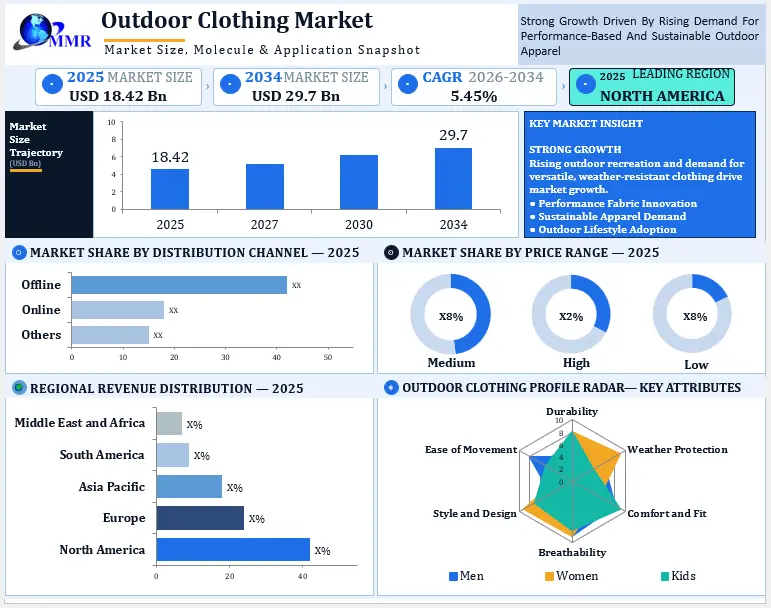
To know about the Research Methodology:-Request Free Sample Report
Outdoor Clothing Market Key Highlights
| Highlight | Key Insight |
| Market Growth Outlook | The Outdoor Clothing Market is projected to grow from USD 18.42 billion in 2025 to USD 29.7 billion by 2034, supported by demand for performance apparel, outdoor recreation, and versatile everyday clothing. |
| North America Leads the Market | North America remains a key regional market, supported by outdoor recreation participation, established technical apparel brands, and strong consumer demand for premium outdoor clothing. |
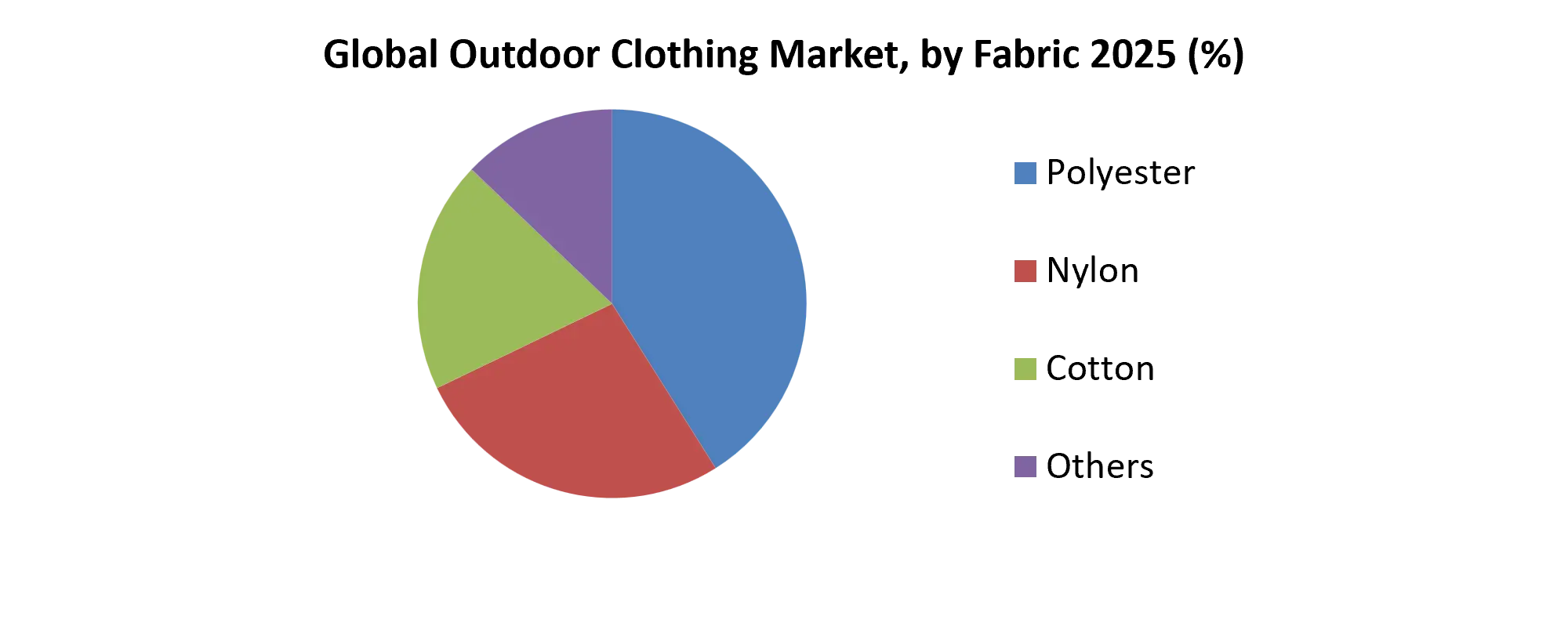
| Polyester Leads Fabric Innovation | Polyester is a leading fabric segment due to its lightweight construction, quick-drying performance, moisture management, and suitability for hiking, trekking, and outdoor sportswear. |
| Online Retail Gains Momentum | E-commerce and direct-to-consumer channels are improving access to outdoor clothing through wider product selection, digital product comparisons, customer reviews, and convenient purchasing experiences. |
| Sustainability Creates New Opportunities | Recycled fabrics, durable garment construction, lower-impact water-repellent treatments, and repair-focused product strategies are creating opportunities for outdoor apparel brands to differentiate their offerings. |
• North America Dominance: In 2025, 57.3% of North Americans participated in outdoor activities, driving premium outdoor apparel demand and contributing the largest revenue share globally.
• Outdoor Participation Growth: U.S. outdoor engagement reached nearly 175 million participants in 2023, including a significant rise in first-time users, boosting multifunctional and lifestyle-oriented clothing adoption.
• Health & Fitness Awareness: Globally, 31% of adults and 81% of adolescents did not meet recommended activity levels in 2025, accelerating demand for performance-oriented outdoor apparel.
• Premium & Sportswear Share: Technical brands such as The North Face and Patagonia command 15–20% of the premium outdoor apparel segment, while global sportswear players Adidas, Nike contribute 38% of outdoor-inspired apparel revenues.
• Sustainability Opportunities: By 2025, 71 countries had 530+ active sustainability policies, promoting eco-friendly outdoor apparel and driving growth for environmentally conscious brands and innovative product lines.
Trends: Multifunctional and Lifestyle-Oriented Outdoor Clothing Adoption
The Global Outdoor Clothing Market is witnessing strong growth, driven by rising adoption of multifunctional and lifestyle-oriented outdoor apparel. Expanding participation in outdoor activities such as hiking, camping, running, biking, and fishing is broadening the consumer base, including women and first-time participants. In 2025, U.S. outdoor engagement has boosted demand for performance outdoor apparel market analysis, highlighting the need for versatile garments that merge activity-specific functionality with lifestyle adaptability. The outdoor recreation economy contributed approximately USD 639.5 billion 2.3% of U.S. GDP, underscoring market potential for lifestyle and multifunctional outdoor clothing.
• Outdoor participation in the U.S. grew steadily, reaching over 175 million individuals, reflecting strong consumer engagement.
• First-time participants increased significantly, signalling an expanding base for multifunctional and lifestyle outdoor apparel.
• The outdoor recreation economy contributed USD 639.5 billion, reinforcing demand for performance-oriented outdoor clothing across diverse activities.
Outdoor Clothing Market Dynamics
Rising Participation in Outdoor Recreation Drive Demand for Performance-Based Outdoor Clothing
The Outdoor Clothing Market is driven by increasing participation in hiking, trekking, camping, mountaineering, and adventure tourism, alongside growing consumer interest in fitness and outdoor lifestyles. Demand for waterproof jackets, breathable shirts, thermal wear, lightweight trousers, and weather-resistant apparel is increasing as consumers seek clothing that delivers comfort, mobility, and protection across changing environmental conditions. The United States National Park Service reported 331.9 million recreation visits to national parks in 2024, highlighting the substantial participation in outdoor recreation and the potential demand for specialized outdoor apparel. Growing interest in multifunctional clothing that transitions between outdoor activities and everyday wear further supports product adoption among younger consumers, working professionals, and adventure enthusiasts.
High Performance Fabric Costs and Premium Outdoor Clothing Prices Restraint Wider Adoption
The Outdoor Clothing Market faces restraints from the high cost of technical fabrics, specialized manufacturing processes, and advanced protective treatments used in premium outdoor apparel. Waterproof membranes, thermal insulation, abrasion-resistant textiles, and durable water-repellent finishes can increase production costs, making specialized jackets and trekking clothing less affordable for price-sensitive consumers. In addition, some performance garments require specific washing methods and careful maintenance to preserve their protective properties, which can discourage frequent purchases. Competition from low-cost casual wear, seasonal demand fluctuations, and differences in consumer purchasing power across regions further affect market penetration, particularly in developing economies where outdoor clothing is often considered a discretionary purchase rather than an essential clothing category.
Sustainable Outdoor Apparel and Innovative Textile Technologies Create New Revenue Potential
The Outdoor Clothing Market presents opportunities through the development of recycled polyester garments, responsibly sourced natural fibres, durable products, and environmentally conscious manufacturing practices. Growing consumer awareness of textile waste and resource efficiency encourages manufacturers to introduce repairable jackets, recyclable materials, and longer-lasting outdoor apparel. According to the United Nations Environment Programme, the fashion and textile sector faces significant environmental challenges associated with resource consumption, waste generation, and pollution, reinforcing the relevance of sustainable product development. Additional opportunities arise from advanced moisture management, ultraviolet protection, lightweight insulation, adaptive layering systems, and inclusive product designs for women and different body types. Direct-to-consumer websites, digital product recommendations, and specialized online retail channels can also help outdoor clothing brands reach niche customer groups and improve product accessibility.
Unpredictable Weather Conditions and Intense Brand Competition Affect Outdoor Clothing Market Development
The Outdoor Clothing Market faces challenges related to unpredictable weather patterns, changing consumer preferences, supply chain uncertainty, and intense competition among established outdoor apparel brands and emerging manufacturers. Seasonal variations can affect demand for insulated jackets, rainwear, thermal clothing, and summer hiking apparel, creating inventory management difficulties for retailers. Manufacturers must also balance garment durability, breathability, waterproof performance, affordability, and environmental responsibility without compromising product quality. Rapid changes in textile innovation require continuous investment in research, product testing, and material development, while counterfeit products and misleading performance claims can weaken consumer confidence. In addition, brands must demonstrate credible sustainability practices and maintain consistent product performance to differentiate their offerings in an increasingly competitive outdoor apparel industry.
Outdoor Clothing Market Key Trends
| Trend | Description |
| Sustainable and Recycled Outdoor Fabrics | Outdoor clothing manufacturers are incorporating recycled polyester, recycled nylon, and lower-impact materials into jackets, hiking trousers, and fleece garments. Brands are also focusing on durable construction and reduced-impact water-repellent treatments to meet consumer expectations for responsible outdoor apparel. |
| Outdoor Clothing for Everyday Wear | Technical jackets, fleece tops, cargo trousers, and weather-resistant outerwear are becoming popular beyond hiking and camping. Consumers increasingly prefer outdoor apparel that combines functional performance with casual styling for commuting, travel, and everyday activities. |
| Lightweight and Breathable Fabric Innovation | Brands are developing lightweight insulation, moisture-wicking textiles, and breathable outer layers that help regulate body temperature during physical activity. These innovations support demand for outdoor clothing suited to hiking, trail running, cycling, and changing weather conditions. |
| Chemical-Free Water-Repellent Treatments | Outdoor apparel producers are adopting water-repellent finishes that avoid intentionally added per- and polyfluoroalkyl substances in response to environmental concerns and changing regulatory requirements. The focus is on maintaining rain protection and fabric durability while reducing reliance on certain persistent chemicals. |
| Versatile Layering and Modular Jacket Designs | Outdoor clothing collections increasingly feature removable insulated liners, adaptable outer shells, adjustable ventilation, and layering systems. These designs allow consumers to adapt garments to different temperatures and activities, improving versatility across hiking, travel, and daily use. |
| Direct Online Sales and Personalized Product Selection | Outdoor clothing brands are strengthening online retail channels through detailed product specifications, fit guidance, activity-based recommendations, and digital shopping experiences. These approaches help customers compare waterproofing, insulation, breathability, and garment suitability before purchasing specialized outdoor apparel. |
Global Outdoor Clothing Market Segment Analysis
The Global Outdoor Clothing Market segmentation analysis reflects strong diversification across apparel usage, product functionality, and consumer preferences, enabling brands to optimize portfolios for performance, lifestyle, and climate-specific demand. Apparel type and product type remain the most influential revenue-defining segments within the outdoor apparel market.
By Apparel Type:Sports and activity wear segment dominated the Apparel Type market in 2025. Due to rising participation in hiking, trail running, camping, and fitness activities, while casual and recreational wear continues to gain share due to everyday lifestyle integration.
 By Product Type:Top wear segment dominated the Product Type in year 2025.The product type, led by jackets, fleece, and base layers, as these products deliver higher value, technical differentiation, and climate protection compared to bottom wear and accessory categories.
 By Fabric, Polyester is a leading fabric in the Outdoor Clothing Market because of its lightweight construction, quick-drying properties, moisture management, and suitability for performance-oriented apparel. It is widely used in hiking jackets, fleece tops, base layers, and outdoor sportswear, while recycled polyester is gaining attention as brands seek more sustainable material options. Nylon remains important for trekking trousers, windbreakers, and abrasion-resistant outerwear because of its strength and durability. Cotton serves casual outdoor clothing and comfortable everyday apparel, although its slower drying time makes it less suitable for prolonged exposure to wet conditions. Other fabrics, including merino wool, elastane blends, and specialized technical textiles, support temperature regulation, stretch, and activity-specific performance. Overall, polyester is a strong candidate for the leading fabric segment, supported by its versatility across different outdoor clothing applications.
 By Distribution Channel, Online retail is gaining momentum in the Outdoor Clothing Market as consumers increasingly compare fabric technologies, product specifications, prices, and customer reviews before purchasing outdoor apparel. Brand websites and e-commerce marketplaces provide access to a wider selection of waterproof jackets, hiking trousers, thermal wear, and lightweight outdoor clothing, making digital shopping particularly attractive to younger consumers and buyers in locations with limited specialist stores. Offline retail remains important because customers often prefer to assess fabric quality, garment fit, comfort, and insulation in person, particularly when buying technical outdoor clothing. The Others category includes alternative sales channels such as selected direct-selling arrangements and non-traditional retail outlets, depending on the market's segmentation methodology. Overall, online retail is a prominent growth channel, while offline stores continue to play an important role in product evaluation and specialized customer service.
Regional Insights – Global Outdoor Clothing Market
North America dominated the Outdoor Clothing Market in 2025, with 57.3% of the population participating in outdoor activities, driving demand for performance and lifestyle-oriented outdoor apparel. Europe shows resilient outdoor clothing market growth, supported by 76.6% adult physical activity prevalence, with Germany at 79%, France 76%, and Finland 77%, maintaining demand for versatile technical apparel. The Asia Pacific outdoor clothing market is the fastest-growing region during 2025. south America and the Middle East & Africa have 60.9% participation, offering strong long-term market opportunities.
• North America leads global revenue contribution within the outdoor apparel market.
• Europe benefits from sustained lifestyle-driven demand for technical outdoor clothing.
• Asia Pacific and emerging regions offer strong future growth potential.

Competitive Landscape – Global Outdoor Clothing Market
The Outdoor Clothing Market is characterized by strong competition among established outdoor apparel brands, specialized performance clothing manufacturers, and emerging sustainable fashion companies. Key players such as The North Face, Columbia Sportswear, Patagonia, Arc’teryx, and Salomon compete through technical fabric innovation, waterproof and breathable clothing, thermal insulation, product durability, brand reputation, and distribution reach. While premium brands focus on advanced outdoor performance, specialized designs, and sustainable materials, companies such as Columbia Sportswear and Decathlon also address consumers seeking functional outdoor clothing at accessible prices. Competitive strategies increasingly emphasize recycled fabrics, lightweight apparel, versatile outdoor-to-everyday designs, direct-to-consumer sales, and stronger online retail experiences. Companies that combine reliable weather protection, comfort, affordability, and responsible material sourcing are well positioned to strengthen their presence in the outdoor apparel industry as demand evolves across hiking, trekking, camping, adventure travel, and everyday outdoor wear.
| Company | Country of Origin | Key Region | Market Relevance and Competitive Differentiation |
| The North Face | United States | North America | Combines technical outdoor jackets, insulated clothing, and mountain apparel with lifestyle-oriented designs. Its broad product range supports demand from serious outdoor enthusiasts and everyday consumers. |
| Columbia Sportswear | United States | North America | Competes through accessible performance apparel, proprietary heat-management technologies, waterproof clothing, and products for hiking, fishing, and everyday outdoor use. |
| Patagonia | United States | North America | Differentiates through durable outdoor apparel, responsible material sourcing, garment repair, and environmental initiatives, appealing to consumers prioritizing product longevity and sustainability. |
| Arc'teryx | Canada | North America | Focuses on premium technical clothing for mountaineering and alpine activities, emphasizing precise construction, weather protection, lightweight performance, and specialized garment design. |
| Salomon | France | Europe | Strengthens its position through performance apparel for trail running, mountain sports, and outdoor activities, connecting technical clothing with an active sportswear identity. |
| Decathlon | France | Europe and Asia Pacific | Uses an integrated product design, development, and retail model to offer hiking and camping apparel at accessible prices, making outdoor clothing available to a broader customer base. |
| Jack Wolfskin | Germany | Europe | Serves hiking, trekking, and outdoor travel customers through functional apparel, weather-resistant designs, and products suited to recreational outdoor activities. |
| KOLON SPORT | South Korea | Asia Pacific | Brings an Asia-focused outdoor apparel perspective through technical clothing, functional design, and product development suited to regional consumer preferences and outdoor activities. |
Outdoor Clothing Market Recent Development
| Month and Year | Company | Recent Development |
| February 2026 | Nike | Nike reintroduced its All Conditions Gear outdoor performance brand with a renewed focus on hiking, trail running, and exploration. The initiative includes technical apparel such as performance tops and insulated jackets, strengthening Nike's focus on outdoor clothing and specialist adventure wear. |
| February 2026 | Eddie Bauer | Eddie Bauer announced the return of its First Ascent performance collection as part of a strategy focused on technical product innovation and digital retail. The range emphasizes waterproofing, breathability, wind resistance, and functional outdoor apparel. |
| April 2026 | The North Face | The North Face introduced its Universal Collection, developed with input from adaptive athletes and the adaptive sports community. The initiative focuses on inclusive outdoor equipment and design, reflecting an industry effort to make outdoor experiences more accessible. |
| August 2026 | Patagonia | Patagonia updated its Nano-Air insulation range for the autumn season, including lighter insulation and redesigned technical layers. The developments address the need for breathable, flexible outdoor clothing for activities such as hiking, climbing, and ski touring. |
| August 2026 | The North Face | The North Face introduced its Summit Trail Run Collection alongside the next-generation Offtrail Ultra, combining technical trail-running footwear with lightweight protective apparel for demanding terrain. The launch reinforces its focus on specialized mountain performance. |
| September 2026 | Rab | Rab launched the next generation of its Microlight collection for autumn and winter, introducing updated styles and refined insulation technology. The collection builds on lightweight warmth, packability, and versatility for mountain activities, with continued attention to recycled materials and repairability. |
Outdoor Clothing Market Scope: Inquire before buying
| Outdoor Clothing Market | |||
|---|---|---|---|
| Report Coverage | Details | ||
| Base Year: | 2025 | Forecast Period: | 2026-2034 |
| Historical Data: | 2020 to 2025 | Market Size in 2025: | USD 18.42 Bn. |
| Forecast Period 2026 to 2034 CAGR: | 5.45% | Market Size in 2034: | USD 29.7 Bn. |
| Segments Covered: | by Apparel Type | Casual Wear Fashion Wear Rainy Wear Promotional Apparel Recreational Wear Sports/ Activity Wear Road Running |
|
| by Product Type | Top Wear
Jackets Bottom Wear Pants Others |
||
| by Fabric | Polyster Nylon Cotton Others |
||
| by Price Range | Low Medium High |
||
| by Consumer Group | Men Women Kids Boys Girls |
||
| by Distribution Channel | Online E-commerce Company website Offline Speciality Store Retails Others |
||
Outdoor Clothing Market, by Region
North America (United States, Canada and Mexico)
Europe (UK, France, Germany, Italy, Spain, Sweden, Austria and Rest of Europe)
Asia Pacific (China, South Korea, Japan, India, Australia, Indonesia, Malaysia, Vietnam, Taiwan, Bangladesh, Pakistan and Rest of APAC)
Middle East and Africa (South Africa, GCC, Egypt, Nigeria and Rest of ME&A)
South America (Brazil, Argentina Rest of South America)
Global Outdoor Clothing Market, Key players:
1. The North Face
2. Patagonia
3. Columbia Sportswear
4. Arc’teryx
5. Black Diamond Equipment
6. Marmot
7. Outdoor Research
8. Mountain Hardwear
9. Mammut Sports Group
10.Jack Wolfskin
11.Salomon
12.Helly Hansen
13.Rab
14.VAUDE
15.Berghaus
16.Icebreaker
17.Smartwool
18.Montane
19.AIGLE
20.Lafuma
21.L.L.Bean
22.Cotopaxi
23.Barbour
24.BLACKYAK
25.Salewa
26.Adidas
27.Nike
28.Puma
29.Wildcraft
30.Decathlon
31.Montbell
32.Klattermusen
33.Houdini Sportswear
34.Kathmandu
35.REI Co-op
36.Canada Goose
37.Moncler
38.Millet Mountain Group
39.Toread
40.ANTA Sports
41.Li-Ning
42.Xtep
43.Bosideng
44.Woodland
45.Reima
FAQs of Global Outdoor Clothing Market.
Q1: What factors are driving the growth of the Global Outdoor Clothing Market?
A: Growth is driven by multifunctional and lifestyle-oriented apparel, rising health and fitness awareness, and demand for sustainable and eco-friendly outdoor clothing.
Q2: Which regions lead the Global Outdoor Clothing Market?
A: North America leads in revenue and participation, Europe shows stable growth with high activity prevalence, and Asia Pacific is the fastest-growing region.
Q3: What are the main challenges facing the outdoor clothing market?
A: Challenges include high consumer price sensitivity toward premium products and volatility in raw material costs.
Q4: Which apparel and product types dominate the market?
A: Sports and activity wear dominate by apparel type, while top wear such as jackets, fleece, and base layer lead by product type.
Q5: How are brands responding to sustainability and regulatory trends?
A: Brands are adopting circular design, eco-friendly materials, and compliance with global regulations like EU EPR and sustainable product standards to strengthen market positioning.