
India Lubricants Market Size by Type, Application, Distribution Channel, End-User - Segment-Level Market Assessment, Growth Opportunity Analysis, Competitive Mapping & Forecast to 2034
Overview
India Lubricants Market size was valued at USD 2.99 Bn in 2025 and the India Lubricants Market revenue is expected to reach USD 4.74 Bn by 2034, at a CAGR of 5.24 % over the forecast period.
India Lubricants Market Overview
Lubricants are specialized fluids, oils, and greases formulated to reduce friction, minimize wear, dissipate heat, and protect moving mechanical components, thereby improving equipment performance, energy efficiency, and service life. They are indispensable across automotive, industrial, construction, mining, power generation, agriculture, marine, and manufacturing applications. The India lubricants market continues to expand in 2025, supported by robust vehicle production and sales, growing industrial activity, infrastructure development, and rising demand for premium synthetic and semi-synthetic lubricants. The market is also benefiting from increasing mechanization, expanding commercial vehicle fleets, and higher adoption of advanced lubricants that improve fuel economy and extend oil drain intervals. Industry participants are focusing on EV-compatible lubricants, industrial fluids, and high-performance formulations to address evolving mobility and manufacturing requirements. Despite the gradual transition toward electric vehicles, the large installed base of internal combustion engine (ICE) vehicles and strong industrial demand continue to sustain lubricant consumption. Regulatory compliance with standards issued by the Bureau of Indian Standards (BIS), the Automotive Research Association of India (ARAI), and increasingly stringent emission norms remain essential for lubricant manufacturers, while growing demand for synthetic lubricants and premium products is creating new opportunities for market expansion.
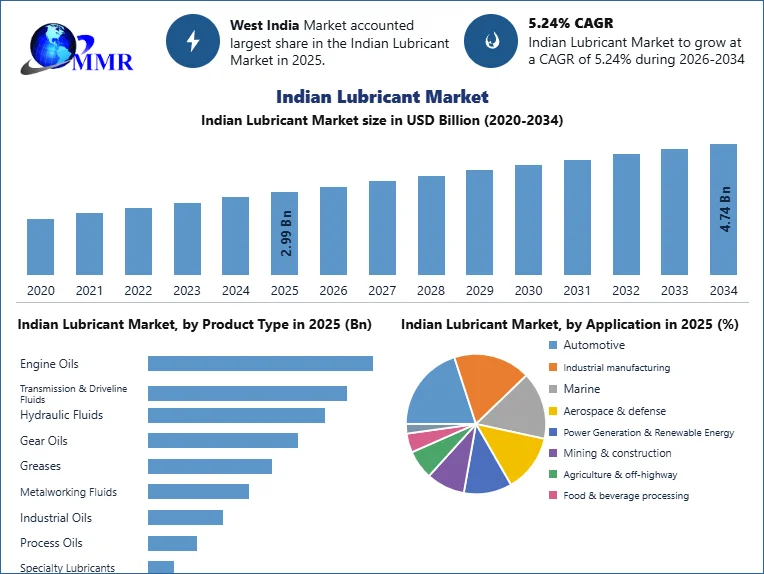 To know about the Research Methodology:-Request Free Sample Report
The India Lubricants Market scope involves continuous research and development efforts to innovate and introduce lubricants that meet evolving industry demands, regulatory requirements, and environmental considerations.
India Lubricants Market Dynamics
Automotive Industry to boost India Lubricants Market growth
The continuous growth of the automotive sector in India, including passenger vehicles, commercial vehicles, and two-wheelers, is a significant driver for the India lubricants market. Increased vehicle sales led to higher demand for lubricants. The expanding industrial sector, encompassing manufacturing, construction, and other industries, creates a substantial demand for lubricants. Machinery and equipment in these sectors require efficient lubrication for optimal performance. Growing transportation activities, including logistics and freight, lead to higher demand for lubricants in the commercial vehicle segment. Lubricants are essential for maintaining the engines and mechanical components of trucks and buses. There is a notable shift in the market towards the adoption of synthetic lubricants. Synthetic lubricants offer enhanced performance, better fuel efficiency, and extended drain intervals, driving their popularity.
Environmental regulations and a growing emphasis on sustainability have led to the development and adoption of environmentally friendly lubricants. Bio-based and biodegradable lubricants cater to environmentally conscious consumers and industries. The aftermarket demand for lubricants, driven by routine maintenance and replacement needs, is a significant driver for India Lubricants Market. The aging vehicle fleet on Indian roads contributes to a continuous need for replacement lubricants. Lubricants play a crucial role in the agricultural sector, supporting the maintenance of tractors and agricultural machinery. Rural development and agricultural activities contribute to lubricant demand.
Price Volatility in Raw Materials to restraint the India Lubricants Market Growth
Fluctuations in the prices of base oils and additives, which are key raw materials for lubricant manufacturing, impact the overall production cost. Sudden price increases affect profit margins for lubricant manufacturers. The lubricants industry is closely tied to crude oil prices, as base oils are derived from crude oil. Dependency on crude oil makes the industry vulnerable to global oil price fluctuations. The presence of counterfeit lubricant products in the market poses a significant challenge. Counterfeits affect brand reputation, compromise product quality, and pose risks to the performance of machinery. The India lubricants market is highly competitive, with numerous domestic and international players. Intense competition can lead to price wars and margin pressures, affecting the profitability of companies. Foreign trade agreements and regional trade pacts have both positive and negative impacts on the lubricants market. While export opportunities exist, free trade agreements also lead to increased competition and challenges for domestic manufacturers.
India Lubricants Market Segment Analysis
Based on the Distribution Channel, the market is segmented into OEM Sales and Aftermarket Sales. OEM sales segment dominated the market in 2025 and is expected to hold the largest India Lubricants Market share over the forecast period. The OEM (Original Equipment Manufacturer) sales segment in the India Lubricants Market is the distribution and sale of lubricants directly to manufacturers of vehicles and equipment for use as original equipment in new products. In the automotive lubricants segment, OEM sales involve supplying lubricants that are specifically recommended or approved by vehicle manufacturers to be used in their brand-new vehicles during the manufacturing process. Lubricant manufacturers and suppliers engage in partnerships with automotive OEMs to provide lubricants that meet the precise specifications and requirements of the original equipment. The use of a specific lubricant brand as OEM-approved influences consumer preferences and creates brand loyalty when vehicle owners seek replacement lubricants during routine maintenance.
By Product Type: The India Lubricants Market is segmented into Engine Oils, Transmission & Driveline Fluids, Hydraulic Fluids, Gear Oils, Greases, Metalworking Fluids, Industrial Oils, Process Oils, and Specialty Lubricants. Engine Oils dominate the market owing to the large fleet of passenger cars, commercial vehicles, two-wheelers, and agricultural equipment, coupled with regular maintenance requirements and strong demand from the automotive sector. Meanwhile, Industrial Oils are witnessing significant growth due to rapid industrialization, expansion of manufacturing activities, increasing automation, and rising demand from sectors such as power generation, steel, cement, chemicals, and heavy engineering. Additionally, the growing adoption of high-performance synthetic lubricants and specialty formulations is supporting the expansion of premium lubricant products across industrial applications.
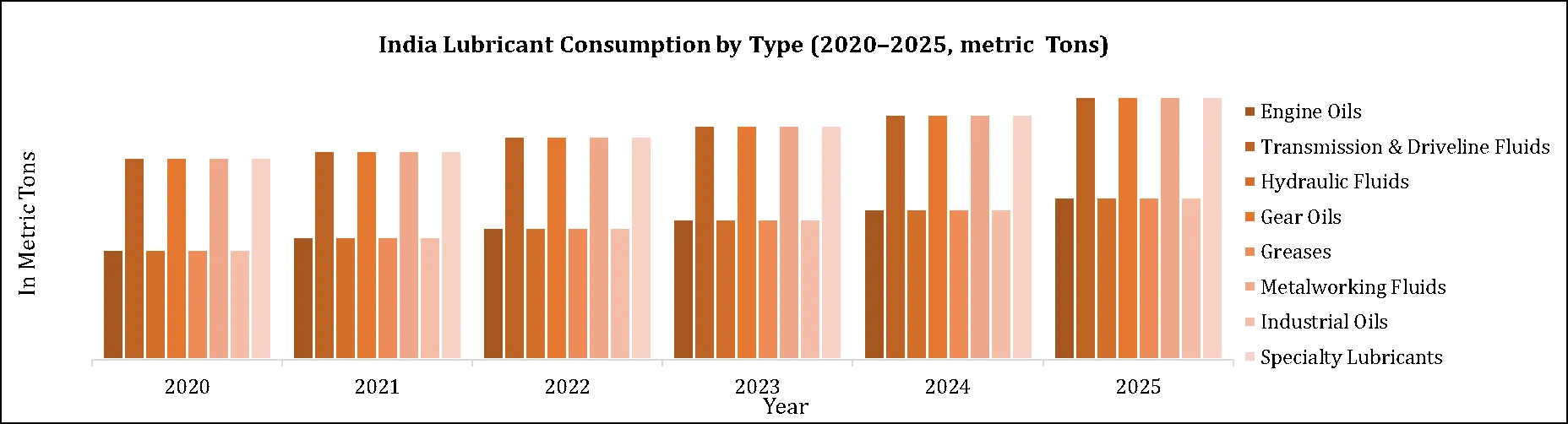
India Lubricants Market Regional Insight
The West India region dominated the India Lubricants Market in 2025 and is expected to maintain its leadership throughout the forecast period. States such as Maharashtra and Gujarat account for the largest share owing to the presence of major refineries, lubricant blending plants, petrochemical complexes, automotive manufacturing hubs, and extensive industrial infrastructure. The region also benefits from major ports including Mumbai, Jawaharlal Nehru Port (JNPT), Mundra, and Kandla, which facilitate the import of base oils and export of finished lubricants. Strong demand from the automotive, chemical, engineering, cement, mining, and logistics sectors continues to drive lubricant consumption across Western India.
South India represents the fastest-growing regional market, supported by expanding automobile production in Tamil Nadu and Karnataka, increasing industrial investments in Telangana and Andhra Pradesh, and growing renewable energy and electronics manufacturing activities. The North India market remains a major consumer due to its large commercial vehicle fleet, agricultural machinery usage, and manufacturing base across Delhi NCR, Haryana, Punjab, and Uttar Pradesh. Central India is witnessing steady growth, driven by mining, cement, steel, infrastructure development, and mechanized agriculture in states such as Madhya Pradesh and Chhattisgarh. Meanwhile, East and Northeast India continue to experience gradual expansion, supported by investments in oil & gas, mining, ports, infrastructure development, and government-led industrialization initiatives, resulting in increasing demand for automotive and industrial lubricants across the region.
Competitive Analysis
The India Lubricants Market in 2025 is highly competitive, with strong participation from public sector oil marketing companies, multinational lubricant brands, and domestic specialty lubricant manufacturers. Indian Oil Corporation, Bharat Petroleum Corporation, and Hindustan Petroleum Corporation dominate through their wide fuel-station networks, strong industrial supply base, and large-scale distribution reach. Private and multinational players such as Castrol India, Shell India, ExxonMobil, Gulf Oil Lubricants India, Valvoline, TotalEnergies, Motul, GS Caltex, and Fuchs Lubricants India compete strongly in premium automotive, synthetic, industrial, and specialty lubricant categories, focusing on brand strength, OEM partnerships, advanced formulations, and higher-margin products.
Domestic companies such as Veedol Corporation, Savita Oil Technologies, Apar Industries, Balmer Lawrie, Panama Petrochem, Nandan Petrochem, and Eastern Petroleum strengthen the market through cost-competitive products, process oils, transformer oils, industrial lubricants, greases, and regional distribution networks. Competition in 2025 is increasingly shaped by demand for synthetic lubricants, EV fluids, high-performance industrial oils, fuel-efficient engine oils, and bio-based lubricants. Companies are focusing on product innovation, dealer expansion, digital sales channels, sustainability, and partnerships with automotive and industrial customers to gain market share in India’s growing lubricants industry.
Recent Development
July 2025: Shell completed the acquisition of Raj Petro Specialities in India, strengthening its lubricants portfolio and customer base. This is expected to increase competition in specialty lubricants, industrial oils, and value-added lubricant solutions.
October 2025: Shell Lubricants India launched a new range of advanced lubricants across passenger cars, two-wheelers, and pickup trucks. This supports premiumization in the Indian automotive lubricant market and increases demand for higher-performance formulations.
December 2025: Stonepeak agreed to acquire a 65% controlling stake in Castrol from bp, valuing Castrol at around US$10.1 billion. The deal is expected to bring stronger investment focus into Castrol’s global and Indian lubricant operations.
February 2026: Gulf Oil Lubricants India and Mahindra Tractors renewed their multi-year partnership, extending a decade-long OEM alliance. This will strengthen lubricant demand in India’s agriculture and off-highway segment.
June 2026: Tata Motors and Castrol India signed an MoU to launch a used engine oil circularity pilot in Karnataka. The initiative is expected to support recycling, re-refined base oil adoption, and sustainable lubricant value chains in India.
Scope of the India Lubricants Market: Inquire before buying
| India Lubricants Market | |||
|---|---|---|---|
| Report Coverage | Details | ||
| Base Year: | 2025 | Forecast Period: | 2025-2034 |
| Historical Data: | 2020 to 2024 | Market Size in 2025: | US $ 2.99 Bn. |
| Forecast Period 2025 to 2034 CAGR: | 5.24% | Market Size in 2034: | US $ 4.74 Bn. |
| Segments Covered: | by Type | Engine Oils
Passenger Car Motor Oils (PCMO) Transmission & Driveline Fluids Automatic Transmission Fluids (ATF) Hydraulic Fluids Mineral Oil-Based Gear Oils Automotive Gear Oils Greases Lithium / Lithium Complex Greases Metalworking Fluids Cutting Fluids Industrial Oils Compressor Oils Process Oils Rubber Process Oils Specialty Lubricants Heat Transfer Fluids |
|
| by Application | Automotive Industrial manufacturing Marine Aerospace & defense Power Generation & Renewable Energy Mining & construction Agriculture & off-highway Food & beverage processing Other industrial applications |
||
| by Distribution Channel | OEM Sales Aftermarket Sales |
||
| by End-User | Automotive Industry Manufacturing Sector Construction Agriculture Marine Aviation & Aerospace |
||
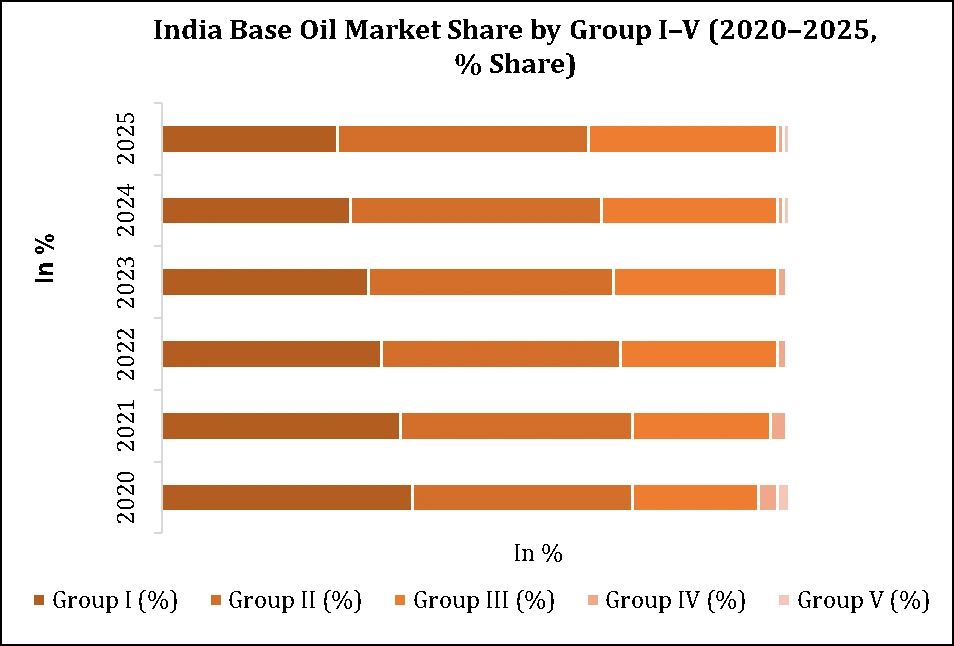
| By Base Oil | Mineral Oil Lubricants Group I (Solvent-refined) Group II (Hydroprocessed) Group III (Severely Hydroprocessed / Hydrocracked) Synthetic Lubricants Group IV (Polyalphaolefins – PAO) Group V (Synthetic Esters) Polyalkylene Glycols (PAG) Silicone-based Lubricants Semi-Synthetic / Blends Bio-Based / Renewable Lubricants Vegetable Oil-Based Animal Fat-Based |
||
India Lubricants Key Players Include:
- Indian Oil Corporation Limited
- Bharat Petroleum Corporation Limited
- Hindustan Petroleum Corporation Limited
- Castrol India Limited
- Shell India
- ExxonMobil
- Gulf Oil Lubricants India
- Valvoline Lubricants & Solutions India PVT. LTD.ited
- TotalEnergies
- Veedol Corporation Limited
- Savita Oil Technologies
- Apar Industries Ltd
- Balmer Lawrie & Co. Ltd.
- Panama Petrochem Ltd
- Fuchs Lubricants India
- Nandan Petrochem Limited
- Eastern Petroleum Pvt. Ltd.
- Motul
- GS Caltex
- Others
Frequently asked Questions:
1. What are lubricants, and why are they essential in various industries?
Ans: Lubricants are substances, usually in the form of oils or greases, designed to reduce friction, heat, and wear between moving parts of machinery or equipment. They are crucial in various industries to ensure the efficiency, reliability, and longevity of machinery by providing protection to surfaces that come into contact.
2. How does the automotive industry impact the India Lubricants Market?
Ans: The continuous growth of the automotive sector, including passenger vehicles, commercial vehicles, and two-wheelers, significantly drives the India Lubricants Market. Increased vehicle sales lead to higher demand for lubricants, and the expanding industrial sector further contributes to substantial demand.
3. What role do synthetic lubricants play in the market, and why are they gaining popularity?
Ans: Synthetic lubricants offer enhanced performance, better fuel efficiency, and extended drain intervals, contributing to their popularity in the India Lubricants Market. There is a notable shift in the market towards the adoption of synthetic lubricants.
4. What are the key segments in the India Lubricants Market based on application and distribution channels?
Ans: The market is segmented into Automotive Lubricants and Industrial Lubricants based on application, with Automotive Lubricants dominating the market. In terms of distribution channels, the market is segmented into OEM Sales and Aftermarket Sales, with OEM Sales holding the largest market share.
5. How do regional variations impact the India Lubricants Market?
Ans: The India Lubricants Market exhibits regional variations driven by diverse economic activities and industrial landscapes. Different regions contribute to market dynamics, with factors such as industrialization, urbanization, agricultural activities, and transportation hubs influencing demand.