
Home Improvement Market - Industry Structure Evaluation, Demand Drivers Analysis, Regional Growth Analysis and Identification, Competitive Positioning / Landscape Review & Global Market Size Forecast to 2032
Overview
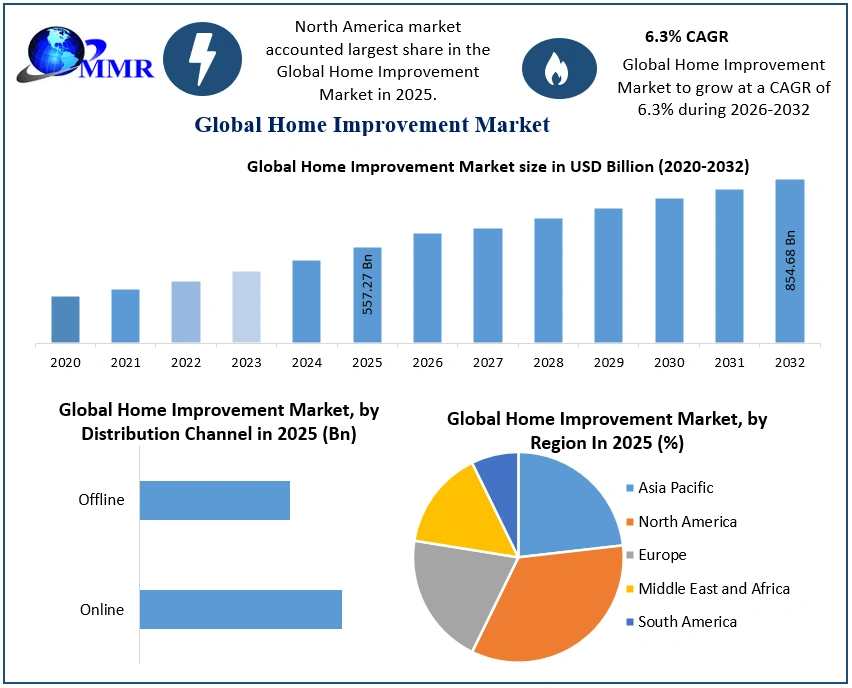
The Home Improvement Market size was valued at USD 557.27 Billion in 2025 and the total Home Improvement revenue is expected to grow at a CAGR of 6.3% from 2026 to 2032, reaching nearly USD 854.68 Billion by 2032.
Comprehensive Analysis of DIY & DIFM Segments, Kitchen & Bathroom Renovation Trends, Smart Home Upgrades, Regional Growth, Key Players.
Home Improvement Market Overview
The most resilient consumer-driven industries, supported by rising renovation spending, ageing housing stock, and the global shift toward smart, energy-efficient living. The home renovation market continues to grow as more than 50% of homes in North America and Europe are over 40 years old, boosting sustained demand for structural upgrades, house repair and maintenance services, and modernization of outdated interiors.
Growing preference for premium home remodeling services, especially in the kitchen renovation market and bathroom remodeling market, reflects rising interest in functional design, modern storage solutions, and sustainability. Smart technologies are reshaping the sector as homeowners adopt smart home improvement features such as automated lighting, connected HVAC systems, and intelligent security systems. Sustainable home renovation is another major trend, supported by EU and U.S. incentives promoting green building materials, solar home improvement trends, and home insulation improvement. This shift aligns with consumer preferences for long-term savings and environmentally responsible living. Meanwhile, the expansion of e-commerce and digital tools AR/VR design apps, digital tools for DIY home projects, and online how-to platforms, has strengthened both the DIY vs DIFM market segments. The U.S. home improvement market leads with the highest spending, supported by strong housing turnover and major players such as Home Depot and Lowe’s. APAC shows the fastest growth due to rapid urbanization and rising middle-class income, while Europe benefits from government-led efficiency retrofits.
To know about the Research Methodology :- Request Free Sample Report
Trend: Rapid Adoption of Smart Home Renovation Solutions
The home improvement Industry is witnessing a major shift fueled by the rapid adoption of smart home renovation solutions. Homeowners are increasingly investing in intelligent systems such as smart thermostats, AI-enabled security cameras, automated lighting, connected HVAC units, and app-controlled appliances to enhance comfort, convenience, and safety. This Home Improvement Market trend is supported by rising awareness, improved IoT affordability, and stronger Wi-Fi/5G penetration. Post-pandemic lifestyle changes have also accelerated demand for multifunctional living environments, home offices, fitness corners, entertainment areas, and hybrid-learning zones, driving higher spending on interior remodeling services and digital upgrades.
The sustainable home renovation is gaining momentum, with consumers preferring energy-efficient windows, solar-powered roofing, and advanced water management systems to reduce long-term utility costs. Retailers and renovation companies utilize AI-driven design tools, AR visualization apps, and digital twins to provide personalized project planning, which boosts Home Improvement Market growth. These tools allow homeowners to preview paint finishes, flooring selections, lighting layouts, and décor options before installation. As millennials and Gen Z increasingly prioritize automation, environmental responsibility, and DIY home improvement, they are becoming key drivers of new home upgrade trends across both DIY and DIFM segments.
Home Improvement Market Dynamics
Driver: Rising Renovation Demand Due to Aging Homes
In North America and Europe, more than 50% of homes are over 40 years old, creating a massive need for modernization and structural renewal. This aging-home renovation demand stimulates spending on roofing replacement, window upgrades, HVAC modernization, electrical and plumbing repairs, and exterior improvement projects. Homeowners are strongly motivated to improve property value, especially in competitive real estate environments, through high-impact upgrades such as kitchen remodeling, bathroom renovations, and smart home improvement features that boost resale Home Improvement Market potential. The rise of hybrid and remote work has increased demand for personalized interiors, including home office installations and space optimization.
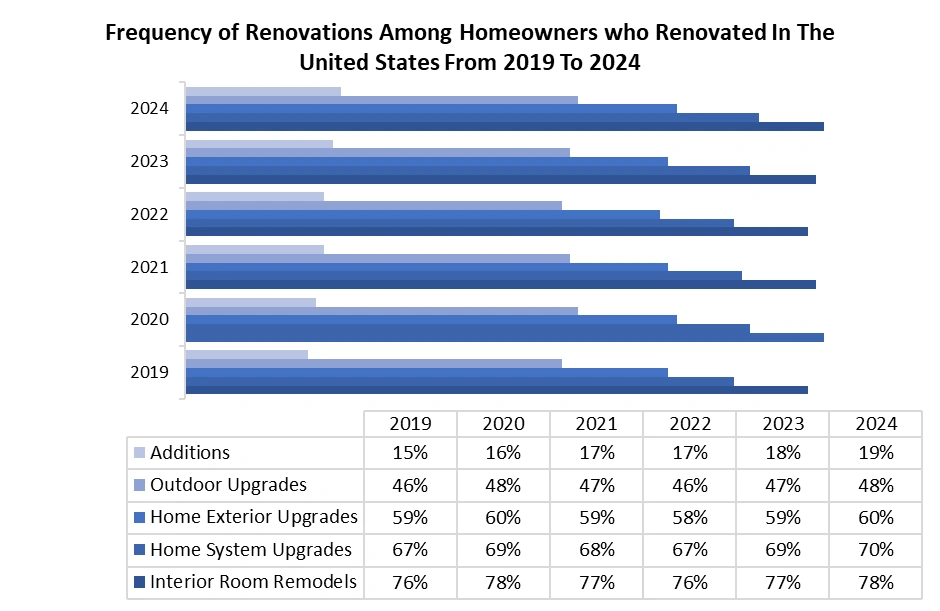
The growth of e-commerce and online DIY home projects empowers consumers to handle basic repairs independently, supporting the expansion of the DIY vs DIFM ecosystem. Government incentives promoting energy-efficient upgrades, such as solar home improvement trends, insulation improvement, and adoption of green building materials, also encourage homeowners to pursue long-term cost-saving enhancements. As homes older than 20–30 years require upgrades, U.S. homeowners are renovating more frequently. Between 2019 and 2023, the proportion of households undertaking renovation grew steadily, supported by rising disposable income, lifestyle upgrades, and long-term maintenance needs, driving Home Improvement Market growth.
Restraints: Rising Costs and Skilled Labor Shortages to restrain Home Improvement Market growth
The home renovation ecosystem is experiencing an unpredictable rise in raw material prices paired with ongoing labor shortages. Costs of lumber, steel, cement, roofing shingles, and PVC have surged due to global supply chain disruptions, logistics delays, and international trade imbalances, causing homeowners and contractors to delay or scale down projects. The shortage of skilled electricians, carpenters, plumbers, and certified remodeling professionals, especially in North America and Europe, has increased labor expenses by 15–30% in several regions while prolonging project completion timelines. The inflationary pressures and higher interest rates have reduced consumer appetite for renovation financing, slowing down DIFM-based remodeling services and making larger renovation plans harder to execute.
Home Improvement Market Segment Analysis
By Project, the market is broadly segmented into the Do It Yourself (DIY) and Do It For Me (DIFM). The Do-It-For-Me (DIFM) segment is the dominant project for the Home Improvement Market share, accounting for over 62% of total project spending in 2025, driven by rising reliance on professional remodeling services due to labor-intensive projects and the growing complexity of system upgrades. Many homeowners prefer hiring certified contractors for roofing replacement, plumbing and electrical upgrades, HVAC system upgrades, and full-scale kitchen and bathroom renovations. Increasing aging-home renovation demand in North America and Europe also plays a major role, as older homes require skilled labor for structural repairs and system modernization. DIFM growth is fueled by strong demand for premium finishes, smart home automation, and sustainable home renovation solutions. Rising time constraints, remote work lifestyles, and the desire for high-quality craftsmanship continue to shift consumers away from traditional DIY home improvement. The availability of flexible renovation financing, along with the expansion of e-commerce platforms providing bundled installation services, strengthens this segment.

By End Use, the market is categorized into Bath Improvements & Additions, Kitchen Improvements & Additions, Exterior Replacements, Interior Replacements, Property Improvements, System Upgrades and Others. Kitchen Improvements & Additions is the largest end-use segment for the Home Improvement Market, contributing over 28% of global renovation spending in 2025, making it the most dominant category in the home renovation landscape. Kitchens are considered the highest-value improvement areas, offering a return on investment (ROI) of 70–85% in many developed markets.
Spending on Home Improvement Market growth is driven by rising demand for modular kitchen upgrades, high-end kitchen cabinets, advanced countertops, and energy-efficient appliances. Modern homeowners increasingly prioritize multifunctional layouts, smart home improvement features such as voice-controlled lighting, and enhanced storage solutions. Trends in sustainable home renovation, such as eco-friendly cabinets, recycled countertops, and water-efficient fixtures, continue to influence consumer decisions. The kitchen renovation market is also expanding due to lifestyle changes, including the rise of home cooking post-pandemic and the growing preference for open-concept living spaces. Strong demand for professional remodeling services has boosted DIFM kitchen projects, especially in urban regions of North America, Europe, and APAC.

Home Improvement Market Regional Insights
North America dominated the Home Improvement Market in 2025 and is expected to continue its dominance over the forecast period. The region has leadership throughout the forecast period due to high consumer spending, strong DIY culture, and the presence of major industry players such as Home Depot and Lowe’s. The U.S. home improvement market benefits from an aging housing stock, with more than 65% of homes built before 1989, creating strong demand for system upgrades, kitchen remodeling, bathroom renovation, and energy-efficient retrofits. Rising adoption of smart home renovation solutions, including connected HVAC systems, smart lighting, and home security technologies, continues to push premium product sales.
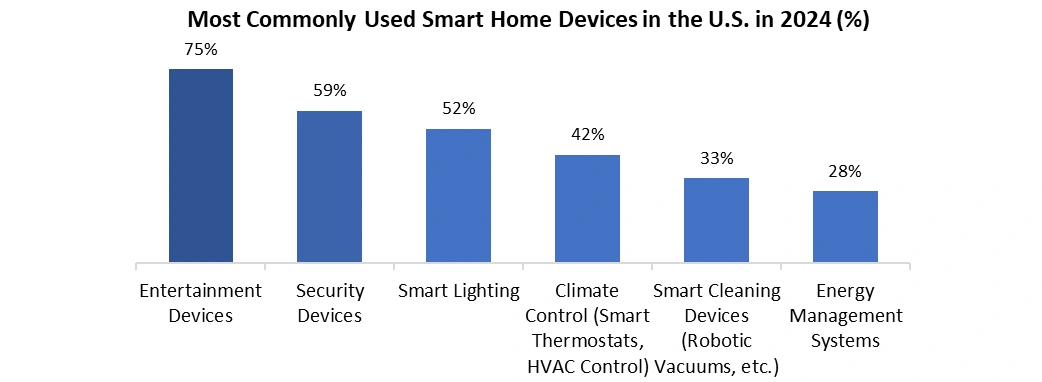
Canada contributes significantly, supported by growing residential renovation activities, green building incentives, and increased investment in exterior home improvement projects such as roofing, siding, and window replacement. A strong DIFM segment, combined with increasing financing options for renovation spending, supports steady Home Improvement Market growth across both urban and suburban regions. North America leads in DIY home improvement due to the widespread availability of online tutorials, e-commerce platforms, and retail giants offering affordable tools, materials, and project guidance. Favorable government policies encouraging energy-efficient home upgrades and sustainable home renovation boost the Home Improvement Industry growth. Growing adoption of smart home devices security systems, smart lights, and thermostats is driving home improvement upgrades, as U.S. homeowners increasingly modernize living spaces with connected, energy-efficient technologies.
Home Improvement Market Competitive Landscape
The home improvement industry is moderately consolidated, with leading players such as Home Depot, Lowe’s, ACE Hardware, Menards, and Kingfisher. Home Depot remained the largest player with revenues exceeding USD 150 billion, while Lowe’s generated over USD 86 billion, reflecting strong consumer spending on remodeling and repair services. Companies are focusing on expanding private-label product lines, improving e-commerce capabilities, and integrating AI-based design tools to attract both DIY and DIFM customers. Rising demand for energy-efficient upgrades and smart home renovation continues to intensify competition, pushing firms to invest in digital retail innovations, omnichannel logistics, and contractor partnerships. Strategic acquisitions, store expansions, and sustainable product portfolios remain core competitive strategies.
• In March 2024, The Home Depot. announced four new Pro-focused distribution centers across Detroit, Southern Los Angeles, San Antonio, and Toronto to improve delivery speed and reliability for professional contractors. These hubs stock bulky materials such as lumber, insulation, and roofing shingles, enabling efficient job-lot fulfillment directly to worksites. By the end of 2024, The Home Depot plans to upgrade 17 key Pro markets with deeper inventory, tailored assortments, digital order-management tools, trade credit options, and enhanced ProXtra loyalty benefits, strengthening its leadership in the global home improvement ecosystem.
• On Dec 11, 2024, Lowe’s unveiled its 2025 Total Home Strategy to accelerate long-term growth and market share. The company announced five key initiatives, including boosting Pro penetration, expanding online sales, enhancing home services, creating a unified loyalty ecosystem, and increasing space productivity. Lowe’s also introduced a new generative AI framework with partners like NVIDIA and OpenAI, launched the first product marketplace in the U.S. home improvement sector, and announced the relaunch of its MyLowe’s Pro Rewards program for 2025.
Home Improvement Market Scope:Inquire before buying
| Home Improvement Market | |||
|---|---|---|---|
| Report Coverage | Details | ||
| Base Year: | 2025 | Forecast Period: | 2026-2032 |
| Historical Data: | 2020 to 2025 | Market Size in 2025: | 557.27 USD Billion |
| Forecast Period 2026-2032 CAGR: | 6.3% | Market Size in 2032: | 854.67 USD Billion |
| Segments Covered: | By Project Type | Do It Yourself (DIY) Do It For Me (DIFM) |
|
| By Type | Kitchen Fixtures Bathroom Fixtures Flooring Paints and Coatings Others |
||
| by Distribution Channel | Online Offline |
||
| By Application | Remodeling Repair Maintenance New Construction |
||
Home Improvement Market, by Region
Asia Pacific (China, South Korea, Japan, India, Australia, Indonesia, Malaysia, Vietnam, Taiwan, Bangladesh, Pakistan and Rest of APAC)
Europe (UK, France, Germany, Italy, Spain, Sweden, Austria and Rest of Europe)
North America (United States, Canada and Mexico)
Middle East and Africa (South Africa, GCC, Egypt, Nigeria and Rest of ME&A)
South America (Brazil, Argentina Rest of South America)
Home Improvement Key Players
1. The Home Depot, Inc.
2. Lowe’s Companies, Inc.
3. Kingfisher plc
4. Masco Corporation
5. The Sherwin-Williams Company
6. Ace Hardware Corporation
7. Menard, Inc.
8. Wesfarmers Limited
9. B&Q
10. OBI Group Holding GmbH
11. Leroy Merlin
12. Hornbach Holding AG
13. Travis Perkins plc
14. Fastenal Company
15. True Value Company
16. 84 Lumber Company
17. Tractor Supply Company
18. Floor & Decor Holdings, Inc.
19. Mr. D.I.Y. Group (M) Berhad
20. Mr. Bricolage SA
21. Pella Corporation
22. Kohler Co.
23. Andersen Corporation
24. Watsco, Inc.
25. Beacon Roofing Supply, Inc.
26. Builders FirstSource, Inc.
27. FirstService Corporation
28. Dreamstyle Remodeling
29. DuPont de Nemours, Inc.
30. Henkel AG & Co.
Frequently Asked Questions:
1] What segments are covered in the Home Improvement Market report?
Ans. The segments covered in the Home Improvement Market report are based on Project, End Use, Distribution Channel and Region.
2] Which region is expected to hold the highest share of the Home Improvement Market?
Ans. The North America region is expected to hold the highest share of the Home Improvement Market.
3] What is the market size of the Home Improvement Market by 2032?
Ans. The market size of the Home Improvement Market by 2032 is USD 854.68 billion.
4] What is the growth rate of the Home Improvement Market?
Ans. The Global Home Improvement Market is growing at a CAGR of 6.3 % during the forecasting period 2026-2032.
5] What was the market size of the Home Improvement Market in 2025?
Ans. The market size of the Home Improvement Market in 2025 was USD 557.27 Billion.