
Hair Gel Market - Industry Structure Evaluation, Demand Drivers Analysis, Regional Growth Analysis and Identification, Competitive Positioning Review & Global Market Size Forecast to 2032
Overview
The Hair Gel Market was valued at USD 24.15 billion in 2025 & is expected to grow to USD 32.43 billion by 2032, representing a compound annual growth rate (CAGR) of 4.3% during the forecast period.
Hair Gel Market Overview
Hair gel is a significant segment in the global hair care industry and has experienced steady growth. It targets both genders who use hair gel for styling and hold. Hair gel industry market size varies by region, with North America, Europe and Asia Pacific being major markets.
Market growth is due to rising consumer awareness about hair care, changing grooming trends and the demand for versatile styling options. Hair gel products have different formulations and holds to suit various hair types and styling requirements.
The gel variations are light, medium, strong and extra-strong hold. Hair gel products may have added features like shine enhancement, heat protection, or specific hair care benefits. Hair gel is a popular styling product among all ages and genders, especially younger demographics and those who express themselves through their hair. Hair gel products are distributed through various channels including supermarkets, drugstores, beauty supply stores, salons and online platforms.
E-commerce has increased convenience for consumers purchasing hair gel products. Many domestic and foreign brands compete in the hair gel market. L'Oréal, Unilever, Procter & Gamble, Henkel AG & Co. KGaA, Estée Lauder Companies and Revlon are industry leaders.
Innovative companies survive. Hair gel market has witnessed various trends and innovations. Organic and natural formulations are being introduced to meet the rising demand for clean and sustainable products. Long-lasting, flexible, non-sticky and lightweight hair gels, as well as those designed for specific hair types or concerns (such as frizz control or colour protection), are increasingly popular.
The 2026 Middle East crisis has forced a radical restructuring of the Hair Gel Market. With crude prices hitting $120/bbl and 400% freight surcharges due to the Hormuz blockade, petrochemical-based polymer costs have spiked by 30%. Industry leaders are now leveraging AI-driven procurement and near-shoring to secure biosynthetic alternatives. This strategic pivot toward localized, circular supply chains is essential to maintaining margins amidst historic energy-driven volatility.
 To know about the Research Methodology :- Request Free Sample Report
Hair Gel Market Report Scope
This report explores the size and expansion of the hair gel industry, combining historical and present data. It simply shows all the numbers and metrics like market revenue, volume, size, and sales, explaining growth patterns and the drivers behind market proliferation.
This analytical study provides readers with a comprehensive understanding of the market's magnitude and opportunities. Emphasizing market segment, as this report categorizes the hair gel market based on diverse factors.
These factors may include product type, hold strength, hair type, distribution channel and geography. The segmentation allows for a deeper understanding of market dynamics and identifies target audiences for specific hair gel products. Regional analysis is an essential component of the report, examining the hair gel market across different regions. It examines geographical trends, market size, growth prospects and market dynamics in each region.
The report also assesses the competitive landscape of the hair gel market. It includes an analysis of key players, their market share, strategies and product portfolios. Information on mergers and acquisitions, partnerships, collaborations and new product launches by major players may also be provided. This section enables readers to understand the market's competitive intensity and the strategies employed by key players. Market trends and opportunities are highlighted to give readers insights into the latest developments and innovations in hair gel products. This analysis identifies growth opportunities and challenges while examining emerging technologies and consumer preferences.
It provides valuable information for product development and marketing strategies in the hair gel market. Consumer insights form an important aspect of the report, studying consumer behavior, preferences and purchasing patterns related to hair gel products. This analysis helps manufacturers and marketers understand consumer demands, needs and expectations, aiding in product development and targeted marketing strategies.
The regulatory environment surrounding hair gel products is another aspect covered in the report.
It provides an overview of relevant regulations, standards and certifications governing the production, labelling and marketing of hair gel products. This analysis informs industry stakeholders about compliance requirements and potential implications.
The report concludes by offering a forecast of the hair gel market's future growth trajectory. It considers market trends, consumer preferences, technological advancements and competitive dynamics in formulating the forecast. Strategic recommendations are provided for industry stakeholders based on the analysis and findings of the report.
Hair Gel Market Dynamics
Fashion and grooming trends drive hair gel sales. As fashion trends change and personal grooming rises, customers want diverse styling techniques to attain trendy hairstyles. Hold-and-style hair gels are in demand. Hair care awareness is another key factor.
Quality hair products are becoming more important to consumers. They want hair gels that nourish and protect hair while styling. Social media and celebrity culture increase hair gel sales. Celebrity and social media influence customer preferences. Celebrities and influencers inspire consumers to copy their haircuts, driving hair gel sales.
The market for hair gel is going through a change as a result of consumer preferences for natural and organic goods. In response to this, there is an increasing demand for natural, chemical-free hair gels. The market is facing a rise in personalised solutions with frizz control, color protection, and volumizing hair gels gaining popularity in among consumers.
Customized solutions improve customer satisfaction by meeting their different demands and preferences. Market trends include lightweight, non-sticky formulations. Consumers seek long-lasting hair gels without a sticky residue. Lightweight, non-sticky formulas suit customer expectations for ease of application and natural feel.
Hair gel has many growth prospects. Rising disposable income, urbanization and consumer habits make emerging markets promising. These markets can help companies expand their consumer base and capitalize on hair styling product demand.
Hair gel innovation is another opportunity. Companies can differentiate their products and attract customers by continuously innovating formulations with sophisticated technologies or hair issues. Innovative features and functions can boost market share.
Hair gel makers and sellers can benefit from e-commerce. Online platforms let companies access more customers, offer ease and use digital marketing to sell their products. E-commerce boosts hair gel sales due to consumer convenience.
Despite favorable market conditions, the hair gel market poses obstacles to its growth and profitability. Local and worldwide competition is a major threat. Competition can cause price wars, lower profit margins and market share loss. Hair gel is threatened by alternatives and substitutes. Based on hair type or taste, consumers may choose hair sprays, pomades, or creams.
These options may deter hair gel buyers. Hair gel faces problems. Manufacturers struggle with sustainability. Consumer understanding of sustainability and environmental impact requires eco-friendly packaging, materials and manufacturing.
Hair gel makers may struggle to meet these sustainability standards. Consumer tastes change. Consumer tastes change frequently. To meet consumer requests, hair gel makers must follow trends, do market research and innovate.
Manufacturers face regulatory compliance. Ingredient, labelling and safety regulations are essential. Hair gel makers must keep up with changing laws and comply across markets, which is time-consuming.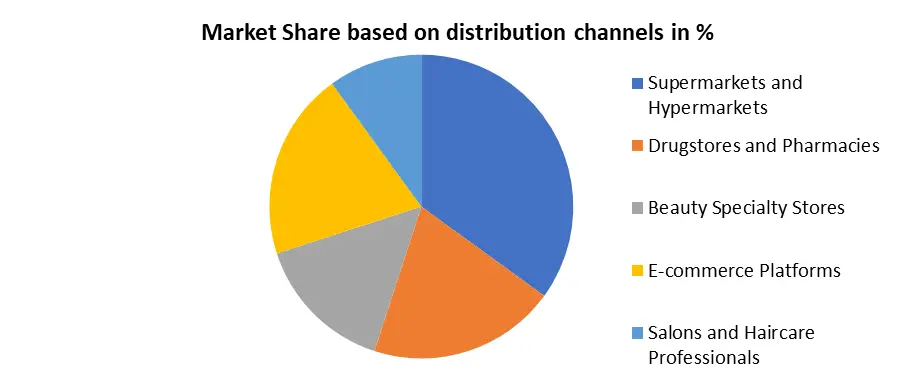
Hair Gel Market Regional Analysis
North American hair gel market is influenced by fashion-conscious consumers and changing grooming trends. US and Canada dominate the hair gel market in the region due to a strong demand for various styling products.
North American market trends include preference for natural and organic formulations, innovative product features and social media influence on consumer choices. Popular distribution channels in this region include supermarkets, drugstores and e-commerce platforms.
Europe is a significant market for hair gel, with the United Kingdom, Germany, France and Italy being the top consumers. Europe offers a diverse range of hair gel products that cater to different hair types and styling preferences.
Hair care awareness and trendy hairstyles are driving the growth of the European market. Established cosmetic brands and eco-friendly products are important factors influencing the European hair gel market.
Asia Pacific hair gel market is growing due to a large population, rising disposable income and changing consumer lifestyles. China, Japan, South Korea and India are significant players in the regional market due to their strong grooming culture and the impact of K-beauty and J-beauty trends. Asia Pacific's hair gel market offers a variety of formulations for different hair types and concerns.
E-commerce and beauty specialty stores are driving the distribution of hair gel products in this region. Hair gel market in South America has growth opportunities, with Brazil Argentina being the key markets.
Market influenced by emphasis on personal appearance and grooming in the region. There is a high demand for hair gel products that cater to various hair textures and styles.
Consumers prefer products that offer long-lasting hold and humidity resistance. Latin American hair gel market is highly competitive with both local and international brands offering diverse options.
The Middle East and Africa countries like Saudi Arabia, UAE, South Africa and Nigeria are key players in the hair gel market. Cultural factors drive the market in this region, with hair styling being crucial for self-expression and identity.
There is a high demand for hair gel products that offer strong hold, heat protection and humidity resistance in hot and humid climates. Distribution channels such as retail stores, beauty shops and online platforms are utilised to reach consumers in this area.
Hair Gel Market Segment Analysis
In terms of product type, the hair gel market offers a range of options to cater to different styling needs. Styling gel is the most common type, providing hold, texture and definition to various hairstyles. Wet look gel is designed to create a sleek and shiny appearance, while volumizing gel adds lift and body to the hair.
Curl enhancing gel targets those with natural curls, helping to define and enhance them. Specialty gels cater to specific concerns, such as anti-frizz, colour-enhancing, or heat protection properties.
Distribution channels play a crucial role in reaching consumers in the hair gel market. Supermarkets and hypermarkets offer convenience and a wide product selection to shoppers. Drugstores and pharmacies provide a dedicated section for personal care products and often offer expert advice. Beauty specialty stores focus on a diverse range of hair gel brands, catering to specific hair needs and preferences.
E-commerce platforms have gained popularity, providing convenience and a broad range of products online. Salons and haircare professionals recommend and sell hair gel products, leveraging their expertise and personalized advice.
Consumer demographics also play a significant role in segmenting the hair gel market. Gender is an important factor, with specific formulations and packaging targeting men and women.
Men's hair gel products often focus on providing strong hold and styling options for short hairstyles, while women's products may emphasize shine, flexibility and texture. Age is another consideration, as different age groups have varying hair care needs.
Products for teenagers, young adults, or mature consumers may be tailored accordingly. Hair type is also a key segmentation factor, with formulations customized for straight, wavy, curly, or textured hair. Lifestyle and preferences, such as vegan or cruelty-free products, may also be targeted by specific hair gel brands.
Hair Gel Market Competitive Landscape
The hair gel market's competitive landscape is marked by the presence of numerous players, including established brands, emerging companies and regional or local manufacturers. These players engage in fierce competition, aiming to differentiate themselves through product innovation, effective marketing strategies and strong brand positioning.
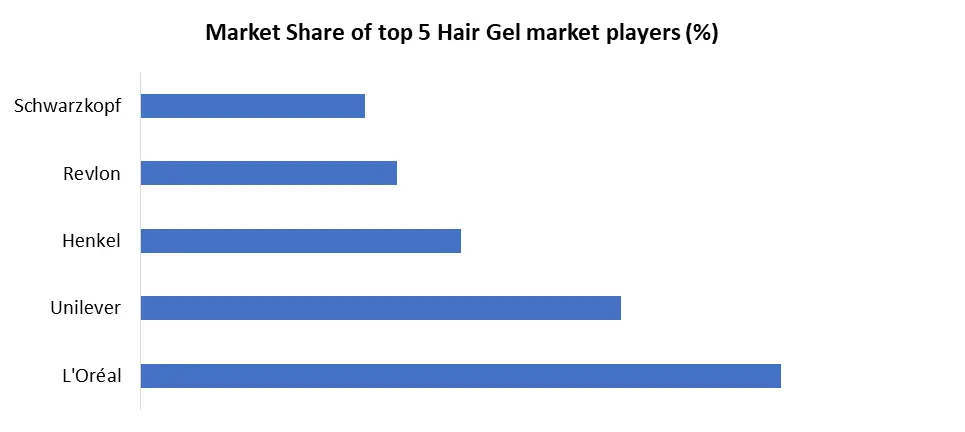
The market's competitiveness drives continuous efforts to meet evolving consumer demands and gain a competitive edge. P&G is a major player in the hair gel market. P&G has a diverse selection of hair gel products available, including well-known brands like Pantene and Head & Shoulders. The company prioritises product innovation and invests heavily in R&D to meet various consumer needs.
L'Oréal is a major player in the hair gel market. Their hair gel offerings cater to different styling needs and hair types, allowing consumers to find suitable products within their range. Unilever is also a significant player in the hair gel market.
The company boasts a strong presence in the personal care sector and their hair gel brands, such as Dove and TRESemmé, are known for delivering quality products with specific benefits like long-lasting hold, moisture and shine.
Henkel AG & Co. KGaA is recognized as a multinational company with a significant presence in the hair gel market. Their brand Schwarzkopf offers a wide range of styling products, including hair gels, renowned for their quality and performance.
In addition to these established brands, the hair gel market also features emerging and niche players. These companies often focus on specific target markets or consumer segments, providing specialized hair gel products with distinct features or natural and organic ingredients.
Examples of such players include Kinky-Curly, which caters to the needs of natural and curly hair and Hanz de Fuko, known for its premium men's grooming products. Regional and local manufacturers also contribute to the hair gel market, particularly in specific geographic areas.
These players possess a strong understanding of local consumer preferences and can cater to specific regional demands effectively. They may leverage their proximity to the market, flexible production capabilities and distribution networks to compete successfully against larger multinational companies.
Regional and local players often have a loyal customer base and focus on localized marketing efforts and targeted distribution channels to promote their hair gel products. Private label brands offered by retailers, supermarkets and drugstores have gained prominence in the hair gel market.
These brands provide affordable alternatives to established brands while maintaining quality standards. Retailers leverage their existing distribution channels and customer base to promote private label hair gel products, offering consumers a value-for-money proposition.
The hair gel market's competitive landscape is dynamic and continuously evolving. Product innovation, formulation enhancements, marketing campaigns and brand positioning are critical factors for success.
Companies strive to understand consumer preferences, emerging market segments and industry trends to effectively compete and capture market share in the highly competitive hair gel industry.
Recent Industry Developments
| Exact Date | Company | Development | Impact |
|---|---|---|---|
| 26 March 2026 | Henkel AG & Co. KGaA | Henkel signed a definitive agreement to acquire Olaplex for $1.4 billion to strengthen its premium hair care and styling portfolio. | The acquisition significantly enhances Henkel's competitive position in the high-end professional styling and bond-building market segments. |
| 17 March 2026 | L'Oréal S.A. | L'Oréal expanded its AI partnership with NVIDIA to integrate the ALCHEMI machine learning framework for predicting molecule performance in new formulations. | This computational chemistry approach accelerates the R&D cycle for creating next-generation, high-performance hair styling gels and treatments. |
| 05 January 2026 | L'Oréal Groupe | The company introduced the Light Straight + Multi-styler at CES 2026, utilizing infrared light technology for hair styling. | This launch disrupts traditional styling methods by combining hardware innovation with product application for superior hair health. |
| 12 December 2025 | Unilever PLC | Unilever's CEO confirmed a strategic shift toward premiumization, focusing on the growth of power brands like Dove and high-end styling lines. | The strategy aims to improve profit margins by pivoting away from mass-market tail brands toward value-added styling products. |
| 19 August 2025 | Procter & Gamble | P&G launched a new Consumer Insights Program in Latin America to drive localized innovation for hair care and styling essentials. | This initiative targets regional market share by tailoring gel formulations to specific humidity and climate needs in the LATAM region. |
| 15 June 2025 | Unilever PLC | Unilever completed the acquisition of Dr. Squatch, a men’s personal care brand specializing in natural and botanical products. | The move expands Unilever's presence in the rapidly growing natural men's grooming and styling market. |
Hair Gel Market Scope : Inquire Before Buying
| Hair Gel Market | |||
|---|---|---|---|
| Report Coverage | Details | ||
| Base Year: | 2025 | Forecast Period: | 2026-2032 |
| Historical Data: | 2020 to 2025 | Market Size in 2025: | 24.15 USD Billion |
| Forecast Period 2026-2032 CAGR: | 4.3% | Market Size in 2032: | 32.43 USD Billion |
| Segments Covered: | by Product | Styling Gel Wet Look Gel Volumizing Gel Curl Enhancing Gel Specialty Gels |
|
| by Hold Strength | Light Hold Medium Hold Strong Hold Extra Strong Hold |
||
| by Distribution Channel | Supermarkets and Hypermarkets Drugstores and Pharmacies Beauty Specialty Stores E-commerce Platforms Salons and Haircare Professionals |
||
| by Active Ingredients | Aloe Vera-based Keratin-infused Argan Oil-based Tea Tree Oil-based Others |
||
Hair Gel Market , by Region
North America (United States, Canada and Mexico)
Europe (UK, France, Germany, Italy, Spain, Sweden, Austria and Rest of Europe)
Asia Pacific (China, South Korea, Japan, India, Australia, Indonesia, Malaysia, Vietnam, Taiwan, Bangladesh, Pakistan and Rest of APAC)
Middle East and Africa (South Africa, GCC, Egypt, Nigeria and Rest of ME&A)
South America (Brazil, Argentina Rest of South America)
Key Players / Competitors Profiles Covered in Brief in Global Hair Gel Market Report in Strategic Perspective:
- Procter & Gamble
- L'Oréal S.A.
- Unilever
- Revlon Inc.
- John Paul Mitchell Systems
- Henkel AG & Co. KGaA
- Schwarzkopf
- Wella Professionals
- Coty Inc.
- Kao Corporation
- Shiseido Company, Limited
- Amorepacific Corporation
- LG Household & Health Care Ltd.
- Natura &Co
- Grupo Boticário
- Belcorp
- Yanbal International
- Laboratorios Maverick
- Johnson & Johnson
- Beiersdorf AG
- Estée Lauder Companies
- Shanghai Jahwa United
- Garnier
- Mellew Hair Care
- Combe Incorporated
Frequently Asked Questions
1. What is the projected hair gel market size and growth rate?
Ans. The hair gel market valuation is USD 24.15 billion in 2025, reaching USD 32.43 billion by 2032 with a 4.3% CAGR driving industry growth.
2. Which region leads the hair gel market share analysis?
Ans. North America dominates global consumption due to grooming trends, while Asia Pacific shows the fastest market expansion fueled by rising disposable incomes and K-beauty.
3. How is technology impacting hair gel market trends 2026?
Ans. L'Oréal’s AI partnerships and infrared styling tools revolutionize formulation accuracy, accelerating the R&D cycle for high-performance, tech-driven hair styling gels and customized consumer solutions.
4. What role does sustainability play in hair gel industry growth?
Ans. Rising demand for eco-friendly packaging and organic formulations forces brands toward clean beauty. Natural hair gel segments thrive as consumers prioritize sustainable manufacturing practices.
5. How do premiumization strategies influence hair gel market revenue?
Ans. Leaders like Unilever and Henkel shift toward premium hair care, acquiring high-end brands like Olaplex to capture value-added styling segments and improve profit margins.
6. Which distribution channel is most effective for hair gel sales?
Ans. E-commerce platforms offer unmatched convenience, yet beauty specialty stores and salons remain vital for personalized professional advice and high-performance specialty gel product discovery.
7. What are the primary hair gel market competitive challenges?
Ans. Intense brand competition and product substitutes like pomades or sprays create price wars, requiring continuous innovation in hold strength and non-sticky formulation technology.