
Green Hydrogen Market By Technology, By Form, By Power Source, By Distribution Channel, By Application and Regional Insights 2034
Overview
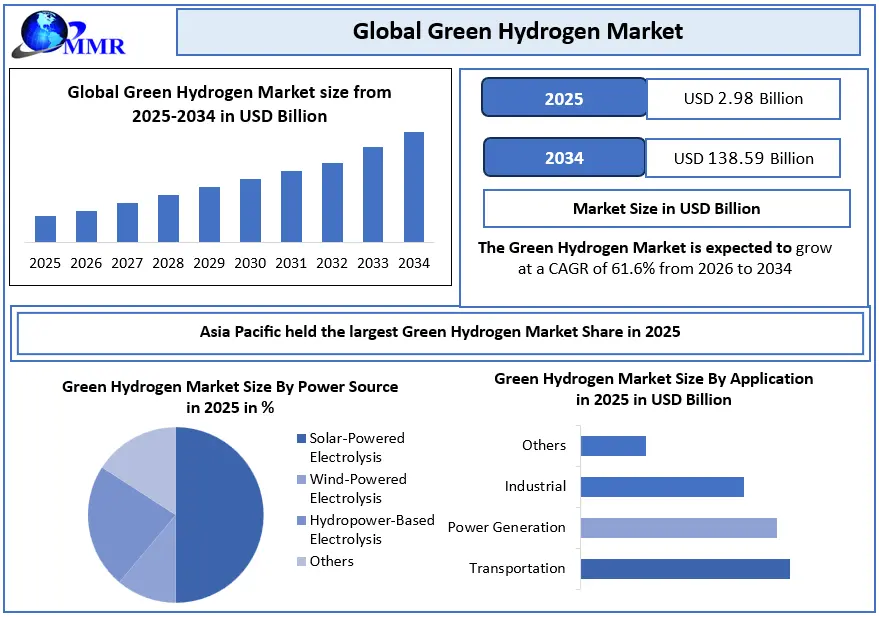
Green Hydrogen Market size was valued at USD 2.98 Billion in 2025, and the total revenue is expected to grow at a CAGR of 61.6% from 2026 to 2034, reaching nearly 138.59 Billion.
Green Hydrogen Market Overview
The Green Hydrogen Market is emerging as a strategic component of global decarbonization, supporting the transition toward low-carbon industrial production, sustainable transportation, and renewable energy integration.
• Production Technology: Green hydrogen is produced through water electrolysis powered by renewable electricity, primarily solar, wind, and hydropower, eliminating direct carbon dioxide emissions during hydrogen production.
• Industrial Applications: Major applications include ammonia production, petroleum refining, green steel manufacturing, methanol production, energy storage, and hydrogen-based synthetic fuels.
• Energy Requirements: Producing 1 kg of hydrogen typically requires nearly 50–55 kWh of electricity in modern electrolyzer systems, depending on operating efficiency.
• Technology Development: Alkaline and proton exchange membrane (PEM) electrolyzers remain commercially important, while solid oxide electrolyzers offer opportunities for high-temperature industrial integration.
• Government incentives, green hydrogen production subsidies, renewable electricity expansion, and increasing investments in electrolyzer manufacturing capacity are accelerating Global Green Hydrogen Market growth. Rising industrial decarbonization commitments, clean hydrogen policies, and renewable energy integration are creating opportunities for large-scale green hydrogen projects, sustainable hydrogen production, and hydrogen infrastructure development. However, high green hydrogen production costs, electricity price volatility, limited hydrogen storage and transportation infrastructure, and uncertain long-term industrial hydrogen demand remain significant barriers to commercial adoption and market expansion.
Green Hydrogen Market Growth and Share Analysis
To know about the Research Methodology :- Request Free Sample Report
Green Hydrogen Market Dynamics
Market Trend: Increasing Deployment of Large-Scale Electrolyzers and Integration of Renewable Energy
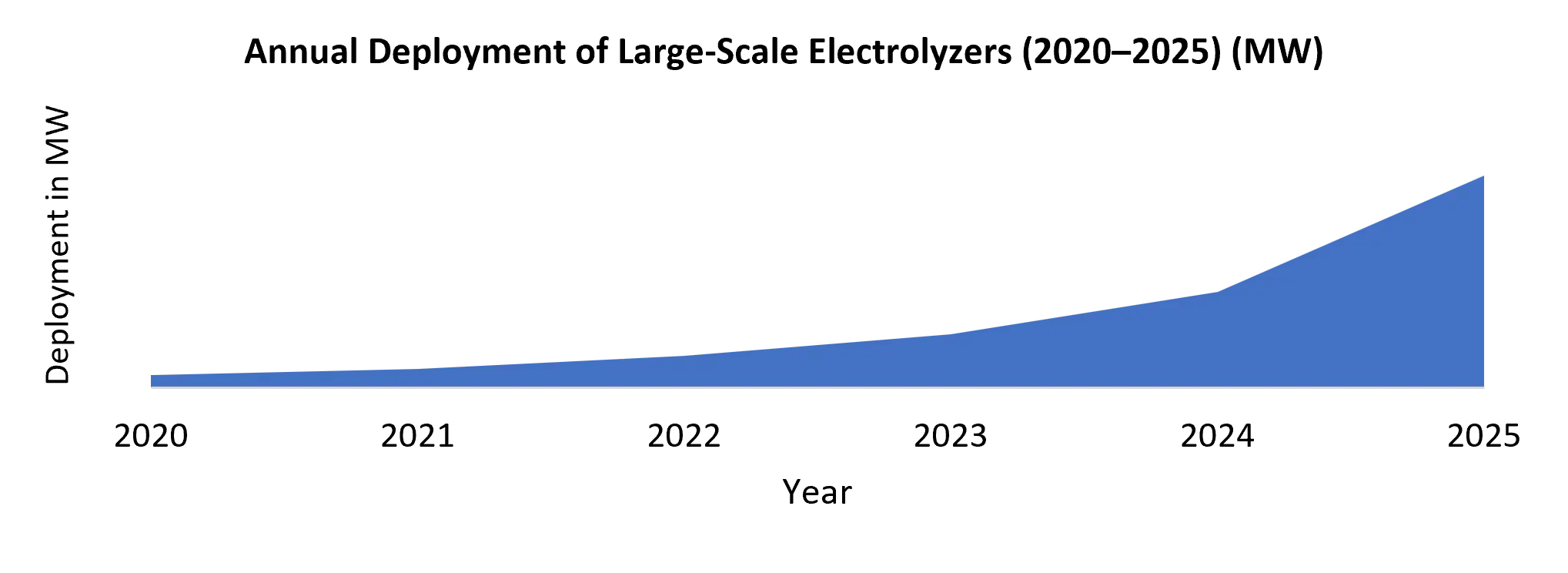 • Electrolyzer Capacity Expansion: Global installed water electrolysis capacity doubled during 2025, exceeding 4 GW, reflecting increasing investment in renewable hydrogen production infrastructure.
• China's Technological Leadership: China accounted for nearly 75% of new global electrolyzer installations in 2025, supported by domestic manufacturing capacity, competitive equipment costs, and large-scale industrial projects.
• Increasing Production: Global low-emissions hydrogen production increased nearly 20% in 2025, approaching 1 million tonnes annually, although renewable hydrogen represents only part of this volume.
• Industrial Integration: Hydrogen developers are increasingly locating electrolyzers near solar and wind generation facilities, ammonia plants, refineries, and industrial clusters to improve operating efficiency and reduce transportation requirements.
• Technology Innovation: Manufacturers are developing higher-efficiency alkaline, PEM, and solid oxide electrolysis technologies, alongside modular systems designed for flexible renewable electricity consumption.
Market Driver: Increasing Industrial Decarbonization Requirements and Government Investments Accelerating
• Growing Industrial Hydrogen Demand: Global hydrogen consumption exceeded 100 million tonnes in 2025, increasing nearly 3% annually, creating substantial opportunities to replace conventional fossil-based hydrogen with renewable alternatives.
• Industrial Emission Reduction: Refining, ammonia, methanol, and steel production represent important potential demand centers for green hydrogen, particularly where direct electrification remains technically challenging.
• Increasing Low-Carbon Adoption: Low-emissions hydrogen demand grew nearly 20% in 2025, indicating gradual industrial adoption of alternative hydrogen production pathways.
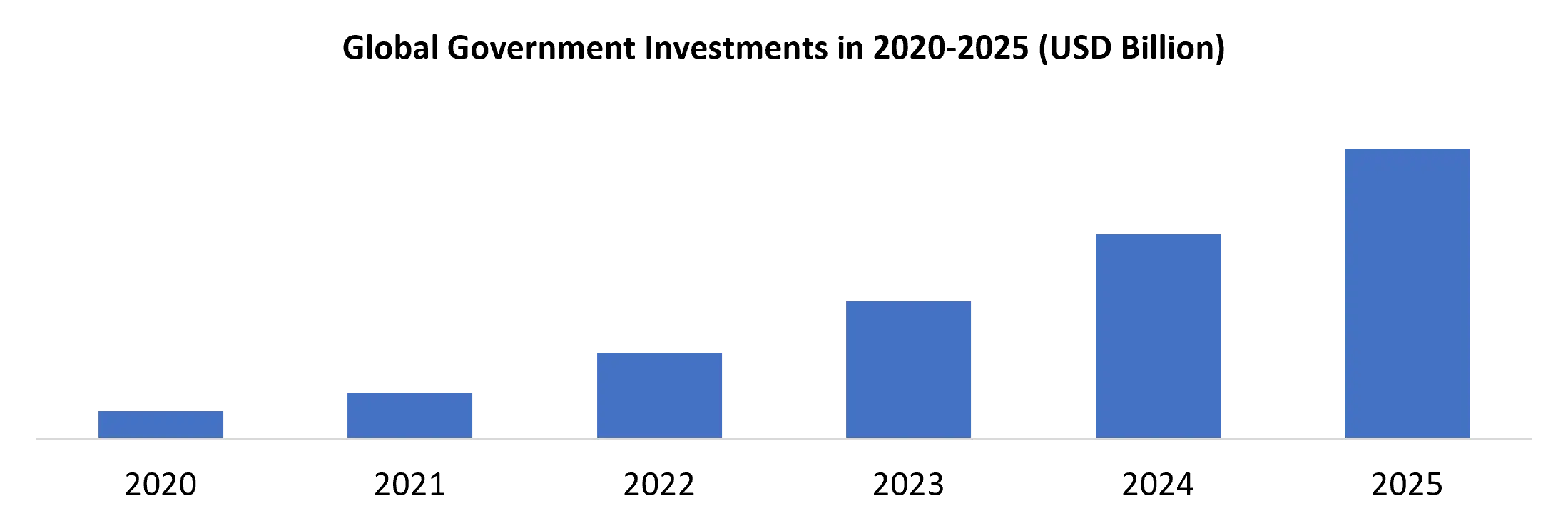
• Government Policy Support: Renewable hydrogen procurement initiatives, industrial decarbonization policies, production incentives, and certification frameworks are encouraging project development across Europe, India, China, and other markets.
• Commercial Procurement: Global new low-emissions hydrogen offtake agreements reached nearly 1.7 million tonnes annually in 2025, providing a potential foundation for future investments.
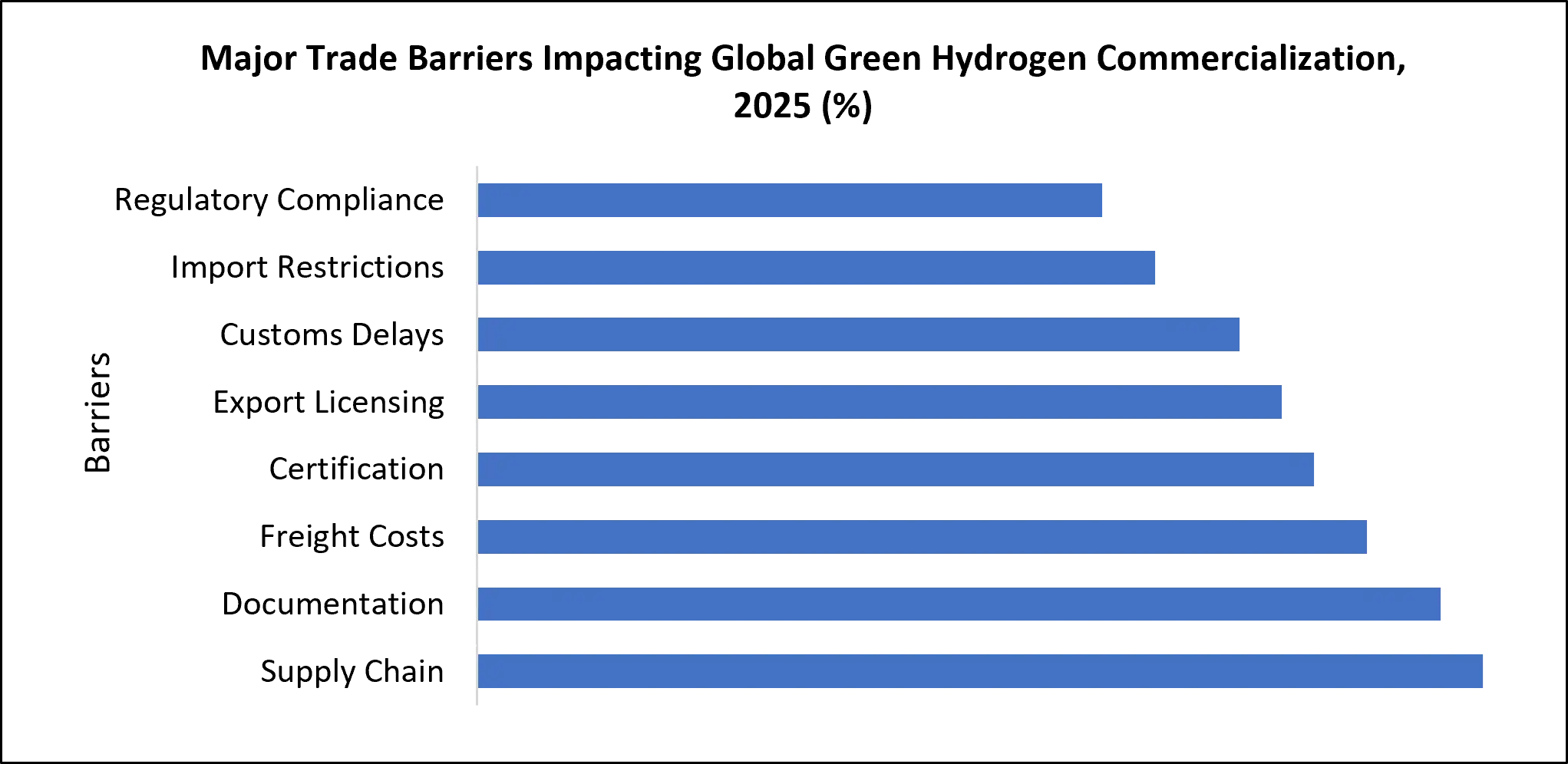
Market Challenge: High Production Costs, Limited Hydrogen Infrastructure and Uncertain Industrial Offtake Agreements
• High Electricity Requirements: Electrolysis typically requires nearly 50–55 kWh of electricity per kilogram of hydrogen. At USD 0.05/kWh, electricity alone contributes nearly USD 2.50–2.75/kg, excluding equipment, financing, and other operating costs.
• Limited Commercial Adoption: Low-emissions hydrogen accounted for less than 1% of global hydrogen production in 2025, highlighting the substantial gap between conventional hydrogen supply and emerging cleaner alternatives.
• Weak Contractual Commitments: Only nearly 20% of new low-emissions hydrogen offtake volumes signed in 2025 were supported by firm agreements, restricting project financing.
• Project Development Delays: The announced low-emissions hydrogen production pipeline for 2030 declined from 37 million tonnes annually in the 2025 IEA assessment to 27 million tonnes in the 2026 assessment.
• Infrastructure Limitations: Insufficient hydrogen pipelines, storage terminals, export facilities, and distribution networks increase development costs.
• Investment Uncertainty: High capital expenditure, regulatory complexity, renewable electricity availability, and competition from conventional hydrogen continue delaying final investment decisions.
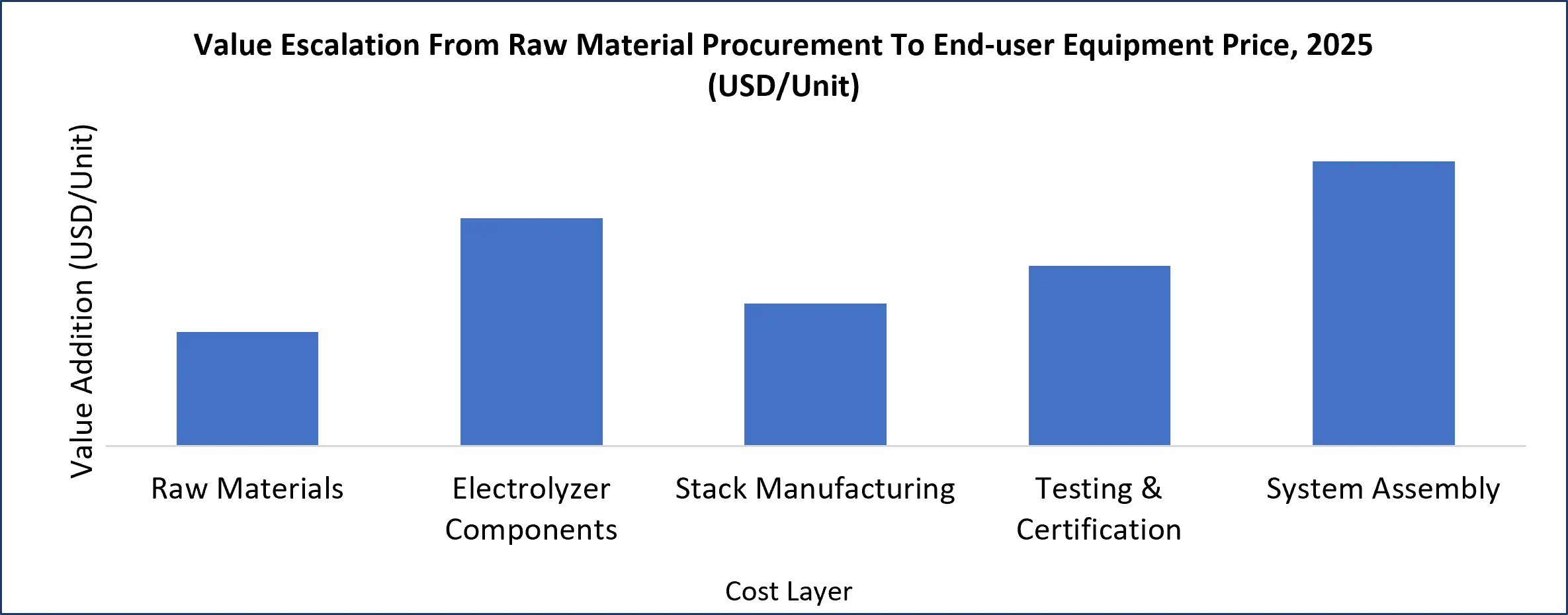
Green Hydrogen Market Segment Analysis
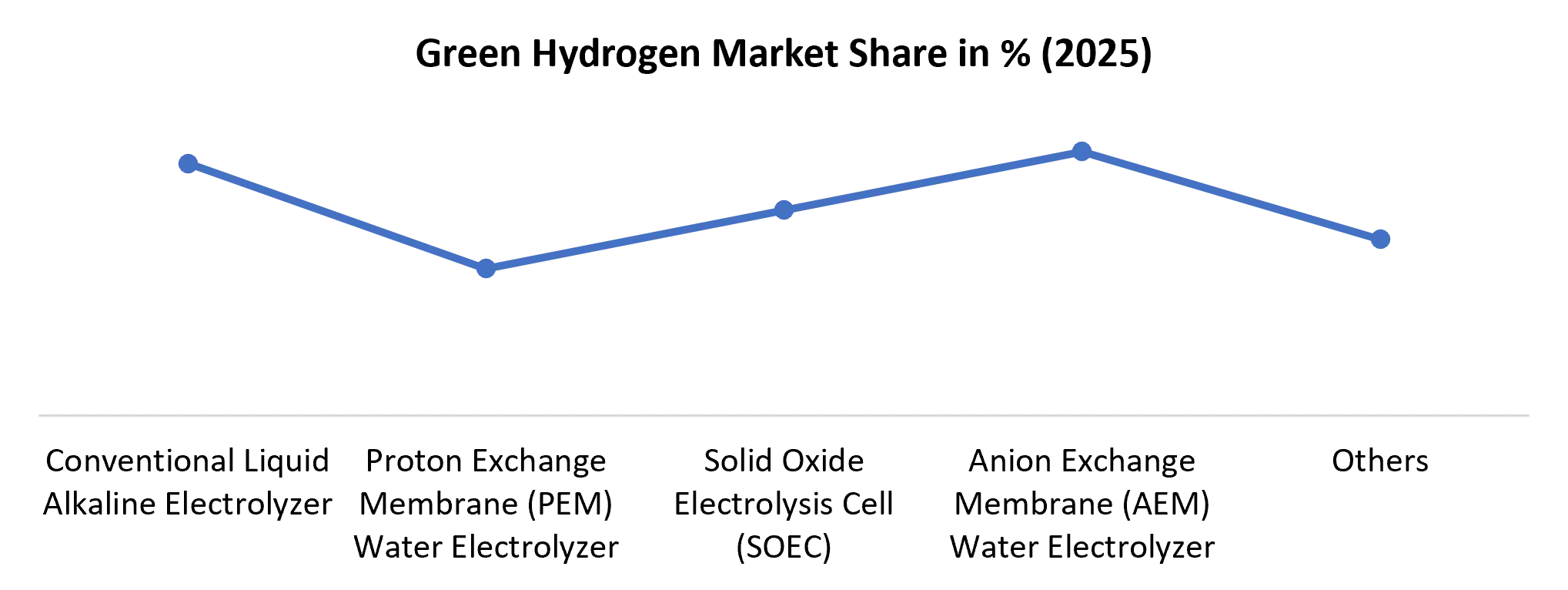
By Technology: Conventional Liquid Alkaline Electrolyzers Dominated the Green Hydrogen Market in 2025
Conventional liquid alkaline electrolyzers dominated the Green Hydrogen Market in 2025, supported by their commercial maturity, comparatively low equipment costs, and suitability for large-scale hydrogen production. Global installed water electrolysis capacity exceeded 4 GW in 2025, nearly doubling from 2024 levels. In 2024, electrolyzer systems manufactured and installed in China cost nearly USD 600–1,200/kW, compared with USD 2,000–2,600/kW outside China, depending on technology and project specifications. Commercial alkaline electrolyzers typically require nearly 50–55 kWh of electricity per kilogram of hydrogen, depending on operating conditions and system efficiency. Increasing investments in green ammonia production, petroleum refining, steel manufacturing, and renewable hydrogen infrastructure are strengthening demand for alkaline electrolysis technology.
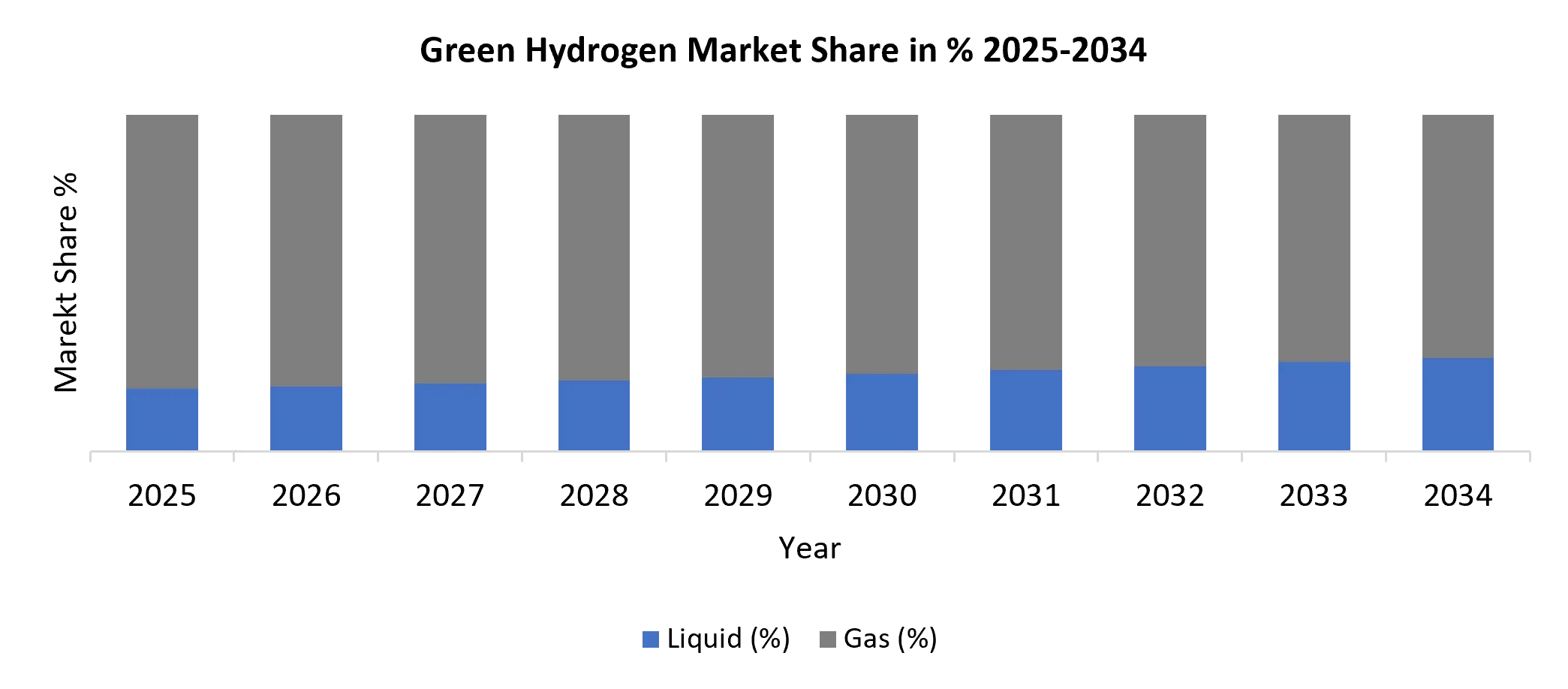
By Form: Gaseous Hydrogen Dominated the Green Hydrogen Market in 2025
The gaseous hydrogen segment dominated the Green Hydrogen Market in 2025, supported by direct electrolyser output, industrial consumption, and comparatively lower processing requirements than liquid hydrogen. Water electrolysis initially produces hydrogen in gaseous form, eliminating the need for additional liquefaction when supplying nearby industrial facilities. Hydrogen liquefaction typically requires nearly 10–13 kWh/kg, in addition to the 50–55 kWh/kg commonly required for electrolysis.
Gaseous hydrogen can be stored at pressures of 350–700 bar for selected hydrogen fuel cell vehicles and transportation applications, while industrial hydrogen storage and distribution systems frequently operate at lower pressures. Increasing investments in high-pressure hydrogen storage systems, compressed gaseous hydrogen infrastructure, hydrogen refueling stations, and industrial hydrogen distribution networks are supporting Green Hydrogen Market growth, renewable hydrogen adoption, and the development of efficient hydrogen transportation and storage technologies. Global hydrogen consumption exceeded 100 million tonnes in 2025, with petroleum refining, ammonia manufacturing, and chemical production accounting for most demand. Increasing investments in hydrogen pipelines, industrial hydrogen hubs, and renewable-powered electrolyzers are strengthening gaseous hydrogen infrastructure.
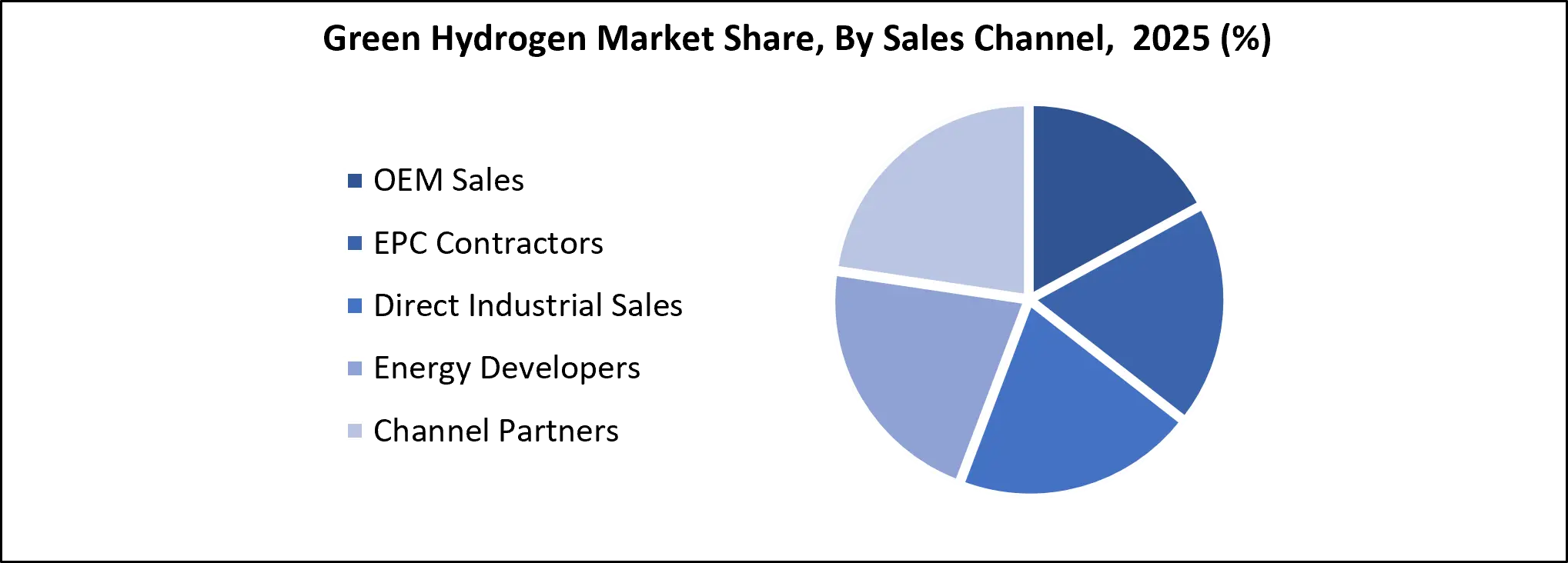
 By Sales Channel, Direct OEM-to-End-User Sales dominated the Green Hydrogen Market in 2025, supported by large-scale industrial procurement, customized electrolyzer systems, and long-term service agreements. Major manufacturers directly supply electrolyzers to refineries, fertilizer producers, and hydrogen developers. Industrial green hydrogen projects frequently require 10–100 MW electrolyzer systems, accelerating demand for large-scale green hydrogen production, industrial hydrogen electrolyzers, and renewable hydrogen technologies. Increasing adoption of PEM electrolyzers and alkaline water electrolysis systems encourages direct collaboration between electrolyzer manufacturers, industrial end users, and EPC contractors, supporting green hydrogen market growth, industrial decarbonization, and renewable energy integration. In 2025, Greenzo Energy secured an INR 320 crore contract to supply equipment for a 20 MW hydrogen project, demonstrating substantial project-based procurement. EPC-led sales remain a significant competing channel, particularly for turnkey facilities requiring integrated engineering, construction, and commissioning services.
Green Hydrogen Market Regional Insights
Asia Pacific dominated the Green Hydrogen Market in 2025 and is expected to continue its dominance over the forecast period.
• Regional Market Leadership: Asia Pacific dominated the Green Hydrogen Market in 2025, supported by expanding renewable energy infrastructure, industrial decarbonization initiatives, and hydrogen production investments across China, India, Japan, South Korea, and Southeast Asia.
• China's Large-Scale Green Hydrogen Projects: Sinopec's Kuqa green hydrogen facility in Xinjiang has nearly 260 MW of electrolyzer capacity, supported by 300 MW of solar photovoltaic capacity and designed to produce 20,000 tonnes of renewable hydrogen annually for refinery applications.
• India's Green Hydrogen Production Incentives: By February 2026, India had awarded incentives to 18 companies covering 862,000 tonnes of annual green hydrogen production capacity, strengthening domestic production and industrial supply chains.
• India's Investment and Employment Opportunities: India's National Green Hydrogen Mission targets investments exceeding USD 88.9 billion, creation of 600,000 jobs, and annual greenhouse gas emission reductions approaching 50 million tonnes by 2030.
• Japan's Hydrogen Economy Development: Japan aims to increase hydrogen supply from nearly 2 million tonnes to 3 million tonnes annually by 2030 and 12 million tonnes by 2040, supporting industrial decarbonization, energy security, and hydrogen imports.
• Southeast Asia's Industrial Hydrogen Demand: Southeast Asia consumed nearly 4 million tonnes of hydrogen in 2024, with Malaysia accounting for 22%, Vietnam 15%, and Singapore 12%. Existing ammonia, refining, and methanol demand creates opportunities for renewable hydrogen substitution.
• Regional Production Pipeline and Future Opportunities: Southeast Asia's announced low-emissions hydrogen projects could deliver nearly 480,000 tonnes annually by 2030, with over 90% concentrated in Indonesia and Malaysia. However, only 6% of announced capacity had reached final investment decision, highlighting commercialization challenges.
Major Global Green Hydrogen Projects – Electrolyser Capacity, Production Targets, and Project Timelines
| Green Hydrogen Project | Country | Electrolyzer Capacity (MW) | Designed H₂ Production (Tonnes/Year) | Project Timeline / Status |
| NEOM Green Hydrogen Project | Saudi Arabia | 2,200 | ~219,000 | Targeted 2027 |
| Sinopec Kuqa Green Hydrogen Project | China | 260 | 20,000 | Commissioned 2023 |
| bp Lingen Green Hydrogen Project | Germany | 100 | 11,000 | Targeted 2027 |
| Hunter Valley Hydrogen Hub | Australia | 50 | 4,700 | Under development; target 2028 |
| Iberdrola Puertollano Green Hydrogen Plant | Spain | 20 | ~3,000 | Operational since 2022 |
Green Hydrogen Market Competitive Landscape
The Green Hydrogen Market is characterized by increasing competition among established energy companies, electrolyzer manufacturers, and emerging hydrogen technology providers. Major players include Plug Power, Siemens Energy, thyssenkrupp nucera, Nel ASA, John Cockerill, ITM Power, Air Liquide, Linde, LONGi Hydrogen, and Fortescue. Green Hydrogen Companies are focusing on large-scale electrolyzer manufacturing, technological innovation, strategic partnerships, and production cost reduction to strengthen their competitive positions.
In 2025, the announced global electrolyzer project pipeline reached nearly 822 GW, highlighting substantial development opportunities, although much remained uncommitted. The 2.2 GW NEOM green hydrogen project demonstrates the increasing scale of commercial hydrogen infrastructure investments. Green Hydrogen Market Competition is intensifying across alkaline, PEM, and solid oxide electrolysis technologies, with manufacturers prioritizing efficiency, durability, and modular production systems. Strategic acquisitions and manufacturing consolidation are reshaping industry competition.
Green Hydrogen Market Recent Developments
| Date | Company Name | Recent Developments |
| 07-Jul-26 | Plug Power Inc. | Plug Power announced that the 50 MW Hunter Valley Hydrogen Hub in Newcastle, Australia, reached its final investment decision. The project will utilize Plug Power's GenEco PEM electrolyzer technology and is designed to produce nearly 4,700 tonnes of renewable hydrogen annually. Developed to support Orica's industrial decarbonization initiatives, the hydrogen will replace conventional hydrogen in ammonia manufacturing. The project strengthens Plug Power's commercial presence in Australia and supports the expansion of renewable hydrogen infrastructure across the Asia Pacific region. |
| 11-Feb-25 | Accelera by Cummins | Accelera by Cummins announced an agreement to supply a 100 MW PEM electrolyzer system for bp's green hydrogen facility in Lingen, Germany. The installation will incorporate 20 HyLYZER-1000 units, manufactured at Accelera's facility in Guadalajara, Spain. The project is designed to produce nearly 11,000 tonnes of green hydrogen annually, supporting refinery decarbonization and industrial applications. Commercial operations are targeted for 2027. This development strengthens Accelera's position in Europe's expanding hydrogen infrastructure market and demonstrates growing demand for industrial-scale electrolyzer technologies. |
| 17-Aug-26 | Electric Hydrogen Co. | Electric Hydrogen announced its selection as the preferred electrolyzer supplier for Perdaman's Project Helios in Western Australia. The proposed project will integrate more than 1 GW of solar photovoltaic capacity and produce over 120 tonnes of low-carbon hydrogen daily. Hydrogen production will support Perdaman's AUD 6.45 billion Project Ceres ammonia and urea manufacturing facility. Electric Hydrogen's HYPRPlant technology will enable large-scale renewable hydrogen production, strengthening the company's commercial position in industrial decarbonization and sustainable fertilizer manufacturing applications. |
| 17-Jun-26 | Ohmium International, Inc. | Ohmium International announced a strategic cooperation agreement with Hynfra P.S.A. to develop green hydrogen and ammonia projects across three countries: Mauritania, Jordan, and Oman. The partnership includes engineering collaboration, project development, and potential deployment of Ohmium's modular PEM electrolyzer systems. The projects aim to support industrial decarbonization, renewable hydrogen exports, and energy security. This agreement strengthens Ohmium's presence across the Middle East and Africa while creating opportunities for large-scale hydrogen infrastructure development and international renewable fuel supply chains. |
| 13-Apr-26 | Bloom Energy Corporation | Bloom Energy announced an expanded strategic partnership with Oracle involving potential deployment of up to 2.8 GW of solid oxide fuel cell capacity, including 1.2 GW of contracted capacity, for AI and cloud infrastructure. Separately, Bloom demonstrated a 4 MW solid oxide electrolyzer at NASA's Ames Research Center, capable of producing more than 2.4 tonnes of hydrogen daily. These developments highlight Bloom's electrochemical technology capabilities, although the Oracle agreement specifically concerns fuel cell power generation rather than green hydrogen production. |
Green Hydrogen Market Scope: Inquire before buying
| Green Hydrogen Market | |||
|---|---|---|---|
| Report Coverage | Details | ||
| Base Year: | 2025 | Forecast Period: | 2026-2034 |
| Historical Data: | 2020 to 2025 | Market Size in 2025: | 2.98 USD Billion |
| Forecast Period 2026-2034 CAGR: | 61.6% | Market Size in 2034: | 138.59 USD Billion |
| Segments Covered: | by Technology | Conventional Liquid Alkaline Electrolyzer Proton Exchange Membrane (PEM) Water Electrolyzer Solid Oxide Electrolysis Cell (SOEC) Anion Exchange Membrane (AEM) Water Electrolyzer Others |
|
| by Form | Liquid Gas |
||
| by Power Source | Solar-Powered Electrolysis Wind-Powered Electrolysis Hydropower-Based Electrolysis Others |
||
| by Distribution Channel | Pipeline Cargo |
||
| by Application | Transportation Power Generation Industrial Others |
||
Green Hydrogen Market, By Region
North America (United States, Canada, and Mexico)
Europe (UK, France, Germany, Italy, Spain, Sweden, Austria, and the Rest of Europe)
Asia Pacific (China, South Korea, Japan, India, Australia, ASEAN, Indonesia, Philippines, Malaysia, Vietnam, Thailand, ASEAN, Rest of Asia Pacific)
Middle East & Africa (South Africa, GCC, Nigeria, Rest of ME&A)
South America (Brazil, Argentina, Rest of South America)
Key players/Competitors profiles covered in the Green Hydrogen Market report from a strategic perspective
North America
1. Plug Power Inc.
2. Bloom Energy Corporation
3. Accelera by Cummins
4. FuelCell Energy Inc.
5. Electric Hydrogen Co.
6. Ohmium International, Inc.
7. Verdagy, Inc.
8. The Chemours Company
9. H2B2 Electrolysis Technologies
10. HTEC
Europe
11. Siemens Energy AG
12. thyssenkrupp nucera AG & Co. KGaA
13. Nel ASA
14. ITM Power plc
15. Sunfire GmbH
16. Topsoe A/S
17. Enapter AG
18. HydrogenPro ASA
19. John Cockerill Hydrogen
20. Johnson Matthey Plc
21. Industrie De Nora S.p.A.
22. McPhy Energy S.A.
23. H-TEC SYSTEMS GmbH
24. H2 Core Systems GmbH
25. Genvia
26. Bosch
Asia-Pacific
27. Asahi Kasei Corporation
28. LONGi Hydrogen Technology Co., Ltd.
29. Sungrow Hydrogen Sci. & Tech. Co., Ltd.
30. Reliance Electrolyser Manufacturing Limited
31. ACME Group
32. Adani New Industries Limited
33. L&T Electrolysers Limited
34. GreenH Electrolysis Pvt. Ltd.
35. Trina Green Hydrogen
36. Hygreen Energy
37. Cockerill Jingli Hydrogen
38. PERIC Hydrogen Technologies
39. Tianjin Mainland Hydrogen Equipment Co., Ltd.
40. Shandong Saikesaisi Hydrogen Energy Co., Ltd.
41. Hysata Pty Ltd.
42. H2U Technologies Japan
43. Toshiba Energy Systems & Solutions Corporation
Middle East & Africa
44. H2Pro Ltd.
45. HDF Energy
46. AMEA Power
47. ACWA Power
South America
48. HYTRON Energy & Gas / NEA|HYTRON
49. Unigel
50. H2B2 Brasil
Frequently Asked Questions:
1. Which region has the largest share in Global Green Hydrogen Market?
Ans: Asia Pacific region held the highest share in 2025.
2. What is the growth rate of Global Green Hydrogen Market?
Ans: The Global Green Hydrogen Market is growing at a CAGR of 61.6% during forecasting period 2026-2034.
3. What is scope of the Global Green Hydrogen Market report?
Ans: Global Green Hydrogen Market report helps with the PESTEL, PORTER, COVID-19 Impact analysis, Recommendations for Investors & Leaders, and market estimation of the forecast period.
4. What is the study period of this Market?
Ans: The Global Green Hydrogen Market is studied from 2020 to 2034.