
Wealth Management Platform Market Size by Deployment Type, Advisory Model, Application, End-User, Region – Segment-Level Market Assessment, Growth Opportunity Analysis, Competitive Mapping & Forecast to 2030
Overview
The Wealth Management Platform Market size was valued at USD 2.1 Billion in 2023 and the total Fuel Cell Electric Vehicle revenue is expected to grow at a CAGR of 37% from 2024 to 2030, reaching nearly USD 19.02 Billion by 2030
The Wealth Management Platform Market serves as a critical technological infrastructure for financial institutions, wealth management firms, and individual financial advisors to streamline and enhance their wealth management services. These platforms provide a comprehensive suite of tools and functionalities designed to facilitate various aspects of wealth management, including portfolio management, financial planning, risk assessment, client communication, and regulatory compliance. In industrial applications, wealth management platforms play a pivotal role in optimizing the efficiency and effectiveness of financial advisory services. By leveraging advanced technologies such as artificial intelligence (AI), machine learning (ML), and data analytics, these platforms enable advisors to analyze vast amounts of financial data, identify investment opportunities, and develop personalized strategies tailored to each client's unique financial goals and risk tolerance.
Additionally, wealth management platforms offer intuitive user interfaces and interactive dashboards that empower advisors to deliver a superior client experience, fostering stronger client relationships and loyalty. One of the key innovations driving the evolution of wealth management platforms is the integration of advanced analytics and predictive modeling capabilities. These innovations enable advisors to perform sophisticated portfolio analysis, scenario modeling, and risk assessment, allowing them to make more informed investment decisions and optimize portfolio performance. Moreover, the integration of artificial intelligence and machine learning algorithms enables wealth management platforms to automate routine tasks, such as portfolio rebalancing and tax optimization, thereby freeing up advisors' time to focus on higher-value activities such as financial planning and client engagement.
The importance of wealth management platforms in today's financial landscape cannot be overstated. These platforms not only enable financial advisors to deliver more personalized and proactive wealth management services but also empower clients to take a more active role in managing their finances. By providing clients with access to real-time portfolio information, interactive financial planning tools, and secure communication channels, wealth management platforms facilitate greater transparency, trust, and collaboration between advisors and clients. Ultimately, wealth management platforms are instrumental in helping individuals and families achieve their financial goals, build wealth, and secure their financial future in an increasingly complex and dynamic market environment.
The Wealth Management Platform Market is experiencing significant growth due to the increasing demand for streamlined wealth management solutions worldwide. With the rise in affluent clients seeking personalized financial services, wealth management platforms offer comprehensive tools for advisors to efficiently manage clients' assets, portfolios, and financial goals. Factors driving market expansion include advancements in technology, such as AI and machine learning, which enhance data analysis and decision-making processes, leading to more tailored investment strategies. Additionally, the growing adoption of cloud-based platforms facilitates accessibility, scalability, and security for both advisors and clients.
Recent developments by key players in the market, such as Advisor360, NetXInvestor, and Axia Suite, focus on enhancing user experience, expanding functionality, and integrating advanced analytics for better portfolio management. These platforms empower advisors with robust tools for portfolio reporting, risk assessment, and financial planning, while offering clients secure online portals to monitor their investments and track performance in real-time. Overall, the Wealth Management Platform Market is poised for continued growth, driven by technological innovation, increasing client demand for personalized financial services, and the ongoing pursuit of efficiency and effectiveness in wealth management practices.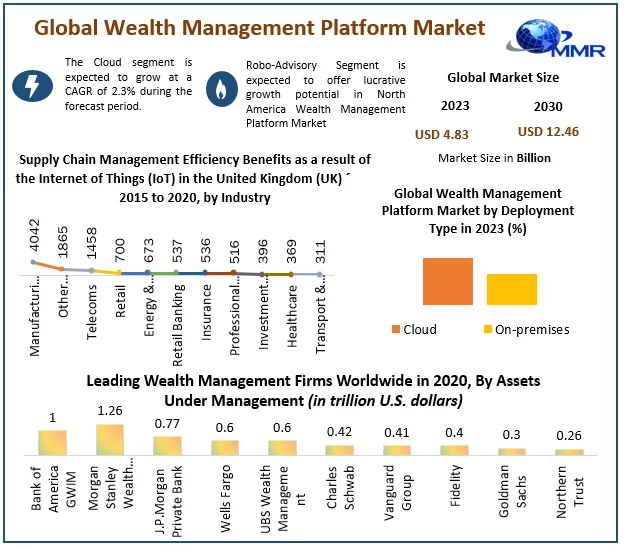 To know about the Research Methodology :- Request Free Sample Report
Wealth Management Platform Market Dynamics:
Globalization of Wealth Management Demand for Scalable Platforms Drives Wealth Management Platform Market
The increasing demand for personalized financial services prompted the adoption of wealth management platforms that cater to individual client needs. For example, platforms like Wealthfront and Betterment leverage algorithms to provide tailored investment strategies, enhancing client satisfaction and retention. Secondly, technological advancements, including artificial intelligence (AI) and machine learning (ML), are revolutionizing wealth management platforms. Platforms like Addepar harness AI to analyze complex financial data and provide actionable insights, enabling advisors to make informed decisions and deliver superior client outcomes.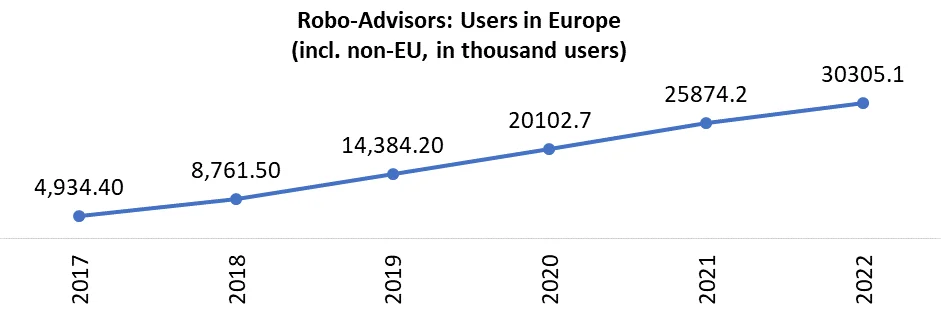 The rise of robo-advisors is another significant growth driver for the wealth management platform market. Robo-advisors such as Vanguard Personal Advisor Services and Schwab Intelligent Portfolios offer automated investment management services through digital platforms, attracting cost-conscious investors and expanding the market for wealth management platforms. Additionally, stringent regulatory compliance requirements necessitate the use of sophisticated wealth management platforms to ensure adherence to regulations. Platforms like Envestnet provide compliance tools and reporting features that help financial firms meet regulatory obligations efficiently, reducing the risk of penalties and reputational damage.
Furthermore, the globalization of wealth management is driving the demand for scalable and customizable platforms that can support diverse client needs across different regions. Platforms like InvestCloud and SS&C Advent offer multi-currency and multi-lingual capabilities, enabling firms to serve clients worldwide and capitalize on global market opportunities. The growing wealth of high-net-worth individuals (HNWIs) is also fueling market growth as affluent clients seek sophisticated wealth management solutions and personalized advisory services. Platforms like UBS Wealth Management and Merrill Lynch Wealth Management cater to the needs of HNWIs by offering comprehensive wealth management platforms with advanced investment tools and personalized advisory services.
Increasing emphasis on enhancing the client experience through intuitive and user-friendly wealth management platforms. Platforms like Personal Capital and eMoney Advisor provide intuitive interfaces, interactive dashboards, and mobile apps that empower clients to track their financial progress and communicate with their advisors seamlessly. Collaborations between wealth management firms and technology providers are also driving innovation and market expansion. Partnerships between firms and fintech startups, such as BlackRock's collaboration with Envestnet, result in the development of innovative wealth management platforms that combine industry expertise with cutting-edge technology.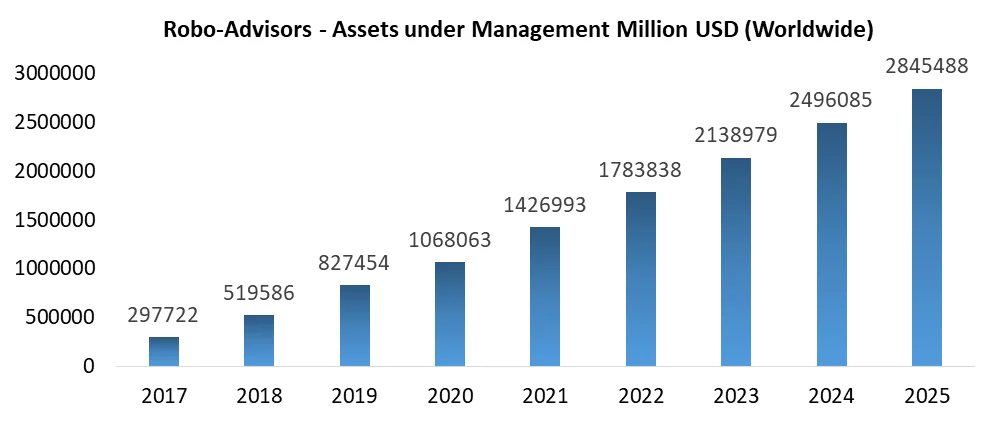 The growing demand for environmental, social, and governance (ESG) investing solutions is fueling the development of specialized wealth management platforms. Platforms like MSCI ESG Manager and Morningstar Sustainable Investing offer ESG screening tools and analytics to help investors align their investments with their values and sustainability goals. Lastly, the shift towards fee-based advisory models incentivizes the adoption of wealth management platforms that support transparent fee structures and value-added services. Platforms like Charles Schwab Intelligent Advisory and TD Ameritrade Institutional offer fee-based advisory services with access to comprehensive wealth management platforms, appealing to clients seeking transparent and fiduciary-focused advisory relationships. Overall, these growth drivers collectively contribute to the expansion and evolution of the Wealth Management Platform Market, shaping the future of financial advisory services.
Empowering Investor with Technology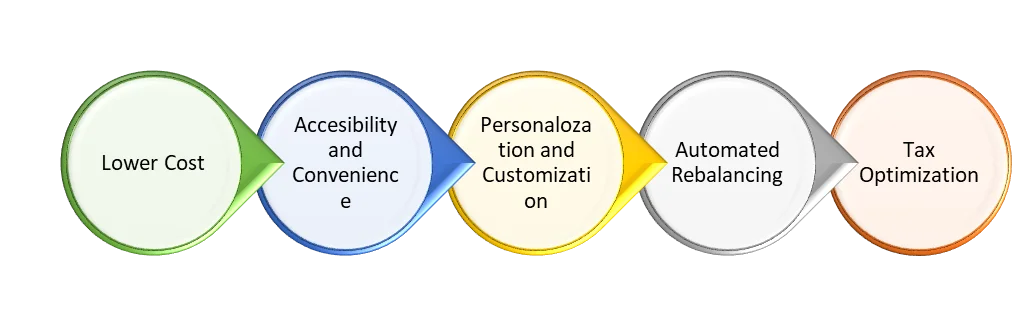 Complexity of Financial Products Implications for Wealth Management Restrains the Wealth Management Platform Market
Stringent regulatory compliance requirements, such as GDPR and MiFID II in Europe, increase operational costs and divert resources from innovation. Cybersecurity threats pose significant risks to platforms handling sensitive financial data, exemplified by incidents like the Equifax data breach. Additionally, concerns over trust and transparency stemming from high-profile scandals like the Bernie Madoff Ponzi scheme undermine investor confidence and require greater accountability in wealth management practices.
Legacy systems integration poses challenges for firms transitioning to modern platforms, while data privacy concerns, exemplified by the Facebook-Cambridge Analytica scandal, heighten client apprehensions about the security of their personal information. Market fragmentation and resistance to change within traditional financial institutions further hinder the market's growth, along with the complexity of financial products, customer education, and adoption, and competition from agile fintech startups like Robinhood and Wealthsimple. Overcoming these challenges requires collaborative efforts among industry stakeholders and continued innovation in technology and regulatory frameworks to foster a more secure, transparent, and efficient wealth management ecosystem.
Based on Type, the Wealth Management Platform Market is segmented into cloud and on-premises. The cloud has the biggest market share because it allows enterprises to carefully monitor their cloud-based apps and services, providing invaluable data, insights, and alerts as well as potential future commotions or concerns. Accessing tracking queries, analyzing procedures, ensuring data integrity, charting cloud-database resource utilization, and tracking obtainability are all part of the process. The main benefit of a cloud-based solution is that it is simple to use and does not require the organization to worry about installation, maintenance, or configuration duties. That it's under the control of the cloud provider. The cloud-based model is suitable for firms that want to grow on their own time. Corporations with large internal infrastructure, banks, financial institutions, and organizations with a devoted internal monitoring staff, on the other hand, choose on-premise. Wealth Management Platform Market.
Based on the Application, the Wealth Management Platform Market is segmented into Performance management, risk and compliance management, portfolio accounting and trading management, financial advice management, reporting, and others make up the wealth management platform market. Portfolio accounting is the process of analyzing the performance of individual stocks in a stock portfolio, determining whether investments should be increased or decreased, and evaluating the portfolio to verify that it fulfills the investor's growth goals. Portfolio accounting and trade management help HNW individuals manage their financial assets successfully and safely. The wealth management platform market for portfolio accounting and trade management platforms will continue to develop over the forecast period due to the growing number of high-net-worth individuals.
Wealth Management Platform Market Regional Insights:
The North America region dominated the market with 55 % share in 2023. The North America region is expected to witness significant growth at a CAGR of 6% through the forecast period. In order to attract and retain successful retail consumers in North America, wealth management services are becoming increasingly vital. Rich mass customers, for example, account for a significant portion of retail banks' net income in the region. The wealth management activities of many of the region's different financial market businesses are growing. Furthermore, the market is growing due to the presence of major players in the country.
Wealth Management Platform Market Scope: Inquire before buying
| Wealth Management Platform Market | |||
|---|---|---|---|
| Report Coverage | Details | ||
| Base Year: | 2023 | Forecast Period: | 2024-2030 |
| Historical Data: | 2018 to 2023 | Market Size in 2023: | US$ 33 Bn. |
| Forecast Period 2024 to 2030 CAGR: | 12.7% | Market Size in 2030: | US$ 76.2 Bn. |
| Segments Covered: | by Deployment Type | Cloud On-premises |
|
| by Advisory Model | Human Advisory Robo-Advisory Hybrid |
||
| by Application | Performance Management Risk and Compliance Management Financial Advice Management Portfolio accounting and Trading Management Reporting Other |
||
| by End-User | Investment Management Firms Trading and Exchanging firms Banks Brokerage Firms Other |
||
Wealth Management Platform Market by Region
North America (United States, Canada and Mexico)
Europe (UK, France, Germany, Italy, Spain, Sweden, Austria and Rest of Europe)
Asia Pacific (China, South Korea, Japan, India, Australia, Indonesia, Malaysia, Vietnam, Taiwan, Bangladesh, Pakistan and Rest of APAC)
Middle East and Africa (South Africa, GCC, Egypt, Nigeria and Rest of ME&A)
South America (Brazil, Argentina Rest of South America)
Wealth Management Platform Market Key Players
Major Contributors in the Wealth Management Platform Market in North America:
1. Charles Schwab Corporation (San Francisco, California, USA)
2. Fidelity Investments (Boston, Massachusetts, USA)
3. Vanguard Group (Malvern, Pennsylvania, USA)
4. BlackRock, Inc. (New York, USA)
5. Morgan Stanley (New York, USA)
6. Merrill Lynch (New York, USA)
7. Goldman Sachs Group, Inc. (New York, USA)
8. J.P. Morgan Chase & Co. (New York, USA)
9. Wells Fargo & Company (California, USA)
10. TD Ameritrade Holding Corporation (Nebraska, USA)
11. LPL Financial Holdings Inc. (California, USA)
12. Ameriprise Financial, Inc. (Minnesota, USA)
13. Raymond James Financial, Inc. (Florida, USA)
14. SEI Investments Company (Pennsylvania, USA)
15. Northern Trust Corporation (Illinois, USA)
16. BNY Mellon Wealth Management (New York, USA)
17. Stifel Financial Corp. (Missouri, USA)
Major Leading Player in the Wealth Management Platform Market in Asia Pacific:
1. Charles Stanley Group (London, United Kingdom)
2. Deutsche Bank Wealth Management (Frankfurt, Germany)
FAQ:
1] What segments are covered in the Wealth Management Platform Market report?
Ans. The segments covered in the Wealth Management Platform Market report are based on Deployment Type, Advisory Model, Application, End User, and Region.
2] Which region is expected to hold the highest share in the Global Wealth Management Platform Market?
Ans. North America region is expected to hold the highest market share in the Wealth Management Platform market.
3] What is the market size of the Global Wealth Management Platform Market by 2030?
Ans. The market size of the Wealth Management Platform Market by 2030 is expected to reach USD 12.46 Billion.
4] What is the forecast period for the Global Wealth Management Platform Market?
Ans. The forecast period for the Wealth Management Platform Market is 2024-2030.
5] What was the market size of the Global Wealth Management Platform Market in 2023?
Ans. The market size of the Wealth Management Platform Market in 2023 was valued at USD 4.83 Billion.