
Vegan Cosmetics Market - Industry Structure Evaluation, Demand Drivers Analysis, Regional Growth Analysis and Identification, Competitive Positioning Review & Global Market Size Forecast to 2034
Overview
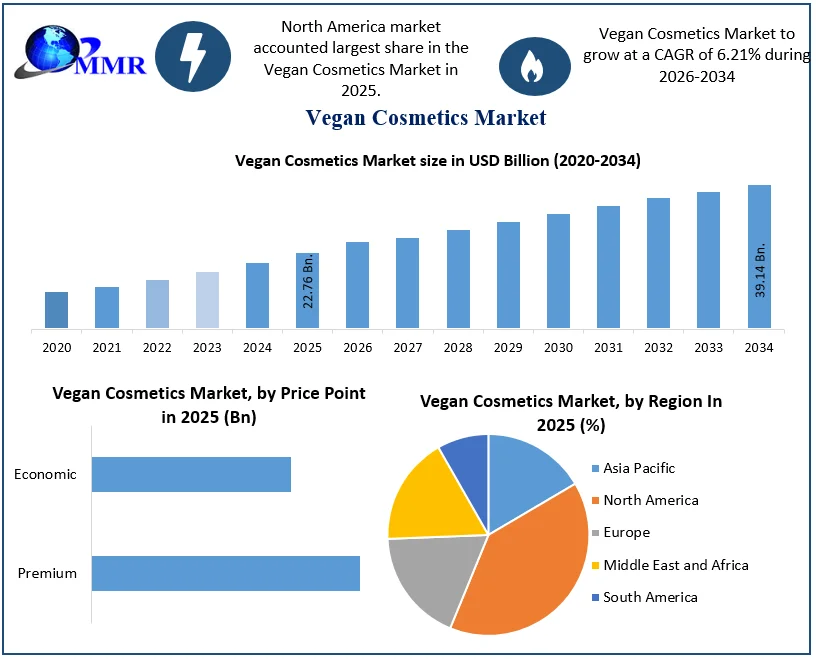
The Vegan Cosmetics Market size was valued at USD 22.76 Billion in 2025 and the total Vegan Cosmetics revenue is expected to grow at a CAGR of 6.21% from 2026 to 2034, reaching nearly USD 39.14 Billion.
Vegan cosmetics categorizes products that do not contain any animal-derived (such as gelatine, cholesterin or collagen) or animal by-products (such as honey, beeswax, or milk). Many people believe that vegan also means that the products are substances that have not been tested on animals. The term "vegan" is not regulated by law and is more often used when products do not contain any animal-derived substances. However, this does not mean that these have not been tested on animals. A vegan product is not always cruelty-free. The vegan cosmetics trend is driven by growing environmental, health, and ethical concerns, with notable figures like Millie Bobby Brown and Selena Gomez launching vegan brands. Marketed as free from animal-derived ingredients, vegan cosmetics are projected to reach $20.8 billion by 2025. Seppic offers a range of vegan-friendly active ingredients like CERAMOSIDES HP and NATIVE ESSENCE, alongside vegan formulations for sensory experiences.
Vegan Cosmetics Market Size, Growth and Share Analysis
To know about the Research Methodology :- Request Free Sample Report
Vegan cosmetic products are widely used in Europe in 2025. In the UK, vegan products are the most prevalent with 20% of new products developed, followed by Germany with 19% in the last five years. Although the trend competes with the halal claim, vegan beauty is on the rise in Asia with almost 20 % of vegan product launches in the same period (Global Asia Zone). By product category, decorative cosmetics are the top adopters of vegan products with 44.7%, followed by skin and hair care products with 29.3% and 12.9% respectively.
The need for high-efficacy goods, the financial situation of women, and men's increased awareness of aesthetics have all had an impact on the business strategies of luxury cosmetics businesses in recent years and drive the Vegan Cosmetics Market. Higher discretionary incomes for the middle class have also had an impact. Additionally, factors such as improved brand recognition, digitalization, and consumer knowledge of premium components in cosmetics contribute to a favorable trend toward premium branded cosmetics.
Vegan Cosmetics Market Key Dynamics
Consumer Awareness and Demand for Ethical Products:
The Vegan Cosmetics Market is being propelled by a surge in consumer awareness and demand for ethical products. With growing concerns about animal welfare and environmental impact, more consumers are seeking cruelty-free and vegan alternatives in their beauty routines. This shift in consumer preferences has led to increased demand for innovative, plant-based formulations from brands that prioritize transparency and sustainability. Additionally, the expansion of distribution channels, including e-commerce platforms and mainstream retailers, has made vegan cosmetics more accessible to a wider audience. Technological advancements in formulations have further fueled market growth, as companies strive to develop vegan products that offer comparable performance to conventional cosmetics. As consumer consciousness continues to drive the demand for ethical and sustainable beauty products, the Vegan Cosmetics Market is poised for continued expansion and innovation.
Consumer awareness is driving a seismic shift in the fashion industry towards sustainability. Informed consumers are demanding ethically sourced materials, pushing brands to prioritize eco-friendly fabrics such as organic cotton and recycled polyester. Additionally, consumers are advocating for ethical manufacturing practices, including fair wages and safe working conditions. Brands are responding by increasing transparency and embracing certifications such as GOTS and Fair Trade. This consumer-driven change not only benefits the environment by reducing carbon footprint and chemical pollution but also promotes economic opportunities and fosters a culture of quality over quantity in fashion consumption. Together, informed consumers and responsible brands are shaping a greener, more ethical future for the fashion industry.
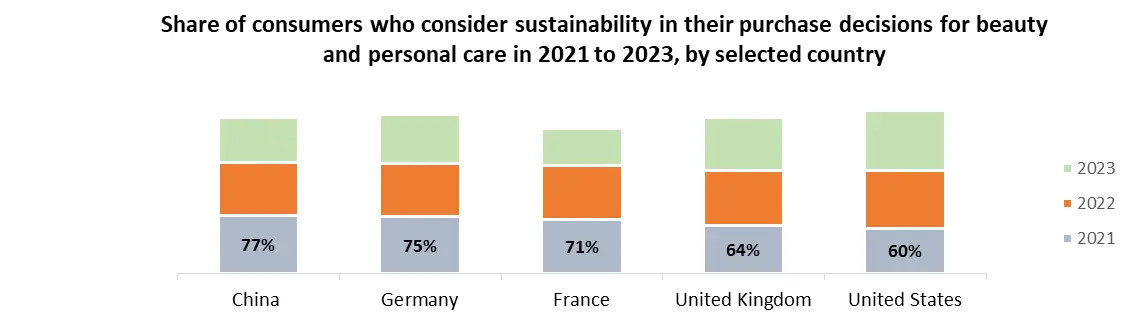
The share of consumers prioritizing sustainability in beauty and personal care purchases varied across selected countries from 2021 to 2024. This data reflects shifting consumer preferences towards eco-friendly products, indicating a growing global trend towards sustainable beauty choices. The extent of this consideration differed by country, highlighting diverse attitudes and behaviors towards sustainability in the beauty industry and boosting the demand for vegan cosmetics products.
Expansion of Distribution Channels:
With the rise of e-commerce platforms and social media influencers, consumers now have easier access to a wide array of vegan beauty products. Another key driver propelling the growth of the Vegan Cosmetics Market is the expansion of distribution channels. Additionally, mainstream retailers and specialty stores are increasingly dedicating shelf space to vegan cosmetics, catering to the growing demand from conscious consumers. This diversification of distribution channels allows vegan cosmetic brands to reach a broader audience and increase market penetration, driving overall market growth.
Europe emerges as a key player in the global market for vegan cosmetics, particularly in the importation of natural ingredients. As the world's largest importer of vegetable oils and essential oils, Europe's demand for natural cosmetic ingredients presents lucrative opportunities for suppliers. Despite economic challenges, the European Vegan Cosmetics manufacturers has displayed resilience, boasting a growth rate surpassing the global average. This resilience is expected to persist, with forecasts indicating sustained growth in the European market for vegan cosmetics, driven by consumer preferences for ethical and sustainable products.
Technological Advancements in Formulations to Create the Lucrative Opportunity for Market Growth
Technological advancements in formulations play a pivotal role in driving growth within the Vegan Cosmetics Market. As consumer expectations for performance and efficacy continue to rise, cosmetic companies are investing in research and development to create innovative vegan formulas that rival conventional products. Advancements in ingredient sourcing, formulation techniques, and product efficacy have enabled vegan cosmetics to offer comparable results to their non-vegan counterparts, attracting a wider consumer base. This focus on innovation not only drives product differentiation but also enhances the overall appeal of vegan cosmetics, which is expected to drive market growth and sustainability in the long term.
Table: Vegan Alternatives for Animal-Derived Ingredients in Cosmetics
| Ingredient | Vegan Alternative |
| Keratin | Soya protein, almond oil |
| Lanolin | Plant oils (coconut, olive), shea butter |
| Beeswax (Cera Alba) | Carnauba wax, candelilla wax, olive wax, soy wax |
| Carmine/Cochineal | Red iron oxide, plant-based pigments (e.g., beetroot powder) |
| Glycerin | Vegetal glycerin (from soybean, coconut, or palm oils) |
| Squalene Oil | Squalane (plant-derived, e.g., olive squalane) |
| Hyaluronic Acid | Plant-based hyaluronic acid (bacteria-based biofermentation) |
| Capric/Caprylic Triglyceride | Plant-derived (coconut, palms, figs) |
| Shellac | Zein (corn protein) |
| Allantoin | Plant-based (comfrey root, horse chestnut, bearberry) or synthetic |
The vegan cosmetics market is witnessing continuous evolution through key ingredient innovations and the adoption of popular vegan alternatives. Innovations such as PHENOBIO and STEVISSE offer eco-conscious solutions, while ingredients such as Cannabidiol and Mushrooms gain traction for their skin benefits. Also, vegan replacements for animal-derived ingredients like keratin and lanolin demonstrate the market's commitment to sustainability. These advancements signify abundant opportunities in the vegan cosmetics sector, reflecting a growing consumer demand for ethical and plant-based beauty products.
Vegan Cosmetics Market Segment Overview
By Product: In 2025, the skincare segment held a significant Vegan Cosmetics Market share of approximately 35.07%. Conscientious consumers are increasingly favoring vegan skincare products due to heightened awareness of their skin benefits. These products, crafted from plant-based ingredients, are perceived to reduce skin irritations, acne, and other issues. The hair care sector is projected to exhibit the fastest Compound Annual Growth Rate (CAGR) of 6.82% from 2026 to 2034. Vegan hair care offers diverse products such as shampoo, conditioner, and hair oil, tailored to meet varying consumer needs, thus stimulating market demand. Key brands such as E.L.F Cosmetics, KVD Vegan Beauty, and Bite Beauty are driving growth through their offerings of vegan color cosmetics, enhancing value sales within the market. This trend underscores a broader shift towards sustainability and plant-based alternatives in the cosmetics industry.
Consumer demand for vegan skincare and cosmetics is surging due to several factors: the wellness trend's influence, celebrity endorsements like Selena Gomez's Rare Beauty and Rihanna's Fenty Skincare, and the rise of niche claims such as Halal and nature-identical beauty. These trends align with concerns about ethics and sustainability, driving interest in cruelty-free, eco-friendly products. As veganism becomes increasingly mainstream, the market for vegan beauty products is expected to continue growing over the next five to seven years, reflecting consumers' growing emphasis on ethical purchasing and environmental impact.
By Distribution Channel: Based on distribution channel, the specialty stores dominated the distribution channels with a substantial contribution of over 35.7%. These outlets prioritize offering diverse product selections, including vegan cosmetics, providing customers with ample choices from various brands. They incentivize purchases through discounts and vouchers, driving increased foot traffic. The supermarkets and hypermarkets collectively hold approximately XX.85% market share. These large-scale retail establishments offer extensive beauty product assortments in one convenient location. Strategically situated near residential areas, they ensure easy access to a wide array of products, including vegan cosmetics, thereby bolstering Vegan Cosmetics Market growth.
Vegan Cosmetics Market Regional Insight
North America held the largest Vegan Cosmetics Market share in 2025. Factors such as heightened consumer awareness, robust regulatory frameworks set by the FDA, and the presence of influential brands like The Body Shop, Lush, and Neal's Yard Remedies contribute to this stronghold. Renowned brands in North America include The Body Shop, Lush, Catrice, Essence, NYX Professional Makeup, MAC Cosmetics, Urban Decay, Charlotte Tilbury, Huda Beauty, Fenty Beauty, and Anastasia Beverly Hills, reflecting the region's dedication to ethical and sustainable beauty options. Also, North America's well-established distribution channels and strong presence of vegan beauty influencers are contributing to market expansion. With a growing number of millennials and Gen Z consumers embracing veganism, the region is expected to continue dominating the global vegan cosmetics industry.
Europe shows increasing demand for vegan cosmetics, North America remains at the forefront. This is fueled by a growing emphasis on ethics and the environment in consumer choices, alongside the rising popularity of vegan and vegetarian lifestyles. Consumers are increasingly inclined towards natural and organic formulations, leading to a surge in product innovation and availability. Europe's diverse market landscape accommodates both mainstream and niche vegan brands, catering to a wide range of preferences.
The Asia Pacific Vegan Cosmetics Market is expected to grow at a significant CAGR over the forecast period. The surge in demand for vegan cosmetics is driven by a burgeoning population, rising disposable incomes, and shifting consumer preferences toward cruelty-free and sustainable products. Growing awareness regarding the adverse effects of animal testing and the presence of harmful chemicals in beauty products are driving the adoption of vegan alternatives across countries like China, Japan, South Korea, and India. Additionally, the influence of social media and celebrity endorsements is amplifying consumer interest in vegan beauty brands. Despite the dominance of traditional beauty standards, there is a noticeable shift towards embracing natural and ethical skincare and makeup products. As the market continues to mature and regulatory frameworks evolve, Asia Pacific emerges as a lucrative region for vegan cosmetics, with immense growth potential.
Vegan Cosmetics Market Recent Development
| Date | Company | Development | Impact |
|---|---|---|---|
| 15 September 2025 | Marinela Makeup | Marinela Makeup partnered with FasterCapital's EquityPilot program to scale its line of affordable, Canadian-sourced vegan cosmetics. | The collaboration grants the brand access to product development, e-commerce optimization, and a target US$150,000 seed round to expand production and North American distribution. |
| 15 December 2025 | Herbivore Botanicals | Herbivore Botanicals announced an exclusive retail partnership with Ulta Beauty alongside the launch of a new 15-piece plant-powered body care collection. | The expansion brings Herbivore's 100% vegan, adaptogen-infused formulations to over 850 Ulta Beauty stores nationwide and online. |
| 24 February 2026 | Croda International | Croda International Plc reported a 10% increase in new ingredient sales driven by green chemistry innovations like Kerabio hair-repair technology. | The R&D surge accelerates the commercialization of high-performance plant-based alternatives that replace traditional animal-derived cosmetic ingredients. |
| 15 April 2026 | Checkerspot | Biotech firm Checkerspot partnered with La Fabrique Végétale to unveil Algolein, a new microalgae-derived lipid range for personal care applications. | The debut ingredient, Algolein TG C18/80, provides cosmetic formulators with a sustainable, high-oleic algal oil alternative to animal fats and intensively farmed plant oils. |
Vegan Cosmetics Market Scope : Inquire before buying
| Vegan Cosmetics Market | |||
|---|---|---|---|
| Report Coverage | Details | ||
| Base Year: | 2025 | Forecast Period: | 2026-2034 |
| Historical Data: | 2020 to 2025 | Market Size in 2025: | USD 22.76 Bn. |
| Forecast Period 2026 to 2034 CAGR: | 6.21% | Market Size in 2034: | USD 39.14 Bn. |
| Segments Covered: | by Product | Skin Care Hair Care Makeup Others |
|
| by Price Point | Premium Economic |
||
| by End User | Men Women Children |
||
| by Distribution Channel | E-commerce Hypermarket/Supermarket Specialty Stores Others |
||
Vegan Cosmetics Market, by Region
North America (United States, Canada and Mexico)
Europe (UK, France, Germany, Italy, Spain, Sweden, Austria and Rest of Europe)
Asia Pacific (China, South Korea, Japan, India, Australia, Indonesia, Malaysia, Vietnam, Taiwan, Bangladesh, Pakistan and Rest of APAC)
South America (Brazil, Argentina Rest of South America)
Middle East & Africa (South Africa, GCC, Egypt, Nigeria and Rest of ME&A)
Leading Companies in the Vegan Cosmetics Industry
Vegan Cosmetic denotes the worldwide cosmetic manufacturing industry, which produces beauty and personal care products that are 100% free from any animal origin or genetically modified organisms. Some important segments in this industry are skin care, hair care, and color cosmetics.
| Company Name | Headquarters | Core Competencies |
| Pacifica Beauty | San Clemente, California, USA | Vegan and cruelty-free cosmetics, skincare, and personal care |
| Arbonne International LLC | Irvine, California, USA | Vegan skincare, cosmetics, and nutrition products |
| Gabriel Cosmetics Inc. | Redmond, Washington, USA | Vegan and natural cosmetics |
| Zuzu Luxe | Redmond, Washington, USA | Vegan color cosmetics |
| Ecco Bella | New Jersey, USA | Botanical and vegan cosmetics |
| Beauty Without Cruelty | London, England, UK | Vegan and cruelty-free cosmetics |
| Urban Decay | Newport Beach, California, USA | Vegan makeup and beauty products |
| e.l.f. Beauty | Oakland, California, USA | Vegan and cruelty-free cosmetics |
| Milk Makeup | New York, New York, USA | Vegan cosmetics and skincare |
| L'Oréal Groupe | Clichy, France | Vegan beauty products across multiple brands |
| Beiersdorf AG | Hamburg, Germany | Vegan skincare and personal care products |
| Yves Rocher | La Gacilly, France | Botanical and plant-based cosmetics |
| Lush | Poole, England, UK | Fresh handmade vegan cosmetics |
| Cosmax, Inc. | Seongnam, South Korea | OEM/ODM manufacturing of vegan cosmetics |
| INIKA Organic | Gold Coast, Queensland, Australia | Certified organic and vegan cosmetics |
| Ere Perez | Sydney, New South Wales, Australia | Natural vegan makeup |
| Natura &Co | São Paulo, Brazil | Sustainable and vegan cosmetics and personal care |
| Grupo Boticário | São José dos Pinhais, Paraná, Brazil | Vegan beauty and personal care products |
| Spectrum Collections | Cardiff, Wales, UK | Vegan and cruelty-free makeup brushes and beauty accessories |
Frequently Asked Questions:
1] What is the growth rate of the Global Vegan Cosmetics Market?
Ans. The Global Vegan Cosmetics Market is growing at a significant rate of 6.21 % during the forecast period.
2] Which region is expected to dominate the Global Vegan Cosmetics Market?
Ans. North America is expected to dominate the Vegan Cosmetics Market during the forecast period.
3] What is the expected Global Vegan Cosmetics Market size by 2034?
Ans. The Vegan Cosmetics Market size is expected to reach USD 39.14 Bn by 2034.
4] Which are the top players in the Global Vegan Cosmetics Market?
Ans. The major top players in the Global Vegan Cosmetics Market are Beiersdorf (Hamburg, Germany), L’Oréal SA (Paris, France), Groupe Rocher (France) and others.
5] What are the factors driving the Global Vegan Cosmetics Market growth?
Ans. The new shift in consumer preferences is propelling the market forward, prompting cosmetics companies to innovate and expand their offerings to meet the rising demand for cruelty-free and eco-friendly beauty solutions and drive the vegan cosmetics Market growth.
6] Which country held the largest Global Vegan Cosmetics Market share in 2025?
Ans. US held the largest Vegan Cosmetics Market share in 2025.