
Transportation Management System Market – Industry Structure Evaluation, Demand Drivers Analysis, Regional Growth Analysis and Identification, Competitive Positioning Review & Global Market Size Forecast to 2032
Overview
Transportation Management System Market was valued at US$19.03 Bn. in 2025 and the total Transportation Management System revenue is expected to grow at 17.6% from 2026 to 2032, reaching nearly US$ 59.19 Bn.
Transportation Management System Market Overview:
An enterprise resource planning (ERP) system may include a transportation management system (TMS), a subset of supply chain management that deals with transportation operations. TWMS is an extra variation of the conventional TMS (Transportation and Warehouse Management System). In the areas of organizing, directing, planning, shift, and staff scheduling, inventory management, order reception, order processing, picking, and shipping, TWMS supports supply chain managers in the everyday administration of their firm. It eliminates the need for integrations by combining all of the features of a conventional transportation management system (TMS) and a warehouse management system (WMS) into a single code set. A TWMS enhances conventional WMS and TMS software applications by doing away with the requirement to develop an additional piece of software, known as an integration that allows them to interact.
The issues brought on by automation trends, such as rapid growth rates, growing expenses, and increasingly complex client demands, are being met by Transportation Management Systems (TMSs), which are quickly becoming indispensable tools. Improved visibility, more operational efficiency, better business process results, and cost sensitivity are the major end-user drivers of a TMS. The TMS technology trends are also influenced by these forces. Machine-to-machine connectivity between businesses can increase visibility. M2M communication hence can connect various transport logistics firms via intelligent gadgets in a cyber-physical manner. The Internet of Things (IoT) technology powers services including fleet management, route planning, onboard security, logistics and supply chain management, and intelligent transportation.
Transportation Management System Market Report Scope:
The Transportation Management System market is segmented based on Component, Transportation Mode, Organization Size, Vertical, Deployment Mode, and Region. The growth of various segments helps report users in acquiring knowledge of the many growth factors expected to be prevalent throughout the market and develop different strategies to help identify core application areas and the gap in the target market. The report provides an in-depth analysis of the market and contains meaningful insights, facts, historical data, and statistically supported and industry-validated market statistics. It also includes estimates based on an appropriate set of assumptions and methodologies.
A bottom-up approach has been used to estimate the market size. Key Players in the Transportation Management System market are identified through secondary research and their market revenues are determined through primary and secondary research. Secondary research included a review of annual and financial reports of leading manufacturers, while primary research included interviews with important opinion leaders and industry experts such as skilled front-line personnel, entrepreneurs, and marketing professionals. Some of the leading key players in the global Transportation Management System market include Oracle, SAP, Manhattan Associates, C.H. Robinson, and E2open. They are continuously strategizing on mergers and acquisitions, strategic alliances, joint ventures, and partnerships for the growth of their market shares.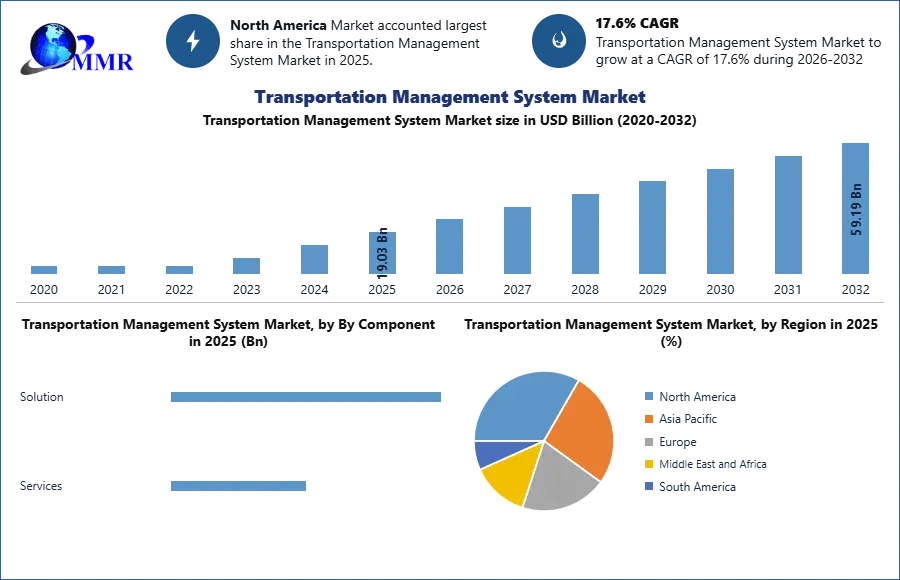 To know about the Research Methodology :- Request Free Sample Report
Transportation Management System Market Dynamics:
Lower costs of TMS technology as compared to other logistics information systems:
A greater number of firms choose to purchase off-the-shelf systems to support their transportation needs while other firms using a TMS choose to outsource the effort completely and allow a vendor or third-party provider to host the needed services. One study noted that on-demand TMS is becoming increasingly popular in light of cost concerns and the substantial development time required of hosted systems. On-demand solutions also prove more affordable for small and medium-sized companies, though companies of various sizes in the sample reported the use of externally-hosted systems.
While the level of investment varied substantially, the cost of TMS technology appears relatively low, when compared to many other logistics information systems. The cost to purchase a hosted TMS ranged from a low of$100,000 to a high of $1,000,000. Similarly, installation costs of these systems exhibited wide disparity, ranging from $20,000 to $450,000. The annual maintenance of these types of systems should be a concern and another study's results indicated a substantial range in annual maintenance costs, ranging from $4,000 per year to $400,000 per year.
TMS Implementation Issues and Resolutions:
There are always problems during installing an IT system. In this sense, TMS implementations seem ubiquitous. The persistent IT problem of system incompatibility frequently manifests in TMS installations, according to users. The project's implementation phase continues to experience delays, which is a problem. Senior management and executives who are reluctant to accept a system raise issues for businesses deploying TMS because they doubt the necessity or worth of these systems. Several companies claim that inadequate training is a challenge in the adoption of TMS.
TMS implementation teams manage to overcome these obstacles in several different ways. System adjustments are frequently made in response to incompatibility problems to improve communication between the impacted systems. Working more closely with vendors and managing the implementation process more actively to reduce implementation delays, which appear to occur frequently in IT installations alleviates challenges. People-related problems, resistance, and a lack of training seemed to be best handled by educating users about the system's potential and capabilities and providing end users with software training to better prepare them for the altered way that their particular tasks would be carried out on the new systems. Unfortunately, in other cases, businesses respond to difficulties and implementation problems in a defeated way, just accepting the shortcoming and anticipating no improvement.
Future prospects for Transportation Management System Market:
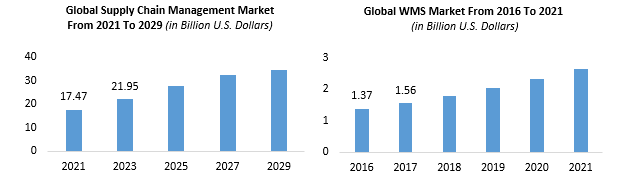
TMS clients may be divided into two primary groups: those that build and manage their internal systems and those who purchase specialized services from externally hosted (outsourced or on-demand) systems. Users of internal systems are expected to increasingly discover connections between TMS and other LIS technologies to offer a full view and better control of physical flows. The advantages of a TMS and WMS integrated system that provide global inventory visibility create enticing growth opportunities. TMS and WMS offer a more comprehensive order fulfillment system suite when combined with an order management system and a supply chain event management system. Software providers are aggressively extending the range of their solutions as they become more aware of the possibilities of integrated system design. In a drive to offer complete supply chain IT solutions, the most aggressive ERP and WMS companies to date have acquired complementing TMS systems or developed their capabilities.
Transportation Management System Market Segment Analysis:
By Transportation Mode, the roadways segment held the largest share of more than 40% in 2025 in total Transportation Management System Market. Road transportation is seen as versatile and affordable since it allows for loading and unloading at any location. The e-commerce sector's growth has also pushed companies to improve their road transportation operations. The need for logistics via roads is being driven by several governments' attempts to upgrade the road transportation infrastructure, particularly in emerging nations.
The maritime segment is expected to grow at a highest CAGR during the forecast period. The significant expenditures being made by various governments in the implementation of transportation management systems for the effective management of waterways can be ascribed to this. During the forecast period, the airways segment is also expected to have notable growth. The adoption of TMS for air travel is expected to be driven by the significant focus that players in the e-commerce and logistics industries are placing on expedited product delivery.
By Vertical, the manufacturing segment accounted for the largest market share of over 31% in 2025 in total Transportation Management System Market. The growth of industrial facilities in developing nations like Mexico and India has raised the need for raw materials, which has led to a rise in transportation. For instance, the "Make in India" project of the Indian government strongly promotes indigenous manufacturing and the growth of the local manufacturing sector. Such activities are encouraging for the manufacturing segment's growth throughout the forecast period.
The retail segment is expected to grow at a highest CAGR xx %of during the forecast period owing to the unabated growth of the e-commerce industries in countries such as India and China. While approximately 80% of internet sales in the Asia Pacific region are made in China, India is on track to have the highest rate of growth globally. To improve their shipping operations, some of the biggest e-commerce businesses, like Alibaba Group, Walmart Inc., and Amazon.com, Inc., are aggressively implementing transportation management systems in the APAC region.
By Deployment Mode, the on-premise segment held the largest market share of over 55% in 2025. Many firms still prefer on-premise solutions to provide easy access to the server, more control over customization, and acceptable data protection. This has contributed to the segment's growth. However, competitors in many sectors and industry verticals are forecast to aggressively transition to cloud-based transportation management systems as knowledge of the benefits of cloud-based solutions grows.
The cloud segment is expected to grow at a CAGR xx% during the forecast period. Shipping companies, suppliers, and logistics providers are increasingly turning to cloud-based transportation management solutions due to their superior and efficient setup capabilities, as well as the unique planning and optimization benefits they can offer. Because of cheaper license and administrative costs, cloud-based transportation management solutions are cost-effective. These technologies may also be accessed remotely and in real-time from any geographic area.
Transportation Management System Market Regional Insights:
The North American Transportation Management System Market (TMS) market is expected to grow at a highest CAGR during the forecast period. The American TMS market has grown significantly, and cloud-based systems now provide scalable options for enterprises of all sizes across industrial sectors. Solution providers range from small specialized TMS developers engaged in local markets to global corporate software providers. Trimble Transportation and McLeod Software are two of the most prominent competitors in the North American TMS industry. Trimble is a big industrial technology company that has acquired a range of TMS products, whereas McLeod has specialized in serving the trucking sector for over 35 years. TMS competitors include Blue Yonder, Manhattan Associates, Descartes, and E2open (including BluJay Solutions), which offer comprehensive supply chain and logistics services.
MercuryGate and TMC (a part of C.H. Robinson) are two other examples of TMS-focused firms, while Oracle, a major US-based cloud infrastructure and software supplier, is involved in this industry with its Oracle Transportation Management product implemented across all geographic markets. SAP Transportation Management is also available internationally from the Germany-based corporate application software company SAP. Local and multinational companies in the European TMS market include Transporeon, Soloplan, and LIS in Germany, SINARI, Generix, and AKANEA in France, Alpega in Belgium, and TESISQUARE in Italy, as well as AndSoft in Andorra. The latter is active across Europe and beyond.
In The Asia Pacific . The uninterrupted rise of the retail and e-commerce sectors in India, China, Singapore, and Malaysia is likely to drive the growth of the regional market throughout the forecast period. The actions and policies being taken by various governments across Asia to provide a conducive environment for the development and distribution of intelligent transportation systems are also expected to help the regional market's growth.
Transportation Management System Market Recent Development:
-
April 2025: C.H. Robinson Financial, in collaboration with Triumph Financial, launched TriumphPay Accelerate, a digital payment platform designed to enable immediate cash flow and near-instant invoice settlements for carriers. By integrating Triumph’s LoadPay digital account and factoring capabilities with C.H. Robinson’s TMS, the solution addresses longstanding payment delays, enhances carrier liquidity, and optimizes back-office efficiency, setting a new benchmark for speed and automation in freight payment systems.
-
May 2025: WiseTech Global entered into a definitive agreement to acquire U.S.-based E2open for approximately USD 2.1 billion. This strategic acquisition strengthens WiseTech’s global trade and logistics ecosystem by integrating E2open’s multi-enterprise supply chain network and cloud-based platform into CargoWise, expanding product capabilities, accelerating innovation, and reinforcing its presence in North America.
-
March 2025: Descartes Systems Group acquired 3GTMS for around USD 115 million, enhancing its cloud-based TMS portfolio in North America. The acquisition integrates advanced planning, rating, and routing functionalities, enabling improved shipment optimization and delivering greater value to shippers, brokers, and 3PL providers managing complex logistics operations.
-
April 2025: Descartes further strengthened its TMS ecosystem through a strategic partnership with Parade, embedding “CoDriver AI” into freight brokerage workflows. This integration enhances carrier engagement, predictive analytics, and operational efficiency, positioning Descartes at the forefront of AI-driven logistics orchestration and real-time decision intelligence.
-
September 2024: Körber AG acquired MercuryGate, expanding its multimodal TMS capabilities and reinforcing its end-to-end supply chain execution offering. The acquisition enhances visibility, operational agility, and customer-centric solutions, solidifying Körber’s positioning as a global leader in digital supply chain transformation.
Transportation Management System Market Scope: Inquire before buying
| Transportation Management System Market | |||
|---|---|---|---|
| Report Coverage | Details | ||
| Base Year: | 2025 | Forecast Period: | 2026-2032 |
| Historical Data: | 2020 to 2025 | Market Size in 2025: | 19.03 USD Billion |
| Forecast Period 2026-2032 CAGR: | 17.6% | Market Size in 2032: | 59.19 USD Billion |
| Segments Covered: | By Component | Solution Services Consulting Integration & Implementation Support & Maintenance |
|
| By Transportation Mode | Roadways Railways Airways Maritime |
||
| By Organization Size | Large Enterprises Small and Medium Enterprises (SMEs) |
||
| By Deployment Mode | On-Premises Cloud |
||
| By Vertical | Retail Healthcare & Pharmaceutical Manufacturing Transportation & Logistics Energy & Utilities Government Others |
||
Transportation Management System Market, by Region
North America (United States, Canada and Mexico)
Europe (UK, France, Germany, Italy, Spain, Sweden, Austria, Turkey, Russia and Rest of Europe)
Asia Pacific (China, India, Japan, South Korea, Australia, ASEAN and Rest of APAC)
Middle East and Africa (South Africa, GCC, Egypt, Nigeria and Rest of ME&A)
South America (Brazil, Argentina, Columbia and Rest of South America)
Transportation Management System Market Key Players are:
- Oracle Corporation
- SAP SE
- Manhattan Associates
- H. Robinson Worldwide
- Trimble Inc.
- Descartes Systems Group
- E2open
- Blue Yonder
- Infor
- Alpega Group
- MercuryGate International
- Kuebix
- Omnitracs
- 3Gtms
- Transplace
- WiseTech Global
- CargoSmart
- One Network Enterprises
- Precision Software
- Project44
- FourKites
- Freightview
- Cerasis
- Qube Logistics
- Savi Technology
- Shipsy
- GoComet
- Locus
- IBM
- McLeod Software