
Tire Pressure Monitoring System Market Size – Industry Structure Evaluation, Demand Drivers Analysis, Regional Growth Analysis and Identification, Competitive Positioning Review & Global Market Size Forecast to 2032
Overview
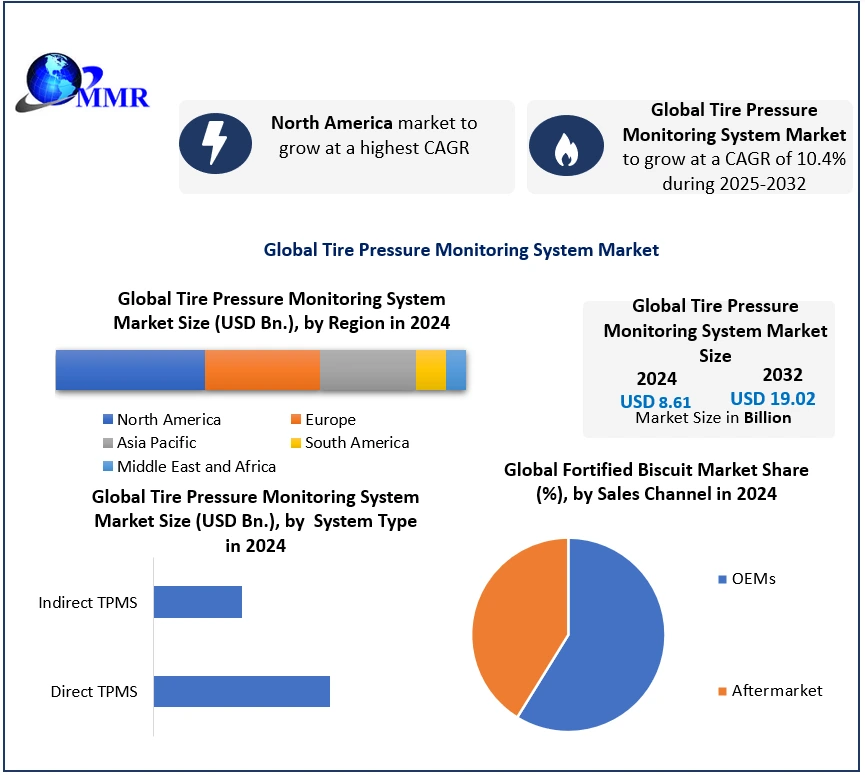
Global Tire Pressure Monitoring System Market size was valued at USD 8.61 Bn in 2024, and the total Tire Pressure Monitoring System Market revenue is expected to grow at a CAGR of 10.4% from 2025 to 2032, reaching nearly USD 19.02 Bn.
Tire Pressure Monitoring System Market Overview:
It stands for Tire Pressure Monitoring System, and it uses tire pressure sensors to track the air pressure of your tire. This system will turn the light on, or the TPMS lights flash, when it senses that one or more tires isn’t at the recommended pressure. While the TPMS probably isn’t your first thought when it comes to safety, it makes it easy to prevent tire failure no matter which Richlands roads you take. The detailed and constructive formation of key drivers, opportunities, and unique segmentation outputs structural and optimistic data. Validated using primary as well as secondary research methodology and scope of the Global Tire Pressure Monitoring System Market.
 To know about the Research Methodology :- Request Free Sample Report
Tire Pressure Monitoring System Market Competitive Landscapes:
Tire Pressure Monitoring System Market Dynamics:
Safety Regulations and Market Growth and Fuel Efficiency and Environmental Concerns are driving the Tire Pressure Monitoring System Market
Stringent safety regulations play a pivotal role in propelling the tire pressure monitoring system market forward. Numerous countries have either implemented or are contemplating regulations mandating the installation of tire pressure monitoring system in vehicles to enhance road safety. Compliance with these regulations significantly contributes to the market's growth, emphasizing the potential for tire pressure monitoring system to establish a prominent market share in the automotive safety segment. The increasing awareness of vehicle safety underscores the importance of tire pressure monitoring system adoption. Recognizing the crucial role proper tire pressure plays in preventing accidents and enhancing overall vehicle stability, consumers and manufacturers alike are embracing tire pressure monitoring system technology as a fundamental aspect of modern vehicle safety. This heightened awareness facilitates the penetration of tire pressure monitoring system into the market, positioning it as a key contributor to the automotive safety landscape. Tire pressure monitoring system positively impacts fuel efficiency, aligning with the growing emphasis on environmental sustainability and fuel economy.
Maintaining proper tire pressure is acknowledged as a key factor in optimizing fuel efficiency, driving the adoption of tire pressure monitoring system as an eco-friendly technology. This eco-conscious approach enhances the potential of tire pressure monitoring system to capture a substantial TPMS market share among environmentally conscious consumers. The tire pressure monitoring system market is bolstered by continuous technological advancements. Innovations such as more accurate and reliable sensors, wireless communication capabilities, and seamless integration with other vehicle systems contribute to overall growth. These technological advancements enhance the effectiveness and efficiency of tire pressure monitoring system, allowing it to gain a larger market share by providing advanced features and functionalities. The global expansion of the automotive industry, marked by an increase in the production of both passenger and commercial vehicles, serves as a significant driver for the tire pressure monitoring system market. The rising demand for vehicles creates a parallel demand for safety features, including tire pressure monitoring system, driving market growth and expanding the potential market share for tire pressure monitoring system providers.
Sensor Reliability and Maintenance Impact on Market Share with Aftermarket Challenges and Market Reach are restraining the market
TPMS sensors, crucial components of the system, are susceptible to damage or malfunction. The need for maintenance or replacement of these sensors can add to the overall cost of ownership, potentially discouraging some consumers from fully embracing TPMS technology. Ensuring sensor reliability and minimizing maintenance costs is essential for TPMS providers to maintain and grow their TPMS market share. Retrofitting older vehicles with TPMS faces challenges in the aftermarket. Issues such as compatibility and installation complexities hinder the seamless integration of TPMS in existing vehicles. Overcoming these hurdles is essential to broaden the market reach and cater to a wider range of vehicles, thereby improving TPMS market penetration. The initial cost associated with installing TPMS in vehicles presents a substantial restraint, particularly in cost-sensitive markets. However, economies of scale and ongoing technological advancements are expected to gradually mitigate this barrier, making TPMS more accessible over time. Overcoming cost concerns is crucial for TPMS to penetrate diverse market segments and increase its market share. The adoption of TPMS in two-wheelers is constrained by cost considerations and a perceived lower safety impact compared to larger vehicles. Consumers may prioritize other features over TPMS due to budget constraints, limiting its penetration in the two-wheeler segment. Addressing these concerns is vital for TPMS market providers to explore untapped market segments and diversify their market share. As vehicles become increasingly connected, concerns about the security and privacy of data transmitted by TPMS systems emerge as a significant restraint. Consumer confidence and adoption rates may be affected by apprehensions related to data security, necessitating robust measures to address these concerns. Building trust in data security is crucial for TPMS providers to retain and expand their TPMS market share.
Tire Pressure Monitoring System Market Segment Analysis
Based on Vehicle, the Light Commercial Vehicle LCV segment comprises a spectrum of vehicles, including vans and small trucks. Within this segment, TPMS plays a critical role in ensuring the safe transportation of goods and passengers. Regulatory standards emphasizing safety and operational efficiency drive the adoption of TPMS in LCVs, positioning it as an integral component of the overall vehicle safety system. The LCV segment share within the TPMS market reflects the emphasis on safety and regulatory compliance. HCVs, including trucks and buses, traverse significant distances, making tire pressure maintenance pivotal for fuel efficiency and safety. The HCV segment represents a substantial opportunity for TPMS adoption, particularly as fleet operators seek technologies to optimize performance, reduce fuel consumption, and enhance overall safety in their extensive operations. The TPMS market's regional segment growth in HCVs aligns with the increasing demand for safety solutions in the commercial transportation sector. TPMS integration in passenger vehicles is propelled by both safety regulations and heightened consumer awareness. Focused on enhancing road safety and reducing accidents, TPMS in passenger vehicles provides real-time tire pressure information to drivers, ensuring optimal driving conditions and contributing to overall safety standards. The passenger vehicle segment analysis highlights the integral role of TPMS in enhancing safety across a broad spectrum of private and commercial vehicles.
Based on Technology, the Direct TPMS is expected to hold the largest share in the market during the forecast period. Direct TPMS has reduced tremendously the handling of multiple components via different sizes of the printed circuit board and removed the cost of adding external components. Small size allows suppliers to use one solution in a wide variety of models. Direct TPMS in heavy-duty tractor/trailer trucks can have 18 or more tires; maintaining properly inflated tires saves thousands of dollars in fuel and tire servicing costs per vehicle throughout its several hundred-thousand-mile lifetime. Direct TPMS units do not require specialized tools to program or reset, making them much simpler to use. In the Sales Channel, OEM is also expected to lead the market growth. Indirect TPMS, in contrast, utilizes existing vehicle systems such as the anti-lock braking system (ABS) to infer tire pressure based on wheel speed and other parameters. While often more cost-effective, indirect TPMS may sacrifice a slight degree of accuracy compared to direct systems. Commonly found in aftermarket solutions and specific OEM implementations, it addresses the need for efficient and budget-friendly TPMS alternatives. The regional segment growth of indirect TPMS reflects its role in providing cost-effective solutions, particularly in specific market regions.
Tire Pressure Monitoring System Market Regional Analysis
In North America, the TPMS market experiences robust TPMS Market growth propelled by stringent safety regulations and a pronounced emphasis on vehicle safety. The United States, in particular, stands out with mandated TPMS installation, significantly contributing to market penetration. The regional analysis underscores a mature TPMS market growth characterized by a high adoption rate, particularly evident in passenger vehicles and light trucks.
• Regulatory Compliance: Stringent safety regulations in the U.S., mandating TPMS installation, act as a driving force behind market growth, positioning the region as a key player in TPMS adoption and fostering a culture of safety among vehicle owners. The regional growth in the US is evident in the widespread implementation of TPMS across various vehicle types.
• Consumer Awareness: Heightened consumer awareness regarding the crucial role of tire pressure in ensuring vehicle safety further solidifies the market's stronghold, emphasizing the importance of TPMS technology. The TPMS market share in the US reflects the success of awareness campaigns in promoting TPMS adoption.
• Advanced Automotive Industry: The presence of a technologically advanced automotive industry in North America encourages the integration of innovative TPMS market solutions. This synergy contributes significantly to the regional segment's growth, reflecting the industry's commitment to cutting-edge safety features and the vast potential for TPMS in the region.
Europe showcases a robust presence in the TPMS market, with regulatory initiatives and heightened consumer awareness playing pivotal roles in shaping the industry. The European Union's regulations mandating TPMS installation contribute significantly to market growth. The regional analysis reveals a diverse market landscape with a dual focus on both passenger and commercial vehicles.
• Regulatory Mandates: Regulatory mandates within the European Union requiring TPMS installation foster market growth. This ensures widespread adoption across the European automotive landscape, reinforcing the region's commitment to vehicle safety. The market potential in Europe is substantial, driven by regulatory compliance and safety-focused initiatives.
• Growing Electric Vehicle Market: The increasing adoption of electric vehicles (EVs) in Europe serves as an additional impetus to the TPMS market. As EVs often incorporate advanced safety features, TPMS technologies find expanded relevance within this growing segment of the automotive market. The evolving electric vehicle market contributes to the overall potential of TPMS in Europe.
The Asia Pacific region emerges as a significant player in the TPMS market, driven by the expanding automotive industry, safety concerns, and technological advancements. Countries such as China, Japan, and South Korea contribute substantially to the regional segment's growth, emphasizing a diverse array of vehicle types.
• Rising Automotive Production: The Asia Pacific region, particularly China, serves as a manufacturing hub for the automotive industry. This positioning leads to increased TPMS integration in new vehicles, aligning with the region's commitment to advancing automotive safety. The regional growth in Asia Pacific is driven by the booming automotive production, creating ample opportunities for TPMS market expansion.
• Government Initiatives: Supportive government initiatives promoting road safety and vehicle efficiency further contribute to the wider adoption of TPMS technologies in the Asia Pacific region. This reflects a concerted effort to enhance overall safety standards and reinforces the market's potential in the region.
• Technological Advancements: Embracing technological advancements, the Asia Pacific region witnesses the seamless incorporation of advanced TPMS solutions in vehicles. This technological integration contributes significantly to the overall growth of the TPMS market in the region, highlighting its potential in addressing evolving automotive safety needs.
Tire Pressure Monitoring System Market Competitive Landscape
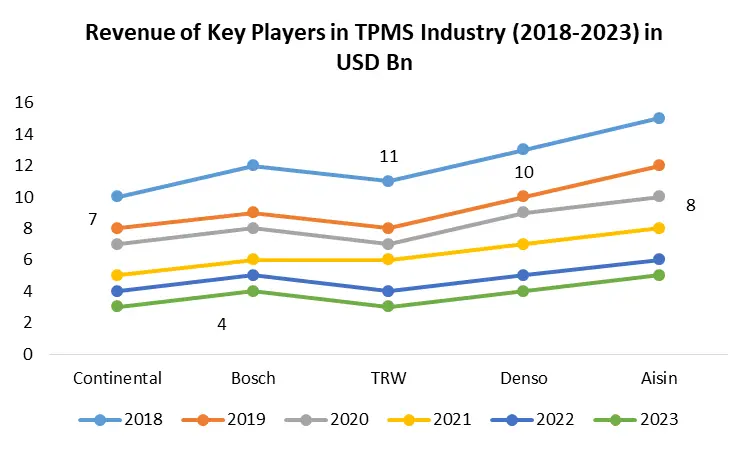
In a strategic move to reinforce its global market position, WEGMANN automotive, the parent company of ALLIGATOR Ventilfabrik GmbH, has recently completed a partial takeover, further solidifying its presence in the tire valves and TPMS (Tire Pressure Monitoring System) sector. The partial takeover involved the acquisition of key segments of ALLIGATOR Ventilfabrik GmbH in 2019. As part of this acquisition, WEGMANN automotive gained control of the ALLIGATOR brand name, along with the sales and distribution operations in both Europe and North America for car and commercial vehicle tire valves, TPMS sensors, and associated tools. This strategic move has significantly expanded WEGMANN automotive's portfolio, allowing it to cater to a broader customer base and offer a comprehensive range of products. Under the umbrella brand of WEGMANN automotive GmbH, the ALLIGATOR division has experienced notable growth and optimization. Currently, more than a million ALLIGATOR products are manufactured daily in Europe, showcasing the division's commitment to meeting the increasing demands of end customers and workshops globally. The products are distributed to customers in over 60 countries, highlighting the division's extensive reach and market presence.
DENSO Corporation, a prominent mobility supplier, and United Semiconductor Japan Co., Ltd. (USJC), a subsidiary of global semiconductor foundry United Microelectronics Corporation, have announced a strategic collaboration to address the escalating demand in the automotive market for power semiconductors. The collaboration aims to leverage the strengths of both companies to enhance the production of insulated gate bipolar transistors (IGBTs), crucial components in the electrification of vehicles. DENSO and USJC will collaborate on the installation of an IGBT line at USJC's 300mm fab, marking a significant milestone as the first facility in Japan to produce IGBTs on 300mm wafers. This initiative aligns with the increasing global efforts to reduce carbon emissions and the growing demand for semiconductors to support the development of electric vehicles. DENSO will contribute its expertise in system-oriented IGBT device and process technologies to the collaboration. The combination of DENSO's technological capabilities with USJC's advanced 300mm wafer manufacturing capabilities is expected to enable the mass production of 300mm IGBTs, scheduled to commence in the first half of 2023. The collaboration is facilitated by the renovation and decarbonization program for indispensable semiconductors, receiving support from Japan’s Ministry of Economy, Trade, and Industry. This underscores the significance of the initiative in strengthening Japan's position in semiconductor production, a critical aspect of the automotive industry's evolution. With the acceleration of electric vehicle development and adoption worldwide, the demand for semiconductors essential for vehicle electrification is surging. IGBTs play a pivotal role as efficient power switches in inverters, converting DC and AC currents to drive and control electric vehicle motors. The collaboration positions DENSO and USJC to play a crucial role in meeting this growing demand.
Global Tire Pressure Monitoring System Market Scope: Inquire before buying
| Global Tire Pressure Monitoring System Market | |||
|---|---|---|---|
| Report Coverage | Details | ||
| Base Year: | 2024 | Forecast Period: | 2025-2032 |
| Historical Data: | 2019 to 2024 | Market Size in 2024: | USD 8.61 Bn. |
| Forecast Period 2025 to 2032 CAGR: | 10.4% | Market Size in 2032: | USD 19.02 Bn. |
| Segments Covered: | by System Type | Direct TPMS Indirect TPMS |
|
| by Vehicle | Light Commercial Vehicle (LCV) Heavy Commercial Vehicle (HCV) Passenger Vehicle |
||
| by Technology | Sensors ECU (Electronic Control Unit) Display Module Others |
||
| by Sales Channel | OEMs Aftermarket |
||
Tire Pressure Monitoring System Market, by Region
North America (United States, Canada and Mexico)
Europe (UK, France, Germany, Italy, Spain, Sweden, Austria and Rest of Europe)
Asia Pacific (China, South Korea, Japan, India, Australia, Indonesia, Malaysia, Vietnam, Taiwan, Bangladesh, Pakistan and Rest of APAC)
Middle East and Africa (South Africa, GCC, Egypt, Nigeria and Rest of ME&A)
South America (Brazil, Argentina Rest of South America)
Tire Pressure Monitoring System Market, Key Players:
North America:
1. Bartec USA LLC
2. Bendix Commercial Vehicles Systems LLC
3. Delphi Automotive LLP
4. General Electric
Europe:
1. Alligator Gmbh
2. Continental AG
3. DUNLOP TECH GmbH
4. Huf Hulsbeck & Furst GmbH & Co. KG
5. NIRA Dynamics AB
6. Pacific Industrial
7. Schrader Electronics
8. Sensata Technologies Inc.
9. TRW Automotive
10. ZF Friedrichshafen
Asia Pacific:
1. Denso Corporation
2. HAMATON AUTOMOTIVE TECHNOLOGY CO., LTD.
3. NXP Semiconductors
4. WABCO
Global:
Delphi Automotive LLP (Note: Listed in both North America and Global due to its global presence)
FAQs:
1. What is the Tire Pressure Monitoring System Market?
Ans: A Tire Pressure Monitoring System TPMS is an electronic system designed to monitor and alert drivers about the tire pressure of their vehicles in real-time.
2. What are the types of Tire Pressure Monitoring System Market?
Ans: Key global Tire Pressure Monitoring System market players include Pfizer Inc., AbbVie, Regeneron Pharmaceuticals, and F. Hoffmann La Roche Ltd.
3. Are Tire Pressure Monitoring System mandatory?
Ans: Many countries, including the U.S. and EU members, have mandated TPMS installation in new vehicles to enhance road safety.
4. What factors are driving the growth of the Tire Pressure Monitoring System market?
Ans: Understanding the key drivers helps stakeholders identify opportunities and market trends.
5. What technological advancements are shaping the Tire Pressure Monitoring System Market?
Ans: Identifying technological trends helps stakeholders stay ahead in innovation and product development.