
Seed Treatment Chemicals Market by Type, by Function, by Chemical Class, by Origin, by Treatment Method, by Application and Regional Insights 2034
Overview
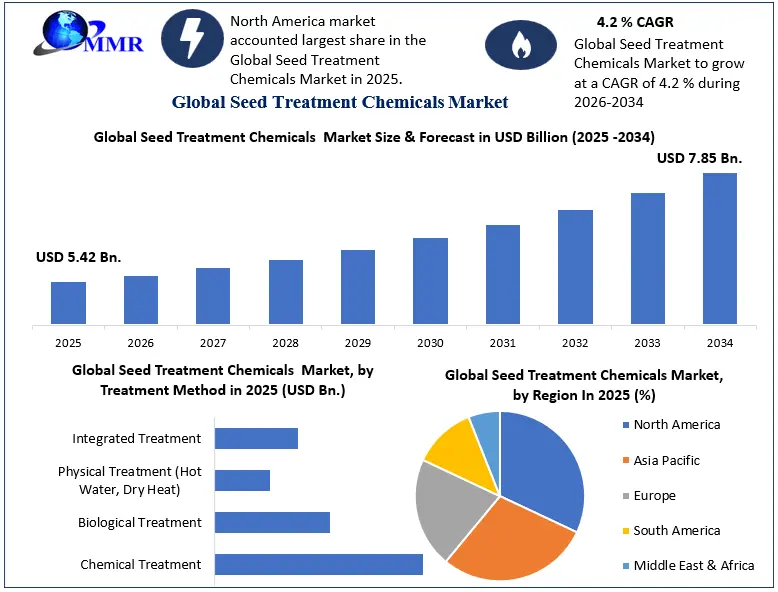
Seed Treatment Chemicals Market size was valued at USD 5.42 Billion in 2025 and the total revenue is expected to grow at a CAGR of 4.2% from 2026 to 2034, reaching nearly USD 7.85 Billion.
Global Seed Treatment Chemicals Market Overview:
The Global Seed Treatment Chemicals Market covers products applied directly to seeds before planting to protect them from seed-borne and soil-borne diseases, insects, and other early-stage threats. These solutions include fungicides, insecticides, bactericides, and other chemical treatment agents, along with formulation components such as colorants, repellents, and wetting agents. Seed treatment helps improve seed protection, germination, seedling establishment, and overall crop performance.
Global Seed treatment plays an important role in protecting seeds during the critical stages of germination and early plant growth. Effective treatment can reduce damage caused by pathogens and pests, support uniform seedling emergence, improve crop vigor, and contribute to better agricultural productivity. It also enables farmers to target crop-protection products at the seed level rather than relying exclusively on later-stage applications.
The market is evolving through greater adoption of advanced seed treatment technologies, improved active ingredients, and more efficient formulations. Farmers are increasingly focusing on seed vigor, disease prevention, and consistent crop establishment. At the same time, interest in biological and integrated seed treatment solutions is increasing as agriculture places greater emphasis on sustainability and efficient input use.
Demand comes primarily from commercial farmers, large-scale agricultural producers, seed companies, crop-protection companies, and agricultural cooperatives. Major crop segments such as cereals, grains, oilseeds, pulses, and other commercially cultivated crops create demand for seed treatment solutions. Adoption varies according to crop type, farming practices, disease and pest pressure, and the availability and cost of treatment products.
Opportunities are emerging from increasing agricultural production, the need to improve crop yields and seed quality, and the adoption of modern farming practices. Product development involving new active ingredients, biological treatments, combination formulations, and precision application technologies can further expand market opportunities. Developing agricultural economies also offer potential as awareness of seed treatment benefits increases.
What does MMR's research reveal?
According to the provided MMR market data, the global Seed Treatment Chemicals Market was valued at USD 5.42 billion in 2025 and is projected to reach USD 7.85 billion by 2034, expanding at a CAGR of 4.2% during 2026–2034. The research indicates that market expansion is supported by increasing demand for effective seed protection, improved crop establishment, technological developments in treatment formulations, and growing awareness of seed treatment practices. At the same time, high treatment costs remain an important constraint to wider adoption.
Seed Treatment Chemicals Market Growth and Share Analysis
To know about the Research Methodology :- Request Free Sample Report
Seed Treatment Chemicals Market Dynamics:
Global Seed Treatment Chemicals Market Drivers Increasing Demand for Higher Crop Productivity and Advanced Seed Protection Technologies
• Increasing demand for higher crop productivity and quality is driving the adoption of seed treatment chemicals.
• Growing incidence of seed-borne diseases, soil-borne pathogens, and early-stage insect attacks is increasing the need for effective seed protection.
• Seed treatment supports uniform seedling emergence, improved seed vigor, and better crop establishment, encouraging adoption across major crops.
• Rising awareness among farmers regarding advanced seed treatment technologies and active ingredients is supporting market expansion.
• Adoption of modern farming practices and precision agriculture is creating demand for efficient and targeted seed treatment applications.
• Continuous improvements in formulation quality and treatment efficiency are contributing to increased product acceptance.
Global Seed Treatment Chemicals Market Restraints High Cost of Seed Treatment Chemicals and Regulatory Compliance Requirements
• High costs associated with seed treatment chemicals can limit adoption, particularly among small and marginal farmers.
• Stringent regulations concerning the registration, use, and environmental impact of agricultural chemicals can increase compliance costs.
• Limited awareness and access to advanced seed treatment technologies in developing agricultural markets can restrain market penetration.
• Concerns regarding the environmental impact and chemical residues associated with certain seed treatment products can affect adoption.
• Complex application requirements and the need for specialized treatment equipment can create barriers for smaller farming operations.
• Fluctuations in agricultural input prices and farm incomes can influence farmers' willingness to invest in seed treatment products.
Global Seed Treatment Chemicals Market Opportunities Rising Adoption of Biological Seed Treatments and Sustainable Agricultural Solutions
• Increasing adoption of biological and environmentally friendly seed treatment solutions creates new growth opportunities.
• Development of new active ingredients and advanced formulations can improve treatment effectiveness while reducing application requirements.
• Expansion of commercial agriculture and increasing demand for high-quality, disease-resistant, and high-yielding seeds can support market growth.
• Growing investment in sustainable agriculture and integrated pest management is creating opportunities for innovative seed treatment products.
• Increasing integration of microbial technologies, biostimulants, and beneficial microorganisms into seed treatment formulations offers new product opportunities.
• Rising adoption of precision seed treatment and digital agriculture technologies can enable customized treatment and improve application efficiency.
Global Seed Treatment Chemicals Market Trends Growing Shift Toward Integrated, Precision-Based, and Microbial Seed Treatment Solutions
• Managing the balance between effective crop protection and environmental sustainability remains a key challenge for manufacturers.
• Increasing regulatory requirements for chemical registration, safety, and environmental assessment can lengthen product development timelines.
• Variability in soil conditions, climate, crop types, and pathogen pressure can affect seed treatment performance.
• Maintaining consistent treatment coverage, dosage, and seed quality during large-scale commercial applications can be challenging.
• Competition between conventional chemical treatments and emerging biological alternatives can create product-development challenges.
• Limited technical knowledge and infrastructure in some agricultural regions can hinder the proper application and adoption of advanced seed treatment technologies.
Global Seed Treatment Chemicals Market Segment Analysis :
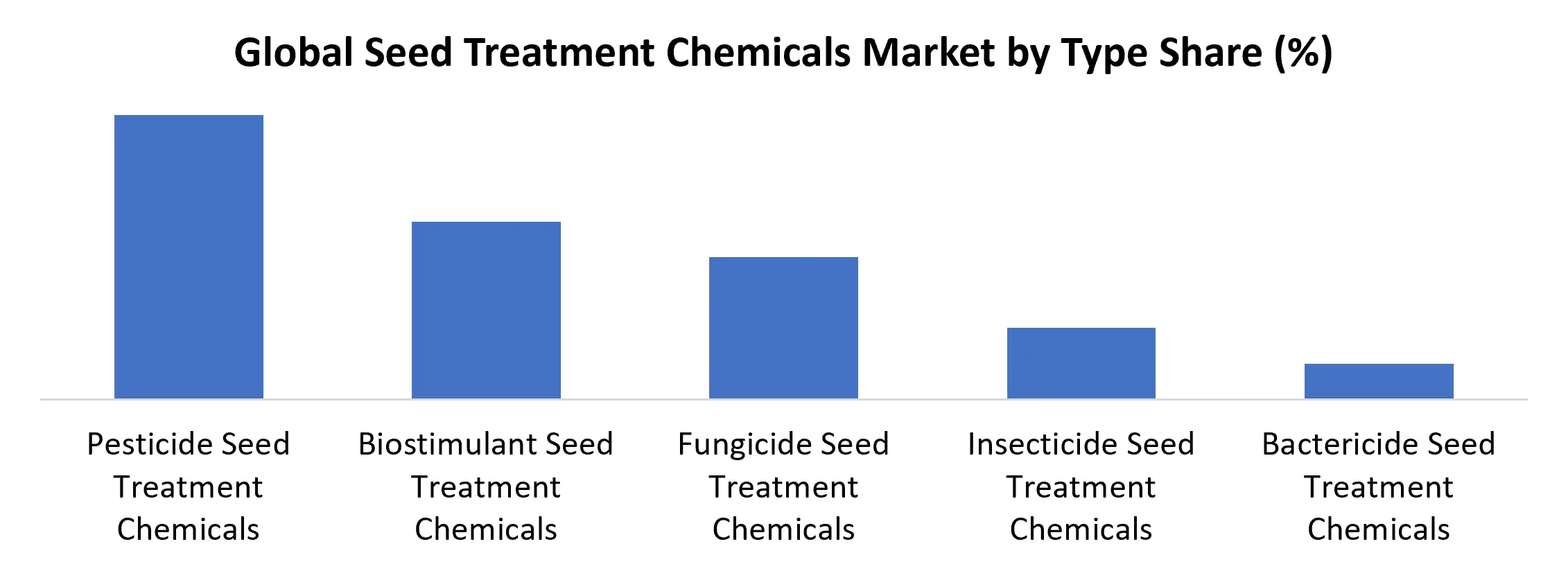
By Type, The Global Seed Treatment Chemicals market includes Biostimulant Seed Treatment Chemicals, Fungicide Seed Treatment Chemicals, Insecticide Seed Treatment Chemicals, and Bactericide Seed Treatment Chemicals. Biostimulant seed treatment chemicals use naturally derived ingredients to support plant growth, improve nutrient utilization, and enhance resistance to drought, salinity, and temperature stress. Fungicide seed treatment chemicals protect seeds and young seedlings from fungal and soil-borne diseases, thereby improving germination and early crop establishment. Insecticide seed treatment chemicals protect seeds and emerging plants from early-season and soil-dwelling insect pests, helping minimize crop losses and support healthy plant development. Bactericide seed treatment chemicals help control bacterial pathogens associated with seeds and seedlings, promoting healthy germination and early-stage crop growth.
By Application, The Global Seed Treatment Chemicals Market is segmented into Seed Protection and Seed Enhancement. The Seed Protection segment focuses on preventing damage caused by insects, fungi, bacteria, and other pathogens before and immediately after germination. Seed treatment creates a protective layer around the seed, helping safeguard seedlings during their vulnerable early-growth stages. The Seed Enhancement segment includes treatments designed to improve germination, seed vigor, nutrient utilization, and uniform emergence. Growing demand for high-quality planting material, improved crop establishment, and better early-stage plant development is increasing the adoption of seed enhancement technologies.
Seed Treatment Chemicals Market Regional Analysis
In terms of value, North America dominated the regional market for seed treatment chemicals in 2025 owing to widespread use of seed treatment technologies in major agricultural applications. The U.S. captured a sizable share of the regional market with a strong demand for seed treatment products for the cultivation of important crops such as wheat, corn, and soybean. The region is supported by advanced agricultural methods, existing crop protection infrastructure and rising awareness of technologies that enhance seed performance and early-stage crop protection.
The Asia Pacific seed treatment chemicals market is projected to expand considerably during the forecast period, with increasing agricultural activities in countries such as India, China and Australia supporting the trend. More farmers are using sophisticated methods, so there is more demand for treated seeds across the region. Seed priming, seed coating and seed pelleting technologies are gaining importance as farmers want to improve germination, seed vigor, crop establishment and overall productivity. Favorable farm conditions, growing demand for food production, and efforts to improve yields from crops are also further supporting market expansion across Asia Pacific.
South America is also emerging as an important growth region, with Brazil and Argentina expected to experience rapid market development during the forecast period. Large agricultural sectors, extensive cultivation of major crops, and increasing adoption of modern crop-management practices are supporting demand for seed treatment chemicals. In addition, growing awareness of seed protection, improved germination, and early-stage pest and disease management is creating opportunities across emerging agricultural markets.
Across developing regions, market growth is further supported by increasing investments in modern agricultural inputs, improved seed technologies, precision farming, and sustainable agricultural practices. The regional market dynamics vary according to crop patterns, farming practices, regulatory frameworks, technological adoption, and farmer awareness. Overall, regional analysis of the Global Seed Treatment Chemicals Market examines these factors along with regional market segments, competitive dynamics, and emerging opportunities influencing the industry's development.
Global Seed Treatment Chemicals Market Competitive Landscape
The Seed Treatment Chemicals Market is highly competitive, with major players such as BASF SE, Bayer AG, Syngenta, Corteva Agriscience, FMC Corporation, UPL Limited, Nufarm Limited, Sumitomo Chemical, ADAMA, and Novonesis focusing on product innovation, advanced formulations, biological seed treatments, and geographic expansion. Companies are increasingly investing in fungicides, insecticides, biostimulants, microbial solutions, and integrated seed-treatment technologies to improve crop protection and seed performance. Strategic partnerships, new product launches, R&D investments, and expansion across Asia Pacific and Latin America remain key competitive strategies.
Seed Treatment Chemicals Market Recent Industry Developments
| Date | Company | Development | Impact |
| 10 January 2026 | Midwestern BioAg | Launched HydraPrime, a next-generation seed treatment designed to improve moisture management, early-season establishment, uniform emergence, and seedling vigor. | Strengthens the biological and seed-priming segment by offering a treatment focused on improved early crop establishment. |
| 19 February 2026 | Bayer AG | Launched newgold® seed, a multi-crop seed brand designed for low-carbon-intensity crops such as camelina and winter canola. | Expands Bayer's seed technology portfolio and connects seed innovation with emerging low-carbon agricultural and biofuel markets. |
| 29 March 2026 | Bayer AG | Expanded its Canadian seed-treatment portfolio with Raxil Rise, a cereal seed treatment containing four active ingredients, including penflufen. | Provides broader disease-control coverage for cereal crops, including Fusarium, loose smut, and bunt. |
| 12 June 2026 | Bayer AG | Introduced the Guardião integrated seed-treatment platform in Brazil, providing soybean growers with more comprehensive seed-treatment solutions. | Supports the development of integrated seed-treatment programs in Brazil and improves access to combined protection solutions. |
| 11 June 2026 | Novonesis | Announced a partnership with Rovensa Next to distribute selected agricultural biosolutions in the U.S. from the 2027 growing season, covering solutions ranging from seed treatment to post-harvest. | Expands the distribution reach of biological agricultural solutions and strengthens the role of biosolutions within seed-to-harvest crop management. |
| 30 July 2026 | Syngenta Group | Reported continued adoption of VICTRATO®, a seed treatment targeting nematodes and fungal diseases, with strong first-year adoption in North America. | Highlights growing demand for seed treatments that provide multiple modes of protection and support crop establishment. |
Seed Treatment Chemicals Market Scope: Inquire before buying
| Seed Treatment Chemicals Market | |||
|---|---|---|---|
| Report Coverage | Details | ||
| Base Year: | 2025 | Forecast Period: | 2026-2034 |
| Historical Data: | 2020 to 2025 | Market Size in 2025: | 5.42 USD Billion |
| Forecast Period 2026-2034 CAGR: | 4.2% | Market Size in 2034: | 7.85 USD Billion |
| Segments Covered: | by Type | Pesticide Seed Treatment Chemicals Biostimulant Seed Treatment Chemicals |
|
| by Function | Seed Protection Seed Enhancement |
||
| by Chemical Class | Insecticides Fungicides Nematicides Herbicides Micronutrients & Fertilizers Others |
||
| by Origin | Synthetic Chemicals Biological / Bio-based (Microbial, Botanical) Hybrid (Chemical + Biological) |
||
| by Treatment Method | Chemical Treatment Biological Treatment Physical Treatment (Hot water, Dry heat) Integrated Treatment |
||
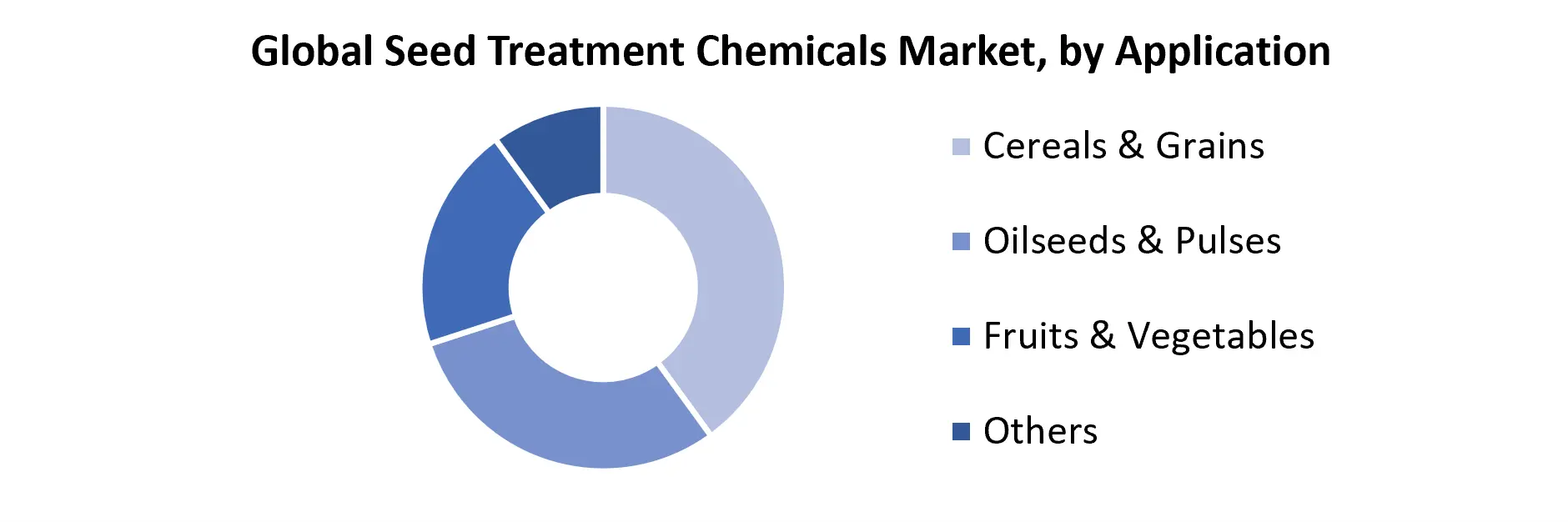
| by Application | Cereals & Grains Oilseeds & Pulses Fruits & Vegetables Others |
||
Seed Treatment Chemicals Market,By Region
North America (United States, Canada and Mexico)
Europe (UK, France, Germany, Italy, Spain, Sweden, Austria and Rest of Europe)
Asia Pacific (China, South Korea, Japan, India, Australia, Indonesia, Malaysia, Vietnam, Taiwan, Bangladesh, Pakistan and Rest of APAC)
Middle East and Africa (South Africa, GCC, Egypt, Nigeria and Rest of ME&A)
South America (Brazil, Argentina Rest of South America)
Seed Treatment Chemicals Market Key players are:
1. BASF SE
2. Bayer AG
3. Syngenta AG
4. Corteva Agriscience
5. FMC Corporation
6. Nufarm Limited
7. UPL Limited
8. Sumitomo Chemical Co., Ltd.
9. Adama Agricultural Solutions Ltd.
10. Croda International Plc
11. Solvay S.A.
12. Eastman Chemical Company
13. Novonesis
14. Verdesian Life Sciences
15. Albaugh LLC
16. Clariant International Ltd.
17. Incotec Group BV
18. Germains Seed Technology
19. Valent BioSciences LLC
20. BioWorks, Inc.
21. Rizobacter Argentina SA
22. Precision Laboratories, LLC
23. Sipcam Oxon Group
24. Indofil Industries Limited
25. PI Industries
26. Nitragin Company
27. BrettYoung Seeds Ltd
28. Agro-K Corporation
29. Koppert Biological Systems
30. Bioworks Technologies, Inc.
31. Lallemand Plant Care
32. Certis Belchim B.V.
33. Marrone Bio Innovations, Inc.
34. Valent U.S.A. LLC
35. Gowan Company, L.L.C.
36. UPL OpenAg
37. AgroSpheres, Inc.
38. NewLeaf Symbiotics
39. Indigo Ag, Inc.
40. Pivot Bio, Inc.
Global Seed Treatment Chemicals Market – Frequently Asked Questions (FAQ)
1. What are seed treatment chemicals used for?
Seed treatment chemicals are used to protect seeds and seedlings against insects, fungi, bacteria, and other diseases, while supporting improved germination, seedling establishment, and crop productivity.
2. What are the major factors driving the market?
Key growth factors include increasing demand for effective seed protection, improved crop establishment, higher agricultural productivity, advanced treatment technologies, and growing awareness of seed treatment practices.
3. What are the major types of seed treatment chemicals?
The market includes biostimulants, fungicides, insecticides, bactericides, and other treatment products used to protect and enhance seeds.
4. Why is Asia Pacific an important market?
Asia Pacific offers growth opportunities due to increasing agricultural activities in countries such as India, China, and Australia, along with growing adoption of seed coating, seed priming, and seed pelleting technologies.
5. Which region held a leading position in the market?
According to the provided market data, North America was the leading regional market in terms of value in 2025, supported by significant adoption in crops such as wheat, corn, and soybean.