
Resistant Starch Market Form, by Product, Distribution Channel, Type, Application, Outlook and Region – Global Market Size Estimation, Industry-Wide Analysis, Competitive Landscape Assessment & Long-Term Forecast to 2032
Overview
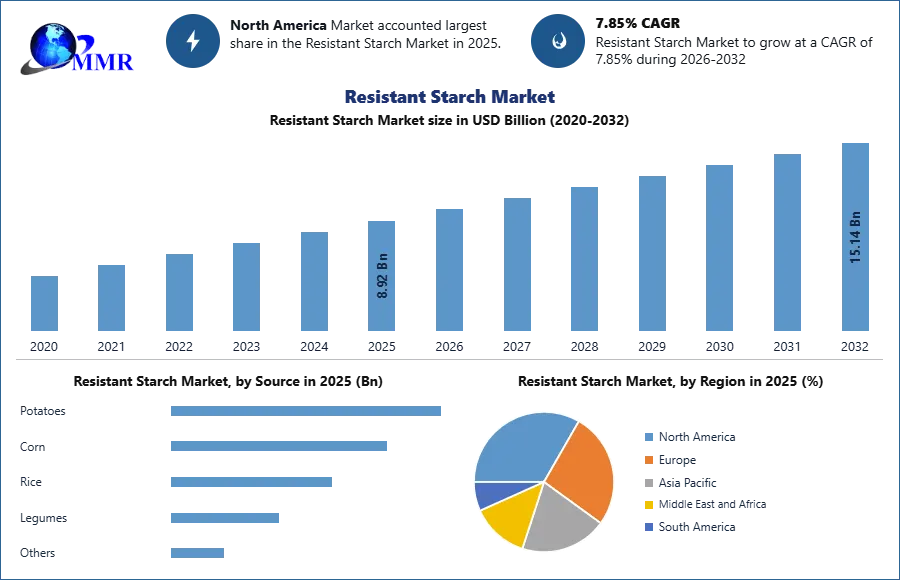
The Resistant Starch Market was valued at USD 8.92 Billion in 2025 and is estimated to grow at a CAGR of 7.85% over the forecast period, reaching USD 15.38 Billion by 2032.
The Global Resistant Starch Market report is a comprehensive analysis of the industry, market, and key players. The report has covered the market by demand and supply-side by segments. The Global Resistant Starch Market report also provides trends by market segments, technology, and investment with a competitive landscape.
To know about the Research Methodology :- Request Free Sample Report
Global Resistant Starch Market Overview:
Resistant starch is a natural fiber that is non digestible by its form that is not broken down, thereby resulting in bacterial fermentation which in turns converts into fatty acids. The starch does not break into the small intestine but travels to the large intestine and results in fatty acid with the help of intestinal bacteria.
It also benefits the human body due to its low glycemic index and the minimal amount of carbohydrate content which also affects the body by limiting the production of new fat cells, keeping blood cholesterol level low, improving digestion and insulin sensitivity. Harmful diseases like cancer, diabetes and heart diseases can also be prevented with the help of resistant starch.
Global Resistant Starch Market Dynamics:
Market Drivers
Growing Demand for Functional Foods and Healthier Alternatives
As consumers become more health-conscious, there is an increasing demand for functional foods that provide additional health benefits. Resistant starch is gaining popularity due to its potential health benefits, such as improving digestive health, reducing the risk of certain diseases like diabetes, and aiding in weight management. Resistant starch is also known to enhance gut microbiota, which helps in regulating cholesterol and controlling blood sugar levels. With a rising preference for healthier eating habits, particularly in regions such as North America, Europe, and Asia Pacific, the demand for resistant starch has surged. Furthermore, the incorporation of resistant starch in a variety of food products, such as snacks, bread, pasta, and beverages, is driving its market expansion.
Regulatory Support for Dietary Fiber Products
Regulatory bodies around the world are increasingly supporting the use of dietary fiber in food and beverages, recognizing the health benefits of products containing fiber-rich ingredients like resistant starch. In countries such as the U.S. and the EU, regulatory agencies like the Food and Drug Administration (FDA) and European Food Safety Authority (EFSA) are encouraging the use of resistant starch as an essential ingredient for improving digestive health. The growing focus on public health and the regulatory recognition of the health benefits associated with resistant starch are expected to foster its widespread adoption across various food products. As health and wellness trends continue to dominate consumer behavior, governments are likely to create more favorable conditions for the growth of the resistant starch market.
Technological Advancements in Starch Extraction
The development of more efficient and sustainable extraction methods for resistant starch has contributed to its growing popularity in the food industry. Advances in production technologies allow for the extraction of resistant starch from a variety of natural sources, including potatoes, corn, rice, and legumes. These improvements in processing technologies are making it easier and more cost-effective for manufacturers to produce high-quality resistant starch products. Additionally, the increasing availability of non-GMO and organic resistant starch options further enhances the appeal of these products among health-conscious consumers. As these technologies continue to evolve, it is expected that the production of resistant starch will become even more efficient, leading to lower prices and broader market adoption.
Market Restraints
High Production Costs for Natural Resistant Starch
One of the primary barriers to the widespread adoption of resistant starch is the high cost associated with its production. The production of high-quality resistant starch from natural sources such as potatoes and corn requires specialized equipment and processes, which can be expensive. Moreover, the need for non-GMO, organic sources of resistant starch further drives up costs, limiting the ability of some manufacturers to compete in the market. While the price of resistant starch is gradually decreasing due to technological advancements, high production costs still remain a significant challenge, particularly for smaller-scale producers who may struggle to meet the market's demands at competitive prices. This pricing pressure could potentially slow the growth of the resistant starch market, especially in price-sensitive markets.
Limited Awareness Among Consumers
Despite the growing awareness of functional foods, consumer understanding of the benefits and applications of resistant starch remains limited. While its health benefits, particularly in digestive health and weight management, are well-documented, many consumers are still unaware of the potential advantages of incorporating resistant starch into their diets. Additionally, there is a lack of clarity regarding the distinction between resistant starch and other types of dietary fiber. This knowledge gap could impede market penetration and slow down the adoption of resistant starch-based products in mainstream markets. To overcome this, there is a need for targeted educational campaigns to raise awareness among consumers about the health benefits of resistant starch.
Competition from Alternative Dietary Fibers
The resistant starch market faces significant competition from other types of dietary fibers such as inulin, pectin, and psyllium husk. While resistant starch offers numerous health benefits, these alternative fibers also provide similar health advantages and are more widely recognized by consumers. The availability of these alternatives at lower prices could limit the growth potential of the resistant starch market. Moreover, manufacturers often prefer using more established fiber ingredients in their products, which results in slower market adoption for resistant starch. The competition from these alternative fibers, combined with consumer preferences for well-known ingredients, may hinder the expansion of the resistant starch market in the near term.
Market Opportunities
Expansion of Plant-Based and Gluten-Free Products
The increasing demand for plant-based and gluten-free products provides a significant opportunity for the resistant starch market. Many consumers are turning to plant-based diets for health, ethical, and environmental reasons, and gluten-free diets have become more mainstream due to increased awareness of gluten sensitivity and celiac disease. Resistant starch, being naturally gluten-free and plant-based, offers a valuable ingredient for manufacturers looking to cater to these growing consumer segments. Additionally, resistant starch provides a healthy alternative to refined carbohydrates, which is appealing to those following plant-based diets or avoiding gluten. As more food manufacturers develop gluten-free and plant-based products, the demand for resistant starch is expected to rise.
Rising Demand for Weight Management and Gut Health Products
With increasing concerns about obesity and digestive health, there is a rising demand for functional foods and dietary supplements that support weight management and gut health. Resistant starch is known to aid in weight loss by promoting satiety and regulating blood sugar levels. Moreover, it acts as a prebiotic, promoting the growth of beneficial bacteria in the gut. These benefits have led to an increase in the development of dietary supplements and functional food products that contain resistant starch. As awareness of gut health and the importance of weight management continues to grow, the demand for resistant starch-based products is expected to increase significantly.
Innovation in Food Applications
There is an emerging opportunity in the food industry for innovative applications of resistant starch in products such as snacks, bakery items, dairy, beverages, and ready-to-eat meals. Food manufacturers are increasingly incorporating resistant starch into a wide range of products to improve their nutritional profile, particularly in terms of fiber content and satiety. The versatility of resistant starch, coupled with consumer demand for healthier, fiber-enriched food options, creates new growth opportunities for product innovation. As consumers continue to demand healthier food options, manufacturers can leverage the benefits of resistant starch to develop novel and functional food products that meet these needs.
Resistant Starch Market Segment Analysis
Resistant Starch Market Segmentation, by Source
The market has been divided into Potatoes, Corn, Rice, Legumes, and Others. Among these, the Potatoes sub-segment is projected to generate the maximum revenue. The Potato sub-segment dominated the market in 2025 due to the widespread availability and cost-effectiveness of potato-based resistant starch. Potatoes are rich in starch that resists digestion, making them an ideal source of resistant starch for the food and beverage industry. Potatoes are used extensively in processed foods, snacks, and dietary supplements, contributing to their significant market share. As demand for cost-effective, natural sources of resistant starch rises, potato-derived resistant starch will continue to lead the market.
Resistant Starch Market Segmentation, by Application
The market has been divided into Food and Beverages, Pharmaceuticals and Dietary Supplements, Animal Feed, and Others. Among these, the Food and Beverages sub-segment generated the maximum revenue in 2025. This segment dominated because resistant starch is widely incorporated into a variety of food products, such as snacks, bakery goods, pasta, and dairy products. The growing demand for functional foods that offer health benefits, particularly in digestive health and weight management, has led to an increased use of resistant starch in food and beverages. With rising health-conscious consumer behavior, the food and beverages segment will continue to lead in the coming years.
Resistant Starch Market Regional Analysis
North America dominated the market in 2025, and is expected to continue its dominance during the forecast period. The region has seen significant growth due to the rising demand for dietary fiber and functional foods. Consumers in North America are becoming more health-conscious, seeking foods that support gut health, weight management, and overall wellness. Additionally, government regulations promoting the use of dietary fiber in food products and the increasing availability of innovative resistant starch-based products have further contributed to the market’s growth. North America’s strong focus on health, regulatory support, and technological advancements positions it as the leader in the resistant starch market. As demand for fiber-enriched foods continues to rise, North America will remain a dominant player in this market.
Global Resistant Starch Market Scope: Inquire before buying
| Resistant Starch Market | |||
|---|---|---|---|
| Report Coverage | Details | ||
| Base Year: | 2025 | Forecast Period: | 2026-2032 |
| Historical Data: | 2020 to 2025 | Market Size in 2025: | 8.92 USD Billion |
| Forecast Period 2026-2032 CAGR: | 7.85% | Market Size in 2032: | 15.14 USD Billion |
| Segments Covered: | by Source | Potatoes Corn Rice Legumes Others |
|
| by Type | Native Resistant Starch Modified Resistant Starch |
||
| by Application | Food and Beverages Pharmaceuticals and Dietary Supplements Animal Feed Others |
||
Recent Developments
January 2025: Ingredion launched a new line of resistant starch products targeted at the growing demand for functional foods. The new product range focuses on improving gut health and supporting weight management.
February 2025: Tate & Lyle PLC expanded its resistant starch portfolio to include organic variants, catering to the growing demand for clean-label, organic food ingredients.
March 2025: Roquette Frères announced the opening of a new production facility for resistant starch in North America, which will help meet the increasing demand from the food and beverage sector.
Global Resistant Starch Market, by Region
North America (United States, Canada and Mexico)
Europe (UK, France, Germany, Italy, Spain, Sweden, Austria and Rest of Europe)
Asia Pacific (China, South Korea, Japan, India, Australia, Indonesia, Malaysia, Vietnam, Taiwan, Bangladesh, Pakistan and Rest of APAC)
Middle East and Africa (South Africa, GCC, Egypt, Nigeria and Rest of ME&A)
South America (Brazil, Argentina Rest of South America)
Global Resistant Starch Market, Key Players
1. Ingredion Incorporated
2. Tate & Lyle PLC
3. Cargill, Incorporated
4. Archer Daniels Midland Company
5. Roquette Frères
6. Emsland Group
7. Palsgaard A/S
8. Japan Corn Starch Co., Ltd.
9. Royal DSM
10. BENEO GmbH
11. Kerry Group
12. Mitsui & Co., Ltd.
13. Grain Processing Corporation
14. NutraSource
15. BASF SE
16. ICL Specialty Fertilizers
17. Manildra Group
18. Foodchem International Corporation
19. Lianhua Biotech
20. Avestia Pharma
21. PureCircle
22. DSM Nutritional Products
23. Anhui Anke
24. Greenleaf Biochemicals
25. Qingdao Nanshan Biology