
Organic Sesame Seed Market Size by Color, Seed Form, Application, End User, Distribution Channel and Region – Segment-Level Market Assessment, Growth Opportunity Analysis, Competitive Mapping & Forecast to 2032
Overview
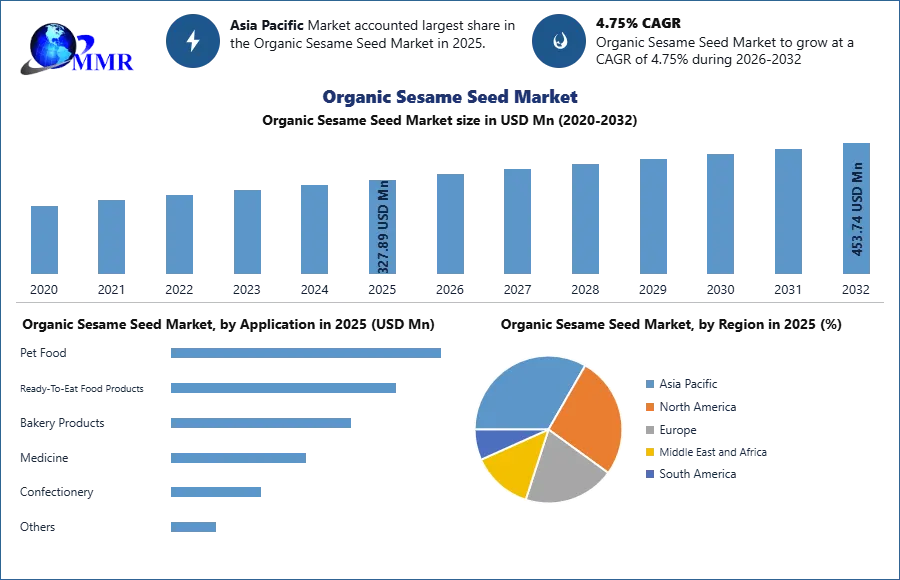
The Organic Sesame Seed Market size was valued at USD 327.89 Million in 2025 and the total Organic Sesame Seed revenue is expected to grow at a CAGR of 4.75% from 2026 to 2032, reaching nearly USD 453.74 Million.
Organic Sesame Seed Market Overview
The global Organic Sesame Seed Market is experiencing significant growth, driven by increasing consumer demand for organic and natural food ingredients. Organic sesame seeds are widely used in various food products such as bakery goods, snacks, oils, and health supplements due to their rich nutritional profile, including healthy fats, proteins, and antioxidants.The market is primarily segmented by type, with white sesame seeds holding the largest share, followed by black sesame seeds, which are growing rapidly due to their higher antioxidant content. The market is also segmented by form (raw/whole, roasted, and processed) and application (food & beverage, oil extraction, nutraceuticals, and cosmetics). Geographically, the Asia-Pacific region leads the market due to significant sesame production in countries like India, China, and Myanmar. North America and Europe are expected to witness the highest growth rates due to the rising preference for organic and clean-label products. Key players in the market include Dipasa USA Inc., Tradin Organic Agriculture B.V., Delphi Organic GmbH, and Sesaco. These companies are focusing on increasing their product offerings, enhancing distribution channels, and catering to the growing demand for organic sesame seeds. With increasing health consciousness and the rising popularity of plant-based diets, the market is expected to continue its growth trajectory. The market's competitive landscape is driven by innovations in product offerings and strategic partnerships to expand regional presence.
To know about the Research Methodology :- Request Free Sample Report
Organic Sesame Seed Market Dynamics:
Driver: Growing Demand for Healthy and Plant-Based Foods
One of the key drivers for the Organic Sesame Seed Market is the increasing consumer demand for healthy and plant-based foods. As people become more health-conscious and adopt plant-based diets, organic ingredients like sesame seeds are gaining popularity due to their high nutritional value. Organic sesame seeds are rich in healthy fats, proteins, vitamins, and minerals, which contribute to heart health, bone strength, and overall wellness. Their antioxidant properties, such as high levels of lignans and vitamin E, also make them desirable for preventing chronic diseases.
This growing health trend has spurred the demand for organic sesame seeds in a variety of products, from bakery items to snacks and even cosmetics. The shift toward clean-label products, where consumers seek foods with minimal processing and no artificial additives, aligns with the natural and organic appeal of sesame seeds. Additionally, the global rise in veganism and vegetarianism has further boosted the market, as organic sesame seeds provide an excellent source of plant-based protein.
As more consumers prioritize health and sustainability, organic sesame seeds are poised to become a staple in households worldwide. This growing preference for healthier food options, combined with a focus on organic agriculture, provides a robust market opportunity for sesame seed suppliers and manufacturers looking to tap into the expanding demand for organic and nutritious ingredients.
Opportunity: Expansion in Emerging Markets
An exciting opportunity in the Organic Sesame Seed Market lies in expanding into emerging markets, particularly in regions such as South America, the Middle East, and Africa. These regions have shown a rising interest in organic foods due to improving health awareness, changing lifestyles, and increasing disposable income. As more consumers in these regions seek healthier and sustainable alternatives to conventional food, organic sesame seeds are becoming a preferred option. The Asia-Pacific region remains a major player in sesame seed production, particularly in countries like India, China, and Myanmar. However, the growth of the organic sesame seed market is now shifting to other regions where demand for organic products is steadily rising. Emerging markets are expected to drive the next wave of growth for organic sesame seed exports, providing suppliers and manufacturers with significant opportunities.
Countries like Brazil, Egypt, and South Africa are poised to increase production, as they have the ideal growing conditions for sesame. Additionally, these markets are witnessing increased international trade in organic sesame, as global consumers seek access to authentic, high-quality, and certified organic sesame seeds. By capitalizing on the rising trend of organic consumption in emerging markets, companies can expand their market reach, diversify their customer base, and boost revenue. Furthermore, leveraging local production in these regions can help reduce costs while meeting the growing demand for organic sesame seeds globally.
Restraint: High Price of Organic Sesame Seeds
One of the significant restraints in the Organic Sesame Seed Market is the high price of organic sesame seeds compared to conventional seeds. Organic farming involves more labor-intensive practices, stricter regulations, and certification processes, all of which contribute to higher production costs. These increased costs are passed on to the consumer, making organic sesame seeds more expensive. The price premium attached to organic sesame seeds can deter price-sensitive consumers, especially in markets where organic products are still considered a niche. While demand for organic foods is rising, the cost of organic sesame seeds limits their penetration into mass-market products, such as low-cost snacks and bakery goods. In regions with less purchasing power, like parts of Africa and South America, this price factor poses a barrier to widespread adoption.
The supply chain of organic sesame seeds is more complex and less streamlined than conventional sesame seed production, leading to inefficiencies and higher costs. These factors combined present a challenge for suppliers and manufacturers to maintain competitive pricing, limiting their ability to compete against lower-priced conventional sesame seed products in both domestic and international markets.
Organic Sesame Seed Market Segment Analysis:
By Color, the organic sesame seed market is primarily segmented into black and white sesame seeds. Black sesame seeds dominate the market due to their stronger flavor, crunchier texture, and higher nutritional value. These seeds are rich in polyunsaturated fatty acids, Omega-6, and essential minerals such as iron, calcium, magnesium, and phosphorus, making them highly preferred for their health benefits. Black sesame seeds are commonly used in savory dishes, snacks, and health-focused products. On the other hand, white sesame seeds have a sweeter and milder flavor, making them ideal for delicate-flavored products like tahini, baked goods, and garnishes. White sesame seeds also find application in confectionery and salad toppings due to their aesthetic appeal and subtle taste.
By Seed Form, the seed form segment is divided into raw and processed seeds. Processed sesame seeds dominated the organic sesame seed market in 2025, including hulled and roasted varieties, due to their convenience and versatility. Hulled seeds, which have the outer hull removed, offer a smoother texture and are commonly used in oil extraction, baked goods, and snack foods. They have a cleaner, off-white appearance, and are more digestible compared to raw seeds. Raw seeds, retaining their outer shell, are primarily used in their whole form for traditional recipes or oil extraction. While raw seeds provide higher fiber content due to the hull, processed seeds are preferred for their consistent texture and flavor.
By Application, In terms of application, organic sesame seeds are widely used in bakery products, including bread, pastries, and crackers, where they enhance flavor, texture, and aroma. The bakery snacks segment is particularly dominant, with sesame seeds contributing a nutty flavor, crunch, and rich aroma to products. Organic sesame seeds are also utilized in ready-to-eat food products like energy bars, granola, and protein bars, adding nutritional value through healthy fats, fiber, and minerals. Additionally, sesame seeds are used in confectionery products such as candies and sesame-based bars, offering both flavor and texture.
Organic Sesame Seed Market Regional Insights:
Asia Pacific held the largest Organic Sesame Seed Market share in 2025. The Asia-Pacific region is not only the largest producer but also the dominant consumer of organic sesame seeds, with major players like India, China, and Myanmar leading the charge. These countries benefit from favorable climatic conditions and extensive agricultural practices that support sesame cultivation. The region’s growth is being propelled by an increasing preference for organic foods, as consumers are becoming more health-conscious and seeking out products with higher nutritional value and fewer chemicals. As part of the broader global shift toward plant-based diets, organic sesame seeds are gaining popularity due to their high nutrient content, including healthy fats, fiber, and minerals like calcium and magnesium. Furthermore, the rise of the middle class in countries such as India and China is fostering greater disposable income, which is facilitating the purchase of higher-quality, organic products. In countries like Japan, South Korea, and Thailand, organic sesame seeds are increasingly used in traditional and contemporary dishes, particularly in bakery products like bread, snacks, and confectionery, as well as in health-focused snacks like energy bars and granola. Additionally, the growing awareness of sustainability and the demand for clean-label products have contributed to the region’s strong preference for organic ingredients, further boosting the market share of organic sesame seeds. With evolving consumer preferences, the Asia-Pacific region is expected to maintain its leadership in the organic sesame seed sector, offering vast opportunities for growth in both production and consumption.
Recent Developments
On August 2024: Shiloh Farms, based in Georgia, was awarded the 2024 Georgia Farmer of the Year title. This recognition underscores the company’s excellence in farming practices, sustainability, and leadership in the agricultural community. Shiloh Farms continues to expand its reach in the organic food sector, offering a wide range of products, including sesame seeds. The company has been increasing its focus on gluten-free, organic, and natural foods, responding to growing consumer demand for healthier, plant-based products. The recognition as a leader in farm management highlights Shiloh's dedication to quality and sustainability.
On December 25, 2025: Shyam Industries recently launched a successful IPO, receiving overwhelming subscription, highlighting strong market confidence in its agro-product lines, including organic sesame seeds. The IPO was subscribed almost 988 times, signaling investor interest in the company’s growth prospects within the organic agricultural market. Shyam Industries continues to develop a robust export business in agro-commodities, including sesame seeds and spices. This expansion is complemented by enhanced processing capabilities and a focus on sustainable, organic agricultural practices.
Organic Sesame Seed Market Scope: Inquire before buying
| Organic Sesame Seed Market | |||
|---|---|---|---|
| Report Coverage | Details | ||
| Base Year: | 2025 | Forecast Period: | 2026-2032 |
| Historical Data: | 2020 to 2025 | Market Size in 2025: | 327.89 USD Mn |
| Forecast Period 2026-2032 CAGR: | 4.75% | Market Size in 2032: | 453.74 USD Mn |
| Segments Covered: | by Color | Black White Hulled Roasted Brown Others |
|
| by Seed Form | Raw/Whole Seed Processed Seed |
||
| by Application | Pet Food Ready-To-Eat Food Products Bakery Products Medicine Confectionery Others |
||
| by End User | Food and Beverages Oil Extraction Animal Feed Pharmaceutical Others |
||
| by Distribution Channel | Supermarkets/Hypermarkets Health Food Stores Specialty Stores E-commerce platforms Others |
||
Organic Sesame Seed Market, by Region
North America (United States, Canada, Mexico)
Europe (United Kingdom, France, Germany, Italy, Spain, Sweden, Russia, Poland, Belgium, Netherlands, Rest of Europe)
Asia Pacific (China, South Korea, India, Japan, Australia, Indonesia, Malaysia, Philippines, Thailand, Vietnam, Rest of Asia Pacific)
Middle East & Africa (South Africa, GCC, Egypt, Nigeria, Rest of MEA)
South America (Brazil, Argentina, Colombia, Chile, Rest of South America)
Key players/Competitors profiles covered in the Organic Sesame Seed Market report in strategic perspective
- Dipasa USA Inc.
- Shiloh Farms
- Shyam Industries
- Dhaval Agri Exports
- Tradin Organic Agriculture B.V.
- Delphi Organic GmbH
- Sesaco
- NNRV Trade Partners
- Valency Agro Pvt. Ltd.
- Suman Exports
- Bhimani Exports Pvt. Ltd.
- SadBhaav Spices
- Vora Spice Mills LLP
- SKYZ International
- Kisan Agro
- Dhairyya International
- Bora Foods Pvt. Ltd.
- Patel Export Industries
- Danube Exports Pvt. Ltd.
- Green Earth Products Pvt. Ltd.
- Maxcor Agro & Allieds
- Shree Raghvendra Agro Processors
- Farmvilla Food Industries Pvt. Ltd.
- Avaniya Organics
- Bombay Super Seeds
- Mudra Global
- Sagar Group
- ECOAXIS Global Ltd.