
Muscle Stimulator Market Size by Product, Modality, Technology, Application, End-User, Distribution Channel, Region, Industry-Wide Analysis, Competitive Landscape Assessment & Long-Term Forecast to 2034
Overview
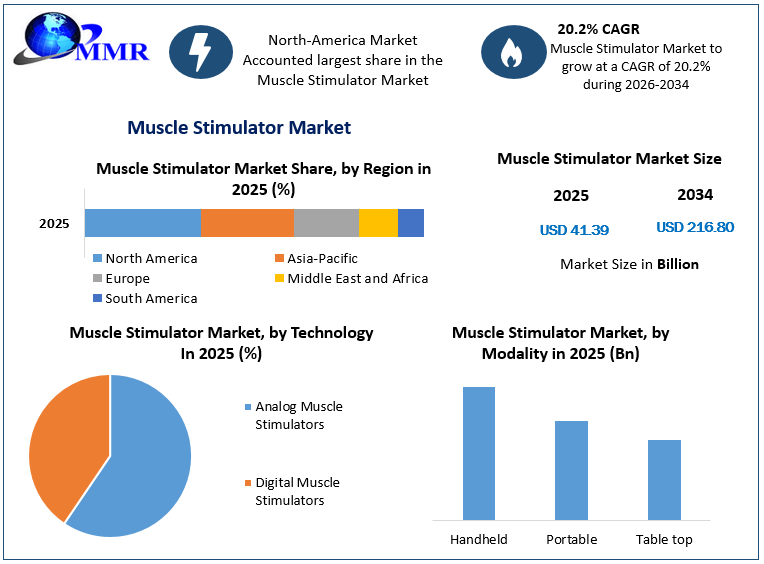
Muscle Stimulator Market size was valued at USD 41.39 Bn. in 2025, and the total Muscle Stimulator Market revenue is expected to grow by 3.8 % from 2026 to 2034, reaching nearly USD 216.80 Bn. BY 2034.
Muscle Stimulator Market Overview:
A muscle stimulator, also known as electrical muscle stimulation (EMS) or neuromuscular electrical stimulation (NMES), employs electrical impulses to induce muscle contractions, supporting applications in pain management, physiotherapy, rehabilitation, and strength conditioning. The global muscle stimulator market is experiencing strong growth, driven by technological advancements, rising rehabilitation needs, and expanding wellness applications the innovations such as wearable full-body EMS suits are transforming the market landscape. In March 2025, Neuro20 Technologies Corp secured FDA clearance for its Neuro20 PRO System, a next-generation suit integrating software for personalized therapy, enabling simultaneous engagement of multiple muscle groups. Similarly, the integration of AI and machine learning enhances therapy outcomes through real-time monitoring, predictive maintenance, and customized programs.
Strategic expansions are also boosting the market. Therabody’s acquisition of PowerDot in 2025 exemplified the extension of EMS into fitness and consumer wellness, highlighting growing mainstream acceptance. Furthermore, compact wireless devices are gaining traction for at-home use, offering drug-free pain relief and post-exercise recovery solutions. Market adoption is reinforced by increasing insurance reimbursement in North America and routine incorporation of EMS in sports medicine and physiotherapy. The industry demonstrates strong potential across rehabilitation, clinical care, and consumer wellness sectors.
Muscle Stimulator Market Size, Growth & Share Analysis
To know about the Research Methodology :- Request Free Sample Report
Muscle Stimulator Market Dynamics
Rising Prevalence of Chronic Diseases drive the growth of Muscle Stimulator Market
Conditions such as musculoskeletal disorders, stroke, arthritis, chronic pain, diabetes, and chronic obstructive pulmonary disease (COPD) continue to impact a growing share of the global population, significantly fueling the Muscle Stimulator Market. These diseases are associated with impaired mobility, persistent pain, muscle weakness, and reduced quality of life. Conventional therapies, including medication and surgery, often provide only partial relief, carry side effects, or may not be viable for long-term management. This has accelerated demand for non-invasive, safer, and more effective alternatives such as muscle stimulators, including neuromuscular electrical stimulation (NMES) and transcutaneous electrical nerve stimulation (TENS).
Muscle stimulators are increasingly adopted to manage chronic pain, strengthen muscles, and support rehabilitation, both in clinical and home settings. For example, in the UK, work-related musculoskeletal disorders affected 473,000 workers in 2025, driving reliance on stimulators to restore mobility and reduce pain medication. Stroke survivors benefit significantly from NMES to retrain muscles, with insurance reimbursements in Germany reinforcing adoption. Similarly, the U.S., with over 51 million adults suffering chronic pain, represents a major demand hub for targeted pain relief devices. COPD patients and those with heart failure, who often cannot perform conventional exercise, are also treated with NMES to improve endurance and muscle mass.
Advancements in wearable technologies, such as FDA-approved systems such as the Neuro20 PRO suit, are expanding accessibility and adoption. Together, these applications highlight how the chronic disease burden is directly fueling sustained demand for muscle stimulators worldwide.
Competition from Alternative Therapies limits the Muscle Stimulator Market growth.
The widespread availability and acceptance of alternative therapies significantly limit the growth of the muscle stimulator market. Although muscle stimulators, including NMES and TENS devices, are clinically proven for pain relief, rehabilitation, and muscle strengthening, their adoption is often challenged by cost concerns, limited awareness, and the perception of complexity. In contrast, alternatives such as yoga, acupuncture, physiotherapy, manual massage, and foam rolling are widely regarded as more affordable, accessible, and culturally familiar options for patients seeking long-term relief from chronic pain or musculoskeletal disorders. In Asia, for instance, yoga and acupuncture are deeply integrated into traditional healthcare systems and preferred by patients due to their low cost and holistic appeal.
Similarly, in developed regions such as Europe, manual physiotherapy remains the primary mode of rehabilitation after surgeries or sports injuries, often chosen over electrical devices for its personalized, human-centered approach. In fitness-focused markets like the U.S., foam rolling, hot/cold therapy, and massage guns have gained popularity as do-it-yourself recovery solutions, reducing reliance on stimulators.
The absence of standardized medical guidelines for stimulator use in emerging economies has further slowed physician recommendations, with many opting for established, low-cost remedies. High device prices, particularly in uninsured or price-sensitive populations, also make stimulators less competitive compared to traditional practices. Despite proven clinical benefits, muscle stimulators face strong competition from culturally entrenched, cost-effective, and widely trusted alternatives. This dynamic constrains market penetration, especially in developing regions, and remains a key restraint on the global muscle stimulator market’s long-term growth potential.
Muscle Stimulator Market Segment Analysis
Based on Product the Stimulator Market Segment into Neuromuscular Electrical Stimulation, Functional Electrical Stimulation, Transcutaneous Electrical Nerve Stimulation, Interferential, Burst Mode Alternating Current, Micro Current Electrical Neuromuscular Stimulator and Others. Transcutaneous Electrical Nerve Stimulation segment dominated the product segment in 2025. Due to its widespread use in chronic pain management and rehabilitation. TENS devices are non-invasive, portable, and user-friendly, making them highly accessible for both clinical and home applications. Their proven effectiveness in relieving chronic pain conditions such as arthritis, back pain, neuropathy, and post-surgical discomfort has strengthened demand, particularly as global pain prevalence continues to rise.
The affordability of TENS devices compared to other advanced stimulation technologies also supports higher adoption among cost-sensitive patients and healthcare systems. Moreover, growing consumer preference for drug-free pain relief solutions driven by concerns about opioid dependence and side effects of long-term medication has accelerated TENS adoption worldwide. Clinical validation, coupled with increasing insurance coverage in some countries, further boosts patient trust and utilization. Advancements in wearable TENS devices and smartphone-connected systems have expanded usability, driving growth across both medical and wellness markets. These advantages collectively explain why TENS emerged as the leading segment in 2025.
Muscle Stimulator Market Regional Insights
The North America region has dominated the Muscle Stimulator Market in 2025. Maintaining its dominance through a combination of structural, demographic, and technological factors that drive adoption and innovation across medical, fitness, and consumer wellness sectors. Structurally, the region benefits from advanced healthcare infrastructure, with hospitals, clinics, and rehabilitation centers widely integrating electrotherapy into treatment and home-use programs. For example, U.S. rehabilitation hospitals routinely prescribe stimulators post-surgery or injury to prevent atrophy and accelerate recovery. Strong regulatory frameworks also play a role, with the FDA leading global approvals of new devices, including a 2025 launch of stimulators for core muscle strengthening that expanded both clinical and consumer applications. In addition, robust reimbursement policies in the U.S. and Canada make devices more accessible, fueling widespread adoption.
Demographically, the high prevalence of chronic conditions, including over 54 million U.S. adults living with arthritis, and the region’s rapidly aging population significantly increase demand for non-invasive rehabilitation and pain relief. Rising incidences of injury and surgery, including over 17,000 annual spinal cord injuries and numerous orthopedic operations, further underscore the necessity of these devices in recovery pathways. Sports and fitness culture amplifies this demand, with NFL and NBA teams and recreational athletes increasingly using TENS and NMES devices for recovery and performance enhancement.
Technological leadership remains a key competitive edge, with companies such as NeuroMetrix, Zynex, EMS Physio, and Beurer driving early adoption and continuous innovation, including wearable, AI-enabled stimulators integrated with health apps. Real-world adoption is evident across hospitals like Cleveland Clinic and NewYork-Presbyterian, elderly patients using at-home NMES units, NFL sports medicine programs, and fitness consumers purchasing connected EMS devices online. Coupled with strong purchasing power, technological readiness, and consumer health awareness, North America’s dominance is reinforced by proactive professional training and patient education, ensuring higher compliance and repeat adoption. This combination of healthcare infrastructure, policy support, demographic demand, and innovation ensures that North America’s leadership in the muscle stimulator market.
Competitive Landscape of Muscle Stimulator Market:
Muscle Stimulator Market Market is competitive with the presence of several established companies and an increasing number of new entrants, all striving to strengthen their positions through product innovation, partnerships, mergers and acquisitions, and international expansion. Leading players such as DJO Global, Omron Corporation, Zynex Inc., NeuroMetrix Inc., Beurer GmbH, and EMS Physio Ltd. command significant market share due to their extensive product portfolios, technological expertise, and global distribution networks. Companies continue to focus on diversifying their offerings to meet the growing demand across clinical, sports, and home care settings.
For example, NeuroMetrix launched the Neuro20 PRO System, providing advanced full-body stimulation, while Omron Corporation expanded its TENS portable units by integrating heat therapy features. DJO Global has strengthened its position through strategic acquisitions, including Compex and Chattanooga Medical, leveraging their distribution and technological strengths to broaden its market reach.
Competition is boosted by advancements in wearable and wireless stimulation technologies, which are driving wider adoption due to convenience and ease of use. The increasing demand for portable, multifunctional, and cost-effective devices from physiotherapy clinics, sports facilities, and home users is motivating companies to focus on affordability without compromising performance. This trend is pushing both established and emerging players to innovate with user-friendly, connected solutions that integrate with digital health platforms. As a result, the competitive landscape is expected to become even more dynamic, with a strong emphasis on innovation, affordability, and global market penetration.
Key trends in the Muscle Stimulator Market
1. Digital & AI-Driven Devices- Muscle stimulators are evolving with AI and smart connectivity, enabling personalized treatment protocols and real-time adjustments. App integration allows users and clinicians to track progress, customize therapy, and improve outcomes. This trend boosts adoption in home healthcare and professional settings, enhancing convenience while aligning with the global shift toward data-driven, patient-centric medical technologies.
2. Wearables & Portables- The market is witnessing a surge in lightweight, portable, and wearable muscle stimulators designed for everyday use. These compact devices feature improved battery life, wireless control, and discreet designs, making them ideal for athletes, rehabilitation patients, and wellness users. Portability increases user compliance, driving demand across home care and fitness recovery markets, especially among younger, tech-savvy consumers.
3. Expanded Applications- Muscle stimulators are no longer limited to rehabilitation and pain relief. Their use has broadened into sports recovery, fitness training, neurological rehabilitation, and even cosmetic toning therapies. This diversification attracts multiple end-user groups, from athletes to elderly patients, and aligns with the global preference for non-invasive, drug-free treatments, significantly widening the market’s growth potential across industries.
Muscle Stimulator Market Recent Industry Developments
| Date | Company | Development | Impact |
|---|---|---|---|
| 30 January 2025 | Myocene | Myocene received FDA De Novo clearance for its muscle fatigue monitoring device that combines electrostimulation with force measurement for objective muscle assessment. | The clearance expands clinical adoption of advanced muscle stimulation-based technologies for sports medicine and rehabilitation. |
| 25 February 2025 | Canadian Pioneer Medical Technology Corporation (CPMT LASER) | The FDA granted 510(k) clearance for the company's EMS (FlexPulse, MagnaCore and Magnetika) powered muscle stimulator devices. | The approval broadened the availability of new electrical muscle stimulation solutions in the U.S. rehabilitation market. |
| 30 July 2025 | Changsha Anxiang Medical Technology Co., Ltd. | The FDA issued 510(k) clearance for the company's TENS and EMS Unit, classified as a Powered Muscle Stimulator (Class II). | The clearance strengthened the market with additional FDA-authorized muscle stimulation devices for pain management and rehabilitation. |
| 09 June 2026 | PEPPER | PEPPER officially launched its FDA-cleared Muscle Activation Suit, a wireless full-body EMS wearable integrated with a real-time guided mobile application. | The launch accelerated consumer adoption of wearable electrical muscle stimulation technology for fitness and recovery applications. |
Muscle Stimulator Market Scope: Inquire before buying
| Muscle Stimulator Market | |||
|---|---|---|---|
| Report Coverage | Details | ||
| Base Year: | 2025 | Forecast Period: | 2026-2034 |
| Historical Data: | 2020 to 2025 | Market Size in 2025: | USD 41.39 Bn. |
| Forecast Period 2026 to 2034 CAGR: | 3.8% | Market Size in 2034: | USD 216.80 Bn. |
| Segments Covered: | by Product | Neuromuscular Electrical Stimulation Functional Electrical Stimulation Transcutaneous Electrical Nerve Stimulation Interferential Burst Mode Alternating Current Micro Current Electrical Neuromuscular Stimulator Others |
|
| by Modality | Handheld Portable Table top |
||
| by Technology | Analog Muscle Stimulators Digital Muscle Stimulators |
||
| by Application | Pain management Neurological disorder Musculoskeletal disorder Others |
||
| by End-User | Hospitals Ambulatory surgical centers Physiotherapy clinics Sports clinics |
||
| by Distribution Channel | Direct Sales Distributors |
||
Muscle Stimulator Market, by region
North America (United States, Canada, Mexico)
Europe (United Kingdom, France, Germany, Italy, Spain, Sweden, Russia, Rest of Europe)
Asia Pacific (China, South Korea, Japan, India, Australia, Indonesia, Malaysia, Philippines, Thailand, Vietnam, Rest of Asia Pacific)
Middle East and Africa (MEA) (South Africa, GCC, Nigeria, Rest of MEA)
South America (Brazil, Argentina, Colombia, Chile, Rest of South America)
Muscle Stimulator Market, Key Players
North America
1. Enovis — DJO/Chattanooga & Compex (USA)
2. Zynex Medical (USA)
3. NeuroMetrix (USA)
4. BioMedical Life Systems (USA)
5. Mettler Electronics (USA)
6. Richmar — Compass Health Brands (USA)
7. ExcelHealth — iReliev (USA)
8. Therabody — PowerDot (USA)
9. truMedic (USA)
10. AxioBionics (USA)
11. Neuro20 Technologies (USA)
12. Current Solutions — InTENSity (USA)
Europe
1. BTL Industries (Czech Republic)
2. Zimmer MedizinSysteme (Germany)
3. Enraf-Nonius (Netherlands)
4. Gymna (Belgium)
5. Globus (Italy)
6. Verity Medical — NeuroTrac (UK)
7. schwa-medico (Germany)
8. PHYSIOMED ELEKTROMEDIZIN (Germany)
9. Cosmogamma (Italy)
10. I-TECH Medical (Italy)
11. Hasomed (Germany)
12. gbo Medizintechnik AG (Germany)
13. EMS Physio Ltd (UK)
Asia–Pacific
1. Omron Healthcare (Japan)
2. ITO Co., Ltd. (Japan)
3. OG Wellness (Japan)
4. Johari Digital Healthcare (India)
5. BPL Medical Technologies (India)
6. HMS Medical Systems (India)
7. Technomed Electronics (India)
8. Guangzhou Longest Science & Technology (China)
9. Shenzhen XFT Medical (China)
10. Yuwell — Jiangsu Yuyue Medical (China)
South America
1. IBRAMED (Brazil)
2. KLD Biosistemas (Brazil)
3. HTM Eletrônica (Brazil)
4. Quark Medical (Brazil)
Frequently Asked Questions:
1. Which region has the largest share in Global Muscle Stimulator Market?
Ans: North America region held the highest share in 2025.
2. What is the growth rate of Global Muscle Stimulator Market?
Ans: The Global market is growing at a CAGR of 3.8 % during forecasting period 2026-2034.
3. What is scope of the Global Muscle Stimulator market report?
Ans: Global Muscle Stimulator Market report helps with the PESTEL, PORTER, Recommendations for Investors & Leaders, and market estimation of the forecast period.
4. Who are the key players in Global Muscle Stimulator market?
Ans: The important key players in the Global Muscle Stimulator Market are – NeuroMetrix, Cogentix Medical, Cyberonics, Abbott, Boston Scientific, Medtronic, Nevro, DJO Global, Zynex, AxioBionics, Beurer GmbH, EMS Physio Ltd., MeyerDC, Omron Healthcare, Inc., RS Medical, OG WELLNESS TECHNOLOGIES CO., and LTD.
5. What is the study period of this market?
Ans: The Global Muscle Stimulator Market is studied from 2020 to 2034.