
High-Pressure Gas Cylinder Market - Industry Structure Evaluation, Demand Drivers Analysis, Regional Growth Analysis and Identification, Competitive Positioning Review & Global Market Size Forecast to 2034
Overview
The High-Pressure Gas Cylinder Market size was valued at USD 7.63 Billion in 2025 and the total High-Pressure Gas Cylinder revenue is expected to grow at a CAGR of 5.26% from 2026 to 2034, reaching USD 12.10 Billion.
Global High-Pressure Gas Cylinder Market Overview
The Global High-Pressure Gas Cylinder Market encompasses seamless metallic and fiber-reinforced composite pressure vessels engineered to safely store and transport compressed gases—such as hydrogen, compressed natural gas (CNG), oxygen, nitrogen, argon, helium, and specialty semiconductor gases—at working pressures typically ranging from 150 bar to over 700 bar.
Growth is underpinned by global decarbonization initiatives driving hydrogen and natural gas mobility, rising demand for ultra-high-purity gases in semiconductor and pharmaceutical manufacturing, and expanding medical oxygen infrastructure. While all-steel Type I cylinders remain the foundation of industrial bulk gas distribution due to cost durability, demand is rapidly shifting toward lightweight aluminum and carbon-fiber composite Type III and Type IV vessels for fuel-cell electric vehicles (FCEVs), self-contained breathing apparatus (SCBA), aerospace, and portable healthcare applications.
High-Pressure Gas Cylinder Market Growth Outlook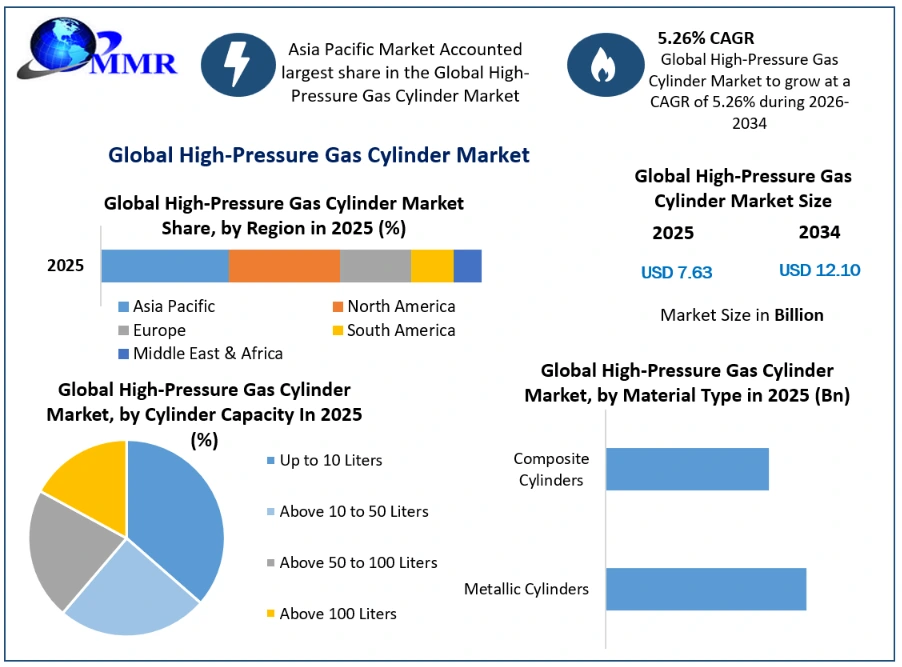
To know about the Research Methodology :- Request Free Sample Report
Global High-Pressure Gas Cylinder Market Dynamics
Market Drivers
Clean Energy Transition and Hydrogen Mobility Expansion: Heavy government and private investments in green hydrogen corridors, refueling stations, and commercial fuel-cell trucks and buses are accelerating demand for 350-bar to 700-bar Type III and Type IV composite cylinders capable of maximizing onboard energy density while minimizing vehicle weight.
Industrial Gas Demand in Semiconductor, Healthcare, and Manufacturing Sectors: Rapid capacity expansions in semiconductor wafer fabrication, electronics manufacturing, and pharmaceuticals require reliable supplies of ultra-high-purity nitrogen, argon, and specialty calibration gases. Simultaneously, aging global populations and home-care therapy adoption sustain steady procurement of lightweight aluminum and composite medical oxygen cylinders.
Market Restraints
High Manufacturing Costs of Carbon-Fiber Composites and Stringent Testing Regulations: Advanced Type III and Type IV composite cylinders rely on expensive aerospace-grade carbon fiber and precision filament-winding processes, resulting in significantly higher upfront unit costs than conventional seamless steel cylinders. Furthermore, mandatory compliance with regional pressure-vessel safety codes (such as ISO, DOT, and TPED) and periodic hydrostatic requalification testing lengthens certification timelines and increases lifecycle operating expenses.
Market Opportunities
Smart Cylinder Telemetry and IoT-Enabled Fleet Management: Integrating RFID tags, QR serialization, ultrasonic wall-thickness sensors, and IoT pressure-monitoring valves allows industrial gas suppliers and end users to track real-time gas levels, optimize refill logistics, and automate 10-year hydrostatic inspection schedules—creating recurring digital service revenues alongside hardware sales.
Global High-Pressure Gas Cylinder Market Segment Analysis
By Material Type: Metallic cylinders account for the majority share of global market combined anchored by steel cylinders due to high pressure tolerance, long service life, recyclability, and cost efficiency across bulk industrial gas distribution and welding. Aluminum cylinders provide 30% to 40% weight savings over steel alongside superior corrosion resistance, making them widely preferred for portable medical oxygen, SCUBA diving, and specialty calibration gases. Composite cylinders represent the fastest-growing material segment and holding around 26.8% share—as carbon- and aramid-fiber construction reduces weight by up to 70% compared to steel equivalents for high-pressure hydrogen mobility, aerospace, and firefighting applications.
By Cylinder Type: Type I – all-metal cylinders command the largest installed base and revenue share across stationary and merchant industrial gas fleets, leveraging seamless chromium-molybdenum steel or aluminum-alloy construction for durable 200-to-300-bar containment. Type II – hoop-wrapped composite cylinders feature a thick metallic liner reinforced around the cylindrical body with fiberglass or carbon fiber, offering a cost-balanced weight reduction for stationary hydrogen buffering and natural gas transit. Type III – fully wrapped composite cylinders with metal liners and Type IV – fully wrapped composite cylinders with non-metallic liners (high-density polyethylene or polyamide liners overwrapped with aerospace-grade carbon fiber) record the fastest growth rates, enabling lightweight 350-bar to 700-bar storage in fuel-cell electric vehicles, self-contained breathing apparatus (SCBA), and launch vehicles. Other / emerging cylinder types encompass conformable multi-cell pressure vessels and smart sensor-integrated cylinders engineered for space-constrained vehicle chassis and automated fleet telemetry.
By Gas Type: Nitrogen, oxygen, and argon collectively generate the largest share of packaged gas cylinder volume—driven by metal fabrication shielding, semiconductor wafer processing, food packaging, and hospital or home respiratory therapy. Hydrogen and natural gas (CNG / methane) represent the fastest-expanding gas segments as clean-energy mandates and commercial fleet decarbonization accelerate deployments of onboard fuel storage and high-pressure tube trailers. Carbon dioxide and acetylene sustain steady recurring demand across beverage carbonation, surgical insufflation, and oxy-fuel welding/cutting, while helium, gas mixtures (including breathing air, medical blends, and semiconductor calibration gases), and others command high unit values due to stringent internal cleanliness and valve-purity standards.
By Working Pressure: Above 150 to 200 bar and above 200 to 300 bar account for the core share of industrial, medical, and CNG cylinder shipments, balancing gas payload capacity with standardized filling-station infrastructure and seamless metallic vessel economics. Up to 150 bar covers lower-pressure specialty gases, dissolved acetylene accumulators, and compact portable cylinders. Above 300 to 450 bar and above 450 bar (including 700-bar hydrogen storage systems) represent the fastest-growing pressure tiers, requiring advanced Type III and Type IV carbon-fiber composite architectures to maximize volumetric energy density in heavy-duty fuel-cell trucks, buses, and hydrogen refueling cascades.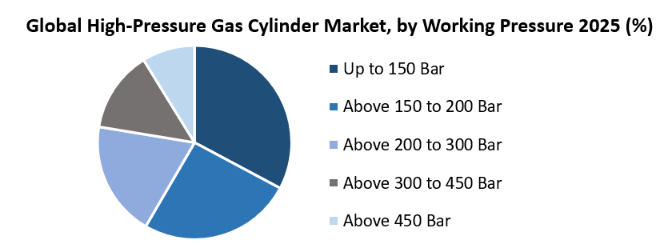
By Cylinder Capacity: Above 10 to 50 liters represents the dominant capacity range across global merchant gas distribution—encompassing standard 40-liter to 50-liter water-capacity cylinders used in welding shops, factories, laboratories, and hospital manifold systems. Up to 10 liters experiences strong expansion in portable medical oxygen therapy, emergency SCBA packs, recreational diving, and analytical calibration instruments. Above 50 to 100 liters and above 100 liters (including large jumbo cylinders and multi-cylinder tube-trailer modules) are growing rapidly in onboard CNG/hydrogen commercial vehicle fuel racks and bulk industrial gas supply.
By Application: Industrial gas supply and processing commands the largest application driven by daily cylinder exchanges for welding, cutting, inerting, heat treatment, and electronics manufacturing. Medical and healthcare gas supply holds a major, resilient revenue share underpinned by hospital oxygen networks, home-care respiratory therapy, and anesthetic gas delivery. Hydrogen energy storage and fueling and compressed natural gas (CNG) storage and fueling represent the fastest-growing applications as transport operators scale zero- and low-emission fleets. Firefighting and emergency breathing systems, diving and underwater breathing systems, aerospace and space applications, laboratory and scientific applications, and other specialized applications sustain steady demand for lightweight aluminum and composite vessels.
By End-User Industry: Industrial manufacturing and metal fabrication generates the largest end-user revenue—due to continuous consumption of argon, oxygen, nitrogen, and acetylene across shipyards, automotive plants, and construction fabrication. Automotive and transportation represents the fastest-growing end-user sector as commercial trucking, transit buses, and passenger fleets adopt CNG and 700-bar hydrogen fuel systems. Healthcare and medical services, energy and utilities, and chemicals and petrochemicals drive substantial recurring procurement of certified steel and composite fleets, while public safety and emergency services, aerospace and defense, research laboratories and educational institutions, marine and offshore, and other industries rely on mission-critical, high-reliability pressure vessels.
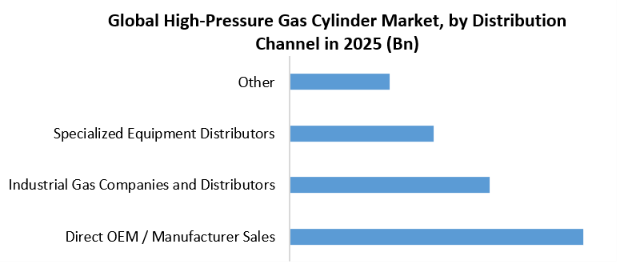
By Distribution Channel: Industrial gas companies and distributors account for the largest distribution share, operating massive proprietary rental and exchange cylinder fleets equipped with barcoding, RFID, and smart residual-pressure valves to serve manufacturing, healthcare, and laboratory accounts. Direct OEM / manufacturer sales capture high-value contracts directly from commercial vehicle automakers, aerospace contractors, hydrogen infrastructure developers, and defense agencies requiring custom-engineered Type III and Type IV storage modules. Specialized equipment distributors and other channels supply certified cylinders, valves, and safety assemblies to firefighting agencies, diving centers, medical device providers, and regional workshops.
Global High-Pressure Gas Cylinder Market Regional Analysis
Asia Pacific commands the largest share and fastest growth rate in the global high-pressure gas cylinder market, led by China, India, Japan, and South Korea. The region hosts over 35 million CNG vehicles alongside aggressive national hydrogen fuel-cell vehicle rollouts, massive semiconductor foundry investments, and large-scale industrial manufacturing that drive high-volume demand across both seamless steel and Type III/IV composite vessels.
North America holds a major revenue share anchored by the United States and Canada, supported by advanced industrial gas distribution networks, aerospace and defense programs, firefighting SCBA upgrades, and federal clean-hydrogen hub incentives. High adoption of DOT-certified composite cylinders, ultra-high-purity semiconductor gas supply chains, and digitized asset-tracking fleets reinforces regional market value.
Europe represents a technologically mature market propelled by strict EU decarbonization mandates, heavy-duty hydrogen transport projects, and rigorous TPED safety standards across Germany, France, the United Kingdom, Italy, and Norway. European manufacturers and industrial gas majors lead global deployments of hydrogen tube trailers, composite vehicle fuel systems, and low-emission packaged gas logistics.
South America registers steady growth driven by CNG passenger and commercial fleet conversions in Brazil and Argentina, expanding industrial manufacturing, and healthcare oxygen infrastructure upgrades across urban and regional hospital networks.
Middle East & Africa experiences measured expansion supported by industrial diversification, petrochemical and energy operations in Saudi Arabia and the United Arab Emirates, and medical oxygen and agricultural gas distribution initiatives across South Africa and emerging African healthcare networks.
Global High-Pressure Gas Cylinder Market Competitive Landscape
The Global High-Pressure Gas Cylinder Market is moderately consolidated across specialized pressure-vessel manufacturers while maintaining strong regional competition in standard industrial steel cylinders. Prominent global manufacturers include Worthington Enterprises, Inc. (Worthington Industries), Luxfer Holdings PLC (Luxfer Gas Cylinders), Hexagon Composites ASA (Hexagon Purus), Faber Industrie S.p.A., Chart Industries, Inc., Everest Kanto Cylinder Ltd., Beijing Tianhai Industry Co., Ltd., Sinoma Science & Technology Co., Ltd., Nantong CIMC Enric, NPROXX, Catalina Cylinders, and Rama Cylinders Pvt. Ltd., alongside global industrial gas majors such as Linde plc and Air Liquide S.A. that manage vast proprietary cylinder rental pools.
Competitive strategy centers on Type III and Type IV carbon-fiber filament-winding capacity, 700-bar hydrogen storage certifications, automated hot-billet piercing and cold-extrusion efficiency, and integrated valve and telemetry solutions. Leading vendors are expanding dedicated hydrogen storage plants across North America, Europe, and Asia, forming strategic partnerships with commercial vehicle OEMs and electrolyzer developers, and embedding smart tracking technologies to differentiate on safety and total lifecycle cost.
The objective of the report is to present a comprehensive analysis of the global market to the stakeholders in the industry. The past and current status of the industry with the forecasted market size and trends are presented in the report with the analysis of complicated data in simple language. The report covers all the aspects of the industry with a dedicated study of key players that include market leaders, followers, and new entrants.
PORTER, PESTEL analysis with the potential impact of micro-economic factors of the market have been presented in the report. External as well as internal factors that are supposed to affect the business positively or negatively have been analyzed, which will give a clear futuristic view of the industry to the decision-makers.
The reports also helps in understanding the global market dynamic, structure by analyzing the market segments and project the Global Market size. Clear representation of competitive analysis of key players by product, price, financial position, product portfolio, growth strategies, and regional presence in the global market make the report investor’s guide.
Global High-Pressure Gas Cylinder Market Recent Developments:
| Date | Company | Development | Impact |
|---|---|---|---|
| 02 January 2026 | Time Technoplast Ltd. | Time Technoplast received regulatory approval from the Petroleum and Explosives Safety Organisation (PESO) to manufacture and supply high-pressure composite gas cylinders. | This regulatory milestone enables the company to supply specialized high-pressure storage cylinders for hydrogen, oxygen, and medical gases across diverse industries. |
| 28 July 2026 | Luxfer Holdings PLC | Luxfer Holdings PLC, parent of Luxfer Gas Cylinders, entered into a definitive agreement to be acquired in an all-cash transaction valued at $17.37 per share. | The transaction restructures ownership of a major producer of high-pressure aluminum and carbon-composite gas cylinders serving industrial, medical, and alternative fuel sectors. |
| 02 September 2026 | FORVIA | FORVIA unveiled its second-generation 700 bar and 350 bar Type IV high-pressure hydrogen cylinders, including a 563-liter model storing 22.7 kg of hydrogen, at IAA Transportation 2026. | The R134.02-certified composite cylinders deliver the world's largest single-cylinder storage capacity to extend zero-emission range for heavy-duty trucks and buses. |
| 09 October 2026 | Hexagon Purus ASA | Hexagon Purus launched HyCarrier, a next-generation 381-bar distribution container engineered with lightweight Type 4 high-pressure composite hydrogen cylinders. | The modular system transports up to 1,150 kg of compressed hydrogen across road, rail, and inland waterways with automated fire-triggered shut-off protection. |
| 13 November 2026 | Everest Kanto Cylinder Limited | Everest Kanto Cylinder reported commencing commercial CNG cylinder production and dispatches at its new Egypt facility alongside an MoU with CARGAS for CNG transport units. | The operational milestone expands EKC's global manufacturing network to six plants with 1.8 million annual cylinder capacity to serve Middle Eastern and African clean-energy markets. |
Global High-Pressure Gas Cylinder Market Scope: Inquire before buying
| Global Global High-Pressure Gas Cylinder Market | |||
|---|---|---|---|
| Report Coverage | Details | ||
| Base Year: | 2025 | Forecast Period: | 2026-2034 |
| Historical Data: | 2020 to 2025 | Market Size in 2025: | 7.63 USD Billion |
| Forecast Period 2026-2034 CAGR: | 5.26% | Market Size in 2034: | 12.10 USD Billion |
| Segments Covered: | by Material Type | Metallic Cylinders Steel Cylinders Aluminum Cylinders Composite Cylinders |
|
| by Cylinder Type | Type I – All-Metal Cylinders Type II – Hoop-Wrapped Composite Cylinders Type III – Fully Wrapped Composite Cylinders with Metal Liners Type IV – Fully Wrapped Composite Cylinders with Non-Metallic Liners Other / Emerging Cylinder Types |
||
| by Gas Type | Oxygen Nitrogen Hydrogen Carbon Dioxide Argon Helium Natural Gas (CNG / Methane) Acetylene Gas Mixtures Others |
||
| by Working Pressure | Up to 150 Bar Above 150 to 200 Bar Above 200 to 300 Bar Above 300 to 450 Bar Above 450 Bar |
||
| by Cylinder Capacity | Up to 10 Liters Above 10 to 50 Liters Above 50 to 100 Liters Above 100 Liters |
||
| by Application | Industrial Gas Supply and Processing Medical and Healthcare Gas Supply Hydrogen Energy Storage and Fueling Compressed Natural Gas (CNG) Storage and Fueling Firefighting and Emergency Breathing Systems Diving and Underwater Breathing Systems Aerospace and Space Applications Laboratory and Scientific Applications Other |
||
| by End-User Industry | Industrial Manufacturing and Metal Fabrication Healthcare and Medical Services Energy and Utilities Automotive and Transportation Chemicals and Petrochemicals Public Safety and Emergency Services Aerospace and Defense Research Laboratories and Educational Institutions Marine and Offshore Other |
||
| by Distribution Channel | Direct OEM / Manufacturer Sales Industrial Gas Companies and Distributors Specialized Equipment Distributors Other |
||
Global High-Pressure Gas Cylinder Market, by Region
North America (United States, Canada and Mexico)
Europe (UK, France, Germany, Italy, Spain, Sweden, Austria, Turkey, Russia and Rest of Europe)
Asia Pacific (China, India, Japan, South Korea, Australia, ASEAN and Rest of APAC)
Middle East and Africa (South Africa, GCC, Egypt, Nigeria and Rest of ME&A)
South America (Brazil, Argentina, Columbia and Rest of South America)
Global High-Pressure Gas Cylinder Market Key Players:
North America
1. Luxfer Gas Cylinders
2. Norris Cylinder Company
3. Catalina Cylinders
4. Worthington Enterprises
5. Hexagon Lincoln
6. Steelhead Composites
7. CP Industries
8. Leland Gas Technologies
Europe
9. Faber Industrie
10. Cylinders Holding
11. NPROXX
12. Eurocylinder Systems
13. Amtrol-Alfa
14. CHEMET
15. Worthington Cylinders
16. Ragasco
17. Hexagon Composites
18. GVP
Asia Pacific
19. Everest Kanto Cylinder
20. CIMC Enric
21. Sinoma Science & Technology
22. Beijing Tianhai Industry
23. Shandong Huachen High Pressure Vessel Group
24. Zhejiang Jindun Pressure Vessel
25. Shenyang Zhongfu Kejin Pressure Vessels
26. Shandong Yongan Special Equipment
27. ILJIN Composite
28. NK Co., Ltd.
29. Time Technoplast
30. Rama Cylinders
31. INOXCVA
32. Maharashtra Cylinders
33. Quantum Fuel Systems
34. Toyota Industries Corporation
35. Japan Steel Works
36. Furui Special Equipment
37. Jiangsu Minsheng Heavy Industries
38. Shandong Huanri Group
South America
39. MAT S.A.
40. White Martins
41. Messer Gases do Brasil
Middle East & Africa
42. Gulf Cryo
43. EKC International FZE
44. Abdullah Hashim Industrial Gases & Equipment
45. African Oxygen Limited (Afrox)
46. National Industrial Gases Company
Frequently Asked Questions
1.Which region has the largest share in Global High-Pressure Gas Cylinder Market?
Ans: Asia Pacific region held the highest share in 2025.
2.What is the growth rate of Global High-Pressure Gas Cylinder Market?
Ans: The Global High-Pressure Gas Cylinder Market is growing at a CAGR of 5.26% during forecasting period 2026-2034.
3.What is the scope of the Global High-Pressure Gas Cylinder Market report?
Ans: Global High-Pressure Gas Cylinder Market report helps with the PESTEL, PORTER, COVID-19 Impact analysis, Recommendations for Investors & Leaders, and market estimation of the forecast period.
4.Who are the key players in Global High-Pressure Gas Cylinder Market?
Ans: The important key players in the Global High-Pressure Gas Cylinder Market are – Worthington Industries, Luxfer Holdings PLC, Hexagon Composites ASA, Faber Industrie S.p.A., Everest Kanto Cylinder Ltd., Sinoma Science & Technology, Beijing Tianhai Industry, Linde PLC, Air Liquide, Air Products and Chemicals, Quantum Fuel Systems, Steelhead Composites, ILJIN Composites, JFE Steel Corporation, Hyosung Advanced Materials.
5.What is the study period of this Market?
Ans: The Global High-Pressure Gas Cylinder Market is studied from 2020 to 2034.