
Global Functional Foods and Drinks Market by Segments, Country and Region – Share, Size, Outlook, Opportunity Analysis, and Forecast 2026-2032
Overview
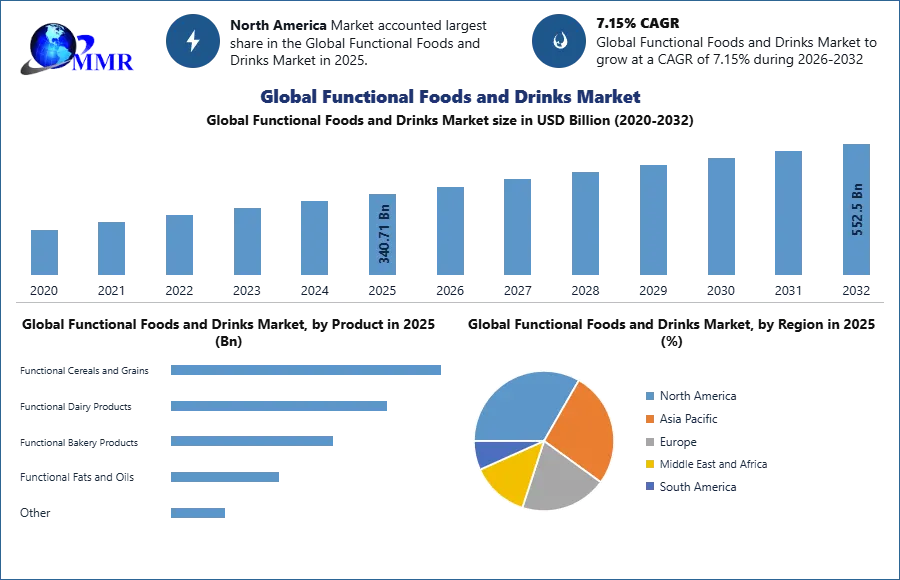
The Functional Foods and Drinks Market size was valued at USD 340.71 Billion in 2025 and the total Functional Foods and Drinks revenue is expected to grow at a CAGR of 7.15% from 2026 to 2032, reaching nearly USD 552.5 Billion.
The Functional Foods and Drinks Market encompasses a wide range of products that offer health benefits beyond basic nutrition. These products are fortified with additional nutrients, vitamins, minerals, or other bioactive compounds, targeting specific health concerns or providing enhanced functionality. Examples include probiotic yogurts, fortified cereals, energy drinks with added vitamins, and herbal teas with antioxidant properties.
Functional foods and drinks find applications across various sectors, including dietary supplements, sports nutrition, weight management, and general wellness. They are designed to support immune health, digestive health, heart health, cognitive function, and overall well-being. These products play a crucial role in promoting healthier dietary habits and addressing specific health needs, contributing to the prevention of chronic diseases and improving quality of life. The importance of the Functional Foods and Drinks Market lies in its ability to offer consumers convenient and effective ways to improve their health and well-being. As people become more health-conscious and proactive about managing their health, there is a growing demand for products that offer functional benefits. Additionally, with rising concerns about environmental sustainability and ethical sourcing, there is a trend towards products that are organic, non-GMO, and sustainably sourced, further driving growth in this market segment.
The global presence of the Functional Foods and Drinks Market is significant, with consumers across the world increasingly incorporating these products into their daily diets. Regions such as North America, Europe, and Asia-Pacific are key markets for functional foods and drinks, driven by factors such as changing dietary preferences, increasing health awareness, and growing disposable incomes. Moreover, emerging economies are witnessing rapid urbanization and lifestyle changes, leading to greater demand for functional products to address health concerns associated with modern living. Overall, the demand for functional foods and drinks continues to grow as consumers seek ways to enhance their health and well-being through dietary choices. With ongoing research and innovation in food science and technology, the market is expected to expand further, offering a diverse range of functional products tailored to meet the evolving needs and preferences of consumers worldwide.
 To know about the Research Methodology :- Request Free Sample Report
Functional Foods and Drinks Market Dynamics:
Emerging Trends Driving Growth in the Functional Foods and Drinks Market
The functional foods and drinks market is experiencing robust growth, fueled by shifting consumer preferences towards health-conscious lifestyles and preventive healthcare. This market segment includes products fortified with ingredients offering specific health benefits beyond basic nutrition, such as probiotics, antioxidants, omega-3 fatty acids, and vitamins. The current scenario is characterized by increasing demand for functional foods and drinks due to rising awareness of the link between diet and health, coupled with the growing prevalence of lifestyle-related diseases. Factors driving market growth include the aging population, heightened interest in wellness and nutrition, and the expansion of the middle-class demographic with higher disposable incomes.
Key players in the industry are actively innovating to meet consumer demands and preferences, with recent developments focusing on product diversification and functionality. For instance, Nestlé has introduced "BOOST WELLNESS," a range of fortified instant noodles targeting health-conscious consumers in India, while PepsiCo launched "Driftwell," a functional beverage designed to promote relaxation and stress reduction, reflecting the market's emphasis on catering to evolving consumer needs and driving continued expansion in the functional foods and drinks sector.
In response to shifting consumer priorities, the functional foods and drinks market has witnessed notable trends in 2022. A growing emphasis on self-care has led to increased demand for products supporting immunity, with a notable 28% of U.S. adults prioritizing self-care. Citrus fruits, dark leafy greens, and nutrient-rich superfoods like berries have become popular choices for bolstering immune health. Concurrently, the active lifestyle market is expanding, as consumers seek products to enhance physical and mental performance. Sales of foods and beverages with caffeine claims and electrolyte supplements have surged, reflecting a broader interest in fitness and well-being.
The ethical considerations are driving consumer preferences towards sustainably sourced and regeneratively grown foods. Health-conscious consumers are increasingly opting for organic and grass-fed options, aligning their dietary choices with their values for environmental sustainability and animal welfare. Additionally, a significant portion of consumers are turning to food as a tool to manage various health conditions, including heart disease, diabetes, and obesity. This trend underscores the growing recognition of the link between diet and overall health outcomes.
Weight management remains a top priority for many consumers, leading to a demand for low-sugar, low-carb, and high-protein options. The popularity of plant-based foods continues to grow, although concerns about overprocessing and environmental impact have prompted a reassessment of the segment. Simultaneously, there is a rising demand for cleaner and more transparent product formulations, with consumers actively avoiding unwanted ingredients and allergens.
This has led to increased interest in non-GMO, organic, and allergen-free products. As more consumers cook at home, there is a growing demand for products and ingredients that facilitate healthy cooking and meal preparation. Functional foods are also making their way onto restaurant menus, responding to consumer demands for immunity-boosting, plant-based, and allergen-friendly options. Finally, mental and emotional health concerns are driving the demand for functional foods and supplements that support mood, stress management, and cognitive health. These trends collectively reflect a broader shift towards holistic wellness and personalized nutrition in the food and beverage industry drives Functional Foods and Drinks Market.
Table: Different Functional Food Types
| Food Type | Definition | Examples |
| Fortified | Food or beverages that have added vitamins, minerals, or amino acids. | Fruit juices fortified with Vitamin C, yogurt fortified with Vitamin D, coffee fortified with mushrooms. |
| Enriched | Food or beverages with added nutrients that have been lost during processing. | Wheat flour enriched with folic acid or iron, pasta enriched with Vitamin B. |
| Altered | Food or beverages from which a component has been removed, reduced replaced with another substance with more beneficial effects. | Low-fat milk, plant-based meat alternatives. |
| Non-altered | Food or beverages naturally contain increased numbers of nutrients or components. | Whole foods like nuts, seeds, garlic, and tomatoes. |
| Enhanced | Food or beverages in which one of the components has been naturally enhanced through special growing conditions, new feed composition, genetic manipulation, or otherwise. | Eggs with increased omega-3 content are achieved by altering chicken feed, GMO crops such as pest-resistant corn. |
Regulatory Complexities and Labelling Requirements Hamper the Functional Foods and Drinks Market
The significant hurdle is navigating regulatory complexities and stringent labeling requirements, which can delay product launches and inhibit market entry due to the rigorous scrutiny of health claims by regulatory agencies like the FDA. Consumer perception poses another challenge, as skepticism persists regarding the efficacy and safety of functional products, potentially deterring adoption. Price sensitivity is a key consideration, as the higher production costs associated with formulating functional foods and drinks often result in premium pricing, limiting accessibility for price-sensitive consumers.
Additionally, meeting consumer expectations for taste and texture while incorporating functional ingredients can be challenging, with products risking rejection if they compromise on sensory experience. Ensuring shelf stability of functional ingredients over the product's lifespan presents logistical challenges, particularly for sensitive ingredients like probiotics and omega-3 fatty acids. Ingredient sourcing can also be problematic, with factors like seasonality and supply chain disruptions affecting availability. Effective marketing and education are crucial for communicating the benefits of functional products to consumers, requiring targeted efforts to address awareness gaps.
Competition from dietary supplements presents another challenge, as consumers opt for supplements for targeted health benefits. The fragmented market landscape further complicates matters, with diverse products and brands vying for consumer attention. The substantiating health claims requires extensive scientific research and evidence, posing a barrier to product development and launch. Addressing these challenges will be essential for the continued growth and success of the Functional Foods and Drinks Market.
The Functional Beverage Market a Hub of Growth and Innovation Boost Functional Foods and Drinks Market
The expansion of the health-conscious consumer base presents a prime opportunity for manufacturers and retailers. With an increasing emphasis on personal health and wellness, more consumers are actively seeking functional foods and drinks that offer tangible health benefits. For example, the surge in popularity of plant-based diets has created a demand for products like Beyond Meat's plant-based burgers, appealing to health-conscious individuals looking for sustainable protein sources that align with their dietary preferences. Innovation in functional ingredients represents another key growth opportunity in the market. Advances in food science and technology have led to the development of novel functional ingredients with proven health benefits.
For instance, the incorporation of adaptogens like ashwagandha and maca into beverages such as kombucha and energy drinks caters to consumers seeking stress relief and energy enhancement through natural means. This innovation not only expands the product offerings in the market but also meets the evolving needs of health-conscious consumers.
| Product | Health Benefits | Key Ingredients |
| Greek Yogurt | High protein, probiotics for gut health | Live bacterial cultures |
| Green Tea | Antioxidants, metabolism boost | Catechins, polyphenols |
| Oatmeal | Heart health, digestive support | Soluble fiber, beta-glucans |
| Fortified Orange Juice | Immune support, bone health | Vitamin C, calcium, vitamin D |
| Almond Milk | Dairy alternative, bone health | Calcium, vitamin E, magnesium |
| Whole Grain Bread | Sustained energy, digestive health | Fiber, B vitamins |
| Omega-3 Eggs | Brain health, heart health | Omega-3 fatty acids |
| Probiotic Yogurt Drinks | Digestive health, immune support | Probiotic strains |
| Functional Water | Hydration, added vitamins and minerals | Electrolytes, vitamin B, antioxidants |
| Protein Bars | Muscle recovery, satiety | Whey protein, fiber, vitamins |
Personalized nutrition solutions have also emerged as a promising growth area within the Functional Foods and Drinks Market. With the rise of personalized nutrition, consumers are increasingly interested in tailored dietary recommendations based on their individual health profiles. Companies like Habit offer personalized meal kits and nutritional coaching based on DNA analysis, providing consumers with customized solutions that address their unique health needs and preferences. This personalized approach resonates with consumers seeking personalized and effective ways to optimize their health and well-being.
Enhanced product convenience is another factor driving growth in the Functional Foods and Drinks Market. Convenience-driven consumers are seeking functional products that fit seamlessly into their busy lifestyles. Brands like Soylent have capitalized on this trend by offering ready-to-drink meal replacements packed with essential nutrients, providing consumers with convenient and nutritionally balanced meal options on the go. As consumers continue to prioritize convenience without compromising on nutritional quality, there is ample opportunity for brands to innovate and expand their offerings in this space.
The functional beverage market presents significant growth potential for manufacturers and retailers. The growing popularity of functional beverages, which offer hydration and additional health benefits, has led to increased innovation and diversification within the market. For example, brands like Celsius offer energy drinks infused with metabolism-boosting ingredients like green tea extract, appealing to consumers seeking both hydration and performance benefits in a single product. With consumers increasingly turning to beverages as a convenient and functional way to support their health and wellness goals, the functional beverage market is poised for continued growth and innovation. Targeted health solutions for the aging population represent another important growth opportunity in the market.
As the global population ages, there is a growing demand for functional foods and drinks that address age-related health concerns. Products fortified with calcium and vitamin D, such as fortified dairy alternatives and bone health supplements, cater to the needs of aging consumers seeking to maintain their health and vitality as they age. By developing products specifically tailored to the needs of older adults, manufacturers can capitalize on this growing demographic segment and establish a strong foothold in the market. Additionally, the integration of technology presents new avenues for growth and innovation in the Functional Foods and Drinks Market. Smart packaging and IoT devices offer opportunities to enhance the functionality and appeal of food and beverage products. For example, smart water bottles like HidrateSpark track hydration levels and provide personalized hydration recommendations, promoting overall health and wellness. By leveraging technology to provide personalized experiences and real-time feedback to consumers, brands can differentiate themselves in the market and drive customer loyalty.
Functional Foods and Drinks Market Segment Analysis:
Based on Product: the market the market has been divided into Functional Cereals and Grains, Functional Dairy Products, Functional Bakery Products, Functional Fats and Oils, and Other Functional/Fortified Foods. Among these, the Functional Dairy Products sub-segment is projected to generate the maximum revenue. The Functional Dairy Products sub-segment witnessed the highest market share in the Functional Foods and Drinks Market in 2025. In the Functional Foods and Drinks Market, dairy products play a significant role as a source of essential nutrients and functional ingredients. Functional dairy products are fortified with added nutrients or bioactive compounds to offer specific health benefits beyond basic nutrition. This segment includes a variety of products such as probiotic yogurts, fortified milk, and dairy-based beverages targeted towards improving digestive health, boosting immunity, and enhancing overall wellness.
Functional Foods and Drinks Market Regional Analysis:
In 2025, North America holds a significant share of the Functional Foods and Drinks Market thanks to high consumer awareness regarding preventive healthcare and strong demand for fortified foods, probiotic drinks, and energy beverages. The U.S. dominates the region, supported by major companies such as Coca-Cola, PepsiCo, and General Mills, along with a well-established functional beverage industry. Europe also represents a mature Functional Foods and Drinks Market, with countries such as France, Germany, and the UK driving demand for probiotic dairy products, plant-based functional foods, and fortified cereals. Strict food safety regulations and rising interest in gut health and immunity products continue to support market growth in the region. Asia-Pacific is expected to be the fastest-growing regional market in 2025 owing to increasing urbanization, expanding middle-class populations, and strong consumption of functional beverages and nutraceutical foods in countries like China, Japan, South Korea, and India.
Functional Foods and Drinks Market Recent Development:
| Exact Date | Company | Development | Impact |
|---|---|---|---|
| 16 February 2026 | TENZING | TENZING launched Natural Energy+, a functional drink infused with Lion's Mane to improve focus and mental clarity. | This expands the company’s portfolio into nootropic-enhanced functional beverages, catering to consumers seeking sustained energy without the crash. |
| 15 January 2026 | Brown-Forman | Brown-Forman expanded the U.S. availability of New Mix, Mexico's top-selling tequila-based RTD, featuring El Jimador tequila. | This strategic move captures rising demand for premium, spirit-based canned cocktails by leveraging authentic brand equity. |
| 01 November 2025 | Monster Energy | Monster Energy introduced Ultra Wild Passion, a zero-sugar addition to its flagship Ultra energy drink lineup. | The product supports the brand's growth in the health-conscious segment by offering bold flavor profiles without added caloric load. |
| 15 October 2025 | Grupo Jumex & AriZona | Grupo Jumex and AriZona Beverages deepened their partnership to launch Jumex Energy, a line of fruit-nectar-based energy drinks. | This collaboration combines authentic fruit blends with functional energy, targeting consumers who prefer natural-leaning flavor experiences. |
| 01 April 2025 | Lipton | Lipton launched Lipton Fusions, a new line of lemonade iced teas available in strawberry lemonade and pineapple mango flavors. | The launch drives category innovation by merging traditional tea RTDs with trendy, fruit-forward flavor profiles for increased market reach. |
Functional Foods and Drinks Market Scope: Inquire before buying
| Global Functional Foods and Drinks Market | |||
|---|---|---|---|
| Report Coverage | Details | ||
| Base Year: | 2025 | Forecast Period: | 2026-2032 |
| Historical Data: | 2020 to 2025 | Market Size in 2025: | 340.71 USD Billion |
| Forecast Period 2026-2032 CAGR: | 7.15% | Market Size in 2032: | 552.5 USD Billion |
| Segments Covered: | by Product | Functional Cereals and Grains Functional Dairy Products Functional Bakery Products Functional Fats and Oils Other |
|
| by Ingredient | Probiotics & Prebiotics Vitamins & Minerals Dietary Fibers Omega-3 Fatty Acids Plant Extracts & Botanicals Antioxidants |
||
| by Distribution Channel | Supermarkets/Hypermarkets Convenience Stores Online Retails Others |
||
| by End User | Adults Children Athletes & Fitness Enthusiasts Elderly Consumers |
||
Functional Foods and Drinks Market, by Region
North America (United States, Canada and Mexico)
Europe (UK, France, Germany, Italy, Spain, Sweden, Austria and Rest of Europe)
Asia Pacific (China, South Korea, Japan, India, Australia, Indonesia, Malaysia, Vietnam, Taiwan, Bangladesh, Pakistan and Rest of APAC)
Middle East and Africa (South Africa, GCC, Egypt, Nigeria and Rest of ME&A)
South America (Brazil, Argentina Rest of South America)
Functional Foods and Drinks Market, Key Players:
1. PepsiCo Inc.
2. The Coca-Cola Company
3. Nestlé S.A.
4. Danone S.A.
5. General Mills Inc.
6. Kraft Heinz Company
7. Mars Incorporated
8. Tyson Foods Inc.
9. Arla Foods amba
10. Glanbia plc
11. Unilever PLC
12. Yakult Honsha Co., Ltd.
13. Meiji Holdings Co., Ltd.
14. Kirin Holdings Company Limited
15. Ajinomoto Co., Inc.
16. Amway Corporation
17. Herbalife Ltd.
18. Kellogg Company (Kellanova)
19. Abbott Laboratories
20. Monster Beverage Corporation
21. Celsius Holdings, Inc.
22. Red Bull GmbH
23. Otsuka Holdings Co., Ltd.
24. FrieslandCampina N.V.
25. Fonterra Co-operative Group Limited
26. DSM-Firmenich AG
27. Ingredion Incorporated
28. Tate & Lyle PLC
29. Archer Daniels Midland Company
30. Glanbia Nutritionals
Others