
Cultured Meat Market Size – Industry Structure Evaluation, Demand Drivers Analysis, Regional Growth Analysis and Identification, Competitive Positioning Review & Global Market Size Forecast to 2030
Overview
Cultured Meat Market size was valued at USD 252.7 Million in 2023 and the total Cultured Meat Market revenue is expected to grow at a CAGR of 17.2% from 2024 to 2030, reaching nearly USD 767.54 Million by 2030.
Cultured Meat Market Overview:
Cultured Meat Market size was valued at USD 252.7 Million in 2023 and the total Cultured Meat Market revenue is expected to grow at a CAGR of 17.2% from 2024 to 2030
Meat created in vitro from animal cells is known as cultured meat. It is a type of cellular farming. Tissue engineering techniques, which are often used in regenerative medicine, are also used to create cultured meat. Jason Matheny popularized the concept of cultured meat in the early 2000s, and New Harvest, the world's first NGO (Non-Government Organization) dedicated to in-vitro meat research, was founded. Cultured meat is expected to produce as much as half of 1% of the world's meat supply by 2030, amounting to billions of pounds, with consequences for a variety of industries. To know about the Research Methodology :- Request Free Sample Report
Cultured Meat Market Dynamics:
Advantages of cultured meat over traditional meat:
Cultured meat has the potential to not only match but outperform traditional meat in terms of taste and texture, as well as create new products. If consumers embrace these goods, the cultured meat market is expected to reach US $25 billion by 2030. The world eats mostly the meat of animals that are simplest to grow industrially, but cultured meat may not be constrained in this way. Instead, the industry may choose cell lines from specific animals with the best features, such as Wagyu beef or wild salmon, and copy them for the same price as beef patties or tilapia.
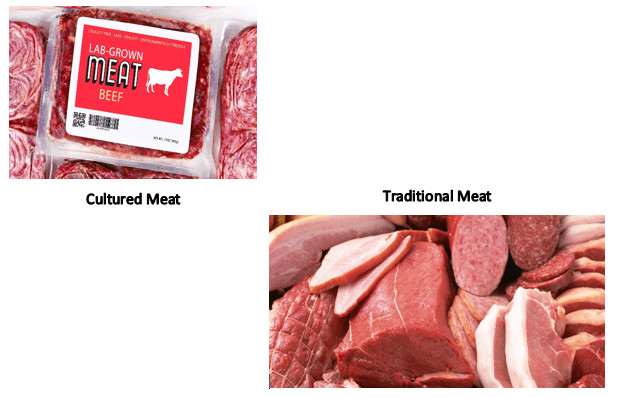 Cultivated meat can even go a step further by selecting cell lines from animals that aren't generally consumed because of poor meat content, prolonged growing times, or scarcity. For example, a product that has posed a difficulty to many ranchers, ostrich meat, might be grown and developed into a popular low-fat red meat alternative. There may even be the opportunity for very inventive product development: the industry's imaginative take on dodo poultry may create a better nugget than chicken, or a burger made of what analysis chefs believe mammoth might have tasted like could be a delectable new concept.
Consumers trust and health risks associated with cultured meat:
Consumers must not only enjoy but also trust cultured meat. Producers will be responsible for convincing consumers that produced meat is as safe and nutritious as traditional meat. While this may be a short-term challenge, health and nutrition may prove to be a long-term advantage if cultured meat producers can demonstrate a track record of safety for example, by reducing the risk of foodborne illness or release tailored for example, “extra lean” products with superior nutritional profiles.
Potential health risks, such as the introduction of substances whose health effects are unknown and require further research, could harm the reputation of cultured meat. Also, the nutritional composition may differ, and consumer education may be important to ensure that customers supplement their diets appropriately if necessary.
Social and economic issues:
Cultured meat also raises several economic and societal issues that could be problematic. The first is cost: grown meats will initially be more expensive, which may put them out of reach for some customers, though as the sector grows, prices are expected to decline. The chances that the cultured meat market may eventually upset animal-protein prices, perhaps within ten years or so of continuous growth, is a more complex matter.
For example, if particular cuts of meat (such as fillet mignon) are replaced with cultured alternatives, lower cuts of conventional meat may become more expensive to compensate for the loss of sales of the more expensive cuts. Also, the rise of cultured meat could result in smaller farm sizes, reducing economies of scale and raising prices for traditional meat consumers.
If cultured meat gains importance, it may influence jobs in the long run. Cultured meat production requires a comparable number of workers as traditional meat production, but the occupations demand significantly different abilities. Finally, because cultured meat production does not require a specific climate or topography, regional effects could occur, such as a meat producer losing some of its economic advantages to farmers in other regions of the country or the globe.
Rules and regulations regarding cultured meat:
Regulatory issues must also be resolved. The European Union and Canada both need innovative food applications to be authorized before they can be sold. Also, from January 1, 2022, the European Union demands that cultured animal goods and manufacturing demonstrate safety through an approved corporate application.
The FDA (Food and Drug Administration) and USDA (United States Department of Agriculture) have decided to jointly regulate cultured meat in the United States. The FDA is in charge of cell collection, cell banks, and cell growth and differentiation, while the USDA is in charge of the manufacturing and labeling of human food products obtained from the cells.
Support for research:
Cellular agriculture research does not have a strong academic foundation or funding sources. As a result, independent institutions have undertaken and supported the majority of research. However, as not-for-profit organizations gain funding and interest, this is gradually changing. For example, New Harvest provides a fellowship program that supports graduate students and organizations from a variety of academic institutions.
Surface area of bioreactors:
Developing system configurations that allow all cells to have exposure to culture media while optimizing spatial needs is a typical challenge for bioreactors and scaffolds. Many cell types must be connected to a surface to enable growth during the cell proliferation phase before the scaffold is introduced.
As a result, cells must be grown in one-cell thick confluent monolayers, which needs a large amount of surface area. On a broad scale, this offers a practical issue. As a result, microcarriers small spherical beads of glass, or other suitable material suspended in the culture media may be used in systems. Cells cling to these microcarriers in the same way that they cling to each other.
Growth parameters related to culture media:
In vitro cultivation would not be possible without the use of culture media. It is in charge of supplying macromolecules, nutrients, and growth factors that are required for cell proliferation. One of the most difficult aspects of cellular agriculture is obtaining growth factors. Traditionally, fetal bovine serum (FBS), a blood product derived from fetal cows, has been used. It vitiates the independence of the usage of animals, in addition to being unethical in its manufacturing.
It is also the most expensive component of cultured beef, with a liter costing over US $1000. Also, because chemical composition varies widely depending on the species, it is impossible to quantify it equally and chemically. FBS is used because it closely resembles the in vivo process of muscle growth. The majority of the growth factors required for tissue development are delivered through an animal's bloodstream, and no other known fluid can provide all of these components on its own.
Ongoing research and development on cultured meat:
While most start-ups focus on more common species and breeds, Eat Just's GOOD Meat and the company Orbillion Bio are investigating Wagyu, and Vow is investigating more exotic alternatives such as kangaroo and alpaca. Companies may opt to concentrate on a single area soon and mix plant protein and other flavors into their products to get the desired taste and texture.
For example, Eat Just's chicken product, which is offered in Singapore, is made up of more than 70% cultured cells with a little amount of plant protein added for structure, whereas Future Meat in Israel uses a combination of cultivated fat and plant protein. It's too early to determine whether blended choices are merely a band-aid solution or a viable long-term option.
Production Process of Cultured Meat:
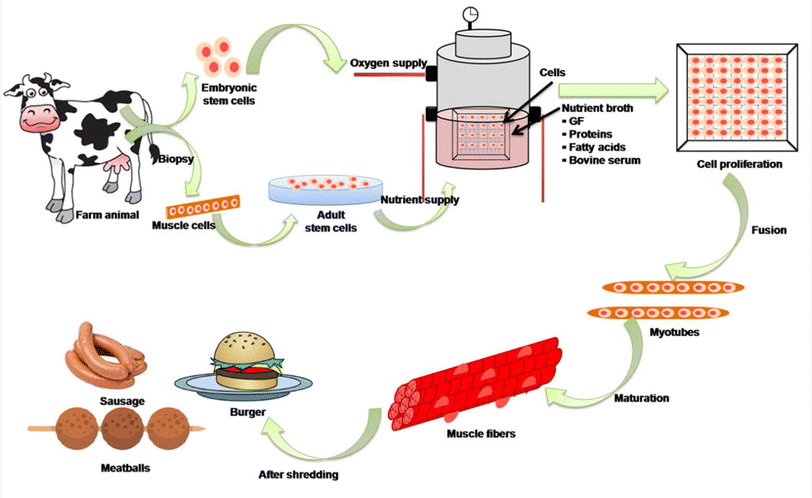
1. Cell lines are purchased or created to be used indefinitely.
Animal cell lines that have been developed or purchased are stored in cell banks; when a batch is made, the cells are thawed in tiny shaking flasks and transferred to seed train bioreactors.
2. Cells develop in seed train bioreactors in nutrient-rich medium.
Cells are transferred down the seed train into progressively larger bioreactors as their volume and density rise.
3. In the primary bioreactors, cells reach the desired density.
When cells reach a desired density in the main bioreactors, the bioreactors are drained into centrifuges for harvesting, which achieves a balance between cell volume and batch time.
4. Cells are collected using centrifugation.
The media is separated from the cells in a continuous centrifuge, resulting in a low concentration of media in the collected cells.
5. Cells are harvested and readied for distribution.
Meat cells are processed for distribution in a variety of ways, depending on the ultimate product. Cells can be combined with other additives to obtain the appropriate texture before being molded and packaged for storage and distribution.
Cultured Meat Market Segment Analysis:
Based on Sources, the cultured meat market is segmented into beef, poultry, seafood, pork, and duck.
By 2030, the poultry segment is expected to remain dominant in terms of the overall market share in terms of revenue. This is because of the increasing popularity of poultry products in various quick-service restaurants (QSRs), which has prompted producers to develop new alternative goods to meet future meat consumer demand. Cultured chicken products are projected to be less expensive than other sources and to attain widespread acceptance around the world.
Furthermore, as the demand for animal protein rises, so does the demand for poultry products. The global market for cultured meat is likely to grow even faster as a result of this. Moreover, the rising demand for chicken meat is likely to drive the worldwide cultured meat industry, given the fast-growing urban population in developing countries.

Based on End-use, the cultured meat market is segmented into burgers, nuggets, meatballs, sausages, hot dogs, and others.
In 2023, the nuggets segment was dominant and held more than xx% of the overall market share in terms of revenue. As a popular processed meat product, nuggets are becoming increasingly popular. Nuggets are one of the most common ways that chicken flesh is consumed in different countries. Consumers are looking for solutions that are handy to eat at any time, thanks to the growing popularity of on-the-go lifestyles and snacking goods, across the globe. Because of the growing adoption of cultured meat in the production of nuggets around the globe, particularly in the Asia Pacific region, the nuggets segment is expected to grow at a quicker rate of xx% over the forecast period.
Cultured Meat Market Regional Insights:
In 2023, the North American market held a considerable xx% of the overall market share and is expected to grow at a CAGR of approximately xx% during the forecast period. The highest share is predicted to be driven by an increase in inventions and advances, as well as increased spending on efficient R&D. Consumers are shifting from conventional meat to cultured meat products because of health concerns about meat consumption, a surge in investor interest in alternative proteins, and the possibility to supply the essential nutrition in tailor-made proteins.
Metropolitan areas in the United States and Canada are likely to lead growth thanks to a higher proportion of flexitarians who are open to and embrace meat alternatives and alternative proteins. The expanding demand for alternative proteins in the region encourages more investment.
The objective of the report is to present a comprehensive analysis of the market to the stakeholders in the industry. The past and current status of the industry with the forecasted market size and trends are presented in the report with the analysis of complicated data in simple language. The report covers all the aspects of the industry with a dedicated study of key players that include market leaders, followers, and new entrants.
PORTER, PESTEL analysis with the potential impact of micro-economic factors of the market have been presented in the report. External as well as internal factors that are supposed to affect the business positively or negatively have been analyzed, which will give a clear futuristic view of the industry to the decision-makers.
Cultured Meat Industry Ecosystem
Cultured Meat Market Scope: Inquire before buying
| Global Cultured Meat Market | |||
|---|---|---|---|
| Report Coverage | Details | ||
| Base Year: | 2022 | Forecast Period: | 2024-2030 |
| Historical Data: | 2018 to 2023 | Market Size in 2023: | USD 252.7 Million |
| Forecast Period 2024 to 2030 CAGR: | 17.2% | Market Size in 2030: | USD 767.54 Million |
| Segments Covered: | By Type | Red Meat Poultry Seafood Others |
|
| by Sources | Beef Poultry Seafood Pork Duck Others |
||
| by End-use | Burgers Nuggets Meatballs Sausages Hot dogs Others |
||
| by Application | Food Service Industry Pet Food Industry Others |
||
Cultured Meat Market, by Region
North America (United States, Canada and Mexico)
Europe (UK, France, Germany, Italy, Spain, Sweden, Austria and Rest of Europe)
Asia Pacific (China, South Korea, Japan, India, Australia, Indonesia, Malaysia, Vietnam, Taiwan, Bangladesh, Pakistan and Rest of APAC)
Middle East and Africa (South Africa, GCC, Egypt, Nigeria and Rest of ME&A)
South America (Brazil, Argentina Rest of South America)
Cultured Meat Market Key Players
1.BioTech Foods
2.Eat Just
3.Fineless Foods
4.Cargill
5.Clear Meat
6.Dupont
7.Fork and Goode
8.Memphis Meats
9.Future Meat Technologies Limited
10.Mosa Meat
11. Merck KGaA
12.SuperMeat
13.Tyson Foods
14.Vow Group
15. Aleph Farms
16.Matrix Meats
17.Redefine Meat
18.Others
Frequently Asked Questions:
1. Which region has the largest share in the Global Cultured Meat Market?
Ans: North American region holds the highest share in 2023.
2. What is the growth rate of the Global Cultured Meat Market?
Ans: The Global Cultured Meat Market is growing at a CAGR of 17.20% during the forecasting period 2024-2030.
3. What is the scope of the Global Cultured Meat market report?
Ans: The Global Cultured Meat Market report helps with the PESTEL, PORTER, Recommendations for Investors & Leaders, and market estimation of the forecast period.
4. Who are the key players in Global Cultured Meat market?
Ans: The important key players in the Global Cultured Meat Market are – BioTech Foods, Eat Just, Fineless Foods, Cargil, Clear Meat, Dupont, Fork and Goode, Memphis Meats, Future Meat Technologies Limited, Mosa Meat, Merck KGaA, SuperMeat, Tyson Foods, Vow Group, Aleph Farms, Matrix Meats, and Redefine Mea
5. What is the study period of this market?
Ans: The Global Cultured Meat Market is studied from 2018 to 2030.