
Connected Wearable Patches Market Size by Type, Product, Sensor Technology, Wearable Type, Application, End Use, Region, Industry-Wide Analysis, Competitive Landscape Assessment & Long-Term Forecast to 2032
Overview
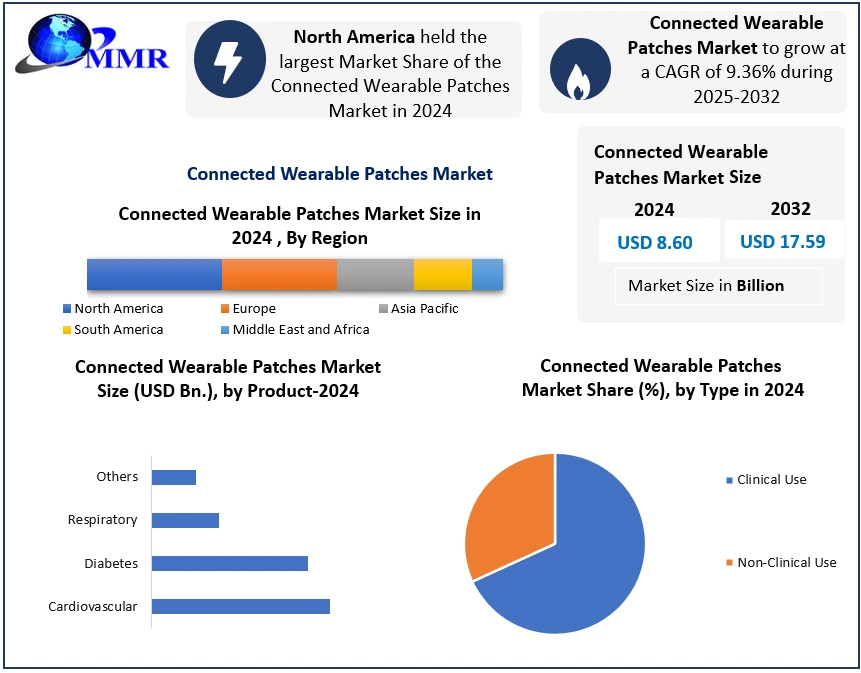
The Global Connected Wearable Patches Market size was valued at USD 8.60 billion in 2024, and the total Connected Wearable Patches Market revenue is expected to grow by 9.36% from 2025 to 2032, reaching nearly USD 17.59 billion.
Connected Wearable Patches Market Overview
Connected Wearable Patches are smart, skin-adhered electronic devices containing sensors and wireless communications technology to provide a real-time monitoring, diagnostic, and insight capability regarding health or fitness. It includes wireless connectivity (e.g., Bluetooth, NFC, and/or LTE); these patches also support wireless data transmission to mobile app(s) or cloud-based services for either remote monitoring or analytical purposes. Their use is expanding across areas such as cardiovascular monitoring, glucose monitoring, temperature monitoring, medication delivery, and performance monitoring with non-invasive, continuous, and patient-centred solutions in clinical and non-clinical settings. The scope of applications of connected wearable patches is extensive, spanning from remote patient monitoring, chronic disease management, and clinical trials to sports & fitness, geriatric care, and military medicine. Their potential value occurs not only from the ability to collect real-time data, but also provides the opportunity for health care providers to prepare or intervene with proactive healthcare delivery. Connected patches also have value with clinical value by reducing hospital readmissions and personalize treatments. As the healthcare space progresses toward a value-based and digital care model, connected patches have the potential to function as an enabling technology for mobile health, digital therapeutics, and telemedicine ecosystems.
 To know about the Research Methodology:-Request Free Sample Report
Many factors are influencing the Connected Wearable Patches Market, including the increasing prevalence of chronic diseases, a greater desire for remote patient monitoring, the aging of populations, the emergence of healthcare in the form of digitization, and a greater awareness of fitness.
Global priorities toward preventive healthcare, cost containment of health systems, and real time monitoring of clinical trials will support the Connected Wearable Patches Market in developed and developing economies as people see their potential to support early diagnosis, as well as ongoing monitoring that can support timely intervention. This is especially true for people with chronic conditions like diabetes, heart disease, and hypertension.
North America leads the global Connected Wearable Patches Market in 2024. This is due to advanced healthcare infrastructure, high-level technology adoption, some supportive regulatory structures (the FDA has great platform for digital health devices), and considerable investment in remote patient monitoring and telehealth. Additionally, some of the factors supporting growth and innovation in the region are the R&D, partnerships between MedTech companies and health systems, and growing consumer awareness.
Connected Wearable Patches Market Dynamics
Increasing Demand for Real-Time Health Monitoring to Drive the Connected Wearable Patches Market
The increasing demand for continuous, real-time health monitoring is a key driver of the growth of the connected wearable patches market. Wearable patches are being presented as a foundational element in healthcare delivery with the increased adoption and awareness of preventive healthcare, chronic disease management, and remote patient monitoring. In both clinical and non-clinical scenarios, wearable patches are becoming an important way to monitor patients remotely with differentiated advantages as a non-invasive, skin-adherable patch that can wirelessly send health-related metrics (i.e., heart rate, glucose level, temperature, ECG readings) in real-time. With digital-first, patient-centric care ever-increasing, connected patches are playing an increasingly important role in supporting early diagnosis, early interventions, and making adjustments to therapy, particularly in the aging population or chronic disease patient (e.g., diabetes, cardiovascular) populations. The growth is expected to continue with increased development of the mobile health infrastructure as well as an increasing investment in digital health around the world.
Growth in Personalized and Preventive Healthcare to Drive the Connected Wearable Patches Market
The use of connected wearable patches continues to grow as personalized medicine and preventive healthcare continue to expand. Connected patches offer a trustworthy and practical way to collect data over extended time frames, utilizing biometric measurements because of the emerging trend of consumers and health providers as they are searching for individualized, meaningful data.
Connected patches are being used in scenarios such as remote cardiac monitoring, glucose monitoring, drug dosage delivery, and fitness performance tracking. The continued development of a connected patch is parallel to many emerging healthcare trends, including remote or virtual care, or even small end-to-end ecosystems based entirely outside of the traditional healthcare setting.
Sensor miniaturization, battery life, and wireless connectivity are improving the performance of a patch, and the comfort and wearability of the patch are improving the use of a patch for daily use as well as in some cases long-term use (week, month, year). Health care delivery is evolving, which is resulting in investment opportunities and collaboration opportunities between traditional medical device companies, digital health app startups, and healthcare providers to provide real-time actionable health data outside of an established care setting.
Connected Wearable Patches Market Segment Analysis
Based on Type, the Clinical Use segment dominates the Connected Wearable Patches Market in 2024 and is expected to hold the largest market share over the forecast period. This segment includes patches used for monitoring chronic conditions such as cardiovascular diseases, diabetes, and respiratory disorders, providing real-time, continuous health data to clinicians and patients. The growing adoption of remote patient monitoring, increasing prevalence of chronic diseases, and advancements in sensor technologies are driving the strong demand for clinical wearable patches. the Non-Clinical Use segment, which caters to wellness, fitness, and lifestyle applications, is witnessing steady growth, supported by rising consumer awareness and adoption of connected health and fitness devices.
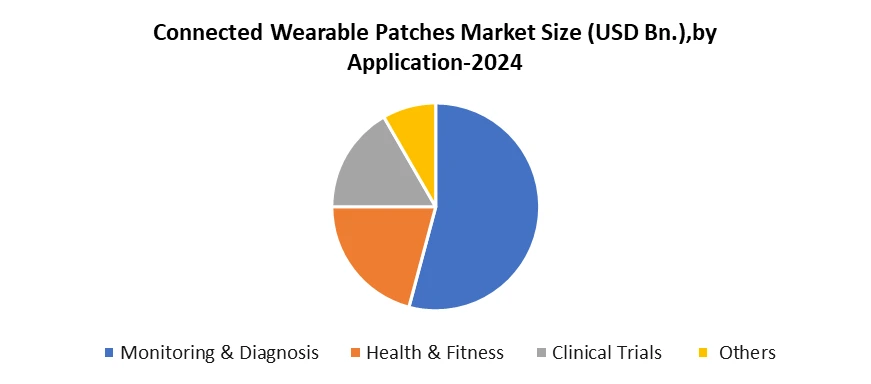
Based on Application, the Monitoring & Diagnosis segment held the largest Connected Wearable Patches Market Share in 2024 and is expected to maintain its dominance over the forecast period. This segment includes patches used for continuous health monitoring, early disease detection, and real-time patient diagnostics, particularly in clinical settings. The growing prevalence of chronic diseases, increasing adoption of remote patient monitoring solutions, and advancements in connected sensor technologies are driving demand in this segment. The Health & Fitness and Clinical Trials segments are experiencing steady growth, fueled by rising consumer interest in personal wellness and the expanding use of wearable patches in research and drug development applications.
Connected Wearable Patches Market Regional Analysis
The North America region dominated the market with the highest Connected Wearable Patches Market Share in 2024. The dominance of this region is driven by the rising chronic disease burdens, the aging population, and its established digital health infrastructure. The digitization of healthcare in the U.S. is happily being promoted with federal and state policies that make it easier to access remote patient monitoring (RPM), telehealth, and continue value-based care, which is why they are increasing connected patch adoption. Likewise, North America is experiencing encouraging approval from regulators for connected applications (i.e., FDA), reimbursement models established by insurers, and a change in required healthcare modalities from facility-based to patient-based healthcare in the home related to COVID-19. North America holds many leading companies and research institutes for wearable technology, supporting innovation in real-time health monitoring, health diagnostics, and data integration capabilities for myriad healthcare issues. The outlook for sustained growth is strong through the forecast period as healthcare systems strive to cut costs and increase access through intelligent, passive, non-invasive monitoring and technology in place of healthcare transactions.
In Asia-Pacific (APAC) region, the market is witnessing rapid growth driven by the rising prevalence of chronic diseases such as diabetes and cardiovascular conditions, an increasing population, and growing awareness of personal health monitoring. Technological advancements, government initiatives, and collaborations among healthcare and tech companies are further accelerating adoption, particularly in countries like Japan, China, and South Korea. The region is expected to continue expanding steadily as both clinical and consumer-focused wearable patches gain traction.
In Europe, the Connected Wearable Patches market growth is driven by healthcare digitization, rising healthcare costs, and increasing adoption of wearable health technologies. Countries such as the UK, Germany, and France are leading in integrating connected wearable patches for monitoring chronic conditions, preventive care, and clinical research. Additionally, strong infrastructure, regulatory support, and innovative product launches are driving the region’s adoption of advanced wearable patch solutions.
Connected Wearable Patches Market Competitive Landscape:
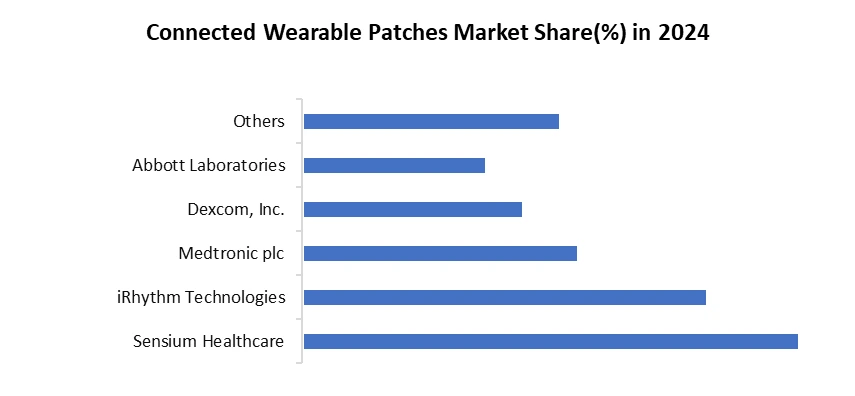
The Connected Wearable Patches Market represents a rapidly evolving sector characterized by dynamic innovations and increasing adoption across healthcare and wellness applications. Health systems worldwide are placing an increased emphasis on remote monitoring and management of individuals, early diagnosis, and personalized health care. The top medical device and health technology companies are urgently trying to develop smaller, smarter, and more precise connected wearable patches. the increasing number of competitive players investing significant capital in research and development, regulatory approvals, and strategic partnerships in order to enhance their development pipeline and reach more globally.
Key players like Medtronic plc are setting an early example, prompted by posts related to their remarkable cardiac monitoring patches or glucose monitoring systems. Using its physician networks and clinical insights, Medtronic is making FDA-approved patches that connect with mobile platforms that allow physicians and clinicians to view their patients’ vitals in real-time. There are a number of notable strengths behind Medtronic's competitive advantage, alongside being a major global medical player; their validated clinical data and ability to show clear value, their operating scale, and deep clinical engagement and partnerships with hospitals and specialist clinics.
Abbott Laboratories, another key player in this sector, has a leading position and has made a remarkable improvement in the diabetes (CGM) continuous glucose monitoring system is the Freestyle Libre, providing a painless solution for managing diabetes via a wearable solution that could connect with a mobile app and a cloud platform. With Abbott's competency in harnessing sensor technology, remote connected apps, and cloud solutions, they have defined the new metabolic health segment, displacing prior solutions.
Connected Wearable Patches Market Key Developments:
January 2025 – Abbott Laboratories announced a global extension of its FreeStyle Libre Sense wearable patch technology to sports performance monitoring. Originally designed to monitor glucose in Diabetics, the company has adapted its patch to measure and monitor real-time glucose variability for non-diabetic athletes to assist with training performance. This represents an important cross-sector application of medical-grade technology to the consumer and wellness industry.
In 2024, Connected Hydration launched wearable patches and an accompanying app that deliver real-time, personalized insights on sweat composition (volume and electrolytes), body temperature, and movement for industrial workers and military personnel. This technology supports proactive hydration management, helping prevent dehydration and heat-related injuries.
Connected Wearable Patches Market Key Trends:
Integration into Digital Health Ecosystems and Remote Monitoring Platforms
Connected wearable patches are being increasingly deployed with digital health services such as electronic health records (EHR), telehealth services, and cloud-based analytics. This combination provides a real-time monitoring and care planning service for patients, particularly in chronic disease management and post-discharge care. As health system infrastructures continue to develop toward 'smart healthcare' standards, wearable patches will further integrate with health systems to offer remote diagnostics, early warning interventions, and tailored pathways of care.
Growing Need for Preventive Health Monitoring and Chronic Disease Management
There is also a growing need for wearable patch technology to help with early detection, preventive care, as well as unobtrusive monitoring of chronic health conditions - for example, diabetes, cardiovascular disease, and respiratory disease. Patients and providers want to use wearable patches that can collect real-time data, continuously, to help minimize emergency visits, reduce hospital re-admission rates, and long-term impact on health. This is particularly true with an aging patient population and around the health care workforce short areas.
Scope of the Global Connected Wearable Patches Market: Inquire before buying
| Global Connected Wearable Patches Market | |||
|---|---|---|---|
| Report Coverage | Details | ||
| Base Year: | 2024 | Forecast Period: | 2025-2032 |
| Historical Data: | 2019 to 2024 | Market Size in 2024: | USD 8.60 Bn. |
| Forecast Period 2025 to 2032 CAGR: | 9.36% | Market Size in 2032: | USD 17.59 Bn. |
| Segments Covered: | by Type | Clinical Use Non-Clinical Use |
|
| by Product | Cardiovascular Heart Rate Blood Pressure Others Respiratory Oxygen Saturation Respiratory rate Diabetes Others |
||
| by Sensor Technology | Electrocardiography (ECG) Photoplethysmography (PPG) Gyroscope Temperature Sensing Others |
||
| by Wearable Type | Wristwear Neckwear Others |
||
| by Application | Monitoring & Diagnosis Health & Fitness Clinical Trials Others |
||
| by End Use | Hospitals Medical Clinics Home Care Others |
||
Connected Wearable Patches, by region
North America (United States, Canada and Mexico)
Europe (UK, France, Germany, Italy, Spain, Sweden, Austria and Rest of Europe)
Asia Pacific (China, South Korea, Japan, India, Australia, Indonesia, Malaysia, Vietnam, Taiwan, Bangladesh, Pakistan and Rest of APAC)
Middle East and Africa (South Africa, GCC, Egypt, Nigeria and Rest of ME&A)
South America (Brazil, Argentina Rest of South America)
Connected Wearable Patches Market, Key Players
North America
1. Abbott Laboratories
2. Medtronic plc
3. iRhythm Technologies
4. BioIntelliSense
5. VitalConnect
6. Dexcom
7. Preventive Solutions
8. Blue Spark Technologies
9. Cardiac Insight
10. MC10, Inc.
Europe
1. Philips Healthcare
2. Biovotion AG
3. G Medical Innovations
4. L’Oréal
5. PKvitality
6. Sensium Healthcare
7. Beurer GmbH
8. Nemaura Medical
9. Tunstall Healthcare
10. BITTIUM Corporation
Asia-Pacific
1. Samsung Electronics
2. Huawei Technologies
3. Suzhou MicroDiag Biomedicine
4. Tencent
5. Nihon Kohden Corporation
6. Seers Technology
7. Fujitsu
8. ZTE Healthcare
9. Vivalink
10. iMotion Group (China)
FAQ’S
1] What segments are covered in the Connected Wearable Patches Market report?
Ans. The segments covered in the Connected Wearable Patches Market report are based on Type, Product, Sensor Technology, Wearable Type, Application, End-Use, and Region.
2] Which region is expected to hold the highest share in the Global Connected Wearable Patches Market?
Ans. The North America region is expected to hold the highest market share in the Connected Wearable Patches market.
3] What is the market size of the Global Connected Wearable Patches Market by 2032?
Ans. The market size of the Connected Wearable Patches Market by 2032 is expected to reach USD 17.59 billion.
4] What is the forecast period for the Global Connected Wearable Patches Market?
Ans. The forecast period for the Connected Wearable Patches Market is 2025-2032.
5] What was the market size of the Global Connected Wearable Patches Market in 2024?
Ans. The market size of the Connected Wearable Patches Market in 2024 was valued at USD 8.60 billion.