
Global Functional Beverage Market 2025-2032: Market Size, Revenue Dynamics, Segment Profitability, Competitive Landscape, and Strategic Growth Roadmap
Overview
The Global Functional Beverage Market was valued at USD 182.2 Bn in 2025 and is expected to reach USD 301.3 Bn by 2032, growing at a CAGR of 7.45% during the forecast period. Rising health awareness, preventive nutrition, sugar regulations, ingredient innovation, and digitally native brands are driving growth in the Functional Beverage Market. Companies increasingly capture market share through formulation expertise, regulatory compliance, and direct-to-consumer channels, reshaping profit distribution among manufacturers, ingredient suppliers, distributors, and investors. Functional beverages have moved beyond soft drinks to become a cornerstone of preventive healthcare and wellness, influencing energy, hydration, gut health, immunity, and lifestyle disease management while strengthening brand loyalty, pricing power, and profit margins. Industry competition now focuses on formulation science, ingredient quality, and regulatory compliance, as consumers shift toward nutritionally enriched beverages over traditional sugary drinks.
Holistic Wellness Trend Driving Functional Beverage Market Growth
The Functional Beverage Market is growing as consumers prefer drinks that offer full health benefits rather than just hydration. They actively seek beverages that boost immunity, support gut health, enhance mental clarity, reduce stress, and provide sustained energy. Rising lifestyle diseases and post-pandemic health awareness, along with demand for clean-label, low-sugar, nutrient-dense products, have made functionality the main factor driving purchases over taste.
Innovation in Prebiotic and Cognitive Drinks Creates Major Market Opportunity
A major opportunity in the Functional Beverage Market lies in developing prebiotic sodas, cognitive-performance drinks, and protein-enriched beverages targeting weight management, fitness recovery, and GLP-1 users. Demand for nutrient-dense, low-calorie, and mentally supportive drinks is accelerating across supermarkets and online channels. Brands that combine clinically backed ingredients with great taste and regulatory compliance can unlock premium pricing and long-term consumer loyalty.
(Converted image into highlights)
Functional Beverage Shaping 2026
Holistic Wellness Focus
• Immunity: Boosting immune health through functional ingredients.
• Gut Health: Probiotics and digestive benefits for a healthier gut.
• Mental Clarity & Stress Relief: Functional drinks targeting mental wellness and stress reduction.
Innovative Ingredients
• Adaptogens: Herbs and mushrooms known for their stress-relieving properties.
• Probiotics: Healthy bacteria promoting gut and immune health.
• Plant Proteins: Sourced from plants to provide sustainable protein options.
Emerging Trends
• Prebiotic Sodas: Functional carbonated drinks for gut health.
• Cognitive Drinks: Beverages that support brain health and mental performance.
• High-Protein Beverages: Popular drinks offering protein to support muscle growth and recovery.
Clean Label Demand
• Natural: Consumer demand for naturally sourced ingredients.
• Low Sugar: A preference for beverages with less sugar.
• Nutrient-Dense: Focus on drinks with a high nutrient profile and health benefits.
Rapid Market Growth in 2026
• Wellness-Focused: Increased focus on overall wellness.
• Fitness & Weight Management: Drinks catering to consumers focused on fitness and weight loss.
• GLP-1 Consumers: Targeting individuals using GLP-1 receptor agonists for weight management.
Volume Economics and Consumption Behavior: The Real Growth Engine of Functional Beverages
High-frequency daily consumption, urban lifestyle adoption, and expanding on-the-go usage are turning functional beverages into a volume-driven category rather than a niche wellness product, with clean-label preferences rising 8% year-on-year and innovation generating 258 new product launches, reinforcing repeat purchases, shelf velocity, and long-term category scale in global markets.
Beverage Revenue Change in the Worldwide Market by Product Type (2017–2022)
| Year | Alcoholic Drinks (USD Billion) | Hot Drinks (USD Billion) | Non-Alcoholic Drinks (USD Billion) |
| 2017 | 18.71 | 5.31 | 30.67 |
| 2018 | 21.92 | 7.23 | 40.19 |
| 2019 | 25.58 | 9.24 | 49.25 |
| 2020 | 34.9 | 13.35 | 73.42 |
| 2021 | 45.79 | 18.78 | 88.53 |
| 2022 | 44.63 | 19.96 | 112.7 |
To know about the Research Methodology :- Request Free Sample Report
The Global beverage market growth, particularly in non-alcoholic and wellness drinks, is paving the way for the functional beverage market to thrive. The surge in demand for health-focused, nutrient-dense, and low-sugar drinks aligns perfectly with the growing interest in functional beverages, positioning the market for continued expansion and investment in the coming years.
(Converted image into graph)
Global Functional & Packaged Beverage Consumption 2024 (Volume in Billion Liters)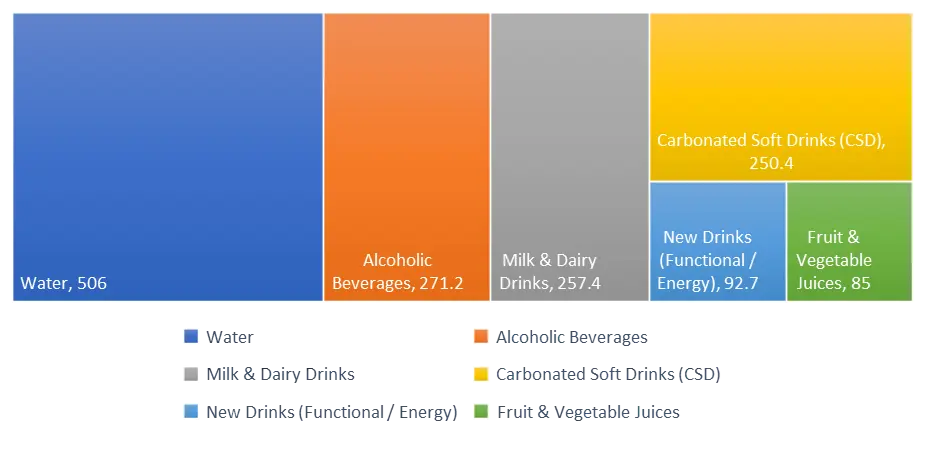 Recent Developments in the Functional Beverages Market
Mergers and Acquisitions:
• PepsiCo – CytoSport: Expanded into sports nutrition and protein drinks, targeting fitness-conscious consumers.
• PepsiCo – Rockstar: Strengthened presence in the energy drink segment, a key functional beverage category.
• SYSTM Foods – HUMM Kombucha: Added probiotic kombucha, focusing on gut health and wellness.
• Suja Life – Slice (planned relaunch 2025): Positioning as a healthier, nutrient-enriched soda aligns with functional beverage trends.
New Product Launches:
• Red Bull Summer Edition Curuba Elderflower: Offers energy-boosting functional benefits.
• NESCAFÉ Gold Espresso / NESCAFÉ Ice Roast: Targets consumers seeking functional coffee for energy and mental alertness.
• TeaPot Blackberry Rooibos (cannabis-infused iced tea): Combines wellness, relaxation, and functional beverage appeal.
Funding and Strategic Investments:
• Full Circle Brewing Co. & Crowns & Hops Brewing Co. alliance: Focus on functional and wellness-oriented beverages to expand market reach.
The Functional Beverages Market is rapidly evolving, driven by consumer interest in health, wellness, energy, and convenience. Companies are actively pursuing strategic acquisitions, innovative product launches, and partnerships to capitalize on growing demand for sports nutrition drinks, energy beverages, kombuchas, fortified teas, and wellness beverages. This sector continues to show strong growth potential and dynamic innovation.
Functional Beverage Market Segment Overview:
In 2025, Energy Drinks captured 42% share of the Functional Beverage Market, driven by strong demand from young consumers and working professionals, with 61% of users consuming them for performance and alertness. Sugar-free variants accounted for 48% of demand, while 37% of consumers preferred vitamin- and caffeine-fortified options.
Sports Drinks held XX% of the market share, supported by fitness awareness and hydration needs, with 54% of active consumers choosing them for electrolyte replenishment and low-calorie options representing 46% of consumption.
Nutraceutical Drinks also represented XX% of the market share, as 63% of consumers preferred drinks enriched with vitamins, minerals, and probiotics, and immunity-boosting beverages accounted for 52% of demand, with plant-based formulations making up 44% of the segment. Across all segments, companies actively leverage formulation expertise, regulatory compliance, and innovation to capture growth in this expanding market.
Industry Transformation and Innovation Landscape
• Product Innovation Expansion: Manufacturers are introducing multifunctional beverages, with 52% of new product launches combining energy, hydration, and immunity benefits to meet evolving consumer demand.
• Plant-Based Portfolio Growth: Approximately 47% of companies are expanding plant-based beverage portfolios, focusing on natural ingredients and clean-label formulations to attract health-conscious consumers.
• Digital Sales Enhancement: Around 41% of brands are strengthening e-commerce strategies, increasing online presence and investing in digital marketing to drive sales.
• Sustainable Packaging Initiatives: Nearly 45% of manufacturers are adopting recyclable packaging solutions, reducing environmental impact and aligning with consumer sustainability preferences.
• Strategic Collaborations: About 38% of companies are forming partnerships to expand distribution networks and enhance market reach across regions.
Functional Beverage Market Regional Overview:
North America
• Accounts for 34% of the Functional Beverage Market.
• Growth driven by strong consumer awareness and product innovation.
• 72% of consumers actively purchase functional drinks for energy and immunity support.
• Energy drinks dominate with 44% regional share.
• Sugar-free variants represent 51% of consumption, indicating a shift toward healthier options.
• Online retail contributes 38% of sales, while supermarkets hold 36% share.
Europe
• Holds 24% of the Functional Beverage Market.
• Growth supported by increasing demand for organic and clean-label products.
• 63% of consumers prefer beverages with natural ingredients.
• Functional water and nutraceutical drinks account for 39% of regional consumption.
• Sustainability trends influence 48% of purchasing decisions, with eco-friendly packaging gaining popularity.
Asia-Pacific
• Represents 32% of the Functional Beverage Market.
• Driven by rapid urbanization and growing health awareness.
• 67% of consumers prefer functional drinks with herbal and traditional ingredients.
• Energy drinks account for 41% of consumption, while nutraceutical beverages contribute 34%.
• Online sales represent 33% of the regional share.
Middle East & Africa
• Accounts for 10% of the Functional Beverage Market.
• Growth supported by expanding urban populations and rising demand for hydration beverages.
• 49% of consumers prefer functional drinks for energy and hydration.
• Convenience stores contribute 37% of sales.
• Demand for fortified beverages has increased by 43%, reflecting growing health awareness.
Functional Beverage Market Scope: Inquire before buying
| Functional Beverage Market | |||
|---|---|---|---|
| Report Coverage | Details | ||
| Base Year: | 2025 | Forecast Period: | 2026-2032 |
| Historical Data: | 2020 to 2025 | Market Size in 2025: | USD 233.02 Bn. |
| Forecast Period 2026 to 2032 CAGR: | 7.45% | Market Size in 2032: | USD 301.3 Bn. |
| Segments Covered: | by Type | Energy Drinks Sports Drinks Probiotic & Gut Health Drinks Fortified Juices Functional Water & Others |
|
| by Ingredient Type | Vitamins & Minerals Probiotics Amino Acids Botanicals & Herbal Extracts Others |
||
| by Distribution Channel | Convenience Stores Drug Store/ Pharmacies/Health Store Supermarket Online Retail Others |
||
Functional Beverage Market, by Region
North America (United States, Canada and Mexico)
Europe (UK, France, Germany, Italy, Spain, Sweden, Austria and Rest of Europe)
Asia Pacific (China, South Korea, Japan, India, Australia, Indonesia, Malaysia, Vietnam, Taiwan, Bangladesh, Pakistan and Rest of APAC)
Middle East and Africa (South Africa, GCC, Egypt, Nigeria and Rest of ME&A)
South America (Brazil, Argentina Rest of South America)
Company Profile: Key Players – Global Functional Beverage Market
Global Integrated & Multinational Leaders
1. Red Bull GmbH
2. The Coca-Cola Company
3. PepsiCo Inc.
4. Nestlé S.A.
5. Monster Energy Company
6. Keurig Dr Pepper (Dr Pepper Snapple Group)
7. Danone S.A.
8. GlaxoSmithKline plc
9. Archer Daniels Midland (ADM)
10. Living Essentials
11. Kraft Heinz Company
12. Fonterra Co-operative Group
13. JDB Group
14. Del Monte Pacific Ltd.
15. Tata Consumer Products (Tata Gluco+)
16. Parag Milk Foods Ltd.
17. VRS Foods Ltd.
18. Sosyo Hajoori Beverages Pvt. Ltd.
19. Everest Beverages & Food Industries Pvt. Ltd.
20. Nirmaan Getränke & Spezialitäten Pvt. Ltd.
Frequently Asked Questions
Q. What is the Functional Beverage Market?
The Functional Beverage Market includes drinks fortified with ingredients such as vitamins, minerals, probiotics, amino acids, and botanicals that provide health benefits beyond basic hydration, including energy, immunity, digestion, and mental focus.
Q. Why is the Functional Beverage market considered volume-driven?
Consumption is part of daily health routines (hydration, energy, gut health) and depends on population size and lifestyle habits rather than discretionary spending. This results in high repeat purchases and stable baseline demand.
Q. What is the current size of the Global Functional Beverage Market?
The market was valued at USD 182.2 billion in 2025 and is projected to reach USD 301.3 billion by 2032, growing at a CAGR of 7.45% (2025–2032).
Q. What are the major cost drivers in functional beverages?
Functional ingredients such as probiotics, vitamins, amino acids, and plant extracts, which account for approximately 35–45% of total production cost, are followed by packaging and distribution.
Q. Why are functional ingredients growing faster than total beverage volume?
Because manufacturers are increasing ingredient density and product functionality to meet demand for clean-label, low-sugar, and performance-oriented beverages, driving higher value per liter sold.