
Ceramic Tiles Market – Industry Structure Evaluation, Demand Drivers Analysis, Regional Growth Analysis and Identification, Competitive Positioning Review & Global Market Size Forecast to 2032
Overview
The Ceramic Tiles Market size was valued at USD 391.23 Billion in 2025 and the total Ceramic Tiles revenue is expected to grow at a CAGR of 7.1% from 2026 to 2032, reaching nearly USD 632.36 Billion.
Ceramic Tiles Market Overview:
Ceramic tiles, made from a mixture of clays and natural elements such as sand, quartz, and water, showcase strength, and resistance to high temperatures and acidic materials. The global ceramic tiles market expected significant growth due to the increasing demand for sustainable and visually appealing building materials, finding extensive application in residential, commercial, healthcare, and hospitality sectors, driven by evolving architectural and interior design trends. The market's growth is fueled by the strong development of construction and infrastructure industries in emerging economies such as India, China, Brazil, and South Asian countries, with various types of tiles catering to diverse construction needs across key regions worldwide.
Technological advancements in ceramic tile manufacturing and the availability of abundant raw materials have further contributed to market growth. Leading players in the global ceramic tiles market, including Porcelanosa Group, Kajaria Ceramics Limited, Atlas Concorde S.P.A., Ceramic Industries Group, Cerâmica Carmelo Fior, Cersanit Group, China Ceramics Co., Ltd., Crossville Inc., and Dynasty Ceramic Public Company Limited, engage in strong competition, emphasizing product innovation, quality, and market presence. For instance, since January, Kajaria Ceramics Limited has successfully opened over 15 new ceramic tiles showrooms in India. The Ceramic Tiles Market's bright future is highlighted by its versatility and widespread utilization in various sectors, propelling it towards continued growth.
Ceramic Tiles Market Scope and Research Methodology
The Ceramic Tiles Market report offers a thorough evaluation of the market for the forecast period. It examines patterns and factors shaping the market, including drivers, constraints, opportunities, and challenges. The report also provides expected revenue growth for the Ceramic Tiles Market during the forecast period. The research on the Ceramic Tiles Market analyses major applications, business strategies, and influencing factors. The report examines market trends, volume, cost, share, supply and demand, and utilizes methods like SWOT and PESTLE analysis. Primary research resources include databases and surveys. To know about the Research Methodology :- Request Free Sample Report
Ceramic Tiles Market Dynamics:
Ceramic Tiles Market Drivers
Rising Urbanization Drives Ceramic Tiles Demand in Infrastructure Projects
The growing construction sector, especially in developing economies driving market growth. Rapid urbanization and population growth fueled an increased demand for infrastructure development, thereby stimulating the need for ceramic tiles in various construction projects. Rising the middle-class population and increasing disposable income in emerging economies led to an increase in demand for improved housing and infrastructure, further boosting the utilization of ceramic tiles in the construction industry. Ceramic tiles possess several advantages, such as durability, water resistance, ease of maintenance, and a wide array of designs and colors, making them a preferred choice among both builders and consumers. As eco-friendly building practices gain popularity, ceramic tiles have gained acceptance due to their natural composition and recyclability, aligning with green construction initiatives.
A significant market driver is the escalating demand for digitally printed ceramic tiles. The preference for digitally printed tiles has grown as their composite designs enhance the aesthetic appeal of residential and office spaces. The adoption of new technologies for printing designs on tiles has allowed manufacturers to offer a wide spectrum of unique designs, to diverse consumer preferences. For instance, In April, MSI, a leading supplier of flooring and wall tiles in North America, expanded its Q Premium Natural Quartz product range with five new marble-look colours. These additions cater to diverse styles and preferences, reflecting MSI's commitment to providing an extensive and on-trend selection of products.
Visually stimulating mosaic tiles have become increasingly popular due to their inherent beauty. Entire rooms adorned with mosaic designs create a magnificent and visually captivating ambience. This trend is driven by unique customized artworks, with brands like Hindware Italian Tiles offering products inspired by famous artists like Frida Kahlo and Picasso. Hygiene consciousness among consumers has given rise to an innovative segment in the market - germ-resistant tiles. These tiles are made using a special glaze and undergo a unique anti-microbial treatment, effectively preventing the growth of germs, bacteria, and fungus on the tiles. This development has further augmented the demand for ceramic tiles, especially in spaces where hygiene is ultimate concern.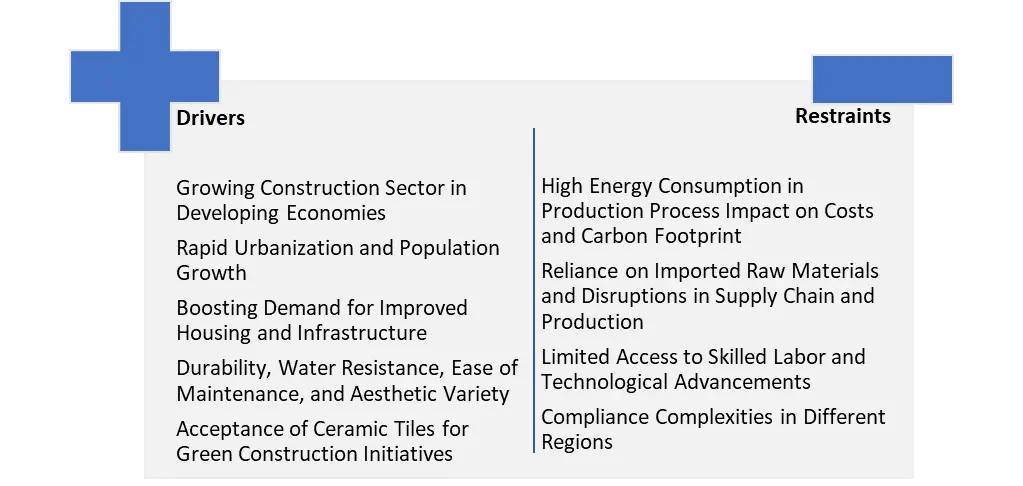
Ceramic Tiles Market Restraint
Regulatory Challenges and Fluctuating Raw Material Prices Impact Ceramic Tiles Market
The ceramic tiles market encounters several significant restraints that impact its growth and operations. One major challenge is the high energy consumption during the production process, wherein firing ceramic tiles in kilns at high temperatures requires substantial energy input. This not only leads to higher production costs but also contributes to manufacturers' increased carbon footprint. As environmental concerns and sustainability become more critical, the industry faces the task of balancing energy efficiency while meeting the rising demand for ceramic tiles. To remain competitive and environmentally responsible, investments in more sustainable production methods are necessary.
The ceramics industry heavily relies on imported raw materials like clay, feldspar, and quartz, making it susceptible to fluctuations in global prices, disruptions in the supply chain, and logistical challenges. These factors lead to escalated production costs and hinder expansion efforts. Inadequate infrastructure, including inefficient transportation networks and unreliable power supply, poses adverse effects on the industry's operations, with frequent power outages disrupting production schedules and increasing expenses. This scenario makes it challenging for manufacturers to compete effectively in the global market.
Another constraint faced by the ceramics industry is limited access to skilled labour and a lack of technological advancements. To improve productivity, efficiency, and competitiveness, the sector must prioritize upgrading machinery, implementing automation, and nurturing skilled human resources. Moreover, intense competition from international players, particularly those with advanced technology and cost-effective production methods, adds to the challenges. To stay competitive, local manufacturers must focus on enhancing product quality, innovation, and diversification to cater to evolving consumer demands effectively. The production of ceramic tiles' significant energy consumption and carbon footprint are concerning amid mounting environmental concerns. Fluctuations in raw material prices pose a threat, affecting manufacturers' profit margins and overall market growth. The presence of alternative flooring materials like vinyl, laminate, and engineered wood, offering competitive pricing and ease of installation, further hinders the ceramics market's growth prospects.
Regulatory challenges exert a significant impact on the ceramic tiles market, with different regions having distinct standards for these products. For instance, in the UK and the EU, the norm EN 14411, and in the US, ANSI 137, establish the requirements and classification of ceramic tiles based on specific characteristics. Similarly, in India, IS, ISO, and EN (4457:2007) outline minimum manufacturing requirements that manufacturers must adhere to the rules. These varying standards create complexities for companies operating in multiple regions, potentially requiring additional efforts to ensure compliance and adaptability.
Ceramic Tiles market opportunities:
Renovation and Remodeling Projects Boosting Ceramic Tiles Preference
The increasing urbanization and population growth in developing economies are driving the demand for infrastructure development, creating opportunities for the ceramic tiles market to grow as construction projects surge. For instance, 10 futuristic cities are set to be built around the world including The Line- Saudi Arabia, New Administrative Capital- Egypt, Biodiversity- Malaysia, Amaravati- India and others. The booming real estate sector in emerging economies also fuels the demand for ceramic tiles in residential and commercial construction, presenting a significant opportunity for their utilization in flooring and wall applications. Advancements in manufacturing technologies and digital printing techniques open up new design possibilities, attracting more consumers and expanding the market.
The rising awareness of environmental sustainability and green building practices provides opportunities for ceramic tiles made from recycled materials and eco-friendly processes, appealing to environmentally conscious consumers and projects. The rapid urbanization in the Asia Pacific region, especially in China and India, leads to increased housing and commercial space demand, further driving the ceramic tiles market. Renovation and remodeling projects create a preference for ceramic tiles due to their durability, aesthetics, and easy maintenance.
The hospitality industry's growth, encompassing hotels, restaurants, and resorts, offers opportunities for ceramic tiles with their durability and design options. The rise of e-commerce and online retail platforms presents another avenue for manufacturers to reach a broader customer base and explore new market segments. Innovations in manufacturing processes, particularly digital printing technology, enable manufacturers to produce intricate and customized designs, expanding their market presence. manufacturers can explore niche segments by diversifying their product offerings, catering to specialized applications such as anti-slip tiles for healthcare facilities and swimming pool tiles for leisure centres. As emerging economies witness rapid infrastructure development, the ceramic tiles market can capitalize on these opportunities and strengthen its presence in the industry.
Ceramic Tiles Market Segment Analysis:
Based on Type, the Porcelain tiles segment dominated the ceramic tiles market in 2025 and is expected to continue its dominance during the forecast period. These tiles are more durable and less porous than glazed ceramic tiles, suitable for both indoor and outdoor applications. They withstand heavy foot traffic and are commonly used in high-traffic areas like commercial spaces and outdoor patios.
The glazed ceramic tiles segment is expected fast growth in the ceramic tiles market during the forecast period, known for vibrant colours and glossy finish. Widely used in interior applications for residential and commercial buildings, these tiles offer water resistance and easy cleaning, making them ideal for spaces where aesthetics and design are crucial, such as kitchens and bathrooms.
Scratch-free ceramic tiles are expected to hold a significant share during the forecast period. Scratch-free ceramic tiles are highly resistant to scratches and abrasions and manufactured for heavy-duty applications such as industrial floors, hospitals, and airports. They offer excellent longevity and retain their appearance even in demanding environments, making them a reliable choice for durable and long-lasting surfaces.
Based on Application, Floor tiles dominated the largest ceramic tiles market share in 2025 and are expected to continue their dominance during the forecast period. Ceramic floor tiles are renowned for their outstanding durability, slip resistance, and ease of cleaning, making them a perfect choice for both residential and commercial spaces. Floor tiles diverse selection of materials, designs, and sizes cater to various interior design preferences, making them extensively used in homes, offices, shopping malls, airports, and public spaces.
Wall ceramic tile is a rapidly growing segment in the ceramic tiles market, Wall tiles are designed for vertical surfaces and are widely used for interior and exterior wall coverings. They come in various sizes, colours, and patterns, allowing for creative and decorative applications. Wall tiles are preferred for their ease of maintenance, water resistance, and ability to enhance the aesthetic appeal of spaces.
Ceramic Tiles Market Regional Insights:
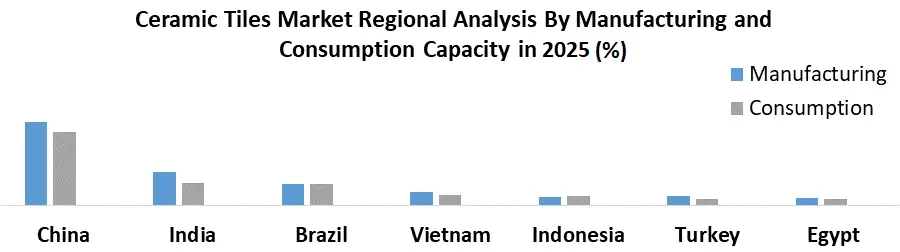
Asia Pacific dominated the Ceramic Tiles Market in 2025, with xx% of global production. China contributes nearly xx% in the manufacturing of ceramic tiles and exports around 24-25% to other regions. The region is expected to maintain its dominance during the forecast period due to high demand from residential and non-residential construction segments, especially in emerging economies like China and India.
North Americas ceramic tiles market is expected a significant growth during the forecast period, fueled by rising construction activities in residential and commercial sectors. Italian tile manufacturers are capitalizing on the region's availability of raw materials and untapped market potential, leading to expansions of their production bases. North America stands as the largest region for ceramic tiles imports, with the USA alone accounting for xx% of ceramic tile imports, according to ICCTAS's latest industry report.
Europe is a fast-growing region in the ceramic tiles market, with notable manufacturers like Mohawk Industries and Grupo Pamesa, exporting around xx% of global ceramic tiles to other regions. South America and the Middle East Africa are expected to experience rapid growth in the ceramic market as well.
Competitive Landscape:
The ceramic tiles market's competitive landscape is characterized by dynamic competition among key players, each vying for market share through product innovation, quality, and customer satisfaction. Notable companies such as Porcelanosa Group, Mohawk Industries, RAK Ceramics, Siam Cement Group, Kajaria Ceramics Limited, Lamosa Grupo, Grupo Cedasa, SCG Ceramics, Roca Sanitario, and China Ceramics Co., Ltd. lead the industry. These manufacturers operate globally and offer diverse ranges of high-quality and innovative ceramic tiles for various residential, commercial, and industrial applications. With a strong emphasis on sustainability, technology-driven manufacturing, and wide distribution networks, these players continuously contribute to the market's competitiveness and growth.

Mohawk Industries stands as a market leader with over 25 ceramic tiles manufacturing plants, of which 23 are located in the USA. The company's growth is further evidenced by 32 acquisitions made since 2013. Group Lamosa is another significant player in the ceramic tiles market, boasting 16 manufacturing plants in South America. SGC Ceramics, with 28 ceramic tiles manufacturing plants worldwide, holds a 12% global share in exporting ceramic tiles. Ceramica Carmelo Fior commands a 32% global export share in the ceramic tiles market. These prominent players' manufacturing capacities and market shares reflect their influential positions in the industry.
Ceramic Tiles Industry Ecosystem
Ceramic Tiles Market Scope: Inquire before buying
| Ceramic Tiles Market | |||
|---|---|---|---|
| Report Coverage | Details | ||
| Base Year: | 2025 | Forecast Period: | 2026-2032 |
| Historical Data: | 2020 to 2025 | Market Size in 2025: | USD 391.23 Billion |
| Forecast Period 2026 to 2032 CAGR: | 7.1 % | Market Size in 2032: | USD 632.36 Billion. |
| Segments Covered: | by Type | Glazed ceramic tile Porcelain tiles Scratch-free ceramic tiles Others |
|
| by Finish | Matt Gloss |
||
| by Construction Type | New Construction Renovation and Replacement |
||
| by Application | Wall tiles Floor tiles Other |
||
| by End User | Residential Commercial |
||
Ceramic Tiles Market by Region
North America (United States, Canada, and Mexico)
Europe (UK, France, Germany, Italy, Spain, Sweden, Austria, and the Rest of Europe)
Asia Pacific (China, South Korea, Japan, India, Australia, Indonesia, Malaysia, Vietnam, Taiwan, Bangladesh, Pakistan, and the Rest of APAC)
Middle East and Africa (South Africa, GCC, Egypt, Nigeria, and the Rest of ME&A)
South America (Brazil, Argentina Rest of South America)
Ceramic Tiles Market Key Players
1. Arwana Citramulia Tbk
2. ATLAS CONCORDE S.P.A.
3. Avalon Flooring
4. Ceramic Industries Group
5. Cerâmica Carmelo Fior
6. Cersanit Group
7. China Ceramics Co., Ltd.
8. Crossville Inc.
9. Dynasty Ceramic Public Company Limited
10. Elizabeth Group
11. Florim Ceramiche S.p.A.
12. Grupo Cedasa
13. Grupo Celima Trebol
14. Grupo Lamosa
15. Guangdong Newpearl Ceramics Group Co., Ltd.
16. Kajaria Ceramics Limited
17. Kaleseramik
18. Lamsoa Group
19. LASSELSBERGER Group
20. MOHAWK INDUSTRIES INC.
21. PAMESA CERÁMICA SL
22. Porcelanosa Group
23. RAK CERAMICS
24. Ricchetti Group
25. SCG CERAMICS
26. Siam Cement Group
27. Somany Ceramics
28. STN Cerámica
29. Vitromex USA, Inc.
30. White Horse Ceramic
Frequently Asked Questions:
1] What segments are covered in the Global Ceramic Tiles Market report?
Ans. The segments covered in the Ceramic Tiles Market report are based on Type, Finish, Construction Type, Application, End-User and Region.
2] Which region is expected to hold the highest share of the Global Ceramic Tiles Market?
Ans. The Asia Pacific region is expected to hold the highest share of the Ceramic Tiles Market.
3] What is the market size of the Global Ceramic Tiles Market by 2032?
Ans. The market size of the Ceramic Tiles Market by 2032 is expected to reach USD 632.36 Billion.
4] What is the forecast period for the Global Ceramic Tiles Market?
Ans. The forecast period for the Ceramic Tiles Market is 2026-2032.
5] What was the Global Ceramic Tiles Market size in 2025?
Ans: The Global Ceramic Tiles Market size was USD 391.23 Billion in 2025.