Global Blue Cheese Market by Type, Source, Texture, End-User, and Region – Global Market Size Estimation, Industry-Wide Analysis, Competitive Landscape Assessment & Long-Term Forecast to 2032

3.6%
CAGR (2026-2032)
10.4 USD Bn.
Forecast Market Size
321
Report Pages
161
Market Tables

Overview

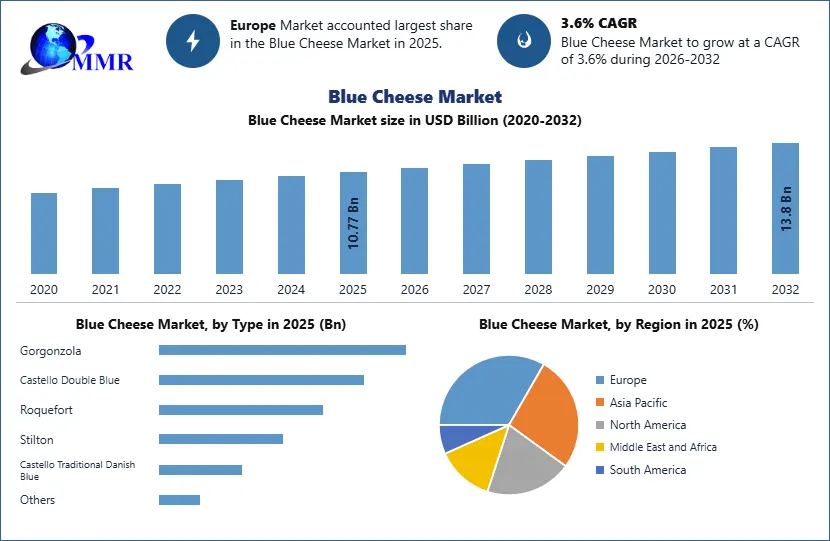
The Blue Cheese Market size was valued at USD 10.77 Billion in 2025 and the total Blue Cheese revenue is expected to grow at a CAGR of 3.6% from 2026 to 2032, reaching nearly USD 13.8 Billion.

Blue Cheese Market Overview:

The blue cheese market, characterized by its distinctive tangy flavor and iconic blue-green veining resulting from the introduction of mold cultures during the aging process, represents a specialized segment within the broader cheese industry. This particular variety of cheese, aged with molds like Penicillium roqueforti or Penicillium glaucum, has garnered attention due to its unique taste profile and its versatility in culinary applications. From high-end gastronomy to artisanal gastronomy, blue cheese has seamlessly integrated into various culinary traditions, contributing significantly to its consistent expansion. Moreover, the prevailing fascination with specialty and artisanal foods further fuels its prominence, establishing it as a noteworthy entity in the realm of fine dining. The growth of the blue cheese market is underpinned by several pivotal drivers. Additionally, the escalating demand for gourmet experiences has elevated blue cheese's reputation, as its unparalleled flavor profile imparts a sense of refinement to a spectrum of dishes. The revival of interest in time-honored and artisanal foods confers a competitive edge to blue cheese producers, capitalizing on consumers' inclination towards meticulously crafted products. The perception of blue cheese as a repository of health advantages, attributed to its nutritional richness and probiotic content, has positively influenced consumer preferences, thereby bolstering consumption patterns.
Blue Cheese Market Snapshot

To know about the Research Methodology :- Request Free Sample Report

The landscape of the blue cheese market brims with opportunities for innovation and expansion. Industry stakeholders stand to gain from the burgeoning trend of introducing novel product iterations, including milder alternatives tailored to a wider consumer base. With the sway of globalization on culinary preferences, there exists untapped potential to introduce blue cheese to new geographical domains. The online retail sphere, too, emerges as a strategic avenue for connecting with consumers and diversifying the distribution network. Concurrently, in harmony with evolving dietary inclinations, the market observes the emergence of plant-based blue cheese substitutes, catering to the burgeoning demand for vegan and vegetarian options. The prevailing culinary discourse underscores the significance of food pairing and culinary education, a trend that augments the integration of blue cheese in various gastronomic creations and presentation styles. Additionally, the market responds to the mounting consumer emphasis on sustainability and ethical practices, entailing the assimilation of eco-conscious methodologies into the production processes. As the blue cheese market advances, the confluence of its distinct attributes and alignment with contemporary culinary trends paints a promising canvas for expansion and innovation, rendering it a compelling niche within the broader gastronomic landscape.

Blue Cheese Market Dynamics:

Blue Cheese Market Drivers

Culinary Adventurousness and Taste Exploration Propel Blue Cheese Market Expansion

The burgeoning success of the blue cheese market is deeply intertwined with the evolving predilections of consumers and their heightened inquisitiveness when it comes to embracing diverse culinary escapades. This evolution in preferences, characterized by more expansive palates and an increased willingness to experiment with gastronomic choices, has paved the way for a pronounced surge in demand for distinctive and audacious flavors, such as those offered by blue cheese. This driver finds its roots in the fundamental human inclination to embark on journeys of taste discovery, fostering a surge in the popularity of blue cheese's unmistakable tangy notes and its signature blue veining, a result of the introduction of mold cultures during the aging process.

In an epoch where sustenance has transcended its functional role to become a conduit for cultural exploration and individual expression, blue cheese finds itself in a spotlight of significance. Its remarkable capability to orchestrate a symphony of sensations for the senses renders it pivotal in this realm. This driver underscores the market's adeptness at discerning and adapting to the transformative shifts in consumer conduct and their progressively heightened affinity for intricate and unconventional flavors. In a landscape where consumers seek to titillate their taste receptors and embrace a panorama of gastronomic diversity, the blue cheese market flourishes, assuming the mantle of a culinary treasure that caters harmoniously to the contemporary thirst for adventure and novelty in the gastronomic universe.

Blue Cheese Market Restraint

Challenging Widespread Adoption Due to Strong and Unique Flavor Profile

The blue cheese market confronts a notable restraint in the form of limited acceptance arising from its distinctive and robust flavor profile. While aficionados appreciate the tangy notes and characteristic blue veins brought about by mold cultures during aging, this very uniqueness poses a hurdle to achieving mass market penetration. The pronounced taste, though a hallmark sought by enthusiasts, can prove divisive for consumers favoring milder or more conventional flavors. This restraint accentuates the necessity for strategic positioning and targeted marketing endeavors to broaden the consumer base beyond those inclined toward bold and distinctive tastes. While blue cheese undoubtedly holds allure for specific segments, its potent flavor becomes an obstacle in achieving widespread embrace, potentially necessitating innovative strategies to render it more approachable to a broader spectrum of consumers.

Blue Cheese Market Opportunities:

Rising Demand for Premium Ingredients and Food Exploration Boosts Blue Cheese Market

Among the evolving landscape of culinary preferences, characterized by a fervent pursuit of premium ingredients and diverse gastronomic experiences, the blue cheese market is poised to seize substantial growth opportunities. The ongoing trend toward gourmet dining and culinary exploration provides a favorable backdrop for the expansion of blue cheese's presence. The distinct tangy flavor and characteristic blue veins, resulting from the introduction of mold cultures, align seamlessly with the contemporary demand for intricate and memorable taste profiles. As consumers increasingly seek sophistication in their dining experiences, blue cheese's unique attributes position it as a prime candidate for meeting these expectations. Furthermore, the ascendancy of artisanal and specialty foods offers an additional propulsion to this upward trajectory. Consumers are actively seeking out ingredients that embody authenticity and high quality, and blue cheese fits squarely within this narrative. Its artisanal production methods and rich history in traditional cheese-making align perfectly with the artisanal food movement, providing an avenue for market expansion. Partnering with local producers and championing traditional crafting techniques, blue cheese can be positioned as an artisanal gem in the modern culinary landscape.

Opportunity Description
Artisanal Market Expansion Capitalize on the growing interest in artisanal and handcrafted foods by positioning blue cheese as an authentic and high-quality product. Collaborate with local producers to highlight traditional cheese-making methods.
Culinary Education Initiatives Leverage the trend of food appreciation and education by offering workshops, cooking classes, and online resources that showcase blue cheese's uses in various cuisines and dishes.
Premium Pairing Experiences Partner with restaurants, wineries, and gourmet food establishments to curate premium tasting experiences that highlight the harmonious pairing of blue cheese with wines, charcuterie, and other complementary products.
Health-Conscious Innovation Develop low-sodium or reduced-fat versions of blue cheese to cater to health-conscious consumers without compromising the distinctive flavor and texture. Highlight the nutritional benefits of blue cheese, such as its calcium and probiotic content.
Global Market
Exploration
Explore opportunities to introduce blue cheese to new international markets where gourmet and artisanal food trends are on the rise. Collaborate with local distributors and retailers to adapt to regional preferences and tastes.

This comprehensive tabled example showcases various opportunities within the blue cheese market, illustrating strategies that capitalize on emerging trends and consumer preferences to foster growth and expansion.

Blue Cheese Market Segment Analysis:

Based on Type, the Gorgonzola segment holds a significant market share in the year 2025 and is expected to dominate during the forecast period. The dominating segment in the blue cheese market varies based on several factors, including consumer preferences, cultural influences, marketing efforts, and culinary trends. Certain types of blue cheese might dominate the market due to their historical significance, wide recognition, and versatility in various dishes. For example, in certain markets, Roquefort and Gorgonzola might have been dominant segments due to their strong cultural ties, long-standing reputation, and extensive use in regional cuisines. Castello Double Blue and similar varieties could cater to consumers seeking a more intense flavor experience. Stilton and milder blue cheeses could appeal to those who are new to blue cheese or prefer a less overpowering taste.

Blue Cheese Market, by Type (%) In 2025

Blue Cheese Market

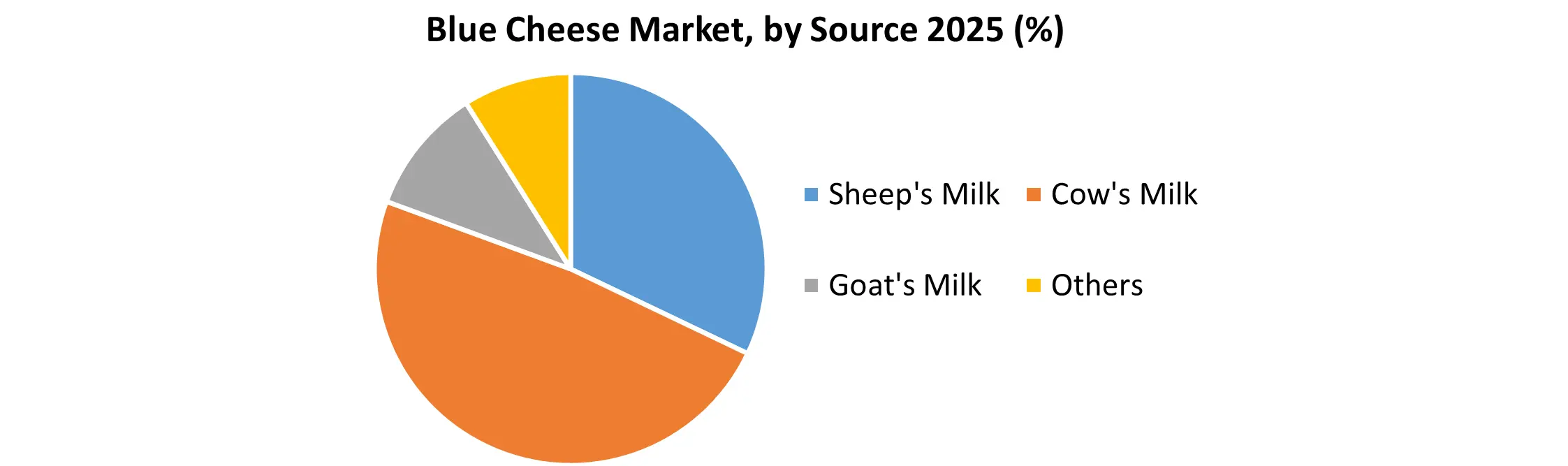
Based on Source, the Sheep's Milk segment holds a significant market share in the year 2024 and is expected to dominate during the forecast period. The dominating segment among these sources of milk varies based on a combination of factors, including historical traditions, regional availability of milk sources, consumer preferences, and marketing strategies. Historical traditions and regional practices play a significant role. For instance, in regions where sheep farming is prominent, blue cheeses made from sheep's milk like Roquefort might dominate due to their historical significance and established reputation. Similarly, in regions with a strong dairy cow industry, blue cheeses made from cow's milk might be more prevalent.

Consumer preferences also come into play. Some consumers might prefer the unique flavor profile of blue cheese made from sheep's milk, while others might lean toward the familiarity of cow's milk blue cheese. The rise of artisanal and specialty cheeses has also led to increased interest in goat's milk and other alternative milk sources, which could influence market dynamics. Marketing efforts can further shape the dominating segment. Producers might highlight the unique qualities of each type of milk, leading to shifts in consumer preferences. Sustainability concerns, animal welfare considerations, and nutritional attributes might also impact which milk sources gain prominence.
Blue Cheese Market Snapshot

Blue Cheese Market Regional Insights:

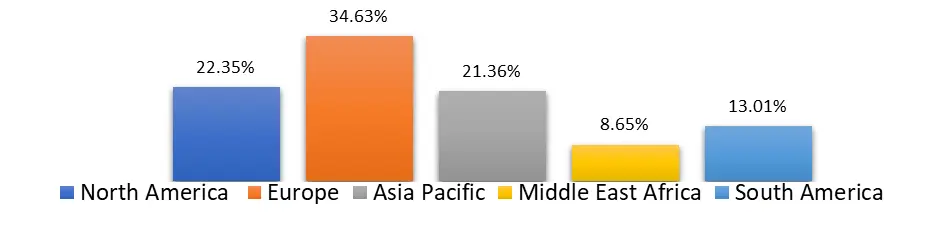
The European region holds historical and cultural significance in the blue cheese market due to its rich tradition of production and consumption. Notably, the UK is known for Stilton, a PDO-protected blue cheese with a crumbly texture and mellow flavor. France, on the other hand, boasts Roquefort, one of the world's oldest blue cheeses with an AOC status, showcasing its historical importance and unique production methods. Europe's established cheese-making heritage and export capabilities contribute to its dominance in the blue cheese market.

In North America, particularly the United States and Canada, the market for blue cheese is significant. Despite blue cheese not being as deeply rooted in culinary traditions as in Europe, the region's large population and diverse tastes drive consumption. The US, for instance, showcases a growing interest in artisanal and gourmet foods, including specialty cheeses like blue cheese. American producers have adeptly tailored traditional European recipes to create unique blue cheese varieties that cater to local preferences, contributing to North America's growing presence in the market. Meanwhile, regions like Asia Pacific, South America, the Middle East, and Africa might have smaller blue cheese markets compared to Europe and North America.

However, the evolving culinary landscape, increased access to international foods, and changing demographics have the potential to expand the market in these areas. Japan and China within the Asia Pacific region, for instance, exhibit a growing interest in foreign cuisines and gourmet ingredients, suggesting a potential rise in blue cheese consumption among specific consumer segments. As the blue cheese market's dominance is influenced by diverse factors such as consumer preferences, cultural influences, trade agreements, marketing strategies, and access to quality milk sources, it's important to note that popularity can vary even within each region. For accurate and up-to-date insights into the dominating region in the blue cheese market, consulting recent market research reports and specialized industry analyses are recommended.

Blue Cheese Market Regional Insights by % (2025)
Blue Cheese Market

Blue Cheese Market Scope: Inquire Before Buying

Blue Cheese Market
Report Coverage Details
Base Year: 2025 Forecast Period: 2026-2032
Historical Data: 2020 to 2025 Market Size in 2025: 10.77 USD Billion
Forecast Period 2026-2032 CAGR: 3.6% Market Size in 2032: 13.8 USD Billion
Segments Covered: by Type Gorgonzola
Castello Double Blue
Roquefort
Stilton
Castello Traditional Danish Blue
Others
by Source Sheep's Milk
Cow's Milk
Goat's Milk
Others
by Form Blocks
Shredded
Sliced
Others
by Texture Hard Blue Cheese
Soft Blue Cheese
Semihard Blue Cheese
Semisoft Blue Cheese
by Fat Content Low-Fat Blue Cheese
Full-Fat Blue Cheese
by Distribution Channel Online Retail
Specialty Stores
Supermarket/Hypermarket
Others

Blue Cheese Market, by Region

North America (United States, Canada and Mexico)
Europe (UK, France, Germany, Italy, Spain, Sweden, Austria and the Rest of Europe)
Asia Pacific (China, South Korea, Japan, India, Australia, Indonesia, Malaysia, Vietnam, Taiwan, Bangladesh, Pakistan and the Rest of APAC)
South America (Brazil, Argentina Rest of South America)
Middle East & Africa (South Africa, GCC, Egypt, Nigeria and the Rest of ME&A)

Blue Cheese Market, Key Players

1. Roquefort Société
2. Groupe Lactalis
3. Arla Foods
0. Saputo Inc.
5. Fonterra Co-operative Group
6. Bel Group
7. Kraft Heinz Company
8. Danish Crown
9. Bongrain SA
10.Sargento Foods Inc.
11.Point Reyes Farmstead Cheese Company
12.Castello
13.St. Agur
14.Roth Cheese
15.Montchevre-Betin, Inc.
16.Papillon
17.Maytag Dairy Farms
18.Valley Shepherd Creamery
19.Carr Valley Cheese
20.Colston Bassett Dairy
21.Cropwell Bishop Creamery
22.Cashel Blue
23.Rosenborg Castello
24.Hook's Cheese Company
25.Glengarry Fine Cheese
26.Long Clawson Dairy
27.Cropwell Bishop Creamery
28.Colston Bassett Dairy
29.Hartington Creamery
30.Websters Dairy (Saxelbye)
31.Shepherds Purse Cheeses Ltd.
32.The Cornish Cheese Co.
33.Stichelton Dairy
34.Rennet & Rind.
35.Ticklemore Cheese Dairy,
36.Oxford Blue
37.Pevensey Blue
38.The Welsh Cheese Company
39.Trefaldwyn Blue
40.Brinkworth Dairy
41.Others

Frequently Asked Questions:

1] What segments are covered in the Global Blue Cheese Market report?
Ans. The segments covered in the Blue Cheese Market report are based on Type, Source, Texture, Distribution Channel, and Region.

2] Which region is expected to hold the highest share of the Global Blue Cheese Market?
Ans. The Europe region is expected to hold the highest share of the Blue Cheese Market.

3] What is the market size of the Global Blue Cheese Market by 2032?
Ans. The market size of the Blue Cheese Market by 2032 is expected to reach USD 13.8 Bn.

4] What is the forecast period for the Global Blue Cheese Market?
Ans. The forecast period for the Blue Cheese Market is 2026-2032.

5] What was the Global Blue Cheese Market size in 2025?
Ans: The Global Blue Cheese Market size was USD 10.77 Billion in 2025.

Table of Contents

SECTION A – GLOBAL BLUE CHEESE MARKET INTRODUCTION A1. Executive Market Landscape and Industry Overview 1.1. Global Blue Cheese Market size estimation and growth outlook (2025-2032) 1.2. Historical market size analysis based on value and volume trends 1.3. Forecast modeling assumptions using consumption and trade dynamics 1.4. Impact of inflation and dairy pricing cycles on market expansion 1.5. Demand elasticity assessment across premium and standard segments 1.6. Volume-to-value conversion trends across retail and foodservice channels 1.7. Market maturity assessment based on penetration and consumption frequency A2. Global Blue Cheese Market Dynamics 2.1. Global Blue Cheese Market Trends 2.2. Global Blue Cheese Market 2.3. Drivers 2.4. Restraints 2.5. Opportunities 2.6. Challenges 2.7. PORTER’s Five Forces Analysis 2.8. Supplier power 2.9. Buyer power 2.10. Threat of substitutes 2.11. Threat of new entrants 2.12. Competitive rivalry 2.13. PESTLE Analysis A3.Supply Chain Structure and Value Chain Optimization 3.1. End-to-end value chain mapping from milk sourcing to retail shelf 3.2. Role of dairy cooperatives and contract farming in supply stability 3.3. Cold chain logistics importance in maintaining cheese quality standards 3.4. Distributor and retailer margin structure across developed markets 3.5. Import dependency impact on supply chain risk and pricing volatility 3.6. Digitalization trends in dairy supply chain monitoring systems A4. Raw Material Dynamics and Milk Supply Economics 4.1. Cow milk versus sheep milk usage trends in blue cheese production 4.2. Seasonal fluctuations in milk production affecting cheese availability 4.3. Feed cost volatility impact on dairy input pricing structures 4.4. Organic and grass-fed milk sourcing trends influencing premium pricing 4.5. Regional milk yield productivity comparison influencing supply stability 4.6. Government subsidies and dairy support policies affecting production A5. Production Technology and Processing Innovations 5.1. Traditional versus industrial blue cheese production methods comparison 5.2. Role of Penicillium cultures in flavor and texture development 5.3. Automation adoption in large-scale cheese aging and processing units 5.4. Innovations in moisture control and shelf-life extension technologies 5.5. Sustainable production techniques reducing environmental footprint 5.6. Packaging innovations improving product longevity and retail appeal A6. Pricing Analysis and Margin Structure (2020–2025) 6.1. Price segmentation across premium, mid-tier, and private label products 6.2. Cost breakdown including raw materials, processing, and logistics 6.3. Retail margin analysis for packaged versus deli-based cheese formats 6.4. Impact of import duties and tariffs on final retail pricing 6.5. Discounting strategies and promotional pricing in supermarket chains 6.6. Inflation-driven pricing adjustments and consumer affordability trends A7. Demand Drivers and Consumption Behavior Analysis 7.1. Rising consumer preference for artisanal and specialty cheese products 7.2. Influence of western dietary habits in emerging markets adoption 7.3. Role of culinary trends and gourmet cooking in boosting demand 7.4. Increasing demand for strong-flavored and aged cheese varieties 7.5. Growth in wine pairing culture supporting blue cheese consumption 7.6. Expansion of premium dairy categories across urban populations A8. Market Operational Challenges Analysis 8.1. Strong flavor profile limiting mass-market consumer acceptance 8.2. High production costs compared to other cheese varieties 8.3. Shelf-life limitations impacting distribution and inventory management 8.4. Regulatory compliance challenges in cross-border cheese trade 8.5. Volatility in dairy input costs affecting profitability margins 8.6. Limited awareness in developing markets restricting consumption A9. Opportunities in Premiumization and Product Innovation 9.1. Expansion of organic and specialty blue cheese product offerings 9.2. Growth in flavored blue cheese variants targeting younger consumers 9.3. Private label premiumization strategies in retail chains 9.4. Increasing demand for clean-label and additive-free cheese products 9.5. Opportunities in functional dairy products with added nutritional benefits 9.6. Development of convenient packaging formats for on-the-go consumption A10. Retail Format Analysis: Fixed Weight vs Cut & Wrapped 10.1. Consumer preference comparison between packaged and fresh-cut formats 10.2. Pricing differential analysis across retail formats and store types 10.3. Shelf visibility and merchandising impact on product sales velocity 10.4. Margin comparison between pre-packed and deli counter products 10.5. Inventory turnover rates across different product presentation formats 10.6. Role of in-store experience in influencing purchase decisions A11. Rate of Sale (ROS) Performance Analysis (UK Focus) 11.1. ROS benchmarking across supermarket chains and retail formats 11.2. Comparison of weekly sales per store for packaged products 11.3. Performance of deli counter products in high-footfall locations 11.4. Impact of promotions on ROS acceleration and demand spikes 11.5. Seasonal variations in ROS linked to festive and holiday demand 11.6. SKU-level performance comparison across different cheese types A12. Trade Analysis and Import-Export Dynamics (2020–2025) 12.1. Import dependency trends across key blue cheese consuming markets 12.2. Export competitiveness of European blue cheese producers 12.3. Trade flow analysis for premium versus mass-market products 12.4. Tariff structures influencing cross-border cheese pricing 12.5. Impact of geopolitical factors on dairy trade routes 12.6. Growth in specialty cheese imports in developed economies A13. Consumer Demographics and Buying Behavior Insights 13.1. Age group segmentation influencing blue cheese consumption patterns 13.2. Income-based purchasing behavior and premium product adoption 13.3. Urban versus rural consumption trends and accessibility differences 13.4. Influence of health awareness on dairy product selection 13.5. Cultural preferences shaping demand for specific cheese varieties 13.6. Role of digital platforms in influencing purchasing decisions A14. Packaging Trends and Innovation Landscape 14.1. Shift toward sustainable and recyclable packaging materials 14.2. Vacuum-sealed packaging improving shelf life and product freshness 14.3. Portion-controlled packaging for convenience and reduced waste 14.4. Transparent packaging enhancing product visibility and appeal 14.5. Labeling innovations highlighting origin and quality certifications 14.6. Smart packaging solutions enabling freshness tracking A15. Regulatory Framework and Compliance Requirements 15.1. Food safety regulations governing dairy and cheese production 15.2. Labeling requirements for imported and domestic cheese products 15.3. Certification standards for organic and specialty cheese categories 15.4. Compliance challenges for small-scale and artisanal producers 15.5. Impact of Brexit on UK dairy import regulations 15.6. Quality control standards ensuring product consistency A16. Product Differentiation and Sensory Profile Analysis 16.1. Flavor intensity variation across different blue cheese varieties 16.2. Texture differentiation between creamy, crumbly, and semi-soft formats 16.3. Aroma strength influencing consumer acceptance and repeat purchases 16.4. Salt content variation impacting taste and preservation characteristics 16.5. Aging duration impact on flavor complexity and product positioning 16.6. Visual appearance including veining patterns affecting consumer appeal A17. Shelf Life, Storage, and Inventory Management Analysis 17.1. Shelf life comparison across packaged and fresh-cut formats 17.2. Storage temperature requirements influencing product quality maintenance 17.3. Retail inventory turnover rates impacting stock replenishment cycles 17.4. Waste management challenges in perishable cheese product categories 17.5. Cold storage infrastructure requirements across distribution networks 17.6. Impact of packaging on extending product freshness duration A18. Retail Merchandising and Shelf Placement Strategy Analysis 18.1. Shelf positioning impact on consumer visibility and product sales 18.2. Cross-merchandising strategies with wine and gourmet food categories 18.3. Planogram optimization for maximizing cheese category performance 18.4. In-store promotional displays influencing impulse purchase behavior 18.5. Retailer strategies for premium versus mass-market product placement 18.6. Seasonal merchandising trends impacting product demand fluctuations A19. Promotional Strategies and Discounting Trends Analysis 19.1. Role of price promotions in driving short-term sales volumes 19.2. Multi-buy offers influencing consumer purchase quantity decisions 19.3. Seasonal discounting strategies during festive demand periods 19.4. Loyalty program incentives increasing repeat purchase frequency 19.5. Impact of in-store sampling on consumer trial rates 19.6. Digital couponing trends shaping modern retail promotional strategies A20. Foodservice and HoReCa Demand Analysis 20.1. Demand from restaurants for premium and specialty blue cheeses 20.2. Usage trends in gourmet dishes and culinary applications globally 20.3. Growth in cheese-based menu offerings across casual dining chains 20.4. Bulk purchasing patterns among foodservice operators and distributors 20.5. Price sensitivity differences between retail and foodservice buyers 20.6. Impact of tourism on specialty cheese consumption trends A21. E-commerce and Online Retail Growth Analysis 21.1. Rising online grocery adoption influencing cheese category sales 21.2. Cold chain logistics challenges in direct-to-consumer deliveries 21.3. Subscription-based gourmet cheese delivery models gaining popularity 21.4. Online product reviews influencing consumer purchase decisions 21.5. Digital shelf optimization strategies for improved product visibility 21.6. Growth of specialty food platforms offering artisanal cheese A22. Private Label Market Dynamics and Growth Trends 22.1. Expansion of retailer-owned brands in blue cheese category 22.2. Pricing advantage driving private label market share growth 22.3. Quality improvements narrowing gap between branded and private label 22.4. Premium private label offerings targeting high-income consumers 22.5. Retailer control over supply chain improving margin structures 22.6. Competitive pressure on branded manufacturers from private labels A23. Innovation in Flavors and Product Extensions 23.1. Development of flavored blue cheese variants with herbs additions 23.2. Infusion of spices enhancing product differentiation strategies 23.3. Limited-edition seasonal products driving consumer excitement levels 23.4. Fusion cheese concepts combining blue cheese with other varieties 23.5. Innovation targeting milder taste profiles for broader audience appeal 23.6. Expansion into snackable and ready-to-eat cheese formats A24. Health, Nutrition, and Functional Benefits Analysis 24.1. Nutritional composition including protein, calcium, and fat content 24.2. Growing demand for low-fat and reduced sodium cheese options 24.3. Functional health benefits supporting gut health and digestion 24.4. Consumer perception of cheese in balanced dietary patterns 24.5. Role of probiotics in blue cheese nutritional positioning 24.6. Clean-label trends influencing ingredient transparency expectations A25. Sustainability and Environmental Impact Analysis 25.1. Environmental impact of dairy farming and cheese production processes 25.2. Water usage efficiency improvements across cheese manufacturing facilities 25.3. Carbon footprint reduction initiatives across supply chain operations 25.4. Waste reduction strategies in cheese production and packaging 25.5. Sustainable sourcing practices for milk procurement operations 25.6. Regulatory pressure driving adoption of eco-friendly production methods A26. Macroeconomic Impact on Blue Cheese Market 26.1. Inflation impact on dairy product affordability and consumption 26.2. Currency fluctuations affecting import pricing and competitiveness 26.3. Economic downturns reducing demand for premium cheese categories 26.4. Disposable income trends influencing consumer purchasing behavior 26.5. Trade policies shaping global dairy market competitiveness 26.6. Interest rate changes impacting investment in dairy sector A27. Cultural and Culinary Influence on Market Demand 27.1. Role of European culinary heritage in blue cheese popularity 27.2. Adoption of international cuisines driving cheese consumption growth 27.3. Cultural preferences influencing specific blue cheese variety demand 27.4. Increasing experimentation with gourmet cooking among consumers 27.5. Influence of food media and celebrity chefs on consumption trends 27.6. Regional taste preferences shaping product innovation strategies A28. Seasonality and Demand Fluctuation Analysis 28.1. Peak demand during festive seasons and holiday celebrations 28.2. Winter season preference for strong-flavored cheese varieties 28.3. Promotional cycles aligned with seasonal consumption patterns 28.4. Impact of tourism seasonality on cheese sales volumes 28.5. Supply chain adjustments to meet seasonal demand spikes 28.6. Inventory planning strategies for managing demand volatility A29. Risk Analysis in Supply and Demand Imbalance 29.1. Supply shortages caused by raw material availability fluctuations 29.2. Demand uncertainty impacting production planning and inventory levels 29.3. Import disruptions affecting product availability in key markets 29.4. Climate change impact on dairy farming productivity levels 29.5. Volatility in global dairy prices influencing market stability 29.6. Overproduction risks leading to price declines and wastage A30. Technological Disruption and Future Industry Trends 30.1. Adoption of AI in demand forecasting and inventory optimization 30.2. Blockchain usage in ensuring traceability across dairy supply chain 30.3. Automation reducing labor dependency in cheese production processes 30.4. Digital platforms enhancing direct-to-consumer sales capabilities 30.5. Smart sensors improving quality monitoring during cheese aging 30.6. Future innovations shaping next-generation blue cheese products A31. Global Blue Cheese Market : Market size and Forecast by Segmentation (by Value USD Billion and Volume in Metric Tons ) (2025-2032) 31.1. Blue Cheese Market Size and Forecast, By Type 31.1.1. Gorgonzola 31.1.2. Castello Double Blue 31.1.3. Roquefort 31.1.4. Stilton 31.1.5. Castello Traditional Danish Blue 31.1.6. Others 31.2. Blue Cheese Market Size and Forecast, by Source 31.2.1. Sheep's Milk 31.2.2. Cow's Milk 31.2.3. Goat's Milk 31.2.4. Others 31.3. Blue Cheese Market Size and Forecast, By Form 31.3.1. Blocks 31.3.2. Shredded 31.3.3. Sliced 31.3.4. Others 31.4. Blue Cheese Market Size and Forecast, By Texture 31.4.1. Hard Blue Cheese 31.4.2. Soft Blue Cheese 31.4.3. Semihard Blue Cheese 31.4.4. Semisoft Blue Cheese 31.5. Blue Cheese Market Size and Forecast, By Fat Content 31.5.1. Low-Fat Blue Cheese 31.5.2. Full-Fat Blue Cheese 31.6. Blue Cheese Market Size and Forecast, By Distribution Channel 31.6.1. Online Retail 31.6.2. Specialty Stores 31.6.3. Supermarket/Hypermarket 31.6.4. Others 31.7. Global Blue Cheese Market Size and Forecast, By Region 31.7.1. North America 31.7.1.1. United States 31.7.1.2. Canada 31.7.1.3. Mexico 31.7.2. Europe 31.7.2.1. United Kingdom 31.7.2.2. France 31.7.2.3. Germany 31.7.2.4. Italy 31.7.2.5. Spain 31.7.2.6. Sweden 31.7.2.7. Russia 31.7.2.8. Rest of Europe 31.7.3. Asia Pacific 31.7.3.1. China 31.7.3.2. South Korea 31.7.3.3. Japan 31.7.3.4. India 31.7.3.5. Australia 31.7.3.6. Indonesia 31.7.3.7. Philippines 31.7.3.8. Malaysia 31.7.3.9. Vietnam 31.7.3.10. Thailand 31.7.3.11. Rest of Asia Pacific 31.7.4. Middle East and Africa 31.7.4.1. South Africa 31.7.4.2. GCC 31.7.4.3. Egypt 31.7.4.4. Nigeria 31.7.4.5. Rest of ME&A 31.7.5. South America 31.7.5.1. Brazil 31.7.5.2. Argentina 31.7.5.3. Chile 31.7.5.4. Colombia SECTION B – COMPETITIVE INTELLIGENCE & INDUSTRIAL ECOSYSTEM B1. Company Profiles: Key Players 1.0.0.1. Overview 1.0.0.2. Business Portfolio 1.0.0.3. Financial Overview 1.0.0.4. SWOT Analysis 1.0.0.5. Strategic Analysis 1.0.0.6. Recent Developments 1.1. TOP DOMESTIC (BRITISH) BLUE CHEESE BRANDS 1.1.1. Long Clawson Dairy 1.1.2. Cropwell Bishop Creamery 1.1.3. Colston Bassett Dairy 1.1.4. Hartington Creamery 1.1.5. Websters Dairy (Saxelbye) 1.1.6. Shepherds Purse Cheeses Ltd. 1.1.7. The Cornish Cheese Co. 1.1.8. Stichelton Dairy 1.1.9. Rennet & Rind. 1.1.10. Ticklemore Cheese Dairy, 1.1.11. Oxford Blue 1.1.12. Pevensey Blue 1.1.13. The Welsh Cheese Company 1.1.14. Trefaldwyn Blue 1.1.15. Brinkworth Dairy 1.2. TOP IMPORTED BLUE CHEESE BRANDS 1.2.1. Castello (Arla Foods) 1.2.2. Président 1.2.3. Galbani 1.2.4. Lactalis American Group 1.2.5. Danish Creamery 1.2.6. ILEDEFRANCECHEESE 1.2.7. Alouette 1.2.8. BelGioioso Cheese, Inc. 1.2.9. Lidl 1.2.10. Aldi 1.2.11. Société des Caves de Roquefort 1.3. GLOBAL TOP MANUFACTURER OF BLUE CHEESE BRANDS 1.3.1. Savencia Fromage & Dairy 1.3.2. LA Fromageries 1.3.3. Luigi Guffanti 1876 1.3.4. Caseificio Defendi 1.3.5. Caseificio Brusati 1.3.6. Igor Gorgonzola 1.3.7. Long Clawson Dairy 1.3.8. Clawson Dairy Limited 1.3.9. Colston Bassett Dairy 1.3.10. Stilton Cheesemakers Association 1.3.11. Butlers Farmhouse Cheeses 1.3.12. Arla Foods 1.3.13. Thise Dairy 1.3.14. Queserías Picos de Europa, S.L. 1.3.15. Rogue Creamery 1.3.16. Point Reyes Farmstead Cheese Company 1.3.17. Maytag Dairy Farms, LLC 1.3.18. Prairie Farms Dairy, Inc. 1.3.19. Agropur 1.3.20. Saputo Inc. 1.3.21. King Island Dairy 1.3.22. Bega Cheese 1.3.23. Highland Fine Cheeses B2. Competitive Landscape Overview and Market Concentration 2.1. Market structure analysis across fragmented and consolidated segments 2.2. Share distribution between multinational and regional producers 2.3. Competitive intensity assessment across premium and mass segments 2.4. Entry barriers and capital requirements for new market participants 2.5. Strategic positioning of private label versus branded products 2.6. Market consolidation trends and merger activity analysis B3. Domestic vs Imported Brand Market Share Analysis 3.1. Market share comparison between locally produced and imported brands 3.2. Performance benchmarking of domestic producers in retail channels 3.3. Import brand penetration in premium and specialty segments 3.4. Consumer perception differences between domestic and imported products 3.5. Pricing competitiveness across local and international brands 3.6. Impact of origin labeling on brand preference and sales B4. Key Company Portfolio Analysis and Product Positioning 4.1. Product portfolio diversification across blue cheese variants 4.2. Positioning strategies for premium versus value product offerings 4.3. Innovation pipeline analysis for new product development 4.4. SKU rationalization strategies improving operational efficiency 4.5. Packaging and branding differentiation across competitive players 4.6. Alignment of product offerings with evolving consumer preferences B5. Sales Performance and Revenue Benchmarking (2021–2025) 5.1. Revenue growth comparison across leading blue cheese manufacturers 5.2. Volume sales performance across retail and foodservice channels 5.3. Profitability benchmarking across top industry players 5.4. Regional revenue contribution across different markets 5.5. Impact of private label competition on branded sales 5.6. Sales channel diversification strategies enhancing market reach B6. Distribution Strategy and Retail Channel Penetration 6.1. Supermarket and hypermarket dominance in blue cheese distribution 6.2. Role of specialty stores in premium product sales 6.3. Online retail growth and direct-to-consumer sales channels 6.4. Distributor partnerships enhancing supply chain efficiency 6.5. Shelf placement strategies improving product visibility 6.6. Expansion of deli counters and fresh-cut product offerings B7. Pricing Strategy and Competitive Positioning 7.1. Premium pricing strategies adopted by artisanal producers 7.2. Cost leadership approaches in private label segments 7.3. Discounting strategies and promotional campaign effectiveness 7.4. Price elasticity comparison across consumer segments 7.5. Impact of input cost fluctuations on pricing adjustments 7.6. Competitive benchmarking of price per kilogram across brands B8. Innovation and Product Development Strategies 8.1. Investment in R&D for new flavor and texture innovations 8.2. Development of low-fat and health-focused cheese variants 8.3. Expansion into plant-based alternatives within cheese category 8.4. Collaboration with chefs and culinary experts for product innovation 8.5. Limited edition and seasonal product launches driving demand 8.6. Technology adoption in improving production efficiency B9. Mergers, Acquisitions, and Strategic Partnerships 9.1. Recent merger activities reshaping competitive landscape 9.2. Strategic alliances between dairy cooperatives and distributors 9.3. Acquisition of artisanal brands by multinational companies 9.4. Joint ventures expanding geographic market presence 9.5. Investment trends in specialty cheese production facilities 9.6. Impact of consolidation on pricing and competition B10. Private Label vs Branded Competition Analysis 10.1. Market share comparison between retailer-owned and branded products 10.2. Pricing advantage of private label products in mass segments 10.3. Quality perception differences influencing consumer choices 10.4. Retailer strategies in expanding private label portfolios 10.5. Impact of private labels on branded product margins 10.6. Growth trends in premium private label offerings B11.UK Retail Performance Benchmarking (ROS & Format Analysis) 11.1. ROS comparison across leading retail chains and formats 11.2. Performance of fixed-weight packaged products versus deli offerings 11.3. SKU-level benchmarking across top-performing blue cheese products 11.4. Impact of store size and location on product sales velocity 11.5. Promotional effectiveness across different retail formats 11.6. Seasonal demand spikes influencing retail performance metrics B12. Supply Chain Strategy and Operational Efficiency 12.1. Vertical integration strategies among leading dairy producers 12.2. Optimization of logistics and cold chain distribution systems 12.3. Cost reduction initiatives improving operational margins 12.4. Supplier relationship management ensuring raw material stability 12.5. Digital transformation in supply chain monitoring and forecasting 12.6. Inventory management strategies reducing product wastage B13. Sustainability Initiatives and ESG Strategies 13.1. Adoption of environmentally sustainable production practices 13.2. Reduction of carbon footprint across manufacturing operations 13.3. Ethical sourcing of milk and animal welfare considerations 13.4. Sustainable packaging initiatives reducing environmental impact 13.5. ESG reporting trends among leading dairy companies 13.6. Consumer response to sustainability-driven product positioning B14. Branding, Marketing, and Consumer Engagement Strategies 14.1. Brand storytelling emphasizing heritage and authenticity 14.2. Digital marketing campaigns targeting younger demographics 14.3. In-store promotions and sampling strategies driving trial 14.4. Collaboration with food influencers and culinary experts 14.5. Packaging design enhancing shelf appeal and differentiation 14.6. Loyalty programs and repeat purchase strategies B15. Risk Analysis and Competitive Threat Assessment 15.1. Threat from alternative cheese and dairy substitute products 15.2. Impact of economic downturns on premium product demand 15.3. Regulatory risks affecting import and export operations 15.4. Supply chain disruptions impacting product availability 15.5. Increasing competition from private label brands 15.6. Currency fluctuations influencing international trade dynamics B16. Future Strategic Initiatives and Expansion Plans 16.1. Market expansion strategies targeting untapped consumer segments 16.2. Investment in new production facilities and capacity expansion 16.3. Focus on premiumization and value-added product offerings 16.4. Geographic expansion into emerging markets 16.5. Strategic partnerships enhancing distribution reach 16.6. Innovation roadmap aligned with evolving consumer trends C. STRATEGIC OUTLOOK : GLOBAL BLUE CHEESE MARKET C1. Future Market Evolution and Long-Term Growth Trajectory 1.1. Forecast outlook driven by premiumization and evolving consumer preferences 1.2. Role of innovation in shaping future demand patterns 1.3. Structural shifts in global dairy consumption trends 1.4. Impact of sustainability on long-term market positioning 1.5. Increasing role of digital retail in product distribution 1.6. Strategic implications for stakeholders across value chain C2. Strategic Recommendations for Industry Stakeholders 2.1. Investment focus on high-growth premium product segments 2.2. Strengthening supply chain resilience and sourcing strategies 2.3. Enhancing retail partnerships for improved market penetration 2.4. Leveraging branding and storytelling for differentiation 2.5. Expanding product portfolios aligned with consumer demand trends 2.6. Adopting sustainability initiatives for long-term competitiveness C3. Opportunity Mapping and High-Growth Areas Identification 3.1. Identification of untapped consumer segments and niche markets 3.2. Growth opportunities in premium and artisanal cheese categories 3.3. Expansion potential in online and direct-to-consumer channels 3.4. Innovation-driven opportunities in product development 3.5. Market entry strategies for new and emerging players 3.6. Strategic focus areas for maximizing revenue growth C4. Competitive Strategy Transformation and Market Positioning 4.1. Shift from volume-driven to value-driven growth strategies globally 4.2. Increasing focus on premiumization and product differentiation initiatives 4.3. Strategic repositioning of brands targeting niche consumer segments 4.4. Adoption of omnichannel distribution enhancing market accessibility 4.5. Investment in brand equity strengthening long-term competitive advantage 4.6. Emphasis on storytelling and heritage branding for differentiation C5. Investment and Expansion Strategy Outlook (2025–2032) 5.1. Capital investments in production capacity expansion initiatives globally 5.2. Strategic focus on high-growth premium cheese market segments 5.3. Geographic expansion into emerging and untapped consumption markets 5.4. Investment in advanced processing technologies improving production efficiency 5.5. Funding trends supporting artisanal and specialty cheese producers 5.6. Private equity interest in premium dairy and gourmet segments C6. Innovation Roadmap and Future Product Development Trends 6.1. Pipeline of new product innovations targeting evolving consumer preferences 6.2. Development of hybrid cheese products combining multiple flavor profiles 6.3. Focus on health-oriented formulations with reduced fat content 6.4. Investment in plant-based alternatives complementing traditional cheese products 6.5. Continuous improvement in packaging for convenience and sustainability 6.6. Innovation cycles aligned with changing culinary and consumption trends C7. Future Retail Transformation and Channel Evolution 7.1. Growth of experiential retail formats enhancing consumer engagement 7.2. Expansion of deli counters and fresh-cut product offerings 7.3. Integration of digital technologies in physical retail environments 7.4. Rise of direct-to-consumer models reshaping distribution strategies 7.5. Increasing importance of online grocery platforms for specialty products 7.6. Retail consolidation impacting supplier negotiation power dynamics C8. Strategic Risk Mitigation and Resilience Planning 8.1. Diversification of supply sources reducing dependency risks globally 8.2. Building resilient supply chains to handle future disruptions effectively 8.3. Hedging strategies managing raw material price volatility risks 8.4. Regulatory compliance planning mitigating cross-border trade uncertainties 8.5. Investment in technology enhancing operational flexibility and responsiveness 8.6. Scenario planning for economic downturns and demand fluctuations C9. Long-Term Demand Outlook and Consumption Forecast Trends 9.1. Sustained growth driven by premiumization and evolving taste preferences 9.2. Increasing penetration in emerging markets with rising income levels 9.3. Expansion of blue cheese applications in foodservice industry globally 9.4. Shift toward convenient packaging formats supporting modern lifestyles 9.5. Growing consumer interest in artisanal and specialty dairy products 9.6. Long-term stability supported by diversified product and channel strategies C10. Strategic Recommendations for Market Entry and Expansion 10.1. Focus on premium niche segments for higher profit margins 10.2. Develop strong retail partnerships ensuring wide product distribution 10.3. Invest in branding emphasizing authenticity and product origin 10.4. Leverage digital marketing to enhance consumer awareness effectively 10.5. Optimize pricing strategies balancing affordability and premium positioning 10.6. Expand product portfolio addressing diverse consumer taste preferences SECTION D– STRATEGIC OUTLOOK D1. Key Findings D2.Analyst Recommendation D3. Research Methodology

Custom Market Research Services

We Will Customise The Research For You, In Case The Report Listed Above Does Not Meet With Your Requirements