
Bacterial Cell Culture Market – Global Market Size, Strategic Growth Drivers, Risk Assessment Framework, Regulatory Landscape Review, Competitive Intensity Mapping & Long-Term Industry Outlook to 2032
Overview
Bacterial Cell Culture Market size was valued at USD 3.5 Bn in 2025 and is expected to reach USD 5.44 Bn by 2032, at a CAGR of 6.5 % over the forecast period (2026-2032).
Market Overview:
The process of growing and maintaining bacterial cells in a controlled environment outside from the natural habitat. It involves the use of specialized laboratory equipment and growth bacterial cells and provide the necessary nutrients and conditions for bacterial cells to grow and replicate. Bacterial cell cultures are widely used in various applications such as research, diagnostics, and biopharmaceutical production. The report has covered the market size of bacterial cell culture by application such as bacterial cell culture media, bacterial cell culture reagents, and bacterial cell culture equipment, in value by country. The report has also covered the key players by country and region with benchmarking on their revenue, R&D investment, expansion plans, and market penetration. The demand drivers for bacterial cell culture are analyzed by type, application, and geography with a direct impact on the top line of the companies.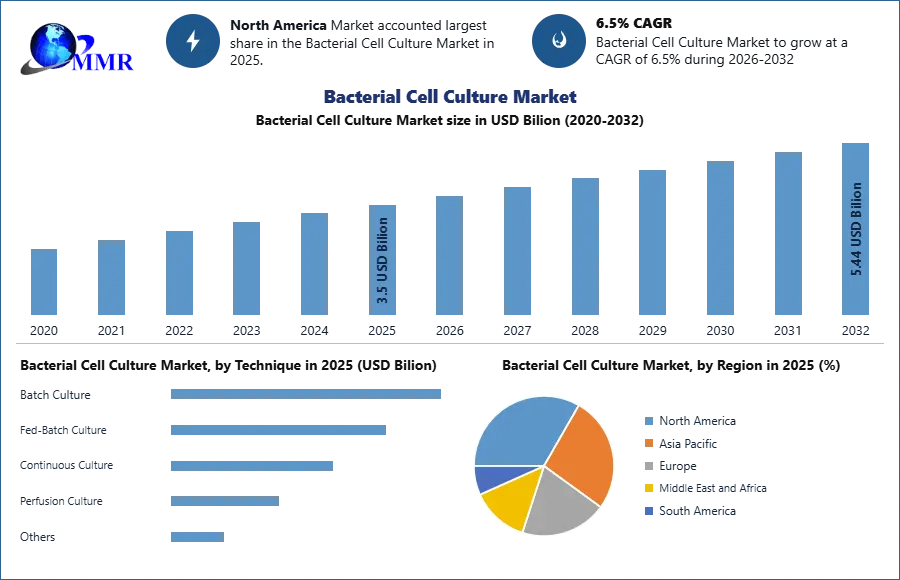 To know about the Research Methodology :- Request Free Sample Report
Bacterial Cell Culture Market Research Methodology
A competitive analysis is conducted to examine the leading companies operating in the market and their application capacity, the supply, and demand for their applications and services. The report also features a comprehensive list of key players and potential entrants in the Bacterial Cell Culture Market. The segment analysis approach is utilized to gain a deeper understanding of the data sets involved, providing both behavioural and geographical analyses to capture significant changes in the forecast period. The report also highlights opportunities for revenue generation by the leading players in the Market.
Strategic planning and management techniques such as SWOT analysis are applied to help organizations identify their strengths, weaknesses, opportunities, and threats. Porter's analysis is also employed to examine an organization's strengths and weaknesses and to identify critical factors that impact profitability. PESTLE analysis is another strategic framework utilized to evaluate the environment in which an organization operates. Through these methodologies, the Bacterial Cell Culture Market report aims to provide a comprehensive analysis of the market, offering insights into the key factors driving market growth and the challenges that must be addressed to succeed in this competitive marketplace.
Bacterial Cell Culture Market Dynamics
Growing demand for Bacterial Cell Culture market
The bacterial cells are used to manufacture many drugs, including antibiotics, hormones, vaccines, and insulin. The bacterial cell culture market is primarily driven by the growth in the production of biological drugs. Biological drugs are usually proteins or other large molecules manufactured through genetic engineering techniques. They are used to treat conditions including cancer, hepatitis B, or chronic asthma. The global bacterial cell culture market is expected to grow due to the increased use of phages to prevent obesity and diabetes.
The market is driven by increasing demand for antibiotics and vaccines, rising prevalence of infectious diseases, and advancements in biotechnology research. Bacterial cultures are typically grown in specialized laboratory equipment, such as incubators and bioreactors, using various growth media and conditions to support their growth and replication. The culture process involves careful monitoring and control of various parameters, such as temperature, pH, and nutrient levels, to ensure optimal growth and yield of the desired bacterial strain, etc.
The growing incidence of bacterial infections and the need for effective antibiotics has resulted in a surge in demand for bacterial cell cultures, which are crucial in the production of antibiotics. Technological advancements have led to the development of new and innovative bacterial cell culture products, which are used in various applications such as drug discovery, gene therapy, and personalized medicine. Additionally, the rising demand for biopharmaceuticals and the increasing government funding for research in the biotechnology sector is expected to drive the growth of the bacterial cell culture market
Market Restraint Factors
Risk of Contamination and Ethical Concerns of the Bacterial Cell Culture Market
The bacterial cell culture systems are complex in nature and require strict maintenance and handling protocols to avoid contamination and maintain the purity of the bacterial cultures. The risk of contamination can result in lower Application activity and higher Application cost is expected to hinder the growth of the bacterial cell culture market. Furthermore, ethical concerns related to the use of animal-derived components in bacterial cell culture media can also limit the growth of the market. These concerns have led to the development of alternative media formulations that do not require the use of animal-derived components
Bacterial Cell Culture Market Segment Analysis
Product Type: The Bacterial Cell Culture Market is segmented based on product Type into media, reagents, and sera. Bacterial culture media provides essential nutrients for bacterial growth and is used by a variety of End users such as food testing, drug discovery, and academic research. Reagents are chemicals used to support bacterial growth, perform assays, and facilitate experiments in the laboratory. Bacterial sera, on the other hand, contain specific antibodies used for research purposes, such as identifying bacterial strains and detecting pathogens.
These three Application types play a critical role in bacterial cell culture and are essential for the growth, maintenance, and analysis of bacterial cells in the laboratory. Understanding the segmentation of the Bacterial Cell Culture Market by Application type allows stakeholders to identify market opportunities, develop targeted marketing strategies, and make informed decisions related to Application development and business planning.
End-user, The bacterial cell culture market is segmented based on end-user, with the major categories being diagnostic centers, the food industry, and others. Diagnostic centers rely on bacterial cell culture as a crucial tool for identifying and studying infectious diseases. By culturing bacterial cells, diagnostic centers can determine the causative agent of infection and test the effectiveness of antimicrobial agents.
The food industry also heavily relies on bacterial cell culture for food preservation, Application of fermented foods like yogurt and cheese, and testing for foodborne pathogens. In addition to these two main categories, bacterial cell culture is also used in various other industries such as pharmaceuticals, biotechnology, and environmental testing. In these industries, bacterial cell culture plays an important role in drug and vaccine development, as well as in monitoring the levels of bacteria in the environment.
Bacterial Cell Culture Market Regional Insights
North America holds the largest Bacterial Cell Culture Market share in 2025. The Increased government initiatives for research, the invention of new technologies and advancements in cell culture applications, clinical studies on cancer, and the presence of world-class biotechnology & research institutes will boost the market in the North American region. The market is expected to grow at a CAGR of around 8.2% during the forecast period. The United States is the largest contributor to the North American market, accounting for the majority of the regional market share. The growth in the region is attributed to the increasing demand for biopharmaceutical Applications and the growing investments in research and development activities.
The bacterial cell culture is used in the diagnosis of various diseases, in food and water testing, in the agricultural sector, in animal feed, and others. According to the Centers for Disease Control and Prevention (CDC), strep throat causes an estimated 5.2 million outpatient visits and 2.8 million antibiotic prescriptions annually among the U.S. population aged 0 to 64 years. Thus, this shows the prevalence of infectious diseases caused by various bacteria including group a streptococcus, Escherichia coli, and others which need for their appropriate diagnosis and treatment. An increase in drug discovery and laboratories is expected to provide enormous opportunities for the market in the North American region.
Moreover, the growth of the market in this region is anticipated to be aided by several factors such as governmental initiatives for bacterial cell research, increasing acceptance of personalized medicines, rising academic and governmental investments in diagnostic research, and increasing emphasis on drug discovery and development. The United States declared new investments and resources to progress the national bacterial cell culture industry. The Department of Health and human services will spend USD 40 million on this project to increase its biomanufacturing and bacterial cell culture market position in society. Thus, the aforementioned facts support the market growth during the forecast period.
Bacterial Cell Culture Market Competitive Landscape
The global Bacterial Cell Culture Market is extremely competitive due to the presence of major players those players constantly innovate their product portfolios due to intense competition and rapid technological advancements, these companies focus heavily on their research and development to include a broader range of products. Various strategies are investments, partnerships, and mergers and acquisitions supplement the fragmented market growth. The key players in the global Bacterial Cell Culture Market are Thermo Fisher Scientific, Inc., ScienCell Research Laboratories, Inc., Bio-Rad Laboratories, Inc., and Eiken Chemical Co, Ltd., among others
Recent Developments
14 Jun 2023 Stopping cells from exchanging DNA 'packets' could halt bacterial resistance, study shows Bacterial resistance is one of the biggest looming health threats for modern medicine, but new research by a transatlantic team of researchers has offered a better understanding of how this resistance spreads and how to stop it. The culprit behind bacteria’s resistance to antibiotics is packets of DNA called plasmids, which sit inside bacterial cells but replicate separately from the cell’s main chromosomal DNA. Plasmids carry a small number of genes that can encode for certain functions, including resistance to antimicrobial drugs.
Recent Developments
| Exact Date | Company | Development | Impact |
|---|---|---|---|
| 12 January 2026 | Thermo Fisher Scientific | Launched the Gibco DynaDrive Perfusion system, a high-density bacterial culture bioreactor designed for automated media exchange. | This innovation reduces manual intervention by 40% and significantly boosts biomass yield for large-scale vaccine production. |
| 19 November 2025 | Merck KGaA | Partnered with Ginkgo Bioworks to optimize synthetic bacterial strains through high-throughput screening of specialized growth media. | The collaboration aims to accelerate commercialization timelines for microbial-based industrial enzymes and specialty chemicals. |
| 04 August 2025 | Sartorius AG | Commissioned a new manufacturing facility in South Korea specifically for single-use bacterial fermentation technologies. | This expansion addresses the surging demand for localized bioprocessing solutions in the Asia-Pacific pharmaceutical sector. |
| 22 May 2025 | Danaher Corporation (Pall) | Acquired MicroCulture Systems to integrate advanced real-time microbial monitoring sensors into their existing cell culture portfolio. | The deal strengthens Pall’s analytical capabilities, allowing for precise metabolic tracking during complex bacterial fermentation cycles. |
Bacterial Cell Culture Market Scope: Inquire before buying
| Bacterial Cell Culture Market | |||
|---|---|---|---|
| Report Coverage | Details | ||
| Base Year: | 2025 | Forecast Period: | 2026-2032 |
| Historical Data: | 2020 to 2025 | Market Size in 2025: | 3.5 USD Bilion |
| Forecast Period 2026-2032 CAGR: | 6.5% | Market Size in 2032: | 5.44 USD Bilion |
| Segments Covered: | by Product Type | Media Reagents Sera Consumables Others |
|
| by Technique | Batch Culture Fed-Batch Culture Continuous Culture Perfusion Culture Others |
||
| by Cell Type | Gram-Positive Bacteria Gram-Negative Bacteria Anaerobic Bacteria Thermophilic Bacteria Others |
||
| by Application | Disease Diagnosis Food Testing Water Testing Biopharmaceutical Production Research Laboratories Others |
||
| by End Use | Diagnostic Centers Food Industry Biotech & Pharmaceutical Companies Academic & Research Institutes Others |
||
Bacterial Cell Culture Market, by Region
North America (United States, Canada and Mexico)
Europe (UK, France, Germany, Italy, Spain, Sweden, Austria, Turkey, Russia and Rest of Europe)
Asia Pacific (China, India, Japan, South Korea, Australia, ASEAN and Rest of APAC)
Middle East and Africa (South Africa, GCC, Egypt, Nigeria and Rest of ME&A)
South America (Brazil, Argentina, Columbia and Rest of South America)
Key players/Competitors' profiles covered in the Bacterial Cell Culture Market report in a strategic perspective
- Thermo Fisher Scientific Inc.
- Merck KGaA
- Danaher Corporation
- Sartorius AG
- Eppendorf SE
- Lonza Group AG
- Corning Incorporated
- Becton, Dickinson and Company (BD)
- HiMedia Laboratories Pvt. Ltd.
- PromoCell GmbH
- Bio-Rad Laboratories, Inc.
- GE HealthCare Technologies Inc.
- Fujifilm Irvine Scientific
- Takara Bio Inc.
- Avantor, Inc.
- Charles River Laboratories International, Inc.
- CellGenix GmbH
- PanReac AppliChem (ITW Reagents)
- MP Biomedicals, LLC
- InvivoGen
- Agilent Technologies, Inc.
- Bio-Techne Corporation
- Lonza Bioscience Solutions
- ATCC (American Type Culture Collection)
- R&D Systems, Inc.
Frequently Asked Questions:
1] What is the growth rate of the Global Bacterial Cell Culture Market?
Ans. The Global Bacterial Cell Culture Market is growing at a significant rate of 6.5 % during the forecast period.
2] Which region is expected to dominate the Global Bacterial Cell Culture Market?
Ans. North American region is expected to dominate the Bacterial Cell Culture Market during the forecast period.
3] What is the market size of the Global Bacterial Cell Culture Market by 2032?
Ans. The market size of the Bacterial Cell Culture Market by 2032 is expected to reach USD 5.44Bn.
4] Which are the top key players in the Global Bacterial Cell Culture Market?
Ans. The major key players in the Global Bacterial Cell Culture Market are Thermo Fisher Scientific, Inc., ScienCell Research Laboratories, Inc, Bio-Rad Laboratories, Inc., and others
5] What factors are driving the growth of the Global Market ?
Ans. The increasing demand for Bacterial Cell Culture drives the Bacterial Cell Culture Market growth.