
Herbal Supplements Market Size – Industry Structure Evaluation, Demand Drivers Analysis, Regional Growth Analysis and Identification, Competitive Positioning Review & Global Market Size Forecast to 2032
Overview
Herbal Supplements Market size was valued at USD 138.13 Bn in 2025, and the total Herbal Supplements Market revenue is expected to grow at a CAGR of 7.81% from 2026 to 2032, reaching nearly USD 233.82 Bn. by 2032.
Herbal Supplements Market Overview
Herbal supplements are natural products derived from plants, used for health enhancement, disease prevention, and nutritional supplementation. They encompass capsules, tablets, powders, and liquid extracts, highlighting their growing adoption in wellness and alternative medicine.
The report evaluates availability, noting widespread distribution through pharmacies, online retailers, and health stores, driven by increasing consumer preference for organic and plant-based remedies. Demand and supply dynamics are examined, with rising health consciousness and chronic diseases fuelling growth, while regulatory challenges impact production. Regional dominance is analysed, with Asia-Pacific led the Herbal Supplements Market in 2025 due to high consumer awareness and traditional herbal medicine practices.
Herbal Supplements Market Key major players, such as Nature’s Bounty, Gaia Herbs, and Himalaya Herbal Healthcare, are profiled for their market strategies. Additionally, the report assesses end-user contribution, detailing usage across age groups, with millennials and aging populations significantly driving demand. This study offers actionable insights for stakeholders in the evolving herbal supplements sector.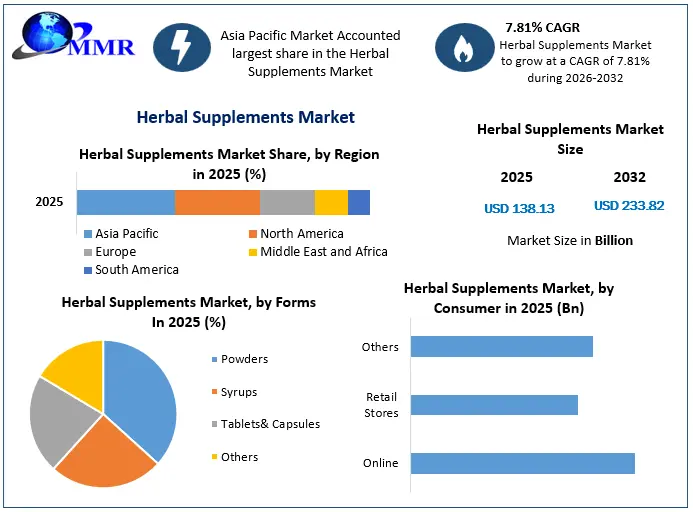
To know about the Research Methodology :- Request Free Sample Report
Herbal Supplement Market Dynamics
Health Awareness and Economic Factors to Drive Herbal Supplement Market Growth
An increasingly sedentary lifestyle forces consumers to lead healthy lives. The number of mental health disorders is increasing. More and more people are looking for safer, healthier, and more economical alternatives. Herbal food supplements are becoming more important owed to growing consumer awareness. Herbal dietary supplements are slowly and steadily gaining consumer trust around the world. They are ready to include herbal supplements in their daily diet. These factors are driving the demand for the product in the market. High medical costs, sluggish lifestyles, tight government budgets, and rising prices for medical and diet products have led consumers to switch to more economical options such as herbal supplements.
Natural Appeal and Longstanding Medicinal Use to Drive Herbal Supplement Market Growth
Herbal remedies have proven to be the safest alternatives for permanent relief from physical and mental disorders. This is one of the key factors driving the market growth of herbal supplements. Herbal supplements claim to be natural. However, this is not always the case. It is always advisable to use these products after thorough consultation with an herbalist or doctor, as they can cause a variety of harmful side effects. Herbal supplements have been used for decades for their medicinal properties and treatment of various illnesses.
Many people around the world are switching to herbal supplements for additional health benefits. Herbal supplements are natural non-food substances and non-pharmaceuticals used to improve health. Herbal food supplements are made from plant-based ingredients and have few or no side effects. Demand for herbal dietary supplements is increasing thanks to the natural label that attracts health-conscious and health-promoting customers.
Complex Regulations, Cultural Differences, and Resource Pressures to Restrain the Herbal Supplements Market
Different countries have varying regulations governing herbal supplements leading to complexities in product approval, labelling requirements, and marketing claims ensuring the purity and safety of herbal supplements challenging due to factors such as variability in plant forms inconsistent manufacturing processes, and adulteration with synthetic compounds or contaminants Attitudes towards herbal supplements vary across cultures and regions influencing demand and market penetrations. The growing demand for herbal supplements puts pressure on natural resources and biodiversity. Herbal supplements face competition from pharmaceutical drugs, especially for acute health conditions. This competition limits the market share of herbal products.
Personalized Nutrition and Sports Trends to Create Herbal Supplements Market Opportunities
Increasing awareness of personalized or bespoke nutritional products and the concept of these nutritional supplements has stimulated consumer interest in different parts of the world and has a positive impact on the market growth of herbal supplements. Technological advances and increased investment in dietary supplements and research and development of dietary supplements are expected to further drive market growth through the forecast period. Athletes are increasingly interested in sports nutrition products and dietary supplements to improve endurance and performance. Trends in sports nutrition products and vitamin supplements due to their endurance and performance-enhancing factors will drive the market growth rapidly.
Shifting Wellness Trends and Regulatory Compliance to Create Herbal Supplements Market Challenges
Strict regulatory policies are now also applied to herbal supplements and are one of the main limiting factors in market growth. Product availability and acceptance, delivery style, and product price are several other factors that negatively impact the overall market. The global herbal market is highly fragmented, with numerous small and medium-sized companies competing for market share, alongside consumer trends in the health and wellness industry shifting rapidly, which impacts the demand for specific herbal supplements.
Herbal Supplements Market Segment Analysis
Based on Forms, the Herbal Supplements Market is segmented into powders, syrups, tablets & capsules, and others (including gummies, softgels, and liquid extracts). Among these, tablets & capsules dominated the Herbal Supplements Market in 2025, accounting for the largest revenue share.
Tablets & capsules remain the preferred choice due to their convenience, precise dosing, longer shelf life, and ease of consumption. Powders are gaining traction among fitness enthusiasts for customizable dosing, while syrups are popular in paediatric and geriatric segments due to their ease of intake. Emerging formats like gummies and liquid extracts are witnessing rapid growth, driven by demand for tastier and faster-absorbing alternatives. However, tablets & capsules continue to lead due to their widespread availability, affordability, and strong consumer trust.
Based on Distribution Channels, the Herbal Supplements Market is segmented into pharmaceutical stores, personal care & specialty stores, online retailers, supermarkets/hypermarkets, and others (including direct sales and health clinics). Among these, pharmaceutical stores dominated the market in 2025, holding the largest revenue share.
Pharmaceutical stores remain the leading distribution channel due to their credibility, expert recommendations (pharmacists), and wide availability of trusted brands. Personal care & specialty stores are gaining popularity, particularly for beauty and wellness-focused herbal supplements. Meanwhile, online retailers are experiencing rapid growth due to convenience, discounts, and a wider product selection. However, pharmaceutical stores continue to lead as consumers prioritize authenticity, professional advice, and immediate product accessibility when purchasing herbal supplements.
Based on Consumer, the herbal supplements market is segmented by consumer purchase channel into online platforms, retail stores, and others (including direct sellers and wellness clinics). Among these, retail stores dominated the market in 2025, capturing the largest revenue share.
Retail stores, including pharmacies, supermarkets, and health & wellness shops, remain the preferred choice due to immediate product availability, in-person expert guidance, and the ability to verify product authenticity before purchase. However, online platforms are rapidly growing, driven by convenience, competitive pricing, and a wider product selection, particularly among younger, tech-savvy consumers. While alternative channels like direct sales and wellness clinics serve niche segments, retail stores maintain dominance as consumers continue to value trust, accessibility, and hands-on shopping experiences when buying herbal supplements.
Herbal Supplements Market Regional Insights
Asia Pacific dominated the Herbal Supplements Market, which holds a 42% global revenue share despite a slight decline from previous years. This leadership stems from deeply entrenched traditional medicine practices in China and India, which together account for over 60% of global herbal supplement exports. Government support through initiatives like India's AYUSH Mission 2025 and China's TCM modernization program is strengthening the sector, while demographic factors, including an aging population and rising lifestyle diseases, further drive demand.
However, the region faces challenges from price sensitivity and market fragmentation. Meanwhile, North America is experiencing the fastest growth, fueled by preventive healthcare trends, with 65% of U.S. adults now using supplements. The market is becoming increasingly sophisticated, characterized by FDA regulatory tightening, premium product offerings, and innovative distribution channels like Amazon's "Verified Herbal Supplements" section. Europe maintains its position as a quality-focused market, led by countries like Germany and Switzerland, known for their rigorous organic certifications. Across all regions, the industry is being transformed by digitalization, with e-commerce platforms and AI-driven personalized nutrition services gaining significant traction, reflecting evolving consumer preferences toward evidence-based, convenient wellness solutions.
Herbal Supplements Market Competitive Landscape:
The Herbal Supplements Market features intense competition among key players, with Nature's Bounty (The Bountiful Company) and Himalaya Wellness Company emerging as two dominant forces. Nature's Bounty leads in North America and Europe, leveraging its scientifically backed formulations, strong retail partnerships, and brand loyalty among health-conscious consumers. Meanwhile, Himalaya Wellness dominates in Asia-Pacific and emerging markets, capitalizing on its Ayurvedic heritage, affordable plant-based supplements, and widespread distribution in pharmacies and e-commerce. Both companies invest heavily in R&D, marketing, and global expansion, though they face growing competition from private labels and digital-native wellness brands. Their continued market leadership relies on product innovation, regulatory compliance, and adapting to shifting consumer preferences toward natural and preventive healthcare solutions.
Herbal Supplements Market Recent Industry Developments:
| Date | Company | Development | Impact |
|---|---|---|---|
| 27 January 2025 | Blue Toad Botanicals | The company launched its new consumer product line, You’ve Got Some NERVE™ Functional Mushroom Capsules, in collaboration with PLT Health Solutions. | The formulation integrates Vanizem™ Aframomum melegueta extract to scale the brand's footprint in the clinically validated neurological health and stress-support supplement market. |
| 24 February 2025 | Organic India | The brand officially debuted its new line of Regenerative Organic Certified (ROC) teas and herbal supplements at the Natural Products Expo West. | Transitioning staple products like Ashwagandha, Neem, and Tulsi to ROC status improves market supply chain transparency and appeals to eco-conscious consumers demanding sustainable botanical sourcing. |
| 28 April 2025 | Vivazen | The company formally introduced its new Botanical Gummies product portfolio, featuring targeted functional plant-based formulations named Berry Bliss, Cider Crush, and Citrus Chill. | This launch drives product diversification by expanding the brand's footprint into the rapidly growing functional chewables format for mood, relaxation, and energy delivery. |
| 21 May 2025 | Traditional Medicinals | The botanical pioneer launched the "Herbs for All" initiative, combining community-led funding grants with a free digital educational platform called the Plant Wisdom Collective. | The initiative bolsters consumer engagement and trust by driving broadened market access to plant-based medicinal education and ethical botanical certifications. |
| 29 July 2025 | Traditional Medicinals | The company broke ground on a new $47 million, 125,000-square-foot manufacturing facility located in Franklin County, Virginia. | This major infrastructure expansion substantially increases the company's production capacity and logistics efficiency across the East Coast herbal tea and wellness market. |
| 17 September 2025 | Traditional Medicinals | The brand completed a dual product launch of its Rosy Mood™ and Stress Ease® Calm organic herbal teas. | Featuring Fair for Life certification, these blends mark the company's strategic entry into the high-demand holistic mood support and adaptogen market segments. |
Herbal Supplements Market Key Trends:
1. There is a growing emphasis on science-backed herbal formulations, with consumers increasingly demanding clinically validated ingredients like Ashwagandha for stress relief and Turmeric for inflammation. Leading brands such as Nature’s Bounty and Gaia Herbs are investing in rigorous clinical trials to substantiate health claims, while regulatory bodies like the FDA and EU are enforcing stricter standards for potency and transparency.
2. Personalization and digital wellness tools are revolutionizing the industry. AI-driven platforms, including Hims & Hers, now offer tailored herbal supplement regimens based on individual health data, while subscription services and mobile apps enhance user adherence. Additionally, social commerce—powered by influencers on TikTok and Instagram—is accelerating the popularity of trending herbs like Maca and Elderberry. Together, these trends highlight a shift toward evidence-based, personalized herbal nutrition, supported by technology and changing consumer preferences.
Herbal Supplements Industry Ecosystem

Herbal Supplements Market Scope: Inquire before buying
| Herbal Supplements Market | |||
|---|---|---|---|
| Report Coverage | Details | ||
| Base Year: | 2025 | Forecast Period: | 2026-2032 |
| Historical Data: | 2020 to 2025 | Market Size in 2025: | USD 138.13 Bn |
| Forecast Period 2026 to 2032 CAGR: | 7.81% | Market Size in 2032: | USD 233.82 Bn. |
| Segments Covered: | by Forms | Powders Syrups Tablets& Capsules Others |
|
| by Distribution Channel | Pharmaceuticals Personal Care |
||
| by Consumer | Online Retail Stores Others |
||
Herbal Supplements Market, by Region
North America (United States, Canada and Mexico)
Europe (United Kingdom, France, Germany, Italy, Spain, Sweden, Russia, Rest of Europe)
Asia Pacific (China, Japan, South Korea, India, Australia, Malaysia, Thailand, Vietnam, Indonesia, Philippines, Rest of APAC)
Middle East and Africa (South Africa, GCC, Nigeria, Egypt, Turkey, Rest of MEA)
South America (Brazil, Argentina, Colombia, Chile, Peru, Rest of South America)
Herbal Supplements Key Players are:
Leaders in Herbal Dietary Supplements & Botanical Wellness Products
Market Focus: These companies develop and commercialize finished herbal supplement products targeting immunity, digestive health, energy enhancement, stress relief, cognitive wellness, and preventive healthcare.
Key Active Players
North America
- Nature's Way Products, LLC – United States
- Gaia Herbs, Inc. – United States
- NOW Health Group, Inc. – United States
- Herbalife Ltd. – United States
Europe
- Arkopharma Laboratoires Pharmaceutiques – France
- A.Vogel AG – Switzerland
Asia Pacific
- Dabur India Limited – India
- Himalaya Wellness Company – India
- Blackmores Limited – Australia
Pioneers in Ayurvedic & Traditional Herbal Medicine
Market Focus: These organizations leverage traditional medicinal systems such as Ayurveda, Traditional Chinese Medicine (TCM), and Kampo medicine to develop scientifically backed herbal healthcare solutions.
Key Active Players
Asia Pacific
- Dabur India Limited – India
- Patanjali Ayurved Limited – India
- Himalaya Wellness Company – India
- Tong Ren Tang Technologies Co., Ltd. – China
- Tsumura & Co. – Japan
Specialists in Herbal Extracts & Botanical Ingredient Manufacturing
Market Focus: These companies supply standardized botanical extracts, active herbal ingredients, and phytochemical compounds used by supplement, nutraceutical, pharmaceutical, and food manufacturers globally.
Key Active Players
North America
- Indena USA Inc. – United States
Europe
- Indena S.p.A. – Italy
- Martin Bauer Group – Germany
Asia Pacific
- Sami-Sabinsa Group – India
- Natural Remedies Pvt. Ltd. – India
Innovators in Nutraceutical & Functional Herbal Nutrition
Market Focus: These companies integrate herbal ingredients with vitamins, minerals, probiotics, and functional nutrition products to address growing consumer demand for holistic health and preventive wellness solutions.
Key Active Players
North America
- The Nature's Bounty Co. – United States
- USANA Health Sciences, Inc. – United States
Europe
- Bioforce AG – Switzerland
Asia Pacific
- Blackmores Limited – Australia
- Amway (Nutrilite) – Asia Pacific Presence
Leaders in Herbal Supplement Contract Manufacturing & Specialty Formulation
Market Focus: These organizations provide contract manufacturing, extraction, formulation development, encapsulation, and private-label production services that support global herbal supplement brands.
Key Active Players
North America
- NutraScience Labs – United States
Europe
- EuroPharma Alliance Sp. z o.o. – Poland
Asia Pacific
- Sami-Sabinsa Group – India
FAQ’S
1. Which region has the largest share in the Global Herbal Supplements Market in 2024?
Ans: The Asia Pacific region held the highest share in 2025.
2. Who are the key players in the Global Herbal Supplements market?
Ans: The important key players in the Global Herbal Supplements Market are –Archer Daniels Midland Company, Glanbia PLC, Herbalife International of America, Inc., Blackmores Limited, Nutraceutical International Corporation, Nbty, Inc., Arizona Natural Products, Ricola AG, Naturalife Asia Co., Ltd., Bio-Botanica Inc., Jarrow Formulas, Inc., Herbochem, Nutrova, Third Coast Herb Co., Healthy Origins USA, NOW Health Group, Inc., and Swanson Health.
3. What was the Global Herbal Supplements Market size in 2025?
Ans: The Global Herbal Supplements Market size was USD 138.13 Bn in 2025.