
Venous Stents Market Size – Industry Structure Evaluation, Demand Drivers Analysis, Regional Growth Analysis and Identification, Competitive Positioning Review & Global Market Size Forecast to 2030
Overview
The Venous Stents Market size was valued at USD 1250.74 Mn. in 2023. The total Venous Stents Revenue is expected to grow at a CAGR of 8.8% from 2024 to 2030, reaching nearly USD 2257.20 Mn. by 2030.
A venous stent is a metal mesh tube that is placed inside a blocked or narrowed vein to keep it open. It acts as a scaffold to prevent the vein from collapsing and to allow blood to flow through it.
• According to MMR analysis, the top 3 exporters of the venous stent are Germany followed by Belgium and the United States.
The global venous stents market has witnessed a rise, owing to the prevalence of venous diseases, the growing aging population, and increasing awareness about venous stents usage. The increasing adoption of outpatient procedures and day-care surgeries is a significant factor driving the venous stents market growth. The emerging key players such as Becton, Dickinson, and Company (United States), Cook Group Inc. (United States), Boston Scientific Corporation (United States), and Medtronic (Ireland), have involved product development strategies like flexible venous stents with high radial strength are expanding the venous stents market growth.
• According to MMR analysis, over 25 million people in the US suffer from chronic venous disease (CVD) and the financial strain on the healthcare system is estimated expenditure of US$1 billion.
Significant advancement has been made in the design and development of venous stents, including innovations in stent materials, design, and delivery systems, which has resulted in the development of more effective and safer stents boosting the demand for venous stents. Additionally, new technologies such as mRNA are projected to emerge and shift the pharmaceutical industry, and the venous stents market towards significant growth.
Asia Pacific held a significant market share of about 20% in 2023 and is the fastest-growing region in the Global Venous Stents Market. The increasing prevalence of venous diseases in the APAC region owing to an aging population, sedentary lifestyles, and growing awareness of chronic has created a demand for advanced treatment options. The development of healthcare infrastructure to improve healthcare facilities has created a favorable environment for the adoption of venous stents. Additionally, the rise in disposable income has made minimally invasive procedures more affordable, and governments in the region promoting affordable healthcare further boost the venous stent market.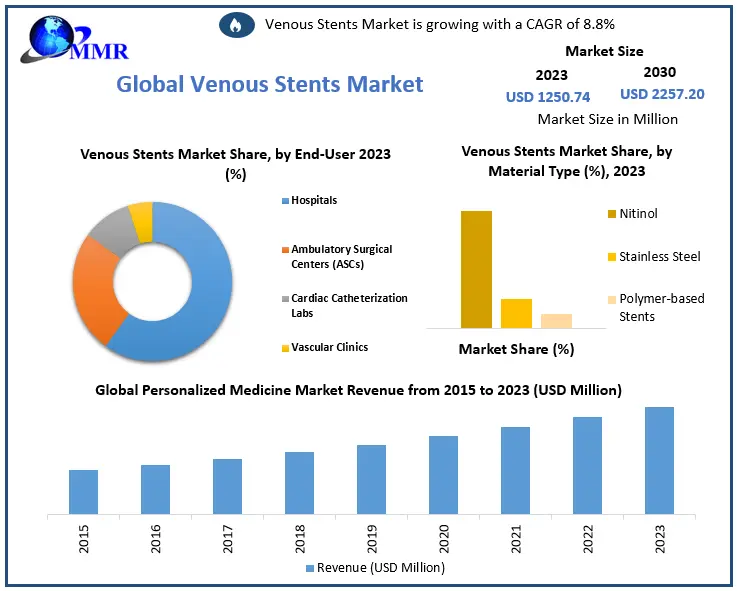 To know about the Research Methodology :- Request Free Sample Report
Venous Stents Market Dynamics
Technological Advancements and Growing Awareness of Minimal Invasive Procedures
Advanced technologies have transformed the treatment of venous diseases, resulting in improved health outcomes and an increased demand for venous stents. The demand for next-generation stents with superior biocompatibility, flexibility, and radial strength is driving the market. These stents provide better support to the venous wall, which reduces the risk of restenosis and increases the durability of the stents, leading to enhanced clinical outcomes for patients. The incorporation of innovative imaging techniques has enabled doctors to perform accurate treatments and enhance stent placement by precisely evaluating lesion morphology and stent placement. The implementation of digital health solutions and telemedicine platforms has played a significant role in raising awareness of minimally invasive venous interventions and improving patient access to advanced treatment options.
The increasing adoption of minimally invasive procedures, such as endovascular stenting, is owing to the growing awareness of the benefits associated with these techniques. These procedures involve smaller incisions, which result in less pain after surgery and a lower risk of complications than traditional open surgeries, making them a popular choice among patients. This trend has increased the demand for venous stents as an essential component of these advanced treatment methods. The market's growth is attributed to technological advancements and increasing awareness, which have led to significant improvements in safety and efficacy.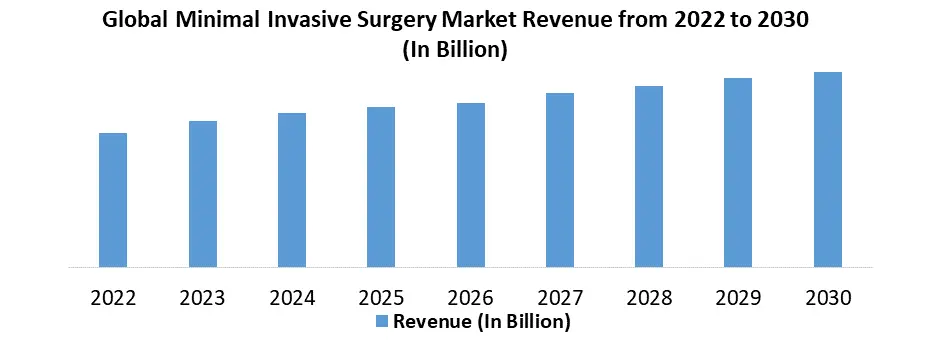 Personalization of Treatment and Emerging Markets
Treatment personalization recognizes the unique anatomical and physiological characteristics of each patient. Venous stents were available only in standard sizes and designs, potentially leading to less-than-ideal results. The new methods allow for customization, which involves crafting stents with precise lengths, diameters, and branching patterns to perfectly match a patient's distinct vascular anatomy. The use of 3D printing technology enables the production of patient-specific stents. Biocompatible materials and drug-eluting coatings are now being personalized to address individual risk factors and enhance the long-term effectiveness of stents.
For example, patients with allergies or specific medical conditions benefit from stents made with biocompatible materials that reduce the risk of adverse reactions. Developing markets present a promising borderline for the venous stent industry. As economies grow and healthcare systems advance, the demand for advanced medical technologies like venous stents is projected to rise. Additionally, strengthening healthcare infrastructure and training local medical professionals are essential for ensuring widespread access to quality care with venous stents.
Venous Stents Market Segment Analysis
Based on Treatment, the Deep Vein Thrombosis (DVT) segment holds the largest market share of about 45% in the Global Venous Stents Market in 2023. According to MMR analysis, the segment is further expected to grow at a CAGR of 8.8% during the forecast period and stands out as the dominant segment within the Global Venous Stents Market. A severe health problem identified as deep vein thrombosis affects about 80 persons out of every 100,000. Several drawbacks are associated with traditional therapies, including compression stockings and blood thinners. Venous stents provide a method of restoring blood flow and minimizing post-thrombotic syndrome (PTS) that is less invasive. The use of venous stents comes with several benefits, such as reduced discomfort, faster healing, and improved long-term outcomes.
Although venous stenting involves higher initial expenses, it is increasingly being recognized as a cost-effective solution. Technological advancements in several stent designs cater to DVT treatment, offering flexibility, biocompatibility, and drug-eluting capabilities. Additionally, the market is profiting from the development of new and improved venous stents, as well as increased awareness and encouraging regulatory environments, which supports sustained growth in the DVT segment and maintains its dominance.
• According to MMR analysis, pulmonary embolism can be life-threatening with 10-30% of individuals dying within one month of diagnosis. It affects around 900,000 people in the US every year.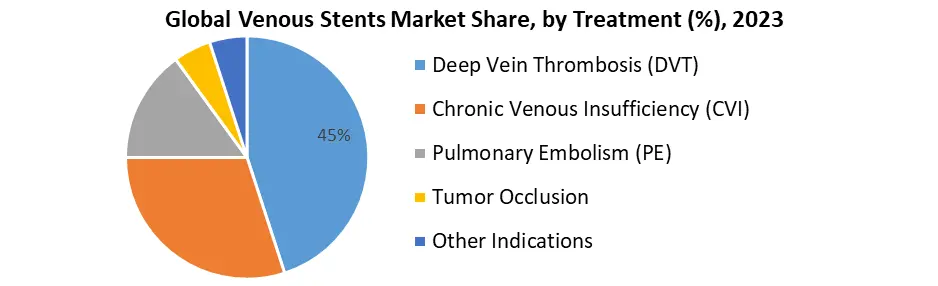 Apart from that, Chronic Venous Insufficiency (CVI) is a rapidly growing segment with a significant market share in the Venous Stents Market. With the rise in an aging population and sedentary lifestyles, the prevalence of CVI is estimated to rise, which creates a significant demand for effective treatment options as traditional methods like compression stockings and lifestyle changes provide limited relief, particularly for severe cases. Technological advancements in stent technology play a crucial role in enhancing the efficacy and appeal of stenting for CVI treatment. CVI significantly impacts the quality of life by leading to pain, fatigue, and mobility limitations. Venous stents offer the potential to significantly improve quality of life, driving patient demand and influencing treatment decisions.
Venous Stents Market Regional Insights
North America dominated the Global Venous Stents Market with the highest share of over 40% in 2023. The region is expected to grow at a CAGR of 8.8% during the forecast period and maintain its dominance by 2030. North America, particularly the United States had the highest healthcare expenditure, making the region dominant in the market. The region boasts a well-established network of hospitals, clinics, and vascular centers with modern facilities and skilled professionals for performing venous stent procedures.
The key players like Abbott, Becton, Dickinson and Company, Cardinal Health, Cook Group Inc., Boston Scientific Corporation, and Medtronic headquartered in North America facilitate research & development and commercialization in the region. The institutes in the region invest in R7D, leading to innovation in design, materials, and delivery systems. Additionally, the increase in the aging population susceptible to venous diseases increases the demand for venous stent treatment. The regulatory bodies have been raising awareness through public health campaigns about venous diseases, leading to early diagnosis and treatment are fueling the market growth. The favorable insurance policies, emphasis on minimally invasive treatment procedures, and rise in healthcare expenditure make the region dominant in the global venous stents market.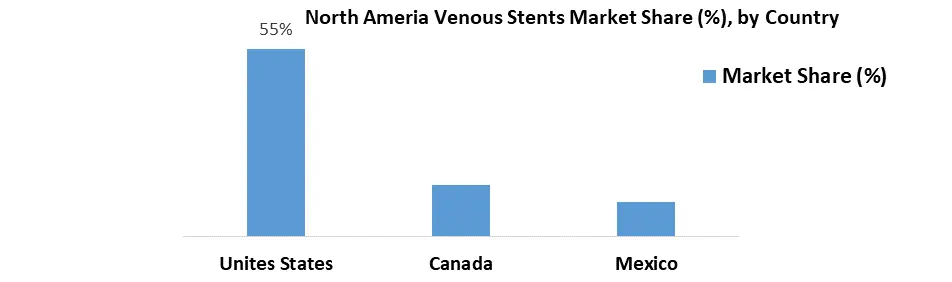 Europe, the second largest market in Venous Stents held a market share of about 30% in 2023 and grew significantly during the forecast period. The region has a developed healthcare system with high-quality hospitals and skilled professionals, which provides the foundation for venous stent procedures. Key players like Terumo and B.Braun Melsungen AG are contributing to the innovation in stent design and materials offering opportunities for market growth. Additionally, the growing awareness about venous disease, emphasis on patient safety, and varied reimbursement policies drive the market growth.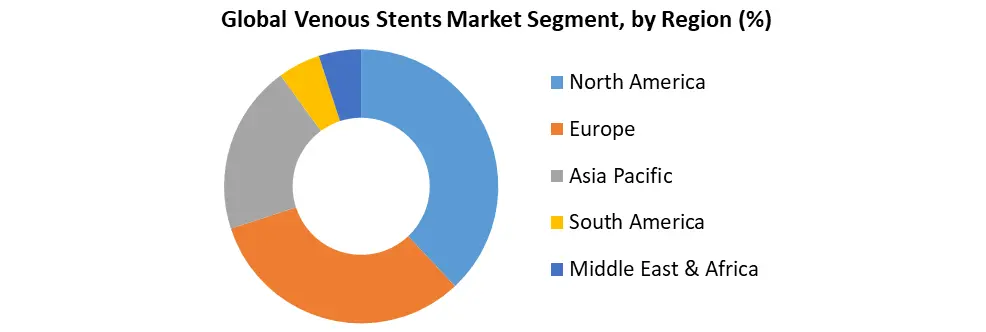
Venous Stents Market Competitive Landscapes
The market for Venous Stents is competitive with key players including Abbott, Becton, Dickinson and Company, Cardinal Health, Cook Group Inc., Boston Scientific Corporation, and Medtronic. The key players are adopting collaborative strategies like mergers and acquisitions, product launches, and joint ventures to expand the consumer base in the market. The market for Venous Stents is competitive and dynamic, thanks to technological advancements, emerging markets, growth of minimal invasion treatments, and an increase in healthcare expenditure and infrastructure.
1. In 2023, Royal Philips acquired Vesper Medical Inc., which develops minimally invasive peripheral vascular devices. The agreement further expanded Philips' range of diagnostic and therapeutic devices with a line of advanced venous stents for the treatment of deep vein disease.
2. In 2023 Gore Medical initiated the clinical trial, which aimed to compare the effectiveness of VBX Stent Graft with bare metal stents.
3. In 2023, Becton, Dickinson, and Company signed an agreement to sell its Surgical Instrumentation platform to STERIS, a medical equipment business based in Ireland.
4. In 2023, RevCore, the world’s first minimally invasive catheter was utilized to perform deep venous stent thrombectomies for chronic stent occlusion.
Venous Stents Market Scope: Inquiry Before Buying
| Venous Stents Market | |||
|---|---|---|---|
| Report Coverage | Details | ||
| Base Year: | 2023 | Forecast Period: | 2024-2030 |
| Historical Data: | 2018 to 2023 | Market Size in 2023: | US $ 1250.74 Mn. |
| Forecast Period 2024 to 2030 CAGR: | 8.8% | Market Size in 2030: | US $ 2257.20 Mn. |
| Segments Covered: | by Material | Nitinol Stainless Steel Polymer-based |
|
| by Treatment | Chronic Deep Vein Thrombosis Post-Thrombotic Syndrome (PTS) May-Thurner’s Syndrome (MTS) Pelvic Congestion Syndrome (PCS) Hemodialysis/Arteriovenous Fistulae |
||
| by Stent Design | Braided Open Cell Closed Cell Hybrid |
||
| by Technology | Wallstent Technology Illiac Vein Stent Technology |
||
| by Application | Leg Chest Abdomen Arm |
||
| by End User | Hospital Ambulatory Surgery Centers Specialty Clinics Cardiac Catheterization Labs |
||
Venous Stents Market by Region
North America (United States, Canada, and Mexico)
Europe (UK, France, Germany, Italy, Spain, Sweden, Austria, and the Rest of Europe)
Asia Pacific (China, South Korea, Japan, India, Australia, Indonesia, Malaysia, Vietnam, Taiwan, Bangladesh, Pakistan, and the Rest of APAC)
Middle East and Africa (South Africa, GCC, Egypt, Nigeria, and the Rest of ME&A)
South America (Brazil, Argentina Rest of South America)
Venous Stents Market Key Players
North America
1. Abbott(Chicago)
2. Becton, Dickinson and Company (New Jersy)
3. Cardinal Health (Dublin)
4. Cook Group Inc. (USA)
5. Boston Scientific Corporation (Massachusetts)
6. W.L Gore & Associates (USA)
7. Cordis (USA)
Europe
1. Medtronic (Ireland)
2. Koninklijke Philips N.V. (Netherlands)
3. OptiMedizinische Instrumente GmbH (Germany)
4. plus medica GmbH & Co. KG (Germany)
5. Jotech GmbH (Germany)
6. Plus Medica (Germany)
7. Stentys (France)
8. Translumina GmbH (Germany)
Asia Pacific
1. Meril Life Sciences Pvt Ltd (India)
2. MicroPort Scientific Corporation (China)
3. Terumo Corporation (Japan)
FAQs:
1. What are the growth drivers for the Venous Stents market?
Ans. Rising Prevalence of venous disorders and increasing healthcare expenditure are the drivers of the Global Venous Stents Market.
2. What are the opportunities in the Venous Stents market growth?
Ans. Development of innovative stents and focus on value-based care are opportunities in the Venous Stents Market.
3. Which region is the fastest-growing region in the global Venous Stents market during the forecast period?
Ans. Asia Pacific is the fastest-growing region in the global Venous Stents market during the forecast period.
4. What is the projected market size & and growth rate of the Venous Stents Market?
Ans. The Venous Stents Market size was valued at USD 1250.74 Million in 2023 and the total Venous Stents Revenue is expected to grow at a CAGR of 8.8% from 2024 to 2030, reaching nearly USD 2257.20 Million by 2030.
5. What segments are covered in the Venous Stents Market report?
Ans. The segments covered in the Venous Stents market report are Material, indication, stent design, technology, application, end user, and region.