
Tunnel Field Effect Transistor Market - Industry Structure Evaluation, Demand Drivers Analysis, Regional Growth Analysis and Identification, Competitive Positioning / Landscape Review & Global Market Size Forecast to 2034
Overview
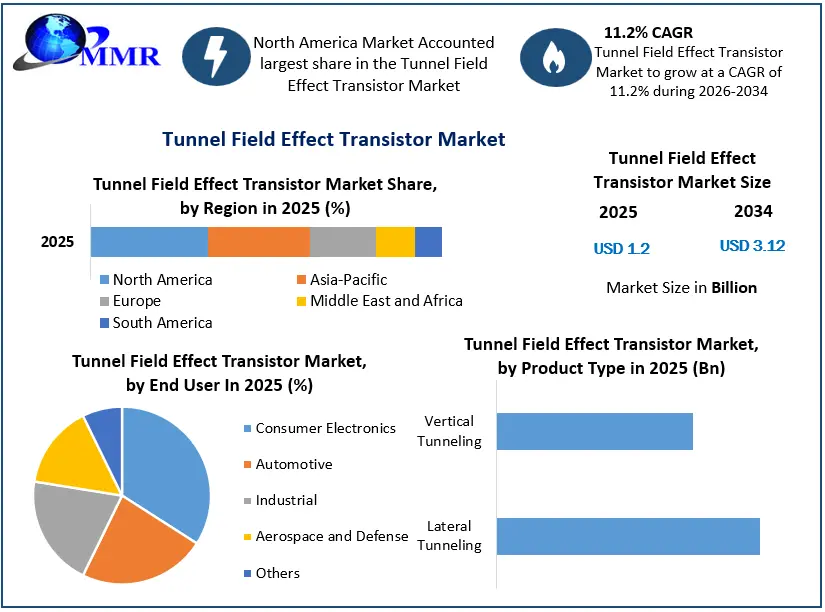
The Global Tunnel Field Effect Transistor Market size was valued at USD 1.2 Billion in 2025 and the total Tunnel Field Effect Transistor revenue is expected to grow at a CAGR of 11.2% from 2026 to 2034, reaching nearly USD 3.12 Billion by 2034.
Tunnel Field Effect Transistor Market Overview:
A Tunnel Field Effect Transistor (TFET) is a semiconductor device that operates based on quantum tunneling principles. Unlike traditional transistors, TFETs leverage the quantum mechanical effect of electrons tunneling through an energy barrier, allowing for the control of current flow. When a voltage is applied to the gate, it modulates the tunneling of carriers from the source to the channel, regulating the transistor's conductivity. The demand for TFETs has witnessed a rapid surge in recent years, due to their potential to address the need for energy-efficient electronic devices. Their unique operation at lower voltages compared to conventional transistors like MOSFETs offers a pathway toward reduced power consumption. This characteristic has garnered attention, especially in battery-powered applications like wearables, sensors, and biomedical implants, driving the increased interest in TFET technology. Thus, this factor driving the Tunnel Field Effect Transistor Market growth.
TFETs offer several advantages, including the ability to operate at lower voltages, potentially leading to significant energy savings. Moreover, their capability to handle low-power applications aligns well with emerging technologies such as 5G, AI, and IoT, where minimizing power consumption is crucial for efficient operation. This factor further increased the demand for tunnel field effect transistors among end-users, boosting the tunnel field effect transistors market growth. Additionally, TFETs show promise in energy harvesting, converting ambient sources like light, heat, or vibrations into usable electrical energy, paving the way for self-powered electronic devices and reducing reliance on conventional power sources, thereby boosting the tunnel field effect transistors industry growth.
The continuous research and development efforts in the field of TFETs focus on enhancing their performance, reliability, and manufacturability, further expected to benefit the industry growth. These advancements, including the exploration of new materials, novel fabrication techniques, and optimized device architectures, present promising opportunities for TFETs to evolve as key components in the semiconductor industry, addressing the growing demand for energy-efficient and self-powered electronic solutions.
Tunnel Field Effect Transistor Market Growth Outlook
To know about the Research Methodology :- Request Free Sample Report
Tunnel Field Effect Transistor Market Dynamics:
Growing use of electronic devices to boost the Tunnel Field Effect Transistor Market growth
The Tunnel Field Effect Transistor (TFET) is a transistor that has been gaining popularity due to its low-power applications, its unique operating mechanism, and its potential for high energy efficiency. Growth in the semiconductor industry with consumption of consumer electronics and advancement in artificial intelligence & and internet penetration is expected to influence the Tunnel Field Effect Transistor Market growth. High-capacity memory chips are used in mobiles and other electronic devices with increased wireless communication chipsets. Demand for smartphones, ICs, and memory devices is expected to drive the Tunnel Field Effect Transistor Market growth. Government policies around the world have increased to strengthen the manufacturing industry.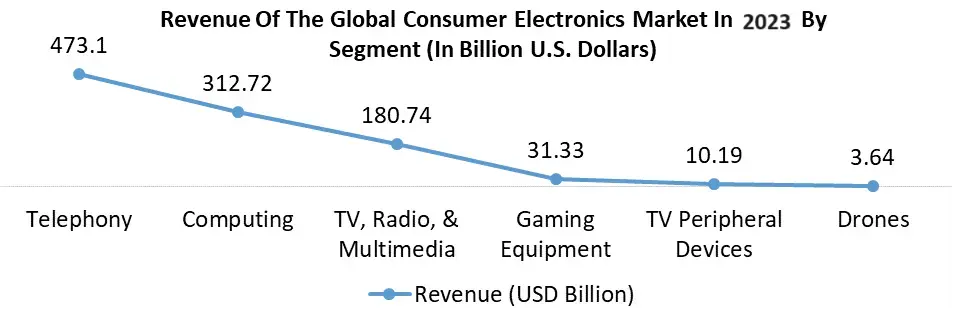 Increased Research and Development activities to improve the advancement of the electronics industry
Increased sales of smartphones with digitalization and urbanization along with disposable income of people is expected to boost the growth Tunnel Field Effect Transistor market. High investment and development of Tunnel Field Effect transistors in consumer electronics are significantly contributing to market growth. Low Power Consumption TFET offers a significant reduction in power consumption compared to other transistors, which makes the Tunnel Field Effect transistor an attractive option for low-power applications such as wearable devices, internet of Things (IoT) devices, and mobile devices.
The tunnel field effect transistor has high-performance potential transistors, especially in terms of switching speed and signal-to-noise ratio, which can lead to improved performance in high-frequency applications. TFETs can be manufactured using existing semiconductor fabrication processes, which makes it easier to integrate them with other components in electronic systems and is compatible with existing technologies. Increasing Research and Development activities, new materials, device structures, and fabrication techniques are being developed that could further improve their performance and expand their potential applications, leading to increased investment in this technology and are factors expected to boost the Tunnel Field Effect Transistor market growth.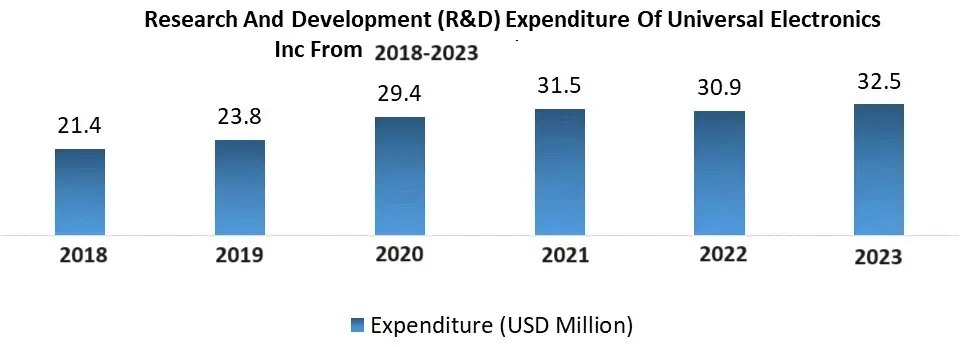 Limited Performance At High Voltage
The Tunnel Field effect transistor has limited performance at high voltage and is not suitable for applications that require high voltage operation, which is expected to restrain the growth of the Tunnel Field Effect Transistor market. It has manufacturing complexity and is manufactured using existing semiconductor fabrication processes, also requires additional process steps and materials that can increase manufacturing costs and complexity. Tunnel field-effect transistors require new technology and as such, there is still much research and development needed to improve their performance and optimize their manufacturing processes. These factors are expected to limit the adoption of transistors in certain applications until these issues are resolved and are expected to restrain the market growth.
The lack of standardization in manufacturing TFETs, including device structures, materials, and fabrication processes makes it challenging for manufacturers to adopt and integrate the technology into their existing products. Competition from other technologies offers unique benefits and also faces competition from other types of transistors and emerging technologies, such as organic transistors, carbon nanotube transistors, and others, which are further expected to limit the growth in the tunnel field effect transistor market.
Tunnel Field Effect Transistors (TFETs) as Key Enablers in Low-Power and Energy-Harvesting Applications
Low-power applications of Tunnel Field Effect transistor is their potential for low-power consumption, making these transistors ideal for use in battery-powered devices, such as wearable sensors, and biomedical implants. The growing demand for these types of devices presents a lucrative opportunity to gain Tunnel field-effect transistor market share. Technologies, such as 5G, artificial intelligence (AI), and the Internet of Things (IoT) with high-performance computing capabilities consume minimal power. TFETs have the potential to address the need and become a key enabling technology for these emerging markets.
These Transistors have the potential to be used in energy-harvesting applications, where they can convert energy sources, such as light, heat, or mechanical vibrations, into usable electrical energy. This enables the development of self-powered electronic devices and reduces reliance on traditional power sources and is expected to fuel the Tunnel Field Effect Transistor Market growth. Research and development in the field of TFETs lead to the development of new materials, fabrication techniques, and device architectures, which improve performance, reliability, and manufacturability. This presents new opportunities for the tunnel field effect transistor market.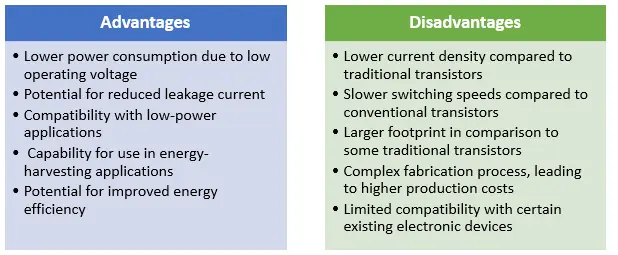 Challenges and Limitations Impeding the Market Adoption of Tunnel Field Effect Transistors (TFETs) in Low-Power Electronics
TFETs have the potential to offer significant improvements in energy efficiency and low-power operation, but theirs still lags behind that of traditional transistors, such as Metal-Oxide-Semiconductor Field Effect Transistors (MOSFETs). Tunnel Field Effect Transistors have low current density, slow switching speeds, and larger footprints than MOSFETs and all these factors are challenges in the market.
Fabrication of TFETs is more complex and challenging than that of MOSFETs, which can increase the production cost of the transistor. The fabrication of transistors requires new materials and fabrication techniques, which are still being developed and optimized. There is no standardized process for the fabrication of TFETs, which makes it difficult for manufacturers to produce TFETs in large quantities and for different applications. Standardization would help to reduce costs and improve the reliability and reproducibility of transistors.
In addition, TFETs are not compatible with some existing electronic devices, such as those that require high operating voltages or high current densities. This can limit their applicability and adoption in some markets. The market for low-power electronic devices is highly competitive, and with several established technologies, such as MOSFETs and Bipolar Junction Transistors (BJTs), which are widely used in these applications. This makes it difficult for transistors to gain market share and compete with these established technologies.
Tunnel Field Effect Transistor Market Segment Analysis:
By Product Type, Lateral Tunneling held the highest market share and dominated the global tunnel field effect transistor market in 2025. Thanks to its advantages and the evolving needs of end-users across various industries, the demand for lateral tunneling has increased significantly, supporting the segment growth. This rise in demand is expected to be attributed to the distinctive characteristics of lateral TFETs, which offer simplified fabrication processes and potential compatibility with existing semiconductor manufacturing techniques. The market has witnessed an upsurge in demand due to the growing necessity for low-power consumption and energy-efficient solutions across sectors such as portable electronics, IoT devices, and automotive electronics. End-users, particularly in the consumer electronics sector, have been increasingly demanding TFETs, specifically lateral tunneling variants, due to their ability to operate at lower voltages, thereby significantly reducing power consumption.
In an era where energy efficiency is paramount, especially in battery-powered devices like smartphones, wearables, and sensors, lateral TFETs have emerged as a promising solution. Additionally, the automotive industry, aiming for advancements in electric vehicles and smart automotive systems, has shown a keen interest in TFET technology to enhance energy efficiency and improve overall performance.
In addition, the Vertical Tunneling segment is expected to grow at a rapid pace during the forecast period. Vertical TFETs offer distinct advantages that cater to the escalating demand for higher performance and efficiency in semiconductor devices. The vertical design allows for superior control over the tunneling process, enabling enhanced transistor performance metrics such as faster switching speeds and improved energy efficiency, vital attributes sought across various industries. The escalating requirements of industries like telecommunications, computing, and data centers, which demand higher-performing, energy-efficient semiconductor solutions, are expected to be the major factor driving the segment growth. Vertical TFETs' ability to offer better control and optimization of the tunneling phenomenon makes them increasingly attractive for applications where speed and reduced power consumption are critical, such as in high-speed communication systems and data processing units.
Additionally, advancements in semiconductor technology have propelled the vertical TFETs' scalability and manufacturability, overcoming previous fabrication challenges. This has piqued the interest of semiconductor manufacturers and researchers, spurring dedicated efforts toward optimizing the vertical TFET technology for widespread commercialization. As the tunnel field effect transistor market continues to prioritize high-performance, low-power semiconductor solutions, the Vertical Tunneling segment is poised to thrive, playing a pivotal role in shaping the future landscape of advanced semiconductor devices. This surge in demand for vertical TFETs is expected to drive innovation, stimulate the tunnel field effect transistor market growth, and establish them as a key component in next-generation electronic systems and devices.
Tunnel Field Effect Transistor Market Regional Insights:
North America led the global tunnel field transistor market with the highest revenue share of 48% in 2025 and the region is further expected to grow at a CAGR of 10.4% during the forecast period. This growth is attributed to the robust presence in automotive, consumer electronics, and various other sectors in the region. The increasing demand and penetration for next-generation smartphones in the region is further expected to be the major factor driving the North American tunnel field effect transistor industry. In addition, growing technological developments such as integrating TFETs with complementary metal-oxide semiconductor CMOS technology help to improve low-power integrated circuits, further expected to benefit the tunnel field effect transistor market. Companies like On Semiconductor Corporation, Diodes Incorporated, and D3 Semiconductor LLC, based in this region, contribute significantly to the innovation and development of FET technology, thereby supporting the industry's growth.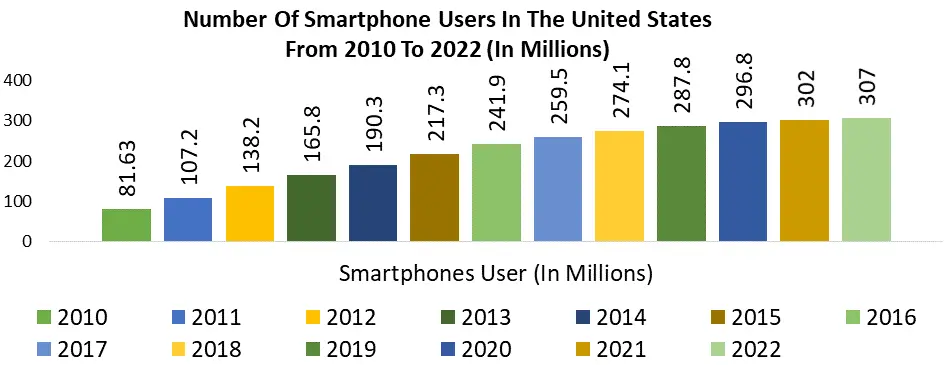
North America, about 22% of the global semiconductor industry as reported by the World Semiconductor Trade Statistics (WSTS), is experiencing an upsurge in demand, especially due to the increasing adoption of next-generation smartphones. This surge is expected to be a primary driver for the North American Tunnel Field Effect Transistor (TFET) market. Moreover, advancements like the integration of TFETs with complementary metal-oxide semiconductor (CMOS) technology showcase the region's commitment to refining low-power integrated circuits. This integration is expected to significantly benefit the TFET market, driving further technological evolution and market growth.
The United States is a leading country in the North America tunnel field effect transistor market. The country plays a vital role in the semiconductor industry's manufacturing, design, and research endeavors. Its prominence fuels the demand for electronic equipment exports and fuels growth across end-user sectors heavily reliant on FETs, such as consumer electronics and automobiles. With the semiconductor industry, including discrete components, being a significant exporting sector in the U.S., estimates statistics highlight that over 82% of semiconductors stem from direct U.S. exports and sales by U.S.-owned subsidiaries all across the world. This includes pivotal activities like R&D, IP development, and high-value-added functions.
Europe is expected to grow at a rapid CAGR and offer lucrative growth potential for the TFET market players during the forecast period. Several companies and research institutions actively developing and commercializing TFET technologies and are expected to influence the tunnel field effect transistor market growth over the forecast period. For instance,
In 2021, Imec, a prominent nanoelectronics research center in Belgium, unveiled breakthroughs in TFET technology, showcasing its potential for ultra-low power applications. Their research efforts underscored the European commitment to advancing TFET technologies.
Moreover, companies like Infineon Technologies in Germany have been actively involved in semiconductor research and development, exploring TFETs to bolster energy-efficient solutions. Their initiatives exemplify Europe's endeavors to pioneer TFET commercialization. The European TFET market's accelerated growth is further expected to be attributed to these concerted efforts by various entities across the region. The collaborative endeavors of research institutions and companies in nations like Germany, France, Belgium, and the UK underline Europe's emergence as a significant hub for TFET innovation and adoption, driving the tunnel field effect transistor market promising growth prospects.
Tunnel Field Effect Transistor Market Scope: Inquiry Before Buying
| Tunnel Field Effect Transistor Market | |||
|---|---|---|---|
| Report Coverage | Details | ||
| Base Year: | 2025 | Forecast Period: | 2026-2034 |
| Historical Data: | 2020 to 2025 | Market Size in 2025: | USD 1.2 Bn |
| Forecast Period 2026 to 2034 CAGR: | 11.2% | Market Size in 2034: | USD 3.12 Bn |
| Segments Covered: | By Product Type | Lateral Tunneling Vertical Tunneling |
|
| By End User | Consumer Electronics Automotive Industrial Aerospace and Defense Others |
||
Tunnel Field Effect Transistor Market, by Region
North America (United States, Canada and Mexico)
Europe (UK, France, Germany, Italy, Spain, Sweden, Austria, Turkey, Russia and Rest of Europe)
Asia Pacific (China, India, Japan, South Korea, Australia, ASEAN and Rest of APAC)
Middle East and Africa (South Africa, GCC, Egypt, Nigeria and Rest of ME&A)
South America (Brazil, Argentina, Columbia and Rest of South America)
Tunnel Field Effect Transistor Market, Key Players are
1. IBM
2. Intel
3. GLOBALFOUNDRIES
4. STMicroelectronics
5. TSMC (Taiwan Semiconductor Manufacturing Company)
6. Samsung Electronics
7. Qualcomm
8. Applied Materials
9. Toshiba
10. NVIDIA
11. Texas Instruments
12. NXP Semiconductors
13. Micron Technology
14. Infineon Technologies
15. Analog Devices
16. ON Semiconductor
17. Renesas Electronics
18. Cree Inc.
19. Synopsys
20. Cadence Design Systems
21. Qorvo, Inc.
22. Advanced Linear Devices, Inc.
23. Fairchild Semiconductor International Inc.
24. Qorvo, Inc.
25. Torex Semiconductor
Frequently Asked Questions:
1] What is the growth rate of the Global Market?
Ans. The Global Market is growing at a significant rate of 11.2% over the forecast period.
2] Which region is expected to dominate the Global Market during the forecast period?
Ans. North America region is expected to dominate the Market over the forecast period.
3] What is the expected Global Market size by 2034?
Ans. The market size of the Market is expected to reach USD 3.12 Bn. by 2034.
4] Who are the top players in the Global Industry?
Ans. The major key players in the Global Communication Platform an Infineon Technologies AG, Qorvo, Inc., and Texas Instruments, Inc.
5] Which factors are expected to drive the Global Market growth by 2034?
Ans. Growing use of electronic devices is expected to drive the Market growth over the forecast period (2026-2034).