
Sustainable Packaging Market- Industry Structure Evaluation, Demand Drivers Analysis, Regional Growth Analysis and Identification, Competitive Positioning Review & Global Market Size Forecast to 2032
Overview
The Global Sustainable Packaging market size reached USD 329.51 Bn in 2025 and is expected to reach USD 476.16 Bn by 2032, growing at a CAGR of 5.4 % during the forecast period.
The world is currently getting more focused on eco-sustainable packaging and more than 50% of the world’s population lives in urban areas they are more likely to have higher production rates of waste, which drives opportunities for sustainable packaging during the forecast period. The Packaging companies are leaning towards sustainable packaging solutions, thanks to a longstanding experience in recycling and a flourishing technology sector. The term sustainable packaging market has gained a lot of momentum because both the government authorities globally and end-users are more aware of maintaining the green harmony of the planet.
The leading Sustainable Packaging market players adopted mergers and acquisitions as the key strategies because of the intense competition in the market. Some of the top key players in the market are Amcor Ltd. (Switzerland), Sealed Air Corp. (USA), Mondi Group (UK), Tetra Laval International (Switzerland), and WestRock Company (USA). They are adopting various other strategies to strengthen their footprint in the market.
For instance, in November 2022, Amcor announced an investment of USD 3 million in PulPac, a Swedish company providing disruptive manufacturing technology for low-cost, high-performance fiber-based packaging. Sustainable Packaging usage continues to rise in the Asia Pacific region, with China, India, and Indonesia at the forefront of sustainability efforts. The U.S. is one of the countries that has shown an increased focus on transitioning to sustainable packaging and they have the highest willingness to pay more for sustainable products.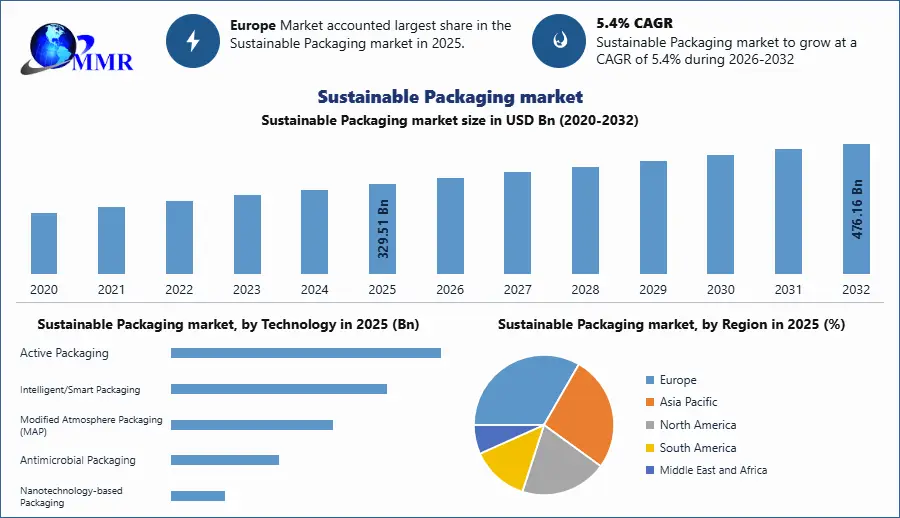 To know about the Research Methodology :- Request Free Sample Report
Sustainable Packaging Market Dynamics:
Strong demand for sustainable packaging solutions in South Korea to drive the sustainable packaging market
There is strong demand for sustainable packaging solutions in South Korea. The sharp growth of the e-commerce market, rocketed popularity of HMR products, and the increase in single-person households among others are some of the reasons for the steady rise in packaging waste. South Korea generates a half million tons of waste every day and seven times more municipal solid waste than Finland. More than 50% of municipal solid waste is packaging waste which accounts for 46% of the total plastic waste.
The whole of Korean society awakened toward the environmental impact caused by packaging waste and they have adopted sustainable packaging solutions. The Korean government amended its recycling law, which brought a significant impact, especially for the food and beverage companies requiring that materials of packaging should be graded and evaluated according to their recyclability.
The regulations and goals of the government, and the global trend of ESG, companies across several industries led by F&B and e-commerce sectors are largely investing in the development of sustainable packaging solutions in Korea Responding to increased consumer concerns over the environmental impact of packaging waste. Thus, the Sustainable Packaging Market in the South Korean region is expected to rise during the forecast period.
Huge investments in the food processing, personal care, and pharmaceutical sectors are creating opportunities for the growth of the sustainable packaging market.
Sustainable packaging is gaining traction in food processing, personal care, and pharmaceutical sectors because of the increasing focus on sustainability and the environment. Companies are investing in research and development to create innovative packaging solutions that are both sustainable and aesthetically pleasing. Sustainable packaging is essential to ensure the safety and efficacy of drugs. Packaging materials that are biodegradable, compostable, and recyclable are being increasingly used to reduce the environmental impact of pharmaceutical packaging waste. Goods (FMCG) companies and retailers are proactively making strong commitments to improve the sustainability of their packaging and to fundamentally rethink their packaging systems.
Tetra Pak is a multinational food packaging and processing company that specializes in producing sustainable carton packaging for food and beverages. The company is known for its signature tetrahedron-shaped cartons, which are made from renewable materials such as paperboard and are fully recyclable. Tetra Pak has invested heavily in sustainable packaging solutions, with a goal to use 100% renewable materials in all of its products by 2030. The company's sustainable packaging solutions not only meet consumer demands for eco-friendly packaging options but also help to reduce waste and extend the shelf life of food products.
Increase in concern regarding packaging waste in oceans and landfills to drive sustainable packaging market.
There is a growing concern worldwide about the environmental impact of packaging waste on oceans and landfills. Plastic waste in particular has become a major issue, with millions of tons of plastic entering the oceans every year, endangering marine life and ecosystems. According to MMR Analysis, global plastic waste generation is expected to reach 1.124 billion metric tons by 2050. In landfills, plastic waste takes hundreds of years to decompose, causing environmental pollution and health hazards. As a result, there is a growing demand for sustainable packaging solutions that can help reduce packaging waste and its environmental impact. This trend is driving the growth of the sustainable packaging market, which includes materials and technologies that are eco-friendly, recyclable, and biodegradable.
Sustainable packaging solutions such as bioplastics, compostable materials, and reusable packaging are gaining popularity among consumers and businesses. Many companies are also adopting sustainable packaging practices as part of their corporate social responsibility (CSR) initiatives, as well as to comply with regulatory requirements. Thus, the increasing concern regarding packaging waste in oceans and landfills is driving the growth of the sustainable packaging market.
Sustainable Packaging Market Trend:
High rate adoption of Eco-Friendly Packaging in Personal care Products
The high rate of adoption of eco-friendly packaging in personal care products is a positive trend that benefits both the environment and consumers. Personal care brands are also taking proactive steps to adopt eco-friendly packaging to meet consumer demand and improve their sustainability practices. They are using materials such as biodegradable plastics, bamboo, and recycled paper to package their products.
In addition to the environmental benefits, eco-friendly packaging can also enhance a brand's reputation and appeal to consumers who value sustainability. By adopting eco-friendly packaging, personal care brands can differentiate themselves from competitors and build stronger relationships with environmentally conscious consumers. Many Personal care companies have adopted Eco-Freiendly Packaging for their products. Lush is a personal care brand that is known for its eco-friendly packaging. They use recycled and biodegradable materials such as paper, cardboard, and plant-based plastics to package their products. For example, their shampoo bars come in a cardboard box that is fully recyclable.
Limited availability of material for Sustainable Packaging is expected to hamper the market growth.
One of the key challenges facing the sustainable packaging market is the limited availability of materials. Sustainable packaging often requires materials that are biodegradable, compostable, or made from renewable resources, and there may be limited supplies of these materials available. For example, some sustainable packaging materials such as bioplastics are made from plant-based sources such as corn or sugarcane. The availability of these materials may be limited by factors such as weather conditions, land availability, and competition with food crops.
Additionally, sustainable packaging materials may be more expensive than traditional packaging materials, which can be a deterrent for some companies. The higher costs of sustainable materials may be due to the limited availability of these materials as well as the costs associated with developing and producing these materials.
Sustainable Packaging Market Segment Analysis:
Based on the Material Type, the paper and paperboard segment held the largest revenue share of around 22.8% in 2025. The increasing demand for eco-friendly and biodegradable packaging materials drove the growth of this segment. Paper and paperboard were widely used for packaging due to their recyclability, lightweight nature, and lower environmental impact compared to plastic-based materials. Growing awareness among consumers and strict government regulations regarding plastic waste management encouraged manufacturers to adopt paper-based packaging solutions. Major companies also shifted toward sustainable packaging materials to reduce their carbon footprint. Amazon strengthened its commitment to sustainable packaging by increasing the use of recyclable paper-based packaging materials for shipments. The company used corrugated boxes made with a high percentage of recycled content and paper cushioning materials to replace plastic packaging, which supported market growth.
Based on the Packaging Type, the rigid packaging segment accounted for a significant market share of around 19.4% in 2025 and was expected to maintain steady growth during the forecast period. Rigid packaging products such as bottles, containers, and jars were widely used across various industries due to their durability and ability to protect products during transportation. Many manufacturers adopted recycled and biodegradable materials in rigid packaging to meet sustainability goals. The Coca-Cola Company committed to making its packaging 100% recyclable and expanded the use of recycled materials in its packaging solutions. The company introduced sustainable plastic bottles made from 100% recycled PET plastic for its Dasani water brand, which contributed to the growth of sustainable rigid packaging applications.
Based on the End User, the food and beverage segment accounted for a significant market share of around 57.6% in 2025 and was expected to grow during the forecast period. The rising consumption of packaged food and beverages, along with increasing environmental concerns, encouraged companies to adopt recyclable and reusable packaging solutions. Many manufacturers used recycled plastics, compostable materials, and reusable containers to reduce environmental impact. PepsiCo introduced several sustainable packaging initiatives, including the development of plant-based plastics and the reduction of single-use plastics. The company launched compostable packaging for its SunChips snack brand and a recyclable paper-based bottle for Tropicana orange juice made from 100% recycled fiber, which supported the growth of sustainable packaging in the food and beverage sector.
Sustainable Packaging Market Regional Insights
Europe dominated the Sustainable Packaging Market in 2025 and was expected to maintain its leading position during the forecast period. The region experienced strong growth due to strict environmental regulations, increasing consumer awareness, and the widespread adoption of eco-friendly packaging materials. Governments across Europe implemented policies to reduce plastic waste and promote recycling and circular economy practices. Paper, cardboard, biodegradable plastics, and compostable materials were widely used across the region. Smurfit Kappa remained a leading provider of paper-based packaging solutions in Europe, offering sustainable packaging products made from recycled paperboard and biodegradable materials.
North America held the second-largest share of the global sustainable packaging market in 2025. The region had a well-established packaging industry and strong recycling infrastructure, particularly for paper and cardboard materials. Increasing corporate sustainability initiatives, government regulations, and consumer demand for environmentally friendly packaging solutions supported market growth. The food and beverage industry remained a major contributor to the demand for sustainable packaging in North America. Amcor offered a wide range of recyclable, compostable, and lightweight packaging solutions aimed at reducing carbon emissions and environmental impact.
Sustainable Packaging Market Research Methodology:
Sustainable Packaging Market offered a comprehensive overview of the market situation in 2025 and provides a forecast for the period 2026–2032. This report provided both qualitative and quantitative information that highlighted important market developments, trends, challenges, competition, and emerging opportunities within the Sustainable Packaging Market. It aimed to deliver a comprehensive presentation of the global Sustainable Packaging market, enabling readers to develop effective business and growth strategies, assess the competitive landscape, and analyze their position in the marketplace. The report also discussed key technological advancements, innovation in eco-friendly materials, and new product developments that were shaping the industry.
The report included Porter’s Five Forces analysis, which explained the five forces: buyers' bargaining power, suppliers' bargaining power, the threat of new entrants, the threat of substitutes, and the intensity of competitive rivalry in the Sustainable Packaging Market. This framework helped evaluate the overall competitiveness and attractiveness of the market. Additionally, the report focused on the competitive landscape by analyzing major companies, strategic initiatives, and market positioning. This analysis helped Sustainable Packaging market players understand the market dynamics and make informed strategic decisions during the 2026–2032 forecast period.
Sustainable Packaging Market Recent Industry Developments (2025–2026)
| Date | Company | Development | Impact |
|---|---|---|---|
| 04 March 2026 | Ball Corporation | The company commercialized the ReAl® alloy can, which is 30% lighter and utilizes 50% recycled content to reduce transportation emissions. | The development addresses Scope 3 carbon footprints for global beverage brands by optimizing material efficiency in metal packaging. |
| 25 February 2026 | Pactiv Evergreen | Launched the SmartPour package, a renewable gable-top solution designed to replace rigid plastic containers in home care and food sectors. | This fiber-based alternative enables brands to shift away from fossil-based materials while maintaining high-performance pouring functionality. |
| 03 June 2025 | Green Bay Packaging | Initiated a groundbreaking ceremony for a new $1 billion kraft linerboard mill investment in Morrilton, Arkansas. | The facility expansion significantly increases the production capacity of renewable paper-based packaging for the North American market. |
| 30 April 2025 | Amcor | Closed the $10.4 billion acquisition of Berry Global, forming one of the world's largest sustainable packaging entities. | The merger consolidates circular packaging expertise and accelerates the scale of recyclable mono-material technology deployment. |
| 01 April 2025 | Sonoco | Completed the divestiture of its thermoformed and flexible packaging business to Toppan Holdings, Inc. | The strategic move allows the company to refocus its portfolio on sustainable fiber-based and high-growth industrial segments. |
| 15 January 2025 | Five Star Holding | Acquired Anduro Manufacturing, a specialist in laminated woven sacks for pet food and consumer products. | This acquisition expands the availability of customized, durable flexible packaging solutions across the United States and Latin America. |
Sustainable Packaging Market Scope: Inquire before buying
| Sustainable Packaging market | |||
|---|---|---|---|
| Report Coverage | Details | ||
| Base Year: | 2025 | Forecast Period: | 2026-2032 |
| Historical Data: | 2020 to 2025 | Market Size in 2025: | 329.51 USD Bn |
| Forecast Period 2026-2032 CAGR: | 5.4% | Market Size in 2032: | 476.16 USD Bn |
| Segments Covered: | by Material Type | Paper and Paperboard Plastics Biodegradable Bio-based Aluminum Others |
|
| by Packaging Type | Rigid Packaging Flexible Packaging |
||
| by Packaging Layer | Primary Packaging Secondary Packaging Tertiary Packaging |
||
| by Technology | Active Packaging Intelligent/Smart Packaging Modified Atmosphere Packaging (MAP) Antimicrobial Packaging Nanotechnology-based Packaging |
||
| by End User | Pharmaceutical and Healthcare Cosmetics and Personal Care Food and Beverage Other End Users |
||
Sustainable Packaging Market, by Region
North America (United States, Canada and Mexico)
Europe (UK, France, Germany, Italy, Spain, Sweden, Austria, Turkey, Russia and Rest of Europe)
Asia Pacific (China, India, Japan, South Korea, Australia, ASEAN and Rest of APAC)
Middle East and Africa (South Africa, GCC, Egypt, Nigeria and Rest of ME&A)
South America (Brazil, Argentina, Columbia and Rest of South America)
Sustainable Packaging Market, Key Players are
1. Sonoco Products Company
2. Amcor pie
3. Gerresheimer AG
4. Smurfit Kappa
5. Ball Corporation
6. BASF SE
7. Ardagh Group S.A.
8. Crown Holding,Inc.
9. WestRock Company
10. DS Smith
11. Mondi
12. International Paper
13. Berry Global
14. Printpack
15. Sealed Air
16. Stora Enso Oyj
17. Georgia-Pacific
18. Huhtamaki
19. Genpak,LLC
20. Tetra Pak InternationalS.A.
21. Billerud
22. Albea S.A.
23. HCP Packaging